I recently received an email from someone who has read all the cozies I’ve written. She said that while she enjoyed each of the books in my Edmund DeCleryk series, she thought the most recent one, Murder at Freedom Hill, was the best; with each book my writing skills have evolved, with layers added to each story. I appreciated her candor, and she probably was correct. My writing has in many ways been like a train, metaphorically picking up steam, and adding railroad cars as necessary to accommodate a growing number of passengers seeking to get to their destination.
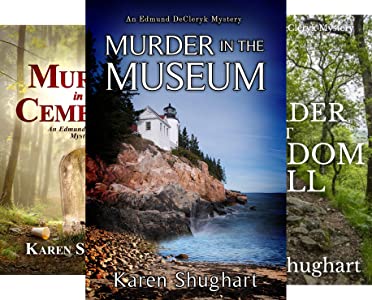
With the first book in the Edmund DeCleryk cozy mystery series, Murder in the Museum, I wrote a prologue that introduced a historical backstory that provided clues to why the present-day murder occurred. As the mystery unfolded, the backstory, spanning the late 1700s to the mid-1800s, continued with artifacts found in the basement of the museum and discovery of a memoir written by a man who, in his youth, had made terrible mistakes but who redeemed himself in adulthood. It was a short story within the book.
I continued with the historical backstory concept in my second book, Murder in the Cemetery, after deciding it would always be part of my cozies. But this time after the prologue, I conveyed it with the discovery of an artifact at the cemetery where the victim was killed, and a series of letters a lonely wife wrote to her sister while on a quest to find her husband, who had been transported to England as a prisoner of war during the War of 1812. Instead of one prologue I wrote two, the first introducing the backstory, and the second giving the reader the seasonal setting for the present day murder.
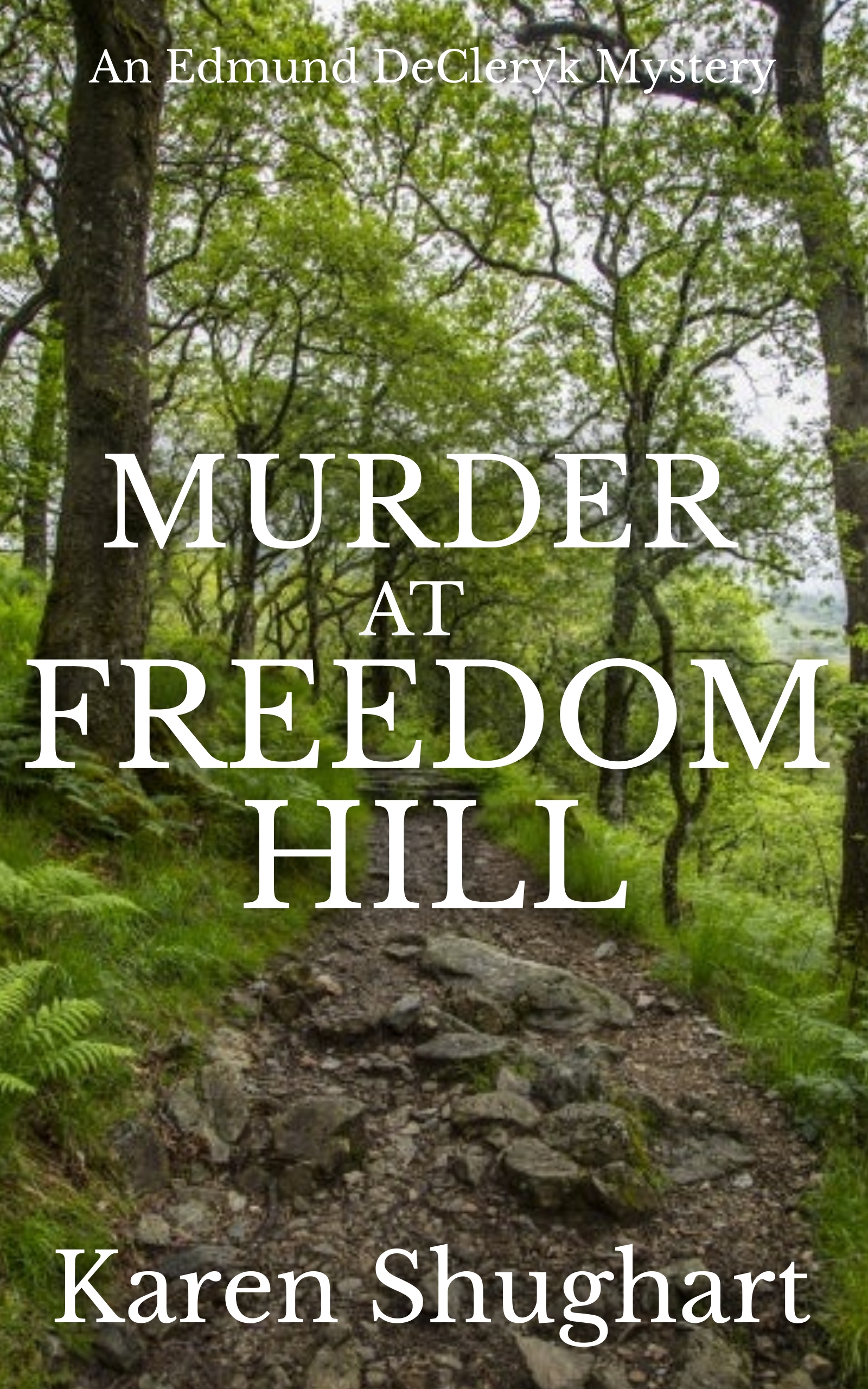
In the third book, Murder at Freedom Hill, I continued with the two prologues and the backstory-a narration for an exhibit at the historical society about the victim’s ancestors, both Black and White-who were involved in the Underground Railroad and Abolitionist Movement. Then I added a subplot that was separate from, but intricately woven into, the main story.
Now I’m working on book four, Murder at Chimney Bluffs. In this one, I continue with techniques I used before: the two prologues, the historical backstory -now rumrunning and the Prohibition era -but the backstory will also be the subplot. And I’ve added a second mystery, a cold case from decades ago that may lead the investigators to the killer.
I’m happy with the progression of these books, it keeps me interested and stretches my brain, but I confess that the writing is taking me a bit longer with each one. Now I’m compiling more notes and have added a timeline and a list of characters, many of whom are recurring; some new. As I continue to write the series I, too, am picking up steam, which will, hopefully, make each book better than the one before.
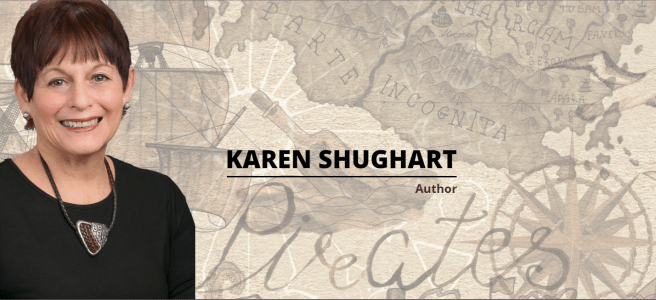
Karen Shughart is the author of the award-winning Edmund DeCleryk cozy mystery series, published by Cozy Cat Press. She has also co-written two additional mysteries with Cozy Cat authors, and two non-fiction books. A member of CWA, North America Chapter, and F.L.A.R.E., she lives with her husband, Lyle, on the south shore of Lake Ontario in New York state.
Did you know that today is International Feng Shui Day? According to The Spruce.com, Feng shui is the practice of arranging pieces in living spaces to create balance with the natural world. The goal is to harness energy forces and establish harmony between an individual and their environment.
Years, okay, two decades ago, I took an online class on how to Feng shui your workspace hoping to help give me harmony to become a published writer. And it work!
Well, I don’t know if it was the Feng shui or being at the right place at the right time or knowing the right person at the right time. Whichever of the three it was, I became a published author with a just starting small press who has grown immensely over the years. I put out 10 books with them before taking the Indie route in 2012.
I kept my desk top and writing space Feng shui just as I’d learned to place items from the class the whole time we lived in Central Oregon. Then we moved to SE Oregon, and I worked in a ten by twenty cabin for 8 months while we built the house we live in now. Nothing was Feng shui but I kept writing books and publishing them.
We built the new house with one room set up for my office and my husband’s desk. (we have matching desks- but he only uses his to hold stuff) At first I placed the desk under a window so I could look out when I needed thinking time while writing. But that put my back to the door. And the one thing I learned during the Feng shui class that stuck with me was to always be facing the door as that is where opportunity walks through. Keep books to your back for knowledge. Those are the only two things I remember from the workshop.
When I was feeling like my writing had stalled and wasn’t feeling as optimistic about my future, I changed my desk. It now sits with one end under the window but it faces the doorway. I don’t have book cases at my back but I have them on both sides of me some just an arm’s reach away.
My husband says my desk takes up too much room this way, but I say I’m open to the opportunities that are coming my way. What they are, I don’t know but I’m ready to embrace them when they do show up!
I have joined a Facebook group that is actively helping me promote my audiobooks. Since it is a whole different group of people than those who read print or ebooks. The owner of the group puts together Indie Author Deals once a month. I’m hoping that one of these days I can use links to my audiobooks on my website. For now I have links to multiple audiobook vendors. Right now there is a sale going on and you can get the first audio 3 book box set from my Shandra Higheagle Mystery series for $0.99 at: IndieAudiobookDeals.com
Being part of this group is one of those opportunities that I found while trying to find someone to help me promote by audiobooks. Feng shui or just luck? I think a little of both!
I’m also excited that through this blog, I’ve met some amazing mystery, suspense, thriller writers and I will get to meet 6 of them in person at the Left Coast Crime conference I’m attending this week in Bellevue, WA. Several of the Ladies of Mystery bloggers and I will be riding from the airport together and then having brunch together the following morning. I’m excited to meet them in person and make even more connections to them and with others throughout the conference.
One of my favorite sayings is: Life is never boring, embrace it!
Like most writers, I don’t like the marketing and promotion side of writing. These days we don’t just sit down and write a book, send it off, and hope a publisher likes it. Especially not if you are an Indie author.
Back when I first started writing novels 30 plus years ago that was the process. Write, edit, send a synopsis and first three chapters to agents and editors and then write the next book while you waited sometimes over a year to hear back. If you did get the nod from an editor or agent then it was revisions and after 18 months to 2 years your book was published.
I was lucky to get picked up by a new small publisher who not only helped with editing but taught me a lot about publishing my book. When I had that down, and with a nudge from other author friends, I took the plunge into being an Indie author. And while being with the small press I had to do all my own marketing and promotion, I didn’t do near enough.
Now, fast forward, I have 55 books, half that are western romance and half that are murder mystery. My heart has always been in writing murder mystery and I feel as if the romance books were what I used as my stepping stones to getting to the genre I love to read and write.
With my murder mystery series, I have been promoting the heck out of them and learning new things as I add more print books and now audiobooks into the mix.
Just when I think I’ve figured out Amazon ads or Facebook ads, or using other promotional third parties, I find out that I messed up with this or with that. I had a promotion scheduled and I thought I’d changed the price of the audio box set. Well, I didn’t so there went the money I paid for the promotion down the drain and the graphics I made to promote the sale will have to be used later when the price finally is changed on all audiobook channels. With this headache, I can see why so many indie authors with audiobooks are selling them direct. It is something that keeps swirling around in my head and I’m thinking strongly about doing it so I can send people to my direct store to purchase audiobooks that I want to put on sale and to get audiobooks for a fairer price all the time.
I have my print books on a direct store and it would only take adding a link to the audiobooks to make it happen. Well, after I upload them to Bookfunnel. That would be another 2-3 hours a day for a week to get them all uploaded. That will cut into my writing time. I have scheduled to write three more books this year. If I don’t get to putting words in the document instead of uploading audiobooks to different vendors and now Bookfunnel, I’d have this book half way written instead of just starting. But once I get them all uploaded I will only have to upload each new book.
“Sigh” Just as I need more energy to do more promoting and marketing, I’m, finding my creative and productive energy doesn’t last as long as it used to.
I have also decided today, after realizing how many more audiobooks I need to upload to Kobo and Bookfunnel that I will from here forward, sit down at the computer with only my book document open and get my word count written before I do promotion or upload audiobooks. It will be the only way I’ll get my book goal accomplished this year.
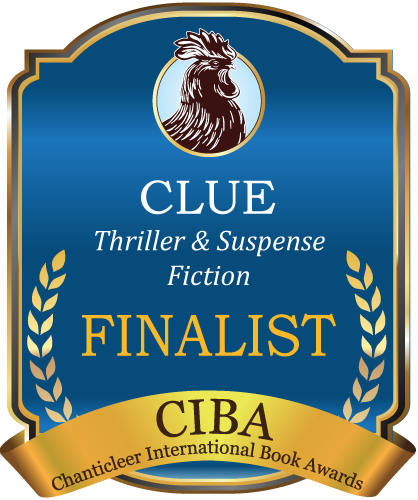
But it is all worth it when I hear from readers how much they enjoy my books and I receive word that a book is a finalist in a contest. After contemplation I thought I’d put Damning Firefly in the wrong category, I guess not!
I’ve been a contributing blogger for Ladies of Mystery for roughly five years, and initially, at the beginning of each year, I made a list of the topics I wanted to write about for each month. But a year or two ago I decided to be a bit more flexible and instead of sticking to the script, so to speak, to write about what motivated me at the time.
When I began to think about what to write for this month’s blog, at first I came up with a blank–some months are easier than others–and after that I considered writing something about Valentine’s Day or Presidents’ Day. Somehow neither felt right, and I couldn’t think of anything original to say about the topics. Then I decided that because February is also Black History Month I’d write about the third book in my Edmund DeCleryk cozy mystery series, Murder at Freedom Hill, which is about the murder of the beloved, biracial mayor of the fictional village of Lighthouse Cove, NY, whose body is found on the path leading to the beach at a historical site called Freedom Hill on the south shore of Lake Ontario
Freedom Hill is a real historic site a short drive from our house where before and during the Civil War, through an intricate, dynamic and well-developed Underground Railroad system, escaping slaves fled down a path to boats that would transport them across the lake to freedom in Canada. At that same time Maxwell Settlement, upon which the fictional Macyville in the book is loosely based, was a thriving community of freed people of color who worked along side abolitionists to help those slaves escape.
In the book, when criminal consultant, Ed, is hired to investigate the mayor’s murder he wonders if the crime might be racially motivated and related to an exhibit the mayor had been working on with Ed’s wife, Annie, head of the local historical society and museum. The exhibit’s focus is on Macyville and the mayor’s ancestors, both Black and White, who lived there, but a critical piece of information the mayor had promised to provide is missing.
The historical society, with help from the mayor, has also obtained a grant from the National Trust for Historic Preservation to restore Macyville, which had fallen into disrepair after its residents left for better opportunities after the Civil War, and a fire destroyed it in the 1920s (the real settlement remains in ruins, but there’s a historic marker designating the site). Annie is working with contractors to assure the project will be completed in time for July 4th weekend festivities, but she suspects that someone is trying to stop it from moving forward. Is the mayor’s death related, or is something else afoot?
I enjoyed doing the research for this book and merging fact with fiction- as I do with all the books in my series- but for some reason this particular period of history has always fascinated me. It was gratifying to learn how so many of our residents played a critical role in helping to shelter fleeing slaves from capture before transporting them to freedom.
Karen Shughart is the author of the Edmund DeCleryk cozy mystery series, published by Cozy Cat Press, including the award-winning book three, Murder at Freedom Hill. All books are available in Kindle, Kindle Unlimited, paperback, and Audible. She is a member of CWA ( Crime Writers Association of the UK-North America Chapter) and F.L.A.R.E ( Finger Lakes Authors and Readers Experience).
Late night–no, was already morning. I read through an email when my gaze snagged on a name. I stared at it, incredulous. After forty years, I had found Zenia.
Zenia is not her real name. I’ve changed it to protect her privacy. When I was fifteen, I met her on her first day at school. A year older than me, she was a tall, statuesque teen with a well-developed figure and, as I discovered, a wild imagination. She was a “boarder”—a residential student; I was a day-student whose mother was also a teacher.
From almost the first minute, we became close friends. She was lovely, with long wavy hair. Plump and vivacious, she had travelled, and boy, could she talk. Her tales of dangerous train journeys enthralled me. Then, gradually details emerged. Some were shared in long, private conversations—I usually stayed after school to chat, and often rushed home an hour or two late.
As a teen, Zenia was full of imaginative stories. She dreamed. And she narrated those dreams in long, vivid tales of descriptions that would today be called ‘drone shots’. In turn I made up ghost stories to entertain her. We had our in-jokes too; we once disagreed about how to pronounce the word ‘obviously.’ She skipped the B entirely, while I stressed it! So, when one of us made a pronouncement, the other replied, “OVIOUSLY!” whereupon we dissolved into giggles.
She said her father had worked at Tata’s (a huge, respectable conglomerate) but that he had been unfairly accused of embezzlement. My father also worked in a subsidiary of the Tata Corporation. He said that Zenia’s father had been fired from his position. There was a protracted lawsuit, the outcome of which I never did learn.
Sighing, he also said that Zenia’s mother had committed suicide.
Separately Zenia revealed that she walked in on her parents one day while their legal issues were at their height. She must have been eight or nine years old. She said, “A bottle of pills was on the table between them. They were holding hands. They looked at me when I came in, and my mother said, ‘That’s why you have to stay.’” That phrase haunted Zenia. She repeated it over and over.
On our school’s parents’ day, I met Zenia’s father, a handsome, charming man with a boisterous manner. And I met Connie, an old, trusted friend who loved Zenia dearly. Connie had been close to Zenia’s parents for decades. A year later, she married Zenia’s father.
Then, in tenth grade (a crucial exam year in India), we broke up. I’d brought home a poor grade, and my mother was astonished. It hadn’t happened before. That night, she came to my room, sat by me on my bed, and asked me to stop spending so much time with Zenia.
I did; my grades skyrocketed. When Zenia asked why I didn’t stay late anymore, I begged off with excuses of homework. She got the message. I was sorry, but no harsh words were spoken and we both dived into exam prep.
Years after I’d migrated to the States, my mother mentioned that Zenia’s father had passed away. She must have had some common friend or acquaintance to know this.
Decades later I looked for Zenia on Facebook and Instagram. She would have enjoyed these forums, full of color and variety. But I couldn’t find her. I checked LinkedIn; no sign of her there either. I assumed she had changed her name after marriage.
Now I know why she wasn’t on social media. That email said she had stage-2 respiratory failure. And Rheumatoid Arthritis, morbid obesity and a slew of other conditions. It was a community appeal to help with Zenia’s medical bills. She’d never married. Her stepmother Connie was caring for her.
That notice brought back a waterfall of memories. I wept for the girl with the big imagination, the gorgeous singing voice, who’d played a funny, eccentric Petruccio to my Katherina in our wacky adaptation of Taming of the Shrew. That girl had such big dreams, wanted an erudite, playful husband, and had plans to work in theatre. In the decade after school, I completed a master’s degree in economics, travelled to the States on a scholarship, married and had children. After my corporate career, I began to write novels about the wide spaces and colorful people of India, crime stories based on immigrants, and history.
Forty years ago, we were both at the starting point of our journeys. Then Zenia fell sick. Meanwhile, I was flying without the terrible weight she carried, the tragedies that had already shaped her at seventeen.
She was longwinded because she had no one else to talk with. She was loud, argumentative, because she imagined that other students were whispering behind her back. Now I wonder whether she was lonely because of a self-imposed exile from the other boarders.
And I wonder if they were cruel to her because she was so unlike them. Most boarders came from orthodox families in small villages and had rarely traveled beyond their own towns. Zenia had been abroad, read widely, loved Shakespeare and Mills and Boon novels. We shared so many interests, not least a penchant for short stories and poetry. What a writer she would have made!
These splinters of memory come alive as I write my novels. Faces from long ago return, embedding themselves into my chapters. Perhaps I’m trying to hold on to them, understand them, preserve the essence of who they were. In Murder in Old Bombay I built the Framji family based on people I’d known, and lost. Each book that follows contains fragments of me too.
Now regret escapes my eyelids, dropping wetly on my keyboard. Regret that I did not reconnect with Zenia when we were younger. Why didn’t I try to find her phone number? It didn’t occur to me. Youth can be stunningly self-absorbed. In the quiet past midnight, I mourn the friend I left behind.
The Spanish Diplomat’s Secret
In The Spanish Diplomat’s Secret, award-winning author Nev March explores the vivid nineteenth-century world of the transatlantic voyage, one passenger’s secret at a time.
Captain Jim Agnihotri and his wife Lady Diana Framji are embarking to England in the summer of 1894. Jim is hopeful the cruise will help Diana open up to him. Something is troubling her, and Jim is concerned.
On their first evening, Jim meets an intriguing Spaniard, a fellow soldier with whom he finds an instant kinship. But within twenty-four hours, Don Juan Nepomuceno is murdered, his body discovered shortly after he asks rather urgently to see Jim.
When the captain discovers that Jim is an investigator, he pleads with Jim to find the killer before they dock in Liverpool in six days, or there could be international consequences. Aboard the beleaguered luxury liner are a thousand suspects, but no witnesses to the locked-cabin crime. Jim would prefer to keep Diana safely out of his investigation, but he’s doubled over, seasick. Plus, Jim knows Diana can navigate the high society world of the ship’s first-class passengers in ways he cannot.
Together, using the tricks gleaned from their favorite fictional sleuth, Sherlock Holmes, Jim and Diana must learn why one man’s life came to a murderous end.
The Spanish Diplomat’s Secret she explores revenge for a real-world unresolved crime in the years before the Spanish American war over Cuba. Nev is presently working on book 4 of her Captain Jim and Lady Diana series. Her books deal with issues of identity, race and moral boundaries.








 Ladies of Mystery
You must be logged in to post a comment.