You Just Feel It

I finished book 12 in my Gabriel Hawke series two weeks ago. This is the first book that when I finished, I didn’t have any doubts that I had forgotten something or that it dragged in places or that it wouldn’t sit with some of my readers. I finished this book with a smile on my face feeling as if it was a good book. Not all books feel that way when I finish.

Many writers understand this. There are very few books that when I have it ready to go to my CP and beta readers that I feel I captured everything I wanted and gave all the right clues and nailed the characters. Even the killer. I figure the places that I’m worried about they will see, and I can fix them.

As usual this was what I call my first draft. Over the decades of writing and having published 58 books, not counting the 7 that never made the cut to being published, this was the first time I finished without any doubts about the story. Having been writing this long, I have a system where I what I write the day before is where I start the following day. I begin where I started writing and read through, making changes to scenes, sentences, and words. So by the time I do type the last word in a book, it is the draft I send to my CP and Betas. After they read and send me their thoughts and suggestions, I do what I call the second draft. This one goes to my line editor. Who will also catch any wrong names, duplication of information, and my legal mistakes. From her, I go through it one more time, the 3rd draft, and send that to a proofreader. After I change what she finds, that is the final draft, and it is published.

Now I could be all wet and full of myself on this one, but so far, the beta readers have liked it and found little to comment on. Well, except for my retired police officer. And what he commented on wasn’t anything to do with police procedure. He didn’t like that Hawke kills a rattlesnake. He thought Hawke should have backed out of the cougar’s cave he was crawling into and waited for the snake to leave. I’ve thought about this since his text to me about enjoying the book other than that scene. I’ve bounced around different ways I could change the scene, but they don’t harken to the urgency that Hawke feels about finding more evidence.

My other beta reader liked the whole book. Didn’t see any problems with any of the story. She did catch some typos.

I’m waiting for my CP to get it back to me and see if she mentions the snake scene. I felt Hawke was doing what he needed to do to keep him and Dog safe while they finished their search of the cave. A small area that they couldn’t have avoided being bitten by the snake if they moved around inside upsetting it.

The scene will stay as is. And the book that when I finished felt right and made me smile, is available for pre-order.
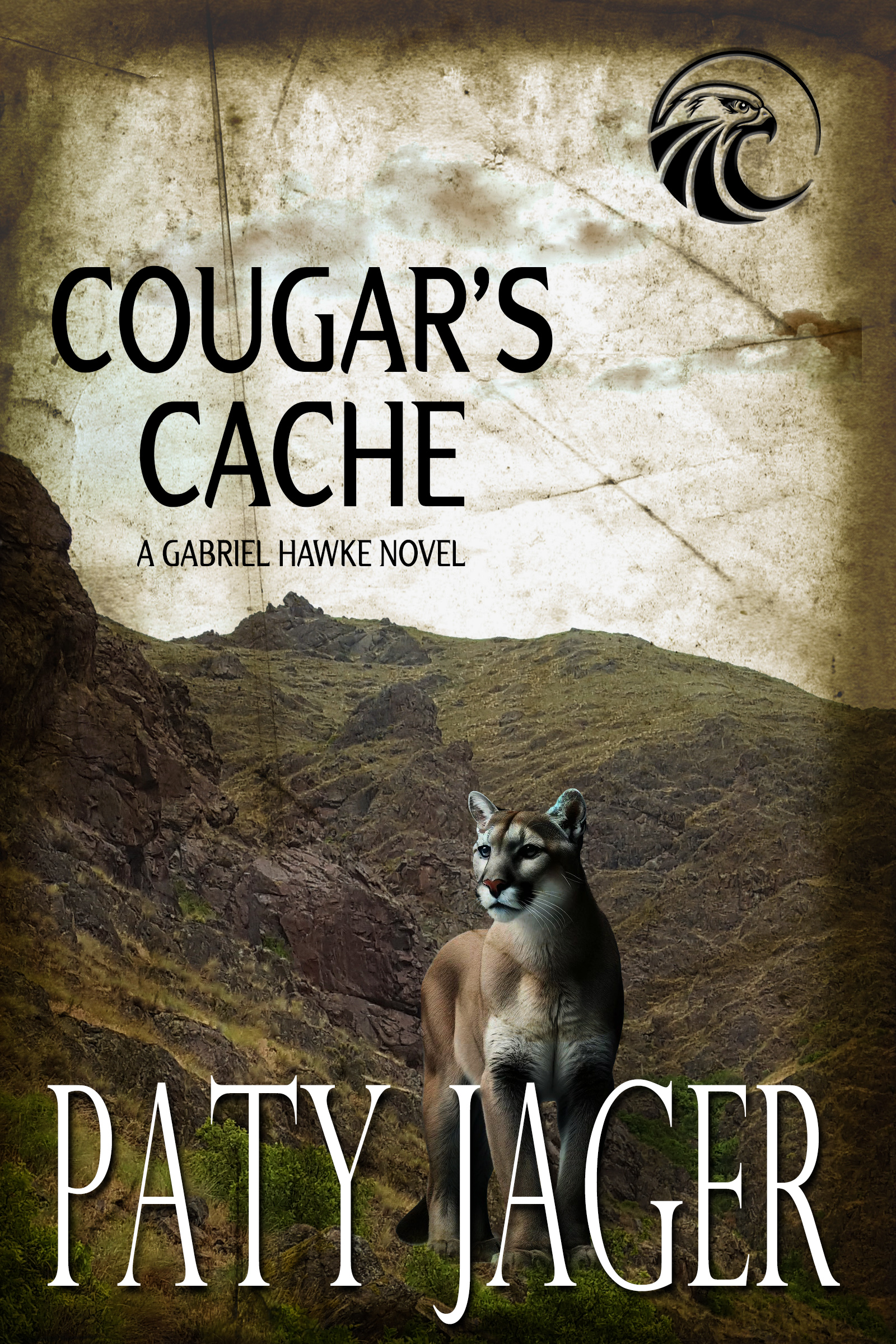
This double cold case and current homicide have Oregon State Police Fish and Wildlife Trooper Gabriel Hawke calling in favors… and exploring a childhood he shoved into the deep recesses of his mind. 

While patrolling on the Snake River in Hells Canyon, Gabriel Hawke’s dog digs up a human bone. Hawke is confronted by an aunt he doesn’t remember, and he finds a canister of film when the rest of the remains are excavated. The film shows someone being killed and a rifle pointed at the photographer.

Going through missing person files, Hawke discovers the victims of the
decades-old double homicide. A person connected to the original crime is
murdered, giving Hawke more leads and multiple suspects.

Attending a local Powwow with his family, Hawke discovers more about his childhood and realizes his suspects have been misleading him.

Pre-order: https://books2read.com/u/bQGkXw

Guest Blogger ~ Kate Michaelson

Why Mysteries?

When I set out to write my first novel, I knew without question that I would write a mystery. As a teen, I remember coming home from the library with stacks of Agatha Christie books and tearing through them within a week. Part of me loved escaping to the far-flung settings of the Golden Age mysteries, but I also enjoyed the way the investigation brought me into the story—not only as an observer, but as an active participant. I got to look over the shoulder of Hercule Poirot or Miss Marple as they interrogated witnesses and checked alibis. 

But even more than the cognitive challenge of who did it, I’ve always been drawn to the psychology of why they did it. Like the detectives, I searched for motives. I wanted to understand why people would commit such seemingly illogical acts. What series of events brought them to that point? As an adult, it’s a question I still find myself asking on a daily basis. 

As much as I tell myself not to, I can’t help but watch or read about the twisted crime stories that make the news. I promise I’m a happy, fairly positive person, so what draws me to this darker side of life? I think it’s the need to understand the ugly realities most of us would like to keep at bay. Judging by the popularity of mysteries, suspense, true crime, and crime dramas, I’m not alone. Michael Connelly once advised authors to “write about what you never want to know.” Whether we’re reading or writing it, crime fiction gives us the opportunity to have the best of both worlds. We delve into aside of the human experience that we want to understand but would prefer to view from a healthy distance. It’s like seeing a shark—exhilarating, as long as we’re watching safely from the other side of some nice, thick aquarium glass.

Along with giving us a day pass to the seedier side of life, mysteries present character studies in disguise. Beneath the layers of intrigue and suspense lie complex characters, driven by greed, revenge, love, or twisted rationales. And, often, the detectives are nearly as troubled by the criminals. Whether it’s a hopeless, hard-drinking private investigator or the cop haunted by a cold case, the job takes its toll. Unlike the reader who can put the book down, detectives must immerse themselves in the morass of a psychopath’s logic and, thus, take the brunt of the damage. Through the detective, we make controlled contact with the taboo and explore the sides of people’s personalities they’ve spent their lives concealing.

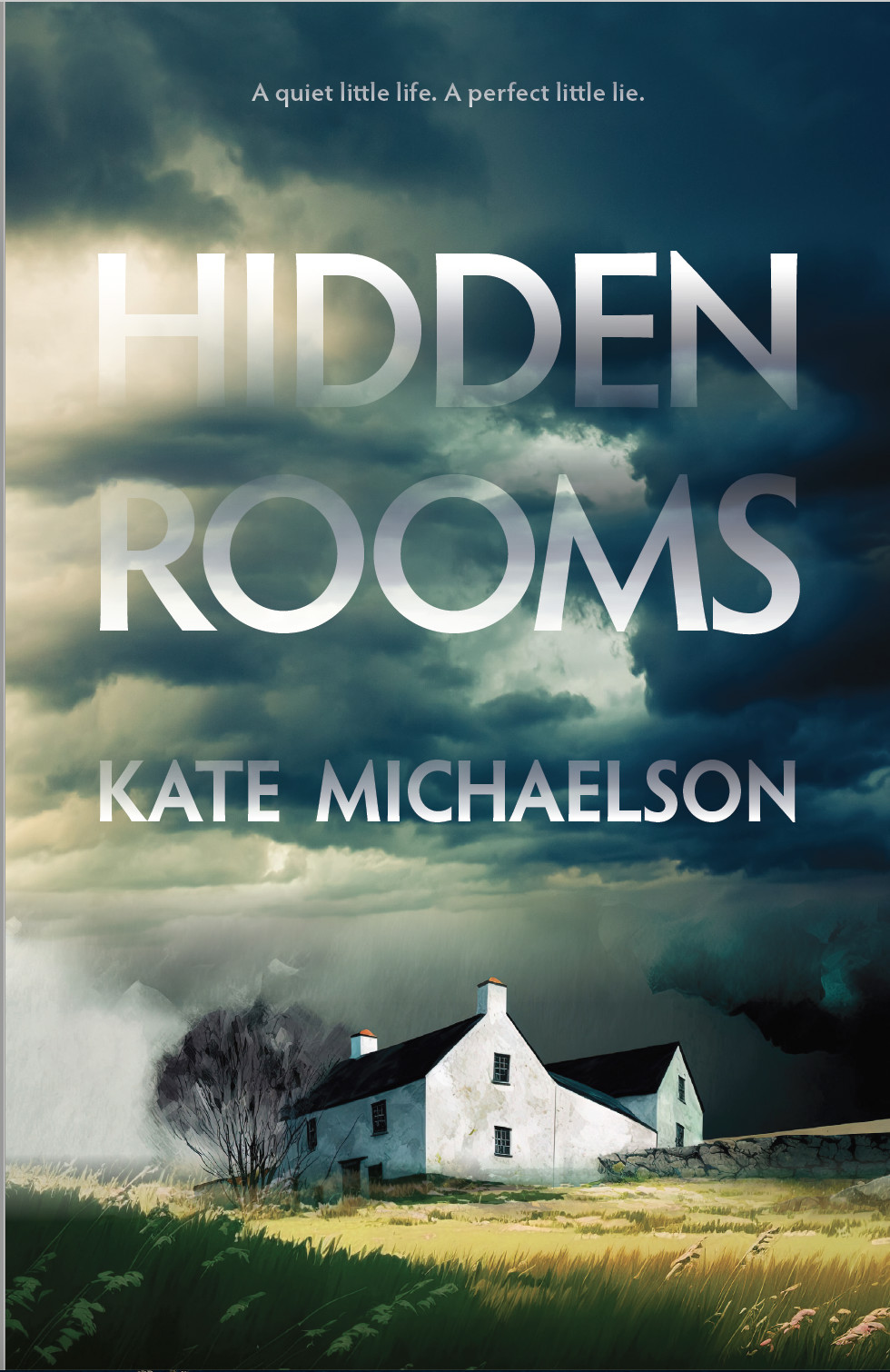
My own mystery, Hidden Rooms, contends with the inaccessible sides of people’s personas and the secrets they keep hidden even from close family and friends. Although my book is set in a small town where everyone knows their neighbors, the drama centers on the characters discovering how little they actually know about one another. My protagonist, Riley, has spent her life quite happily accepting the shiny surfaces her friends and family present. It’s only when a disaster tears their lives apart, that she’s forced to question what they’ve kept hidden beneath their idyllic exteriors. 

My mystery—and the genre as a whole—is about trying to understand the people around us, and that’s why I love them. Crime fiction captures the thrill of the unknown and reveals it to us page by page.

Hidden Rooms

Long-distance runner, Riley Svenson, has been fighting various bewildering symptoms for months, from vertigo to fainting spells. Worse, her doctors can’t tell her what’s wrong, leaving her to wonder if it’s stress or something more threatening. But when her brother’s fiancée is killed—and he becomes the prime suspect—Riley must prove his innocence, despite the toll on her health.

As she reacquaints herself with the familiar houses and wild woods of her childhood, the secrets she uncovers take her on a trail to the real killer that leads right back to the very people she knows best and loves most.

Buy Links

AmazonGathering VolumesBookshop.org, or CamCat Books

Kate Michaelson’s debut novel, Hidden Rooms, won the 2022 Hugh Holton Award for best unpublished mystery by a Midwest writer and was released in April of 2024. As a curriculum developer and technical writer, she has created educational content on everything from media literacy to cybersecurity awareness. She is active in several writing groups and participates in causes that support those with disabilities and chronic illness. In her free time, she loves hiking, traveling, napping and anything else that takes her away from her laptop. She grew up in Greenwich, Ohio and now lives in Toledo, Ohio with her husband and pets.

Facebook: https://www.facebook.com/kate.michaelson/

Instagram: https://www.instagram.com/katemichaelsonwriter/

Goodreads: https://www.goodreads.com/author/show/40269182.Kate_Michaelson

Website: http://www.katemichaelson.com

Guest Blogger ~ Terri Maue

Knife Edge is a traditional murder mystery. The entire story is told from the point of view of the amateur sleuth protagonist, Zee Morani. I knew very little about Zee when I wrote the first draft of Knife Edge about ten years ago. Basically, I knew I wanted her to be a writer, but she needed to have more freedom than a reporter with regular hours or an assigned beat. And because I also wanted her to comment current events, I ruled out making her a book author. So, Zee became a successful columnist.

As I worked my way through early drafts, I learned a lot about Zee. In her job, she was free to pursue whatever interested her, as long as she could turn it into a column on deadline. I decided Zee should use satire in her column, which allowed me to indulge my own penchant for pointing out social, cultural, and bureaucratic idiocy, incompetency, and callousness.

It was fun to sprinkle column topics throughout the story. They provided a bit of comic relief from the escalating tension of the mystery, and I enjoyed researching topics that piqued my interest or aroused my ire. Showing Zee at work also helped me clarify how she could use her particular skills to solve the murder: her skepticism, her attention to detail, and her ability to put information together in different ways—what she called seeing the world sideways.

Also, giving Zee a human-interest focus for her column meant she would not be at home in the world of crime and criminals. I certainly was not. Drawing on my own naivete (as in what might I do next?), I put her into dangerous, and sometimes humorous, situations.

I entered a new stage of relationship with Zee after Knife Edge was accepted by Camel Press. One of the early tasks my editor gave me was to write a history of Zee’s parents. Using Zee’s age at the time of the story, I backtracked to discover that her parents came of age in the 1960s.

That decade exerted a great influence on my own maturation. Coupled with research into that tumultuous time, my experience helped shape Zee’s moral compass. She is driven by a deep need to see justice done. This drive impels her to use her column to defend the ordinary human being who struggles against the mindless workings of a machine-like organization. It also gets her involved in the murder.

Perhaps the biggest surprise in Zee’s character tuned out to be the extent to which her persona was influenced by my two previous careers. I didn’t realize this until after the book was completed.

I spent twelve years in public relations before I quit, unable to continue to spin facts to create a misleading picture. I actually looked in the mirror one day and realized that if I didn’t leave, I would get to the point where I no longer recognized the truth. Though I did not see it at the time, I made Zee a satirist specifically so she could point out the ways in which people use language to distort and misdirect, to adhere to the letter of the law while violating the spirit.

My PR experience also provided the seed for Zee’s dream to write what she considers serious journalism, which she viewed as using her talent for greater good. After my PR disillusionment, I switched careers and became a university professor. I spent 18 years teaching students how to use language ethically and responsibly and showing them how unscrupulous writers and speakers deceive their audiences.

Writers are always encouraged to write what they know. My experience with Zee would seem to indicate that I’m not always aware of what I know, at least not consciously. But then, discovering what lies beneath the surface is a big part of the fun of writing—and life—for me.

KNIFE EDGE

An unwitting columnist. A shocking murder. A devious killer.

Is Zee Morani tracking clues or playing a role orchestrated by a murderer?

When Zee Morani discovers the bloodied corpse of a disgraced medical researcher, the accused killer begs her for help. But Zee is not a cop. She’s not even a PI. She’s a regionally syndicated satirical columnist who dreams of breaking into serious journalism.

Zee believes the suspect is guilty. After all, he staggered into her as he fled the scene of the crime. But she’s made a career of challenging bureaucracy. The drive to defend the underdog, or at least give him a fair chance, pulses in her veins. Unfortunately, everything she learns only strengthens the police case.

Even as the facts pile up against him, Zee’s instincts argue for his innocence. Her friend Fontina’s finely tuned intuition concurs. But while Fontina supports Zee’s investigation, Rico, a seasoned crime reporter, balks at her interference in the case. Despite their recent breakup, he wants to protect Zee from the world of violence he knows all too well. He also wants to win back her heart. Tempting as that is, Zee resists him, her heart shackled by the pain of past betrayals. They agree to work together as professional colleagues and friends, but it’s an uneasy alliance. 

As Zee digs deeper into the researcher’s murder, her involvement makes her a target. Her inexperience tempts her to back away from investigating, but her commitment to truth won’t let her quit. When Rico suffers a vicious attack, her fury burns the last vestiges of hesitation. Gritting her teeth, she tackles a nasty thug, a suspicious police lieutenant, and in the end, the barrel of a gun—all to unmask a stone-hearted killer. 

Amazon: https://www.amazon.com/Knife-Edge-Terri-Maue/dp/1684922003

Barnes & Noble: https://www.barnesandnoble.com/w/knife-edge-terri-maue/1143420718?ean=9781684922000

Bookshop: https://bookshop.org/search?keywords=Terri+Maue

Target: https://www.target.com/p/knife-edge-by-terri-maue-paperback/-/A-89152528#lnk=sametab

Walmart: https://www.walmart.com/ip/Knife-Edge-Paperback-9781684922000/2756992774?from=/search

Terri Maue is a retired professor emeritus from Embry-Riddle Aeronautical University. After she retired, she decided to pursue a life-long dream to write a mystery novel. The result is Knife Edge: A Zee & Rico Mystery. In addition to offering a challenging puzzle, it reflects several of Terri’s interests:

  • martial arts—she holds a first-degree black belt in TaeKwon Do;
  • spirituality—she has studied many forms of religion, including Christianity, Wicca, Buddhism, and Native American and African practices;
  • the intuitive arts—she reads Tarot cards and has taught dream interpretation.

Terri is a member of Henderson Writers Group, Sin City Writers, Sisters in Crime, and Mystery Writers of America. She is working on the second book in the Zee & Rico series. She lives in Las Vegas, Nevada, with Eddie, her personal photographer and husband of 55 years.

You can visit Terri’s website at https://www.terrimaue.com, find her on Facebook at Terri Maue Author, find her on Instagram @terrimaueauthor, and write to her at terri@terrimaue.com

Guest Blogger ~ Keith Yocum

This is how I came up with the mystery premise in “A Whisper Came,” book 1 in the Cape Cod Mystery series.

There is something about the ocean that lends itself to mystery. Whether it’s the isolation of deserted beaches or the strange sound of the wind whistling through tall sea grasses, the area lends itself to a sense of uncertainty and mystery.

I live in Chatham, Massachusetts, at the elbow of Cape Cod. It has the distinction of being surrounded on three sides by salt water: Nantucket Sound, Pleasant Bay, and the Atlantic Ocean. It was founded in 1664 and incorporated in 1712. For American towns, this is old.

Along with the passing centuries has come a litany of shipwrecks off Cape Cod—estimated at 3,500—and, of course, legends. Dotting the cape are 14 lighthouses, though many are not operational.

In 2019, I toured the decommissioned lighthouse on Monomoy Island off Chatham. I had driven my boat past the lighthouse many times over the years but never set foot on the island. The Monomoy lighthouse and keeper’s house are used by the US Wildlife Service to study migratory seabird and resident seal populations.

During the tour, I was surprised by the utter isolation of the lighthouse. It took us nearly a half-hour to walk across the deserted island to reach the lighthouse and keeper’s house. We were allowed to climb to the top of the lighthouse, but there was nothing to see but sand, scrub brush, and the ocean. It was beautiful but oddly intimidating because of its isolation.

During the visit, our Wildlife Service guide chuckled when he mentioned that some researchers at the keeper’s house felt the building was haunted.

For a mystery writer, there’s nothing more intriguing than a hint of spectral disturbances in this setting. After returning to the mainland, I researched the history of this area of Monomoy Island and found unsubstantiated rumors of murders that occurred near the lighthouse in the 1860s. Several legends about ghosts on the island also provided a perfect plot twist.

As a former journalist, I decided to write a modern story involving a young reporter named Stacie Davis sent to Chatham to cover the story of an unidentified woman’s body found floating off the island of Monomoy. The fact that the woman’s body wore clothing from another era added just the right amount of intrigue.

Stacie, the lead character in “Whisper,” is a young reporter at the low end of her newspaper’s totem pole. As a general-assignment reporter, she is given a variety of stories that test her mettle. She’s not happy to be sent on the 90-mile drive to Chatham from Boston, but she’s also keen to prove she can handle any story.

I work closely with my wife, Denise, when revising a manuscript. Perhaps it’s her training as a psychologist, but she was instrumental in bringing authenticity and toughness to Stacie’s character. We have worked together on ten novels, and I always take her advice on improving character development, plot pacing, and romance (of course).

The reception for “A Whisper Came” was much stronger than I anticipated. Our local bookstore here in Chatham sells quite a few paperbacks, and I’ve just finished “Dead In The Water,” book 2 in the Cape Cod Mystery series with intrepid reporter Stacie Davis.  

I can’t wait to see what trouble Stacie will get into in book 3. She’s one tough cookie.

A Whisper Came

Stacie, a young, ambitious reporter, is sent to Chatham on Cape Cod to follow up on the body of an unidentified woman found floating nearby. Over the centuries, Cape Cod has been the site of thousands of shipwrecks, leaving the sandy shore littered with debris, legends, and ghost stories. Stacie’s editors encourage her to dig into the mix of Chatham’s quirky residents and to write about the mysteries surrounding the old Monomoy Point Lighthouse. On a lark, she makes a nighttime visit to the lighthouse with a young charter boat captain and, in the process, stumbles tragically into a dark mystery that forces her to question her sanity and the truth buried in a legend. 

Amazon: https://www.amazon.com/dp/B093TJR9QC

B/N: https://www.barnesandnoble.com/w/a-whisper-came-keith-yocum/1139508965

Ibooks: https://books.apple.com/us/book/id1570048192

Google iPlay: https://play.google.com/store/books/details?id=uvNWEAAAQBAJ&pli=1

Keith Yocum is a former journalist and business executive who has worked for publications including The Boston Globe and The New England Journal of Medicine. He lives on Cape Cod and is the author of ten novels. He welcomes feedback at http://www.keithyocum.com.

https://www.facebook.com/yocum.keith/

    Picking Up Steam by Karen Shughart

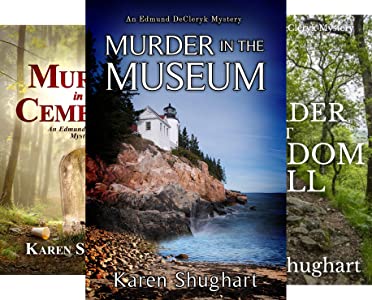
    I recently received an email from someone who has read all the cozies I’ve written. She said that while she enjoyed each of the books in my Edmund DeCleryk series, she thought the most recent one, Murder at Freedom Hill, was the best; with each book my writing skills have evolved, with layers added to each story. I appreciated her candor, and she probably was correct. My writing has in many ways been like a train, metaphorically picking up steam, and adding railroad cars as necessary to accommodate a growing number of passengers seeking to get to their destination.

    With the first book in the Edmund DeCleryk cozy mystery series, Murder in the Museum, I wrote a prologue that introduced a historical backstory that provided clues to why the present-day murder occurred. As the mystery unfolded, the backstory, spanning the late 1700s to the mid-1800s, continued with artifacts found in the basement of the museum and discovery of a memoir written by a man who, in his youth, had made terrible mistakes but who redeemed himself in adulthood. It was a short story within the book.

    I continued with the historical backstory concept in my second book, Murder in the Cemetery, after deciding it would always be part of my cozies. But this time after the prologue, I conveyed it with the discovery of an artifact at the cemetery where the victim was killed, and a series of letters a lonely wife wrote to her sister while on a quest to find her husband, who had been transported to England as a prisoner of war during the War of 1812. Instead of one prologue I wrote two, the first introducing the backstory, and the second giving the reader the seasonal setting for the present day murder.

    In the third book, Murder at Freedom Hill, I continued with the two prologues and the backstory-a narration for an exhibit at the historical society about the victim’s ancestors, both Black and White-who were involved in the Underground Railroad and Abolitionist Movement. Then I added a subplot that was separate from, but intricately woven into, the main story.

    Now I’m working on book four, Murder at Chimney Bluffs. In this one, I continue with techniques I used before: the two prologues, the historical backstory -now rumrunning and the Prohibition era -but the backstory will also be the subplot. And I’ve added a second mystery, a cold case from decades ago that may lead the investigators to the killer.

    I’m happy with the progression of these books, it keeps me interested and stretches my brain, but I confess that the writing is taking me a bit longer with each one. Now I’m compiling more notes and have added a timeline and a list of characters, many of whom are recurring; some new. As I continue to write the series I, too, am picking up steam, which will, hopefully, make each book better than the one before.

    Karen Shughart is the author of the award-winning Edmund DeCleryk cozy mystery series, published by Cozy Cat Press. She has also co-written two additional mysteries with Cozy Cat authors, and two non-fiction books. A member of CWA, North America Chapter, and F.L.A.R.E., she lives with her husband, Lyle, on the south shore of Lake Ontario in New York state.