I See Characters

Every writer puts a bit of the people around them into their characters. We can’t help it. A friend has a quirk that we like and we give it to a character. A relative has a situation that would make for a great subplot, we use it. Even though we are writing fiction, bringing in the bits of real life that we see brings those fictional characters to life.

Last month while working at a NIWA (Northwest Independent Writers Association) booth selling my book and those of other authors in the organization, some unusual characters came by and talked to us. One of my strengths is being a good listener. Only there does come a point with some people when even I started getting antsy and wish the person would move on. Either physically or with their topic.

One person who has stopped by our booth the last two years that I’ve been there is a man who likes to discuss how the government is listening into everything that is going on and how he believes the aliens will soon return to save the planet. He gets very adamant about why he lives off-grid and how we are all being tracked. I’m thinking someone with his perspective on life will show up in one of my books.

Another young man, well, young to me, I believe he might have been late twenties or early thirties. He had a British accent, wore his hair in a shoulder-length bob, and had on a typical t-shirt a male his age would wear and then he had on a skirt that was tight enough across his hips that you could tell he was male if his voice hadn’t given him away. He had a dog on a leash. As he talked to us, he constantly pushed the hair away from his face, adjusted his glasses, and kept his dog from wrapping the leash around his legs. He was quiet, talked a little about the books and how he’d thought about writing, but he didn’t have a clear vision of what he wanted to write.

The third person who captured my attention and sent a chill up my back was a woman. She walked up to the booth dressed in a long flowy skirt, matching sweater, and a silk scarf around her neck. She looked like the wife of a businessman or a professional herself. Her smile was wide, her eyes lit up with the smile and she said, “Hello. I’m here to spread love. Elon Musk and I are building a world filled with love. Come join us and together we can make the world a better place.” I smiled and said, “That’s nice. The world could use more love.” She asked about a couple of the books, then reiterated that she and Elon needed help to spread the love. I nodded and smiled and then- the creepy part. Her eyelids started fluttering, her eyes kind of rolled up, and her smile disappeared. When she stared at me anger simmered in her eyes and she said, “I know where the bodies are buried. I do. I know where the bodies are buried.” I had no words for that response from her. Then as quickly as she’d changed, the smile was back and she said, “I have more love to spread, ” and walked away.

I was speechless for a few minutes. The other member of NIWA who was in the booth with me had been on the phone while I was talking to the woman. I sat down, grabbed a pen and a piece of paper, and wrote down everything she said and how she looked.

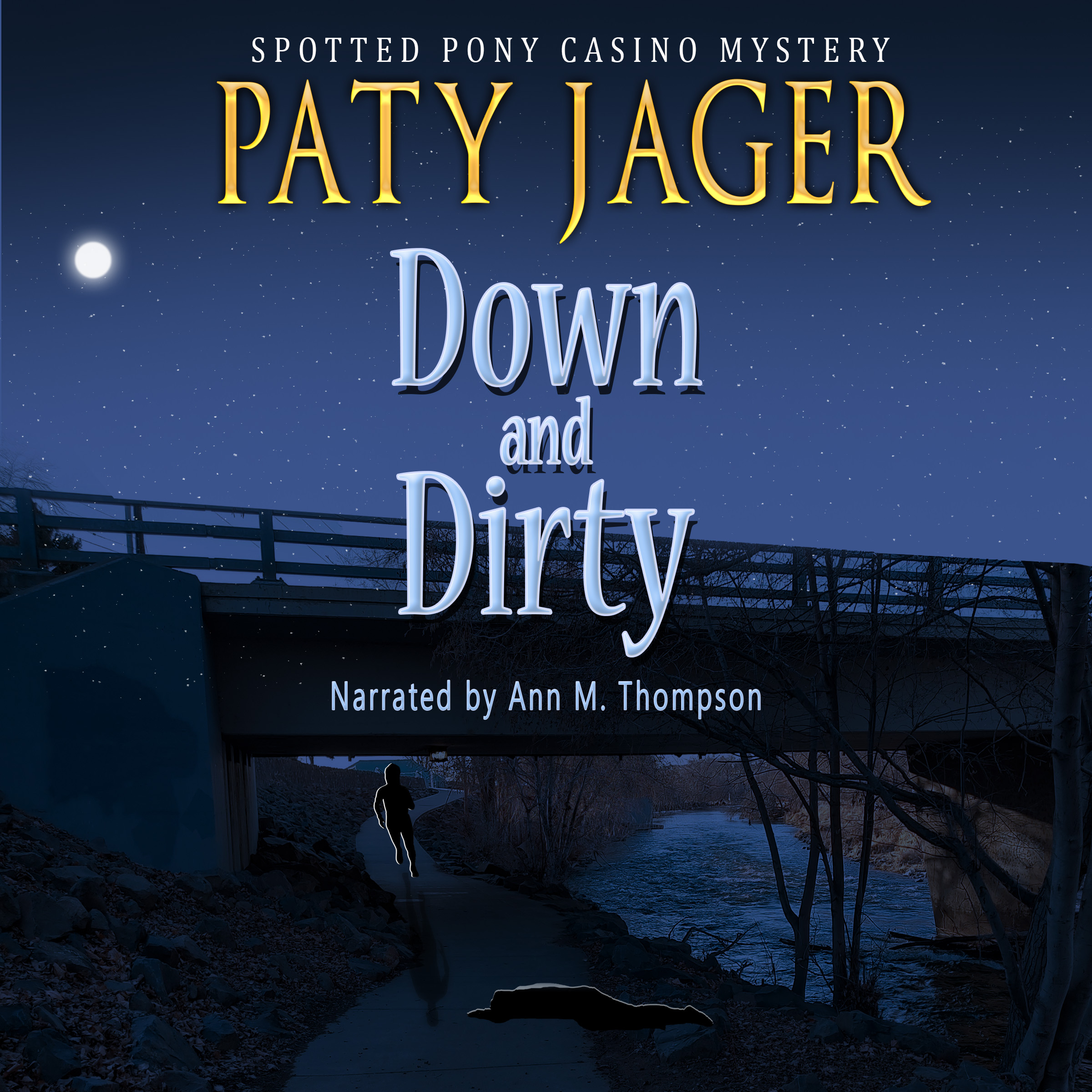
And that woman is a secondary character in my September release, Down and Dirty, book 6 in the Spotted Pony Casino mystery series.

It is encounters like this that give writers the fodder for their stories.

So long, farewell, auf wiedersehen… by Karen Shughart

The song from The Sound of Music kept popping up in my head as I struggled to choose a title for this blog, which will be my last for Ladies of Mystery.  I started writing these shortly after the first book in my Edmund DeCleryk mystery series, Murder in the Museum, was published in early spring, 2018, and other than missing one a while back, I’ve managed to write every month for the past six years.

You’ve read not only about my books, investigative procedures and writing processes, but also what it’s like to live in the northern Finger Lakes region of New York, our travel experiences and family gatherings, and even eulogies for those I’ve loved. I’ve enjoyed every minute of it and feel gratified by how many wonderful and positive comments I’ve received as a result, and friends I’ve made along the way.

The decision has not been easy, it’s taken me weeks to feel comfortable with it. As I’ve grown older (and by most standards I’m in the elderly category), simplifying my life and deciding what takes priority seems tantamount to residing in a world that’s become far too complex for me as of late. Family always takes precedence, we’ve committed to spending more time with our children and siblings; also with friends whom we hold dear to our hearts. Some live hours and sometimes a plane trip away.

When I wrote the first book, my publisher asked for a series, and that’s what she got. I’m now working on book four, Murder at Chimney Bluffs, which, like the others, includes a historical backstory that provides clues to why the murder occurred, this time Prohibition and rumrunning. There was much activity between Canada and our side of Lake Ontario during that period of time, with contraband liquor unloaded onto a beach beneath Chimney Bluffs, drumlins that were created from icebergs millions of years ago.

Authoring books is a time-consuming process and one that I integrate into the other facets of my life, which include writing a monthly blog for Life in the Finger Lakes magazine, serving on the board of directors at our local library, and occasionally volunteering for other organizations here. An active social life and attendance at a multitude of cultural events are included in the colorful tapestry of our lives.

I truly appreciate that I, as a newly published author of mysteries, was given the opportunity to show off my writing skills here. Thanks so much, Paty Jager, for your unwavering support along the way and for understanding my decision at this juncture of my life, and to the rest of you who have steadfastly been with me throughout this journey.

 So, for now, so long, good-bye, auf wiedersehen, good night, and may peace and love follow you everywhere you go.

Karen Shughart is the author of the Edmund DeCleryk cozy mystery series, published by Cozy Cat Press and set in the Finger Lakes. She has also co-written two mysteries with Cozy Cat authors, two non-fiction books, and pens a monthly blog for Life in the Finger Lakes magazine https://www.lifeinthefingerlakes.com/.  A member of CWA, North America Chapter, and F.LARE (Finger Lakes Authors and Readers Experience), she lives with her husband, Lyle, in Sodus Point, NY.  Her books are available at local gift shops and bookstores and in multiple formats at  amazon.com

The Slogging Beginning

I am doing something I haven’t done in some time. I am trying to write a 70k+ book in a month. I want this book off to my critique partners and beta readers by the first of August so I can have it polished and uploaded for release before I leave on a month long vacation the middle of September. Have I put a lot of pressure on myself? Yes! But it will be worth it to be between books while I’m enjoying my vacation.

Most writers know about the saggy middle. It’s where in the middle of the book, sometimes it feels like the pacing has slowed or the story doesn’t feel as fresh and vigorous as it started out. Many have had this happen in a book more than once. But with editing and rewriting it can be given a nice crisp revision.

I’m finding the beginning of this book, not the story, the story is moving along fine. It’s the having to stop and research something that takes time and then takes me off on, ‘What if I did this?’ that turns the story in a different direction. I have had that happen on this particular book four times since beginning the book. I’m a third of the way into the book and I’m finally getting into the rhythm of the story and not having to stop so much and look things up.

So my slogging beginning is the fact, 1) I was at an event and met a person that was so ingrained on my brain after our interaction that I had to put her into this book. Which then changed the direction I had started out on. 2) I decided to make a business I know nothing about as a primary setting to the story. 3) Due to the character I added, I needed to look up mental illnesses. 4) Trying to add information from a short story I put in an anthology required me to reread the short story and figure out how to make it all play into the main plot.

Slogging in this instance is not the writing or the story line, it is the fact I have to keep stopping to research information I hadn’t known would come up with I started the story. Slogging is the hours I’ve spent reading and researching when I wanted to be writing.

However, no matter what you write there is always a need for some research. When I wrote historical western romance I had to research history and how they dressed and lived. In mysteries it’s all about type of wounds, types of crimes, occupations, and yes mental illnesses. Not to mention locations and oh so many things that you would think I wouldn’t need to look up since these are contemporary mysteries. But because of the internet and everyone having access to information, you have to make sure you do even more research so no one can say you don’t know what you’re talking about.

I rarely have a saggy middle and this is the first time I’ve had a slogging beginning. But I can tell you, from here on out this book won’t be sloggy or saggy! I love when I hit the middle of the book and it is like wild downhill ride as I pull all the clues and red herrings together and carry the main character to the revelation of the killer.

Endings are always like a runaway truck!

If you are looking for a good deal on an audiobook bundle, the first three books of my Shandra Higheagle mystery series is available for $0.99 at many audiobook vendors until the 10th as part of the Indie Audiobook Deals. https://indieaudiobookdeals.com/

Guest Blogger ~ Alice Fitzpatrick

THE MYSTERY IN MY LIFE

            I grew up reading my mother’s Agatha Christie novels, losing myself in idyllic English villages where everyone knows each other, sprawling manor houses with hidden passageways, and luxurious seaside hotels that reminded me of the England I’d left behind when we’d immigrated to Canada.  With each book, I took on the challenge of matching wits with Miss Christie, ever hopeful that this time I would identify the murderer.  However, the real mystery in my life was my own family.

            My Polish relatives lived behind the Iron Curtain which might explain my father’s secretive nature.  He spoke little about his past, but when he did, he told a different tale to each of us.  Once he confessed to me that as White Russians, we’d been forced to flee to Poland during the revolution where we’d adopted a Polish variation of our name.  But even so, he assured me, everyone would recognize our royal connection.  

            For several years, I revelled in the fantasy that I was descended from the House of Romanov.  Once I saw the film Anastasia, it became obvious who my grandmother truly was.  The grainy black and white photograph of the squat Slavic woman my father claimed was his mother was obviously part of the deception my aristocratic relations had been forced to perpetrate in order to remain safe.  Sadly years later, DNA analysis proved this to be false.

The Romanovs
Uncle Terry

            Like my protagonist’s Aunt Emma in Secrets in the Water, people in my British family had a habit of disappearing from my life—my Uncle Terry, my cousin Terry, and my great-aunt Marie.  I was a third of the way through the first draft of the book when I realized I’d unconsciously patterned the death of Emma on that of my uncle.  Only one month after the birth of his son, Terry fell asleep at the wheel, rolled his car down an embankment, and bled to death.  As you’d expect, his death devastated the family. 

            But even a seemingly straightforward car accident was problematic.  The family had always suspected Terry was a hemophiliac since he suffered uncontrollable nose bleeds whenever he became excited.  While it’s highly improbable he had this disease, the story was kept alive.  The family couldn’t accept that their only son, with his whole life ahead of him, could die such a senseless death.  As no one wanted to hold Terry responsible, the hemophilia myth allowed us to blame the disease for killing him, rather than his own carelessness. 

            In my book, with no evidence to the contrary and a suicide note, the coroner ruled that the responsibility for Emma’s death was hers alone, a judgement her family and friends have struggled to accept for fifty years.  Like Terry, Emma was about to start an exciting new phase of her life, having just been accepted into Cambridge University.  Part of what my protagonist Kate is up against as she searches for the truth of her aunt’s death is that over the years, the islanders have idealized Emma, choosing to ignore her weaknesses and failings.  But if Kate is to get to the truth, she must be open to every aspect of her aunt’s character, no matter how unpleasant.  When asked if she would like to know something about Emma, even if it wasn’t nice,  she replies, “It’s not the nice things that get you killed, is it?”            

So why do I write mysteries?  It’s because mystery has dominated my life.  Other authors write crime fiction because it allows them to set the world straight, to bring justice to victims, order to chaos.  But for me it’s the need to understand what happened and why.  It’s like finding the missing piece of a jigsaw puzzle.  Only then is the picture complete.

Emma Galway’s suicide has haunted the Meredith Island for fifty years.

Back on the island to lay her grandmother to rest, Kate can’t avoid reflecting on the death of her aunt.  Learning that her late mother had believed Emma was murdered and had conducted her own investigation, she decides to track down her aunt’s killer. 

With the help of her neighbour, impetuous and hedonistic sculptor Siobhan Fitzgerald, Kate picks up where her mother had left off.  When the two women become the subject of threatening notes and violent incidents, it’s clear that one of their fellow islanders is warning them off. 

As they begin to look into Emma’s connection to the Sutherlands, a prominent Meredith Island family, another islander dies under suspicious circumstances, forcing Kate and Siobhan to confront the likelihood that Emma’s killer is still on the island.

Buy Links- https://www.amazon.com/Secrets-Water-Alice-Fitzpatrick/dp/1988754607/

https://www.indigo.ca/en-ca/secrets-in-the-water/9781988754604.html

Alice Fitzpatrick has contributed short stories to literary magazines and anthologies and has recently retired from teaching in order to devote herself to writing full-time.  She is a fearless champion of singing, cats, all things Welsh, and the Oxford comma.  Her summers spent with her Welsh family in Pembrokeshire inspired the creation of the Meredith Island Mysteries series.  Secrets in the Water is the first book in the series.  Alice lives in Toronto but dreams of a cottage on the Welsh coast. 

www.alicefitzpatrick.com/

https://www.facebook.com/alicefitzp

https://www.instagram.com/alicefitzpatrickauthor

https://twitter.com/alicefitzp

https://www.goodreads.com/user/show/10602521-alice-fitzpatrick

Guest Blogger ~ Laura Kelly Robb

The Audiobook Experience

Like nearly every writer I know, I proof my manuscripts by reading them out loud. With my finger poised over the delete button, I find unnecessary words that make a sentence sticky and verb tenses that don’t line up. The process turns up lines of dialogue that sound stilted, as well as gaps in meaning—those leaps in logic a reader would be unable to make without additional information.

My latest mystery, The Laguna Shores Research Club, published by TouchPoint Press in 2022, underwent the same process. The trade paperback version, further copyedited by editor Kimberly Coghlan, was praised for the readability of the prose. I was delighted when TouchPoint sold the audio rights to Tantor Media. The audiobook became available November 2023.

Listening to the audiobook taught me a few things about my editing process.  Something happens when one’s writing becomes performed sound. The story gets a new layer. All the characters gain an additional aspect through the voice the narrator chooses for each one. For instance, the character of the deceased friend, Billie, acquired a West Virginia accent, done very well by the narrator, Amanda Friday.  I had written Billie as having a slight drawl, but I meant only to alert the reader to the fact that she wasn’t a native of Washington, D.C. In Amanda’s narration, however, Billie’s soft, slow pronunciation serves to make her more vulnerable. When I first heard the full recording, Billie’s demise struck me as more tragic than in the written version.

During the process of proofing the manuscript out loud, I had not considered what a performer might add. Knowing what I know now, my instinct will be to give a potential audiobook creator more material to work with—more accents, more quirks of speech, or more variations of disposition that bubble up into the dialogue.

Another benefit that a recording can wring from the written word is to highlight the pacing. Feedback I received from some listeners pointed out that the plot began to gallop in the last quarter of the book and the ending left them breathless. Amanda anticipated the change in the rhythm of the story by speaking in the early chapters in a measured tone.  She saved her variations in intonation for the critical plot developments and final revelations. If I had realized the effect her techniques could have, I think I would have begun the suspense earlier in the book by spreading out the revelations and suspicions of the main character. I’ll be more likely in the future to take the listener as well as the reader into consideration as I structure a plot.

I found one downside to a vocal performance to be the treatment of the dialogue tags. Since we generally read faster than we listen, some repetition in a text is glossed over by the efficient reader. I often included dialogue tags for clarity on the assumption a few extra tags would not tire out most readers. In the audio, however, unnecessary repetitions can weigh down the performance. The narrator often indicates who is speaking through variations in tone and pitch, and the “he said” and “she said” tags become tiresome.  In future work, I will be more attuned to the tags and try to edit them more closely.

As audiobooks become more popular, writers may want to consider producing their own audio versions of their work. I am not familiar with the best ways to proceed, but I know more and more people are wading in. If you are interested, here’s my Mystery and Suspense magazine interview with Amanda Friday about the ins and outs of narration and her work with indie authors.

The Laguna Shores Research Club by Laura Kelly Robb

(ISBN 9781956851311; 328 pp, trade paperback)

Laila Harrow knows the best way to track down anything—or anybody—is to ask Billie Farmer. As the brains of the Laguna Shores Research Club, Billie teaches fellow members how to reach into the ether and pluck out facts.

Counting on Billie’s guidance, Laila promises the St. Augustine Museum a catalogue of Florida Highwaymen paintings that will catapult her standing in the art world. But when Billie dies suddenly, Laila is forced to pull herself out of the darkness and follow the facts. Her investigation turns up up one fact too many: Laila is at the center of a dangerous game.

You can find the audiobook of The Laguna Shores Research Club on Audiobooks.com, AudiobooksNow.com, GooglePlay, LibroFM.com, the free site that asks listeners to post reviews, AudioFreebies.com,and Audible, as well as other platforms such as Spotify. If you have time to take a listen, I would love to hear your thoughts. Reach me at Laura@LauraKellyRobb.com

After studying at the University of Toronto, Laura taught for five years in Spain. Returning to Seattle, she completed a three-week fiction class at Iowa Writers’ Workshop, and published short stories for Foliate Oak, The Nassau Review, and on the RTVE show, Nómadas. She is a member of the Mystery Writers of America. The Laguna Shores Research Club is her second novel.

Social Media Links

Website: https://www.laurakellyrobb.com/

X: @LauraKellyRobb

Instagram: @BookHardy