Last Character Development – Dela Alvaro

After a reader asked me how I developed my characters, I decided to share how I came up with each of my main characters in my mystery series. Today, I’ll explain how Dela Alvaro of the Spotted Pony Casino Mysteries came about.

In the beginning, Dela was actually a main character in a short story I entered in an anthology contest. The story didn’t make the book, but the character stuck with me. At the time she was from a tribe in California because the story had to be set in that state.

Dela Alvaro

As I wrote the short story, her life became clearer and clearer to me and I could see her as an Indigenous person from NE Oregon. When that idea stuck and I had been interviewing a Umatilla woman who helped me with my Stolen Butterfly book in the Gabriel Hawke novels, I knew that Dela would be head of security for a fictional casino. She made her debut in the book Stolen Butterfly, helping Hawke find a missing woman.

From there I spun off her own series. Using the information I gleaned from the Umatilla woman about tribal police and casino security (she had been a security guard at the real Wildhorse Casino), I sketched out my fictional casino, imagined her duties and how she could use her position to help with police investigations.

She was raised on the reservation by a single mom. Dela was told her father died before she was born and he was Hispanic. She believed this until the day she discovered a photo of a Umatilla man who looked a lot like her. A man no one wanted to talk about. Not wanting to cause her mother, a school teacher on the reservation, any unhappiness, she talked it over with her high school boyfriend who also had a missing father. Another thing they bonded over.

To give her a strong need to protect Indigenous women, I had Dela’s best friend in high school found murdered along the interstate when she should have rode home from Pendleton with Dela. Her guilt over her friend makes Dela’s desire to find missing and murdered women’s attackers her first priority. She must save others to atone for not saving her friend.

After that happened, she joined the army and left the reservation. Leaving behind a worried mother and a heart-broken boyfriend. But she needed to leave to think and become stronger. During her time in the Army, she became an MP and would have made it her career if a bomb hadn’t ripped off her lower right leg and filled her with shrapnel.

She returned to her childhood home to recuperate and had the opportunity to get a job as a security guard at the casino and worked her way up quickly when they realized her skills. She had wanted to join law enforcement but with her disability she would have been restricted to desk duty and that isn’t her style.

To her dismay she discovers that a Special Ops officer she butted heads with and had a crush on is an FBI agent stationed in Pendleton. Their lust for one another is palpable but they both know that they aren’t meant to be together and argue instead. Then Dela’s high school sweetheart returns to the reservation and wants to rekindle their relationship. It works. Heath has always been the person she could talk to and who would listen and trust her judgement. He joins the tribal police.

Together, Heath at the tribal police, Quinn at the FBI, and Dela with her good instincts and contacts in the casino security and surveillance, the three make a formidable trio when someone at the reservation is killed or threatened.

That is how I came up with Dela. By sitting down and thinking about her strengths, you read about above which could also be her weaknesses. Her other weaknesses are : Action before thought, feeling she isn’t a whole person, and taking in strays.

The action before thought is how Heath makes her a complete person. He is methodical and can keep her from reacting without thinking. Because of her loss of limb and inability to have children she feels she is damaged. While she acts and talks tough she has a soft spot for anyone or thing that needs help. Her strays are the three-legged dog she named Mugshot and Jethro, the donkey she was asked to take care of by a neighbor and was nearly killed and suspected of killing the woman’s husband.

I hope this gives you an idea of how I put together Dela Alvaro.

Right now I have a special- get all three first in series mystery books bundled together for FREE in ebook or audiobook. It’s my gift to readers this holiday season.

Here are the links:

Mystery audiobook bundle  https://books.bookfunnel.com/Holidayaudiobundle

Mystery ebook bundle https://books.bookfunnel.com/holidayebookbundle

Merry Christmas and Happy Holidays to you all!

Guest Blogger ~ MM Desch

Why I Wrote an LGBTQ (Medical Thriller) Mystery

Every mystery writer knows that moment when life hands you a story, though mine arrived with the bureaucratic charm of a DEA agent on an ordinary afternoon in my Phoenix psychiatric practice. I suppose I should have expected it, having recently qualified to prescribe buprenorphine for opioid addiction treatment. The universe has peculiar timing, particularly when you’re drawn to the psychological complexities of LGBTQ characters navigating medical mysteries. Maybe it’s because I’ve spent years watching people navigate the collision between who they are and who the world expects them to be, and writing LGBTQ characters in medical crises lets me excavate those psychological fault lines in ways that feel necessary, especially these days.

The agent’s unannounced inspection was routine, professional, even cordial once I explained that I hadn’t actually used this newfound prescribing capability yet. But as we sat in my office, surrounded by the everyday detritus of psychiatric practice, tissues strategically placed, diplomas asserting competence, that one plant I somehow hadn’t killed, my writer’s mind began its familiar excavation. What if I had been prescribing buprenorphine? What if some had gone missing? What if someone in this very building was orchestrating a diversion scheme with the methodical precision of a chess master?

That afternoon planted the seed for Tangled Darkness, though it would marinate in my subconscious for years before finally demanding to be written.

The premise crystallized when I combined that DEA visit with my experiences serving on Arizona’s Medical Board committee for impaired physicians. I’d witnessed how addiction could transform brilliant medical minds into ethical contortionists—people trained to heal suddenly finding themselves entangled in webs of their own making. The stories I heard were psychological case studies in how desperate circumstances can rewrite even the most carefully constructed moral code.

But the real catalyst emerged from a pattern I’d observed: the more ethical and scrupulous a physician was, the more vulnerable they became to exploitation. Their conscientiousness could be weaponized against them with surgical precision. This paradox fascinated me, the idea that integrity could become a liability. What if someone filed a false complaint against an innocent psychiatrist? What if that psychiatrist harbored a secret history that made the accusation both plausible and devastating?

Enter Dr. Leslie Schoen, my protagonist. She’s ethical, competent, and living with the transparency that recovery demands—her wife Izzy knows about her journey with alcoholism, and they’ve built their relationship on that foundation of honesty. Which makes the secret she’s now carrying so much more corrosive. When a Medical Board complaint lands alleging that Leslie has stolen opiates from her clinic, she can’t bring herself to tell Izzy, not when her wife is pregnant, not when the accusation feels like a knife twisted in the wound of her recovery. The irony is exquisite in its cruelty: her very status as someone in recovery makes the false allegation both plausible and devastating.

The murder element emerged from a simple question: In a medical practice where controlled substances represent both healing and profit, what happens when someone knows too much? I envisioned Damon Grady, a medical assistant caught between loyalty and desperation—his death would need to be clinically precise yet psychologically revealing, appearing as an overdose while carrying deeper implications about betrayal and survival.

My years in addiction psychiatry taught me that buprenorphine occupies a uniquely precarious position in the opioid crisis. It’s medication that can save lives when used properly, yet because it is another opioid, it’s valuable currency on the street. This duality—medicine as both salvation and commodity—became the engine driving my plot. The very safeguards designed to prevent diversion could be manipulated by someone who understood the system from within.

Portland provided the perfect setting after my relocation from Phoenix. Here was a city where medical marijuana dispensaries operated alongside prestigious medical centers, where progressive healthcare coexisted with the ongoing addiction crises. This backdrop felt like the perfect petri dish for the story I wanted to tell—where cutting-edge addiction treatment coexisted with people dying from overdoses three blocks away.

What made the premise truly compelling was layering in the psychological complexity I’d observed throughout my career. The most dangerous people I’ve encountered in clinical practice aren’t the ones wearing their pathology like a neon sign—they’re the ones whose choices feel both inexplicable and inevitable. I wanted characters who would make readers squirm with recognition, the kind of people you might defend at a dinner party right up until you learn what they’ve done.

The investigation structure allowed me to explore how medical professionals react under scrutiny. Having participated in peer reviews and committee investigations, I understood the unique terror of having your professional reputation questioned. That fear could drive even innocent people to make choices that would haunt them forever.

Writing Tangled Darkness became an exercise in precision—every scenario needed to be plausible enough that medical professionals would nod in recognition yet twisted enough to keep readers guessing. The drug diversion scheme had to be sophisticated enough to temporarily succeed but flawed enough for a determined psychiatrist to unravel. Because even the most brilliant criminals are ultimately human, and humans make mistakes—often the kind that reveal exactly who they are when nobody’s supposed to be watching.

The deeper I dove into the story, the more I realized I wasn’t just writing about prescription drug diversion or murder. I was exploring how systems designed to help us can be corrupted, how past traumas shape present choices, and how the pursuit of truth sometimes requires risking everything we’ve built. It’s a psychological-medical thriller doubling as an LGBTQ mystery. Many would say all of the above.

That cordial DEA agent who visited my Phoenix office had no idea he was launching a debut novel. But then again, the most compelling stories often begin with an ordinary moment—a routine inspection, a casual question. Sometimes the best plots are just waiting there in the everyday machinery of our lives, disguised as paperwork.

TANGLED DARKNESS

When Dr. Leslie Schoen becomes a suspect in her clinic assistant’s murder, she investigates a dangerous web of opiate drug theft while protecting her pregnant wife and confronting her own haunted past. Racing against time to clear her name, she discovers everyone has secrets—and someone in her inner circle is willing to kill to keep them hidden.

Buy link: https://books2read.com/u/bwgvYO

MM Desch brings over three decades as a practicing psychiatrist to her debut psychological thriller, TANGLED DARKNESS (Rowan Prose Publishing). With a passion for telling realistic stories about the veiled realm of psychiatric practice, Desch blends high crime and suspense with her real-world knowledge of addiction medicine. She and her wife live in Portland, Oregon, USA.

Threads

https://www.threads.net/@m.m.desch?xmt=AQGzP66VD8kcFAvY_17dS7gdkt3eKFIIEH3gikVJWaVB2vE

Facebook

https://www.facebook.com/MMDeschWriter/

Instagram

https://www.instagram.com/m.m.desch/

BlueSky

https://bsky.app/profile/mm-desch.bsky.social

Linked In

https://www.linkedin.com/in/mmdesch/

https://www.goodreads.com/author/show/51031502.M_M_Desch

https://www.bookbub.com/authors/mm-desch

Website:

https://marydesch.com/

More Character Development – Gabriel Hawke

I had a reader ask me how I come up with my characters. Last month I wrote about how I came up with Shandra Higheagle, my main character in the Shandra Higheagle Mysteries.

This month I’ll tell you how I came up with Gabriel Hawke, the main character in the Gabriel Hawke Novels. How I came up with names and secondary characters.

To start with, I wanted to set a series in the county where I grew up. I love the mountains, the valleys, the rivers, and the lakes. Wallowa County is beautiful year-round. Growing up in a small community, you learn the dynamics quickly. There are people whose families homesteaded; they feel the county is theirs. Anyone who moves in is an outsider until they have lived there for several generations It’s just the way it is. That makes for conflicts and misunderstandings. And small communities have secrets. Some are a hundred years old and some aren’t that old, but they are there and you know in a rural area, gossip moves faster than an F-16. Those were part of the reasons I picked this county for my setting. That and I wanted a Game Warden and have deaths in the mountains.

I asked my son-in-law if I could ride along with an Oregon State Police Fish and Wildlife Trooper. He set it up, and I spent a day riding around the county, learning what the job entailed, and I knew this was my character’s occupation. The trooper I rode with told me about how he could go from one corner of the county to the opposite one in one day, checking hunting tags or doing a callout. The county is 3,152 square miles. So it could take several hours to go from one corner to the other because most of the roads are gravel or logging roads that he navigates.

While riding with him, he told me stories about some incidents that he helped with and told how he not only does his job as a Fish and Wildlife officer, he also has to do the job of a State Trooper because the county is so large yet only has a population of 7,500, so there are few county and state law enforcement officers. In fact, there are four main towns in the county and only one has city police. It is the county seat.

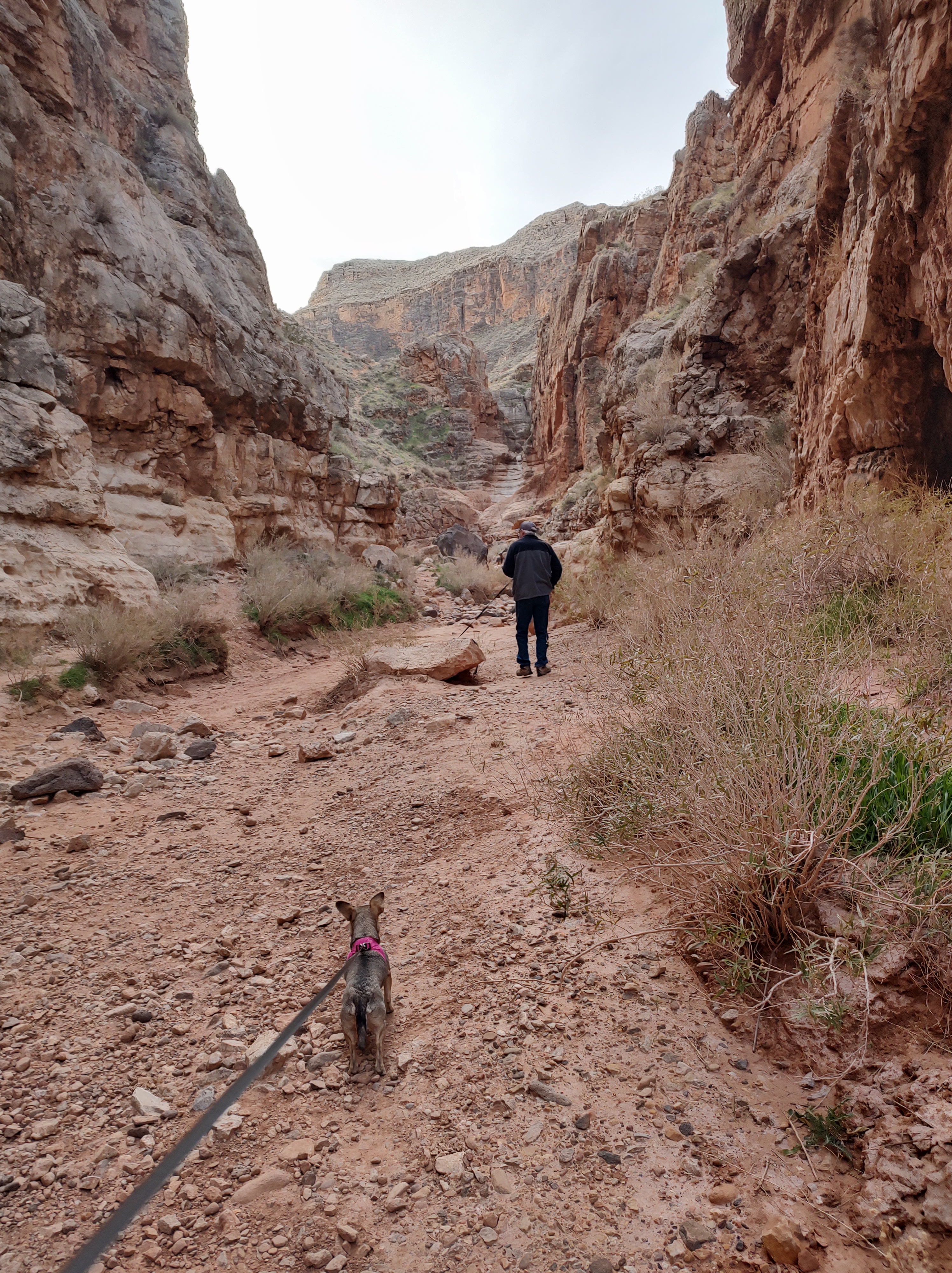
My friend author Carmen Peone took this photo for me.

Now for Hawke. Because Wallowa County was the summer and winter home of the Wallowa band of Nimiipuu, or Nez Perce, I wanted my character to be of that tribe and to protect the land and animals of his ancestors. I gave him a backstory of growing up on the Umatilla Reservation outside of Pendleton- 3 hours from Wallowa County. His mother is Cayuse and his father was from the Nimiipuu Lapwai Reservation in Idaho. He excelled in sports in high school and went on to join the Marines. He was there four years and came back to Oregon and entered the Oregon State Police Academy. His first job was patrolling I-84 between La Grande and Hermiston — that meant he could live on the reservation and work.

He met a woman, married her and then ended up arresting her brother for drugs. She left him and when there was an opening in the Wallowas, he applied and got it. He isn’t a young trooper. He’s actually been a trooper long enough he could retire. He’s in his late fifties, getting closer to sixty, but he loves his job.

This was all the information I knew when I started writing the first book, Murder of Ravens.

I started that book with him being a mature single man living in a studio apartment over an indoor horse arena. He has a horse, a mule, and a dog. Since he isn’t one to get caught up in names, his horse is Jack, the name he had when Hawke purchased him. The mule came without a name, and after Hawke dealt with its cantankerous disposition, he named the mule Horse, hoping it would act more like a horse than a stubborn mule. And Dog is his constant companion when he’s out in the mountains or at home. When the animal came to him when he said, “Come Dog,” Hawke decided the name was good enough.

The horse stable where Hawke lives is part of a farm run by Herb and Darlene Trembley. Over the years, the landlords have become friends and an excellent resource for Hawke when he’s looking into families with history in the county. They grew up here, and their families have been in the county for generations.

While patrolling in the Wallowa Mountains and Eagle Cap Wilderness, Hawke enjoys the freedom of wearing his civilian clothes so poachers won’t take pot shots at him. He takes Dog with him, rides Jack, and packs Horse. They are a smooth-working team when Horse is having a good day. Hawke loves being in the mountains and takes all the patrols that he can.

While in the mountains investigating a death at Charlie’s Hunting Lodge, he butts heads with the new owner, Charlie’s niece, Dani Singer. Initially, they don’t get along and don’t understand one another. Hawke is trying to reconnect with his heritage, and she has run from it her whole life, pretending she wasn’t Indigenous, to not be tossed aside when she applied for the Air Force Academy. She made it in and became a skilled pilot. Since retiring from the Air Force, she uses that skill to fly clients into the Hunting Lodge with her plane and helicopter. As the series progresses, so does their admiration for one another.

The other secondary characters who show up in most of the books are Kitree, the girl who outfoxes Hawke in Book 2, Mouse Trail Ends. She ends up an orphan when her parents are killed while camping in the mountains. She is adopted by Tuck and Sage Kimball, Dani’s wrangler and cook at the hunting lodge.

His mother, Mimi Shumack, still lives at the Umatilla Reservation. He visits her often. She is a big part of who he is as an adult. She remarried when Hawke’s father left and had a daughter who is ten years younger than Hawke. The stepfather was a mean drunk. This shaped who Hawke is today.

Then I had to discover how many city police, county officers, and state police are in the county. I gave them all names, and they come and go in each book depending on what is happening.

Hawke’s personality is quiet, reflective. He rarely loses his temper unless he sees an animal or person being mistreated. He believes in taking care of the land and animals to keep nature at peace. He upholds the laws but will bend the law if it will catch a killer. He has tracking skills he uses not only to follow tracks but also to follow the trail of clues he uncovers while investigating. His need to find the truth or evidence can sometimes get him into trouble, but he manages with the help of Dog and friends to get out of it.

If you haven’t had the chance to read one of Hawke’s books, you can find Murder of Ravens at my website in ebook, audiobook, and print.

Murder of Ravens

The ancient art of tracking is his greatest strength…

And his biggest weakness.

Fish and Wildlife State Trooper Gabriel Hawke believes he’s chasing poachers.

However, he encounters a wildlife biologist standing over a body wearing a wolf tracking collar.

He uses master tracker skills taught to him by his Nez Perce grandfather to follow clues on the mountain. Paper trails and the whisper of rumors in the rural community where he works, draws Hawke to a conclusion that he finds bitter.

Arresting his brother-in-law ended his marriage, could solving this murder ruin a friendship?

Universal book link: https://www.books2read.com/u/bxZwMP

There’s a bundle of holiday gifts coming your way! 

I’m joining eleven other fabulous, award-winning, and best-selling mystery authors for a 12 DAYS OF CHRISTMAS STORY GIVEAWAY.

Here’s how it will work: 

For eleven days starting December 1st, you’ll receive a link for a completely free holiday story–no newsletter signups necessary. Then, on the 12th day, you’ll get a bundle of extra goodies to celebrate the season

Sound like fun?

If you want to make sure not to miss any of the stories and bonuses, you can sign up for my newsletter using this link: https://successful-speaker-2057.kit.com/dddfb95104

Guest Blogger ~ Max Burger

I was intimately affected by the bombing in Dublin in 1974. As depicted in the excerpt from the book (see my website: http://maxburgerauthor.ag-sites.net/ I was a student assisting in the surgery of a victim. The description of the procedure was real. Our uncertainty of both the outcome and the identity of the victim was real as well. Never having experienced the chaos of a trauma case when minutes could mean life or death, and the unpredictability of the outcome, made me acutely aware of the tension in the room. As primarily an observer, my mind raced over the possibility of what might happen and the sad anonymity of a John Doe. The nature of the injury and the markings on the body only added to my questions. This man may have gotten his wounds in any number of ways; the speed that was needed to repair them did not allow for careful review and analysis with a plan for the outcome as it might in an elective surgery. The black rose tattoo added to the questions — a symbol of the Irish resistance to British rule. Whether this person was a member of the IRA or just a proud Republican, I never found out, but the question prompted a momentary pause in the surgery and, for me, the idea of a story of identity. The idea of a pathologist who puts together the pieces came naturally since a dead person could tell a story even if it had to be translated by the skillful eyes and hands of a pathologist. I had seen enough autopsies as a student to know the process and practiced medicine long enough to know the diseases that inhabited the bodies of the dead.

The politics of the time overlaid all the facets of Irish life but were brought into sharp focus with the bombing. I, as most students, was more involved in my social life and studying than following the news which was most violent in Northern Ireland and along the border, as distant as the war in Vietnam was a series of terrible stories that I left at home. We were relatively safe in Dublin until the reality of the violence hit the peaceful city. We all were changed with the bombings, as was my protagonist, Harold Stokes, and his assistant, Samantha Monaghan. Actions needed to be taken.

This is now a work of history and memory, but the circumstances felt very real. I wrote the novel to work through the feelings I couldn’t forget.

EVEN IN DEATH

After the Dublin car bombings in 1974, Harold Stokes, ME, and his new assistant, Samantha Monaghan, begin the last autopsy of the casualties. This unidentified victim is not an Irishman, but an Israeli, killed by a bullet, not a bomb. Before they can finish their task, the body is stolen. Stokes and Monaghan hunt for the victim, but Stokes is also looking for the killers who caused his wife and daughter’s bombing deaths two years before. In their hunt, he and his impetuous young assistant are enmeshed in a web of IRA and Palestinian arms trades with a terrorist known as the Jackal, the Mossad, more factional killings, and the manipulations of an Irish ex-minister using his power to take advantage of the turmoil.

Available On Amazon Google Play Barnes & Noble  Kobo Apple Books

Max Burger is a retired Family Physician, His novel Even In Death, a mystery/thriller of a 1970s Dublin pathologist searching for a stolen body, was published by Rogue Phoenix Press in December 2023. He has completed another novel, My Father’s Father, a Holocaust Family Saga. The first chapter was published in October 2023 in Embark, a literary magazine, and another excerpt, “Lost and Found,” was published in jewishfiction.com in September 2024. He has published personal interest stories in Medical Economics, JAMA, and AMA News.

http://maxburgerauthor.ag-sites.net/

Guest Blogger ~ Nancy Nau Sullivan

Blanche, Nan, and Traveling Mayhem: The Blanche Murninghan Mystery Series

By Nancy Nau Sullivan

Blanche “Bang” Murninghan is a Florida island girl with a wandering heart. One challenge after another invades her idyllic way of life on the beach, and she’s off to far lands. 

In the second misadventure of the mystery series, Trouble Down Mexico Way, Blanche heads to Mexico City and gets caught up in a murder-for-art scheme. It starts with a visit to the Palacio Nacional and discovery of a “fake” mummy in the exhibit. Though she’s no expert in mummies, the skin looks fried. And it’s wearing a pink plastic barrette in its hair. The burning question, right off the bat, is: Why would a mummy be wearing such a piece of hair-ware? 

Blanche is supposed to be writing travel articles for her hometown newspaper, but the mission is immediately derailed. Her curiosity is like a door that begs to be opened. Once she begins this search for the origin of the “fake” mummy, Mexico City suddenly becomes a maze of twists and turns. The police have questions for her. The mummy has spoken with clues that lead Blanche and the authorities on a chase to unravel an obvious murder and the motive behind it.  

I thought up this mystery during the year I lived in Mexico—totally out of the fabric of imagination. Shortly after I arrived, I visited the Palacio Nacional in Mexico City where were displayed hundreds of ancient Mayan artifacts newly discovered in Mexico and Central America. The animated clay figures played ball (with skulls), the women squatted and cooked, the men hunted, the children leaped around with their smiling dog. A thousand-year-old dog. The exhibit also featured violent, colorful, and respectful rituals of death.

The celebration of Day of the Dead soon followed. Nothing is more colorful than the celebration of death in Mexico. From October 31 to November 6, depending on where you happen to be, the town plazas, homes, and shops are swept up in swaths of color, impromptu dancing and music in native dress, whole families out until midnight celebrating their deceased relatives. Their photos are posted on altars (ofrendas) carpeted with bright yellow and orange marigolds and celosias, and piled next are bread and wine and beer and, of course, tequila and mescal, all arranged on embroidered linen, ropes of flowers and handmade baskets, favorites that marked the family tradition together. Family members sit at the altars in the plazas and talk about their ancestors. It is solemn and raucous and lovely all at once, enough to make a newcomer fall completely in love with the culture.

Trouble Down Mexico Way spins off wildly from the adventure of my first days in Mexico City. But, as in all my mysteries, I celebrate the places I’ve lived, enjoyed, worked as a teacher. I like to add a folk tale in each book, history,  and the details of food and smells and color. I’ve always kept journals to refer to in the writing, but I don’t trust my spotty, unreadable notes—once written while sitting on a horse. I research the settings for months before writing to round out the historical context in each story. It can’t all be about murder. And in Blanche’s case in Mexico, it’s also about love when she meets Emilio Del Sierra, a handsome young doctor with a lot of patience and a talent for the guitar.

Before Mexico, the first book in the series was inspired by Anna Maria Island, Florida, the place I spent years with family. Saving Tuna Street—a finalist at Foreword Reviews for best INDIE mystery—meets environmental disaster and chicanery head on. After Trouble Down Mexico Way, Blanche goes to Vietnam, Ireland, and Argentina in a succession of books where she survives hair-raising capers. She always returns to her cabin on the beach where she manages to keep her feet on the ground. Well, sand. When curiosity comes knocking, she’s ready—with a little help from her friends—for more mayhem and misadventure.

Trouble Down Mexico Way

Trouble Down Mexico Way is the second stand-alone mystery in the Blanche Murninghan Mysteries.

Blanche “Bang” Murninghan is a part-time journalist with a penchant for walking the beach — and walking into trouble. In Saving Tuna Street, first in the cozy mystery series, she fends off developers and drug dealers in an attempt to save her beloved Santa Maria Island. But Blanche has feet of sand and a love of travel. The adventure continues in Trouble Down Mexico Way with a “fake” mummy and murder; in Vietnam Mission Improbable: Vietnam, Blanche helps a friend find her mother in that beautiful country. For the fourth misadventure, A Deathly Irish Secret, Blanche inherits a castle and more than she bargained for—a murder charge. She pulls out of that fracas, too. Lastly, she travels to Argentina with handsome hunk Emilio Del Sierra to save his relatives from Nazis on the pampa. Wherever she goes, she always returns to her cabin, the white sand and sunsets, and to her wonderful quirky family on the little Florida Gulf island. 

Link to book on amazon

https://www.amazon.com/Trouble-Mexico-Blanche-Murninghan-Mystery/dp/1611533759

Link to book on Barnes & Noble

https://www.barnesandnoble.com/w/trouble-down-mexico-way-nancy-nau-sullivan-ms/1137370750

Link to Kobo

https://www.kobo.com/us/en/ebook/trouble-down-mexico-way

Kirkus Reviews says: “Blanche alone puts the bang in the book, and her debut should make readers sit up and notice. A welcome newcomer to the South Florida genre.”

A former newspaper journalist—and, presently, traveler–Nancy Nau Sullivan grew up in the Midwest but often stayed on Anna Maria Island, Florida. The setting inspired Saving Tuna Street, first in the Blanche Murninghan mystery series; the fifth installment, Hot Tango in Argentina, launched in April. Nancy’s memoir, The Last Cadillac, received two Eric Hoffer awards, and her novel, The Boys of Alpha Block, is based on her teaching at a boys’ prison. She’s taught in Argentina and Mexico and now writes and teaches part-time near the beautiful beaches of the Gulf of Mexico. Find Nancy at www.nancynausullivan.com.

Social media:

https://www.facebook.com/nancy.sullivan.9638/

https://www.bookbub.com/profile/nancy-nau-sullivan

https://www.instagram.com/nancynausullivan/

https://www.linkedin.com/in/nancy-nau-sullivan-712b2015a/

Day of the Dead photo from: www.freepik.com