
Finding Ideas in Odd Places

It always amazes me when I’m listening to something or see something, and it triggers a book idea.

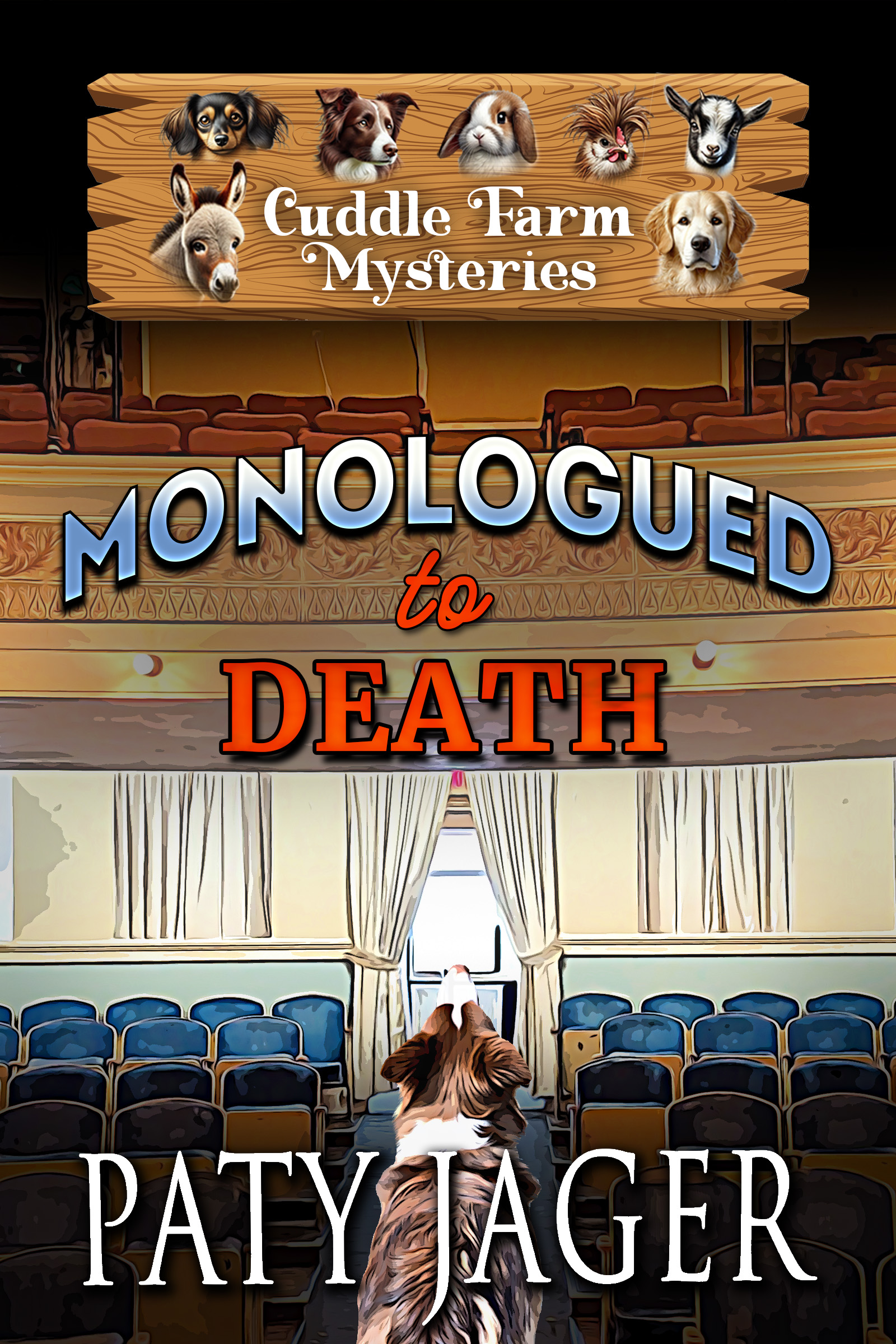
I just finished book 2 in the Cuddle Farm Mysteries, Monologued to Death. It’s with my beta readers, and I’m gathering the information and doing the research for the next Spotted Pony Casino Mystery book. I’m on the fence with the title. I decided to make it a holiday-time-frame book because it will release in November. If it wasn’t a holiday book, then I’d need to wait until January to release it, or it would get lost in the holiday reads.

So, I’ve been tossing around titles with gambling terms and holiday words. Because the Spotted Pony Casino books all have gambling terms in the titles. Right now, the frontrunner is Santa’s Beard– beard being a term for someone placing a bet for someone else. The premise is I have a person who is high up in the tribe and is known as a “Santa” type of person having someone else buying up allotments on the reservation for him.

Another author I was talking to thought the title sounded like something readers couldn’t figure out. But I’m betting, pun intended, that most readers will get it by the end of the book, and I will make sure the victim is referred to by the title at the end of the book when it is all solved.

The premise for the story came about from an online class I’m taking from a Nez Perce Professor who is teaching us the history of the Nez Perce. It’s a non-credit class I sit in on every Thursday night. It started 6 weeks ago, and we have about 2 more weeks to go.

I’ve learned things I didn’t know, and I’ve had things I’ve read reinforced. I found the information about the allotments given to tribal members on the Lapwai reservation informative. Learning how only 18% of the reservation is actually owned by tribal members because when the Whites wanted more land in the reservation, they bought allotments from tribal members for far less than they were worth. Or the Indian Agents sold to the White people they liked. When the Nez Perce couldn’t get the hang of farming, they leased the land to their White neighbors who eventually purchased it. And through the generations, it isn’t always handed down to the tribal members in the family.

Learning all of this, I started researching the Confederated Tribes of the Umatilla Reservation, where my Spotted Pony Casino books are set. They also had allotments assigned to families through the Slater Act of 1885. They have some similar situations that have made the tribe and tribal members land holdings at 52% of the reservation land. They are better off than the Nez Perce, but there is always ongoing animosity and people who are non-tribal who want the land.

There have been a couple of other points and reactions of the person teaching the class that will end up in either more of the Spotted Pony Casino books or the Gabriel Hawke novels. Because while I enjoy writing murder mysteries, it is the characters and how they live and what they think that I am the most interested in enlightening the reader about. As the professor said at the last class, “I am 60 years old, have multiple BAs and my PHD, I still respond fearfully to law enforcement, even though I have never been in trouble with the law, but they will pull me over because they see I’m Indigenous.”

This class has been helping me learn more about how my Native American characters should feel. It is also giving me more inspiration for stories that I can use to enlighten readers about the culture.

That is why I write indigenous characters and try to shed light on the MMIW (Missing and Murdered Indigenous Women). For me it is a passion to show the culture and the people who were here before anyone else and treated so poorly.
Guest Blogger ~ M.E. Proctor

The Call of the Road

By M.E. Proctor

The Way You Say My Name, Book 3 of the Declan Shaw mystery series, will be released in September (publisher: Shotgun Honey).

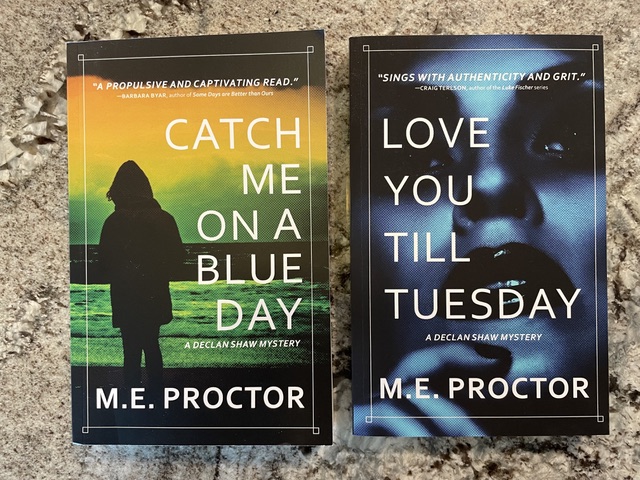
In theme and mood, this book feels different to me. Love You Till Tuesday was a classical murder mystery: a singer is found dead in her apartment; there is no apparent motive; corporate and police corruption play a major role in the story. Book 2, Catch Me on a Blue Day, started with an apparent suicide and resurrected 30-year-old ghosts. The case Declan Shaw investigates has its roots in the past and the arc of the plot is a long one.

At first sight, the canvas of Book 3 seems smaller. For one, there is no murder (not in the beginning, there isn’t). Can it still be called a mystery? The situation puzzles the cop who brings Declan on board. “I almost wish somebody died,” he says. Because a body makes things clear, we know where we are, and what is expected of the wily investigator.

So what is expected of Declan in The Way You Say My Name? He’s hired to find a woman, Amanda, who doesn’t want to be found. She’s not missing, not exactly. She phoned home to tell her parents she was fine. But didn’t say where she was or how long she would be gone. Which doesn’t reassure anybody.

And so, Declan’s quest begins. It will take him from Texas to the Atlantic seaboard, and back. It won’t be a pleasure trip. He will be broken in body and spirit, unsure of what he achieved, how much he resolved, and wondering what his intervention may have made a lot worse.

Hitting the road is a recurrent film noir theme: criminal on the run, drifter showing up in a small town creating chaos, men and women fleeing from their past and hoping for a better life in a place where nobody knows them. There’s some of that in The Way You Say My Name, with a twist when the pursuer finds out that he has, in turn, become a prey.

Declan muses: “What is people’s fascination with end of the world locations? Maybe they think nobody will come that far to find them. Amanda is exactly the kind of person who would run to the end of the landmass and stop because she can go no further.”

Declan does stop when he reaches the ocean, and believes his job is done—Amanda has been found. Only to realize he would have been much better off if he’d kept running.

In many ways, this story is a road movie. Declan’s old pickup truck eats miles of freeway and back roads. There are stops in fast food joints and gas stations, nights of uneasy sleep in a cramped cabin, stiffness in the early morning, tar-laced coffee in paper cups. Encounters too, some helpful and some not so much. It’s the end of January, nobody travels for pleasure. And when Declan reaches North Carolina, the beaches are deserted and the bitter wind bites.

Years ago, I have driven the road Declan takes. I know the stops (except the one in the Jackson, Mississippi, FBI Field Office) and the final destination. It’s funny how experiences like that don’t seep into the writing right away. It takes time for the sediments to settle.

Another road trip to West Texas has given rise to two short stories already and is now the core of the work-in-progress that might become Declan Shaw Book 4 (cross fingers). I don’t know if my more recent trips—Texas to Maine, Texas to Michigan, Texas to Montana—will eventually find a way into a narrative. I hope they do; I’m keeping a journey journal, just in case.

It feels oddly appropriate to release The Way You Say My Name this year, that marks the 100th anniversary of Route 66. A hundred years since Americans realized that there was an entire country open to explore. Hop in the car and go. Hit a few National Parks on the way. I still find it seductive to open my eyes to new horizons every morning. I was born in Europe and we don’t have the same appetite for roaming over there. Yes, people get on the road at vacation time (clogged freeways prove it) but the trip is more utilitarian: the beach awaits! There’s an element of discovery in the American approach to car travel … a vague remnant of the explorer’s spirit.

I wish I could share the cover of the new book with you … Patience, it’s coming!

—-

The Way You Say My Name

A Declan Shaw Mystery

“A spiraling game of cat versus mouse.”
—Craig Terlson, author of the Luke Fischer series

On New Year’s day, P.I. Declan Shaw is hired to investigate a disappearance. Amanda Spencer, a young mother of two, slipped away from a Christmas concert without leaving a clue. What made her run and who is she running from?

While digging up shreds of info from Amanda’s parents and friends, Declan meets Sam Chandler. She’s the kind of woman who stops him in his tracks. Sexy, smart, and complicated. And skilled at keeping secrets. So skilled Declan questions his abilities as a detective. What began as an intriguing missing person case soon shifts into a cross-country pursuit with Sam’s life in the balance.

For once, Declan isn’t the searcher, he’s the one who cannot afford to be found.

In The Way You Say My Name, narratives intertwine as a double spiral winds tighter and tighter. Amanda’s story is one of them. Protecting Sam is the other.

And the closer Declan comes to finding Amanda, the more he risks losing Sam.

Buy Links:

The Way You say My Name will be available on September 22, in eBook and paperback.

You can find Books 1 and 2 in the series on the Shotgun Honey site, here.

M.E. Proctor was born in Brussels and lives in Texas. She’s the author of the Declan Shaw detective mysteries: Love You Till Tuesday, Catch Me on a Blue Day, and the upcoming The Way You Say My Name. She’s the author of two short story collections, Family and Other Ailments and A Book to Live By, and the co-author of the retro-noirs, Bop City Swing and Kansas City Breakdown. Her fiction has appeared in various magazines and anthologies. She’s a Shamus and Derringer awards short story nominee. Catch Me on a Blue Day was recently nominated for a Shamus Award in the Best Original Paperback category.

Social Links

Author Website: www.shawmystery.com

On Substack: https://meproctor.substack.com

Facebook: https://www.facebook.com/martine.proctor

Twitter: https://twitter.com/MEProctor3

BlueSky: https://bsky.app/profile/meproctor.bsky.social

Instagram: https://www.instagram.com/proctormartine/

I HATE to miss deadlines.

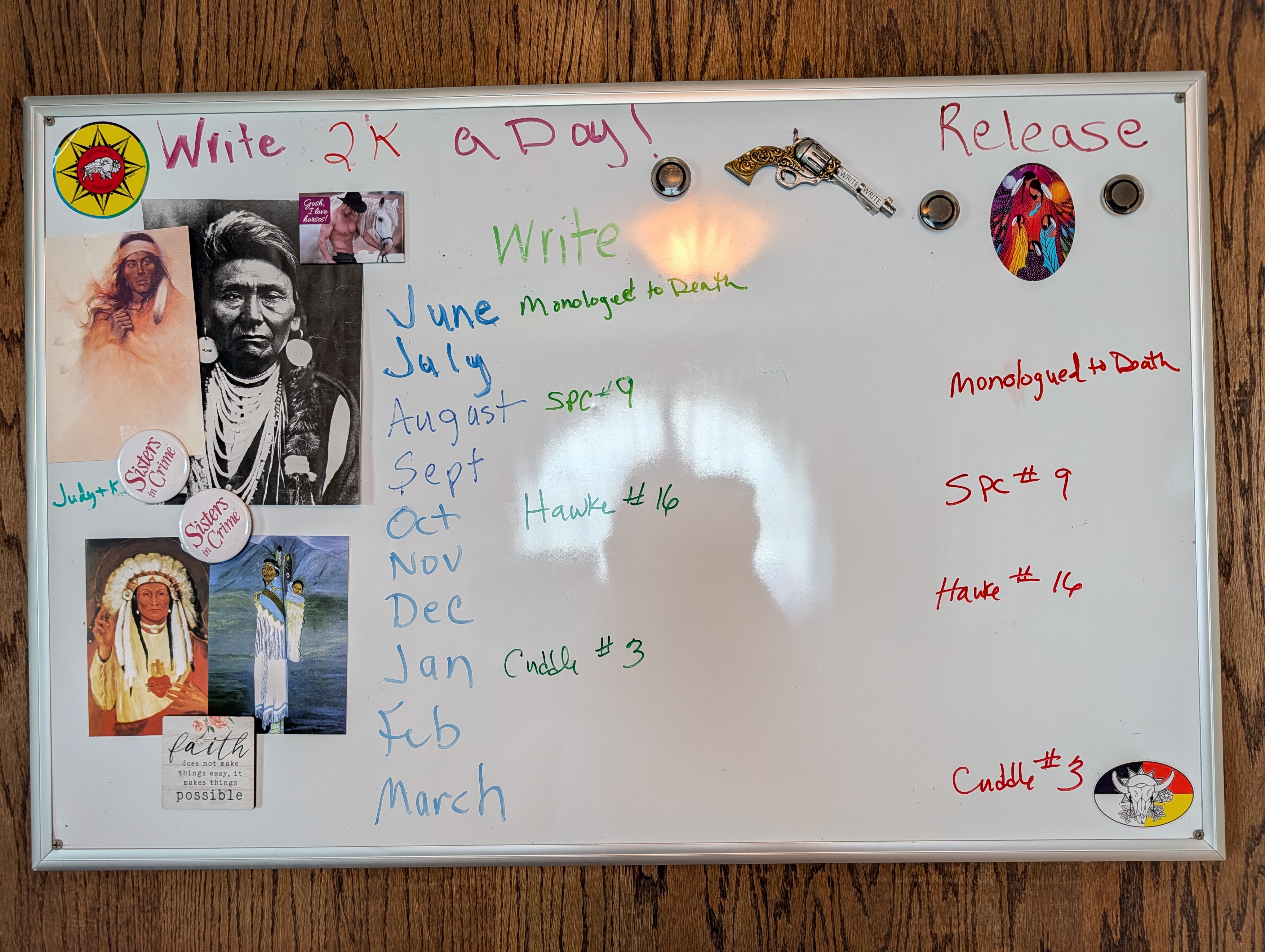
I’m an Indie author. That means I make all the decisions from characters to plot to the endings of my books and when they will be published. I have a whiteboard that I use to keep track of a year’s work/publishing schedule. When I get behind or have to erase and change the dates, it makes me edgy and angry. I like to stay on schedule.

I knew the move I made in March would mess up my schedule. I made concessions for it on my whiteboard. Fast forward to June when I had expected to have a good chunk of the next Cuddle Farm book written and I was slogging in indecision.

Sorry about the reflections in the middle of the photo.

From the moment I finished book 1, Merry Merry Merry Murder, I knew what book 2 would be about. I’d run some scenes in my head and had already researched what I needed to know. I started the book, but it wasn’t flowing. Things didn’t feel right.

I took a break and went to a play with my daughter in an opera house built in 1912. I fell in love with the building and the ambiance, and then my height-conscious daughter walked along the balcony railing and was scared. The railing didn’t come to her knees, and the balcony felt as if it were pitching you forward onto the stage.

After that visit, I couldn’t stop thinking about that opera house. A story was forming in my mind and I had to go back. I bought tickets to the next play and dragged my daughter along again. The play was good, I paid more attention to the stage, the exits, and the short railing. When the play finished, we waited for everyone to leave the balcony and I did some experimenting and then we went down and I took pictures of the balcony from the stage. I wanted one for the cover the next Cuddle Farm book.

Yes, I set the book I’d been working on aside, realizing I needed more time (another book) in between book 1 and the book I’d been writing. It has to do with the discord between the main character and her sister. I wanted to show a bit of a change there before, what is now book 3, is written since it deals with the reason for the discord.

Back to my switching books. Because what had started out as book 2 was now book 3, and I had been brewing that story in my head for almost a year, I was switching to a book I hadn’t even thought of until 4 months ago. As I’d glance up at my whiteboard and see the looming date for the release of book 2 in the Cuddle Farm mysteries and I was still trying to pull all the suspects, the motive, and everything else into place so I could start writing it, my tension grew that I was going to miss the publish date and it would throw off all of the release dates through the rest of this year.

When I was complaining to a friend, she asked me, “But will it be a better book for the series if you write it now?”

My answer was yes.

“Then that’s the book you need to write and move the other publish dates out. They aren’t made in stone.”

Oh, but they are chiseled in my head. My greatest flaw is my greatest strength. I don’t like to be late for ANYTHING. It makes me nervous when I think I’m going to be late. I purposely give myself extra time for everything. And I had for book 2 in the Cuddle Farm Mysteries. But I had to wipe off my whiteboard and redesignate publish dates for this book, the next Spotted Pony Casino book, and the next Gabriel Hawke book. I wasn’t happy, and it made my stomach twist as I erased the dates and reset them.

However, this is going to be a good book and will hopefully pull more readers into this series. It also gives me more time to decide the direction I’m going with the next Spotted Pony Casino book. I’ve been back and forth on how to approach it, and hopefully by the time I am ready to start, I’ll have that story ready to rock and roll.

Guest Blogger~Kathleen Kaska

Murder, Hotels, and Roadside Attractions

by Kathleen Kaska

One of the great joys of writing my Sydney Lockhart Hotel Mysteries is stepping back into the early 1950s—a world balanced between postwar recovery and renewed optimism. The American dream felt tangible then, within reach. For Sydney, that dream meant breaking free from the prescribed role of wife and mother and forging her own path in a man’s world—first as a newspaper reporter, then as a private detective. The only complication was the man she met along the way. But that’s another story.

Back to the hotels.

While the murder plots are born entirely from my imagination, the settings are not. Each mystery unfolds within an actual historic hotel. For me, these grand dames are more than elegant backdrops—they have stories of their own. Their architecture, guest registers, and whispered legends carry me into a true-to-life past, lending each novel an authentic texture.

Beyond the hotels, I explore the surrounding businesses that thrived in their heyday—speakeasies, illegal casinos, and especially roadside attractions. These quirky landmarks still dot America’s highways and byways. Many sprang up between the 1940s and 1960s, when newly built interstates rerouted traffic away from small towns, threatening local economies. The solution? Create something so unforgettable that travelers would have to pull off the road. Curiosity would do the rest.

During my husband’s and my retirement adventure—our two-year, 47,000-mile journey we call “The Big Trip”—we encountered more than a few of these curiosities. In West Texas, the half-buried, graffiti-splashed cars of Cadillac Ranch rose from the prairie like a modern Stonehenge. In South Texas, we searched for the mysterious glow of the Marfa Lights. In Houston, we wandered through the aluminum-clad marvel of the Beer Can House.

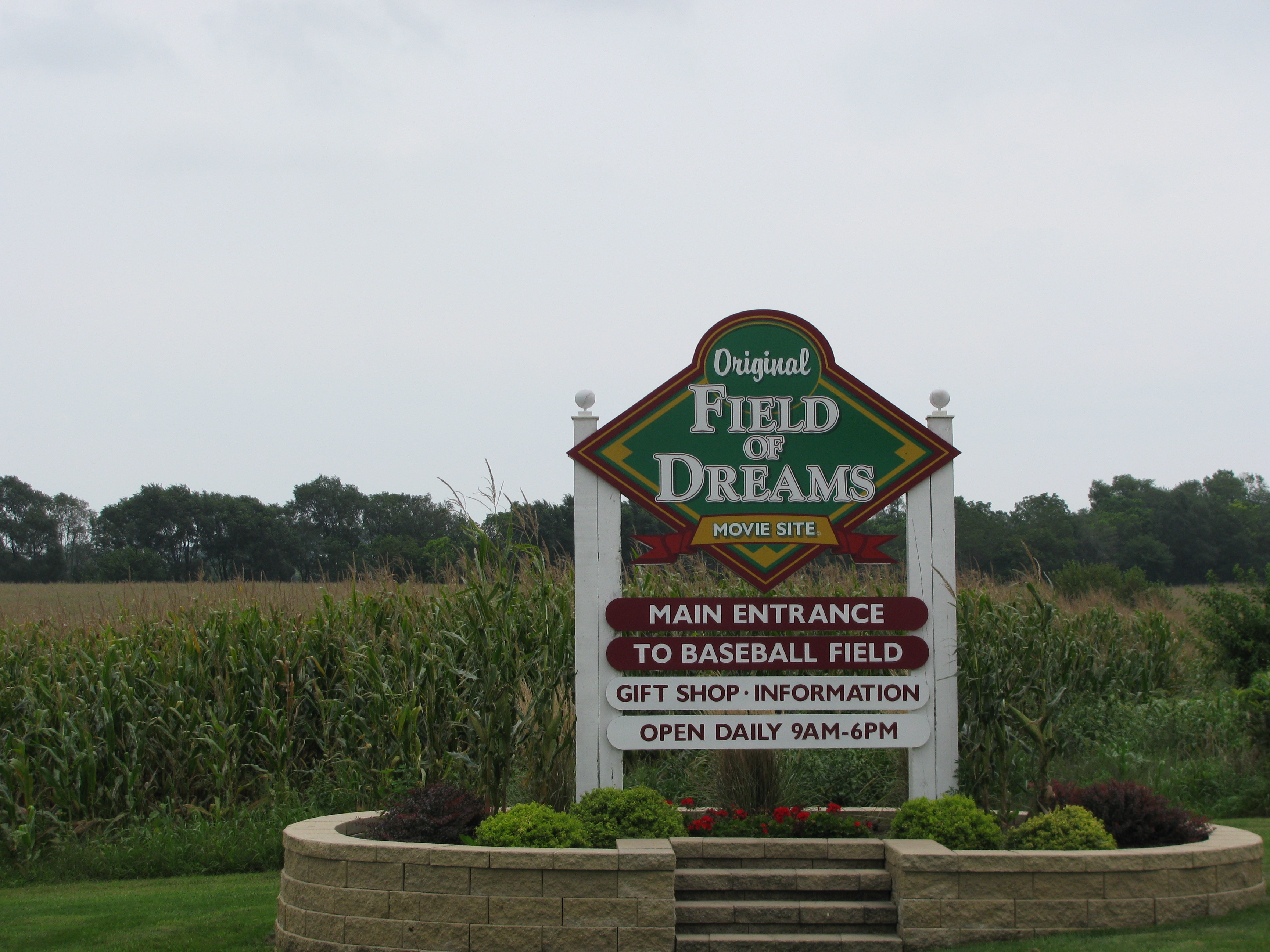
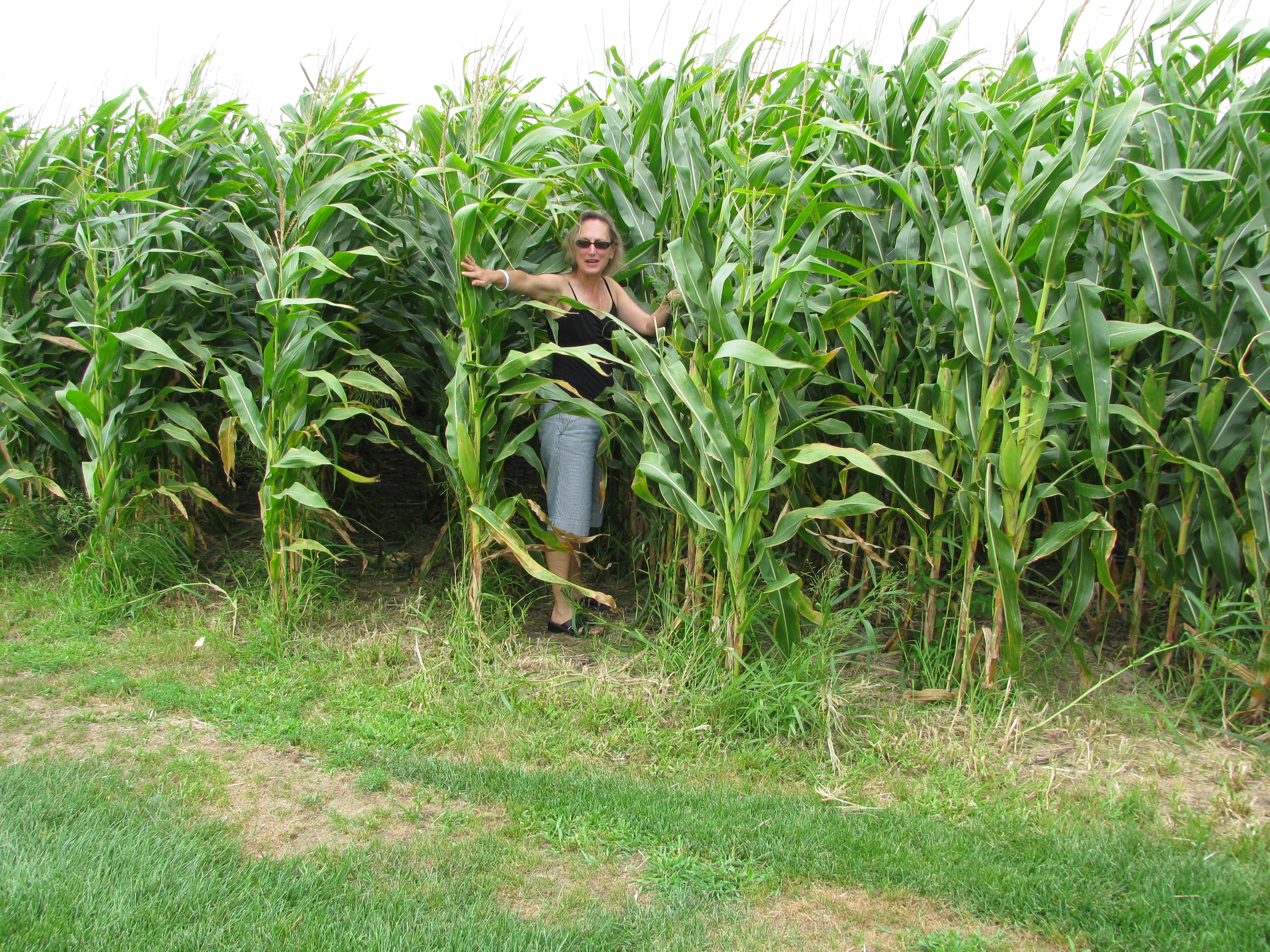
Then there were the corn-themed delights: South Dakota’s Corn Palace; Iowa’s Field of Dreams baseball field carved from a cornfield (I entered—and thankfully found my way out); and the humble memorial marking Buddy Holly’s crash site outside Clear Lake, Iowa, hidden among rustling stalks. It was too much fun not to weave these Americana treasures into my stories.

corn Field of Dreams

In Murder at the Arlington, set at the historic Arlington Hotel and Spa, Bathhouse Row plays a key role. I also mention the Arkansas Alligator Farm & Petting Zoo and Tiny Town, both of which still delight visitors today.

In Murder at the Galvez, Sydney finds herself stranded on Galveston Island Historic Pleasure Pierwhen a blinding fog rolls in—and a bullet slices through the mist.

For Murder at the Menger, research took me deep into Louisiana’s swamps with Cajun Encounters Tour Company at Honey Island Swamp, home to the legendary Whiskey Tree and the ghostly moonshiner said to guard it still.

But my favorite roadside attraction lies just outside New Braunfels, Texas: Aquarena Springs. My parents took my sisters and me there when I was young. The crystal-clear lake featured glass-bottom boats and the world’s only submarine theater, where aquamaids—women dressed as mermaids—performed underwater ballet. There was even an underwater wedding, with lead weights sewn into the bride’s gown to keep it from drifting upward.

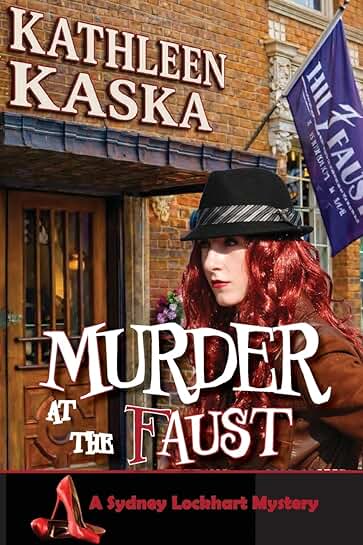
In Murder at the Faust, Sydney tracks suspects to Aquarena Springs, where an aquamaid makes a startling discovery that helps her solve the case.

Aquarena Springs closed in 1996 and is now the Meadows Center for Water and the Environment—but in the 1950s, it was pure magic. And as any mystery writer knows, magic often hides something darker beneath the surface.

Welcome to Sydney’s world. Check in. Settle in. And watch closely as Sydney brings every secret to light.

Giveaway

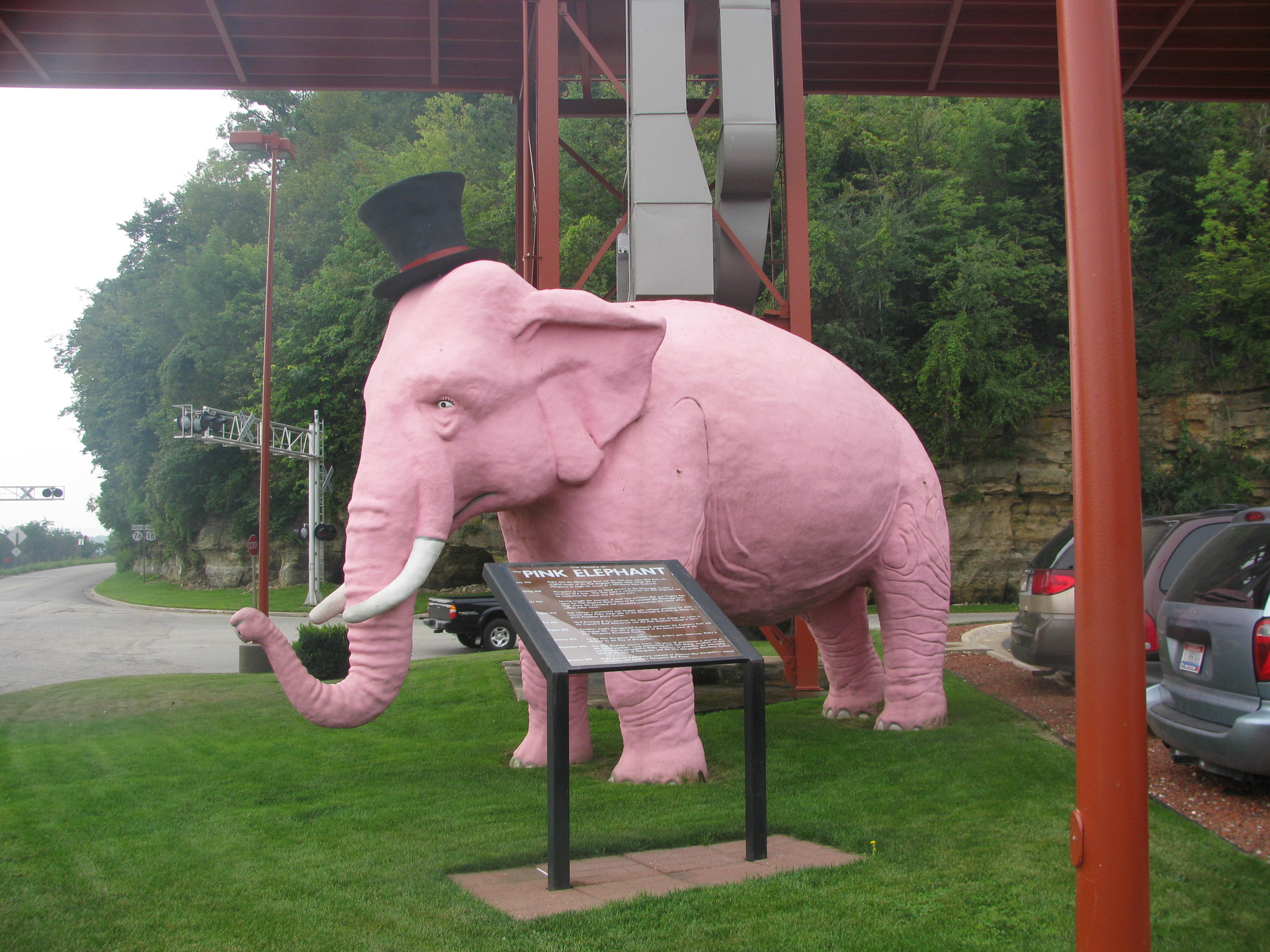
Kathleen is giving away an autographed copy of Murder at the Faust to the person who can tell her where this photo was taken.

Murder at the Faust

Welcome to the historic Faust Hotel, where the year is 1953, the carpet is plush, and the crime scenes are unfortunately plentiful. A bloody hotel room, a dead body on the bank of the Guadalupe River, and a suspiciously well-informed police chief land Sydney in the interrogation hot seat.

With Dixon still recovering from a gunshot wound, help arrives—whether Sydney wants it or not—in the form of plucky Lydia LaBeau and the irrepressible Cousin Ruth Echland. Lydia promptly delves into birdwatching escapades with a mysterious new friend, while Ruth, disguised as a Miss Texas contestant, seems more focused on evening gowns than evidence.

Then another dead body turns up in Sydney’s apartment. Lydia disappears. And the case takes a turn for the bizarre with the arrival of a mermaid and a Bible-thumping zealot—just the sort of chaos Sydney has come to expect.

In a whirlwind of duplicity, deception, and pageant drama, one question looms:
Will the real Sydney Lockhart please stand up?

Look for Murder at the Faust in bookstores and on Amazon on September 8, 2026.

Buy Links:

Pre-order today: https://anamcara-press.com/product/murder-at-the-faust/

http://www.kathleenkaska.com

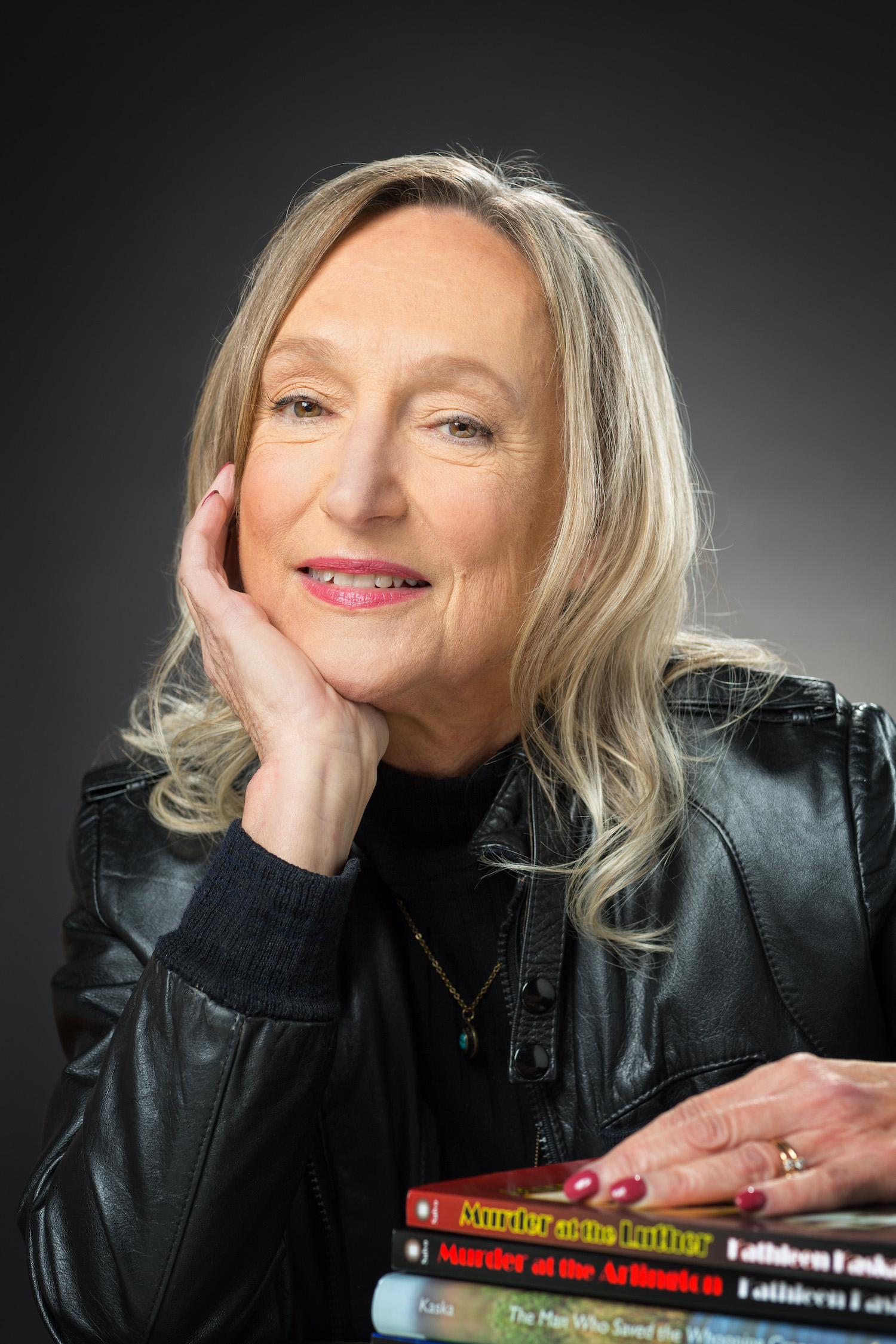
Kathleen Kaska writes the award-winning Sydney Lockhart Mystery Series, the Kate Caraway Animal-Rights Mystery Series, and the Mystery Trivia series, which includes The Sherlock Holmes Quiz Book, published by Lyons Press. Her Holmes short story, “The Adventure at Old Basingstoke,” appears in Sherlock Holmes of BAKING Street, a Belanger Books anthology. She founded The Dogs in the Nighttime Sherlock Holmes Society, a scion of The Baker Street Irregulars. Her latest Sydney Lockhart mystery, Murder at the Pontchartrain, winner of the PenCraft Award for best mystery series, is set in New Orleans at the Pontchartrain Hotel. Kathleen is the winner of the Amity Literary Award for her novel, Death Without Dignity, scheduled for release in January 2027. A Texan at heart, she remains a Texan, even though she now lives in a small coastal town in the Pacific Northwest, where it’s cooler, and there is no traffic. 

Social Media Links

http://www.facebook.com/kathleenkaska

https://www.instagram.com/kathleenkaska/

https://www.amazon.com/author/www.kathleenkaska.com

Guest Blogger ~ Julie E. Eble

When Words Don’t Come by Julie Eble

I sit at my desk, thinking, researching and tapping out intriguing stories when my brain freezes, and not from eating ice cream too fast. I’m mired, stymied, frustrated. I’m trapped in a lonely, silent space crowded with self-doubt and growing angst. Not even my thesaurus shakes me from this synaptic tundra. My brain repeats the same words, like Jack Torrance in Stephen King’s “The Shining”. Okay, that’s over the top, but you get the idea.

The dreaded block strikes most often when I’m stuck in a sentence that cries out for more imagery. A character whose fingers were cold. Just cold? No, no. This character is worthy of more. Somewhere in my loony cranium, I hear “SIMILE”, like, uh… “cold as ice”. Way too obvious. “Cold as a cucumber.” Used too much. “Cold as…,” “Cold as…” I stare at my screen. “Cold as a fish?” Again, too hackneyed. Ack! The block has me in its clutches!

A group of treasured friends from my grade school years once asked how I come up with funny, unexpected phrases. My confession surprised them. For me, they seldom just pop onto the page. I work at it. And when I’m truly stuck for a scintilla of an idea, I stop staring at the screen. I tap my pencil, swivel in my chair, study the scenery outside my window. Whatever it takes. Deadlines be damned.

One day as I stared at a recalcitrant phrase and my thoughts drifted into an epic, redundant stupor, I pushed back my comfy, wheeled, stuffed chair from my paper-strewn desk. I decided to walk around the house. If my brain cells were stuck, at least my body could get in some steps. I paced around the dining room table, circled the kitchen island, hiked up the steps, down the hallway and back, thinking: “Cold as a walrus’ tusk.” “Cold as a penguin’s flippers.” Did I tell you I booked a cruise to the Antarctic? “Cold as a granite coffin.” Oooh, that’s dark. “Cold as the frozen crab legs in my freezer.” Now that’s just silly. “Cold as a viper’s stare.” Oh, that fit.

I now use the walking-around technique whenever I’m truly struck. And that might be the end of this story, except for a little adventure I had with my 10-year-old granddaughter.

On a recent babysitting gig, my husband and I took her to the American Dream Mall. “Sprawling” doesn’t capture the mammoth structure. We wandered about and bumped into the New Jersey Hall of Fame. What a treat. We could select various questions for which each honoree had recorded answers. A video of each famous New Jerseyite popped, and we heard their answers. So cool. Bon Jovi, Connie Chung, Mark Kelly, and Jason Alexander, to name a few. But my “ah-ha” came from… are you ready… Judy Blume.

Yes, Judy Blume hails from New Jersey, and what she said fascinated me.

When she was a young girl, she spent hours bouncing a ball against a wall. So much so that her mother worried about her mental health. You know how moms can be. Judy said she was working through issues, ideas, plots, whatever. And she told us, science has confirmed a link between movement and creativity.

In 1997, the British Journal of Sports Medicine reported that physical exercise can improve creativity. In 2021, Austria’s University of Graz found a relationship between physical exercise and imagination. I expect further research is being done by human scientists that artificial intelligence will tell us all about it.  

I continue to wear out my carpets to capture just the right bit to slip into a sleek, cheeky, glum or silly sentence. And it’s not bad for my waistline either.

Her ex-husband. His billionaire fiancée. One final negotiation. What could go wrong?

With spunk in her step and humor as her shield, Emma faces her ex at the fabled Vanzetti estate to cut the final cords of their ill-fated marriage. When the demanding heiress threatens her, she erupts.

Hours later, the bride-to-be gasps her last breath.

The police zero in on Emma at her cozy nest at the corner of Apple Road and Apricot Lane. A hunky but stoic detective and his team unearth evidence that incriminates her. Evidence that can’t exist. Can it?

Emma, still mourning her father’s death and armed only with her innocence, fights back. When she flounders, her cynical roommate, the elusive private investigator Stevie Rivers, teaches naïve Emma key lessons of detecting. Together, the stalwart and the cynic dive into Brandywine Valley’s world of wealth and equestrian eventing.

Their wry banter deepens their friendship, but the cloud around Emma continues to thicken. They must unearth the real killer before cold steel doors close behind Emma.

But as the horses clear the cross-country hurdles, the murderer strikes again. Emma and Stevie must risk their lives in a deadly race to stop the killer before they become the next victims.

“With punchy humor on every page, Dad Didn’t Prep Me for Murder takes the reader into the world of equestrian eventing with skill, wit, and a perceptive understanding of both people and horses. Julie Eble provides a compelling mystery with well-developed characters and an action-packed ending, and I enjoyed every minute of it.”

Lucinda Gerlitz, Author of Etiquette Can Be Murder newsletters

Buy links: Amazon

Barnes & Noble

BAM!

Bookshop.org 

Julie Eble is an author and award-winning playwright and entrepreneur. As an amateur birder, she often travels with her husband seeking out new species for their life list. She is member of Sisters in Crime, an avid reader, and huge fan of Philadelphia sports teams. 

Her debut amateur sleuth mystery, “Dad Didn’t Prep Me for Murder” published on 15 April 2025. You can find Julie on her website www.julieeble.com