Setting the Scene by Karen Shughart

All the books in my Edmund DeCleryk cozy mystery series are set in Lighthouse Cove, NY, a fictional village on the south shore of Lake Ontario, with the crimes occurring in the present but are related to something that happened in the past. In book one, Murder in the Museum, a map dated 1785 discovered in the historical society museum – led by sleuth Ed’s wife, Annie – and a journal dated 1845 found at an archaeological dig in Toronto, Canada, provide clues to why the victim was killed.

In book two, Murder in the Cemetery, a relic at the cemetery where casualties of the War of 1812 are buried; long-lost letters written by the wife of a patriot transported to England as a prisoner of war during that time;  a missing artifact at an exhibit at the Victoria and Albert Museum in London, England; and a diary discovered at an abandoned farmhouse help Ed and Annie solve the case.

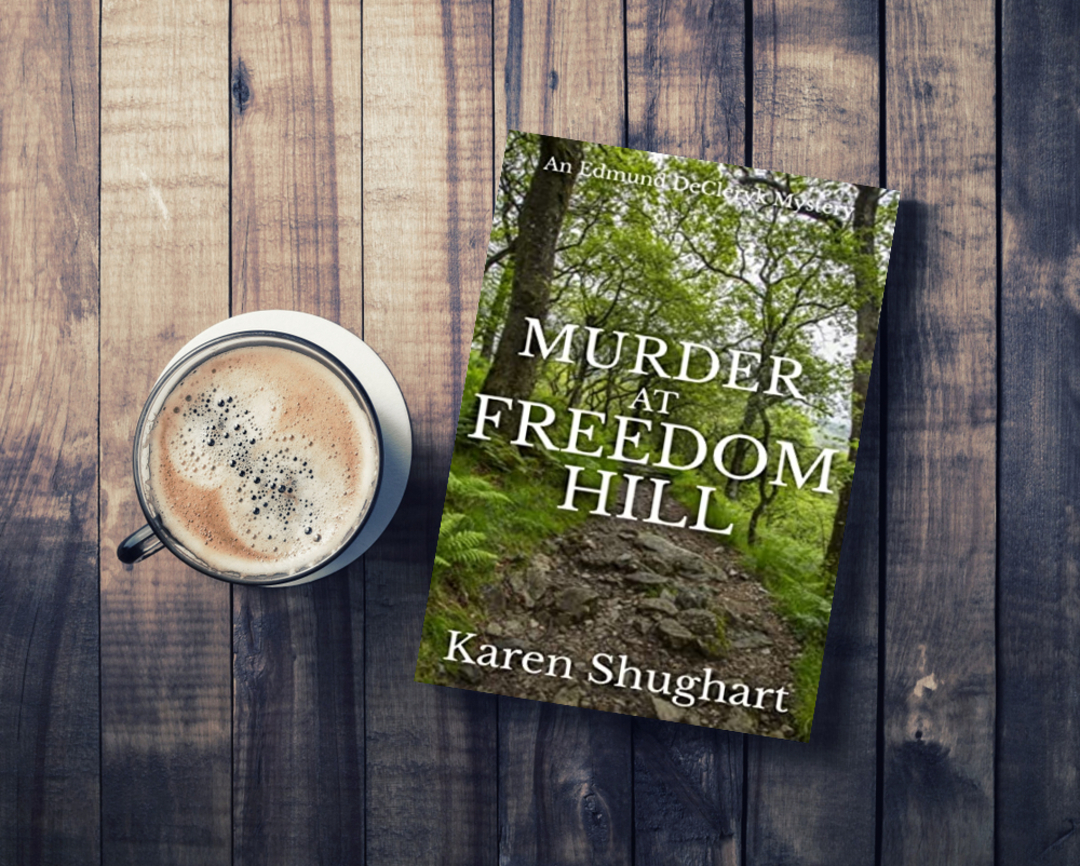
In book three, Murder at Freedom Hill, the crime is thought to be related to the victim’s ancestry, his forebears lived in a settlement where free people of color lived harmoniously with abolitionists who helped transport escaping slaves to Canada across the lake before the Civil War. Another heinous deed, related to that settlement, is revealed during the investigation of the murder.
But what the books also have in common is that I weave into the plot the seasonal setting.  After book one, instead of just one prologue I decided to write two, the first with the historical backstory and the second describing the season.

I continue descriptions of the weather throughout each book, it helps to construct the mood. For example, Murder at Freedom Hill begins in November, before Thanksgiving. In one of the early chapters, Ed discovers that the village mayor has been murdered. A beloved member of the community, the mayor also served on Annie’s board of directors and the two had become close friends. After conferring with Detective Brad Washington at the crime scene, Ed gets into his SUV and drives to the museum to tell Annie about his death. Lots of sunshine and a clear sky start the day, but then the weather changes:

“The brilliant sky at sunrise had made way for clouds the color of brushed pewter that hovered over the roiling silver lake. The day looked like an antique photograph: sepia; gunmetal grey; milky white and black; faded like withered grass. The direction of the wind had changed, picking up speed from the northwest, with fallen leaves swirling around the museum parking lot as Ed pulled into a spot. The temperature had plummeted- winter silently creeping in like a cat about to pounce upon its prey.”

What I enjoy about writing cozy mysteries is the ability to expand description if it fits into the plot, and the weather can either give readers a sense of doom and gloom or provide an interesting juxtaposition to an odious deed.

Karen Shughart’s cozy mysteries are published by Cozy Cat Press. She’s currently working on book four of the series, Murder at Chimney Bluffs.

Guest Blogger ~ J. Woollcott

WHERE DO PLOTS AND CHARACTERS COME FROM?

It was summer and I had finally finished my working career. I wanted to write and travel, but Covid happened, and travel was out of the question, so writing became my focus. I wasn’t sure exactly what kind of book I wanted to work on, except that it should be a mystery and probably have a detective in it. As I hail from Northern Ireland, I figured that was the perfect place. I had a relative who had been in the police over there and I thought, well, if that’s not serendipity, I don’t know what is.

The next part—actually writing the darn thing—was a little more difficult.

The plot? A good question. I don’t really know where that came from. Ask any writer and most of the time they will say the story came from an overheard remark or something they read in the paper or on line. Not copied, just a stray word or sentence that sparked another idea. Stephen King, in his wonderful book, ‘On Writing,’ tells how a casual remark someone made about a basement with ‘rats as big as dogs,’ led him to write Graveyard Shift. I suspect Mr. King doesn’t really suffer from a lack of plot ideas though. I rather think he has more than he knows what to do with.

And where do the characters who populate our books come from? Now this is murky. They often rise fully formed out of the writer’s imagination—or so it seems. I suspect my hero, DS Ryan McBride, and the other members of the squad are an amalgam of too many hours spent reading detective crime fiction and watching British tv mysteries and movies.

So, a plot can spring unbidden from anywhere and characters can tap you on the shoulder and say; ‘Hey, let me out, I want to be in your next story.’

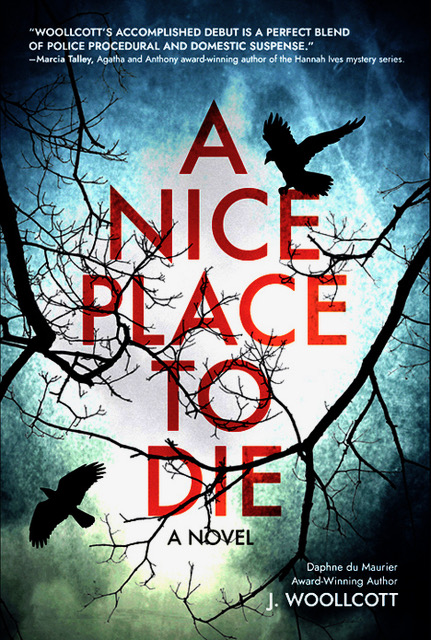
I was a designer and artist, and tend to be visual, so when I started to write A Nice Place to Die, I had an opening scene in my head. A woman’s body lying by a river outside Belfast. Crows cawing above in high, dark trees. A day of sun and cloud. Around that time there had been a lot of talk about date rape drugs and the like, and also articles about mistaken identity. Somehow, by a mysterious alchemy, both subjects came together and ended up in my book.

The Belfast Murder Series; Book One, A Nice Place to Die.

The body of a young woman is found by a river outside Belfast and Detective Sergeant Ryan McBride makes a heart-wrenching discovery at the scene, a discovery he chooses to hide even though it could cost him the investigation – and his career. As Ryan untangles a web of lies, his suspects die one by one, leading him to a dangerous family deception and a murderer who will stop at nothing to keep it. And still, he harbors his secret …

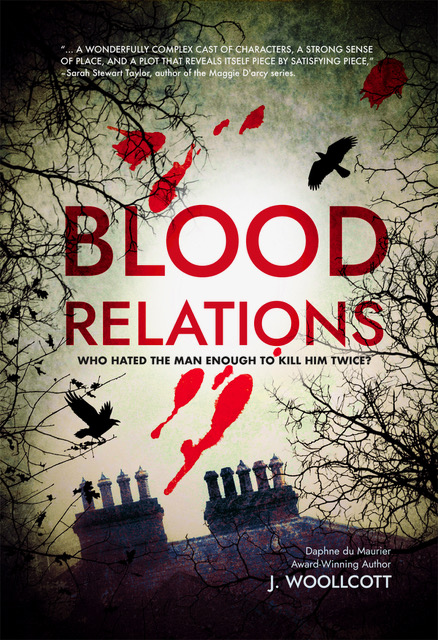
For DS McBride’s second outing, Blood Relations, I’d like to say that came to me in an ordered way, but no. I have even less idea where that plot came from, other than an opening scene of a bleak country house, dark clouds rolling in and a retired Detective Inspector lying dead upstairs on bloody sheets. Once again the story sprang from bits and pieces of chat, random conversations and well, just everyday life – not the murder part of course, I made that up … of course I did.

The Belfast Murder Series; Book Two, Blood Relations.

Belfast, Northern Ireland: early spring 2017. Retired Chief Inspector Patrick Mullan is found brutally murdered in his bed. Detective Sergeant Ryan McBride and his partner Detective Sergeant Billy Lamont are called to his desolate country home to investigate. In their inquiry, they discover a man whose career with the Police Service of Northern Ireland was overshadowed by violence and corruption. Is the killer someone from Mullan’s past, or his present? And who hated the man enough to kill him twice? Is it one of Patrick Mullan’s own family, all of them hiding a history of abuse and lies? Or a vengeful crime boss and his psychopathic new employee? Or could it be a recently released prisoner desperate to protect his family and flee the country? Ryan and Billy once again face a complex investigation with wit and intelligence, all set in Belfast and the richly atmospheric countryside around it.           

Amazon link: https://www.amazon.com/Blood-Relations-Ryan-McBride-Novel-ebook/dp/B0CFJWF69D/

J. Woollcott is a Canadian author born in Belfast, N. Ireland. She is a graduate of the Humber School for Writers and BCAD, University of Ulster. Her first book, A Nice Place to Die won the RWA Daphne du Maurier Award, was short-listed in the Crime Writers of Canada Awards of Excellence in 2021 and a Silver Falchion Award finalist at Killer Nashville 2023.

Website: https://www.jwoollcott.com

Twitter: @JoyceWoollcott

Let It Go by Karen Shughart

There’s a certain amount of pressure for all authors, regardless of how they’re published, that’s self-imposed. We set out to write a book and determine the time frame for finishing it, and therefore must adhere to some sort of schedule. And for those of us who are with traditional publishers, there’s the added pressure of submitting our book at an agreed upon deadline,

When I started writing my Edmund DeCleryk cozy mystery series, I wrote every day. I didn’t set a specific number of hours but instead spent time at the computer until I was either so exhausted that I literally couldn’t see straight or was happy with the advancement of the plot. In the past this has worked well for me, but this summer it didn’t.

Let me explain.  We live in a resort village that is a bustling hive of activity during summer months. Our beautiful scenery, gorgeous waterways, pristine beaches, and a multitude of activities centered around what we call Summerfest results in visits from family and friends, picnics, cookouts, concerts, festivals, outdoor movies, yoga classes, boating excursions and, on cool nights, time spent with friends drinking wine around a blazing fire pit watching the stars.

This year in particular, I was also happily bombarded with invitations to do book talks and signings, sometimes more than one a week. In addition, we took three short trips: to visit family; for a couple’s getaway; and when I participated as a panelist at a  mystery lovers’ conference in another state.

I must admit, at first I felt anxious about my inability to carve out time to continue writing my fourth novel, Murder at Chimney Bluffs, after making good headway last winter and spring.  Then I took a deep breath and thought. ‘It will be done, and isn’t a big part of life enjoying experiences that could help make my writing be even better? Let it go.’

And I did. When my publisher emailed me to get a sense of when she could expect my next book, I responded that I thought I could submit it to her a year from this coming November or maybe even December, but not before. She thanked me and said no problem. When I gave talks and attended signings, which I really do enjoy, I wasn’t the least bit anxious about not writing.

At the entrance to a town a little west of us there’s a huge sign that announces “Where Life is Worth Living”.   And that’s certainly true about this place we call home.  I finally conceded to the pressure to write and allowed myself to enjoy every minute of every day and relax about not keeping to a schedule. I’ll get it done, I know. There’s something to be said for letting go.

Karen Shughart is the author of the Edmund DeCleryk cozy mystery series published by Cozy Cat Press. She lives on the south shore of Lake Ontario in a village in New York state that’s the prototype for Lighthouse Cove, the s fictional setting for her books.

Guest Blogger ~ Tammy D. Walker

The Poet and the Perils of Plotting

“Beautiful writing, but your story is missing a plot.”

I’d read those words again and again from editors rejecting my short stories, literary and science fiction.  As a poet, I’ll admit: plot isn’t one of my strengths.  Or wasn’t, anyway.  And every time I got a rejection that asked where the “story” is in the story, I cringed. 

As a writer, I’m supposed to know how to plot, right?

After all, I’d had poems published while I was in my mid-20s, not long after I started studying creative writing.  And, after taking a long break from writing to focus on a career change, I had many more poems accepted into literary journals and two poetry collections published by good presses. 

For a while, I thought I’d give up on writing fiction.  Those “almost” rejections were piling up, and the heartbreak of another “lovely, but….” message wasn’t motivating. 

Maybe, I thought, I should focus on poetry.  Writing poems gives me the chance to ask questions about the world.  I try to question the way pieces of the world fit together and, often, don’t.  And I question how I see things and why.  I want readers to walk away with not a definitive answer to anything but with a way to ask their own questions.

Which I tried to do in stories too.  But that approach didn’t work in fiction.  At least not for me.

And then, the pandemic happened.  I started reading more mysteries, in particular, cozy mysteries, as a way of traveling when we had to stay mostly at home.  I also watched a lot of travel videos.  In a moment of things coming together in a way I didn’t expect, I thought maybe I could try writing a mystery set on a luxury cruise ship.  Research meant more “online vacations,” and, because mysteries need that element of story to be tightly in place for the mystery to function as a mystery, I’d use the drafting process as a way of teaching myself that elusive skill: plotting.

Three good things happened.

First, I researched everything I could about plotting.  And then, I practiced.  I outlined, reoutlined, considered my characters’ motivations and reactions, and I outlined again. 

Second, I realized that I loved writing mysteries. 

And third, I figured out how to integrate what was working so well for me in poems into my fiction.  Mysteries are, essentially, about asking questions.  The sleuth has to ask questions about the crime, of course.  And we as readers have to ask about the crime as well as the sleuth and all the other characters.  Even if we do eventually get an answer to the whos, whys, and hows in the crime, much of that comes through that same process of questioning I do in poems.

Really, four things happened.  After a good bit of revision, my draft became Venus Rising, which was published in January 2023 by The Wild Rose Press.

Well, five things: that book got a review that said, simply, “good plot.” 

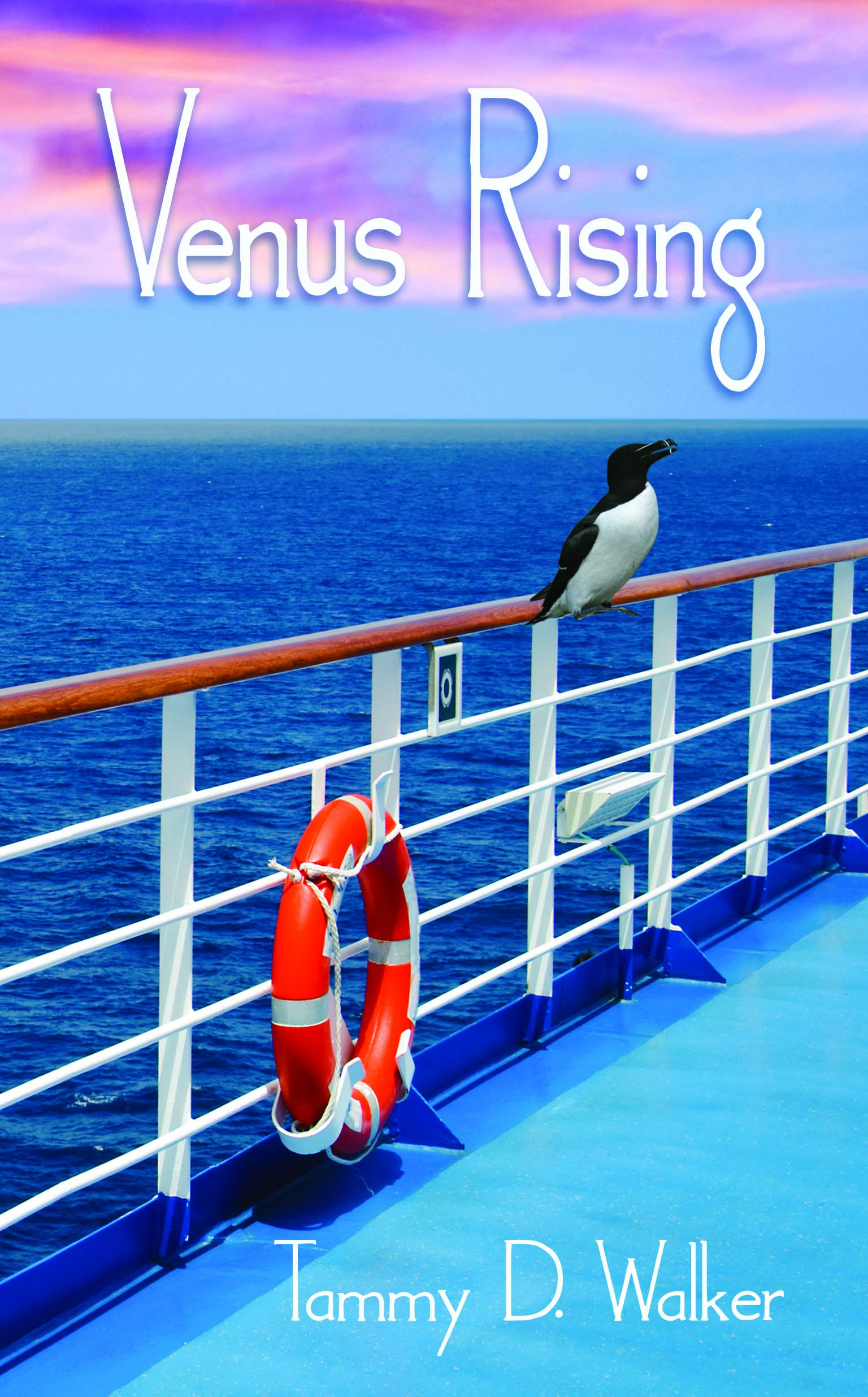
VENUS RISING

Almost as soon as recent divorcee Amy Morrison begins her dream job as librarian aboard the world’s most expensive luxury cruise liner, she nearly sinks it. She’s tasked with hosting the debut of a painting celebrated but hidden for nearly sixty years. But the artist claims the painting isn’t hers. And then, the artist goes missing. With the help of a retired academic couple lecturing aboard the ship, a dashing IT manager, and a housekeeping staff with a love of literature, Amy tries to solve the art fraud and kidnapping while rediscovering the adventurous side of herself.

Buy Links:

Tammy D. Walker writes cozy mysteries, poetry, and science fiction. Her debut cozy mystery, Venus Rising, was published by The Wild Rose Press in 2023.  As T.D. Walker, she’s the author of the poetry collections Small Waiting Objects (CW Books 2019), Maps of a Hollowed World (Another New Calligraphy 2020), and Doubt & Circuitry (Southern Arizona Press 2023).  When she’s not writing, she’s probably reading, trying to find far-away stations on her shortwave radios, making poetry programs, or enjoying tea and scones with her family.  Find out more at her website: https://www.tammydwalker.com

Social Media Links:

Happy Dancing

I don’t know about other authors but there are times my husband and family give me a look that says, they wonder about my sanity. 😉

Last month, I drove to Wallowa County where I set most of my Gabriel Hawke Novels. He is an Oregon State Trooper with the Fish and Wildlife division. The reason for my trip was to:

1) Do reconnaissance of the area where Hawke finds an unconscious woman in the wilderness.

2) Discover why Starvation Ridge was named that.

3) Attend a powwow in Wallowa County so I can have Hawke and his partner Dani attend one in the next book. I also wanted to see if I could connect with a Nez Perce tribal member who would help me add more of the culture to my books.

As usual, I dragged my sis-in-law and brother into my hijinks. Thankfully, my brother being an artist, he understands my need to see things for my books. And I’ve taken my sis-in-law along on other research adventures. First, we made the trip out Starvation Ridge so I could see it better. I’d used Google Earth and an Oregon Gazetteer to try and come up with a plausible explanation for the car stuck between two trees in the middle of forest service land. But I wanted to see the terrain better and I’m glad I did! The way I had my character discover the vehicle wouldn’t work for the area. When I came home, I rewrote the scenes where and how the car was found. Not only did I get a good look at the area, but I got a better feel for it too. And my brother added nuances to it because the story is set in April when there would still be some snow and lots of mud. Which I had written into the story, but he explained it a little bit more. Wind can blow the snow off the very top of the ridge and it’s just mud where there is snow in the trees.

Road on Starvation Ridge

Sis-in-law and I went to the museum in Joseph to find out if there was a way to discover why the ridge was named Starvation. And while we saw some great photos of the past and learned a bit more about the county’s history, we came up empty on the reason for the name. Of course, as we were driving around up on the ridge, we came up with all kinds of grisly reasons for the name. But the next day at the suggestion of a local historian, we went to the Wallowa Museum and the woman there found a book and we discovered the reason for the name. And it was nothing like what we had thought. In fact, it was pretty pathetic. According to the book, it was named Starvation Ridge because a man named Billy Smith came up on the ridge and discovered that a large herd of sheep had eaten all the grass off the ridge. He called it Starvation Ridge and it stuck. Kind of lame and not worth putting in my story. I’ll let the readers fantasize about the name as we had.

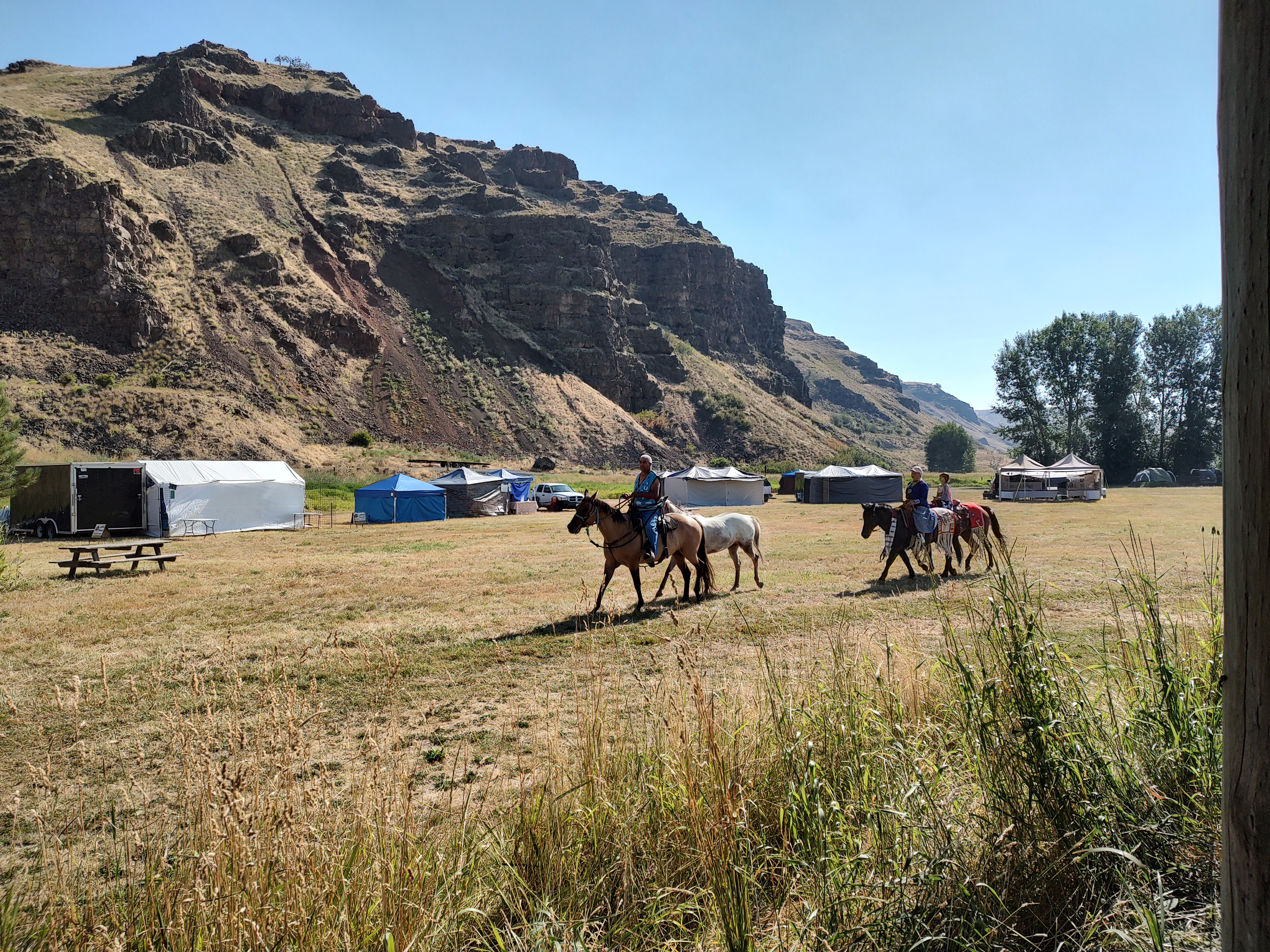
The Tamkaliks Celebration was as moving and colorful as I remembered. I’d attended this powwow a number of years ago, but after taking a class on writing Native American characters and the teacher suggested attending powwows and taking in the ceremonies and talking to people, I decided I needed to get to this one again. I also plan to have my characters attend the powwow in the next Hawke book. The songs, the welcome they give everyone, the friendship dance (we danced), and the reverence they pay to one another was so worthwhile.

Ceremony of the riderless horse. symbolizing the ancestors and those tribal members lost the past year.

The best part of the whole day was a woman that sat down in front of us. She openly explained what was happening to those around her and taught a young couple how to say her dog’s name which meant, Moose. This isn’t how you write the word, only how you say it, “Sauce Luck.” And she taught us how to say Good Morning. Again, not the way you write it but how you say it, which she explained. “Tots MayWe.” After watching her so enthusiastically sharing her culture, I sat down beside her and thanked her for explaining things and asked if she’d be interested in helping me bring more Nez Perce culture to my books. She was excited to help me! She told me about her education and her B.S. in American Indian Studies and Business and her new job that was basically teaching the Nez Perce culture to those who were interested. We exchanged names, emails, and phone numbers. I have sent her an email and she responded right away. I’m excited to have found another connection to help me make my books true to the Nez Perce culture.

And that, my friends, is why I am happy dancing!