Guest Blogger ~ Tammy D. Walker

The Poet and the Perils of Plotting

“Beautiful writing, but your story is missing a plot.”

I’d read those words again and again from editors rejecting my short stories, literary and science fiction.  As a poet, I’ll admit: plot isn’t one of my strengths.  Or wasn’t, anyway.  And every time I got a rejection that asked where the “story” is in the story, I cringed. 

As a writer, I’m supposed to know how to plot, right?

After all, I’d had poems published while I was in my mid-20s, not long after I started studying creative writing.  And, after taking a long break from writing to focus on a career change, I had many more poems accepted into literary journals and two poetry collections published by good presses. 

For a while, I thought I’d give up on writing fiction.  Those “almost” rejections were piling up, and the heartbreak of another “lovely, but….” message wasn’t motivating. 

Maybe, I thought, I should focus on poetry.  Writing poems gives me the chance to ask questions about the world.  I try to question the way pieces of the world fit together and, often, don’t.  And I question how I see things and why.  I want readers to walk away with not a definitive answer to anything but with a way to ask their own questions.

Which I tried to do in stories too.  But that approach didn’t work in fiction.  At least not for me.

And then, the pandemic happened.  I started reading more mysteries, in particular, cozy mysteries, as a way of traveling when we had to stay mostly at home.  I also watched a lot of travel videos.  In a moment of things coming together in a way I didn’t expect, I thought maybe I could try writing a mystery set on a luxury cruise ship.  Research meant more “online vacations,” and, because mysteries need that element of story to be tightly in place for the mystery to function as a mystery, I’d use the drafting process as a way of teaching myself that elusive skill: plotting.

Three good things happened.

First, I researched everything I could about plotting.  And then, I practiced.  I outlined, reoutlined, considered my characters’ motivations and reactions, and I outlined again. 

Second, I realized that I loved writing mysteries. 

And third, I figured out how to integrate what was working so well for me in poems into my fiction.  Mysteries are, essentially, about asking questions.  The sleuth has to ask questions about the crime, of course.  And we as readers have to ask about the crime as well as the sleuth and all the other characters.  Even if we do eventually get an answer to the whos, whys, and hows in the crime, much of that comes through that same process of questioning I do in poems.

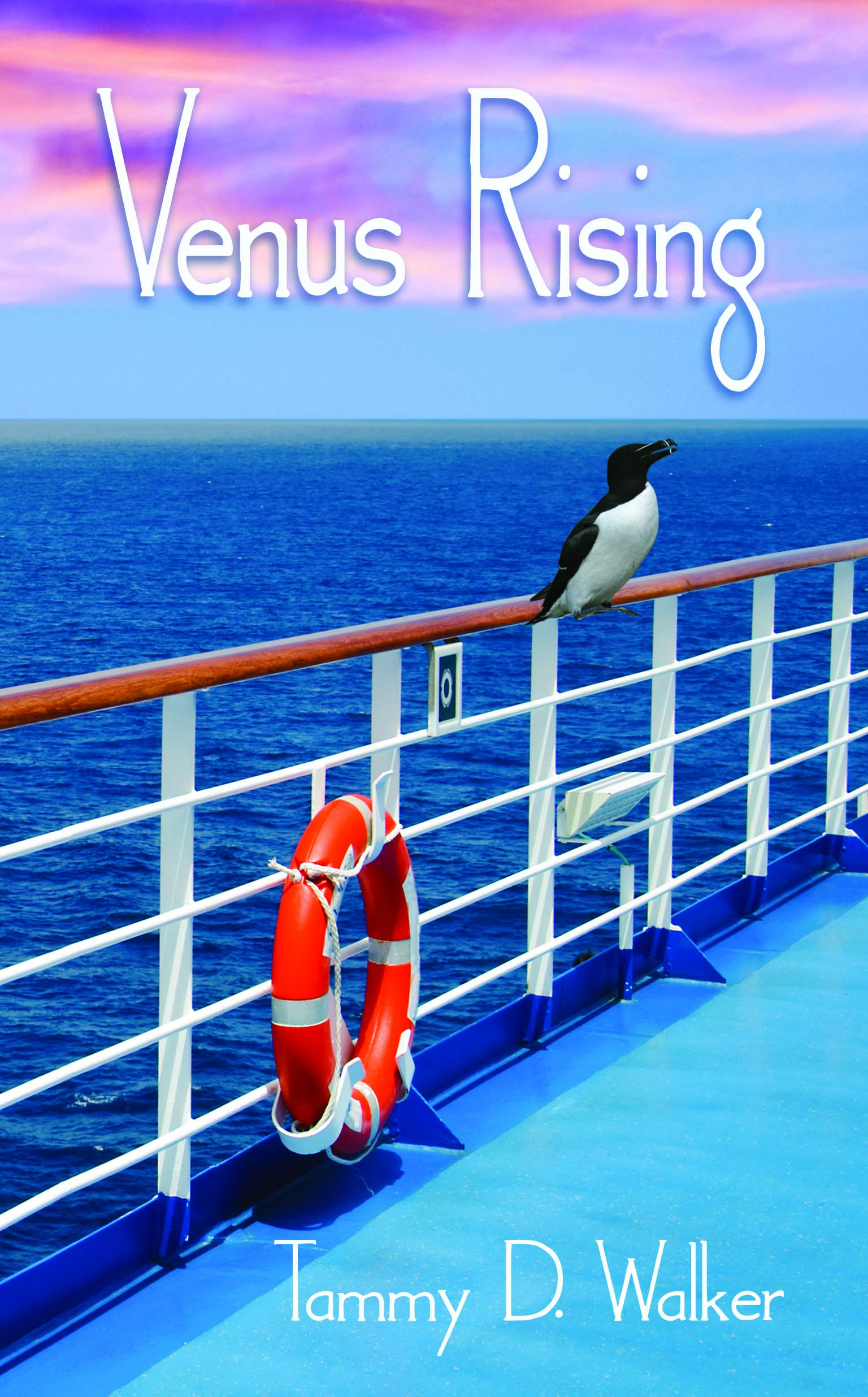
Really, four things happened.  After a good bit of revision, my draft became Venus Rising, which was published in January 2023 by The Wild Rose Press.

Well, five things: that book got a review that said, simply, “good plot.” 

VENUS RISING

Almost as soon as recent divorcee Amy Morrison begins her dream job as librarian aboard the world’s most expensive luxury cruise liner, she nearly sinks it. She’s tasked with hosting the debut of a painting celebrated but hidden for nearly sixty years. But the artist claims the painting isn’t hers. And then, the artist goes missing. With the help of a retired academic couple lecturing aboard the ship, a dashing IT manager, and a housekeeping staff with a love of literature, Amy tries to solve the art fraud and kidnapping while rediscovering the adventurous side of herself.

Buy Links:

Tammy D. Walker writes cozy mysteries, poetry, and science fiction. Her debut cozy mystery, Venus Rising, was published by The Wild Rose Press in 2023.  As T.D. Walker, she’s the author of the poetry collections Small Waiting Objects (CW Books 2019), Maps of a Hollowed World (Another New Calligraphy 2020), and Doubt & Circuitry (Southern Arizona Press 2023).  When she’s not writing, she’s probably reading, trying to find far-away stations on her shortwave radios, making poetry programs, or enjoying tea and scones with her family.  Find out more at her website: https://www.tammydwalker.com

Social Media Links:

Happy Dancing

I don’t know about other authors but there are times my husband and family give me a look that says, they wonder about my sanity. 😉

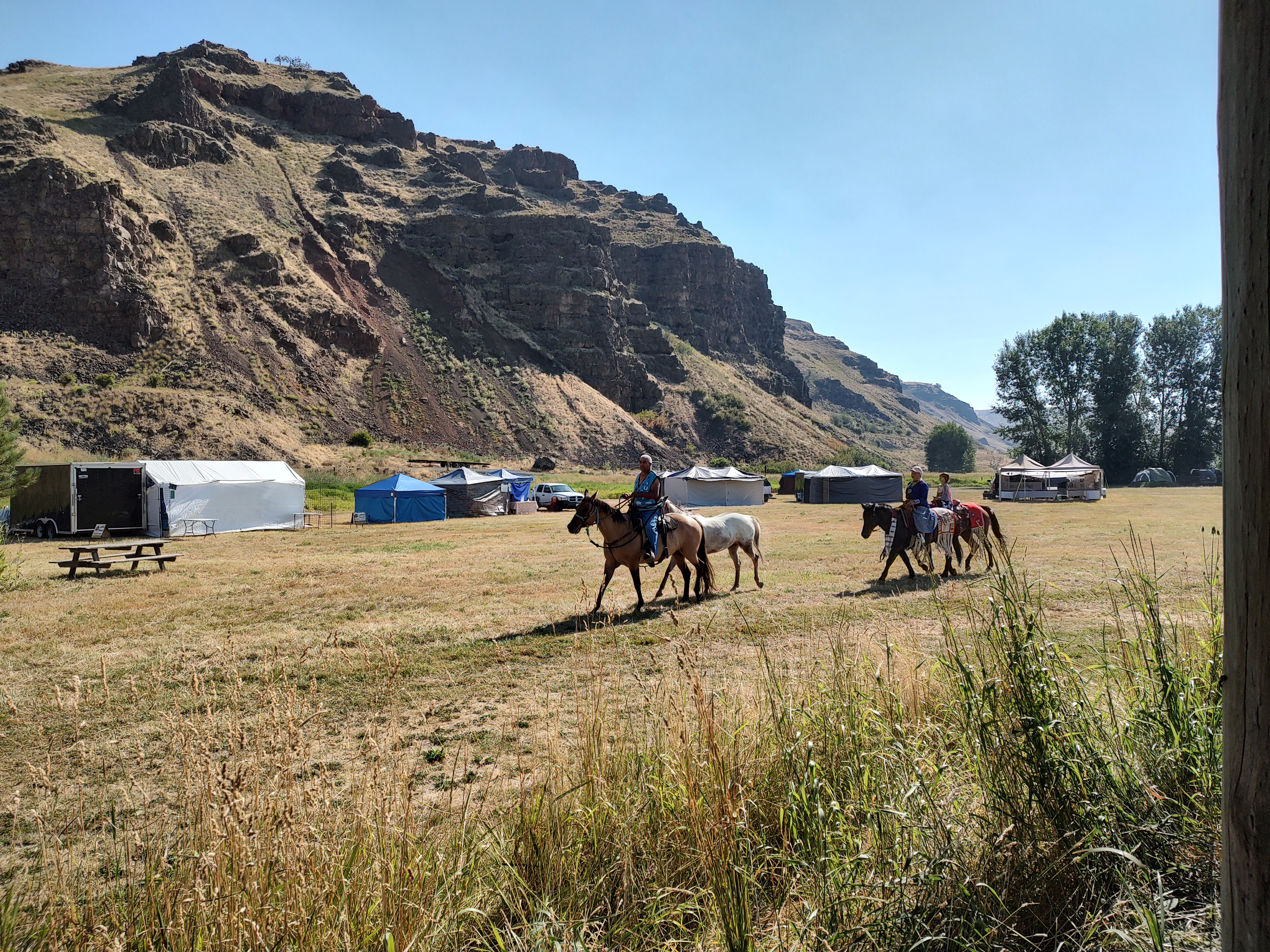
Last month, I drove to Wallowa County where I set most of my Gabriel Hawke Novels. He is an Oregon State Trooper with the Fish and Wildlife division. The reason for my trip was to:

1) Do reconnaissance of the area where Hawke finds an unconscious woman in the wilderness.

2) Discover why Starvation Ridge was named that.

3) Attend a powwow in Wallowa County so I can have Hawke and his partner Dani attend one in the next book. I also wanted to see if I could connect with a Nez Perce tribal member who would help me add more of the culture to my books.

As usual, I dragged my sis-in-law and brother into my hijinks. Thankfully, my brother being an artist, he understands my need to see things for my books. And I’ve taken my sis-in-law along on other research adventures. First, we made the trip out Starvation Ridge so I could see it better. I’d used Google Earth and an Oregon Gazetteer to try and come up with a plausible explanation for the car stuck between two trees in the middle of forest service land. But I wanted to see the terrain better and I’m glad I did! The way I had my character discover the vehicle wouldn’t work for the area. When I came home, I rewrote the scenes where and how the car was found. Not only did I get a good look at the area, but I got a better feel for it too. And my brother added nuances to it because the story is set in April when there would still be some snow and lots of mud. Which I had written into the story, but he explained it a little bit more. Wind can blow the snow off the very top of the ridge and it’s just mud where there is snow in the trees.

Road on Starvation Ridge

Sis-in-law and I went to the museum in Joseph to find out if there was a way to discover why the ridge was named Starvation. And while we saw some great photos of the past and learned a bit more about the county’s history, we came up empty on the reason for the name. Of course, as we were driving around up on the ridge, we came up with all kinds of grisly reasons for the name. But the next day at the suggestion of a local historian, we went to the Wallowa Museum and the woman there found a book and we discovered the reason for the name. And it was nothing like what we had thought. In fact, it was pretty pathetic. According to the book, it was named Starvation Ridge because a man named Billy Smith came up on the ridge and discovered that a large herd of sheep had eaten all the grass off the ridge. He called it Starvation Ridge and it stuck. Kind of lame and not worth putting in my story. I’ll let the readers fantasize about the name as we had.

The Tamkaliks Celebration was as moving and colorful as I remembered. I’d attended this powwow a number of years ago, but after taking a class on writing Native American characters and the teacher suggested attending powwows and taking in the ceremonies and talking to people, I decided I needed to get to this one again. I also plan to have my characters attend the powwow in the next Hawke book. The songs, the welcome they give everyone, the friendship dance (we danced), and the reverence they pay to one another was so worthwhile.

Ceremony of the riderless horse. symbolizing the ancestors and those tribal members lost the past year.

The best part of the whole day was a woman that sat down in front of us. She openly explained what was happening to those around her and taught a young couple how to say her dog’s name which meant, Moose. This isn’t how you write the word, only how you say it, “Sauce Luck.” And she taught us how to say Good Morning. Again, not the way you write it but how you say it, which she explained. “Tots MayWe.” After watching her so enthusiastically sharing her culture, I sat down beside her and thanked her for explaining things and asked if she’d be interested in helping me bring more Nez Perce culture to my books. She was excited to help me! She told me about her education and her B.S. in American Indian Studies and Business and her new job that was basically teaching the Nez Perce culture to those who were interested. We exchanged names, emails, and phone numbers. I have sent her an email and she responded right away. I’m excited to have found another connection to help me make my books true to the Nez Perce culture.

And that, my friends, is why I am happy dancing!

Guest Blogger ~ Patricia Crandall

RABBITS, BUNNIES, WHISKERS AND HOP!

Why do I write? The answer lies in the fact I enjoy reading. It all began with Uncle Wiggley Longears, the rabbit gentleman stories by Howard Garis. At bedtime at our house in the nineteen forties, my father would entertain me and my siblings with his own version of an ‘Uncle Wiggley Adventure.’ After an ending, “And if the turnips do not fall into the cabbage patch traps and get eaten by the turtle tribe, tomorrow I will tell you about Uncle Wiggley’s narrow escape from the falling tree near ‘Henry’, the covered bridge.” (In Vermont, covered bridges are named). With an eager readiness at the next bedtime, three children sat in anticipation as my father struggled to fabricate a new Uncle Wiggley adventure.

            I learned early that children’s authors captivate a child’s and an adult’s imagination in a magical, mind-stretching manner that no other writer can do. The children/young adult authors who are repeatedly read in our home and are impressive masters to follow are: Howard Garis, Beatrix Potter, Dr. Seuss, Laura

Inglis Wilder, J.K. Rowlings, Carolyn Keene, Franklin Dixon, E.B. White and Lewis Carroll.

            Children’s authors often pen a story for a particular child as Clement Moore did when he wrote the renowned poem, ‘The Night Before Christmas,’ to satisfy his children’s need for a Christmas story. A child has an imagination filled with wonder and welcomes all types of zany and horrific tales. Put it all together and zap – Alice in Wonderland by Lewis Carroll.

            I have written a story entitled, ‘The Polka Dot Mystery,’ with my three grandchildren. It began on a rainy day when the children complained there was nothing to do. I pulled out pencils and paper. We sat around the kitchen table and began with the oldest child creating a sentence first. Then the second child added her sentence, followed by a grandson’s wacky sentence. My sentence came next and balanced his morbid one. We continued to do this until we had completed a story, ‘The Polka Dot Mystery.’ To our surprise, it was published in a children’s magazine.

            The next time you browse through a bookstore, check out the children’s section. And watch out for rabbits – they have multiplied in the story market. Hop to it!

Ten-year-old Wyatt and eleven-year-old Hannah uncover the dark world of illegal dog fights when they trespass at a Vermont farm and peep through a barn window. And when crotchety old Lester Cranshaw’s dog, Paddy, turns up missing, there is no holding him back from investigating the situation and the kids join in. In the dead of night, after the trio are captured and held hostage at the Inglis farm, Wyatt will need all of his wits and courage to escape in order to save the lives of his friends. The Dog Men draws the reader into a tempest of animal abuse, lawlessness, and kidnapping within the confines of small-town happenings. A chilling plot and a peerless relationship between kids, adults and pets.

Buy links:

https://shoptbmbooks.com/The_Dog_Men.html

https://www.amazon.com/dp/1614684669

Patricia Crandall has published nine books as well as numerous articles and short stories in various magazines and newspapers.  Books to date include: Melrose, Then and Now, a historical volume, I Passed This Way, a poetry collection, The Dog Men, a thriller, Tales of an Upstate New York Bottle Miner, non-fiction, Pat’s Collectibles, a collection of short stories, Living to One Hundred Plus, a collection of interviews of women living past one hundred and a y/a thriller about child sex trafficking titled The Red Gondola and the Cova. A Reunion of Death is a Christmas mystery in the method of Agatha Christie. Patricia is also working on a unique book of short story mysteries to be published in 2023. A member of Sisters in Crime (Mavens) and National Association of Independent Writer & Editors she lives with her husband, Art, and a rescue cat, Bette, at Babcock Lake in the Grafton Mountains near Petersburgh, New York. She has two children and three grandchildren who live nearby.

Patricia’s blog

Patricia’s website

Guest Blogger ~ Jill Piscitello

Genre Hopping

By Jill Piscitello

After two sweet, holiday romances, I decided to dip a toe into the world of cozy mysteries. As a long-time fan of the genre, I’ve enjoyed the thread of sweet romance that is often woven throughout the stories. For me, the genre is the best of both worlds. Readers’ heartstrings are tugged as they are swept along a twisting tale riddled with suspects, clues, and red herrings. They can expect suspense without graphic violence and a nice, tidy ending. Predictable? Maybe. But many genres follow a structure that appeals to a specific audience.

Similar to sweet romance, most cozy mysteries are set in small, close-knit towns. However, I find that I have more freedom to invoke a bit more humor and fun into the story. No character should ever be perfect. Flaws are much easier to relate to. But it often seems that most of the leading ladies in romance novels are gorgeous. My heroine/sleuth, Maeve Cleary, is never described as a great beauty. Much to her mother’s dismay, she’s in desperate need of a trip to the salon to touch up her highlights and lives in worn-to-death shorts and T-shirts. But she came home to mend a broken heart, not to enter The Miss Hampton Beach beauty pageant.

Maeve introduced herself right away. She’s a woman who speaks her mind and acts on instinct. Moving in with her polished and successful mother had all the makings of a critique-laden stay. I enjoy dissecting the dynamic of mother-daughter relationships and hope readers find their back-and-forth barbs entertaining.  

A Sour Note also sent me hopping from fictional towns into the real setting of Hampton Beach, NH in July. One might think building a setting from the ground up with only your imagination to depend on would prove far easier than writing about a place you know well. However, when an author creates a story world, no one can dispute what is missing or inaccurate. Writing about a popular vacation destination is filled with pressure I didn’t anticipate. In the end, I chose to invoke a creative license when writing about restaurants and other locations within the town. Readers who know the area might enjoy guessing at which places inspired a few hot spots.

My family makes several trips to Hampton every summer. When the idea for A Sour Note took shape, I couldn’t imagine choosing another setting. The sights, food, entertainment, and people watching along one of the most popular boardwalks in the nation provide everything needed for an endless stream of writing ideas. The next book in the series will require a fair amount of research because it will occur during the off-season. I look forward to a few trips north for more insight into what the town looks like when tourist numbers dwindle and am confident an empty beach has quite a bit to offer to the cozy mystery genre.

A Sour Note (A Music Box Mystery)

When murder provides a welcome distraction…

On the heels of a public, broken engagement, Maeve Cleary returns to her childhood home in Hampton Beach, NH. When a dead body turns up behind her mother’s music school, three old friends land on the suspect list. Licking her wounds soon takes a back seat to outrunning the paparazzi who spin into a frenzy, casting her in a cloud of suspicion. Maeve juggles her high school sweetheart, a cousin with a touch of clairvoyance, a no-nonsense detective, and an apologetic, two-timing ex-fiancé. Will the negative publicity impact business at the Music Box— the very place she’d hoped to make a fresh start?

Purchase Links:

Amazon

Barnes and Noble

Excerpt:

With his mouth set in a grim line, he waited.

If anyone else had enough nerve to presume she owed them an explanation, she would respond with a solid mind your own business. Instead, the seventeen-year-old still inside her refused to tell him to get lost. “He was hiding money in his office.” This was one of those times when learning how to wait a few beats before blurting out inflammatory information would come in handy. Each second of passing silence decreased her ability to breathe in the confined space. She turned the ignition and switched on the air conditioner.

“How do you know?” His volume just above a whisper, each dragged-out word hung in the air.

“I found it.”

“When were you in his office?” He swiped at a bead of sweat trickling down the side of his face, then positioned a vent toward him.

“Last night.” When would she learn to bite her tongue? Finn’s switch from rapid-fire scolding to slow, deliberate questioning left her unable to swallow over the sandpaper lump in her throat.

“Where was Vic?”

She stared at the back of the building, wishing she’d kept her mouth shut. “He’d left for the night.” If she averted her gaze, she could pretend his eyeballs weren’t bugging out of his head, and his jaw didn’t need a crane to haul it off his chest.

“You were at the town hall after hours? Did anyone see you?”

“A custodian opened his door for me.” She snuck a glance. Sure enough, features contorted in shock and horror replaced his boy-next-door good looks.

Jill Piscitello is a teacher, author, and an avid fan of multiple literary genres. Although she divides her reading hours among several books at a time, a lighthearted story offering an escape from the real world can always be found on her nightstand.

A native of New England, Jill lives with her family and three well-loved cats. When not planning lessons or reading and writing, she can be found spending time with her family, trying out new restaurants, traveling, and going on light hikes.

Social media links:

Website ~ Twitter  ~ FacebookInstagram  ~ Amazon ~ GoodReads~ BookBub

WHEN FICTION IS TOO MUCH LIKE FACT

Recently my little town of Springville hit the national news when one storm after another caused the Tule River to flood and fill houses with water and mud. We were among those ordered to evacuate because we live near the river—however despite the rushing water taking out trees and bridges as it headed toward the lake, we were in no danger. However, the first day the only roads to get out of town were flooded and closed.

Long ago I wrote a mystery called A Deadly Feast about a storm that caused a raging river to take out a bridge and strand those who lived on the other side for several days.

Raging Water is a Deputy Tempe Crabtree mystery written several years ago about the flooding of Bear Creek which forces people living along the river to evacuate and causes a huge mud slide which makes it impossible for anyone to leave.

Both books have a great similarity to what recently went on in our small town.

This is happened before.

I wrote Bears With Us when we had an occasional bear sighting in an around Springville. At the time, my grandson was a police officer in Aspen CO and many bear encounters he shared with me. I used his expertise to add excitement to the story.

Last summer several bears decided Springville would be a great place to dine. People reported bear sightings regularly. We had two different bears who decided to visit our trash trailer on different nights looking for hand-outs. One was a big black male, the other a smaller brown bear. They didn’t bother anything else, but were scary if you came home during their visits. Believe me, on those occasions we scurried into the house. We haven’t seen them since early fall.

Since I’ve written my final and the last offering in my Deputy Tempe Crabtree mystery series, I’m no longer worried about writing fiction that predicts future events. But it was fun telling readers about it.

Marilyn