Guest Blogger – Avery Daniels

Resort to Murder series goes to New Mexico by Avery Daniels

One piece of writing advice I received early on was to write in whatever genre I read, and I read a lot of cozy and amateur sleuth books.  I like how justice is served; the villain is caught, and for a few hours I am on the trail of a killer.  The vicarious thrills in the safety of my locked home appeal to me, so of course I started writing a cozy mystery series.

I often hear the advice to write what you know.  I grew up in a town with a historic five-star resort.  On a sunny Sunday afternoon, I would go to the resort and walk around their man-made lake and feed the ducks.  I celebrated special occasions at their exquisite restaurant, my employers held holiday parties there, and I won tickets to and attended a LPGA golf tournament at the resort.  So it was easy to make the setting for my cozy series this resort with the idea to have every other book at a resort my sleuth is visiting.  I have also volunteered over the years and helped plan and facilitate events, from retirement luncheons to signature fund-raising events with silent auctions. I have worked with hotel staff from soup to nuts on events, so I knew a good bit of what goes into Julienne’s task in that vein of her job.

 After I settled on the resort as a backdrop, Julienne solidified as the lead character. Julienne is a young professional who skipped college for a manager-in-training program at the local five-star resort. Her dream is to manage resorts around the world to satisfy her wanderlust and desire to experience other cultures.

 In the first book Julienne finds her sleuthing legs when she is the prime suspect in the murder and we are in her historic “home” resort inspired by the Broadmoor.  For book two, Nailed, the resort was a luxury Bavarian themed ski resort in Vail, Colorado inspired by Sonnenalp.  The third book, Spiked, was back at Julienne’s home resort.  This fourth book, Arrowed, is the first to venture out of Colorado.

In Arrowed, a cutthroat venture capitalist grabs Julienne by the ankle and with his dying breath says “the curse got me.”  The Enchantment Canyon Resort, where this occurs, is entirely fictional.  It is a combination of resorts and ideas I merged for the story.  I wanted the feel of a Mexican villa merged with a world class health and wellness resort.  I love Santa Fe and its unique mixing of Mexican and Native American cultures and foods and thus I wanted a resort that reflected the rich cultural heritage. 

I had terrible timing on Arrowed, though.  Here I am writing a cozy mystery set in Santa Fe, only a five-hour drive for me (and one of my favorite places to visit), and Covid made it impossible to do any personal research.  Fortunately, I have been several times and have many fond memories to rely on and supplement with internet research.  Just a tip: any trip to Santa Fe means you should plan on eating and drinking some of the best food in your life.  The food is one highlight of any trip there for me, along with the Margarita Trail!

If you have been to Santa Fe, or New Mexico, what are your favorite memories?
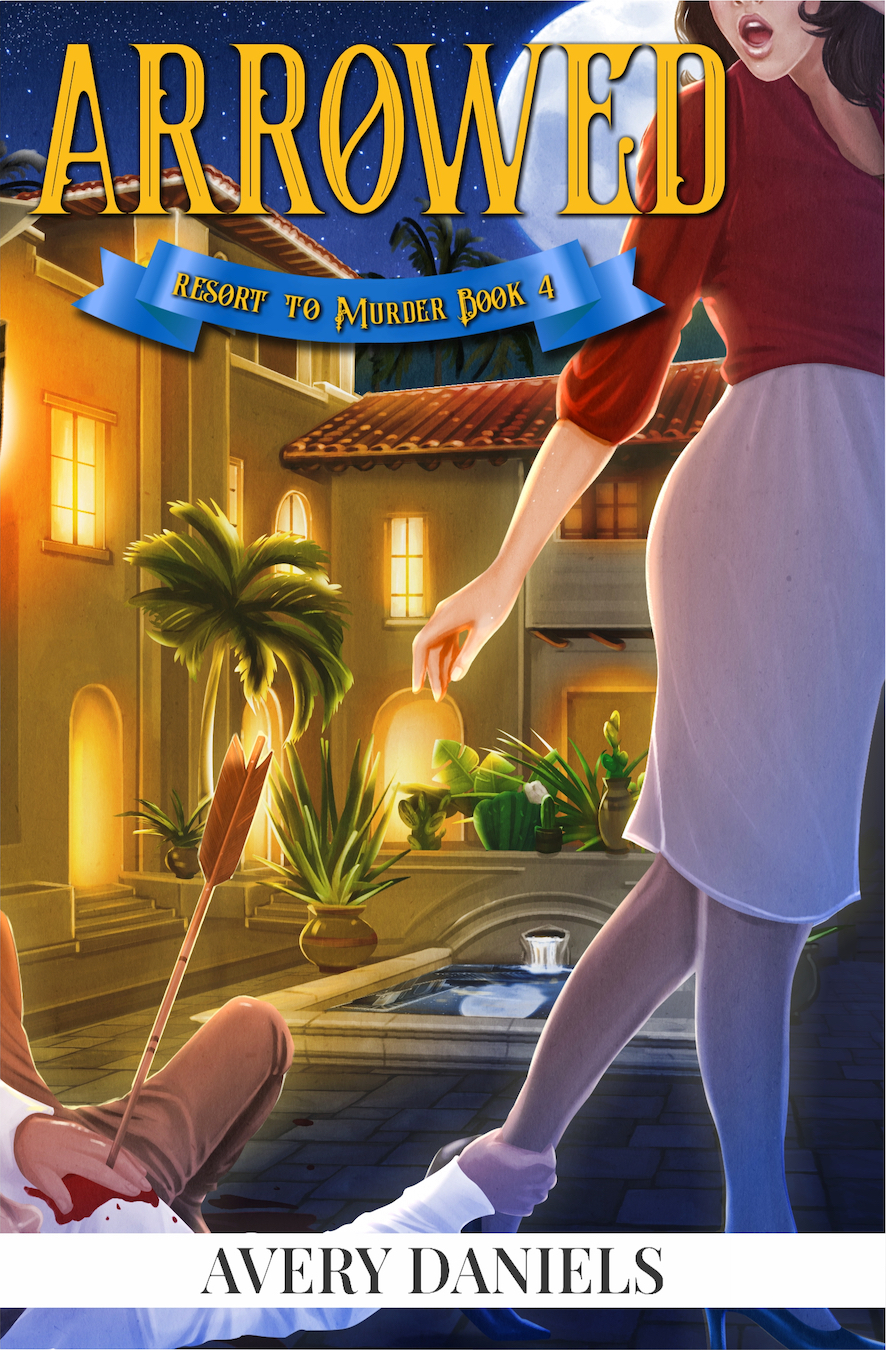
It all began when a dying man with an arrow in his chest grabs her ankle.
     During a heat wave at a Santa Fe resort, Julienne has the resort owner pressuring her to solve the murder. The victim is a high profile business man who made enemies rather than friends, leaving Julienne with a roster of suspects. She was supposed to be training the staff and spending quality time with Mason rather than investigating a murder. The heat turns up when an old girlfriend of Mason’s checks in and is determined to get back together.
     Arrowed is the fourth book in Avery Daniel’s Resort to Murder series and is an exciting contemporary cozy mystery. If you like Cleo Coyle, Maddy Hunter, Duffy Brown, Lynn Cahoon, and Annette Dashofy, then you’ll love this series with a strong intelligent sleuth, lavish settings, and tantalizing mysteries.
     Buy this spunky clean cozy mystery and start enjoying Julienne’s adventures today!

Youtube book trailer:  https://www.youtube.com/watch?v=-svubHiLbDE

Purchase Links

Amazon: https://tinyurl.com/yoo3xfqw

B&N Nook: https://tinyurl.com/4rew7h83

B&N Print: https://tinyurl.com/2jbun5rt

Kobo: https://tinyurl.com/v4tpqebd

Apple: https://tinyurl.com/2a2vxa2b

Bookshop: https://tinyurl.com/14ecxyic

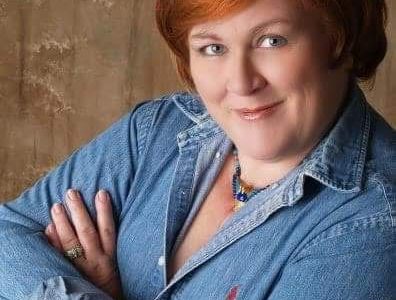
Avery Daniels was born and raised in Colorado, graduated from college with a degree in business administration and has worked in fortune 500 companies and Department of Defense her entire life. Her most eventful job was apartment management for 352 units. She still resides in Colorado with two brother black cats as her spirited companions. She volunteers for a cat shelter, enjoys scrapbooking and card making, photography, and painting in watercolor and acrylic. She inherited a love for reading from her mother and grandmother and grew up talking about books at the dinner table.

Website:  http://avery-daniels.com/

Newsletter:  https://tinyurl.com/2p952mcv

Goodreads:  https://www.goodreads.com/avery-daniels

Amazon Author Page:  https://www.amazon.com/Avery-Daniels/e/B0719JXY83/
Facebook:  https://www.facebook.com/AveryDanielsAuthor

To Gore or Not To Gore… And How Much?

by Janis Patterson

When one writes mysteries, one has to come face to the face with the problem of violence – when, to whom and how much. Almost every mystery – those for grown-ups, that is – includes an assault and/or a death. It is very rare to see a mystery without one or the other and usually both. Dead bodies are pretty much the raison d’etre of a mystery!

The question is, how did the body get dead, where is it found, what condition is it in, and how much – if any – of the actual crime do we show?

What they’re now calling cozy mysteries – the kind with a ditzy amateur sleuth with a terrible love life, a cute job, probably a shoe obsession and perhaps intelligent animals which may or may not solve the actual mystery themselves – usually back away from violence and its aftermath as much as possible. (And yes, I know there are exceptions, but it is the exception that proves the rule!) The dead body that propels the story is so sanitized and occasionally de-humanized that in some stories it resembles little more than a stage prop. Which is distressing but not surprising, as more and more publishers are demanding that the body appear in the first few pages if not on the first page itself. This makes it hard for the reader to regard said dead body as little more than a plot device instead of something that was once a living, breathing complete human being. (In case you didn’t know, this ‘where does the body appear’ thing is one of my hot buttons!)

What we used to call cozies are now in the labeling limbo of ‘traditional mysteries’ which to me means more realistic characters, more realistic actions by those characters, but with only minimal violence. There is blood, but only a tangential mention. My favorite description (taken from one of my own books, of course) talks about the body hastily covered with a now-stained bedspread (at the time of my sleuth’s arrival) with just a lip of wet red peeking out from under the edge. Enough description to evoke a feeling of horror at such a heinous and violent act, but most definitely not enough to revolt or sicken the reader. It’s sometimes a difficult balancing act.

In a hard-boiled or noir mystery, the violence is not only part of but sometimes seems to be the reason for the story. Descriptions of violence, whether or not they result in death, are often and lovingly detailed. Remember how often Mickey Spillane’s Mike Hammer either was beaten up (each blow described) or beat up the bad guy (each blow described.) He wasn’t the only one, either. There are scores of such novels celebrating violence written every day.

My personal bête noir example of gratuitous violence is Robert Ludlum. Yes, his novels are generally classified with thrillers, but in each one there is a mystery, and I’m trying to make a point here. I have publicly called his books ‘the pornography of death.’ Think about it – in sexual pornography nothing is hidden; every moan, every stroke, every touch, every single action is described, usually in loving and minute detail. Ludlum’s (and others’) do the same thing with violence. Every split of skin from a blow. The explosion of skin and the fountain of blood caused by the entry of a bullet… or a spear, or some other penetrating object. The crisping and blackening of skin as it begins to burn. Personally, I find it sickening, but considering how these books sell I’m obviously in the minority!

My feelings toward violence in my books are sort of like mine about sex in my books. They both happen, and we as readers know they happen, as we see the results, but they do not happen ‘on screen’ and there are no overly graphic descriptions.

Once a couple of decades ago I was doing make-up on the set of a horror film. A grizzled old hand and I were watching as an actor was being glued (yes, glued!) into his costume. The gaffer snorted derisively, saying that clump of foam and make-up wasn’t really scary.

Well, it was pretty scary-looking to me! When I told him, he said the purpose of a horror film was to scare people, and not all people were scared by all things. To really scare people, he said, you give a suggestion – a shadow, a hand or a tentacle, and let people create in their own head the thing that scared them the most. “Don’t show the monster,” he said. “Let people create their own monster.”

It’s the same thing with violence. A suggestion – ‘a lip of wet red peeking out’ – can evoke more feelings, more visceral reaction, than an entire thesaurus of detailed description. And that’s why I don’t write overt gore.

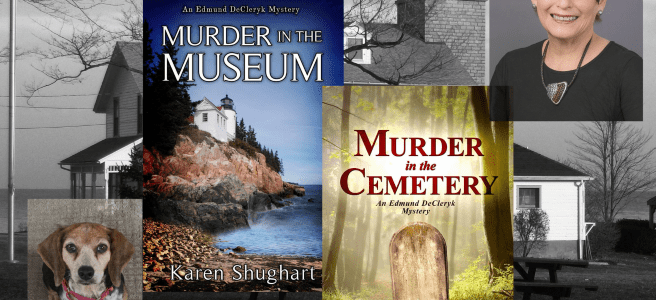
The Wine Blog by Karen Shughart

I’ve always believed that it’s easier to write about what you know, which is why wine features so prominently in my Edmund DeCleryk mysteries. Like my husband and me, Ed, and his wife Annie, live in the northern Finger Lakes region of New York, the second largest wine producer in the U. S. Wine is very much part of the lifestyle here.

Our own wine journey began many years ago. Our kids were in college, our careers at their peak, and we came home each night exhausted. We made the transition from workday to evening by having a glass of wine (or sometimes for Lyle, a Scotch) before dinner.  We caught up, chatted about our day, and even when my husband traveled for business, we designated a time to call each other, evening drink in hand. Although now retired, we continue the tradition to this day.

This image has an empty alt attribute; its file name is restaurant-love-romantic-dinner.jpg

One weekend we were invited to a dinner party at some friends’ house. We were asked to bring a dish to share and a bottle of wine to pair with it. It was the genesis of a gourmet group that met quarterly for many years, rotating hosts. A specialist at a wine store helped us choose the wines to go with each course. We quickly learned that to enjoy wine is to slowly sip and savor it.

Some of us took a cruise together from San Francisco Bay, along rivers that led to the Napa, Sonoma and Carneros wine regions of California.  Each evening we’d dock and before dinner attend a wine education session. The next morning we’d board a bus that would take us to charming towns for vineyard tours, wine tastings and to explore galleries and shops.

One weekend Lyle and I traveled to the Finger Lakes; a short drive from where we lived in Pennsylvania. We were enchanted by the wineries and restaurants, the vibrant jazz scene, and postcard-picture beauty.  We purchased an 1890s cottage on Lake Ontario; after retirement, we decided to make it our permanent home.

We joined a wine club.  At a series of monthly classes at New York Kitchen in Canandaigua, we learned about regions around the world where wine is crafted and how terroir, the natural environment in which grapes are grown, results in differences in color, smell and taste of the same varietal.  We cleaned up our musty basement and created a wine cellar in what was once a cistern, dry as a bone with thick stone walls and floor and about 56 degrees year ‘round.

Over the years I’ve learned a lot about wine, and I write about it in my mysteries. It is, after all, part of the local lore, and an integral part of the culture. And just like Lyle and me, having a glass of wine at the end of the day is a way for Ed and Annie to unwind and share their stories.

Guest Blogger- Tara Lush

As a journalist in Florida, I’ve written about the shady side of my sunny state for years.

Political corruption, horrific crime, drunken antics at tiki bars, alligators, naked people with machetes, cockroaches ending up in unmentionable places…nothing shocks me anymore. I’ve witnessed thirteen executions and covered numerous mass shootings.

I’ve long wanted to write crime fiction, and entertained the thought of doing true crime. But that seemed a little too close to my day job, and frankly, covering those horrific stories as a journalist sapped my desire to retell them in a novel.

My first forays into fiction were contemporary romances, and almost all were set in Florida. But crime fiction lurked in the corners of my brain, and in 2019, I sat down and finally plotted a murder mystery.

I adored the work of Carl Hiaasen, Tim Dorsey and Edna Buchanan — how could I not, they’re all journalists, like me — but when I started to write my debut mystery, I just couldn’t muster the cynicism or the edginess of the hardboiled noir. Perhaps the tumultuousness of recent years played a part in that.

As I scribbled my first mystery, I imagined a slightly less-dysfunctional tropical paradise, one that was loosely based on the things I’ve seen in my twenty-plus years as a reporter in Florida.

I knew I wanted to retain the quirkiness of Florida, though, so I created a fictional island in the Gulf of Mexico, chock full of eccentric characters. Devil’s Beach is where gossipy old hippies mingle with reformed mafiosos. Where the local newspaper writes stories about chicken nuggets shaped like manatees. Where a handsome Instagram-famous barista is found dead and no one bats an eye when a laid off journalist tries to figure out how the barista spent his final hours.

I also wanted a gentle anchor in the book, and that’s why I set it in the coffee shop of my dreams. It’s called Perkatory, a place decorated in hues of weathered wood with sky blue accents.

And then, my reporter’s brain kicked in. I drew inspiration from decades of covering crime in crafting my fictional murder. From the stilted language of cop-speak to wrangling over deadlines with editors, I used details from newspaper stories to seed clues into my fictional story. And the suspects, those were easy — they are all based on people I’ve covered in the past, folks who stood out as true characters.

There are also some fun Florida easter eggs in the details — for instance, the wild monkeys that inhabit a park on my fictional island can really be found in a place called Silver Springs.

I believe that for Florida residents, they’ll recognize many of the places, stories and details in the book. And for you non-Florida folks, I’m hopeful you’ll read my book and feel like you’re on a beach vacation, one where you get to know those quirky characters at the end of the tiki bar.

ABOUT GROUNDS FOR MURDER: Barista Lana Lewis’s sleuthing may land her in a latte trouble as Tara Lush launches her new Coffee Shop mysteries.

When Lana Lewis’ best — and most difficult — employee abruptly quits and goes to work for the competition just days before the Sunshine State Barista Championship, her café’s chances of winning the contest are creamed. In front of a gossipy crowd in the small Florida town of Devil’s Beach, Lana’s normally calm demeanor heats to a boil when she runs into the arrogant java slinger. Of course, Fabrizio “Fab” Bellucci has a slick explanation for jumping ship. But when he’s found dead the next morning under a palm tree in the alley behind Lana’s café, she becomes the prime suspect.

Even the island’s handsome police chief isn’t quite certain of her innocence. But Lana isn’t the only one in town who was angry with Fabrizio. Jilted lovers, a shrimp boat captain, and a surfer with ties to the mob are all suspects as trouble brews on the beach.

With her stoned, hippie dad, a Shih Tzu named Stanley, and a new, curious barista sporting a punk rock aesthetic at her side, Lana’s prepared to turn up the heat to catch the real killer. After all, she is a former award-winning reporter. As scandal hangs over her beachside café, can Lana clear her name and win the championship — or will she come to a bitter end?

LINK: books2read.com/u/4A7KLA 

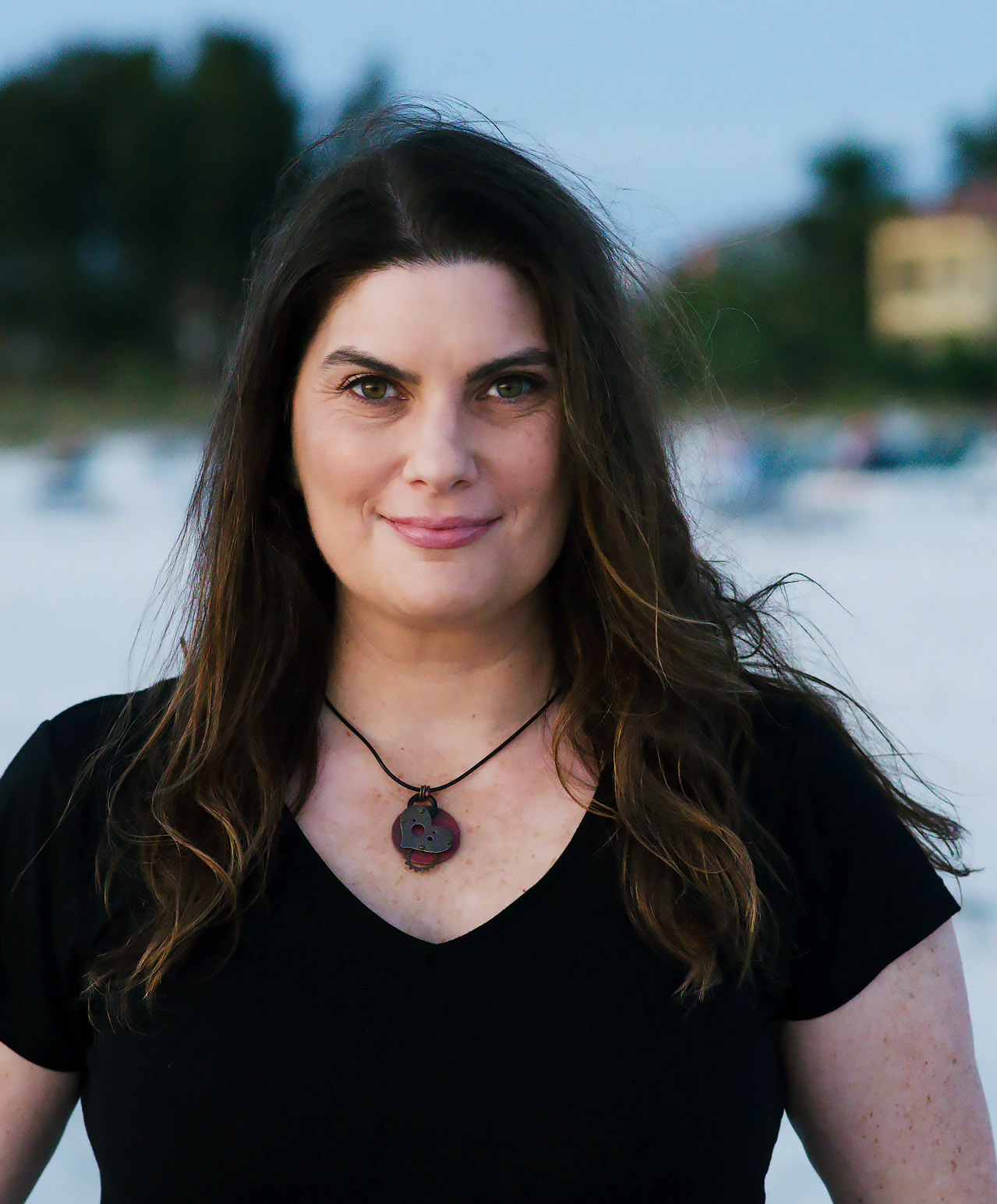
Tara Lush is a Rita Award finalist, an Amtrak writing fellow, and a George C. Polk Award winning journalist. For the past decade, she’s been a reporter with the Associated Press, covering crime, alligators, natural disasters, and politics.

She also writes contemporary romance set in tropical locations under her real name, Tamara Lush. A fan of vintage pulp-fiction book covers, Sinatra-era jazz, and 1980s fashion, she lives with her husband and two dogs on the Gulf coast.

Guest Author ~ Sharon Dean

A male English professor once asked me, why do all you women trade these mystery novels? By “all you women” he meant people like me, female English professors of a certain age. I used to trade with someone during final exams and escape into a mystery between reading student papers. My favorites were by Amanda Cross. How could I resist something called Death in a Tenured Position?

            Amanda Cross was the pseudonym for Carolyn Heilbrun, a faculty member at Columbia. She escaped the stress of being a woman in what was then a male dominated profession by writing novels about a female professor stumbling upon and solving crimes.

            What my female colleagues and I all had in common were preteen years reading Nancy Drew, Trixie Belden, the Dana girls, any of a huge number of mysteries put out by the Stratemeyer Syndicate. Bobbee Anne Mason, who wrote her Ph.D. dissertation on Vladimir Nabokov, studied these novels in a book called The Girl Sleuth (1975) before she turned to writing fiction of her own. In a line that captures how these books led so many of us to become English professors, Mason writes that after all “A scholar is a version of a sleuth.”

            My last scholarly book was an edition of letters by the nineteenth century writer Constance Fenimore Woolson. I had to be a sleuth to edit these letters. I had to find them, to puzzle together how they fit chronologically, to search for many of the names now lost to us. When I gave up writing books that required footnotes and turned to writing fiction, mysteries were a logical place for me to begin.

            My first amateur sleuth, Susan Warner, is what you would expect from me––a retired English professor. My new one, Deborah Strong, is not far removed. She’s a librarian in a town adjacent to the one I imagined for Susan. Both these amateur sleuths listen, watch, put clues together. Both allow me to draw on my life as an academic, especially the second in both series. My Susan Warner novel Death of the Keynote Speaker is set on New England’s Isles of Shoals. It weaves together the real history of Celia Thaxter’s literary salon on Appledore Island and a notorious murder on Smuttynose Island, with a fictional nineteenth-century writer I named Abigail Brewster. Writing it, I drew on many of those letters by Constance Woolson that I edited. In my forthcoming novel, The Wicked Bible (scheduled for Octorber 2021), Deborah Strong encounters a letter to the imagined Brewster when she’s at a conference on the history of libraries.

            I’ve let go of the academic life and learned to edit out the scholarly voice that used to intrude into my drafts. But I can’t let go of the connections to the scholarly research that creep into my fiction. Mine is a life that a good sleuth might have predicted. Reader of girl sleuth mysteries becomes analyzer of literature, and scholarly sleuth becomes writer of whodunits. I’m enjoying the journey.

The Barn

In 1990, Deborah Madison and Rachel Cummings, both seventeen, are enjoying a bicycle ride on a beautiful September day in New Hampshire. They stop at a local barn that no longer houses cows but still displays a wooden cow’s head that peeks out from a window in the rafters. Sliding open the door, they find Rachel’s boyfriend, Joseph Wheeler, dead on the barn’s floor.

            The case lies as cold as Joseph for nearly thirty years until Rachel returns to New Hampshire to attend the funeral of Joseph’s mother. The girls, now women, reopen the cold case and uncover secrets that have festered, as they often do, in small towns. Against a backdrop of cold and snow and freezing rain, Deborah and Rachel rekindle their friendship and confess the guilt each of them has felt about things that happened in the past.

The Barn is a story of friendship lost and recovered, secrets buried and unburied, and the power of forgiveness.

Buy links: https://www.amazon.com/gp/product/B08BZWKTMB

publisher’s link: https://encirclepub.com/product/thebarn/

Sharon L. Dean grew up in Massachusetts where she was immersed in the literature of New England. She earned undergraduate and graduate degrees at the University of New Hampshire, a state she lived and taught in before moving to Oregon. After giving up writing scholarly books that required footnotes, she reinvented herself as a fiction writer. She is the author of three Susan Warner mysteries and of a literary novel titled Leaving Freedom. The Barn, the first novel in a new mystery series, features librarian and reluctant sleuth Deborah Strong as she and her friend solve a thirty-year-old cold case. Set in the depth of New Hampshire’s January, The Barn is a story of friendship lost and recovered, secrets buried and unburied, and the power of forgiveness.

website: https://wordpress.com/page/sharonldean.com/31
publisher’s link: https://encirclepub.com/product/thebarn/
Goodreads: https://www.goodreads.com/author/show/267389.Sharon_L_Dean