Every mystery writer knows that moment when life hands you a story, though mine arrived with the bureaucratic charm of a DEA agent on an ordinary afternoon in my Phoenix psychiatric practice. I suppose I should have expected it, having recently qualified to prescribe buprenorphine for opioid addiction treatment. The universe has peculiar timing, particularly when you’re drawn to the psychological complexities of LGBTQ characters navigating medical mysteries. Maybe it’s because I’ve spent years watching people navigate the collision between who they are and who the world expects them to be, and writing LGBTQ characters in medical crises lets me excavate those psychological fault lines in ways that feel necessary, especially these days.
The agent’s unannounced inspection was routine, professional, even cordial once I explained that I hadn’t actually used this newfound prescribing capability yet. But as we sat in my office, surrounded by the everyday detritus of psychiatric practice, tissues strategically placed, diplomas asserting competence, that one plant I somehow hadn’t killed, my writer’s mind began its familiar excavation. What if I had been prescribing buprenorphine? What if some had gone missing? What if someone in this very building was orchestrating a diversion scheme with the methodical precision of a chess master?
That afternoon planted the seed for Tangled Darkness, though it would marinate in my subconscious for years before finally demanding to be written.
The premise crystallized when I combined that DEA visit with my experiences serving on Arizona’s Medical Board committee for impaired physicians. I’d witnessed how addiction could transform brilliant medical minds into ethical contortionists—people trained to heal suddenly finding themselves entangled in webs of their own making. The stories I heard were psychological case studies in how desperate circumstances can rewrite even the most carefully constructed moral code.
But the real catalyst emerged from a pattern I’d observed: the more ethical and scrupulous a physician was, the more vulnerable they became to exploitation. Their conscientiousness could be weaponized against them with surgical precision. This paradox fascinated me, the idea that integrity could become a liability. What if someone filed a false complaint against an innocent psychiatrist? What if that psychiatrist harbored a secret history that made the accusation both plausible and devastating?
Enter Dr. Leslie Schoen, my protagonist. She’s ethical, competent, and living with the transparency that recovery demands—her wife Izzy knows about her journey with alcoholism, and they’ve built their relationship on that foundation of honesty. Which makes the secret she’s now carrying so much more corrosive. When a Medical Board complaint lands alleging that Leslie has stolen opiates from her clinic, she can’t bring herself to tell Izzy, not when her wife is pregnant, not when the accusation feels like a knife twisted in the wound of her recovery. The irony is exquisite in its cruelty: her very status as someone in recovery makes the false allegation both plausible and devastating.
The murder element emerged from a simple question: In a medical practice where controlled substances represent both healing and profit, what happens when someone knows too much? I envisioned Damon Grady, a medical assistant caught between loyalty and desperation—his death would need to be clinically precise yet psychologically revealing, appearing as an overdose while carrying deeper implications about betrayal and survival.
My years in addiction psychiatry taught me that buprenorphine occupies a uniquely precarious position in the opioid crisis. It’s medication that can save lives when used properly, yet because it is another opioid, it’s valuable currency on the street. This duality—medicine as both salvation and commodity—became the engine driving my plot. The very safeguards designed to prevent diversion could be manipulated by someone who understood the system from within.
Portland provided the perfect setting after my relocation from Phoenix. Here was a city where medical marijuana dispensaries operated alongside prestigious medical centers, where progressive healthcare coexisted with the ongoing addiction crises. This backdrop felt like the perfect petri dish for the story I wanted to tell—where cutting-edge addiction treatment coexisted with people dying from overdoses three blocks away.
What made the premise truly compelling was layering in the psychological complexity I’d observed throughout my career. The most dangerous people I’ve encountered in clinical practice aren’t the ones wearing their pathology like a neon sign—they’re the ones whose choices feel both inexplicable and inevitable. I wanted characters who would make readers squirm with recognition, the kind of people you might defend at a dinner party right up until you learn what they’ve done.
The investigation structure allowed me to explore how medical professionals react under scrutiny. Having participated in peer reviews and committee investigations, I understood the unique terror of having your professional reputation questioned. That fear could drive even innocent people to make choices that would haunt them forever.
Writing Tangled Darkness became an exercise in precision—every scenario needed to be plausible enough that medical professionals would nod in recognition yet twisted enough to keep readers guessing. The drug diversion scheme had to be sophisticated enough to temporarily succeed but flawed enough for a determined psychiatrist to unravel. Because even the most brilliant criminals are ultimately human, and humans make mistakes—often the kind that reveal exactly who they are when nobody’s supposed to be watching.
The deeper I dove into the story, the more I realized I wasn’t just writing about prescription drug diversion or murder. I was exploring how systems designed to help us can be corrupted, how past traumas shape present choices, and how the pursuit of truth sometimes requires risking everything we’ve built. It’s a psychological-medical thriller doubling as an LGBTQ mystery. Many would say all of the above.
That cordial DEA agent who visited my Phoenix office had no idea he was launching a debut novel. But then again, the most compelling stories often begin with an ordinary moment—a routine inspection, a casual question. Sometimes the best plots are just waiting there in the everyday machinery of our lives, disguised as paperwork.
TANGLED DARKNESS
When Dr. Leslie Schoen becomes a suspect in her clinic assistant’s murder, she investigates a dangerous web of opiate drug theft while protecting her pregnant wife and confronting her own haunted past. Racing against time to clear her name, she discovers everyone has secrets—and someone in her inner circle is willing to kill to keep them hidden.
MM Desch brings over three decades as a practicing psychiatrist to her debut psychological thriller, TANGLED DARKNESS (Rowan Prose Publishing). With a passion for telling realistic stories about the veiled realm of psychiatric practice, Desch blends high crime and suspense with her real-world knowledge of addiction medicine. She and her wife live in Portland, Oregon, USA.
Blanche, Nan, and Traveling Mayhem: The Blanche Murninghan Mystery Series
By Nancy Nau Sullivan
Blanche “Bang” Murninghan is a Florida island girl with a wandering heart. One challenge after another invades her idyllic way of life on the beach, and she’s off to far lands.
In the second misadventure of the mystery series, Trouble Down Mexico Way, Blanche heads to Mexico City and gets caught up in a murder-for-art scheme. It starts with a visit to the Palacio Nacional and discovery of a “fake” mummy in the exhibit. Though she’s no expert in mummies, the skin looks fried. And it’s wearing a pink plastic barrette in its hair. The burning question, right off the bat, is: Why would a mummy be wearing such a piece of hair-ware?
Blanche is supposed to be writing travel articles for her hometown newspaper, but the mission is immediately derailed. Her curiosity is like a door that begs to be opened. Once she begins this search for the origin of the “fake” mummy, Mexico City suddenly becomes a maze of twists and turns. The police have questions for her. The mummy has spoken with clues that lead Blanche and the authorities on a chase to unravel an obvious murder and the motive behind it.
I thought up this mystery during the year I lived in Mexico—totally out of the fabric of imagination. Shortly after I arrived, I visited the Palacio Nacional in Mexico City where were displayed hundreds of ancient Mayan artifacts newly discovered in Mexico and Central America. The animated clay figures played ball (with skulls), the women squatted and cooked, the men hunted, the children leaped around with their smiling dog. A thousand-year-old dog. The exhibit also featured violent, colorful, and respectful rituals of death.
The celebration of Day of the Dead soon followed. Nothing is more colorful than the celebration of death in Mexico. From October 31 to November 6, depending on where you happen to be, the town plazas, homes, and shops are swept up in swaths of color, impromptu dancing and music in native dress, whole families out until midnight celebrating their deceased relatives. Their photos are posted on altars (ofrendas) carpeted with bright yellow and orange marigolds and celosias, and piled next are bread and wine and beer and, of course, tequila and mescal, all arranged on embroidered linen, ropes of flowers and handmade baskets, favorites that marked the family tradition together. Family members sit at the altars in the plazas and talk about their ancestors. It is solemn and raucous and lovely all at once, enough to make a newcomer fall completely in love with the culture.
Trouble Down Mexico Way spins off wildly from the adventure of my first days in Mexico City. But, as in all my mysteries, I celebrate the places I’ve lived, enjoyed, worked as a teacher. I like to add a folk tale in each book, history, and the details of food and smells and color. I’ve always kept journals to refer to in the writing, but I don’t trust my spotty, unreadable notes—once written while sitting on a horse. I research the settings for months before writing to round out the historical context in each story. It can’t all be about murder. And in Blanche’s case in Mexico, it’s also about love when she meets Emilio Del Sierra, a handsome young doctor with a lot of patience and a talent for the guitar.
Before Mexico, the first book in the series was inspired by Anna Maria Island, Florida, the place I spent years with family. Saving Tuna Street—a finalist at Foreword Reviews for best INDIE mystery—meets environmental disaster and chicanery head on. After Trouble Down Mexico Way, Blanche goes to Vietnam, Ireland, and Argentina in a succession of books where she survives hair-raising capers. She always returns to her cabin on the beach where she manages to keep her feet on the ground. Well, sand. When curiosity comes knocking, she’s ready—with a little help from her friends—for more mayhem and misadventure.
Trouble Down Mexico Way
Trouble Down Mexico Way is the second stand-alone mystery in the Blanche Murninghan Mysteries.
Blanche “Bang” Murninghan is a part-time journalist with a penchant for walking the beach — and walking into trouble. In Saving Tuna Street, first in the cozy mystery series, she fends off developers and drug dealers in an attempt to save her beloved Santa Maria Island. But Blanche has feet of sand and a love of travel. The adventure continues in Trouble Down Mexico Way with a “fake” mummy and murder; in Vietnam Mission Improbable: Vietnam, Blanche helps a friend find her mother in that beautiful country. For the fourth misadventure, A Deathly Irish Secret, Blanche inherits a castle and more than she bargained for—a murder charge. She pulls out of that fracas, too. Lastly, she travels to Argentina with handsome hunk Emilio Del Sierra to save his relatives from Nazis on the pampa. Wherever she goes, she always returns to her cabin, the white sand and sunsets, and to her wonderful quirky family on the little Florida Gulf island.
Kirkus Reviews says: “Blanche alone puts the bang in the book, and her debut should make readers sit up and notice. A welcome newcomer to the South Florida genre.”
A former newspaper journalist—and, presently, traveler–Nancy Nau Sullivan grew up in the Midwest but often stayed on Anna Maria Island, Florida. The setting inspired Saving Tuna Street, first in the Blanche Murninghan mystery series; the fifth installment, Hot Tango in Argentina, launched in April. Nancy’s memoir, The Last Cadillac, received two Eric Hoffer awards, and her novel, The Boys of Alpha Block, is based on her teaching at a boys’ prison. She’s taught in Argentina and Mexico and now writes and teaches part-time near the beautiful beaches of the Gulf of Mexico. Find Nancy at www.nancynausullivan.com.
Kris Bock on Two Very Different Heroines in her Mystery Series
My two mystery series have first-person (past tense) narrators, so I’m writing from their close point of view and the reader gets their thoughts. A novel, being fiction, doesn’t merely copy people from real life, of course. Still, an author might use bits and pieces of several people to create some characters, and completely make up others. We might also use personal experience – a great way to develop characters who feel authentic!
In the Accidental Detective humorous mystery series, a witty journalist solves mysteries in Arizona and tackles the challenges of turning fifty. I wrote it as I was facing fifty, and Kate has some of the same concerns, such as perimenopause and aging parents. I drew on my experience with chronic back pain, which sometimes throws off my walking stride, in order to write about Kate’s bombing injury and use of a cane.
Those things bring Kate to life, but she’s not me. I’ve been a full-time freelance writer for nearly 30 years, but I’m definitely not a war correspondent. Kate is me if I’d gone into journalism instead of other forms of writing – and if I was much more outgoing and fearless.
My new mystery series, The Reluctantly Psychic Mysteries, star Petra, who can touch an object and sense the emotions people have left behind. To create her character, I tried to imagine what it would be like growing up with a “gift” like hers. She avoids friendships so she won’t have to explain her psychic power or feel like she’s spying on people. Because she’s such a loner, she has many pets. She went into geology because it typically doesn’t force her to handle objects that have emotional residue from prior handling.
In some ways, she’s less me. She’s younger than I am, at thirty. I have no psychic powers. But I drew on the more anxious, cautious parts of myself in creating her, and used plenty of imagination to explore what it might be like to grow up with a challenging psychic power.
Extrovert or Introvert
Because these two characters are so different, they investigate mysteries in very different ways. Professional journalist Kate is used to interviewing people. She’s had practice seeking out the truth. People ask for her help, and she craves the adventure.
Loner Petra has childhood trauma due to neglect, abandonment, and betrayal from both family and friends. She tries to understand people’s behavior so she can protect herself. Her caution and fear mean she overanalyzes everything, but that works pretty well for an amateur detective.
Readers seem to like both characters. People think Kate is fun. They enjoy her eccentric sidekicks, including her sister, her father, and a couple of her father’s wacky friends. Many people would like to be like Kate – or they identify with her attempts to start over in midlife. Readers have said:
“I so related to Kate and her struggles to get back to her regular life. Can’t wait for the next book in this series!”
“A fifty-year-old who is wondering what she wants to do when she grows up? That’s more like it! Bock’s story offers proof positive that no one outgrows the need for more maturity and self-discovery.”
“I loved her smart world traveler, foreign war correspondent heroine. I loved reading a story where the heroine is so fascinating, as fascinating to me as the mystery.”
Most people don’t want to be Petra, but they sympathize with her (and often identify with her caution and anxiety). Book reviews have said:
“What truly resonated with me was Petra’s emotional journey. Her anxiety about being discovered, her cautious approach to forming friendships, and her affection for her pets (the cats! the ferrets! my heart!) made her character incredibly relatable. I found myself laughing, gasping, and perhaps shedding a tear or two.”
“What wrecked me emotionally was Petra’s struggle with trust. She’s spent her life pushing people away to protect herself, but now she has to rely on others to solve this murder. That slow, painful opening-up? The tentative friendships? I felt every second of it… Petra’s journey is one I won’t forget.”
“Petra is such a compelling lead. Her psychometry isn’t just a plot device—it’s a curse that’s shaped her entire life… And her journey from isolation to finally letting people in? Perfection.”
I’m sure most readers don’t have psychic powers. (If you do, please tell me all about it!) So why do people respond so much to Petra’s isolation? Maybe because we can feel isolated for so many reasons: neurodiversity, gender nonconformity, being artist types in a corporate world, feeling out of tune with our community’s or country’s politics … Who among us feels “normal”?
Petra masks her true self most of the time, for her safety, but she craves connections with people who understand and accept her. Don’t we all feel that way some (or much, or all) of the time?
Maybe Kate and Petra represent reasons readers turn to books: We want to identify with characters and believe they would like us too, or we want to feel what it would be like to be entirely different – or sometimes a bit of both.
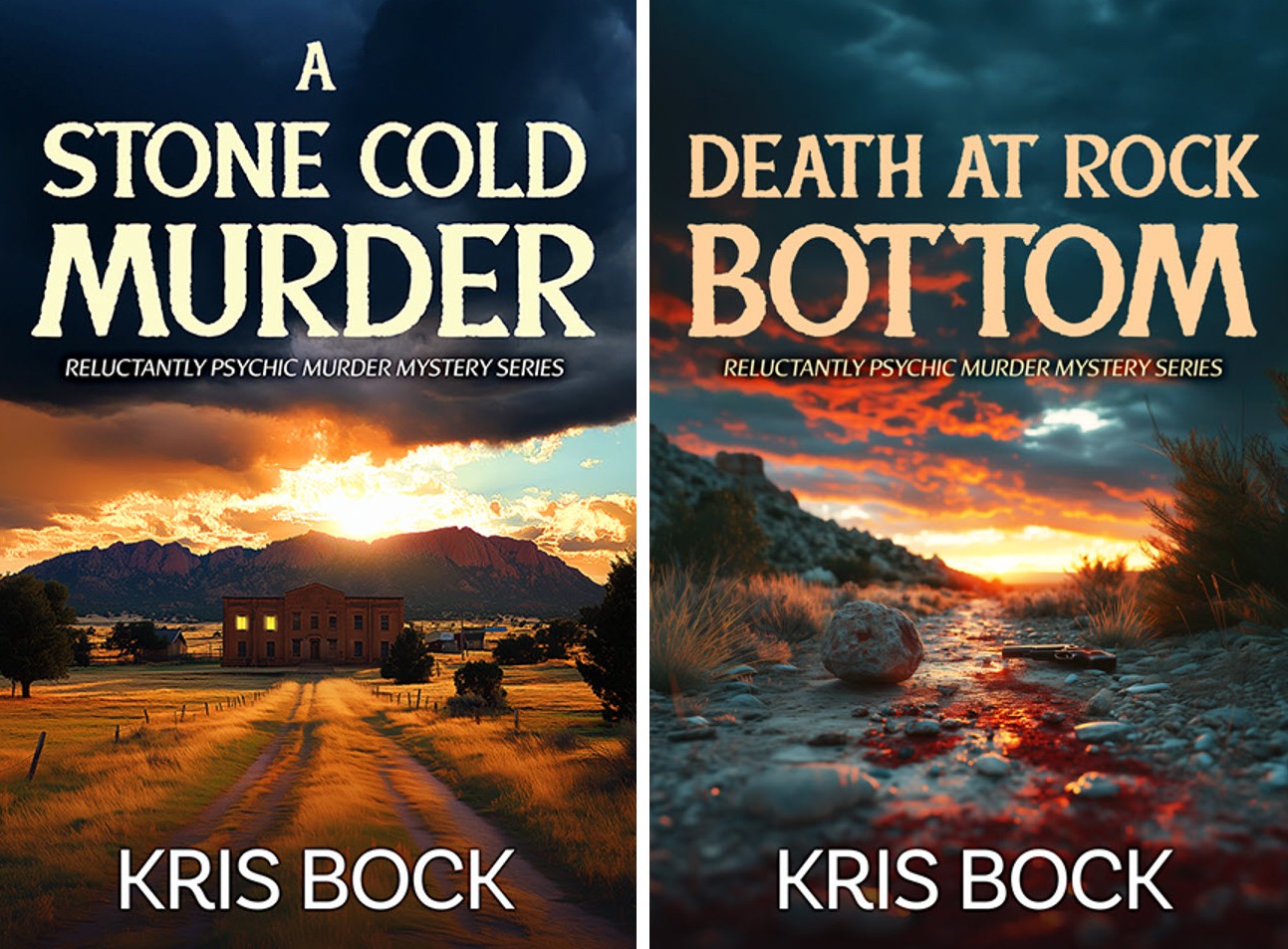
A Stone Cold Murder: The Reluctant Psychic Murder Mystery book 1: Petra Cloch has the gift, or curse, of psychometry – she can sense the emotions people had while wearing or using objects. Now she’s starting a new job at a quirky private museum in smalltown New Mexico. When she picks up a rock in her new office, she feels flashes of rage, fear and death. Everyone says her predecessor died in a car crash, but what if he was murdered? If he died because of the job, she could be next.
“[A Stone Cold Murder] is both heartwarming and suspenseful. For those who appreciate mysteries that offer depth, a distinctive supernatural element, and a protagonist to cherish, A Stone Cold Murder is an essential read.”
“The murder mystery is fantastic. The idea that a museum curator was killed with a rock (how chillingly ironic) and that Petra is the only one who knows? Genius. And the small-town setting? So atmospheric. The Banditt Museum feels like a character itself, full of hidden corners and whispered history.”
Kris Bock writes mystery, suspense, and romance, often with Southwestern landscapes. The Accidental Detective humorous mystery series starts with Something Shady at Sunshine Haven, which is FREE this month at all E-book retailers!
Sign up for the Kris Bock newsletter and get an Accidental Detective short story, a Reluctantly Psychic short story, and other freebies. Then every two weeks, you’ll get fun content about pets, announcements of new books, sales, and more.
Kris’s romantic suspense novels include stories of treasure hunting, archaeology, and intrigue. Readers have called these novels “Smart romance with an Indiana Jones feel.”
As for Kris’s romance, the Furrever Friends Sweet Romance series features the employees and customers at a cat café. Watch as they fall in love with each other and shelter cats. Start the series for free at all e-book retailers!
In the Accidental Billionaire Cowboys series, a Texas ranching family wins a fortune in the lottery. Who wouldn’t want to be a billionaire? Turns out winning the lottery causes as many problems as it solves.
Kris also writes a series with her brother, scriptwriter Douglas J Eboch, who wrote the original screenplay for the movie Sweet Home Alabama. The Felony Melanie series follows the crazy antics of Melanie, Jake, and their friends a decade before the events of the movie. Find the books at all E-book retailers.
He shoved both Castro and Gomez aside and came into the office. He slammed the door and pressed his back against it.
“I never wanted a woman detective in here.” Silvio was a big man and if he wanted to make Emilia feel trapped, he was succeeding. “I’ll do everything I can to f**k you over until you quit.”
Emilia couldn’t help but laugh. “Tell me something I don’t know.”
Silvio gave a start, obviously not expecting her to say that.
When I wrote this dramatic moment in Cliff Diver, the first Detective Emilia Cruz thriller set in Acapulco, Silvio’s dialogue was already scripted.
I’d already been there and done that.
An identical conversation occurred when I worked for the Central Intelligence Agency. About five years into my career, I moved to a new office, recruited by a manager trying to breathe new life into a stodgy team of PhD analysts. All male, as was our manager.
“Pete” was assigned as my mentor. This gave him ample opportunities to sabotage my work. When I finally confronted him, he confessed that he’d never worked with a woman before, didn’t want to work with one now and would do everything he could to get me to leave.
He delivered his threat as if he expected to shock me. I couldn’t help but laugh and deliver the same line that Detective Emilia Cruz would say years later in fiction.
Long since retired, I recently recalled the encounter when recording an episode of the Amato2Berrick Crime Conversations on YouTube with UK crime writer Jane Harvey-Berrick (Dead Water, Dead Reckoning) for our buddy read of The Trespasser by Tana French.
In The Trespasser, Antoinette Conway is the only female police detective on the Dublin Murder Squad. She’s convinced that all her male colleagues are out to get her.
Her point of view is a soul-eating combination of rage, paranoia and scorn. In every situation, Antoinette is looking for a fight, whether physical, verbal or emotional.
In contrast, Detective Emilia Cruz follows the pragmatic approach I took during my CIA career when I was the only woman in the room. A tiny minority of male co-workers acted like jerks and had to be dealt with, the faster the better. Like me, Emilia stands up for herself.
Although she grew up on Acapulco’s streets and knows how to use her fists, Emilia isn’t propelled by rage like Antoinette.
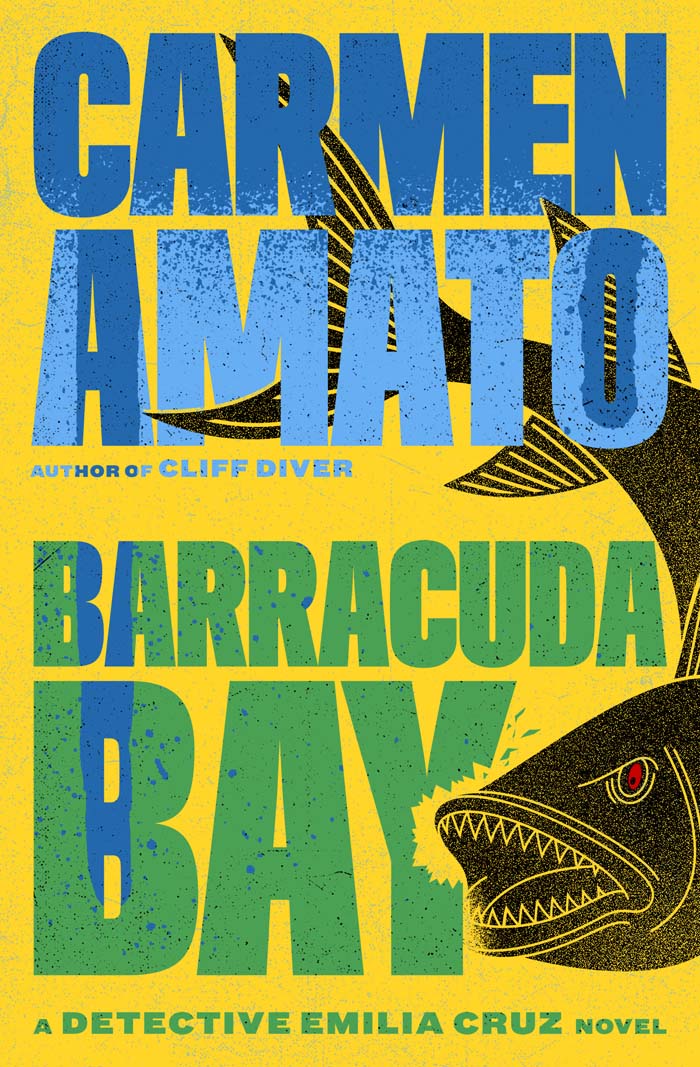
In Barracuda Bay, the ninth and latest release in the series, the chief of police is the jerk who doesn’t want Emilia in the room.
In the series’ prequel, Made in Acapulco, he was loath to shake her hand at a badge ceremony. Fast forward a few fictional years and Emilia wants to get married. It’s the chief’s chance to boot her off the force.
Even worse, the chief recruits her former partner and current boss to help.
And who is the former partner and current boss? You guessed it. The very same Lieutenant Silvio who gave her such a rough time in the first book in the series, Cliff Diver.
In Barracuda Bay, the plot against Emilia unfolds after she finds a woman’s body in a derelict building. The murder case is explosive—the victim is the mayor’s sister, and election season is heating up.
Meanwhile, the crime scene holds secrets. The building once housed a covert government operation targeting a brutal drug lord that went sideways.
Before Emilia can zero in on her prime murder suspect, she’s dispatched to Washington, DC where she becomes a target of killers disguised as cops. Alone and desperate, Emilia is caught in a lethal web of corruption, betrayal, and political intrigue.
Barracuda Bay adds a heady dose of tension to Emilia’s situation as the only woman in the room. As one reviewer wrote: “The hits keep on coming as Detective Cruz is spun through a whirlwind that links cartels, crooks, and various government agencies.”
Before I sign off, you might be wondering what happened to “Pete.”
Six months after our confrontation, he left the CIA because his wife got a job in another state. He’d be a house husband until he found a job there.
Ironic, right? I couldn’t have written a better ending.
Barracuda Bay
Political corruption turns Acapulco’s first female police detective into a fugitive on the run in Washington DC.
“A thrilling series” — National Public Radio
In a derelict building for sale, Acapulco police detective Emilia Cruz stumbles on the body of a woman brutally shot to death. Incredibly, the victim was the sister of Acapulco’s ambitious mayor, who is running for re-election against an opponent with deep pockets.
The victim’s ex-boyfriend has a suspiciously weak alibi but is the crime scene the key to finding the murderer? The building was once used for a secret Mexican government operation targeting a ruthless drug lord.
Meanwhile, there’s a conspiracy within the police department to force Emilia out.
Before Emilia can save her job or arrest her prime suspect, she’s sent on an errand of mercy to Washington, DC. There she becomes a fugitive hunted by killers masquerading as cops. Alone, desperate and on the run, Emilia turns for help to a human trafficker she once vowed to murder. Her brother.
From Acapulco’s beaches to the streets of Washington, DC, the stakes couldn’t be higher in this electrifying, page-turning thriller.
2019 and 2020 Poison Cup award, Outstanding Series – CrimeMasters of America
Carmen Amato is the award-winning author of 18 mysteries and thrillers, including the Detective Emilia Cruz mystery series pitting the first female police detective in Acapulco against Mexico’s cartels, corruption, and social inequality. Starting with Cliff Diver, the series is a back-to-back winner of the Poison Cup Award for Outstanding Series from CrimeMasters of America. Optioned for television, National Public Radio hailed it as “A thrilling series.”
Her Galliano Club historical fiction thrillers include Murder at the Galliano Club, which won the 2023 Silver Falchion Award for Best Historical.
Her standalone thrillers include The Hidden Light of Mexico City, which was longlisted for the 2020 Millennium Book Award.
A 30-year veteran of the CIA where she focused on technical collection and counterdrug issues, Carmen is a recipient of both the National Intelligence Award and the Career Intelligence Medal. A judge for the BookLife Prize and Killer Nashville’s Claymore Award, her essays have appeared in Criminal Element, Publishers Weekly, and other national publications. She writes the popular Mystery Ahead newsletter on Substack.
Originally from upstate New York, after years of globe-trotting she and her husband enjoy life in Tennessee.
As a writer of both short stories and novels, I’ve grown accustomed to research. It is a part of writing, much like plotting and editing. Because I’m naturally curious, I have to limit the amount of research I do on any given subject.
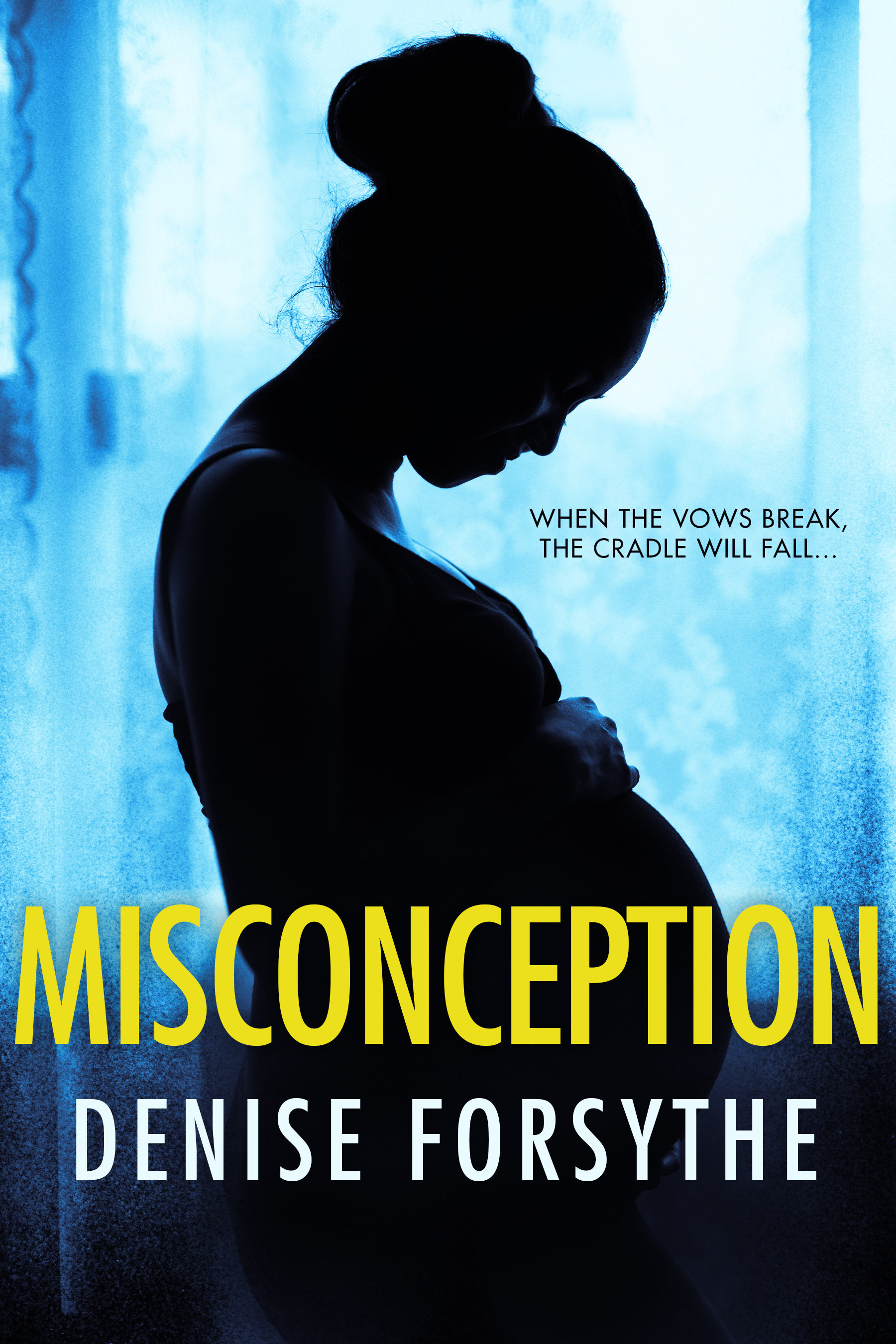
When I began writing Misconception, a domestic suspense thriller, I had no idea how much research I’d need to do. That’s because up until then I’d been a short story writer and only needed to research small bits of information to propel my plot forward.
A tried-and-true pantser, the ideas that combined to form the plot led me to realize just how much research was needed.
The book contains medical research on infertility, psychological research on personality types and disorders, employment research on workplace disputes and criminal law research, including jail/prison conditions for female inmates.
What worked for me and what I will share are five tips on how to get through the research hurdle.
1) To avoid long gaps in writing while researching subjects, consider doing just enough cursory research. That means conducting research prior to or early on during your first draft. That way you’ll avoid having to correct large parts of your story or manuscript later on. In my case, as I was writing Misconception I decided to set the story in Chicago. I felt the large city coupled with challenging weather would set a moody tone for the domestic suspense thriller. This is especially beneficial when you are deep into developing characters and plot points. Once you are at a point to take stock of what you’ve written so far, you can continue researching and filling in any gaps. This can also reduce the chance of falling into a rabbit hole by limiting what you need to advance the story.
2) Create a system to keep track of research sources. I use Scrivener to write my manuscripts. The software provides a handy corkboard to place website links right next to the page where the information will be placed. It’s important to obtain at least two to three resources for each subject, to ensure information or resource isn’t outdated or incorrect.
3) While artificial intelligence resources can be helpful, I would caution their use. Though a resource like ChatGPT can narrow down resource options, it isn’t a replacement for doing your own thorough research. Some resources I used included: WebMD and Health.com for medical conditions, university educational programs for fertility specialty information, past news coverage of sports and team rivalries, news coverage and/or documentaries on jail conditions, fertility health associations, hospital chapel coverage by local newspapers and a website called Lifeway that offers examples of funeral sermons.
4) Check and recheck sources. It’s a good idea to use respected sources for medical and legal research and avoid copying what you see on television or in movies. Tapping into my past experience as a paralegal working for a New York City DA’s office, I knew my knowledge of criminal law wasn’t enough to flesh out the details of Cassie Nichols’ harrowing journey through the Wisconsin legal system. Make sure to drill down to the state, and sometimes the city, when it comes to researching criminal law. I researched specific areas from a state and local angle, going so far as to find real accounts of what jail conditions are like and locating transcripts of initial court appearances so I could use the information as a guide. If you are good at deciphering medical jargon, by all means do so. If you’re not, don’t be afraid to reach out to an expert. A helpful website to assist in locating an expert in a field is HARO or helpareportout.com.
5) Do a final fact check while the book is in self-editing mode. Things change, especially when it comes to legislation. My book was about a third of the way complete when I discovered that it couldn’t be set in Chicago, as planned. During research I learned that in the state of Illinois, in vitro fertility treatments are covered by insurance, whereas in Wisconsin they are not. This was an integral aspect of the plot, given the tension between the main character, Cassie Nichols, and her husband Jake. The financial strain burdened the already stressed couple, adding to the tension. Because I wanted to retain the moody weather as a backdrop to intensify certain scenes in the psychological thriller, I chose to move the setting to a fictional town in southeastern Wisconsin near where I grew up.
Though research may seem daunting, with a little strategy it doesn’t have to be painful.
Misconception
Cassie Nichols wants a baby. Badly.
She’s certain a baby will anchor the crumbling relationship with her husband, Jake, who she suspects is having an affair.
But after a miscarriage and continued trouble getting pregnant leads the couple down the frustrating and expensive road of in vitro fertilization, Cassie finds herself running out of time.
Pumped on hormones, fueled by anxiety, and believing it is the only way to save her marriage, she does the unthinkable to ensure a viable pregnancy.
Now, the happy family she envisioned remains out of reach and is instead wrought with lies, deception, and murder.
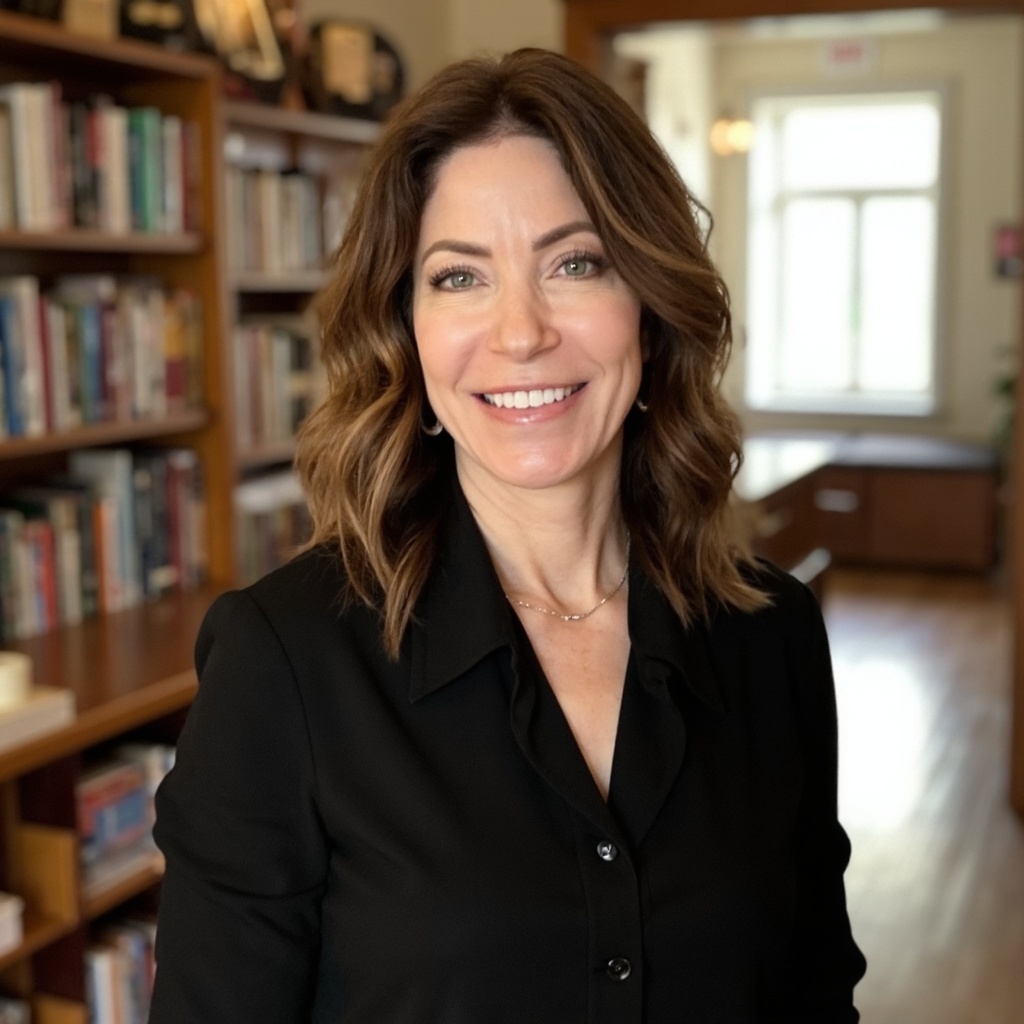
Denise Forsythe is the author of the domestic suspense novels Misconception and the forthcoming Misconstrue.
An award-winning and recognized writer of mystery, horror, and science fiction short stories; you can find these works under the pen name Denise Johnson (see author page).
A member of Sisters in Crime, Inc. and multiple Sisters in Crime chapters, she is a Charter Member of the Sisters in Crime
Grand Canyon Writers chapter and its current vice president.
She resides in the Southwest with a precocious Labradoodle that keeps her on her toes.
Visit her at her website:deniseforsythedotcom to learn more about freebies, upcoming book projects, and book signing events.







 Ladies of Mystery
You must be logged in to post a comment.