Guest Blogger ~ Carmen Amato

Writing the Only Woman in the Room

“Beat it,” Silvio said.

He shoved both Castro and Gomez aside and came into the office. He slammed the door and pressed his back against it.

“I never wanted a woman detective in here.” Silvio was a big man and if he wanted to make Emilia feel trapped, he was succeeding. “I’ll do everything I can to f**k you over until you quit.”

Emilia couldn’t help but laugh. “Tell me something I don’t know.”

Silvio gave a start, obviously not expecting her to say that.

When I wrote this dramatic moment in Cliff Diver, the first Detective Emilia Cruz thriller set in Acapulco, Silvio’s dialogue was already scripted.

I’d already been there and done that.

An identical conversation occurred when I worked for the Central Intelligence Agency. About five years into my career, I moved to a new office, recruited by a manager trying to breathe new life into a stodgy team of PhD analysts. All male, as was our manager.

“Pete” was assigned as my mentor. This gave him ample opportunities to sabotage my work. When I finally confronted him, he confessed that he’d never worked with a woman before, didn’t want to work with one now and would do everything he could to get me to leave.

He delivered his threat as if he expected to shock me. I couldn’t help but laugh and deliver  the same line that Detective Emilia Cruz would say years later in fiction.

Long since retired, I recently recalled the encounter when recording an episode of the Amato2Berrick Crime Conversations on YouTube with UK crime writer Jane Harvey-Berrick (Dead Water, Dead Reckoning) for our buddy read of The Trespasser by Tana French.

In The Trespasser, Antoinette Conway is the only female police detective on the Dublin Murder Squad. She’s convinced that all her male colleagues are out to get her.

Her point of view is a soul-eating combination of rage, paranoia and scorn. In every situation, Antoinette is looking for a fight, whether physical, verbal or emotional.

In contrast, Detective Emilia Cruz follows the pragmatic approach I took during my CIA career when I was the only woman in the room. A tiny minority of male co-workers acted like jerks and had to be dealt with, the faster the better. Like me, Emilia stands up for herself.

Although she grew up on Acapulco’s streets and knows how to use her fists, Emilia isn’t propelled by rage like Antoinette.

  In Barracuda Bay, the ninth and latest release in the series, the chief of police is the jerk who doesn’t want Emilia in the room.

In the series’ prequel, Made in Acapulco, he was loath to shake her hand at a badge ceremony. Fast forward a few fictional years and Emilia wants to get married. It’s the chief’s chance to boot her off the force.

Even worse, the chief recruits her former partner and current boss to help.

And who is the former partner and current boss? You guessed it. The very same Lieutenant Silvio who gave her such a rough time in the first book in the series, Cliff Diver.

In Barracuda Bay, the plot against Emilia unfolds after she finds a woman’s body in a derelict building. The murder case is explosive—the victim is the mayor’s sister, and election season is heating up.

Meanwhile, the crime scene holds secrets. The building once housed a covert government operation targeting a brutal drug lord that went sideways.

Before Emilia can zero in on her prime murder suspect, she’s dispatched to Washington, DC where she becomes a target of killers disguised as cops. Alone and desperate, Emilia is caught in a lethal web of corruption, betrayal, and political intrigue.

Barracuda Bay adds a heady dose of tension to Emilia’s situation as the only woman in the room. As one reviewer wrote: “The hits keep on coming as Detective Cruz is spun through a whirlwind that links cartels, crooks, and various government agencies.”

Before I sign off, you might be wondering what happened to “Pete.”

Six months after our confrontation, he left the CIA because his wife got a job in another state. He’d be a house husband until he found a job there.

Ironic, right? I couldn’t have written a better ending.

Barracuda Bay
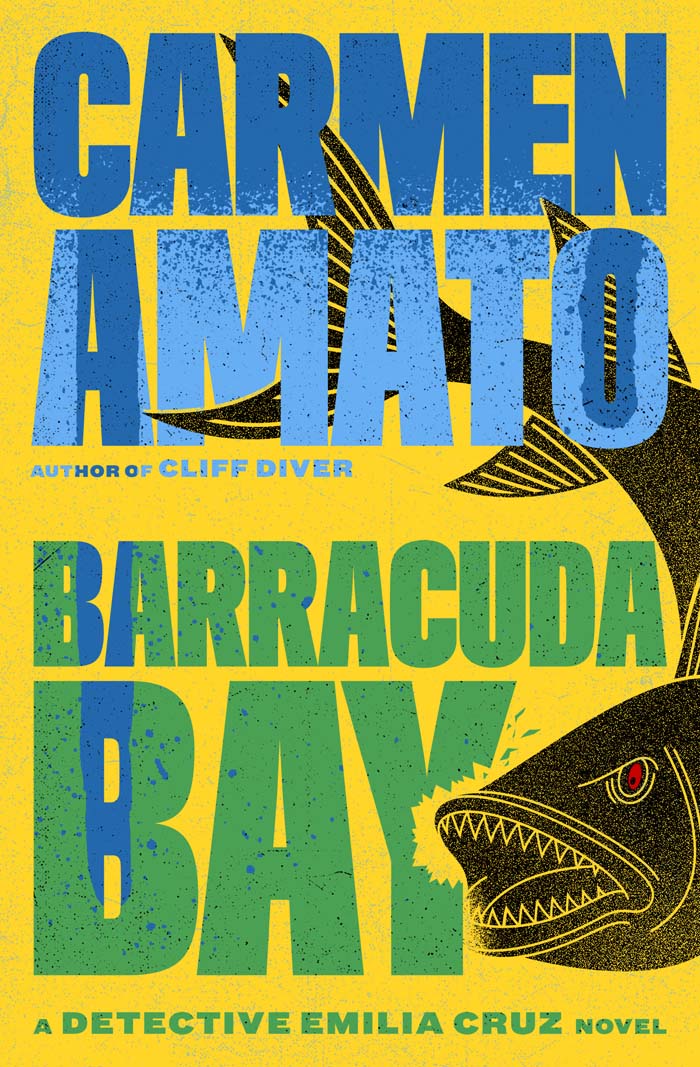
Political corruption turns Acapulco’s first female police detective into a fugitive on the run in Washington DC.

“A thrilling series” — National Public Radio

In a derelict building for sale, Acapulco police detective Emilia Cruz stumbles on the body of a woman brutally shot to death. Incredibly, the victim was the sister of Acapulco’s ambitious mayor, who is running for re-election against an opponent with deep pockets.

The victim’s ex-boyfriend has a suspiciously weak alibi but is the crime scene the key to finding the murderer? The building was once used for a secret Mexican government operation targeting a ruthless drug lord.

Meanwhile, there’s a conspiracy within the police department to force Emilia out.

Before Emilia can save her job or arrest her prime suspect, she’s sent on an errand of mercy to Washington, DC. There she becomes a fugitive hunted by killers masquerading as cops. Alone, desperate and on the run, Emilia turns for help to a human trafficker she once vowed to murder. Her brother.

From Acapulco’s beaches to the streets of Washington, DC, the stakes couldn’t be higher in this electrifying, page-turning thriller.

2019 and 2020 Poison Cup award, Outstanding Series – CrimeMasters of America

BUY:

Amazon: https://geni.us/barracuda2025

Barnes & Noble: https://www.barnesandnoble.com/w/barracuda-bay-carmen-amato/1146877496

Books-a-Million: https://www.booksamillion.com/p/Barracuda-Bay/Carmen-Amato/9798989140374

Carmen Amato is the award-winning author of 18 mysteries and thrillers, including the Detective Emilia Cruz mystery series pitting the first female police detective in Acapulco against Mexico’s cartels, corruption, and social inequality. Starting with Cliff Diver, the series is a back-to-back winner of the Poison Cup Award for Outstanding Series from CrimeMasters of America. Optioned for television, National Public Radio hailed it as “A thrilling series.”

Her Galliano Club historical fiction thrillers include Murder at the Galliano Club, which won the 2023 Silver Falchion Award for Best Historical.

Her standalone thrillers include The Hidden Light of Mexico City, which was longlisted for the 2020 Millennium Book Award.

A 30-year veteran of the CIA where she focused on technical collection and counterdrug issues, Carmen is a recipient of both the National Intelligence Award and the Career Intelligence Medal. A judge for the BookLife Prize and Killer Nashville’s Claymore Award, her essays have appeared in Criminal Element, Publishers Weekly, and other national publications. She writes the popular Mystery Ahead newsletter on Substack.

Originally from upstate New York, after years of globe-trotting she and her husband enjoy life in Tennessee.

Website: https://carmenamato.net/links

Substack: https://mysteryahead.substack.com

Facebook: https://facebook.com/authorcarmenamato

Instagram: https://instagram.com/authorcarmenamato

Amazon: https://www.amazon.com/stores/Carmen-Amato/author/B007UA1J8U

Goodreads: https://www.goodreads.com/author/show/6154479.Carmen_Amato

Email: carmen@carmenamato.net
Guest Blogger ~ Denise Forsythe

5 Tips on Researching a Novel

by Denise Forsythe

As a writer of both short stories and novels, I’ve grown accustomed to research. It is a part of writing, much like plotting and editing. Because I’m naturally curious, I have to limit the amount of research I do on any given subject.

When I began writing Misconception, a domestic suspense thriller, I had no idea how much research I’d need to do. That’s because up until then I’d been a short story writer and only needed to research small bits of information to propel my plot forward.

A tried-and-true pantser, the ideas that combined to form the plot led me to realize just how much research was needed.

The book contains medical research on infertility, psychological research on personality types and disorders, employment research on workplace disputes and criminal law research, including jail/prison conditions for female inmates.

What worked for me and what I will share are five tips on how to get through the research hurdle.

1) To avoid long gaps in writing while researching subjects, consider doing just enough cursory research. That means conducting research prior to or early on during your first draft. That way you’ll avoid having to correct large parts of your story or manuscript later on. In my case, as I was writing Misconception I decided to set the story in Chicago. I felt the large city coupled with challenging weather would set a moody tone for the domestic suspense thriller. This is especially beneficial when you are deep into developing characters and plot points. Once you are at a point to take stock of what you’ve written so far, you can continue researching and filling in any gaps. This can also reduce the chance of falling into a rabbit hole by limiting what you need to advance the story.

2) Create a system to keep track of research sources. I use Scrivener to write my manuscripts. The software provides a handy corkboard to place website links right next to the page where the information will be placed. It’s important to obtain at least two to three resources for each subject, to ensure information or resource isn’t outdated or incorrect.

3) While artificial intelligence resources can be helpful, I would caution their use. Though a resource like ChatGPT can narrow down resource options, it isn’t a replacement for doing your own thorough research. Some resources I used included: WebMD and Health.com for medical conditions, university educational programs for fertility specialty information, past news coverage of sports and team rivalries, news coverage and/or documentaries on jail conditions, fertility health associations, hospital chapel coverage by local newspapers and a website called Lifeway that offers examples of funeral sermons.

4) Check and recheck sources. It’s a good idea to use respected sources for medical and legal research and avoid copying what you see on television or in movies. Tapping into my past experience as a paralegal working for a New York City DA’s office, I knew my knowledge of criminal law wasn’t enough to flesh out the details of Cassie Nichols’ harrowing journey through the Wisconsin legal system. Make sure to drill down to the state, and sometimes the city, when it comes to researching criminal law. I researched specific areas from a state and local angle, going so far as to find real accounts of what jail conditions are like and locating transcripts of initial court appearances so I could use the information as a guide. If you are good at deciphering medical jargon, by all means do so. If you’re not, don’t be afraid to reach out to an expert. A helpful website to assist in locating an expert in a field is HARO or helpareportout.com.

5) Do a final fact check while the book is in self-editing mode. Things change, especially when it comes to legislation. My book was about a third of the way complete when I discovered that it couldn’t be set in Chicago, as planned. During research I learned that in the state of Illinois, in vitro fertility treatments are covered by insurance, whereas in Wisconsin they are not. This was an integral aspect of the plot, given the tension between the main character, Cassie Nichols, and her husband Jake. The financial strain burdened the already stressed couple, adding to the tension. Because I wanted to retain the moody weather as a backdrop to intensify certain scenes in the psychological thriller, I chose to move the setting to a fictional town in southeastern Wisconsin near where I grew up.

Though research may seem daunting, with a little strategy it doesn’t have to be painful.

Misconception

Cassie Nichols wants a baby. Badly.

She’s certain a baby will anchor the crumbling relationship with her husband, Jake, who she suspects is having an affair.

But after a miscarriage and continued trouble getting pregnant leads the couple down the frustrating and expensive road of in vitro fertilization, Cassie finds herself running out of time.

Pumped on hormones, fueled by anxiety, and believing it is the only way to save her marriage, she does the unthinkable to ensure a viable pregnancy.

Now, the happy family she envisioned remains out of reach and is instead wrought with lies, deception, and murder.

universal buy link: https://books2read.com/misconceptionbyDeniseForsythe

Denise Forsythe is the author of the domestic suspense novels Misconception and the forthcoming Misconstrue.

An award-winning and recognized writer of mystery, horror, and science fiction short stories; you can find these works under the pen name Denise Johnson (see author page).

A member of Sisters in Crime, Inc. and multiple Sisters in Crime chapters, she is a Charter Member of the Sisters in Crime

Grand Canyon Writers chapter and its current vice president.

She resides in the Southwest with a precocious Labradoodle that keeps her on her toes.

Visit her at her website:deniseforsythedotcom to learn more about freebies, upcoming book projects, and book signing events.

Guest Blogger~ Zaida Alfaro

The Hidden Track: A Miami Music Mystery, is the third and final book of the Miami Music Mystery series, and it serves as a culmination of everything the series has been building towards. In this final installment, readers are taken on one last thrilling ride through the vibrant music scene of Miami, with a mystery that not only ties up the story arcs of our beloved characters but also brings resolution to the long-standing questions and tensions that have been simmering throughout the series.

The book follows the same characters we’ve grown attached to, but with deeper layers of growth and development. They’ve come a long way from the first book, with their personal lives and relationships more complex and interwoven into the unfolding mystery. In The Hidden Track, the stakes are higher than ever. The main character, Vy, faces a challenge that requires not only solving a crime but confronting personal demons, facing difficult decisions, and navigating the delicate balance between their musical passion and the dangers that come with it.

What sets this book apart is the sense of closure it provides, while also giving readers the chance to reflect on the themes that have been consistent throughout the series—loyalty, trust, and the power of music to heal and connect. The music itself is integral to the story, not only as a backdrop but as a vehicle for the plot, with song lyrics and performances playing key roles in solving the mystery. Music is a language of its own, and in this book, the hidden track symbolizes the final piece of the puzzle, something that’s been waiting to be discovered all along.

Wrapping up the Miami Music Mystery series has been an emotional and reflective journey. After working on these characters and storylines for over five years, it feels surreal to finally bring everything to a close. There’s a mix of happiness and sadness—happiness in knowing I completed the vision I set out for the series, but also sadness in letting go of the world and characters I’ve spent so much time with.

The process of tying up loose ends in the final book was both challenging and rewarding. Every subplot needed resolution, and I wanted to make sure the characters’ growth and the mysteries were satisfying to readers. There were moments of doubt, especially with the last few chapters, but pushing through and seeing it all come together was worth every bit of effort.

What’s also been important for me is knowing the story has reached its natural conclusion. While it’s bittersweet to say goodbye to Miami, its music scene, and the characters who’ve made it so special, I’m proud of what I’ve created and the way everything has come full circle.

I feel a sense of accomplishment, but I also look forward to exploring new projects. There’s a mixture of pride in the series’ completion and excitement about what comes next. It’s been a chapter of my life that I will always cherish, and I’m grateful for the readers who have been part of the journey.

THE HIDDEN TRACK

Vy has finally hit her high note. After years of clawing her way through the ruthless music industry, dodging dangerous rivals, and surviving murderous encounters, her dreams of stardom are within reach. With a record deal secured and her debut single climbing the charts, Vy is ready to shoot her first music video—a moment she’s been rehearsing in her mind for as long as she can remember.

But as always in Vy’s life, nothing stays in tune. As tensions crescendo and chaos threatens to drown her out, Vy must find a way to keep her creative vision intact. All the while, shadows from her past echo through her mind—could there be someone still out there, determined to see her career hit its final note?

As Vy’s close-knit band of friends and collaborators face their own personal trials, the stakes have never been higher. Has Vy’s murderous melody finally ended, or is there still danger lurking in the final verse? In the end, will Vy get the happily ever after she’s fought so hard for, or is there a hidden track playing a haunting melody, waiting to pull her back into the shadows?

Buy link: https://linktr.ee/Zaidamusic

The vibrant city of Miami, Florida, serves as the heartbeat of the Miami Music Mystery series—a city I deeply cherish, having been born and raised there. Like the series’ protagonist, Vy, I am a singer-songwriter and Grammy-considered independent artist, with a profound passion for music and literature. 

Years ago, I discovered cozy mysteries and was immediately captivated by their engaging, intriguing, and often humorous storylines. Inspired by these works, I decided to merge my love of music with my newfound passion for storytelling. This led to the creation of my debut novel, The Last Note: A Miami Music Mystery. 

Following its success, I continued Vy’s story In the Key of Dead: A Miami Music Mystery. Drawing from my own life experiences, I wove elements like phobias, dream sequences, and quirky personalities into the narrative—all grounded in truth. Through these novels, I aimed to share my love for Miami, its rich Cuban culture, my family, and the world of music. 

Now, with the release of The Hidden Track, the final book in the Miami Music Mystery series, I’ve brought Vy’s journey to a thrilling conclusion. This latest installment delves deeper into the city’s vibrant backdrop and Vy’s evolving story, tying together the mysteries, challenges, and triumphs that have defined her journey. 

I hope readers feel the same passion for Miami, music, and storytelling that I’ve poured into these novels. It’s been a joy to bring this series to life and share a piece of my world with you. 

Zaidamusic.com

Instagram/Twitter: zaidamusic

Facebook: zaidaauthor and zaidamusic

Guest Blogger ~ Erica Miner

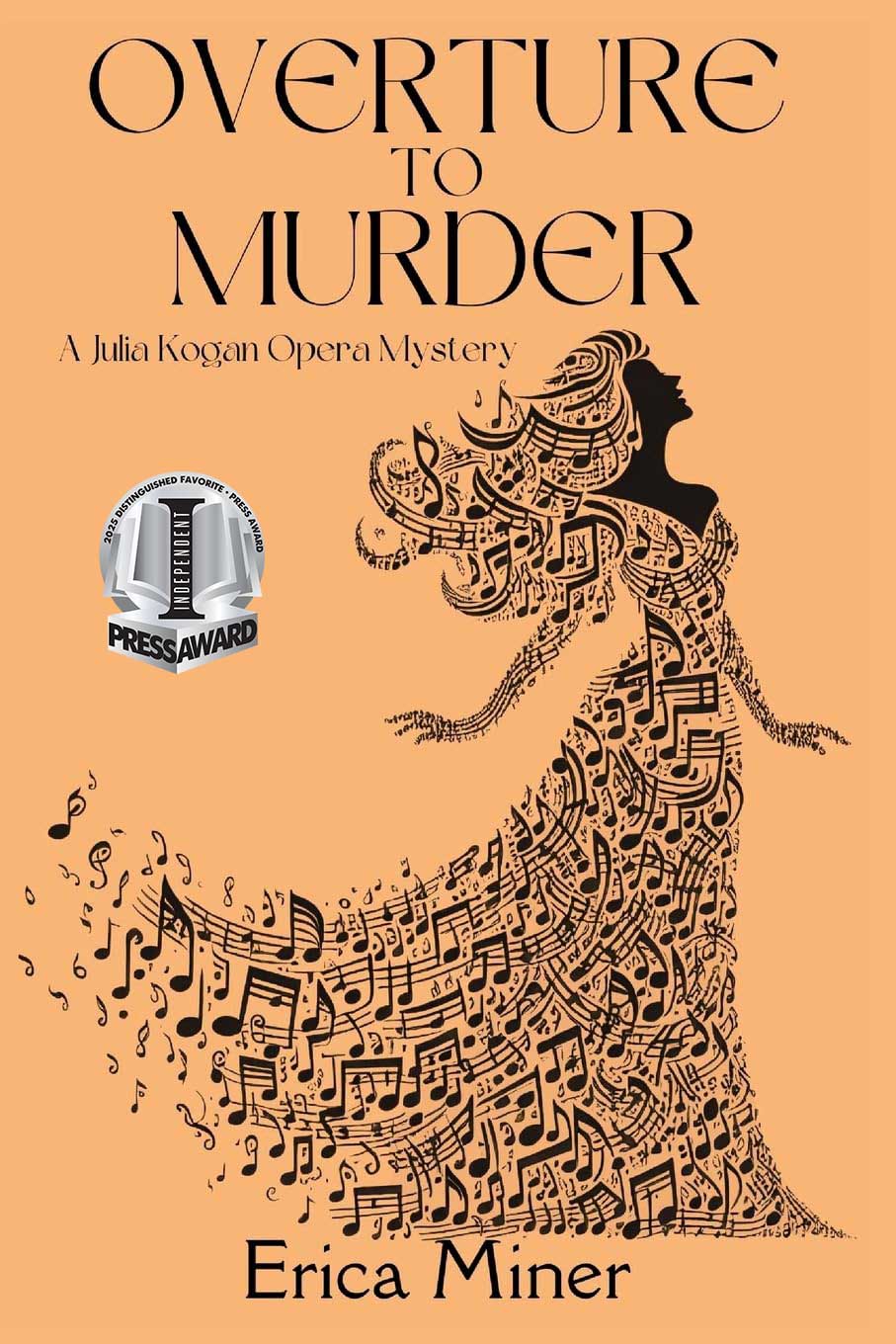
Overture to Murder: a violinist who won’t quit sleuthing

It’s strange how a standalone mystery can evolve into a series. I started off with just one book, Aria for Murder, inspired by my 21 years of experience playing violin at the Metropolitan Opera in New York. The protagonist, young violinist Julia, trades her violin for a detective’s hat as she finds herself investigating murders that take place on and offstage. I had fun weaving real operas into the mystery plot and was gratified at the number of readers who told me they enjoyed learning about opera for the first time. It never occurred to me to write a sequel until one of my fans asked me for one. As a savvy opera aficionado who knew the opera world inside out, he even specified that Book 2 should take place at the Santa Fe Opera.

I jumped at the idea. Though I had never visited Santa Fe, I knew that its opera house, an outdoor theatre set between two mysterious mountain ranges, would be the ideal setting for an opera mystery. Prelude to Murder was the result. While I was in Santa Fe researching the book, I met with a friend, the dramaturg of the San Francisco Opera who, when I revealed my work in progress, asked if I would be interested in writing a third mystery to take place at his company. Book 3, Overture to Murder,was born a year later.

In the story, a suspicious hit-and-run and subsequent backstage murder drive Julia to continue her relentless sleuthing as she investigates deadly secrets behind the music. Can she uncover the truth before the curtain falls on her family’s safety? The answers lie in Overture to Murder. As always, Julia manages to find trouble lurking in every dark hallway and back stairway of the San Francisco Opera, proving once again that an opera house is the perfect environment for mischief and mayhem.

But there were other reasons why I decided to set my third mystery at San Francisco Opera. First of all, San Francisco is one of the world’s most captivating cities. And it considers its opera only slightly less sacred than the Holy Grail. It’s totally an opera town. It’s also a city of mystery and suspense. Witness “Haunted SF Ghosts, Murder and Mystery: a dark and ghastly tour through the mysterious past of downtown alleys and streets. Get haunted by after-dark tales of strange deaths, ruthless villains, famed ghosts, and shocking assassins.” Oh yes. There’s more to the scary aspects of this city than meets the eye.

My most compelling motivation, however, was my personal history with San Francisco’s War Memorial Opera House. Over the years I’ve spent a lot of time there, visiting close relatives and friends who have worked with this illustrious company. When I started researching Overture to Murder, I learned about the fascinating history connecting the opera company with the Gold Rush and other astonishing aspects of the city’s history. But this time, as my friend who had motivated my desire to write the mystery showed me the opera house from top to bottom, I developed a special new intimacy with the place. What I discovered was a theatre steeped in intrigue, with dark creepy basements, ancient creaky elevators, and terrifying catwalks; a place with its own ghosts, whose stories could curl your ears.

What better place to set a mystery?

Overture to Murder

High notes of suspense and danger as the curtain comes down on murder in the third novel of Erica Miner’s Julia Kogan Opera Mystery series. Young Metropolitan Opera violinist Julia heads to the San Francisco Opera to replace ailing concertmaster, Ben, who has suffered serious injuries in a hit-and-run accident. Julia suspects it was no accident, and when one prominent company member becomes the victim of a grisly murder, she cannot resist becoming involved in the investigation. As in her previous sleuthing at the Met and Santa Fe Opera in Books 1 &2, Julia finds danger lurking in the elegant but creepy San Francisco War Memorial Opera house and again finds herself face to face with a ruthless killer. But this time her courage is put to the test when the life of a precious family member is in even deeper peril.

Buy Links:

https://www.amazon.com/Overture-Murder-Julia-Kogan-Mystery/dp/1685127819/

https://www.barnesandnoble.com/w/overture-to-murder-erica-miner/1146432661?ean=9781685127817

https://www.thirdplacebooks.com/book/9781685127817

Award-winning Seattle-based author, lecturer, screenwriter, and arts journalist Erica Miner believes opera theatres and fiery artistic temperaments are a chilling backdrop for murder, and perfect for creating fictional mischief! Drawing on her 21 years as a violinist at the famed Metropolitan Opera, Erica’s fanciful plot fabrications reveal the dark side of the fascinating world of opera in her Julia Kogan Opera Mystery series (Level Best Books): Aria for Murder (2022), finalist in the 2023 CIBA and Eric Hoffer Book Awards; Prelude to Murder (2023), a Distinguished Favorite in the 2024 NYC Big Book Awards;and Book 3, Overture to Murder (2024), a Distinguished Favorite in the 2025 Independent Press Awards.

Erica’s debut novel, Travels with My Lovers, won the Fiction Prize in the Direct from the Author Book Awards. Her screenplays have won awards in the Writer’s Digest, Santa Fe, and WinFemme competitions. When she isn’t plumbing the depths of opera houses for murderous mayhem, Erica frequently contributes reviews and interviews for the well-known arts websites https://classicalvoiceamerica.org, www.bachtrack.com, and www.BroadwayWorld.com.

Erica has lectured on opera and writing throughout the US, as well as in Australia.

Social Media:

https://www.facebook.com/erica.miner1

https://www.instagram.com/emwriter3/

Author Website:

https://www.ericaminer.com

Guest Blogger ~ John Ferriso

Why I Write True Crime.            

Many things can lead us to write down our stories. My writing journey did not just begin; it was always there. As a child, I would remember an incident and retell it to anyone interested. A television show or a stickball game were topics that, years later, I retold to my friends and family. As a child, I watched the police-related television drama Barney Miller, and its dry cop humor interested me. Hill Street Blues had the precinct crime that I enjoyed. Movies like Serpico, Dog Day Afternoon, and Fort Apache the Bronx showed the gritty portrayal of street-level crime; I was hooked and wanted in on the action.    

Growing up in New York, the nightly news inspired me to want a career in law enforcement. I watched the nightly news as the reporters talked about the 44 Caliber killer who murdered his victims; the newspapers referred to him as the Son of Sam. I looked at the morning newspaper headlines and the horrible photos of the women shot. My neighbors talked about him, and teenage girls had their hair color changed. I understood that the Police were looking for the guy. I was fascinated with the stories adults told about the crimes and the ongoing investigations described.

I read true crime, which interested me. I was a reader before my NYPD career and my writing endeavor began. I was in college when I read about the suspects, the investigations surrounding them, and the detectives who hunted them down.

I was in college, working at a sports bar, and waiting to get called to the police academy. I was standing near the waiter’s station, pondering my future law enforcement career. I had a few tables and only a few dollars in my pocket. It would be five more months until the police academy; what type of cop would I become? I will write down what I experienced in the NYPD.

My childhood dream of being in law enforcement propelled me to write. To become a writer, you must focus on what interests you. I no longer needed to listen to the stories of other cops: I was living the same short stories I once read about. I took note cards to work and scribbled pencils to paper my thoughts and engaging experiences. I kept these notecards secret from my co-workers; it was my writing journey.

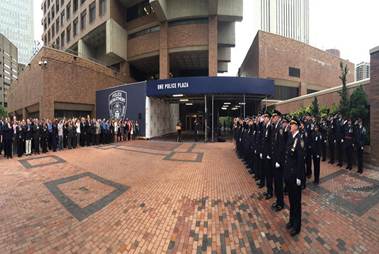
On the morning of September 11, 2001, I was working in Lower Manhattan, half a ½ mile from the towers. The events of that day and all I witnessed would be imprinted on my mind like an ever-playing movie scene. The day’s horrible events would give me a story to tell others. A few days after the events, I began writing in my spiral notebook everything I witnessed. I condensed my thoughts and observations to 17 pages. I wanted to do more than tell my story; I wanted others to read about it. On the 20th anniversary of the attacks, my story was published online. Free for all to read about what I was an eyewitness to on that horrific day.

In a New York Minute: An officer’s eyewitness account of the events of September 11, 2001 – The Juniper Park Civic Association

After retirement, it was time for me to tell my stories and get my work published. I began with one story about an intoxicated businessman who parked his vehicle on the roadway. I wrote it down as a short story and sent it to Psychology Today. What if the Police called all your contacts? What would they say about you? They published my story! I now knew I was more than just a storyteller; others were interested in what I experienced and what I was saying.

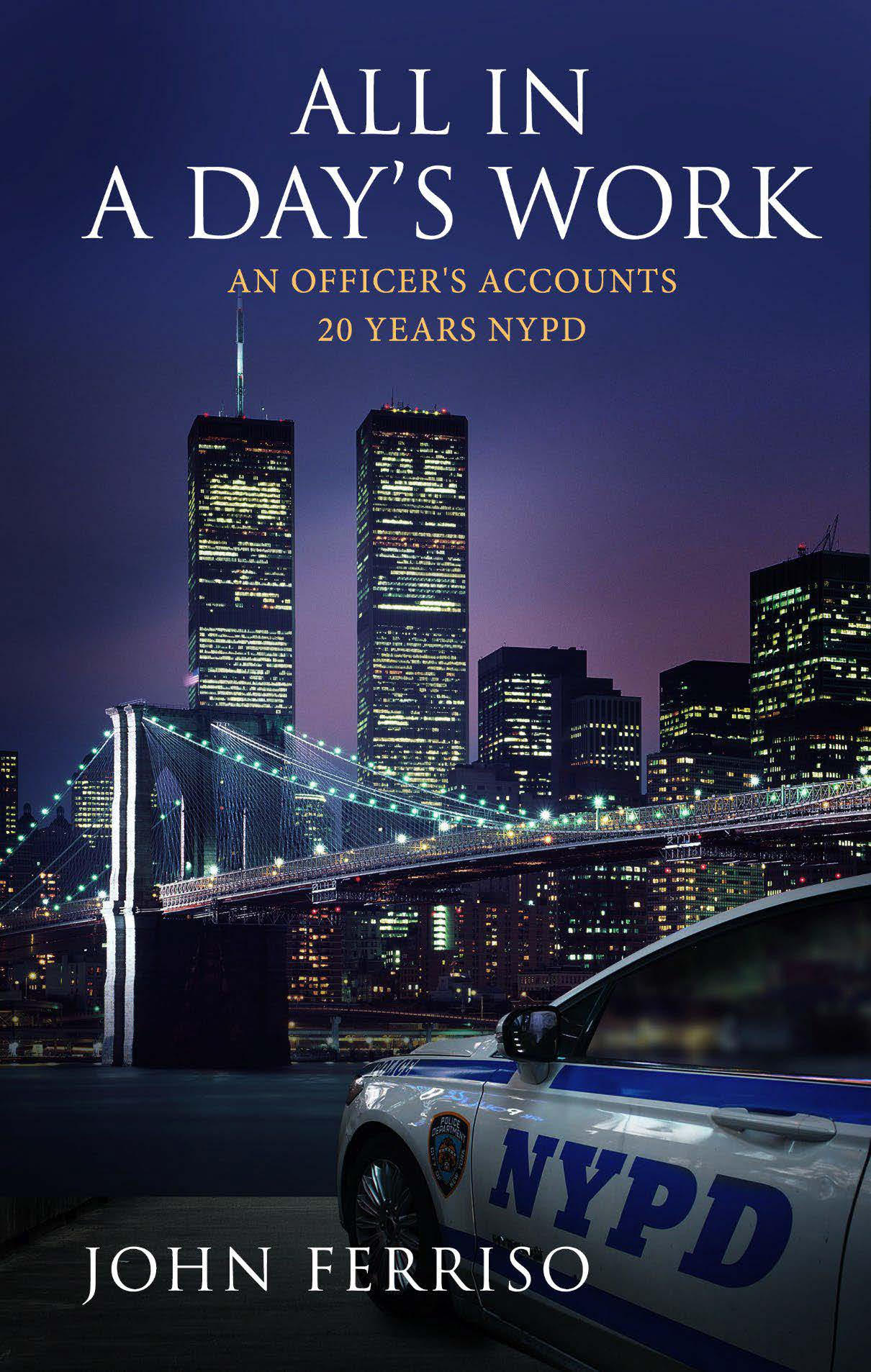
In 2023, it was time to take short stories and self-publish them. All in a day’s work: an officer’s accounts 20 Years NYPD. Soon after, I was a podcast guest in the USA, Australia, and England. I was now telling my stories to a broader audience, discussing my writing journey and the interesting cases I investigated.  

ALL IN A DAY’S WORK

When you are a New York City police officer you become a social worker, chauffeur, human relations consultant, and tour guide. You are expected to do all those tasks while stopping crime as it occurs, preventing crime, and keeping the peace in a city that never takes a break. Let’s not forget you get to do all this within a workday or tour as we call it.

These separate tasks come to you at random times, so going to work is like a roll of the dice. One moment, you are driving with your partner, talking about nonsense, and five minutes later, you are coming face to face with dangerous people who just committed a criminal act. The weight of these tasks can become overwhelming and mentally drain you if you allow it to happen. Many times, you do not have time to reflect on the day’s events. You just move on to the next crisis. Within days or a month, NYPD cops will get involved with and witness more toxic events than an average person will see in a lifetime. Active cops must navigate and work with their coworkers, supervisors, the public, and criminals. What people believe cops do daily regarding police work is often far from the truth.

You will find within my short stories what is occurring inside those moving police vehicles. What the city was like in the days after September 11, 2001. Take a close, in-depth look at the investigation within the NYPD detective squad room. Within the squad room, the pen can influence like a hammer, and a phone call can arrive like a hurricane. If you want the gritty, alarming, and sometimes comical truth behind police work, you have arrived at your destination.

buy link: https://a.co/d/gHVCzb7

I also began to network with authors regarding my law enforcement experience. I could advise other writers on how to place accurate and interesting police-related material into their stories. I could technically advise about the progression of the cases, how the reports are written, and even cop humor. Beyond storytelling and writing, giving back to the writing community is essential and will propel me in future endeavors.

I mainly write true crime because I lived it, which has always kept my interest.

John can be contacted at:

https://ferrisinvestigations.org/

John.Ferriso1970@gmail.com

www.linkedin.com/in/john-ferriso