Bringing Fact & Fiction Together by Paty Jager

2017 headshot newThe current Shandra Higheagle book I’m getting ready to publish has needed many different people to make it a realistic story, not only for plot and story line, but also setting and characters.

Book eleven revisits the Colville Reservation where Shandra’s paternal family live.  Because of the setting, I had to send the story off to my friend who lives on the reservation to make sure I gave a factual representation of the culture and the setting. Thankfully, she only found a couple of things I had to fix.

I also brought in the Seven Drums religion that is having a comeback with the Nez Perce. While I used information from a book written in 1997, the elder who was quoted in the book had spent time in sweat lodges with the elders who had been in the war of 1878. He told how the Indians were made to lose their heritage and become “white”. The clergymen back then and even the Indians who became Christians banned the Seven Drums religion because they didn’t believe you should pay homage to the animals and the world around you, only to the one God.

The elder had become a Christian and later in life, returned to his roots and became a shaman who presided over traditional funerals and ceremonies.

I enjoyed learning the bits and pieces I could find about the religion and adding elements I’d discovered and put my own spin on things. Thankfully, my friend okayed my spins. 😉

Logistics, modus operandi, and discerning the victim and why they should die were other factors that made this story a lot of fun to write. I love the discovery of things as I write as well as having laid a path that can take abrupt twists.

But my favorite part of writing any story is the interesting things I learn as I research and add to my story to not only make it believable but hopefully a learning experience.

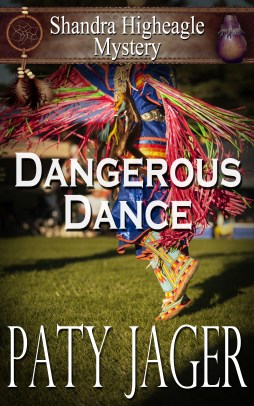
Keep your eyes peeled for Dangerous Dance book 11 in the Shandra Higheagle Mystery series.

Dangerous Dance 5x8Jealousy… Drugs… Murder…

At the reservation to make final arrangements for her upcoming wedding, potter Shandra Higheagle gets caught up in the murder of a young woman about to turn her life around.

Having no jurisdiction on the reservation, Detective Ryan Greer pulls in favors from friends in the FBI to make sure there is no delay in their wedding.

However, the death occurs in a sacred place and could place the nuptials on hold. And following the clues may not only stop the wedding…

But separate Shandra and Ryan for life.


Guest Blogger- Wendy Tyson

Giving Back Gives Back

By Wendy Tyson

My family moved from Philadelphia to Vermont last year, and I’ve spent the last ten months getting further acquainted with our new hometown. Small-town living is quite different from life in the sprawling suburb where we used to live. Everyone has been welcoming, and I’ve had the chance to get to know many of my neighbors, including the local florist. She and I found we have a mutual interest in plants and gardening. One conversation led to another and we decided to do a joint event: a book sale and signing at her shop with proceeds of the sale going to a local food bank. She would promote my books through consignment sales, and I would promote her shop by advertising the event. Hopefully the real winner will be the food bank we sponsor.

This obviously is a small event, and writers paying it forward is nothing new. Dean Koontz, Jonathan and Faye Kellerman, J.K. Rowling, John Grisham, James Patterson…these are just a few of the authors who have made donating to charities a priority. But giving back doesn’t have to mean major philanthropy. Looking to get more involved? Here are a few ways I’ve enjoyed contributing to the larger writing community—and the general public:

  • Get to know local libraries and independent bookstores. If I’m lucky enough to have a great indie bookstore nearby, I visit it frequently—attending events, buying books, mentioning it online, and offering to do signings.  Same for public libraries.  I’ve found local libraries to be a great support and resource.  You can offer to help the library by holding workshops and participating in speaking events. I’ve also donated signed books and Greenhous Mysteries-related items for raffles and auctions that benefit the library.
  • Mentor other writers. Once published, other writers will reach out—for guidance, support, even endorsements.  Taking the time to respond to them will mean a lot, even if you can’t do what they’re asking.  We’ve all been new authors at some point.  It can be difficult deciphering the confusing world of publishing, and new and aspiring authors appreciate the benefit of others’ experience.
  • Teach a class. Sharing your insight is a great way to give back. This can be done individually, but also through workshops and at conferences.  If you have a particular skill, offer to teach a class. Writing festivals are often looking for workshop leaders, as are libraries. Teaching is also a great way to make connections.
  • Visit book clubs. I love book clubs, and I’ve found book club visits to be a terrific way to connect with readers.  Plus, in my experience, book club members are incredibly appreciative of an author’s time.  Every time I attend one, I learn something new about my own work—and I make new friends.  You don’t have to go to someone’s house.  You can offer to meet in a public place (such as a library, coffee shop, or bookstore), or you can do it online via Skype or another platform.
  • Help kids. One of my favorite ways of giving back is by teaching kids and talking to kids about writing.  I’ve found kids of all ages eager to learn and excited about the possibilities.  Stop by your local schools and offer to talk to students, or reach out to local libraries or camps.
  • Do you write about a particular hobby? Children’s’ books? Does your day job offer a special skillset? Find a way to use your platform to raise money for a worthy cause related to your work—or a cause close to your heart. I love to raise money for a local animal rescue at my signings. Sometimes fund raising can be as simple as doing a book signing at a nonprofit event or donating proceeds on a given date to a charity of choice.
  • There really are endless ways you can volunteer to use your writing abilities to benefit others.  From taking on a role in a writing organization, to writing brochures for a local charity, to donating your time during a writing convention, you’ll likely find people eager for your help and expertise.
  • Organize around a cause. Last year I was invited to write a short story for an anthology that would benefit survivors of violent crime, especially domestic abuse survivors. The task was straight forward: write a short story that touches on domestic violence. The result was Betrayed: Powerful Stories of Kick-Ass Crime Survivors. Twenty-two crime authors, including Allison Brennan, donated their time and words to the anthology, and many other people gave marketing, design, or other expertise. The book came out last November and I can honestly say it was one of the most rewarding things I have been part of as an author. It all came together because of one woman’s vision and passion. Don’t be afraid to rally the troops for a good cause—or contribute to another’s project.

For me, a writing career has been a life-long dream. The chance to pay that opportunity forward? Priceless.


Hiding the killer in my subconscious by Paty Jager

2017 headshot newEvery mystery book I’ve written, I start out with the firm belief I know who the killer is.

I start preparing for the book by deciding where the main character, Shandra Higheagle is, what she is doing, and how she will come to either discover a body, be in the vicinity of who does find the body, or know the accused murderer.

The next step is making up my suspect chart and writing down what I know and want others to know about each suspect.

With the suspect chart comes red herrings and other characters- friends, family of the suspects and the victim.

Once the chart is done, I evaluate and decide which one would be the least likely to have killed, yet have the best motive. And that’s the character who I start out hiding the information( red herrings and quick mentions of clues that are glossed over) and plan to have be the one who dunit in the end.

Cars on winding road trough the forest aerial viewEvery book so far, the killer has ended up being someone other than I started out to write about.  I’m not sure if its because I do so many twists and turns in who it could be that I confuse myself or that I realize the person I started out as the murderer is too logical, so I do yet another twist and there is my killer! When I go back through the book to put in clues, I always see that I’d added the necessary clues without thinking about it.

All along my subconscious knew who did it while my working brain was busy workingConcept of the human brain on my initial scenario. I love that this happens because it surprises not only me but the reader.  And it means that writing mystery is what I should be doing since my subconscious seems to know my murderous mind better than I do!

Do you like stories with lots of twists and turns or do you like to know who did it and work with the sleuths to prove it?

SH Mug Art

What’s in a Title? by Paty Jager

Do you pick a book by the title? Do you want the title to tell you the genre of the story or what the story will be about? How about a mystery? Do you want the title to be a clue to the mystery?

These are all questions I’ve asked myself as I picked the title for the first book of my new mystery series coming out in 2019. I thought I had the perfect title… I loved it! Thought it was the essence of the story, more or less. Until I finished the book and read through it again. I felt like the title was lacking.

I loved the title. I used it as part of my trajectory in the story, or so I thought.

I sent the book to a beta reader. When he finished reading and sent me back his thoughts on the story, I told him the new title that popped into my head after I’d sent the manuscript off to him. What did he think? He said the new title fit the story better without me even explaining why I picked it.

BooYah! I now have a new title- Murder of Ravens: A Gabriel Hawke Novel.

20180514_102901

Because my character is a game warden I want to have animals in all the titles. I have four more story ideas penciled out and went through my list of animal names I compiled from Native American Myths and Legends books and hope my titles will fit the books I write. If they don’t, I’ll be changing them as I did with the first book.

Another clever, I think, item to this new series, is whatever animal is in the title will be somewhere on the book cover. In some cases the size of the animal may make it a good contest to have readers find the animal. 😉

So as I asked in the beginning- Do you pick a book by the title? Do you want the title to tell you the genre of the story or what the story will be about? How about a mystery? Do you want the title to be a clue to the mystery?

Guest Blogger- Christoph Burmeister

Guest blogger banner

The Poetic Murderer, and me — How the Book Came to Be

Fear will learn to fear you.

Last winter I got the news: Lionel Ross wanted to publish my first novel. I was overjoyed and humbled beyond my ability to express myself. Then gradually I gained an understanding of what was happening. Engaging style. Humorous. Smiles. An unreliable narrator reveals himself as a lyrical mastermind known as … Of course! The book was scheduled to appear in January 2018. January came like a dream, and marvellous as it may seem, soon I held a copy of The Poetic Murderer in my hands.

I was a shy child with a “vivid imagination,” as my grandmother Liesel used to say. Then I was an anxious teenager who didn’t write at all because of a lack of confidence. In my late twenties, I moved to Copenhagen, where I was awarded a master’s degree in Environmental Economics and Natural Resource Management (A title that is killer like a whale to the attention.) Unsatisfied with the job prospects I attended the Creative Writing School at Cambridge University, where my passion for drawing stories from my imagination re-emerged. I was hooked. I decided that I wanted to write a book. Back then, my professor complimented the energy in my writing, but also suggested that I should write in my mother tongue German as it would be too far a stretch for me to write a novel in English. Challenge accepted!

I started with an image — a young, enigmatic, and successful detective, having to solve a mystical murder case on a quest of a dream and fulfilment of his own destiny, and that idea wouldn’t leave me alone. I wrote the first manuscript in a flash. After six weeks I was ready, and contacted my friend from Cambridge, who wanted to become an editor. I was very positive and awaited her response. Everything changed when she replied. The manuscript was full of inconsistencies, mistakes, and bizarre phrases. But nothing that couldn’t be fixed. I’m human. Humans make mistakes.

I worked on the story obsessively. I’d been a person who enjoyed to achieve his goals with ease, offhandedly. When the novel took over for the first time in my life I had the feeling that I was properly challenged really. I purchased a small notebook and scribbled notes like a maniac, no matter where I was. If I thought of something while cycling, I’d jump off as soon as the traffic permitted it, and put it to paper. It became second nature to me. It felt so real.

From the crazy rush at the beginning, soon my literary journey turned into a devoted drafting of each chapter, and then I’d send each revised version of the manuscript to my friend in England, whose opinion I feared and wait for her response. While all this editing was going on, I continued filling notebooks and drawing the story before the inner eye. I wrote far more than I ever did before. I also discovered that style is a continuous distillation. How can I be me? Honestly expressing myself. No lies. That became the bottom line of all my endeavours. The book slowly took shape, however, due to my inexperience, a fear of failure attended me and intensified.

The detective character was what kept me hooked. He’s my hero, mysterious, funny, impulsive, vulnerable, dreamy, and in love with his laissez-faire lifestyle. When Detective 00 Hansen has to deal with his disturbingly poetic case, much hate from the police force, and that his wife left him, he questions everything. A period of doubt studied me too, especially when friends and family had hard times understanding my yet fictitious ambitions. But I wouldn’t give up.

I worked on the novel through the year, and when I was sure I’d gotten the manuscript into shape, I contacted agents and publishers, and eventually was chosen as one among many talented writers. High times!

Well, that is what I would call a miracle, one that a shy child with a “vivid imagination,” wouldn’t have dreamt of or an honoured professor at Cambridge University wouldn’t have predicted.

Now will anyone buy the book, unravel the deeper meaning of it, smile when I’m acquainting them with a funny line, and feel inspired to follow their own dreams?

That remains to be seen. At least The Poetic Murderer made my own dream become true.

And as you shall see, fear will learn to fear you too.

FINAL COVER (1)The Poetic Murderer

“Fear will learn to fear you.”

If you liked Paul Coelho’s The Alchemist, you will love The Poetic Murderer.

Detective 00 Hansen is an enigmatic dreamer in the streets of Copenhagen, riding a fast antelope, and living a slow life (not always to the delight of his wife)…

In The Poetic Murderer, Hansen and Don Cindy’s first mystery, the duo are informed by Denmark’s Queen Marmalade II and Prince Sandwich about an unimaginable murder at the supermarket. The body is marked by violence and the murder weapon an unhygienic rainbow trout.

The police are baffled by the mysterious poem at the crime scene. But when Detective 00 Hansen applies his vivid imagination to the problem he uncovers a tragic tale of unrequited love and ruthless ambition… Will he stop the poetic murderer on the quest of a dream and fulfilment of his own destiny?

An unaesthetic fear of the unknown haunts us, namely the unforeseen. A fear that shapes our lives. No human can unlearn to fear; we all have to learn how to deal with it. By picking up this novel, the reader travels a new route and learns to lead a fearless life by trusting in the own reality.

Buy links:

Christoph colChristoph Burmeister was born on the 16 April 1987 in Bad Oldesloe on the river Trave. That’s why he originally wanted to become a clown.
On school days he dreamed wholeheartedly. University was no hindrance to him; it was his hobby. He would carefully fashion his appearance as an eager student.
After graduation, the money bell rang, and he started working for a shipping company as a treasury manager. One day he took a glimpse into the mirror and did not recognise himself, so he left home and moved to Copenhagen.
All of a sudden: Hygge!
2015—Creative Writing at the University of Cambridge, then Improv theatre. Now his first novel: The Poetic Murderer.
Christoph likes Jazz and his simplistic life-style resonates with mystery and beauty. His right hand is the instrument of his daily writing practise.

Social Media: