Finding Time to Write is Hard

The rest of this month, I am home 13 days! That means every one of those days I need to put my fanny in the chair and get the next Gabriel Hawke book written. Because August is going to be hit and miss to get writing done.

I swear, each summer gets busier and busier! I was able to get more writing done when I sat all day in a swather or tractor raking hay during hay season than I do now.

As our family grows so do the family commitments as well as I’m trying to get my books seen more by actual people. I’ve found that if someone meets a writer and sees their enthusiasm for their books, the reader is more likely to purchase the book. Then if the like that first purchase they come back for more.

I started this month with an in-person event that I’ve not attended before. It was a Renaissance Faire (loosely). I sold 26 books over two days. All but one of the sales were to new to me readers. I’m hoping they will enjoy what they purchased and come back for more next year, as my following has done for the Sumpter Flea Market each year.

The rest of this month I will be attending Miner’s Jubilee in Baker City, OR, to see if it will be something to do next summer, and I’m attending the Tamkaliks Powwow in Wallowa, OR. I’ve been attending this for several years to help me better see my characters and because I find it healing. The last two Mondays of the month, I’ll be judging at county fairs. That’s what makes the summer get busy for me. But I love talking to the 4-Hers and discovering their love for their projects.

When I am home, I make myself write. I have to. My readers let me know they are impatiently waiting for the next book. I can’t let them down. I’m a people pleaser. My greatest flaw. It gets me more work than I can sometimes do, but there it is. It is who I am.

I’m also mentoring two mystery writers and a friend who has been writing the same book for too long. I’m her weekly reminder to sit down in the chair and move the story forward, don’t keep making it perfect. That comes after the story is all out and waiting to be prettied.

It is these mentorships that keep me from opening the internet first thing in the morning and getting words written before I look at an email or see who liked a meme on Facebook. While I coach other writers on finding time to write, finding ways to streamline their days and writing, I follow my own guidance by making sure I’m writing and moving my story forward.

My greatest strength is that when I set my mind to something, I do it. And right now my mind is set on getting this book written this month so I can “pretty it up” next month when I’m attending a family reunion, a grandson’s wedding, judging at another county fair and state fair, and then selling my books for two days at the State Fair. Because most of those trips are on the opposite side of the state from where I live, it requires a day’s travel to and a day’s travel back. Which eats up a lot of the days in August! Half of August I’ll be away from home- 15 days to travel and attend the events.

That is why my fanny is in my chair and I’m writing! I’m halfway through the book and should get it done in the next 13 days. Yipee!

Authors, are you on a deadline this month, or do you give yourself slack in the summertime? If you’re a reader, how impatient do you get for the next book in a series?

Guest Blogger ~ Tilia Klebenov Jacobs

Researching the Mystery

By Tilia Klebenov Jacobs

Often you can tell when a writer’s research begins and ends with a keyboard search:  telltale signs include incomplete knowledge and/or cliché-based assumptions, creating eye-roll moments in our readership—something it’s safe to say none of us wants to do. So when Professor Google falls down on the job, it’s time to fold up that laptop and do a different kind of investigating, one that involves people instead of pixels.

            First, an example of what to avoid.  Some years ago I was reading a novel with a scene set in MCI-Cedar Junction, a maximum-security prison in Massachusetts.  Our protagonist steps inside and notes that the foyer smells like vomit, a sensory detail illustrating the degradation of the incarcerated.

            Slight problem, however.  I used to teach at that prison, and on precisely zero of the many occasions I’ve been there did the foyer smell like vomit.  The only time it smelled of anything other than air was one day when an inmate was mopping the floor, at which point it smelled like Pine-Sol.  That, combined with a variety of hilarious gaps in said author’s knowledge of prison security protocols, absolutely trumpeted the fact that he never bothered to visit the facility or even call.  I have not picked up one of his books since.

            I should add that he absolutely nailed his description of the exterior of the prison.  In other words, he googled it, saw what the place looked like, and ended his investigation there. 

            Circumventing such blunders consists of several steps.  First, find an expert.  Second, contact them and politely ask for a few minutes of their time.  If you are on the shy side, Step Three is, in the immortal words of Douglas Adams, “Don’t Panic.”  The words “I’m a writer” convey more gravitas than you might expect, and the phrase “I’m writing a book with a character like you, and I want to be sure I get it right” is usually greeted with enthusiasm.  Most people are delighted to share their expertise, especially if they belong to a profession or culture that is frequently misrepresented in popular media.  On behalf of my books, I have interviewed prison guards, FBI agents, a Marine who served in Afghanistan, a parole officer, a rabbi, and more; and in almost every case, the interview went over time because we were enjoying ourselves so much.

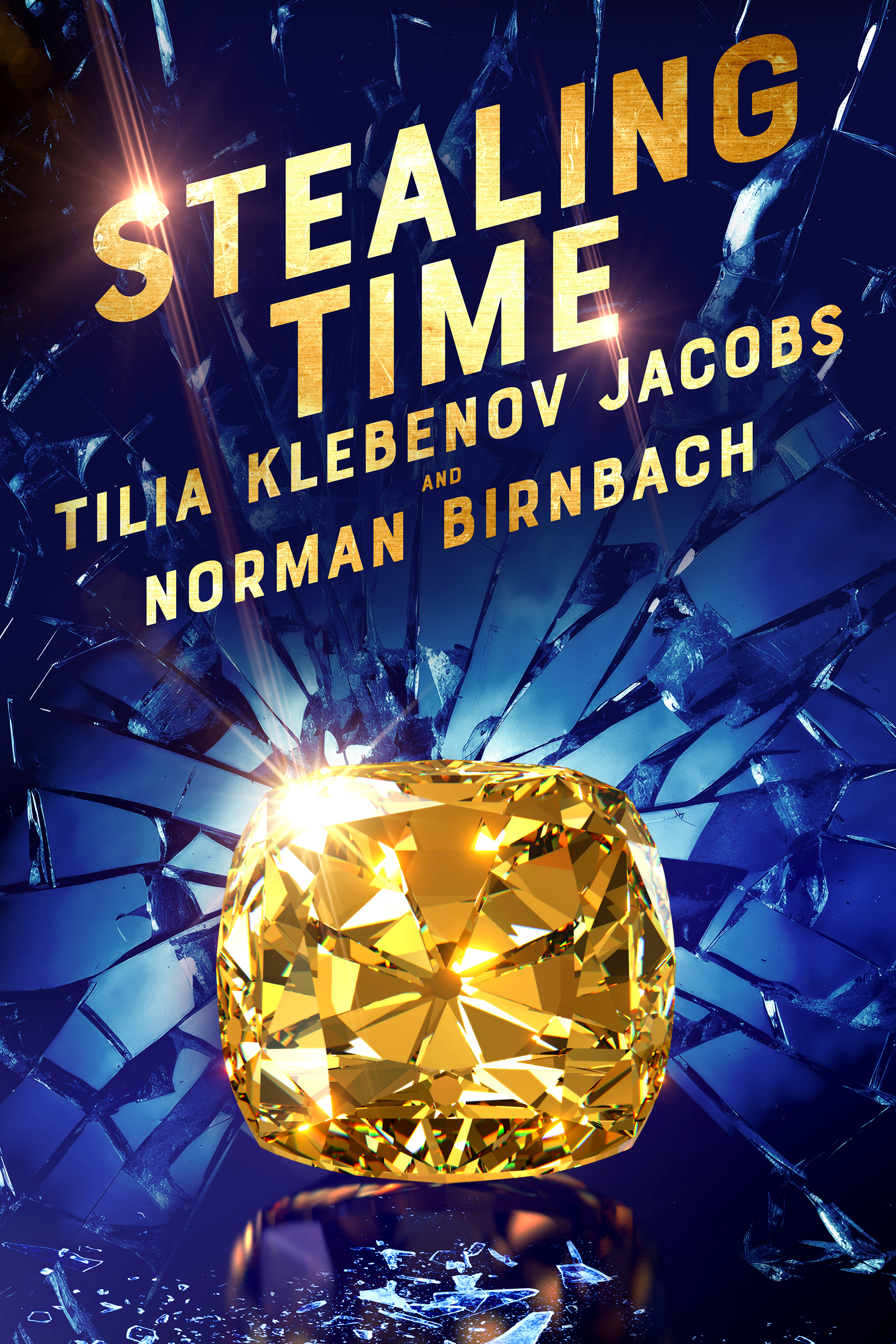
            My most recent book, Stealing Time (co-authored with Norman Birnbach), is set largely in 1980.  While we wrote it, we had the very great pleasure of plumbing the expertise of John Barelli, former head of security at the Metropolitan Museum of Art in New York; and Jonathan Campbell, a Boston-based architect.  In both cases, our question was this:  how can our bad guys rob a museum—in 1980?  We needed specific information about rooftops, scaffolding, and museum security in that era, and the internet was tired of our questions.

            I discovered Mr. Barelli via his memoir, Stealing the Show:  A History of Art and Crime in Six Thefts.  It describes his tenure at the Met from 1978 to 2016, years that neatly overlapped the era of our book.  I emailed him to ask for an interview.  He replied in the affirmative, and he and Norman and I spent a delightful evening chatting about security arcana of the late twentieth century.  Since my partner and I needed to insert one of our baddies into the museum, we asked how long it would have taken for someone to be hired as a security guard at that time.  Were there extensive background checks?  What about fingerprinting?  Mr. Barelli laughed.  “Back then, we had a saying,” he told us.  “‘If it breathes, put a uniform on it.’” 

            Thus reassured, we wrote a scene in which our criminal is quickly hired to guard a hall full of precious gemstones.  Our editor later urged us to change it, since he was confident the guards’ union would have prohibited such slipshod operations.  But we had done our homework with an unimpeachable source, and were able to allay our editor’s concerns. The scene stayed put in all its scintillating historical accuracy.

            The second expert, Jonathan Campbell, was easier to find because I went to high school with him.  Once again, I needed very specific information for our baddies, whose plan involved climbing scaffolding in order to break into the museum; and once again, the internet failed to answer some basic questions, such as,

  1. Is this possible?
  2. How?
  3. What will our degenerates find on the way up?

During a delightful February afternoon, Jonathan led me cantering about the rooftops of Boston in search of verisimilitude.  I learned that,

  1. Yes, it’s possible.
  2. But dangerous.  Anyone seeking to climb scaffolding needs to adhere to the “three points of contact rule,” meaning that at all times one must have at least two hands and one foot, or two feet and one hand, in contact with the structure; unless, of course, one wants a very brief flying lesson.
  3. Roofs are messy.  Based on my experience, our band of reprobates might reasonably be expected to find pigeon poop; ductwork for HVAC; plastic buckets full of rainwater and chains; and stray tools left behind by construction workers.  All of this makes such areas difficult to navigate, which was bad for our baddies but good for us.

            Factuality is not meant to set a reader’s pulse a-twitter; for that we have finely etched characters, snappy dialogue, and wicked plot twists.  Instead, it is a load-bearing wall:  we may not be aware of its function, but it holds our disbelief aloft.  Unconventional kinds of research can be fantastically rewarding, and they give our work both solidity and sparkle that come from no place else.

STEALING TIME

Good news for everyone who loved Back to the FutureThe Time Traveler’s Wife, and Time and Again: the newest page-turner is Stealing Time, a smart, funny caper that will steal your heart.

When there’s no time left, you have to steal it!

New York, 2020. Tori’s world is falling apart. Between the pandemic and her parents’ divorce, what else could go wrong?

Plenty! Like discovering that a jewelry heist forty years ago sent her grandfather to jail and destroyed her family.

New York, 1980. Bobby’s life is pretty great—until a strange girl shows up in his apartment claiming to be a visitor from the future. Specifically, his future, which apparently stinks. Oh, and did she mention she’s his daughter?

Soon Bobby and Tori have joined forces to save the mystical gemstone at the heart of all their troubles. But a gang of thugs wants it too, and they’re not about to let a couple of teenagers get in their way.

This time-travel jewelry heist will keep you guessing till the end!

Buy links: https://www.amazon.com/Stealing-Time-Tilia-Jacobs-ebook/dp/B0DFRC8CJH

Bookshop dot org (paperback):

Bookshop dot org (ebook):  

Barnes and Noble:

https://www.barnesandnoble.com/w/stealing-time-tilia-klebenov-jacobs/1147240874?ean=2940181321410

Tilia Klebenov Jacobs is a bestselling novelist and short story writer. She is vice president of Mystery Writers of America-New England, and is proud to say that HarperCollins calls her one of “crime fiction’s top authors.” Tilia has taught middle school, high school, and college, as well as classes for inmates in Massachusetts state prisons.  She lives near Boston with her husband, two children, and pleasantly neurotic standard poodle.

The book has its own website:  https://stealingtime.net

Tilia on FB:  https://www.facebook.com

Tilia’s website:  http://www.tiliaklebenovjacobs.com

 Norman Birnbach is an award-winning writer who has published over a hundred short stories and articles. His work has appeared in The New York Times, The New York Times Magazine, The Wall St. Journal, Chicago Tribune, Miami Herald, San Francisco ChronicleMcSweeney’s Internet TendencyNew York MagazineThe Magazine of Fantasy & Science Fiction,  and Militant Grammarian. He has also studied gemology at the Gemological Institute of America. Stealing Time is his debut novel. A native New Yorker, he lives outside Boston with his wife, three children, and dog, Taxi.

Norman’s website:  https://normanbirnbach.weebly.com

FB: https://www.facebook.com/nbirnbach

Insta: https://www.instagram.com/normanbirnbach/

Insta: https://www.instagram.com/stealing_time_book/

Tilia and Norman met when they were students at Oberlin College. 

Guest Blogger ~ Denise Forsythe

5 Tips on Researching a Novel

by Denise Forsythe

As a writer of both short stories and novels, I’ve grown accustomed to research. It is a part of writing, much like plotting and editing. Because I’m naturally curious, I have to limit the amount of research I do on any given subject.

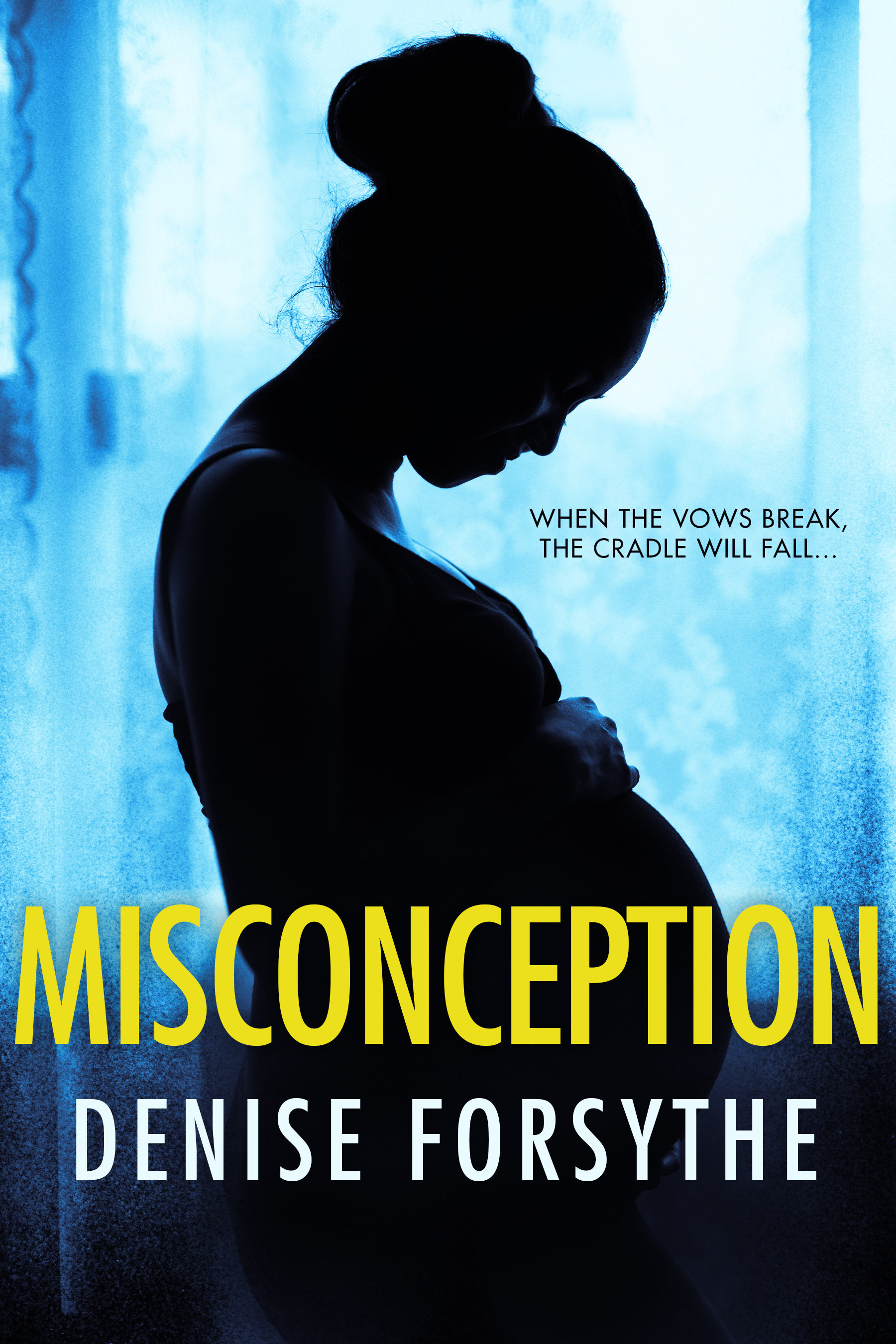
When I began writing Misconception, a domestic suspense thriller, I had no idea how much research I’d need to do. That’s because up until then I’d been a short story writer and only needed to research small bits of information to propel my plot forward.

A tried-and-true pantser, the ideas that combined to form the plot led me to realize just how much research was needed.

The book contains medical research on infertility, psychological research on personality types and disorders, employment research on workplace disputes and criminal law research, including jail/prison conditions for female inmates.

What worked for me and what I will share are five tips on how to get through the research hurdle.

1) To avoid long gaps in writing while researching subjects, consider doing just enough cursory research. That means conducting research prior to or early on during your first draft. That way you’ll avoid having to correct large parts of your story or manuscript later on. In my case, as I was writing Misconception I decided to set the story in Chicago. I felt the large city coupled with challenging weather would set a moody tone for the domestic suspense thriller. This is especially beneficial when you are deep into developing characters and plot points. Once you are at a point to take stock of what you’ve written so far, you can continue researching and filling in any gaps. This can also reduce the chance of falling into a rabbit hole by limiting what you need to advance the story.

2) Create a system to keep track of research sources. I use Scrivener to write my manuscripts. The software provides a handy corkboard to place website links right next to the page where the information will be placed. It’s important to obtain at least two to three resources for each subject, to ensure information or resource isn’t outdated or incorrect.

3) While artificial intelligence resources can be helpful, I would caution their use. Though a resource like ChatGPT can narrow down resource options, it isn’t a replacement for doing your own thorough research. Some resources I used included: WebMD and Health.com for medical conditions, university educational programs for fertility specialty information, past news coverage of sports and team rivalries, news coverage and/or documentaries on jail conditions, fertility health associations, hospital chapel coverage by local newspapers and a website called Lifeway that offers examples of funeral sermons.

4) Check and recheck sources. It’s a good idea to use respected sources for medical and legal research and avoid copying what you see on television or in movies. Tapping into my past experience as a paralegal working for a New York City DA’s office, I knew my knowledge of criminal law wasn’t enough to flesh out the details of Cassie Nichols’ harrowing journey through the Wisconsin legal system. Make sure to drill down to the state, and sometimes the city, when it comes to researching criminal law. I researched specific areas from a state and local angle, going so far as to find real accounts of what jail conditions are like and locating transcripts of initial court appearances so I could use the information as a guide. If you are good at deciphering medical jargon, by all means do so. If you’re not, don’t be afraid to reach out to an expert. A helpful website to assist in locating an expert in a field is HARO or helpareportout.com.

5) Do a final fact check while the book is in self-editing mode. Things change, especially when it comes to legislation. My book was about a third of the way complete when I discovered that it couldn’t be set in Chicago, as planned. During research I learned that in the state of Illinois, in vitro fertility treatments are covered by insurance, whereas in Wisconsin they are not. This was an integral aspect of the plot, given the tension between the main character, Cassie Nichols, and her husband Jake. The financial strain burdened the already stressed couple, adding to the tension. Because I wanted to retain the moody weather as a backdrop to intensify certain scenes in the psychological thriller, I chose to move the setting to a fictional town in southeastern Wisconsin near where I grew up.

Though research may seem daunting, with a little strategy it doesn’t have to be painful.

Misconception

Cassie Nichols wants a baby. Badly.

She’s certain a baby will anchor the crumbling relationship with her husband, Jake, who she suspects is having an affair.

But after a miscarriage and continued trouble getting pregnant leads the couple down the frustrating and expensive road of in vitro fertilization, Cassie finds herself running out of time.

Pumped on hormones, fueled by anxiety, and believing it is the only way to save her marriage, she does the unthinkable to ensure a viable pregnancy.

Now, the happy family she envisioned remains out of reach and is instead wrought with lies, deception, and murder.

universal buy link: https://books2read.com/misconceptionbyDeniseForsythe

Denise Forsythe is the author of the domestic suspense novels Misconception and the forthcoming Misconstrue.

An award-winning and recognized writer of mystery, horror, and science fiction short stories; you can find these works under the pen name Denise Johnson (see author page).

A member of Sisters in Crime, Inc. and multiple Sisters in Crime chapters, she is a Charter Member of the Sisters in Crime

Grand Canyon Writers chapter and its current vice president.

She resides in the Southwest with a precocious Labradoodle that keeps her on her toes.

Visit her at her website:deniseforsythedotcom to learn more about freebies, upcoming book projects, and book signing events.

Guest Blogger ~ Melissa Westemeier

The story behind Old Habits Die Hard begins in 2004 when I attended the University of Iowa’s Summer Writing Festival where I met four women who would become my writing partners. One of those women shares the author credit on Old Habits Die Hard, Mariana Damon came up with the idea of a murder taking place at a retirement community set in a renovated church. When I met Mariana in 2004, the spunky woman from Nebraska with a low voice, wild red curls and long flowing skirts was writing a murder mystery set in a fictional reservation in the southwest, featuring a Native American police officer solving a crime involving a murder and ancient artifacts. Mariana’s writing journey took her next to France, then to Cambridge, England, and finally to Kuwait before her dementia made further work as a writer impossible to pursue.

Mariana and I shared many trips together over the years we worked together and often bunked up together, too. We’d share our secrets, dreams, wishes, and histories deep into the night. Wickedly funny and brave, Mariana’s generous spirit meant I could trust her with anything, she’d be honest and loyal in every circumstance. It’s funny how our lives mirrored each other’s—we both taught English in public schools, both lived in the Midwest, both mothered only sons, and both set aside our own ambitions for our spouses’. She was truly a sister from another mister.

In 2021 another partner, Marni Graff, and I visited Mariana in her new home at a memory care facility. During our time together Mariana shared her desire to write one more murder mystery, so Marni and I gamely took notes and helped her flesh out ideas for a setting, murderer, victim, motive, and cast of characters. “Death at the Abbey” was set in the assisted living facility where she lived before her condition worsened, and she had a terrific concept for an opening scene.

Marni, Mel, Mariana 2021

Marni and I felt tremendous sadness at our friend’s struggle with her disease and helplessness as dementia stripped away her capacity to focus, let alone write. “We should write it for her,” I suggested to Marni over breakfast before we boarded our flights home. It seemed like a fitting tribute to our friend if we could flesh out her final idea and put her name on it. We’d left the character worksheets and plot outline with Mariana, so I jotted down what we could remember in a tiny notebook.

A year later I was between projects and dug that little notebook out of my purse. I’ll just flip through it and see what I might be able to do—maybe turn these ideas into a short story. I’d never successfully written a murder mystery before, but Marni has written eight of them, so I figured I could get things started and Marni could clean up my mess and we’d take it from there. The joke was on me because when I came up for air, I’d written 30,000 words, almost half a book! I sent the pages to Marni and our other writing partner, Lauren Small, to get their feedback. Their response was overwhelmingly positive and encouraging so I kept writing. Four months later I had a complete, polished draft of this book, retitled Old Habits Die Hard.  

I preserved Mariana’s original ideas. Sister Bernadette, a retired nun, solves the murder of Toni Travi at The Abbey with the help of her former student, Detective AJ Lewis. All six of Mariana’s original characters are in the story, and the opening scene is all Mariana’s. She’d determined who committed the murder and why, so it was up to me to fill in the rest. AJ’s less heartbroken and much younger than she’d planned him to be, but I hope she’ll recognize him and be happy with how he turned out.

Mariana Damon sparked this series and it’s exciting to take her ideas further than she imagined they’d go. Neither of us expected that visit in 2021 to result in a book and we certainly didn’t predict a series would happen. It’s pretty cool how our friendship that twenty years ago wound up with both of us on the cover page. Old Habits Die Hard and I’m honored to be Mariana’s ride or die until the end.

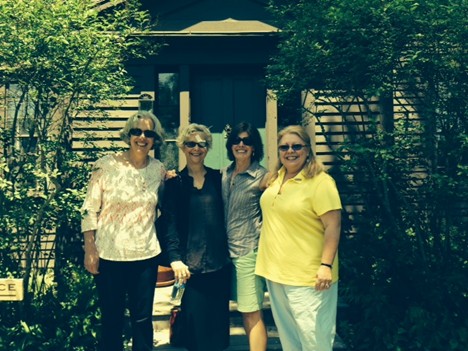
PHOTO: Lauren, Mariana, Melissa & Marni Summer 2014

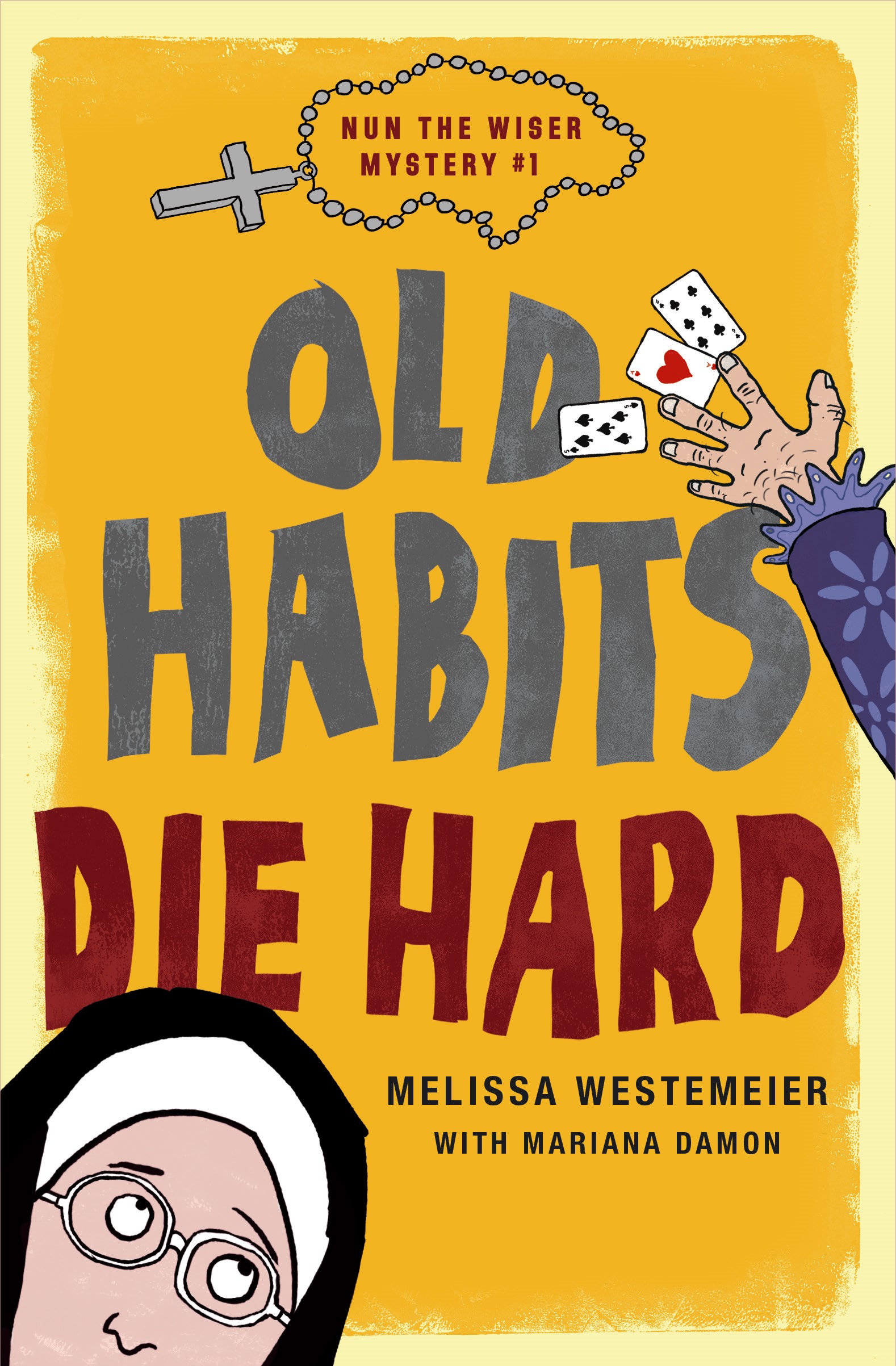
OLD HABITS DIE HARD:

When retired nun and teacher Sister Bernadette returns with her fellow residents to The Abbey: Senior Living, she is the first to discover the body sprawled in the hallway of the converted school where she once taught English and now lives.  Instead of freezing with horror, Sister Bernie has questions. Lots of them. Why does Toni Travi, the bedazzled and bejeweled resident from apartment 218, have so much chest hair? Did anyone at The Abbey know Toni was a man? Was Toni’s death related to allegations that she cheated at cards? Where’s the murder weapon? Who had motive? And did someone kill Toni, or the man hiding beneath the Revlon foundation and blonde wig? 

Detective AJ Lewis is charge of the investigation though Sister Bernie acts as if he is still her student. With unholy stubbornness, she dogs his every step, eavesdrops, sneaks beyond the police tape and offers conjecture and clues. He wants to keep her safe, but she’s determined to lend a helping hand—it’s her habit, after all!

BUY LINKS

Google Play https://play.google.com/store/books/details/Melissa_Westemeier_Old_Habits_Die_Hard?id=4oorEQAAQBAJ&hl=en_US&gl=US&pli=1

Amazon https://a.co/d/exKs6zn

Kobo https://www.kobo.com/us/en/ebook/old-habits-die-hard-6

Barnes & Noble https://www.barnesandnoble.com/w/old-habits-die-hard-melissa-westemeier/1146452143?

Melissa Westemeier is a Sister in Crime and teacher from Wisconsin. She uses humor to explore serious subjects, and her published books include murder mysteries, rom-coms, and a trilogy loosely based on her years tending bar on the Wolf River. She likes her coffee and protagonists strong and prefers to work barefoot with natural lighting.

MEL’S Website: https://www.melwestemeier.com/

Facebook https://www.facebook.com/profile.php?id=100027992959383

Instagram  https://www.instagram.com/mwestemeier/

Bluesky  https://bsky.app/profile/mwestemeier.bsky.social

There is more to a title than the words.

My line editor, who is in her thirties, said the title of my recently published book makes her laugh. I shrugged and told her the title is a gambling term. She said that makes sense because it is a book in the Spotted Pony Casino Mysteries, but it still makes her laugh.

Crapshoot: something(as a business venture) that has an unpredictable outcome. Webster’s dictionary.

When I came up with the storyline for book 7 in my Spotted Pony Casino Mystery series, of all the gambling terms I jotted down for titles, this term was the one that fit the best.

I’m a writer who comes up with an idea for a murder or an idea for a situation that puts my main character into a situation that will test them. This story didn’t start out with a murder. It was to be about a missing woman from the Umatilla Indian Reservation. The woman was a friend of my main character, a disabled veteran who lost her best friend in high school.

This story was meant to show how losing someone and not knowing why the cruelty happened could remain a constant enemy of the living. I wanted my main character to throw her whole being into finding the missing woman. And she does. But in the middle of this emotional trip, her nightmares come back and she becomes engaged. Talk about lows and highs! That is this story. A rollercoaster of ups and downs, and how the Indigenous community comes together to find their lost ones and to make themselves stronger.

While Crapshoot may make some people snicker or laugh, it is the epitome of this story. Each time my main character thinks she knows something, other information comes up. When she tries to rely on the right people or do the right thing, something gets in her way. It’s a crapshoot whether or not they will find the missing woman. The story takes a dark turn when the missing woman’s husband is killed. Then they discover an undercover female FBI agent is missing. And “SPLAT!” another body turns up. This is a story that I enjoyed writing to bring my character both happiness and grief. It shows more of the main character and sets her up for the next book that will knock her off her axis and make her wonder if a person can truly ever really know anyone.

So if this title makes you smile or laugh, that’s okay. Once you begin reading the book, you’ll understand the title and see the reason behind it, besides, it is a gambling term.

CRAPSHOOT

Book 7 in the Spotted Pony Casino Mystery series

 A Fentanyl death.

A missing woman.

Dela Alvaro, head of the Spotted Pony Casino security, and Heath Seaver, a Umatilla Tribal Detective, join forces with the FBI to find Dela’s missing basket-weaving instructor and put a stop to a lethal drug flowing onto the reservation.

The investigation turns deadly when an undercover FBI agent goes missing and the drug cartel’s girlfriend is out for Dela’s blood.

https://books2read.com/u/3njQ7e

In case you were wondering what gambling terms are left on my list for titles:

The Gimmick

Full House

Jackpot

Penny Ante

Luck of the Draw

Blue Chip