Guest Blogger ~ Denise Forsythe

5 Tips on Researching a Novel

by Denise Forsythe

As a writer of both short stories and novels, I’ve grown accustomed to research. It is a part of writing, much like plotting and editing. Because I’m naturally curious, I have to limit the amount of research I do on any given subject.

When I began writing Misconception, a domestic suspense thriller, I had no idea how much research I’d need to do. That’s because up until then I’d been a short story writer and only needed to research small bits of information to propel my plot forward.

A tried-and-true pantser, the ideas that combined to form the plot led me to realize just how much research was needed.

The book contains medical research on infertility, psychological research on personality types and disorders, employment research on workplace disputes and criminal law research, including jail/prison conditions for female inmates.

What worked for me and what I will share are five tips on how to get through the research hurdle.

1) To avoid long gaps in writing while researching subjects, consider doing just enough cursory research. That means conducting research prior to or early on during your first draft. That way you’ll avoid having to correct large parts of your story or manuscript later on. In my case, as I was writing Misconception I decided to set the story in Chicago. I felt the large city coupled with challenging weather would set a moody tone for the domestic suspense thriller. This is especially beneficial when you are deep into developing characters and plot points. Once you are at a point to take stock of what you’ve written so far, you can continue researching and filling in any gaps. This can also reduce the chance of falling into a rabbit hole by limiting what you need to advance the story.

2) Create a system to keep track of research sources. I use Scrivener to write my manuscripts. The software provides a handy corkboard to place website links right next to the page where the information will be placed. It’s important to obtain at least two to three resources for each subject, to ensure information or resource isn’t outdated or incorrect.

3) While artificial intelligence resources can be helpful, I would caution their use. Though a resource like ChatGPT can narrow down resource options, it isn’t a replacement for doing your own thorough research. Some resources I used included: WebMD and Health.com for medical conditions, university educational programs for fertility specialty information, past news coverage of sports and team rivalries, news coverage and/or documentaries on jail conditions, fertility health associations, hospital chapel coverage by local newspapers and a website called Lifeway that offers examples of funeral sermons.

4) Check and recheck sources. It’s a good idea to use respected sources for medical and legal research and avoid copying what you see on television or in movies. Tapping into my past experience as a paralegal working for a New York City DA’s office, I knew my knowledge of criminal law wasn’t enough to flesh out the details of Cassie Nichols’ harrowing journey through the Wisconsin legal system. Make sure to drill down to the state, and sometimes the city, when it comes to researching criminal law. I researched specific areas from a state and local angle, going so far as to find real accounts of what jail conditions are like and locating transcripts of initial court appearances so I could use the information as a guide. If you are good at deciphering medical jargon, by all means do so. If you’re not, don’t be afraid to reach out to an expert. A helpful website to assist in locating an expert in a field is HARO or helpareportout.com.

5) Do a final fact check while the book is in self-editing mode. Things change, especially when it comes to legislation. My book was about a third of the way complete when I discovered that it couldn’t be set in Chicago, as planned. During research I learned that in the state of Illinois, in vitro fertility treatments are covered by insurance, whereas in Wisconsin they are not. This was an integral aspect of the plot, given the tension between the main character, Cassie Nichols, and her husband Jake. The financial strain burdened the already stressed couple, adding to the tension. Because I wanted to retain the moody weather as a backdrop to intensify certain scenes in the psychological thriller, I chose to move the setting to a fictional town in southeastern Wisconsin near where I grew up.

Though research may seem daunting, with a little strategy it doesn’t have to be painful.

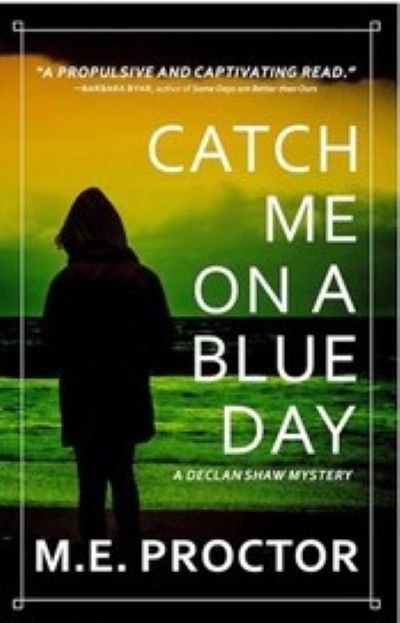
Misconception

Cassie Nichols wants a baby. Badly.

She’s certain a baby will anchor the crumbling relationship with her husband, Jake, who she suspects is having an affair.

But after a miscarriage and continued trouble getting pregnant leads the couple down the frustrating and expensive road of in vitro fertilization, Cassie finds herself running out of time.

Pumped on hormones, fueled by anxiety, and believing it is the only way to save her marriage, she does the unthinkable to ensure a viable pregnancy.

Now, the happy family she envisioned remains out of reach and is instead wrought with lies, deception, and murder.

universal buy link: https://books2read.com/misconceptionbyDeniseForsythe

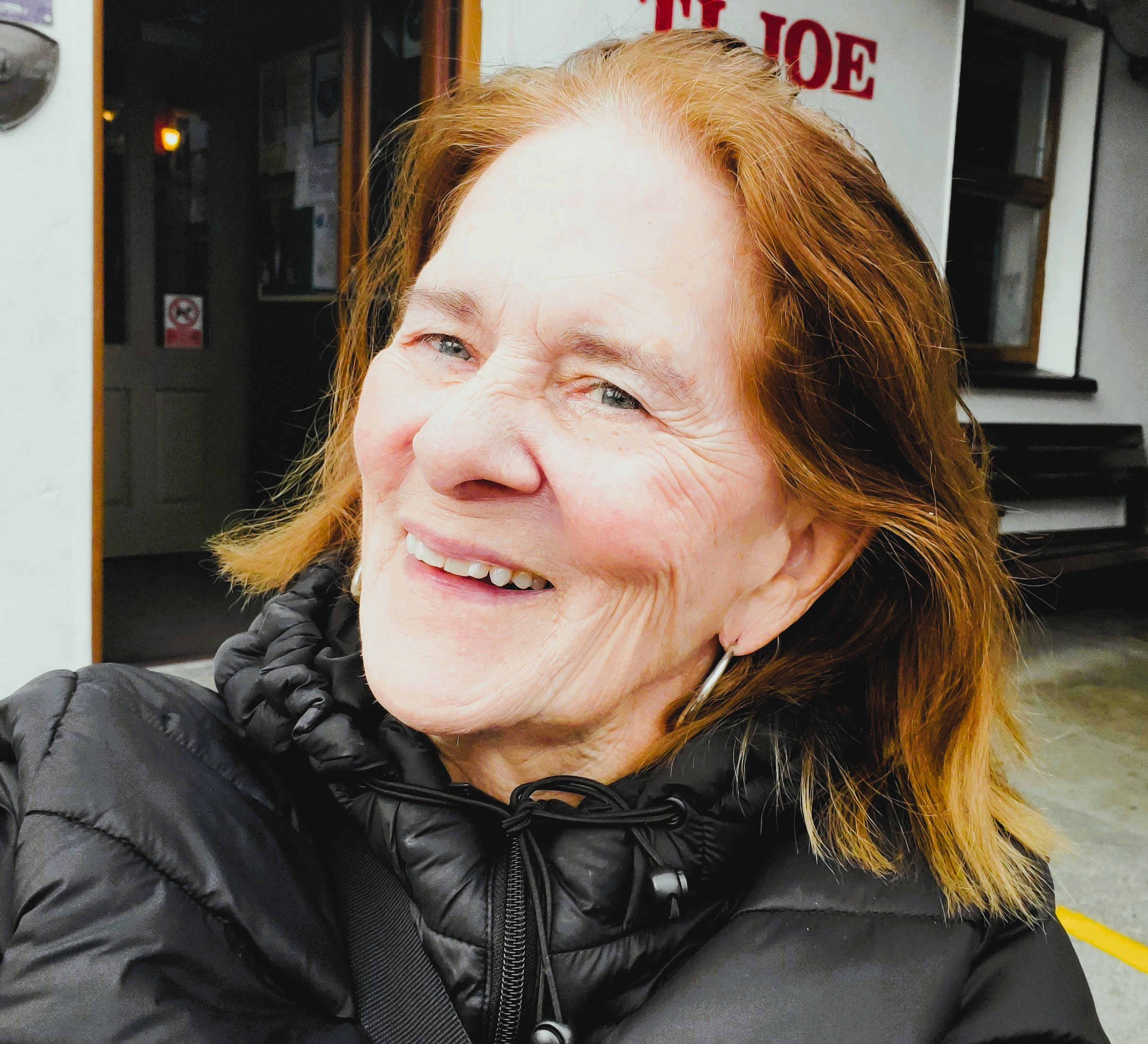
Denise Forsythe is the author of the domestic suspense novels Misconception and the forthcoming Misconstrue.

An award-winning and recognized writer of mystery, horror, and science fiction short stories; you can find these works under the pen name Denise Johnson (see author page).

A member of Sisters in Crime, Inc. and multiple Sisters in Crime chapters, she is a Charter Member of the Sisters in Crime

Grand Canyon Writers chapter and its current vice president.

She resides in the Southwest with a precocious Labradoodle that keeps her on her toes.

Visit her at her website:deniseforsythedotcom to learn more about freebies, upcoming book projects, and book signing events.

Guest Blogger ~ Melissa Westemeier

The story behind Old Habits Die Hard begins in 2004 when I attended the University of Iowa’s Summer Writing Festival where I met four women who would become my writing partners. One of those women shares the author credit on Old Habits Die Hard, Mariana Damon came up with the idea of a murder taking place at a retirement community set in a renovated church. When I met Mariana in 2004, the spunky woman from Nebraska with a low voice, wild red curls and long flowing skirts was writing a murder mystery set in a fictional reservation in the southwest, featuring a Native American police officer solving a crime involving a murder and ancient artifacts. Mariana’s writing journey took her next to France, then to Cambridge, England, and finally to Kuwait before her dementia made further work as a writer impossible to pursue.

Mariana and I shared many trips together over the years we worked together and often bunked up together, too. We’d share our secrets, dreams, wishes, and histories deep into the night. Wickedly funny and brave, Mariana’s generous spirit meant I could trust her with anything, she’d be honest and loyal in every circumstance. It’s funny how our lives mirrored each other’s—we both taught English in public schools, both lived in the Midwest, both mothered only sons, and both set aside our own ambitions for our spouses’. She was truly a sister from another mister.

In 2021 another partner, Marni Graff, and I visited Mariana in her new home at a memory care facility. During our time together Mariana shared her desire to write one more murder mystery, so Marni and I gamely took notes and helped her flesh out ideas for a setting, murderer, victim, motive, and cast of characters. “Death at the Abbey” was set in the assisted living facility where she lived before her condition worsened, and she had a terrific concept for an opening scene.

Marni, Mel, Mariana 2021

Marni and I felt tremendous sadness at our friend’s struggle with her disease and helplessness as dementia stripped away her capacity to focus, let alone write. “We should write it for her,” I suggested to Marni over breakfast before we boarded our flights home. It seemed like a fitting tribute to our friend if we could flesh out her final idea and put her name on it. We’d left the character worksheets and plot outline with Mariana, so I jotted down what we could remember in a tiny notebook.

A year later I was between projects and dug that little notebook out of my purse. I’ll just flip through it and see what I might be able to do—maybe turn these ideas into a short story. I’d never successfully written a murder mystery before, but Marni has written eight of them, so I figured I could get things started and Marni could clean up my mess and we’d take it from there. The joke was on me because when I came up for air, I’d written 30,000 words, almost half a book! I sent the pages to Marni and our other writing partner, Lauren Small, to get their feedback. Their response was overwhelmingly positive and encouraging so I kept writing. Four months later I had a complete, polished draft of this book, retitled Old Habits Die Hard.  

I preserved Mariana’s original ideas. Sister Bernadette, a retired nun, solves the murder of Toni Travi at The Abbey with the help of her former student, Detective AJ Lewis. All six of Mariana’s original characters are in the story, and the opening scene is all Mariana’s. She’d determined who committed the murder and why, so it was up to me to fill in the rest. AJ’s less heartbroken and much younger than she’d planned him to be, but I hope she’ll recognize him and be happy with how he turned out.

Mariana Damon sparked this series and it’s exciting to take her ideas further than she imagined they’d go. Neither of us expected that visit in 2021 to result in a book and we certainly didn’t predict a series would happen. It’s pretty cool how our friendship that twenty years ago wound up with both of us on the cover page. Old Habits Die Hard and I’m honored to be Mariana’s ride or die until the end.

PHOTO: Lauren, Mariana, Melissa & Marni Summer 2014

OLD HABITS DIE HARD:

When retired nun and teacher Sister Bernadette returns with her fellow residents to The Abbey: Senior Living, she is the first to discover the body sprawled in the hallway of the converted school where she once taught English and now lives.  Instead of freezing with horror, Sister Bernie has questions. Lots of them. Why does Toni Travi, the bedazzled and bejeweled resident from apartment 218, have so much chest hair? Did anyone at The Abbey know Toni was a man? Was Toni’s death related to allegations that she cheated at cards? Where’s the murder weapon? Who had motive? And did someone kill Toni, or the man hiding beneath the Revlon foundation and blonde wig? 

Detective AJ Lewis is charge of the investigation though Sister Bernie acts as if he is still her student. With unholy stubbornness, she dogs his every step, eavesdrops, sneaks beyond the police tape and offers conjecture and clues. He wants to keep her safe, but she’s determined to lend a helping hand—it’s her habit, after all!

BUY LINKS

Google Play https://play.google.com/store/books/details/Melissa_Westemeier_Old_Habits_Die_Hard?id=4oorEQAAQBAJ&hl=en_US&gl=US&pli=1

Amazon https://a.co/d/exKs6zn

Kobo https://www.kobo.com/us/en/ebook/old-habits-die-hard-6

Barnes & Noble https://www.barnesandnoble.com/w/old-habits-die-hard-melissa-westemeier/1146452143?

Melissa Westemeier is a Sister in Crime and teacher from Wisconsin. She uses humor to explore serious subjects, and her published books include murder mysteries, rom-coms, and a trilogy loosely based on her years tending bar on the Wolf River. She likes her coffee and protagonists strong and prefers to work barefoot with natural lighting.

MEL’S Website: https://www.melwestemeier.com/

Facebook https://www.facebook.com/profile.php?id=100027992959383

Instagram  https://www.instagram.com/mwestemeier/

Bluesky  https://bsky.app/profile/mwestemeier.bsky.social

There is more to a title than the words.

My line editor, who is in her thirties, said the title of my recently published book makes her laugh. I shrugged and told her the title is a gambling term. She said that makes sense because it is a book in the Spotted Pony Casino Mysteries, but it still makes her laugh.

Crapshoot: something(as a business venture) that has an unpredictable outcome. Webster’s dictionary.

When I came up with the storyline for book 7 in my Spotted Pony Casino Mystery series, of all the gambling terms I jotted down for titles, this term was the one that fit the best.

I’m a writer who comes up with an idea for a murder or an idea for a situation that puts my main character into a situation that will test them. This story didn’t start out with a murder. It was to be about a missing woman from the Umatilla Indian Reservation. The woman was a friend of my main character, a disabled veteran who lost her best friend in high school.

This story was meant to show how losing someone and not knowing why the cruelty happened could remain a constant enemy of the living. I wanted my main character to throw her whole being into finding the missing woman. And she does. But in the middle of this emotional trip, her nightmares come back and she becomes engaged. Talk about lows and highs! That is this story. A rollercoaster of ups and downs, and how the Indigenous community comes together to find their lost ones and to make themselves stronger.

While Crapshoot may make some people snicker or laugh, it is the epitome of this story. Each time my main character thinks she knows something, other information comes up. When she tries to rely on the right people or do the right thing, something gets in her way. It’s a crapshoot whether or not they will find the missing woman. The story takes a dark turn when the missing woman’s husband is killed. Then they discover an undercover female FBI agent is missing. And “SPLAT!” another body turns up. This is a story that I enjoyed writing to bring my character both happiness and grief. It shows more of the main character and sets her up for the next book that will knock her off her axis and make her wonder if a person can truly ever really know anyone.

So if this title makes you smile or laugh, that’s okay. Once you begin reading the book, you’ll understand the title and see the reason behind it, besides, it is a gambling term.

CRAPSHOOT

Book 7 in the Spotted Pony Casino Mystery series

 A Fentanyl death.

A missing woman.

Dela Alvaro, head of the Spotted Pony Casino security, and Heath Seaver, a Umatilla Tribal Detective, join forces with the FBI to find Dela’s missing basket-weaving instructor and put a stop to a lethal drug flowing onto the reservation.

The investigation turns deadly when an undercover FBI agent goes missing and the drug cartel’s girlfriend is out for Dela’s blood.

https://books2read.com/u/3njQ7e

In case you were wondering what gambling terms are left on my list for titles:

The Gimmick

Full House

Jackpot

Penny Ante

Luck of the Draw

Blue Chip

Guest Blogger ~Joanne McLaughlin

Repeat That Name, Please  

            Identity is a big deal in my novels. Maybe it has something to do with all the Superman comic books I read in the barbershop while my dad was having his hair cut. Lots of identity stuff in those stories, secret and otherwise. Midwestern farm boy or big-city newspaper reporter? Mild-mannered, bespectacled guy or visitor from another planet able to leap tall buildings in a single bound?  

            Names—specifically, who we are versus the person we allow the world to see—are a common thread in my first four published novels, three darkly romantic vampire tales and a thriller. Vampires reinvent themselves from century to century; the rest of us sometimes do, though over shorter lifetimes. And, of course, in literature and in life, often all we know of a person at first is the name presented to us.

            In my fifth novel, A Poetic Puzzle, one name sets my protagonist, M. Irene “Mimi” Jones—an under-recognized, under-employed poet/English literature professor—on a mission. It’s the name she shares with internationally acclaimed poet Mary Irene Jones, who has vanished, but not before sending Mimi a cache of her heretofore unpublished manuscripts. Is the timing of these two events a coincidence? Are the manuscripts clues of some sort? And if so, why entrust them to Mimi, of all people? The same-name thing must be significant, right?

            I should mention here that the house Mimi lives in is one she inherited from yet another Mary Irene Jones, the paternal grandmother for whom she was named.

            About that: The name Mary Irene Jones is what prompted me to write A Poetic Puzzle.

            You see, my own father’s mother was a Mary Irene Jones, too, before she married my grandfather. She didn’t disappear, per se, but I never got to know her. My dad scarcely did—he was only nine years old when she died in 1931 of what was apparently characterized as “women’s trouble.” My mother suspected that meant some sort of reproductive or breast cancer. I’m not sure anyone now living would know. My father was the family’s youngest child; he, his older brother, and his two older sisters are gone now.

            I look like my father, as does my son. Both of them more closely resemble George McLaughlin, Mary Irene’s husband, my paternal grandfather. But in the lone photograph I have of her, I can see myself.

            That photo, actually a picture of a photograph, may be the only one that still exists. I don’t know whether she had siblings whose children or grandchildren might have family photo albums. I have never had close ties to my McLaughlin relatives, let alone any Jones descendants who might be her family. Judging from her husband’s birth year, I think this Mary Irene was born in the United States in the late 19th century, but I don’t know when or where. I know she married a man from northeastern Pennsylvania and ended up living in Philadelphia, but I don’t know the circumstances. Except for the year, I don’t know the date of her death or where she was buried.

            That sepia-tone image of my grandmother sits next to my laptop as I write this. I’ve studied it endlessly, searching for clues beyond the obvious. In it, she has dark hair, brown, I suppose, since my father and I and at least one of his sisters had dark brown hair. She has a long face not unlike mine—my late Aunt Vera, whom I resemble a bit, had the same long face.

            Pince-nez eyeglasses sit on my grandmother’s nose—maybe she was near-sighted the way I am. Her light-colored, lacy long-sleeved dress is cinched at the waist with a bow. And she is standing outdoors, with trees in the background. Holding her left hand is a small boy, maybe sandy-haired, maybe five years old. He is dressed for warm weather. My mother told me that she had been told that the boy was not my dad, but who offered that information, I don’t know.

            Were my grandmother and this boy, presumably her other son, standing in their backyard? Were they having a picnic in a park? Were her daughters—one older than the boy, one younger—playing away from the camera’s lens? Was my father an infant napping nearby?

            How my mother came to give me this photo, I don’t recall. Did my uncle’s wife, a distant cousin of Dad’s who married his brother, give it to my parents? My mother always suggested that particular aunt-by-marriage was the source of whatever McLaughlin family history we were aware of. Ancestry.com shows any number of second and third and more distant cousins with whom I share a bit of DNA, but because I have no details about my grandmother’s forebears, I can’t readily know which of these many cousins, if any, sprang from the same branch of the family tree she and I came from. Answers might lie at the bottom of a deep and daunting rabbit hole, to add another garden metaphor, or it might be a fruitless search.

            Truly, Mary Irene Jones McLaughlin is a mystery to me.

            Which got me thinking back in spring 2022: What if I immortalized her (sort of) in a mystery? What if, given that I knew little more than her name, that’s where my story began?

            I dropped her married name from the plot line, lest someone think this book was nonfiction. Also because, as names go, Mary and Jones are definitely common ones.

            As A Poetic Puzzle opens, the reader learns that the two Mary Irene Joneses not only have the same name, but also the same occupation, and are affiliated with the same small college in suburban Philadelphia. It soon becomes apparent, however, that what’s in a name is a confounding, confusing bit of business.

            Mimi Jones discovers much as she scrutinizes the pieces of A Poetic Puzzle, not the least of which is this:

            How well do we really know anyone?  

A Poetic Puzzle

Internationally acclaimed poet Mary Irene Jones has vanished—calls and texts unacknowledged, bank accounts emptied, car abandoned. But before she disappeared, she mailed never-published manuscripts to a lesser-known namesake poet, M. Irene “Mimi” Jones. Are the manuscripts clues only Mimi can decipher? And what about the handsome Philadelphia cop assigned to the case? He seems as intrigued by Mimi as by the missing celebrity poet. Talk about a person of interest…

Amazon.com: A Poetic Puzzle: A Mystery in 32 Pieces: 9781951967130: McLaughlin, Joanne: Books
A Poetic Puzzle – Kindle edition by McLaughlin, Joanne. Romance Kindle eBooks @ Amazon.com.

Joanne McLaughlin began telling stories in second grade, creating superhero fan fiction in the Philadelphia rowhouse where she grew up. She has worked for public media and newspapers in Philadelphia, upstate New York, and northeastern Ohio, involved in award-winning coverage of topics from politics and public health to fashion and financial markets, as well as Pulitzer Prize-finalist architecture criticism and a Peabody Award-nominated podcast. For several years, she also served as vice president of a firm that managed and booked blues musicians. Her novels include the romantic mystery A Poetic Puzzle; Chasing Ashes, a crime thriller; and Never Before Noon, Never Until Now, and Never More Human, a vampire trilogy. Her latest short fiction appears in Ruth and Ann’s Guide to Time Travel, Volume 1; the short stories Peppina’s Sweetheart and Grass and Granite are available on Amazon. Joanne is inspired by strong women like the ones who raised her, determined to meet challenges head on. Joannemclaughlin.net

Social media:
https://facebook.com/joannemclaugh

https:Instagram.com/joannemclaugh

@joannemclaughlin.bsky.social

Joanne McLaughlin (@joannemclaugh) / X

Joanne McLaughlin | LinkedIn

Guest Blogger ~ Liz Alterman

A big thank you to Liz for getting a post for me in time to fill in for Heather Haven, who asked me to find someone to fill her Thursday this month.

Why I write psychological suspense:

During my teen years, my favorite way to spend the weekend involved sitting in the eerie darkness of a movie theater, sharing a bucket of popcorn with friends, waiting to be scared—not by zombies, dinosaurs, or tornados but by the nanny who wasn’t as kind as she appeared, the handsome husband leading a double life, or the woman posing as an author’s biggest fan who will ultimately hold him hostage.

That fear, the feeling of goosebumps sprouting, hair rising on the back of my neck, was such an enthralling sensation, almost like those chilling moments when a roller coaster inches up that steep incline, I couldn’t get enough.

Since the afternoons when my mom read to me as a child, I’d always wanted to write a book. While my first was a memoir, when I turned to fiction, I longed to try to evoke the same tension and anxiety I fell in love with in the fourth grade while reading Lois Duncan’s Ransom and, later, in other novels by authors like Megan Abbott and Patricia Highsmith, and, of course, in those frightening films.

I’ve now written several thrillers and while I’m in the thick of plotting each story, I worry that it won’t come together in the end. (Another source of fear!) That said, I love the way the process can feel akin to putting together a puzzle. You’re working toward a complete picture, your brain turning around the pieces until they lock into place. When they do and you can surprise yourself—and, hopefully, your readers—it’s magical.

Reading and writing thrillers, suspense, and mystery also gives you a healthy sense of wariness. When you’re dialed into the possibility of darkness lurking around every corner, it keeps you on guard. One morning when I was in my twenties and walking through a parking lot, a man approached me and asked if I wanted to see the puppies he had in his van. I almost said, “Are you kidding? I’ve seen Silence of the Lambs three times! There’s no way I’m getting near your van!”

Writers have rich imaginations, which is both a blessing and a curse. I joke that once you start writing thrillers, suspense, or mysteries, that becomes the lens through which you view the world. Last fall, I attended a short writing retreat. Beyond my window lay a field, a dense fog muting the colors of the autumn landscape. My gaze shifted to a pair of dogs sniffing around but always returning to the same patch. Were bodies buried out there? I couldn’t help but muse. 

I often wonder if romance writers are similarly afflicted. When they see a couple, do they create an elaborate backstory for them? A meet-cute? A conflict involving a former love interest that leads to a break-up and eventually a happily-ever-after? Is all this imagining an occupational hazard? Either way, it’s often a delightful escape from reality.

Writing thrillers has also been a wonderful way to work through pent up feelings of frustration and even revenge fantasies. Murder a busybody neighbor? No problem. Put snarky dialogue in the mouth of your protagonist as she outwits a villain? Done. Leave all your animosity on the page.

Though I love writing personal essays and humor pieces, suspense is a genre I always return to for the chance to bask in the unsettling appeal of impending doom.

You Shouldn’t Have Done That

Jane Whitaker and Ivy Chapman have been best friends for twenty years – ever since their sons Cal and Brad attended the same preschool.

But their close bond is severely tested when their now adult sons go skiing together in Wyoming and only one returns.

Where is Cal Whitaker and why didn’t Brad Chapman report him missing?  With growing fears for Cal’s safety, his family begins to suspect Brad knows a lot more than he’s saying.

Friendship turns to suspicion and then to open hostility when Cal’s sister Emerson posts an online appeal that ignites a vicious crusade against Brad.

As decades-old loyalties crumble, Jane and Ivy find themselves on opposite sides of a deadly divide. How far will each mother go to protect her family? And what happens when saving one son means destroying the other?

Buy link: https://www.amazon.com/Shouldnt-Have-Done-That-psychological-ebook/dp/B0F1DPWT5D/ref=tmm_kin_swatch_0

Liz Alterman is the author of the memoir, Sad Sacked, the young adult thriller, Hell Be Waiting, the suspense novels The Perfect Neighborhood, The House on Cold Creek Lane, and You Shouldn’t Have Done That, as well as the forthcoming romcom Claire Casey’s Had Enough. Her work has been published by The New York Times, The Washington Post, McSweeney’s Internet Tendency, and other outlets. Follow her on Instagram or subscribe to her Substack where she shares the ups and downs of the writing life (and cat photos).