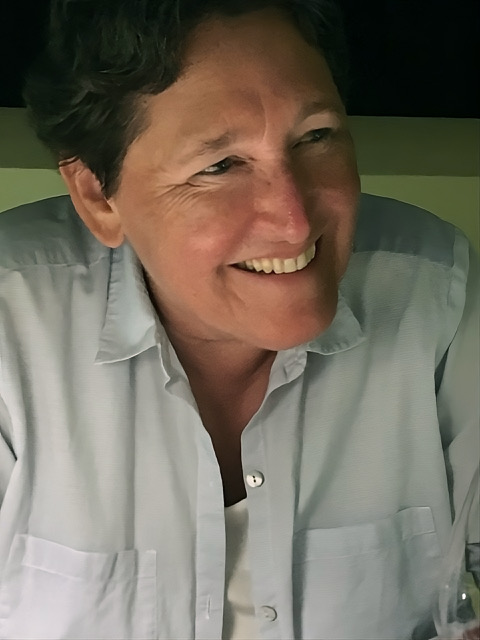
Guest Blogger ~ Glenda Carroll

Where Did I Put That Plot?

By Glenda Carroll

            Plots don’t come easily to me. When I first started writing the Trisha Carson amateur sleuth mysteries about ten years ago, I sat down and blithely typed away following any idea wherever it took me. But that stopped working. I aimlessly spent time chasing after dead ends … nicely written, to be sure, but instead of moving the plot along, it stopped it cold. I wasted so much time.  I realized that I needed more control over what happened and when.  I’m not a plotter, as you can tell. I enjoy the freedom of following whims. So, this hasn’t been an easy step for me. But I’m trying.

 Take Better Off Dead (BOD), the latest book in the mystery series. Like all the mysteries before it, I knew the catalyst for the plot. It’s always based loosely on something true. In the series, each book swirls with an undercurrent of open water swimming.  That’s usually the true part.

 Almost fourteen years ago, a solo swimmer in the Maui Channel Swim, a 10-mile relay race between the islands of Lanai and Maui, was sucked under a powerboat by the propeller wash near the finish line. He suffered catastrophic injuries to one arm which had to be amputated and one hand that was reattached although it had two finders missing. I wasn’t there, but I read about it. Things like that stay in the back of my mind especially when I’m swimming in open water like the San Francisco Bay in Spring and Summer and Fall.  It came to the surface when I began to think about BOD.  I knew I wanted to use the idea of a horrible boating accident. But I needed a victim, some potential murderers and a realistic answer to the question, “why?”

            I lingered over the concept of a premeditated horrific accident but could go no further. At the time, I was also tutoring first generation, low-income high school students in English. One sophomore was reading Shakespeare’s Hamlet and wasn’t thrilled about the language. He didn’t understand Elizabethan English and no amount of my prompting and wheedling made the play on par with a Marvel comic book. That is until I told him the story of Hamlet, his dead father, his uncle and his mother in everyday language. It went something like this:  Hamlet, the prince of Denmark, is at university when he learns of his father’s death. While returning to the family castle, he runs into the ghost of his dad who tells him that his brother, Hamlet’s uncle, poisoned him and that he wants revenge. The revenge part sparked his interest.

 I lingered on how Shakespeare killed his actors: drowning, poisoning, stabbing with a sword, stabbing with a poisoned sword. I compared it to the violence running through video games or a superhero movie. What if Hamlet was the Hulk? That caught his attention. I convinced him to come up with a modern-day plot based on Hamlet. He bought into the idea.  So, we read the play, both the contemporary translation and the Elizabethan language version and he jotted down notes to help him with his video game. That’s when the light bulb went off.  If my student could update Hamlet, so could I. Later that evening, following Shakespeare’s plot, I started writing … modernizing the famous revenge tragedy. The moody Hamlet became Harrison. His dead father and the very much alive brother turned into Andy and Marty Barlow, wealthy Marin County financiers. That’s all the kick I needed. The story began to fall into place.

I can’t say the rest was easy, but I could see a path ahead of me. As part of the Acknowledgement in Better Off Dead, I thanked Will Shakespeare. Without him and Hamlet, there would not have been a Book 4 in the Trisha Carson series.

I’ve started Book 5, and it revolves around a skull found on a San Francisco Bay beach covered in eel grass. (That’s the true part.) Do you think I learned anything from my experience with Better Off Dead? Unfortunately, no. I have no idea what to write next.

BETTER OFF DEAD: A Trisha Carson Mystery

Successful Marin County, Ca financier, Andy Barlow, is training for a competitive open water swim in the cold San Francisco Bay. Unexpectedly, his support boat runs him over midstroke, killing the swimmer instantaneously. Consumed with grief and anger, Andy’s college-aged son Harrison, returns from London to probe what really happened. Although the local sheriff’s office and the Coast Guard have closed the case, Harrison refuses to believe their findings. He reaches out to amateur sleuth Trisha Carson to hunt down the real killer.

Trisha digs into the man’s history and finds fractured relationships in his family, his business and his marriage. There’s clearly more than one person who had reason to seek a deadly revenge, but would they go as far as murder?

Amazon – paperback, ebook

https://www.amazon.com/Better-Dead-Trisha-Carson-Mystery/dp/B0DXKTJRK2

Barnes & Noble – paperback, ebook

https://tinyurl.com/u4tt9nas

Audiobooks

Apple:  https://tinyurl.com/y5t5jw34

Audible:  https://tinyurl.com/yy5anbwr

Glenda Carroll is the author of the amateur sleuth Trisha Carson mysteries set in the beautiful San Francisco Bay area. The fourth book in the series, Better Off Dead, came out in Spring 2025. It’s available in paperback, ebook and audiobook. Alas, Carroll hasn’t won any awards; hasn’t even been short-listed for one. Glenda spends more time swimming than writing. She also tutors first generation, low-income high school students in English and History. She is the current president of Sisters in Crime, Northern California.

She lives in Northern California with her dog, McCovey.

Website: glendacarroll.com

Amazon: https://tinyurl.com/y5mmhh55

Indies United Publishing House Lcc: https://tinyurl.com/ycynyr8a

Barnes & Noble: https://tinyurl.com/u4tt9nas

Audible: https://tinyurl.com/yy5anbwr

Facebook:  https://www.facebook.com/glenda.carroll

Instagram: https://www.instagram.com/glenda.carroll/

Bluesky: ‪@ggcarroll.bsky.social

Getting to Know My Character

As the days and nights are starting to cool, I’m looking forward to dressing in cozy sweatshirts, wrapping up in fuzzy blankets and settling into a routine of writing and quilting.

During the summer, there isn’t time to quilt. I spend a lot of time on the road either to attend events to sell my books, to attend family events, or do research for my writing. When I’m home I’m writing, pulling weeds, doing gardening, or helping hubby.

But come fall and winter, there are my walks and housework, but then I write until 3 or 4 pm and then I work on whatever quilt I have going until it’s dinner time. If I’m cutting fabric for a quilt, I’ll continue doing that after dinner.

It’s funny, I don’t like putting puzzles together, but I enjoy moving pieces of fabric around to find the right pattern in the colors and adjusting them. I can have fabric pieces laying on the guest bed for several days, or even weeks, as I wander in and out rearranging and deciding if I like the way they look. Once I’m satisfied I start sewing them together.

That’s kind of how I write. I start with the idea of a story in my mind and rearrange the characters and the setting as I formulate where the story will start and who will be murdered. It’s a process that I recently realized is crucial to my being able to write an enjoyable story.

My book Merry Merry Merry Murder that is releasing October 15th is the first book of what I hope will be a new series for me. I had the idea for it last fall. And then in January, I wrote the book in one month and felt I was on to something I could do to give my readers something extra to read in between my Gabriel Hawke Novels and Spotted Pony Casino Mysteries releasing.

I sent the book to my beta readers and they all said that they didn’t like the main character and the story fell flat. That is not what a writer wants to hear. I didn’t have time right then to work on it, because I was busy getting the next Hawke book written.

The Christmas book sat and I thought about it when I wasn’t deep in the Hawke book. And then I needed to get the next Spotted Pony book written. I talked to my beta readers some more about the Christmas book as I wrote the Spotted Pony book.

I swirled the main character Andi around in my mind a lot when I wasn’t actively writing or thinking about the books I was writing. After a couple of chat sessions with a beta reader and having a break between my other books, I sat down and went through Merry Merry Merry Murder. ( I know too many Merrys, but sing it like the Carol of the Bells song and you’ll get it)

After letting the character “ferment” in my brain for nearly a year, I dug back into the story. In that year, I’d learned more about my main character, so I “knew” her better. I rewrote the beginning of the story and gave her a new interesting friend and sent the new version to my beta readers.

It was a hit!

Every time I’ve started a new series, I’ve lived with the main character in my head for a year or more. So I knew them inside and out before I started writing their first book. I didn’t do that with Andi and now that I have had her in my head for longer, she is a complete character.

I’ll be sharing her book with you next month, but it was the idea I came up with for this month’s post.

I do have the next Hawke book, Wolf Moon, available in ebook, exclusively at my website right now or you can preorder it from your favorite ebook vendor and get it on September 19th.

In the remote, snowbound wilderness of Oregon’s Eagle Cap Mountains, a sled dog race turns deadly.
State Trooper Gabriel Hawke is teaching winter survival to Search and Rescue recruits when he’s called in to find a missing musher. Arriving at the race camp, he discovers the musher isn’t just a name on a list—she’s someone his friend Justine cares about deeply.

As Hawke searches rugged trails and icy backcountry, the case quickly shifts from a rescue to a murder investigation. Then a second body turns up, and it’s clear the killer is hiding among the racers, handlers, or volunteers. The deeper Hawke digs, the more he uncovers buried secrets and dangerous rivalries.

Now, with a killer on the loose and Justine possibly in the crosshairs, Hawke must navigate blizzards, betrayal, and bloodshed—before the race ends in even more tragedy.

Buy Direct for $1 off and read now! https://www.patyjager.net/product/wolf-moon-ebook/

Universal Buy link or pre-order https://books2read.com/u/bWO1dD

Guest Blogger ~ Jerry Aylward

The Victim’s, Victims.

   Being the second oldest in a family of seven children and growing up impecunious during the mid-50s in rural Middle America, where occupying one’s time for entertainment was left to their imagination. I often busied myself trying to solve problematic riddles and puzzles, starting with the most basic and subjective ones like what came first the chicken or the egg, or, did Humpty-Dumpty really have a great fall, or was it simply a Kings premeditated design for fresh egg salad?

      I was never enthused with those rainy-day picture puzzles that give away the reveal by displaying the completed puzzle’s image all shiny and pristine on the face of its cardboard container. No, I thoroughly enjoyed a deep dive into complex brainteasers, ones that would pique my curiosity, while challenging its solvability. Ones like: I speak without a mouth and hear without ears. I have no body, but I come alive with the wind. What am I? Or the immemorial murder mystery where a lifeless victim is discovered in a windowless room, and the only door is dead bolted from the inside.

   Fast forward a multitude of years, after turning twenty-one, I moved to the east coast, to New York. Where I joined the police department and honed my skills as a detective in the creative art of criminal investigations.

   It’s where I learned the meaning of a true mystery, where a mystery can be nothing more than an unanswered question, or where something is difficult or impossible to understand, or even to explain, or where something not understood or beyond understanding remains an enigma, until it’s solved.

   I also learned the difference between a mystery and a secret, which most often will be conjoined in a crime. A secret is usually just information that needs to be ferreted out before revealing the hidden mystery.

   While the mystery of any homicide is usually limited to who, what, where, when, how, and why, it rarely focuses its investigative depth on the murder victim’s family back story, or it may modestly skim its veneer. I’ve come to learn there is more often a burly and expansive personal history cloaked somewhere beyond the surface pedigree of the victim. By digging deeper into the victim’s background and uncovering hidden or forgotten secrets will often reveal a forewarning to their own impending crisis, of course that can only be exposed through an extensive investigation, and obvious hindsight. Though by unmasking hidden or untold historical family secrets will oftentimes reveal a clear and sharper image of the victim and their significant loved ones, it will frequently divulge the motive for the victim’s demise.

   I further learned most homicide victims leave behind palpable shards of their living lives, along with their unintentional victims, (collateral damage) unwittingly of course, but nevertheless, they leave behind living victims, such as loved ones, family members, and loyal friends. These unforeseen victims, who are mostly overlooked and quickly forgotten victims themselves, though portentously significant in the life of the murdered victim, possess a fundamental account of their own that needs to be shared.

   I’ve written both fiction and nonfiction, though all could be considered mysteries, at some point in time. My nonfiction books are True Crime. My latest True Crime chronicle takes place in 1955, in an affluent community located on the north shore of Long Island, in Nassau County, New York, commonly referred to as the Gold Coast, with the murder of a thirty-five-year-old multimillionaire, hence the title of the book Murder on the Gold Coast, conjointly narrating details of the living victims.

   Consequently, I learned that conducting research into even a seventy-year-old controversial homicide case requires obtaining accurate and minute details of pertinent information that can only be attained by extreme digging into the crime itself, while not being stifled by intentional information barricades, despite some present-day law enforcement officials attempts at continuing to thwart the truth.

   Another interesting detail I discovered while conducting my research in this aged homicide case was the compelling theory of the six degrees of separation. A persuasive philosophy that anyone on Earth can be connected to anyone through a chain of acquaintances with no more than five intermediaries. This means that on average, everyone on this planet is only six introductions away from each other.

   I found in my current true crime commentary I was only three degrees-of-separation away from the victim himself, and only two degrees away from some of the essential witnesses, without ever knowing.

   I also believed that just because some of the facts and physical evidence in this 1955 homicide investigation had been passed over or not addressed, it didn’t necessarily mean the investigators were merely incompetent.

   It should also be noted that exposing any aged criminal mystery to the prism of a new day will always require accurate documentation and absolute certainty based on official police reports, court records, historical witness testimony, common logic, and above all, perceptual principle. 

 MURDER ON THE GOLD COAST

In the early hours on a rainy autumn night in 1955, on a lavish country estate in Oyster Bay Cove, esteemed New York socialite Ann Woodward fired both barrels of her custom-made shotgun into the head of her husband, multimillionaire William J. “Billy” Woodward Jr., killing him. She mistook him for a notorious prowler who preyed on the privileged class. At least that was what the official reports stated. The police focused on catching the prowler, as they cast an impenetrable dragnet around the “Playhouse” for the elusive intruder. However, as with many other aspects of Billy and Ann’s social circle, things were not always as they appeared. Local author and retired detective Jerry Aylward uncovers the uncomfortable truths behind one of the Gold Coast’s most notorious murders.

Murder on The Gold Coast… pre-order is now available at the following online sites.

Amazon: https://www.amazon.com/Murder-Gold-Coast-Killing-Woodward

Barnes and Noble: https://www.barnesandnoble.com/w/murder-on-the-gold-coast-jerry-aylward/1147090484?ean=9781467157490

Walmart: https://www.walmart.com/ip/True-Crime-Murder-on-the-Gold-Coast-The-Killing-of-William-Woodward-Paperback-9781467157490/15485624051

Target: https://www.target.com/p/murder-on-the-gold-coast-true-crime-by-jerry-aylward-paperback/-/A-1004984063

The History Press/Arcadia Publishing:  https://www.arcadiapublishing.com

Jerry Aylward is a retired detective with thirty-two years of service with the Nassau County (NY) Police Department. He served another ten years in federal law enforcement with the United States Department of Homeland Security as a criminal investigator with the OCSO (Office of the Chief Security Officer) at a high-level, secret, government research facility. Jerry has a bachelor’s degree in behavioral science from NYIT and is a New York State–licensed private investigator. Jerry has also authored nonfiction: Francis “Two Gun” Crowley’s Killings in New York City & Long Island. And a pictorial history of the Nassau County Police (NY) Department. Jerry’s first mystery novel was “The Scarlet Oak” was released in July of 2022.
Jerry’s genre has been mainly local history and true crime. With The Scarlet Oak, he throws a twist of murder, spies, and spirits into an American Revolution time travel mystery that takes place in historic Oyster Bay, New York.

Website: www.jerryaylward.com

Email:    jerryaylwardauthor@yahoo.com

Guest Blogger ~ Lee Upton

The Romance of Reading

When I entered first grade I didn’t know the alphabet and was put in the group of children who were having the most difficulty learning to read. At some point I began to read without any  trouble. Then came third grade when all of us children were told if we finished ten books we could claim a prize. 

To claim the prize meant telling the teacher, which meant she would lead us to the box to select from among the many-colored jumble of prizes: tiny plastic dolls and pretty paper fans and box cars and gold-spined books. I coveted those treasures with all my heart.

And yet I would not claim the prize.

Instead, I re-read the tenth book for weeks, staring at the pages. The book was about a child who lived in a city, walked to school, and learned how to obey the stoplights to cross the street safely. I was a child who rode the bus to a rural Catholic school where someone got punished for putting a cigarette in the outstretched hand of the statue of Mary at the top of the stairs. As I reread and reread the tenth book the other children claimed their prizes.

My desire for a prize was desperate, but not so much that I would claim one. I was too shy. I had seen our teacher put one of the children on her lap. She must have been kind, must have delighted in giving prizes. But I couldn’t bear it, couldn’t bear the attention.

The book was my shield. More books would shield me later. In a few years it would be determined that I was myopic and couldn’t make out what was written on the blackboard. Before problems with my eyesight were detected, books continued to be my shield and my comfort—not because of shyness but because I could see most clearly what was written on a page only inches from my face.

In elementary school it wouldn’t be long before I discovered what I call the romance of reading. That is, I read a book that captured my whole attention in a way I had never yet experienced. The book told a story about Robin Hood. At the end, Robin Hood dies. I had no idea. I was so immersed in the book during a silent reading period at school that when an arrow pierced Robin Hood’s heart I cried out with shock. I was too astonished to be embarrassed by my outburst. What I felt for that book: it was like a first romance, and I refused to be embarrassed or ashamed by my response. Ever since, I’ve refused to be embarrassed by anyone’s judgment about what I’m reading. Reading is a romance—and no one else’s judgment should apply.

The word “romance” is hard to explain, at least in the way I want to consider the word.

Years ago a Frenchman, a stranger, asked me what the word “romance” meant. That seemed odd—wouldn’t a Frenchman know the answer, if anyone does? For some reason we were looking at a barrel inside of which a big silver fish was swimming. I tried to answer, but I don’t think he understood what I meant and, anyway, I was distracted by the fish.

If I had to answer now I might say that romance is a willing agreement to engage in a fever dream that can happen in various circumstances, even between one person and one book. That is, reading can be a romance—heady, passionate, and consuming, full of uncertainty and, sometimes, comedy. Even if a story is read aloud to us, each of us in our own minds gives the story life—and what we read may change our sense of time and readjust our sense of the space we occupy. Such reading may even allow a secret undomesticated part of ourselves to flourish. When we are engaged in the romance of reading we are not escaping the confines of our life, not exactly. It’s more like entering a country that never before existed, a country we are helping to bring into being through a quality of attention that creates an intimate experience. It doesn’t feel lonely, although most often conducted in solitude.

My new novel, Wrongful, is a literary mystery in which a popular novelist apparently disappears at a festival where various writers are behaving badly. My primary character, Geneva Finch, is what I think of as an ideal reader, a tenacious reader who has felt deeply what it means to carry on a romance with a series of books. She is an avid admirer of the novels of the popular novelist Mira Wallacz, and she is haunted by the mystifying circumstances surrounding Wallacz’s last moments. She can be critical of what she reads, and she recognizes that her attitudes and behaviors have been shaped by books—and that she may need to adjust her expectations accordingly. Yet reading, for her, sometimes comes close to voluntary enchantment.

I’ve written before about the romance of reading. In “The Ideal Reader,” the opening story of my collection The Tao of Humiliation, a biographer attempts to solve a mystery about a famous writer’s abandonment of his writing—and of his own daughter, who is explicitly identified in the story as an ideal reader. Another story, “Night Walkers,” in my collection Visitations, is about the world’s laziest book club, whose members tend to avoid reading any books and whose main character must regain and newly strengthen her ability to read fiction after enduring her husband’s betrayal. In “Gods and Goddesses in Art and Legend” (Visitations) a woman comes to a realization about how her reading has contoured her expectations far too much: “What new pattern was she going to make for her life? Whatever it was, her life couldn’t be made only of books. Not only of books. Although partly of books, that was true.”

Although an ideally generous reader, Geneva Finch in Wrongful is not a faultless reader—she can jump to conclusions too readily, and she can be willfully naive about authors, at least initially—yet she enters into what she reads with generosity. She doesn’t suspend her judgment, but neither does she suspend her capacity to be changed by her reading, to dwell in the country of the imagination and meet its requirements. She is, in a sense, the perfect reader for Mira Wallacz’s novels, for at their deepest levels both Geneva and the novels’ author endure the lingering effects of loss and self-blame. Their encounter in the novel may be brief. Nevertheless, an unconscious recognition pervades their meeting.

The traces of an underground or inexplicable mystery animates the romance of reading and propels us through certain books. We feel the pull of sensations we may not quite understand. Reading may be an encounter, sometimes with something that we are hazily trying to remember and pursue. I think this is true for us as authors as well: an author writes another book in search of the answer to an inexplicable mystery. 

The dedication page of Wrongful is inscribed “to the rightful reader”—those readers for whom the book is right at this time in their lives, who will be sure of their right to imagine, to read close to the page or in the mirror ball of what we know of culture and history, to read to the end of the book, or to stop short and put the book down, or even to read to the end and start all over again.

I don’t think there can be one sort of ideal reader. Each book we read is its author’s attempt to find the right reader. And as readers we make the ultimate choice—will this be a book we can drop, without hurting anyone’s feelings (the author will never know) or a whirlwind romance, or a cherished encounter that we hate to see end? Will we return to reread the book, faithful year after year? Meanwhile, for readers and writers alike, when a book clicks for us, the romance of reading is ardent and head-turning—a new springtime.

WRONGFUL

When the famous novelist Mira Wallacz goes missing at the festival devoted to celebrating her work, the attendees assume the worst—and some hope for the worst. Ten years after the festival, Geneva Finch, an ideal reader, sets out to discover the truth about what happened to Mira Wallacz. A twisty literary mystery dealing with duplicity, envy, betrayal, and love between an entertainment agent and a self-deprecating former priest, Wrongful explores the many ways we can get everything wrong, time and again, even after we’re certain we discovered the truth.

byuy link: https://www.amazon.com/dp/1963846214

Lee Upton is the author of books of poetry, fiction, essays, and literary criticism. Her forthcoming literary mystery, WRONGFUL, in which writers behave badly at two literary festivals, is forthcoming in May 2025. Her comic novel, TABITHA, GET UP, appeared in May 2024. Her seventh collection of poetry, THE DAY EVERY DAY IS, received the 2021 Saturnalia Prize and appeared in spring 2023. Her second short story collection, Visitations, was a recipient of the Kirkus star and was listed in “Best of the Indies 2017” and “Best Indie Books for December” by Kirkus. The collection was also a finalist in the short story collections category of the American Book Fest Best Book Awards

Facebook: facebook.com/uptonlee

Instagram: leeupton45

Lee Upton’s website: https://www.leeupton.com/

Publisher’s site with reviews and purchasing sites: https://www.saggingmeniscus.com/catalog/wrongful/

Bluesky: @leeupton.bsky.social

On X: @LeeUpto10998691

Stories – Imagination at its best

I’m in the middle of judging at county fairs with one today, and next week, judging at the Oregon State Fair. What could judging at county and state fairs have to do with writing? Let me tell you.

There is a plethora of people I work with when judging. From extension agents, volunteers, other judges, parents, and the kids. All of these give me fodder for characters in my books. I never truly learn all about the people, but I get descriptions, sometimes names, and characteristics that help me flesh out main or minor characters.

There are the items I judge. Why did that person use that color, make a dog coat, raise such exotic plants, or wish they could have brought in a poisonous plant? What people make or bring (there are some fairs that have collections as exhibits) to the fair to express who they are. So many times, I look at what a person has brought in and wonder what do they do when they aren’t crafting, sewing, or cooking.

I must say, my favorite thing to judge is the writing. Whether at the county or state level. 4-H members can now enter creative writing to be judged. When I read a good story and feel excited for the child who put this effort into telling a good story. I love seeing children expressing themselves in words and ideas on paper.

There have been stories that make me laugh, ones that make me sad, and ones that tear at my heart. One year, there were a lot of stories about death. That was hard to keep reading so many stories like that. But other years I’ve read about pirates, talking animals, fairies, ghosts, and even read a few mysteries.

I love that kids are learning to express themselves with words and sharing their imaginations with others. As a child, I wrote plays that my younger brother and I acted out with our stuffed animals. In junior high, two friends and I wrote an ongoing story that we passed around, adding to it. The story was an adventure set in the mountains where we lived.

Story has been a part of my life for as long as I started learning to read over my older brother’s shoulder. Words put together in a way to make someone want to read what I write is thrilling.

I will continue to write until my brain or my hands fail me. Because it is the best way I know to convey information to people in an entertaining way.

It’s early in the month but I have a Chirp Deal coming out on August 13th. If you want to listen to the first box set of my Gabriel Hawke Novels, it will be available for $2.99 from there from 8/13 – 9/10. You can find it here: https://www.chirpbooks.com/audiobooks/gabriel-hawke-box-set-1-3-by-paty-jager

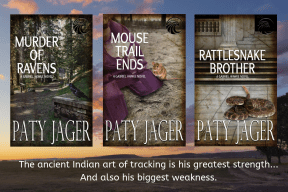
    Join Oregon State Trooper Gabriel Hawke as he performs his duties with the Fish and Wildlife Division while finding a body with a wolf collar, tracking a lost child, and hunting down a poacher in the wilderness of Wallowa County.

    Books 1-3 in the Gabriel Hawke Novels

    Oregon State Trooper Gabriel Hawke is part of the Fish and Wildlife Division in Wallowa County. He not only upholds the law but also protects the land of his ancestors.

    Murder of Ravens

    Book 1

    State Trooper Gabriel Hawke is after poachers in the Wallowa Whitman National Forest. When he comes across a body wearing a wolf tracking collar, he follows the trail of clues.

    Mouse Trail Ends

    Book 2

    Dead bodies in the wilderness. A child is missing. Oregon State Trooper Hawke is an expert tracker, but he isn’t the only one looking for the child.

    Rattlesnake Brother

    Book 3

    State Trooper Gabriel Hawke encounters a hunter with an illegal tag. The name on the tag belongs to the Wallowa County District Attorney and the man holding the tag isn’t the public defender.