Guest Blogger ~ Kathleen Kaska

Another Hotel, Another Murder, Another Sydney Lockhart Mystery

My idea for my Sydney Lockhart mystery settings came from historic hotels my husband and I have frequented. These old hotels are usually in the town center and are often community gathering places. Having cocktails in the lounges allowed us to meet the locals who would often share the most entertaining, unique, and unusual places to visit, which was excellent fodder for additional scenes in the books.

The series is set in the early 1950s. Sydney is a sassy, determined young woman trying to make it as a private detective in a man’s world. Her journey begins when she checks into the Arlington Hotel in Hot Springs, Arkansas, only to find a dead man in her bathroom. The man had been murdered, and she is the main suspect. I chose the Arlington as the first location because it is like my second home. Adding up all the nights we’ve stayed at the Arlington equals about four months. I’m familiar with all the nooks, crannies, and hidden places the average hotel guest is unaware of. Many local business I mentioned in the book have been in operation since the 1930s and are still open today. And with Hot Springs’ notorious history of gangsters running the city, it was easy to create a feasible plot. In fact, Al Capone once lived in the Arlington Hotel.

Since then, I’ve used the Luther Hotel in Palacios, Texas, the Galvez Hotel in Galveston, Texas, the Driskill Hotel in Austin, and the Menger Hotel in San Antonio. They all possess a unique history, which I weave into the stories.

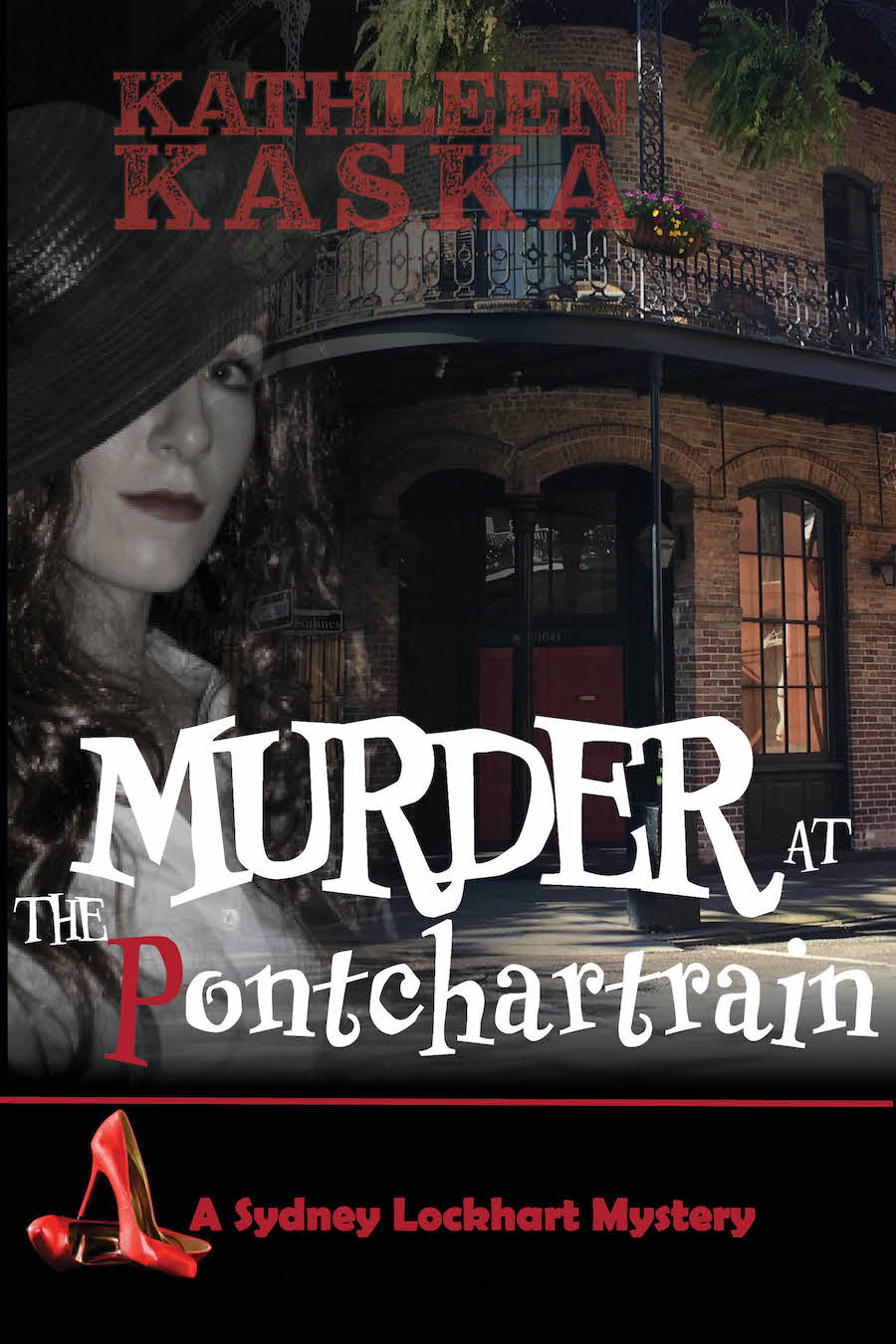
My latest mystery, Murder at the Pontchartrain, which was release on June 28, occurs in one of my favorite cities, New Orleans. The Pontchartrain, located in the Garden District, was opened in 1927 as a luxury apartment building. In the early 1940s, it was turned into a hotel. This is where Tennessee Williams wrote his classic play, Streetcar Named Desire. This vibrant, exotic city begs to have a mystery set there. Just ask Anne Rice.

I brought Sydney to New Orleans because she and her fiancé/partner in crime, Ralph Dixon, had some unfinished business to attend to. But in less than twenty-four hours, someone is murdered in their hotel room, and Dixon is arrested. Sydney is in a race to solve the murder and free Dixon before she ends up in a cell next to him. When word back home in Austin gets out, Ruth, Sydney’s bubble-headed blonde cousin, and Sydney’s twelve-year-old charge, Lydia LaBeau, arrive to give Sydney a hand. Ruth is assigned to snoop around the hotel. At the same time, Lydia appoints herself as the investigator of the French Quarter, where she ends up helping out at the Voodoo Shop and making friends with Pat O’Brien’s head bartender. Yes, I know the girl is only twelve, but age has never influenced what Lydia does.

While wandering the streets in New Orleans, I envisioned Sydney darting down the back alleys of the French Quarter, tracking a suspect near Audubon Park, and almost meeting her demise in the Lower Ninth Ward.

If readers know of great hotels for my future setting, I love to hear about them. The requirement is that the hotel was in operation in the early 1950s and is still in business today.

I’m Sydney Lockhart. I solve murders, most of which I’m the primary suspect. My fiancée, Ralph Dixon, and I came to New Orleans to get married. Instead, he’s been arrested for a double murder, and I’m hunting for the real killer. Assisting me are a twelve-year-old voodoo queen, a ghost detective, and my crazy cousin Ruth. Wish me luck. I’ll need it.

https://www.amazon.com/Murder-Pontchartrain-Sydney-Lockhart-Mystery/dp/1941237940

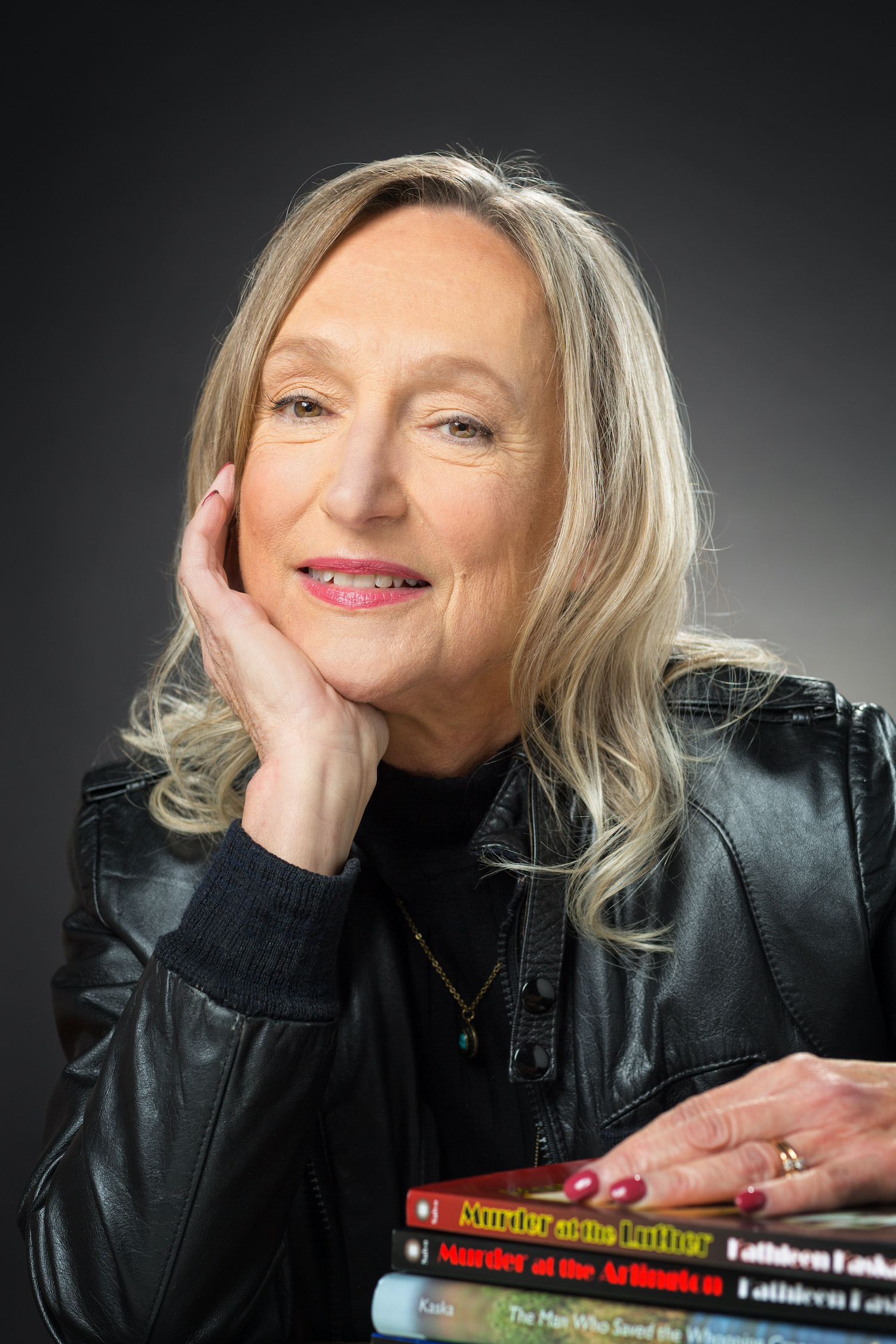
Kathleen Kaska is the author of the awarding-winning mystery series: the Sydney Lockhart Mystery Series set in the 1950s and the Kate Caraway Animal-Rights Mystery Series. She also writes mystery trivia. The Sherlock Holmes Quiz Book was published by Rowman & Littlefield. Her Holmes short story, “The Adventure at Old Basingstoke,” appears in Sherlock Holmes of Baking Street, a Belanger Books anthology. She is the founder of The Dogs in the Nighttime, the Sherlock Holmes Society of Anacortes, Washington, a scion of The Baker Street Irregulars.

Social Media Links:

http://www.kathleenkaska.com

Bookstore

https://twitter.com/KKaskaAuthor

http://www.facebook.com/kathleenkaska

https://www.instagram.com/kathleenkaska/

https://www.bookbub.com/search/authors?search=Kathleen%20Kaska

https://www.amazon.com/author/www.kathleenkaska.com

Random Ramblings

My summer has been busy! More so than usual. The only upside is I have been gone so much I didn’t have to help with as much hay harvesting. 😉 However that running around has drained me and made it take longer to get my next book out.

I told myself when I planned my 10 day trip to Hawaii that I would still work on my writing for half of the day. Well, I didn’t. And that put a book that I was already struggling with too much of a lag between starting and finishing it. Thank goodness my beta readers and editor found the places where I changed someone’s name or had a character looking at something they couldn’t have seen because the other character hadn’t been home to leave it. Little timeline things that I was sure I’d written but obviously only in my head.

Turtles on the rocks in Hawaii

As a writer, do you have instances like that? I have on several books known I’d written a scene that led up to something and neither I nor a beta reader can find it. It was a scene I’d played over in my mind while I was walking or driving and then when I sat down at the computer I started with the scene after it and was sure I’d written the one that was still in my brain. That’s frustrating. At least the scene is there, and usually, I can write it better than it played out in my mind.

In the book that is off to my final proofreader, I had many spots that I had to “fix” after the beta readers read it. I also had more scenes and paragraphs that I took out or manipulated to make my character more sympathetic to the victims in the story. I have never had so many saved documents of partial scenes that don’t make it in the book. I sure hope my readers like this one. It’s a true Hawke story but it does delve into something more controversial than his other books.

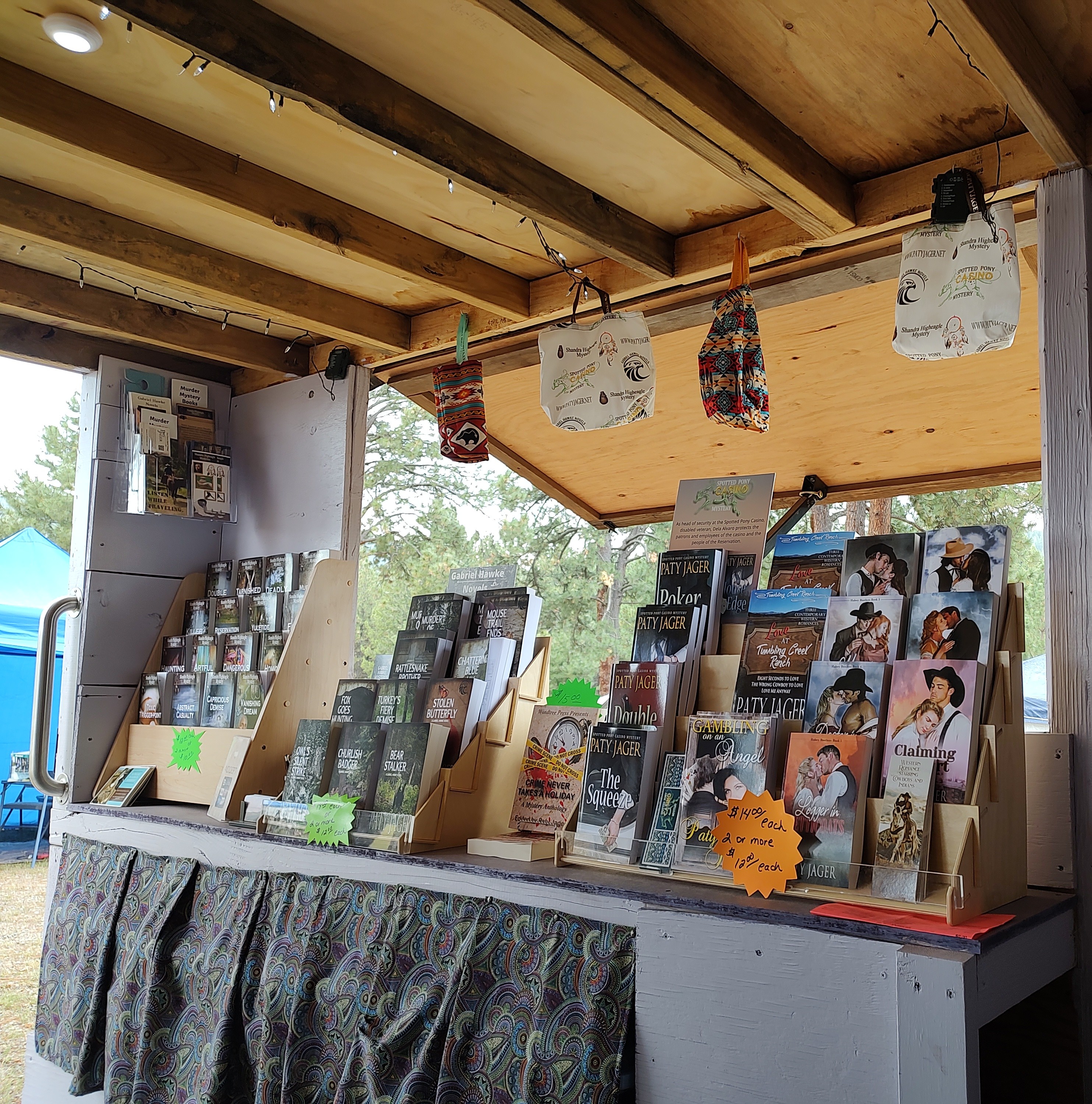
I spent Labor Day Weekend at a Flea Market where I and another writer friend usually have brisk sales. This year there were so few people who wandered by our trailer, it was kind of eerie. I only sold about a third of what I normally sell. Most of those were to my return readers.

This week, I’m headed to Mt. Angel, Oregon to sell my first in series books along with books by other NIWA (Northwest Independent Writers Association) members. It should be a fun weekend.

As soon as I return from there, I’m diving into a Shandra Higheagle Christmas mystery. I’ve had a multitude of Shandra fans ask me for one more book. I’m writing a Christmas novella to hopefully give the readers closure. I hope I can get it out before Christmas!

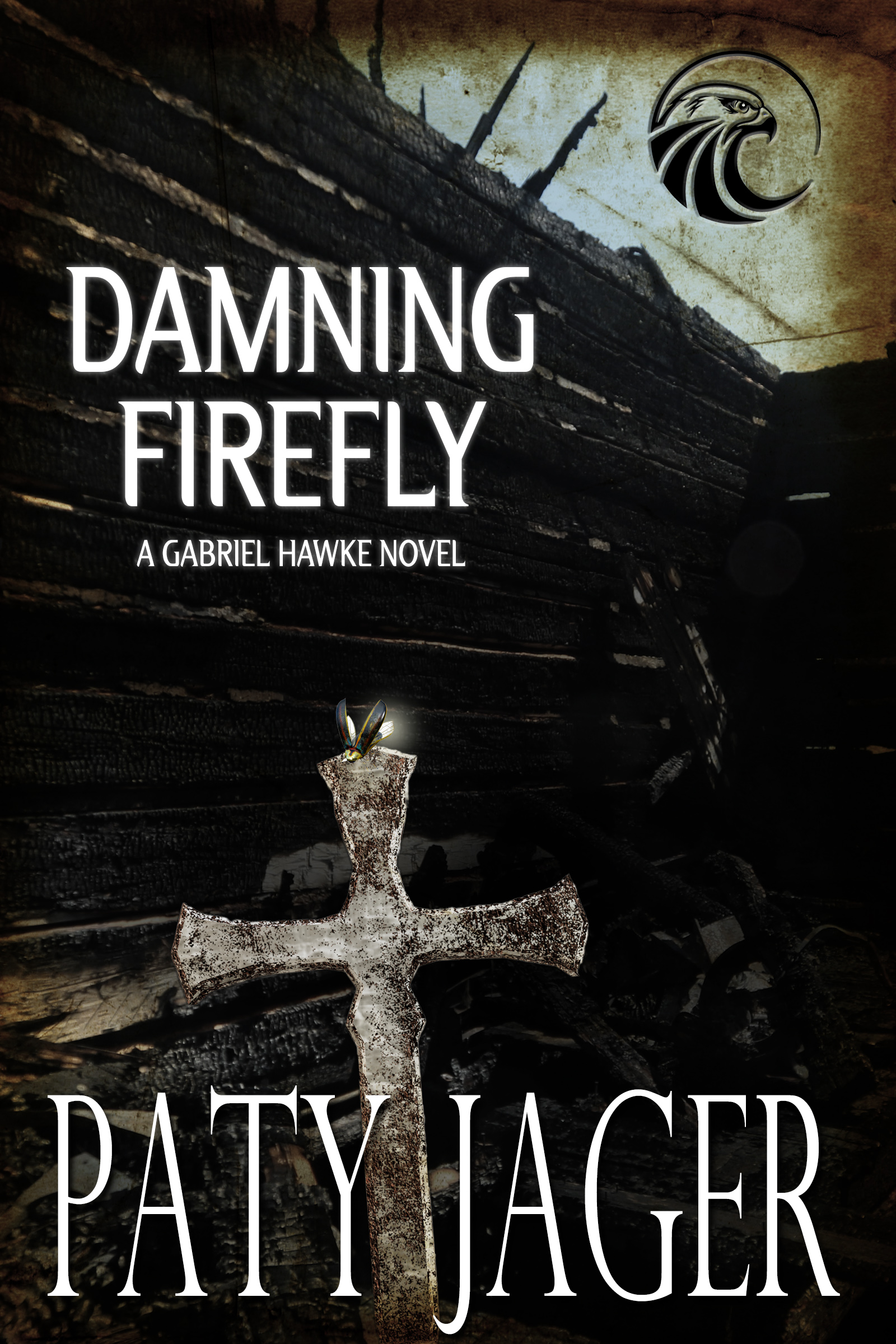
Right now you can pre-order Damning Firefly. It will release on September 25th.

Book 11 in the Gabriel Hawke Series

A church fire.

An unconscious woman on Starvation Ridge.

Gabriel Hawke, fish and wildlife officer with the Oregon State Police, helps with a fire at The Lighted Path church before heading out to check turkey hunters. He discovers a car wedged between two trees and a woman with a head injury reeking of smoke. Is she the arsonist?

Hawke encounters the county midwife gloating over the burnt church and learns she and the victim in the car know one another.

Two seemingly separate events lead Hawke to a serial rapist and a county full of secrets. 

Universal Book Link to Pre-order: https://books2read.com/u/bQeBDZ

Guest Blogger ~ DL Morton

Hiding in plain sight.

I would imagine, like many of you, my intention of becoming a writer, author, or even working in a profession where writing took a front seat could not have been further from my imagination. Although, life sometimes has other ideas that don’t require personal input. Thus, my journey to becoming a writer began, and my clues were hiding in plain sight.

It started in college. Having trouble understanding the intricate workings of the English language, a creative writing professor took pity on me and folded me under her wing, because she loved my stories. She didn’t mind my misspellings, poor placements of commas, or whether I capitalized in the right places. Teaching me the art of creative writing helped me through all my necessary credits to finish my degree. That should have been my first clue.

 After that, over the next three decades, I did anything but write stories. Until my five-year-old grandson asked me to tell him a new story. So, I made one up on the spot. It turned into his favorite. Later, he asked me to write it down, so his mom could read it to him because, “she never gets it right.” That should have been my second clue.

Thirty-three children’s books later, I wrote a novel. It’s a woman’s literary fiction about love and secrets. After years of writing stories of roughly one thousand words, from start to finish, I thought I’d died and gone to heaven with the new-found freedom of expanded word count.

What I realized later, squeezing in surprises for children’s stories, developed a knack for hiding clues in plain sight. However, not satisfied with that manuscript, I stored it for five years, unpublished. Since then, I’ve changed genres and moved on.

Last year, I pulled that story from the mothballs, and did a rewrite. My editor has since gone through it, and dubbed me a master at hiding clues. Since I’ve changed my genre to paranormal cozy mysteries, this remark was just what I needed to hear, and timely, too.

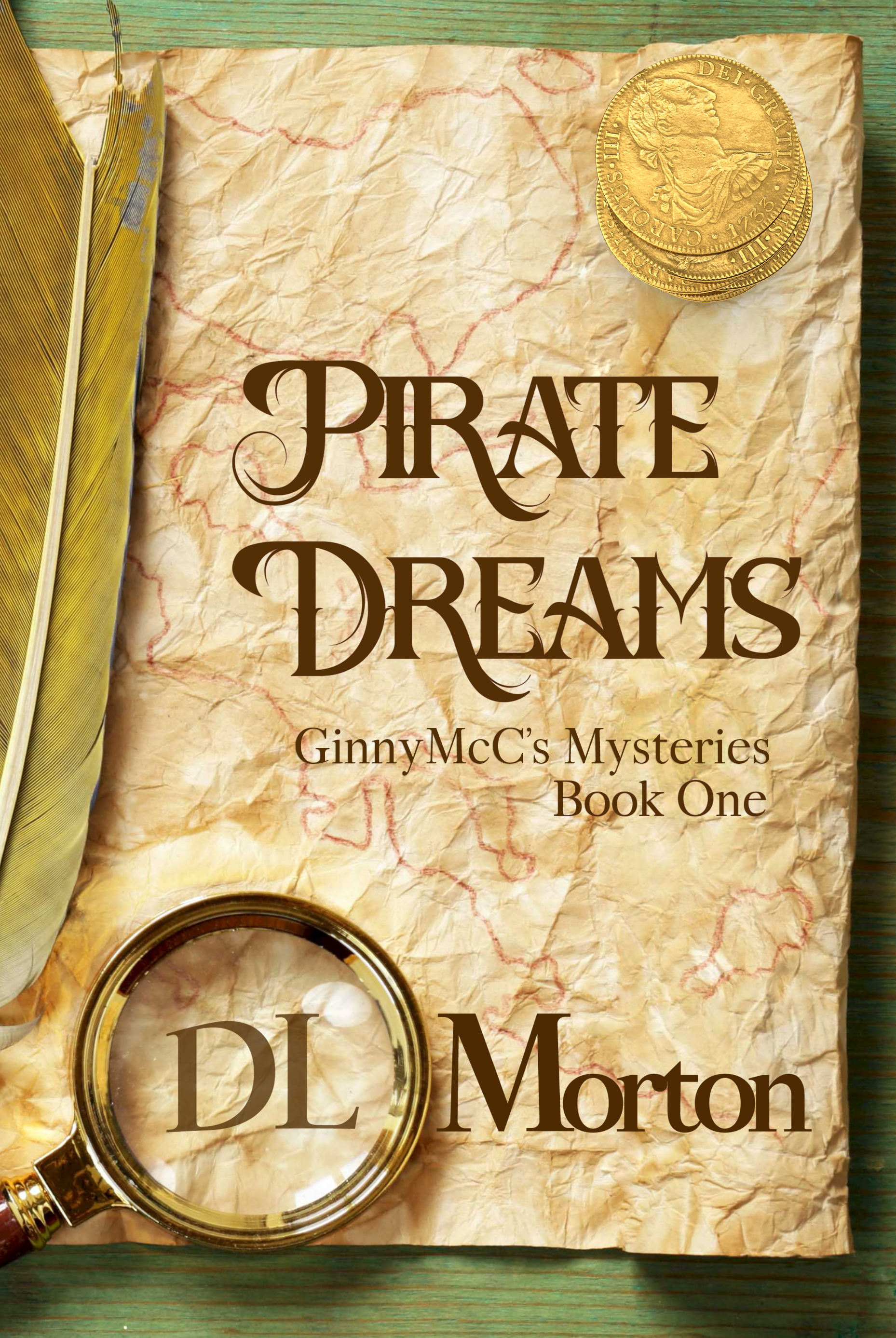
Not too long ago, I released my first book in a trilogy, called Pirate Dreams, under my pen name, DL Morton. I’ve also received several wonderful reviews and received a golden award. Not bad for someone who couldn’t, wouldn’t, and thought she shouldn’t be a writer, much less a published author.

I find my stories seem to write themselves. I only provide the physical task of typing. That was the clue that tapped me on my shoulder. Telling me to open my eyes and see the clues hidden in plain sight.

No matter what your genre, hiding clues is something most everyone will find they need to do, and when writing mysteries, they are essential. You can slip a discrete clue into the most obvious of places, and before you know it, a good mystery emerges.

The moral to this story is two-fold. One, be sure to spot your own clues. They may give you a hint as to where you should be looking.

Two, be sure to look for them in all your walks of life. You might find an opportunity or interest pop up that you never knew or realized would tickle your fancy.

Happy hiding everyone.

Pirate Dreams

A Pirate Days Festival sets off a set of circumstances that could change Ginny McCarthy’s life forever. As a reclusive insomniac, stitching together pieces of a fragmented dream about an ancient pirate legend proves more difficult than she imagined. Determined to find the truth, Ginny’s forced to seek help through unlikely and untrusted sources. Calling on her best friend for support, they navigate through unusual and dangerous situations. Together, they face suspicions and risks as they try to understand the meaning of her dreams.

https://www.amazon.com/Pirate-Dreams-Ginny-McCs-Mysteries-ebook/dp/B0C2JW6TN7

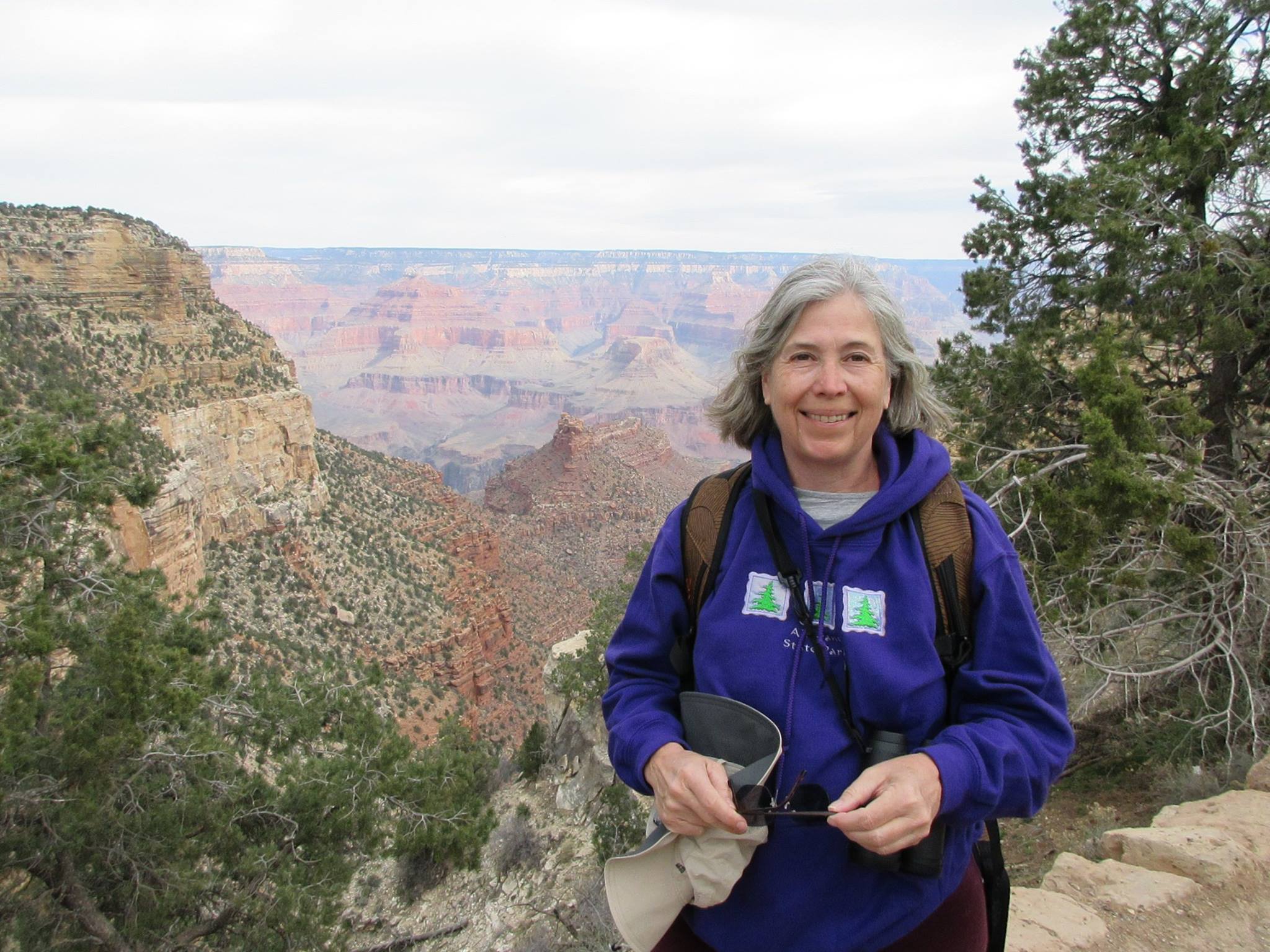
An established author of children’s books, DL Morton is branching out to adult fiction. She’s now working on a mystery series starring Ginny McC and a stand alone women’s literary fiction novel. She lives in an author’s paradise in the mountains of Northern California.

Website:
http://dlmortonbooks.com

Guest Blogger ~ Sharon L. Dean

The Mystery of Naming

I’m not original when it comes to naming characters. No Vermeulens or Siobhans or Kimmos. I try to make the names I choose popular at the time when a character was born. So the six old women in my novella with that title get Barb, Dottie, Jane, Lucy, Stella, and Thelma, all common names in the 1920s.

My novels are filled with generic names, Will and Peter, Anna and Cynthia. The problem with this is that I tend to repeat names without remembering that I used the same one in an earlier novel. This happened recently with the novel I’m working on now. I named a minister Roy Chambers after Roy Chamberlain, the minister of my former church. When I discovered I’d used the name in Cemetery Wine, I had three choices: keep the name despite the repetition, change the name, or find a connection between the old novel and the new one. I worked to find a connection. None made sense, so I changed just the last name from Chambers to Tibbetts, a nod to another minister I once knew.

I heard a famous writer say that if she met someone she didn’t like, she’d use that person’s name for an unlikeable character in her next novel. I don’t do that. But I do pay homage to people via the names I choose. A mortician gets the last name of the mortician in the town where I grew up, a doctor gets the name of my old doctor, and a college professor gets the name of my dissertation advisor. My cats, Nutzycoocoo and Charlie, get memorialized in my writing.

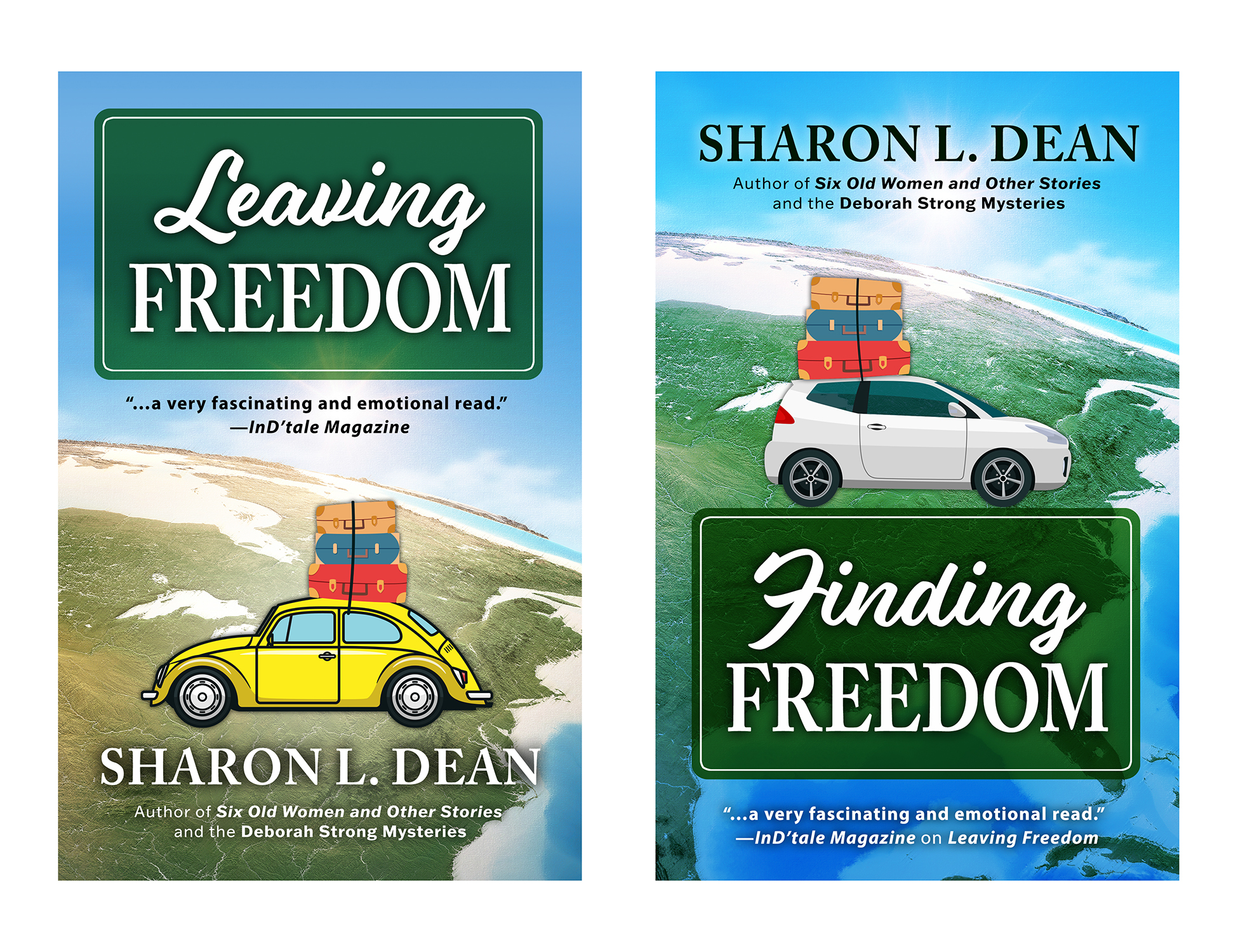
My novels Leaving Freedom and Finding Freedom borrow the protagonist’s name, Connie, from Constance Fenimore Woolson, a nineteenth-century writer whose work I researched in the days I was an academic. Woolson’s sister and niece were Clare and Clara. Connie, Clare, Clara, I couldn’t keep them straight even when I was researching Woolson. So I changed my Connie’s sister to Sarah (note the rhyme) and her niece to Lizzie, after Woolson’s friend. Her mother gets Woolson’s mother’s name, Hannah, and her uncle gets Woolson’s brother, Charlie.

The most fun I had with names came in Death of the Keynote Speaker. This is the second in my first mystery series featuring Susan Warner, the name of another nineteenth-century writer. I put into the novel a secret code even Nancy Drew couldn’t crack. Nancy Wheeler combines Nancy Drew and Honey Wheeler from the Trixie Belden books. Frank Belden combines Trixie’s last name with Frank Hardy. Joe Hardy of Hardy Boys series is Joe Keene after Carolyn Keene, the name given the author of the Nancy Drew series. And so it goes, all the way to the police officer named Stratemeyer after the syndicate that produced all those books.

The name of a character doesn’t need to be unique. Often these days, I wish there were a pronunciation glossary to accompany a novel. I can do Raskolnikov and Akhmad and Clytemnestra. I applaud the wider range of ethnicities in our contemporary fiction, but please tell me how to pronounce Ove. Ove with a long o? Ové with two syllables? Uve as in ooh or Uvé with two syllables? Maybe there’s a reason the American movie is named A Man Called Otto.

How do you choose names when you write? What kind of names do you prefer when you read?

Leaving Freedom took Connie Lewis from her home in Freedom, Massachusetts, to Florida with her aging mother and then to Ashland, Oregon, where she found success as a writer and a place to call home. Now, in the sequel Finding Freedom, Connie is eighty years old and has exchanged the Volkswagen she called The Yellow Sub for a Honda Fit she’s nicknamed Last Chance. She’s ready for a last adventure and will use a drive across the United States to write a travel narrative she’ll call Travels with Connie.  From gospel singers in the little town of Fossil, Oregon, to a famous painter in Glacier National Park, to turtle races in Perhem, Minnesota, to a twelve-year-old grandniece who teaches her about the lives of modern tweens, she finds more material for her book than she expected. Both going and coming back, she solved mysteries that help her to understand how the world changes even as it remains the same. Will she complete her journey in Massachusetts where she was born, the Oregon she has learned to call home, or somewhere she hasn’t expected?

https://www.amazon.com/Finding-Freedom-Sharon-L-Dean-ebook/dp/B0C5ZHK5N1

https://www.amazon.com/Leaving-Freedom-Sharon-L-Dean/dp/1645994651

Sharon L. Dean grew up in Massachusetts where she was immersed in the literature of New England. She earned undergraduate and graduate degrees at the University of New Hampshire, a state she lived and taught in before moving to Oregon. Although she has given up writing scholarly books that require footnotes, she incorporates much of her academic research as background in her mysteries. She is the author of three Susan Warner mysteries , three Deborah Strong mysteries, and a collection of stories called Six Old Women and Other Stories, Her novel Leaving Freedom was reissued on June 14, 2023 along with a sequel Finding Freedom. Dean continues to write about New England while she is discovering the beauty of the West.

My website:

https://sharonldean.com/

My publisher:

https://encirclepub.com/

Guest Blogger ~ Tammy D. Walker

The Poet and the Perils of Plotting

“Beautiful writing, but your story is missing a plot.”

I’d read those words again and again from editors rejecting my short stories, literary and science fiction.  As a poet, I’ll admit: plot isn’t one of my strengths.  Or wasn’t, anyway.  And every time I got a rejection that asked where the “story” is in the story, I cringed. 

As a writer, I’m supposed to know how to plot, right?

After all, I’d had poems published while I was in my mid-20s, not long after I started studying creative writing.  And, after taking a long break from writing to focus on a career change, I had many more poems accepted into literary journals and two poetry collections published by good presses. 

For a while, I thought I’d give up on writing fiction.  Those “almost” rejections were piling up, and the heartbreak of another “lovely, but….” message wasn’t motivating. 

Maybe, I thought, I should focus on poetry.  Writing poems gives me the chance to ask questions about the world.  I try to question the way pieces of the world fit together and, often, don’t.  And I question how I see things and why.  I want readers to walk away with not a definitive answer to anything but with a way to ask their own questions.

Which I tried to do in stories too.  But that approach didn’t work in fiction.  At least not for me.

And then, the pandemic happened.  I started reading more mysteries, in particular, cozy mysteries, as a way of traveling when we had to stay mostly at home.  I also watched a lot of travel videos.  In a moment of things coming together in a way I didn’t expect, I thought maybe I could try writing a mystery set on a luxury cruise ship.  Research meant more “online vacations,” and, because mysteries need that element of story to be tightly in place for the mystery to function as a mystery, I’d use the drafting process as a way of teaching myself that elusive skill: plotting.

Three good things happened.

First, I researched everything I could about plotting.  And then, I practiced.  I outlined, reoutlined, considered my characters’ motivations and reactions, and I outlined again. 

Second, I realized that I loved writing mysteries. 

And third, I figured out how to integrate what was working so well for me in poems into my fiction.  Mysteries are, essentially, about asking questions.  The sleuth has to ask questions about the crime, of course.  And we as readers have to ask about the crime as well as the sleuth and all the other characters.  Even if we do eventually get an answer to the whos, whys, and hows in the crime, much of that comes through that same process of questioning I do in poems.

Really, four things happened.  After a good bit of revision, my draft became Venus Rising, which was published in January 2023 by The Wild Rose Press.

Well, five things: that book got a review that said, simply, “good plot.” 

VENUS RISING

Almost as soon as recent divorcee Amy Morrison begins her dream job as librarian aboard the world’s most expensive luxury cruise liner, she nearly sinks it. She’s tasked with hosting the debut of a painting celebrated but hidden for nearly sixty years. But the artist claims the painting isn’t hers. And then, the artist goes missing. With the help of a retired academic couple lecturing aboard the ship, a dashing IT manager, and a housekeeping staff with a love of literature, Amy tries to solve the art fraud and kidnapping while rediscovering the adventurous side of herself.

Buy Links:

Tammy D. Walker writes cozy mysteries, poetry, and science fiction. Her debut cozy mystery, Venus Rising, was published by The Wild Rose Press in 2023.  As T.D. Walker, she’s the author of the poetry collections Small Waiting Objects (CW Books 2019), Maps of a Hollowed World (Another New Calligraphy 2020), and Doubt & Circuitry (Southern Arizona Press 2023).  When she’s not writing, she’s probably reading, trying to find far-away stations on her shortwave radios, making poetry programs, or enjoying tea and scones with her family.  Find out more at her website: https://www.tammydwalker.com

Social Media Links: