Guest Blogger ~ Douglas J. Wood

Our Love Affair with Villains and Killers

As a novelist who writes criminal procedurals (a genre name I hate), evil characters are central to my plots.  The more evil they are, the more they capture the fascination of readers.  It’s not that readers want the killers to win, but they do love the chase and climax when the criminals are caught and face their fate.

I like to call my writing style “plausible fiction”.  While the stories are a product of my imagination, I want readers to walk away with the belief that while my novels are fictional, the stories I weave are believable.  Plausible.  Only then have I successfully delivered a compelling tale to my fans that hopefully puts a few chills down their spines. 

I try to achieve that result through thorough research, including conversations with some of the vilest people one could ever meet.  I’m often amazed how open such people will open up to me.  Early in my writing career, I imagined that if I told a stranger that I was a novelist and would like to talk to them, they’d suggest I find the door.  Or worse.  But the exact opposite occurs.  People want to talk.  They want to tell their stories.  I strive to make sure my readers can get into the criminal mind and find themselves conflicted with their own thoughts on right and wrong.  So, I talk to both criminals and the people who protect us from them.  I’m not trying to write morality plays but I want to challenge readers with a reality that can often be unsettling.

Terrorists and serial killers, always major characters in my books, are unworthy of our sympathy.  They are psychopaths to their core.  They have no sense of right or wrong.  Yet they could be your neighbor.  Someone you know who seems to act as sanely as anyone else.  Most are not the scary characters you see on television or in movies.  They don’t have dispositions that openly reveal their ill intent.  Indeed, they are among us every day.  As FBI statistics and supporting studies by non-partisan organizations show, at any given time there could be as many as fifty active serial killers on the prowl.  There are thousands of unsolved murders, and experts say many of them are collections of victims slain by serial killers who were never caught. 

Yet in our day-to-day lives, we should not be frightened.  The chance of a serial killer lurking in your hometown is slim.  You probably have a better chance of being hit by lightning than encountering  one of these psychopaths.  Nonetheless, we remain captivated by their stories, and it is that fascination that makes readers crave criminal procedurals. 

Of course, we need our heroes, too.  Someone needs to counter evil and stand for justice.  And at times, they need to skirt the edge of propriety to catch the targets of their search.  That happens every day.  Who can blame them?  If they can stop a killer, we’re all safer.  But what we often miss is that our justice system has checks and balances that are important even when they seem to favor criminals.  So, in my writing, I try to keep the “bad cops” well balanced against the “good cops.”  That conflict is central to the plot in The Shakespeare Killer where the FBI profiler is repeatedly stumped by a mysterious serial killer murdering criminal defense lawyers.

One thing that has beguiled me, however, is the choice people make when I offer to use their name as a person in one of my books.  Years ago, I used to raffle off the opportunity to choose whether you’d like to be a hero or a villain  The proceeds were donated to charity.  Or I’d simply ask someone I wanted to memorialize if they’d like me to use their name.  Something like an homage.  Every time, they chose to be a villain.  Not once has anyone said they want to be a hero.  In fact, when I’ve chosen to make them heroes or victims, they’re disappointed.  They’d rather be an outlaw.  A killer.  A psychopath.  And when I tell them to reconsider since it was likely I’d kill them off in a particularly gruesome manner, to a person, they’d tell me to have at them.  The worse their death, the better.  I’ve vaporized characters in bombings, hanged them in executions, riddled them with bullets, or made them suffer grotesque endings.  The response?  Sheer glee from those who face that fate.

So, I write plausible fiction that teeters close to reality and when I approach a person I want to include in the book, they choose to be killed-off in the most despicable way possible.  Now ask yourself and be honest.  If you’re given a choice to have your name as a character in a fictional thriller about a serial killer or terrorist, who do you want to be? The hero or the villain?  And, most importantly, how would you like to be killed?

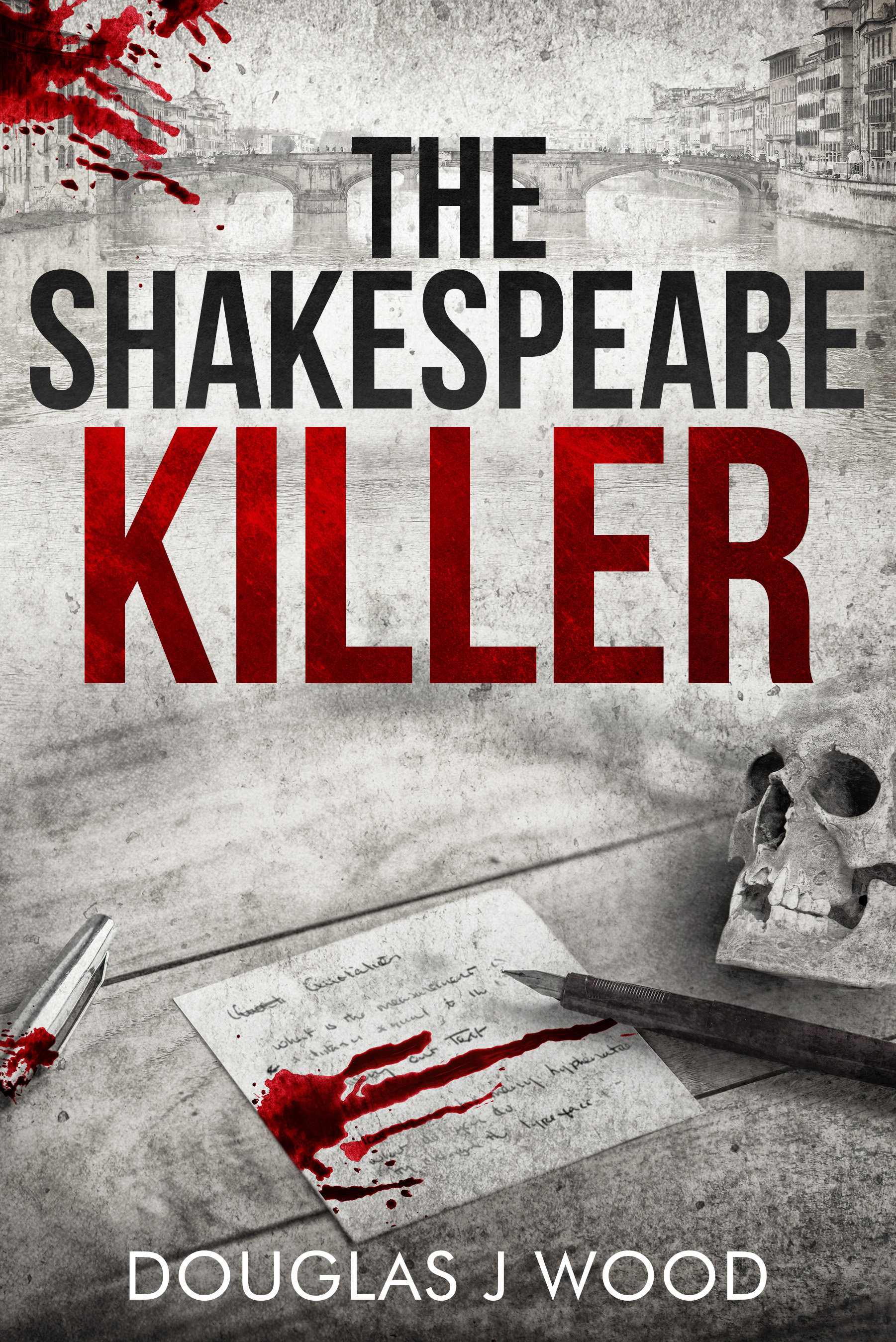
The Shakespeare Killer

The first victim is Jacob Schneider– a prominent criminal defense attorney. His death is ruled a suicide by authorities, just like all the other defense attorneys who have died recently. However, when Special Agent Chris DiMeglio gets on the case, he receives a tip from a local reporter who suspects these deaths are connected. Between the victim profiles, the suicide notes, and the unusual methods of death, it soon becomes obvious the FBI has yet another serial killer on their hands.

The Shakespeare Killer is a new mystery from Douglas J. Wood featuring Special Agent Chris DiMeglio. This case is particularly sadistic and soon DeMiglio starts receiving texts referencing Shakespearean characters and a clear motive to “kill all the lawyers.” With the lives of so many at stake, DiMeglio is forced to play a heart-pounding, cat and mouse game to find the culprit and stop the killing.

Amazon buy linkhttps://www.amazon.com/Shakespeare-Killer-Douglas-J-Wood/dp/B0C4HLQ82S/

Douglas J. Wood is the author of multiple award-winning books, both fiction and non-fiction. Including his Samantha Harrison series; his memoir, Asshole Attorney: Memories, Musings, and Missteps in A 40-Year Career (2019 Independent Press Award for Best Humor and Wit); Dark Data: Control, Alt, Delete, a thriller about cyberwar and financial terrorism (2020 Independent Press Award for Best Political Thriller); critically acclaimed Dragon on the Far Side of the Moon (2021); and Blood on the Bayou, a police procedural about a serial killer in New Orleans (2023 Independent Press Award Distinguished Favorite in Crime Fiction). The Shakespeare Killer is his seventh novel and a sequel to Blood on the Bayou.

As Senior Counsel at the law firm of Reed Smith LLP, he gained over 45 years of experience practicing entertainment and media law, often imparting knowledge from his career in his books. Listed among the leading global specialists in advertising law in Chambers, the Legal 500, The Best Lawyers in America, and Super Lawyers, he is known and respected worldwide and is a member of the Legal 500 Hall of Fame. He received his BA from the University of Rhode Island, his Juris Doctor from the Franklin Pierce Law Center, a Masters of Law in Trade Regulation from New York University School of Law, and an Honorary Doctor of Laws from the University of New Hampshire.

Doug currently lives in North Carolina with his wife of 49 years, Carol Ann. They are blessed with three grown children and four adorable grandchildren.

Author websitehttps://douglasjwood.com/

Instagramhttps://www.instagram.com/douglasjwoodauthor

Facebookhttps://www.facebook.com/douglaswoodauthor

Twitterhttps://twitter.com/djwood1976

Guest Blogger ~ Marla A. White

Unveiling the Fun Side of Crime: My Murder Research Adventure

Maybe this should worry me, but there’s no shortage of people I want to kill on a daily basis, so coming up with victims for my plots is relatively easy. Cut me off on the freeway? Your car is now being driven by a soon to be dead character. Be mean to a friend? Murder will follow. 

The real fun for me comes when it’s time to research the details. For “Cause for Elimination” I had firsthand knowledge of the horse and eventing world because I lived it. But finding out how to blow up a boat (hint: it’s not as easy as it sounds), or what it would sound like if someone were stabbed and their lung collapsed, required a little more digging. Fortunately, I have a few real live resources I can turn to for answers.

There’s a fellow eventer and nurse who’s very patient with my myriad of weird questions about broken necks and blood loss. Another good friend is an expert in wiring and security systems. He was invaluable when I was trying to figure out how the spy camera I needed for a particular scene would work. My nephew builds boats and helped me with the boat question.

Obviously, the Internet is a beautiful thing. There’s a wonderful website, “How To Kill Your Imaginary Friends” with articles such as, “If you shock a flatline, I swear I will come to your home and beat you with a wet chicken”. One of my characters is Scottish so I have a ton of websites bookmarked to make him sound authentic, including “The Septic’s Companion” for British slang words and insults. Plus lots and lots of research on weapons; guns, swords, knives, and even what a cat-o’-nine-tails looks like. I dread the thought that one day someone will look through search history and promptly arrest or medicate me.

But many of the specific, colorful details in my books, however, come from personal experiences. Like I said, I boarded my horses and rode at most of the locations that appear in “Cause for Elimination”. One scene, where a boarder is bemoaning how their life has been ruined, was from an actual and hilarious encounter that I had. Beautiful Idyllwild, a place a go as often as I can, was the inspiration for the quirky town of Pine Cove in my cozy mystery, “The Starlight Mint Surprise Murder” and the upcoming sequel. My non-mystery books were born out of a visit to a historic inn.

Probably the single most useful research tool for me as a writer, however, is wordhippo.com. It’s like a thesaurus on steroids and helps me keep my writing fresh. Used with ProWritingAid, because I’m useless at putting commas in the right place, I’ve gotten much better at turning in manuscripts that are clean and avoid mistakes. Because while killing off people is fun, murdering the language is downright embarrassing! 

Fun facts

Something readers might find interesting about this book:

Much of what happens in this novel is inspired by real events, people and places from my years of riding horses. Emily’s distinctive pickup truck was inspired by a real truck I coveted. Justin’s uncontrollable ride with “whoa?” – happened to me on that very field. The horse she rides, Reese, is based on the last horse I owned right down to his big suitcase head that he likes to waggle.  Don’t even ask me about the upholstery story!  And though I’ve never forgotten to unhook my air-vest, I’ve certainly had my share of close calls.  

A fact about me readers might find interesting:

The first time I got on a horse was to ride a neighbor’s fat pony bareback. It took off, I clung to its side for maybe 100 yards before hitting the ground, and have been in love with horses ever since.  It’s entirely possible I hit my head.  

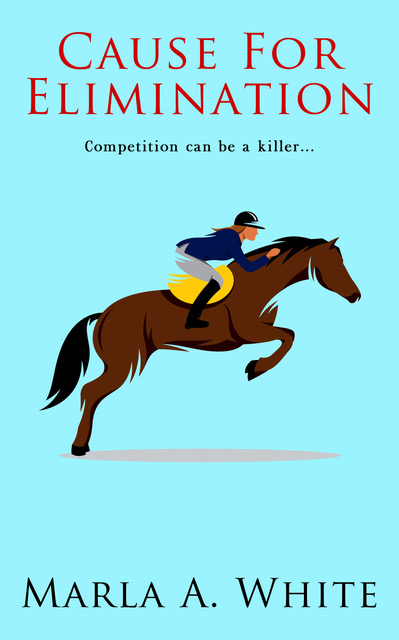
Cause for Elimination

After suffering a devastating riding accident, eventer Emily Conners is on the road back to reclaiming her life. Then she discovers the body of her friend and boss, Pam Yates, brutally murdered at the barn and it seems like nothing will ever be normal again. She’s out of a job, and annoyed by the handsome cop whose been sent to investigate the case.  Because while she wants to see the killer brought to justice, she has some dark secrets of her own she’d rather he didn’t unearth.

Detective Justin Butler usually gets his killer, but this time the investigation proves particularly difficult as Pam Yates had no shortage of enemies.  He looks to Emily for insights into a world that’s completely foreign to him and can’t understand why she’s resistant to help. Is she as busy as she claims, or is she scared off by the growing attraction they both share?

As the investigation heats up, dangers come from unexpected corners and buried secrets are exposed. Emily and Justin will have to work together to catch the killer, putting both their hearts and their lives on the line, before they strike again. 

Buy links:

Amazon  https://amzn.to/3qk7XCP

Books2Read  https://books2read.com/u/b6zjM6

BookBub  https://www.bookbub.com/books/cause-for-elimination-by-marla-a-white

GoodReads https://www.goodreads.com/book/show/62233827-cause-for-elimination

All Author https://allauthor.com/book/70256/cause-for-elimination/

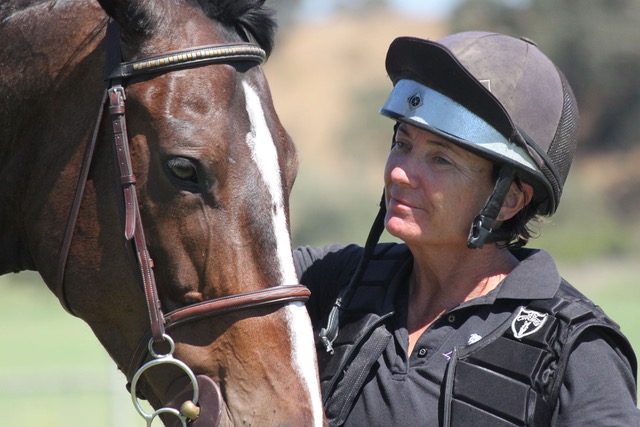
Marla White is an award-winning novelist, story analysis instructor at UCLA and writing coach who lives in Los Angeles. She graduated from the University of Kentucky where she took her first horseback riding lesson. After dabbling in hunters, barrel racing, and weekly trail rides, she fell hopelessly in love with the sport of eventing.  She “conquered” Novice level before taking a break to pursue novel writing but hopes to return to the saddle some day soon.  Her first novel, “The Starlight Mint Surprise Murder,” was published in 2021 followed by the first two books in her Keeper Chronicles series. When she’s not writing, she’s out in the garden, hiking, or working on a jigsaw puzzle.  

Twitter:  https://twitter.com/TheScriptFixer

Instagram: https://www.instagram.com/marlawriteswords/

Facebook: https://www.facebook.com/MarlaAWhiteAuthor

TikTok: https://www.tiktok.com/@marlaw825

Goodreads: https://www.goodreads.com/author/show/21467766.Marla_A_White

Bookbub: https://www.bookbub.com/profile/marla-a-white

Amazon: https://www.amazon.com/stores/Marla-A.-White/author/B094DVMCR4

Why we write what we do

I started writing a post on here about Indigenous People Day. Which is today. It was made a federal holiday alongside Columbus Day in 2021. But by the time I was at the end of writing the post, I decided someone might take my post as political and moved it to my personal blog. If you’re interested, you can read it here: https://writingintothesunset.net/

But today is why I write the mysteries I write. I have been fascinated and in awe of the Indigenous people since I was old enough to understand all that they have gone through. And to see how some of the tribes have grown along with technology and have raised their people up in knowledge, living conditions, and being heard. I know there are some that are still struggling with being heard and seen as productive part of society, but there are others who are thriving. Getting back their culture and language and being economically sound and successful for their tribe.

Their resiliency, belief in their culture, and their desire to give each generation the best life inspires me to write about them. To bring their horrors and their determination to readers. That’s why I have Native American characters in my three mystery stories, to show readers that while they live a different culture, they are just like everyone else with the same dreams, goals, and desires.

I hope that my stories, while they aren’t as full of the culture as some other writers, still portray the culture and the real people who live each day not only with similar struggles but also with more. They are still labeled and seen as different by many.

The theme of my books all deal with injustice. Whether it is someone who is killed, someone who is believed to be the suspect, or it is the characters dealing with prejudice.

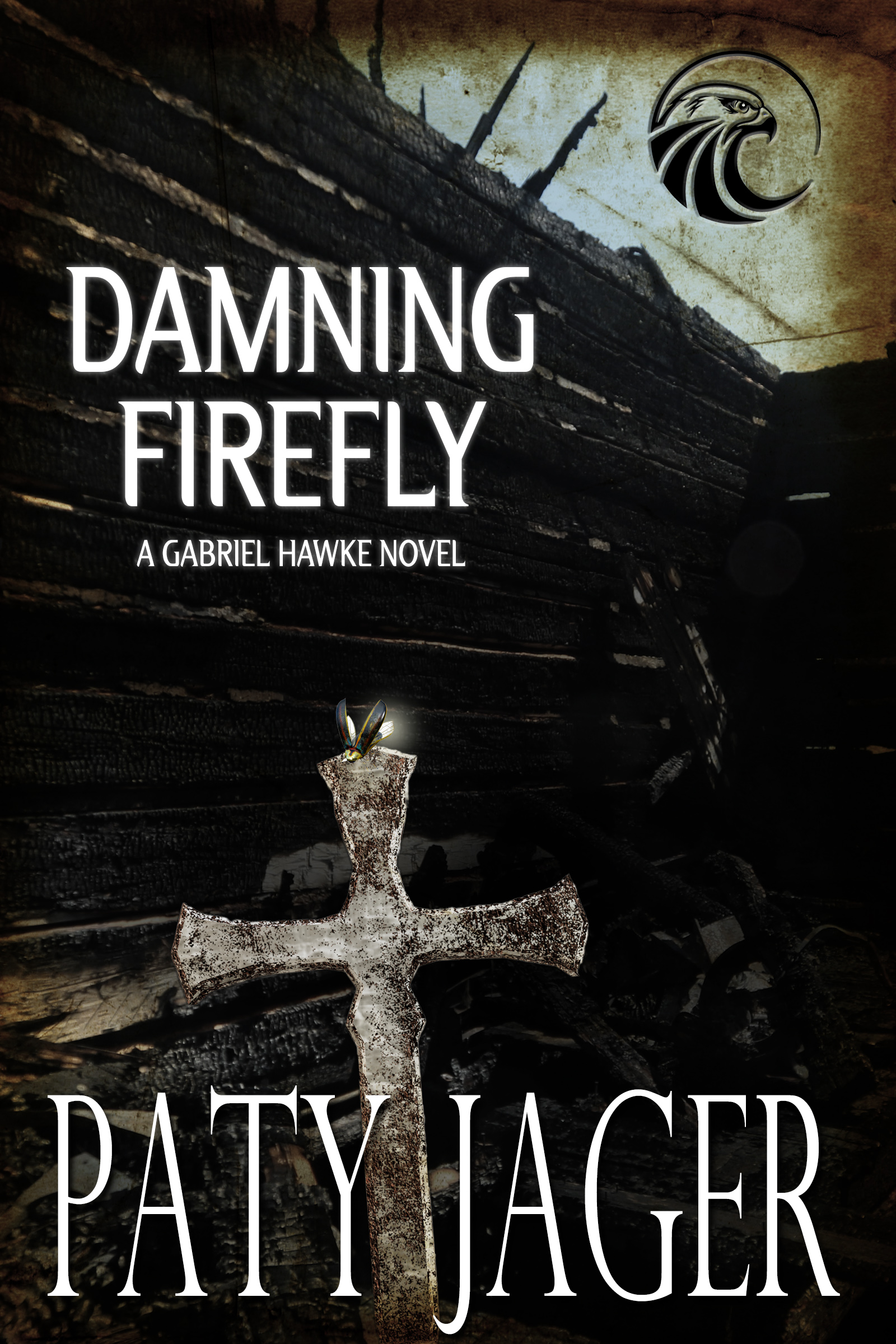
My newest release, Damning Firefly, deals with a completely different injustice. One that I tried hard to portray with empathy and from the first reviews, I did my job.

Damning Firefly

Book 11 in the Gabriel Hawke Series

A church fire.

An unconscious woman on Starvation Ridge.

Gabriel Hawke, fish and wildlife officer with the Oregon State Police, helps with a fire at the Lighted Path church before heading out to check turkey hunters. He discovers a car wedged between two trees and a woman with a head injury reeking of smoke. Is she the arsonist?

Hawke encounters the county midwife gloating over the burnt church and learns she and the victim in the car know one another.

Two seemingly separate events lead Hawke to a serial rapist and a county full of secrets. https://books2read.com/u/bQeBDZ

Guest Blogger ~ J. Woollcott

WHERE DO PLOTS AND CHARACTERS COME FROM?

It was summer and I had finally finished my working career. I wanted to write and travel, but Covid happened, and travel was out of the question, so writing became my focus. I wasn’t sure exactly what kind of book I wanted to work on, except that it should be a mystery and probably have a detective in it. As I hail from Northern Ireland, I figured that was the perfect place. I had a relative who had been in the police over there and I thought, well, if that’s not serendipity, I don’t know what is.

The next part—actually writing the darn thing—was a little more difficult.

The plot? A good question. I don’t really know where that came from. Ask any writer and most of the time they will say the story came from an overheard remark or something they read in the paper or on line. Not copied, just a stray word or sentence that sparked another idea. Stephen King, in his wonderful book, ‘On Writing,’ tells how a casual remark someone made about a basement with ‘rats as big as dogs,’ led him to write Graveyard Shift. I suspect Mr. King doesn’t really suffer from a lack of plot ideas though. I rather think he has more than he knows what to do with.

And where do the characters who populate our books come from? Now this is murky. They often rise fully formed out of the writer’s imagination—or so it seems. I suspect my hero, DS Ryan McBride, and the other members of the squad are an amalgam of too many hours spent reading detective crime fiction and watching British tv mysteries and movies.

So, a plot can spring unbidden from anywhere and characters can tap you on the shoulder and say; ‘Hey, let me out, I want to be in your next story.’

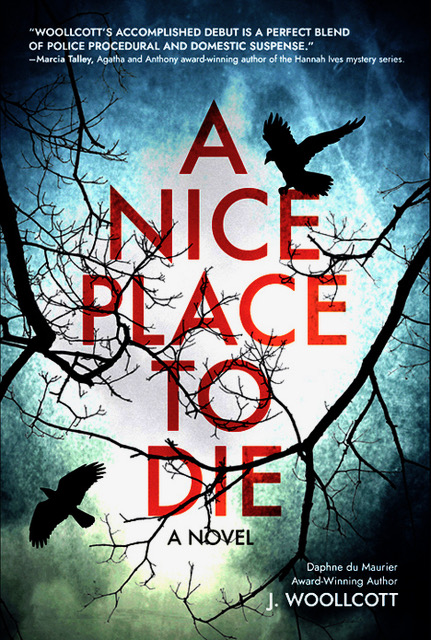
I was a designer and artist, and tend to be visual, so when I started to write A Nice Place to Die, I had an opening scene in my head. A woman’s body lying by a river outside Belfast. Crows cawing above in high, dark trees. A day of sun and cloud. Around that time there had been a lot of talk about date rape drugs and the like, and also articles about mistaken identity. Somehow, by a mysterious alchemy, both subjects came together and ended up in my book.

The Belfast Murder Series; Book One, A Nice Place to Die.

The body of a young woman is found by a river outside Belfast and Detective Sergeant Ryan McBride makes a heart-wrenching discovery at the scene, a discovery he chooses to hide even though it could cost him the investigation – and his career. As Ryan untangles a web of lies, his suspects die one by one, leading him to a dangerous family deception and a murderer who will stop at nothing to keep it. And still, he harbors his secret …

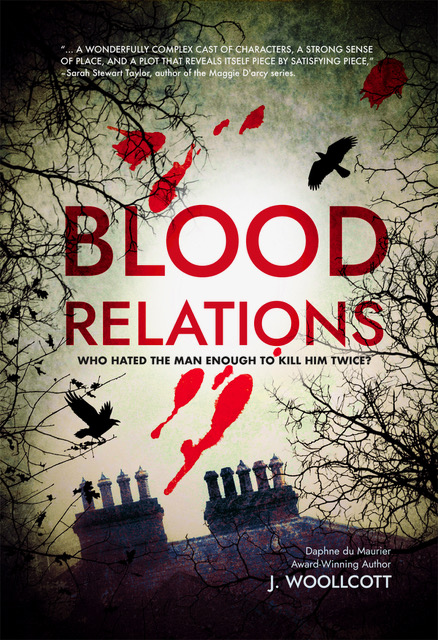
For DS McBride’s second outing, Blood Relations, I’d like to say that came to me in an ordered way, but no. I have even less idea where that plot came from, other than an opening scene of a bleak country house, dark clouds rolling in and a retired Detective Inspector lying dead upstairs on bloody sheets. Once again the story sprang from bits and pieces of chat, random conversations and well, just everyday life – not the murder part of course, I made that up … of course I did.

The Belfast Murder Series; Book Two, Blood Relations.

Belfast, Northern Ireland: early spring 2017. Retired Chief Inspector Patrick Mullan is found brutally murdered in his bed. Detective Sergeant Ryan McBride and his partner Detective Sergeant Billy Lamont are called to his desolate country home to investigate. In their inquiry, they discover a man whose career with the Police Service of Northern Ireland was overshadowed by violence and corruption. Is the killer someone from Mullan’s past, or his present? And who hated the man enough to kill him twice? Is it one of Patrick Mullan’s own family, all of them hiding a history of abuse and lies? Or a vengeful crime boss and his psychopathic new employee? Or could it be a recently released prisoner desperate to protect his family and flee the country? Ryan and Billy once again face a complex investigation with wit and intelligence, all set in Belfast and the richly atmospheric countryside around it.           

Amazon link: https://www.amazon.com/Blood-Relations-Ryan-McBride-Novel-ebook/dp/B0CFJWF69D/

J. Woollcott is a Canadian author born in Belfast, N. Ireland. She is a graduate of the Humber School for Writers and BCAD, University of Ulster. Her first book, A Nice Place to Die won the RWA Daphne du Maurier Award, was short-listed in the Crime Writers of Canada Awards of Excellence in 2021 and a Silver Falchion Award finalist at Killer Nashville 2023.

Website: https://www.jwoollcott.com

Twitter: @JoyceWoollcott

Guest Blogger ~ Mollie Hunt

Ten years, ten Crazy Cat Lady mysteries.

Ten years ago, my high school best friend said to me, “Let’s publish your book.” She was an editor. I was a writer, unpublished even though I’d recently completed my ninth fiction manuscript. I’d been trying the query route, but I never had the patience to carry it through. When I finished a book, I’d send out a frenzy of query letters to everyone in the marketplace manual but then get tired of waiting for that one good response and start another book. Writing books fascinated me; trying to pitch them did not.

I’d completed three mysteries, a thriller, and three and a half sci-fantasies when on a trip to Mazatlán Mexico, I began something new. With the warm breeze off the Pacific Ocean and the sound of marimbas playing in my ears, I penned the first chapters of a cat-themed cozy featuring a cat shelter volunteer. This one felt different; even then I knew it could be a series.

That story, Cats’ Eyes, was the one my friend the editor said we should publish, and we did.

After Cats’ Eyes came Copy Cats and then Cat’s Paw. The Crazy Cat Lady Cozy Mysteries found its voice and established its living characters. I kept coming up with new things for my shelter volunteer Lynley Cannon to do and new crimes that only she could solve. Her varying clowder of cats helped in their catly way, along with her octogenarian mom, her teenage granddaughter, her shelter buddy, and a hunky humane investigator. When I sat down at the computer, the stories would write themselves.

And now, ten years later.

I’m about to publish a new Crazy Cat Lady mystery, Cat House, and this one is special for a few reasons. It’s the tenth in the series, ten being a milestone. It takes place in my own neighborhood, and though the exact locations are fictional, anyone familiar with the Hawthorne district of Southeast Portland, Oregon will be able to visualize some of the features. And if you’ve read any of my series, you know I incorporate cat information into each story and include cat facts and snippets at the beginning of each chapter. Like my character Lynley Cannon, I am an devoted cat person, a volunteer, and an advocate for all cats. If my stories can not only entertain but teach something about cats, I’ve achieved my objective.

In Cat House, I’ve incorporated a secondary storyline involving a cat being treated for Feline Infectious Peritonitis. Up until recently FIP has nearly always been fatal to the unfortunate cats and kittens who contract it, but now there is a cure. Sadly, however, the drug to treat FIP isn’t approved in the United States, so sufferers have to look elsewhere. To get this storyline right, I needed to do quite a bit of research, and not just the internet kind. I reached out to a friend who had successfully treated an FIP kitten with “black market” drugs she obtained through an online group. I also learned of FIP crusader Peter Cohen and his cat advocate work. I was able to interview Peter and find out a whole lot more about why we can’t get this lifesaving drug in the US.

I included Peter’s interview as an afterword in Cat House. My new book may be cozy fiction and light reading for those who like cats, mysteries, and happy endings, but the reader might just learn something along the way.

Right now you can pre-order Cat House for its release on October 29th. Link to Pre-order: https://www.amazon.com/dp/B0CGSXLYTP

Cat House

Book 10 in the Crazy Cat Lady Cozy Mystery Series

This Halloween, the cats are hiding, and the monsters don’t wear costumes.

Young men from the Portland-Seattle area are going missing. It’s just another sad headline to Lynley Cannon—until she starts her new cat sitting job for an enigmatic neighbor.

An off-limits room, a suspicious phone message involving drugs, and the sudden appearance of a missing man’s cat arouse Lynley’s suspicion, but how far can she go before the consequences of her cat-like curiosity turn deadly?

https://www.amazon.com/House-Crazy-Lady-Mystery-Book-ebook/dp/B0CGSXLYTP

Cat Writer Mollie Hunt is the award-winning author of two cozy series, the Crazy Cat Lady Mysteries and the Tenth Life Mysteries. Her Cat Seasons Sci-Fantasy Tetralogy features extraordinary cats saving the world. Mollie also released a cat-themed COVID memoir. In her spare time, she pens a bit of cat poetry as well.

Mollie is a member of the Oregon Writers’ Colony, Sisters in Crime, the Cat Writers’ Association, Willamette Writers, and Northwest Independent Writers Association (NIWA). She lives in Portland, Oregon with her husband and a varying number of cats.

You can find Mollie Hunt, Cat Writer on her blogsite: https://molliehuntcatwriter.com/

Follow Mollie’s Amazon Page: http://www.amazon.com/author/molliehunt

Facebook Author Page: http://www.facebook.com/MollieHuntCatWriter/