Guest Blogger ~ M.E. Proctor

The Detective Comes Calling

When I start working on a short story I never know much about the characters. I might have a place in mind—a bar on a beach, a path in the forest, an iced-over parking lot—or a line of text I woke up with, like this one that I used recently, curious to see where it would take me: Innocence doesn’t do it for me. Spoiler alert: somebody dies.

Most of my pieces unspool that way. Characters walk on stage, I get to know them, and things happen. Or nothing happens and the story goes asleep on my laptop, for a while or forever. That loose process works well for me, for short fiction.

A book is a very different animal.

If you write yourself in a corner in a short story the damage is minimal. You can shelve the draft, revisit it later and either find a solution or scrap it entirely. It’s disappointing but at worst you’ve only lost a few weeks. On the other hand, if you’re fifty thousand words into a book and hit a wall or run out of juice, it really hurts. The investment in time and the emotional commitment are substantial. Of course you can try to rescue the project. As Chandler said: In doubt, send in a guy with a gun. Sometimes it works, other times … Raise your hand if like me you’ve read books that feel like they’re limping to the finish line.

The pitfalls of winging it were very much in the back of my mind when I decided to sink my teeth into a crime novel. The problem is that I’m not a plotter. Detailing every beat of a story before sitting down to write it feels too much like a straitjacket. It sucks all the fun out of the project. Why bother to write it if I know everything, no surprises, from the get go? Still, I wanted to be better organized than usual. Start with an idea and develop a rough outline that could go the distance.

It was an excellent resolution.

It didn’t happen.

Because Declan Shaw threw me for a spin.

I was on the back porch, engaged in the creative exercise known as woolgathering, when a name popped into my head. Out of nowhere. Insistent. I’d never written anything, book or short story, that used the name of a character as a prompt. I was intrigued. Who the hell was this guy pitching a tent in my subconscious?

Names aren’t neutral. In life, we’re passive recipients—a gift from our parents. In fiction, the writers are in control. They can play with the mental images a name creates (Dickens mastered it). What does the name suggest about the character’s past, family, or cultural background? Smith evokes 1984 or The Matrix, Cadogan-Smith comes with horses and country estates, Smith-Underfoot might be a familyliving in Hobbiton.

Declan Shaw. What does it bring to mind? Irish heritage. He probably drinks whiskey and can tell a tale. Yes, I know, it’s a cliché. But seriously, with a name like that, what does he do for a living? I love antiheroes but I didn’t feel like spending an entire book with a hitman, Ken Follett did it so well in The Day of the Jackal, and, more recently, Rob Hart in Assassins Anonymous. So what? Reporter. I could see the byline, front page, above the fold. Then an insidious voice in my head whispered: Can you build a series around a journalist, how many cases can he cover, without stretching credibility? A series? The inner voice had to be kidding, there was no book #1 yet. It was ludicrous. But, but … I could smell the possibilities.

And that‘s how, right there, on my porch, Declan Shaw became a private detective.

The first scene I wrote had nothing to do with investigating. I pictured him as an eleven-year-old boy, standing at the bottom of a flight of stairs, looking up at his intimidating grandmother. She was a black-clad villain straight out of a comic book. I imagined the events that brought the kid to her place and the disastrous consequences that ensued. Readers won’t find any of that in Love You Till Tuesday, the first book in the series. Declan’s back story is in my back pocket and won’t come out until the time is right.

I forgot my resolution to outline and gave myself permission to improvise. The plan was to learn who my character was by writing him. It took a lot longer than I expected, three years, three manuscripts, a thousand pages, multiple false starts. None of that work made it into the book, but the effort was worth it. I knew Declan inside out. We were both ready to tackle Love You Till Tuesday. In some sort of orderly fashion.

My plot document looked like the output from a chaotic brainstorming session, a jumble of character sketches, a rough timeline, cryptic notes, dead ends and side stories. It was an unstructured and messy pseudo synopsis, with plenty of freedom between the lines to change almost everything. As I typed away, things changed indeed, and changed again after input from editors and beta readers, cuts and tightening up, but the original bones of the story remained. Until finally Declan Shaw made his official debut with his cigarillos, his cowboy boots, his good and flawed impulses, and his ironic take on the world. He’s good company. I’m keeping him.

Love You Till Tuesday – A Declan Shaw Mystery

The murder of jazz singer April Easton makes no sense, and yet she appears to have been targeted. Who ordered the hit and why? Steve Robledo, the Houston cop in charge of the investigation, has nothing to work with. Local P.I. Declan Shaw who spent the night with April has little to contribute. He’d just met her and she was asleep when he left.

The case seems doomed to remain unsolved, forever open, and quickly erased from the headlines. And it would be if Declan’s accidental connection with the murder didn’t have unexpected consequences.

The men responsible for April’s death are worried. Declan is known to be stubborn and resourceful. He must be watched. He might have to be stopped. He’s a risk the killers cannot afford. The stakes are high: a major trial with the death penalty written all over it.

Buy Links:

Love You Till Tuesday is available in eBook and paperback.

Barnes & Noble, Bookshop.org, and Amazon at https://www.amazon.com/Love-You-Till-Tuesday-Proctor/dp/1956957707

From reviews:

If you think the crime fiction market has enough PIs, think again. Declan Shaw is the kind of PI this genre has been waiting for. Declan is a well-developed, complex and nuanced character, wrestling with his own internal conflicts as he investigates the murder of April Easton. Sharp, witty dialogue and a fast-pace make Love You Till Tuesday an engaging read—one of those books you can’t put down and keep reading late into the night. It is a fun, intense read from beginning to end and M.E. Proctor displays her incredible talent at creating a well-written and beautifully crafted book.

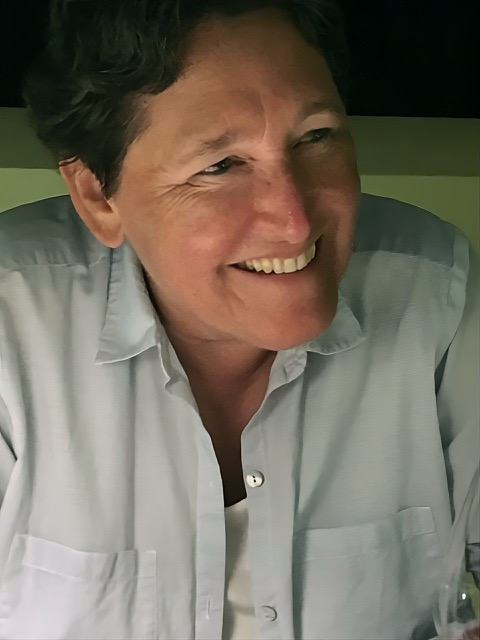
M.E. Proctor was born in Brussels and lives in Texas. The first book in her Declan Shaw PI series, Love You Till Tuesday, is out from Shotgun Honey with a follow up scheduled for 2025. She’s the author of a short story collection, Family and Other Ailments. Her fiction has appeared in various crime anthologies and magazines like VautrinBristol NoirMystery TribuneShotgun Honey, Reckon Review, and Black Cat Weekly.

Social Links

Author Website: www.shawmystery.com

On Substack: https://meproctor.substack.com

Facebook: https://www.facebook.com/martine.proctor

Twitter: https://twitter.com/MEProctor3 BlueSky: https://bsky.app/profile/meproctor.bsky.social

First, Third, How do I choose?

I spent way too much time trying to decide if this new series should be written in first or third person. A lot of the cozy mysteries I’ve read are in first person. They stay in the main character’s point of view (POV) throughout the book.

In my other mystery books, I stay in third person for all the series. But the main character’s POV all the time in the Spotted Pony Casino books. Sometimes I add another POV character in my Gabriel Hawke books because the story needs that added POV. In my Shandra Higheagle Mysteries, I use Shandra and Ryan’s POV’s both.

This new series, I went back and forth between first person and third. So far the book has stayed in my main character’s POV. And I think I’ll keep it that way. It’s how most cozy mysteries are. But as I write, I find myself typing “I” and writing some sentences in first person. This makes me wonder if I need to go back to the beginning and start over, writing from the first-person POV.

Which do you feel is stronger?

Third Person

Andi Clark parked her van in front of the Auburn City Park where the first Christmas event of the year would kick off in an hour. People bustled around putting the finishing touches on craft and food booths. It was the Saturday after Thanksgiving and the whole county was excited to move from the doldrums of a rainy fall into preparations for Christmas.

She never arrived more than an hour before an event. Any earlier her crew of cuddles became bored and got into trouble. The committee had asked her to set up a small petting zoo where people would enter the event. She’d parked as close as she could get with the inflatable decorations and roped-off areas making the attendees follow a specific path through all the booths and over to where Santa would listen to children’s Christmas wishes.

“Come on, Cocoa, I can use your help carrying things.” Andi unbuckled her brown and white border collie from the seatbelt harness and listened to Lulu whine. Andi scratched the Chiweenie’s dapple head and black, long furry ears. “You’re too small to help me right now. You keep Athena company.” She patted the Golden Retriever/Pyrenees cross dog’s blonde head and followed Cocoa to the trailer behind the van.

 Lucky for her all her animals were small except for Athena. The large breed cross was larger than her mini donkey and pygmy goat. Andi pointed to the bucket full of the pins that held the panels together. Cocoa grabbed the handle in her mouth. Andi gathered the top two panels and carried them to the area with a sign, Cuddle Farm Animals.

First Person

Parking my van in front of the Auburn City Park, I watched people bustling around getting food and craft booths ready for the first Christmas event of the year to kick off in an hour. It was the Saturday after Thanksgiving and the whole county was excited to move from the doldrums of a rainy fall into preparations for Christmas and the possibility of snow.

I never arrive more than an hour before an event. Any earlier my crew of cuddles become bored and get into trouble. The committee asked me to set up a small petting zoo at the entrance to the event. I made my way by the inflatable decorations and roped-off areas funneling attendees down a specific path through all the booths and over to where Santa would listen to children’s Christmas wishes.

“Come on, Cocoa, I can use your help carrying things.” I unbuckled my brown and white border collie from the seatbelt harness and listened to Lulu whine. Scratching the dapple head and soft, black, long furry ears of my Chiweenie, I said, “You’re too small to help me right now. You keep Athena company.” I patted Athena, my Golden Retriever/Pyrenees’, blonde head and followed Cocoa to the trailer behind the van.

 Lucky for me, all my animals are small, except for Athena, and fairly easy to handle. Athena was larger than both my mini donkey and pygmy goat. At the trailer loaded with panels to set up a small pen, I pointed to the bucket full of pins that held the panels together. Cocoa grabbed the handle in her mouth and I gathered the top two panels and carried them to the area with a sign, Cuddle Farm Animals.

Which version makes you want to continue reading?

When I wrote my first mystery 30 years ago, it was in first person. then an agent I sent it to, told me that no one bought mystery books in first person. Which floored me because I had just read the first three Sue Grafton books that were in first person. Anyway, I moved from first person to third and on to a different genre. Now that I’m back writing mysteries, I wonder if I also need to switch to first person for this series. I encourage all thoughts and responses to this dilemma.

A fun new adventure for me, besides trying to decide which tense to use in this new series, is having my books available to readers and listeners from my website. Yes! You can now purchase my ebooks, audiobooks, and print books from my website.

The ebooks are the same price as at other vendors but if you are a subscriber to my newsletter you will be able to purchase my new releases in ebook format from my website for a $1 less and get it before it publishes to other vendors. So if you want to get my new releases at a reduced price and before they release anywhere else, you need to subscribe to my newsletter. https://bit.ly/2IhmWcm

Also available from my website are my audiobooks, which ARE priced lower than at other audiobook vendors. Because I don’t have to pay a middleman to get my audiobooks to you, you get the reward of a lower cost. Also watch my newsletter and website for audiobook deals. As part of the IAD- Independent Authors Direct- group, I will have specials on my audiobooks every two weeks.

My print books have been for sale on my website for a year now. If you purchase a print book directly from me, you get it autographed, some swag, and free shipping. You can’t beat that!

Happy New Year everyone!

Guest Blogger ~ June Trop

Meet Miriam bat Isaac

            I’ve modeled my heroine, Miriam bat Isaac, on the woman known as Maria Hebrea, who probably lived in Roman-occupied Alexandria (Egypt) during the first century CE. I encountered her work when taking a course on the Historical Development of Concepts in Chemistry.

Ordinarily chemistry is taught from the perspective of what we know now without delving into how the concepts evolved over the millennia. So, when the professor assigned a paper on a historically significant concept, I had no idea of a topic. That is, until in desperation, I went to the university library to roam the stacks.

I don’t remember exactly how it happened—did I bump into a bookcase while looking to the heavens for inspiration?—but a moment later, a weighty tome fell on my toe and opened to a page about Maria Hebrea. And so, I began to wonder how a Jewish woman from Ancient Alexandria became the legendary founder of Western alchemy and held her place for 1500 years as the most celebrated woman of the Western World.

Sixteenth Century Depiction of Maria Hebrea

 In the alchemical literature, Maria Hebrea is also referred to as Mary the Jewess or Miriam the Prophetess, sister of Moses. Like her, all alchemists wrote under the name of a deity, prophet, or philosopher from an earlier time to enhance the authenticity of their claims or shield themselves from persecution. Although the tradition among all the crafts and mystical cults was to guard the secrecy of their work, persecution was a real risk for alchemists, who could be accused of and summarily executed for conspiring to debase the emperor’s currency.

Accordingly, Maria Hebrea worked anonymously. Hundreds of years later, however, another alchemist, Zozimos of Panopolis, celebrated her contributions. And so, with just a little tweaking, I had enough information to resurrect the once famous Maria Hebrea and create Miriam bat Isaac, my sleuth extraordinaire.

Miriam bat Isaac’s Adventures

Published in paperback and e-book by Level Best Books in February 2024

Miriam bat Isaac has recorded her nail-biting adventures in novels, novelettes, and short stories. Her most recent volume, The Deadliest Returns, is a book of three novelettes about returning, whether it means going back or giving back. In the first, “The Bodyguard”, Miriam’s brother, a renowned gladiator, returns from the dead to serve as a bodyguard back home when his employer retires Alexandria.

In the second, “The Beggar”, an old man disguised as a matronly beggar, returns to Alexandria to learn the fate of the lovechild he was forced to leave behind to escape the wrath of Roman law. And in the third, “The Black Pearl,” Miriam, having come into possession of the cache of jewels heisted from the Temple of Artemis, sails to Ephesus to return the treasure. The prized gem, however, a uniquely lustrous black pearl, disappears. With the power to heal the brokenhearted and restore the health of the one possessing it, could the pearl’s mystical properties be the motive for murder?

If, like Miriam, you thrive on uncovering the guilty longings, secrets, lies, and evil deeds of others, then as Miriam’s deputy, you will have ample opportunity to indulge your fancies. So, escape the monotony of everyday life and plunge into that rousing world of adventure in three of her most daring exploits.

To purchase The Deadliest Returns from Amazon

For the e-book, click here: https://www.amazon.com/dp/B0CV4TTX3T

For the paperback, click here: https://www.amazon.com/Deadliest-Returns-Collection-Miriam-Novelettes/dp/1685125859

As an award-winning middle school science teacher, June used storytelling to capture her students’ imagination and interest in scientific concepts. Years later as a professor of teacher education, she focused her research on the practical knowledge teachers construct and communicate through storytelling. Her first book, From Lesson Plans to Power Struggles (Corwin Press, 2009), is based on new teachers’ stories about their first classroom experiences. 

Now associate professor emerita at the State University of New York, June devotes her time to writing The Miriam bat Isaac Mystery Series. Consisting of short stories, novelettes, and several books, some have won modest recognition, such as being named a finalist for the Killer Nashville Silver Falchion Award. ​

June, an active member of the Mystery Writers of America, lives with her husband Paul Zuckerman, where she is breathlessly recording her plucky heroine’s next life-or-death exploit. She’d love a visit at www.JuneTrop.com or on her Facebook page, June Trop Author, https://www.facebook.com/profile.php?id=100044318365389, where she publishes a blog every Tuesday afternoon about writing, the history of science, or life in Roman Alexandria.

Guest Blogger ~ Midge Raymond & John Yunker

The Devil’s in the Details: Eco-fiction in the mystery genre

When my husband, John Yunker, and I embarked on a four-day hiking trip in one of the most remote areas of the world, we had no idea we’d bring home the idea for a novel we would write together. (We also had no idea we would survive writing a murder mystery together.)

But though Devils Island is our first co-authored book, it’s not our first collaboration. In 2011, noticing a dearth of opportunities for authors writing environmental fiction, we co-founded Ashland Creek Press, a boutique publisher focused on books about the environment and animal protection. From the day we opened for submissions, we’ve received far more environmental novels than we could ever publish — and now, thirteen years later, “cli-fi” has become a genre of its own.

Both John and I have written our own novels about endangered species — John in The Tourist Trail, and me in My Last Continent and Floreana — and once we learned about the plight of Tasmanian devils in Australia, we knew we’d found our next project.

But we had to ask ourselves: Can a serious environmental topic like endangered species be addressed in a genre often considered “beach reading”? The answer we came up with is: Absolutely. And perhaps it’s even more effective than tackling such subjects in a more “literary” genre.

Here’s why: We’ve seen, over the years, as both writers and publishers, that readers can be wary of environmental books. When it comes to climate change and animal protection, the news out there can be difficult: the planet is heating up; species are disappearing. Readers like to read, in part, to escape to somewhere else — mentally and emotionally, even if not physically. So we aimed, with Devils Island, to write a story that offers a fun escape (a glamping trip in one of the most beautiful places in the world), while also sharing what makes the real-life island of the novel so important (it is part of the conservation effort to save Tasmanian devils).

Maria Island

What we learned during our journey to Maria Island, a tiny island off the coast of Tasmania, is that Tassie devils are being reintroduced there because it is so remote; it’s the one place offering them hope for survival from a contagious facial tumor disease. To give ourselves literary freedom, we call our fictional island Marbury, and we created Kerry, a naturalist-turned-guide who herself is escaping the tough world of rescue to lead tourists on a trip where she’ll get to feel the optimism of sharing a place of hope with travelers. (Little did she know one of her guests would go missing, and a storm would cut off all communication with the outside world.) The secrets and lies of the hikers — and the disappearance of one of them and the death of another — is the focus of the story, but along the way, we’ve snuck in myriad details that will teach readers about the amazing Tasmanian devils (among other creatures) and the efforts to protect them.

And this is where eco-fiction meets mystery — in the details. Locked-room and closed-room mysteries are nothing new to the genre, but by setting a suspense novel on an island where conservationists are rehabilitating an endangered species is a detail that goes a long way toward readers’ understanding of the issues. And while the human characters are center stage in Devils Island, an individual devil character plays a small but important role — and myriad other animals make appearances as well.

Mystery novels include plenty of red herrings — but these don’t have to be limited by human plot twists. We decided that one subplot of Devils Island would be all the more resonant if it was about another issue facing Australia, that of poaching and wildlife smuggling.

Maria Island Lagoon

And mystery writers never neglect setting — and this, too, can be effective in an eco-mystery. Nearly every part of the world is suffering the effects of climate change, from stronger hurricanes to increasing wildfires. In Devils Island, it wasn’t a stretch to conjure a storm that would cut off all contact between the hikers and the outside world. Alternatively, climate change can provide an atmospheric backdrop, as in Jane Harper’s bestseller The Dry, in which the tinder-dry farming community that has suffered from years of drought reveals the stress of the climate crisis on this community and ratchets up the tension in the story as well.

Characters, of course, propel stories forward — and they can also provide details of context and backstory for animals and the environment. In Devils Island, Kerry brings both naivete (this being her first time around as a lead guide) as well as expertise (she knows everything about devils and most of the wildlife from her former job). Another thing characters provide is conflict, and author Cher Fischer provided plenty of this in her eco-mystery Falling Into Green (published by Ashland Creek Press) in which ecopsychologist Esmeralda Green, a vegan with an electric car, falls in love with a carnivorous, Hummer-driving television reporter.

Mystery novels are all about figuring out who did what, and an eco-mystery is no exception. But adding details that reveal environmental issues, the plight of animals, and our changing world can create stories that are not only fun to read but make us think about our planet as well. 

Devil’s Island

On a remote island off the coast of Tasmania, an Australian wilderness guide embarks on a four-day hike with six guests—and arrives at their destination with only two.

Devils Island is home to abundant wildlife and is the ideal place to re-introduce endangered Tasmanian devils. It’s also a region where travelers can see firsthand the unspoiled drama of Australia’s wild places. For naturalist guide Kerry, the trip offers a respite from the grueling work of trying to save an endangered species. American college classmates Brooke and Jane have a chance to reconnect after years of estrangement. Two Australian couples hope to escape their big-city lives and enjoy the company of longtime friends.

When Jane disappears on the first night, the group assumes she has wandered too far in the stormy weather. Yet it turns out she has a secret connection to one of the other guests—and when another hiker is found dead in camp, the group finds itself isolated by the worsening storm and wondering who among them might be responsible.

Amazon: https://www.amazon.com/Devils-Island-John-Yunker/dp/1608096149

Bookshop.org: https://bookshop.org/p/books/devils-island-midge-raymond/21171253?ean=9781608096145

Barnes & Noble: https://www.barnesandnoble.com/w/devils-island-john-yunker/1144401474?ean=9781608096145

Oceanview Publishing: https://www.oceanviewpub.com/books/devils-island

Buy a signed copy: https://midgeandjohn.com/purchase.html

Devils Island is the debut collaboration by Midge Raymond and John Yunker. Midge is the author of the novels Floreana and My Last Continent and the award-winning short-story collection Forgetting English. Her writing has appeared in TriQuarterly, American Literary Review, Bellevue Literary Review, the Los Angeles Times, the Chicago Tribune, Poets & Writers, and other publications. She earned a certificate in private investigation from the University of Washington. John is the author of the novel The Tourist Trail; editor of the Among Animals fiction series and a nonfiction anthology, Writing for Animals; and his plays have been produced or staged at such venues as the Oregon Contemporary Theatre, the Source Festival, the Centre Stage New Play Festival, and Association for Theatre in Higher Education conference.

Website: https://midgeandjohn.com/

Instagram: https://www.instagram.com/midge_and_john/

Facebook: https://www.facebook.com/MidgeandJohn/

Cavalcade of Books

Since my Saturday guest didn’t get their post to me I decided to promote the Ladies of Mystery Cavalcade of books. This is an online site where you can find books by the ladies who post once a month on this blog. There are 29 books of various subgenres of mystery. Head on over and browse the selection.

https://bodiebluebooks.com/ladies

Some books are on sale through this month and some books are just there so you can pick and choose which authors’ books you might like to read.