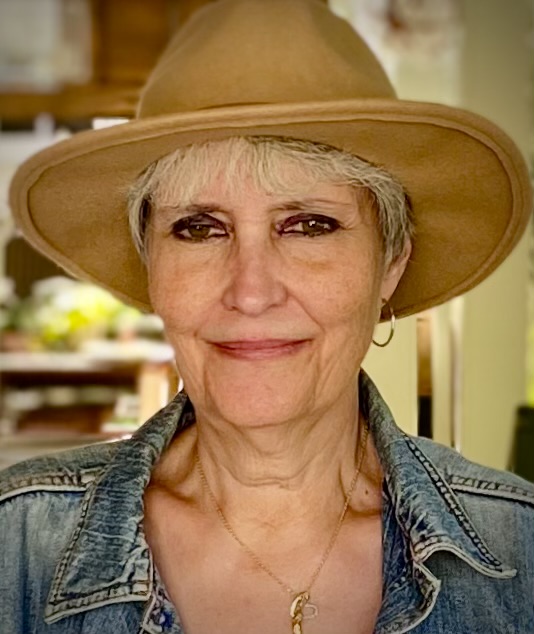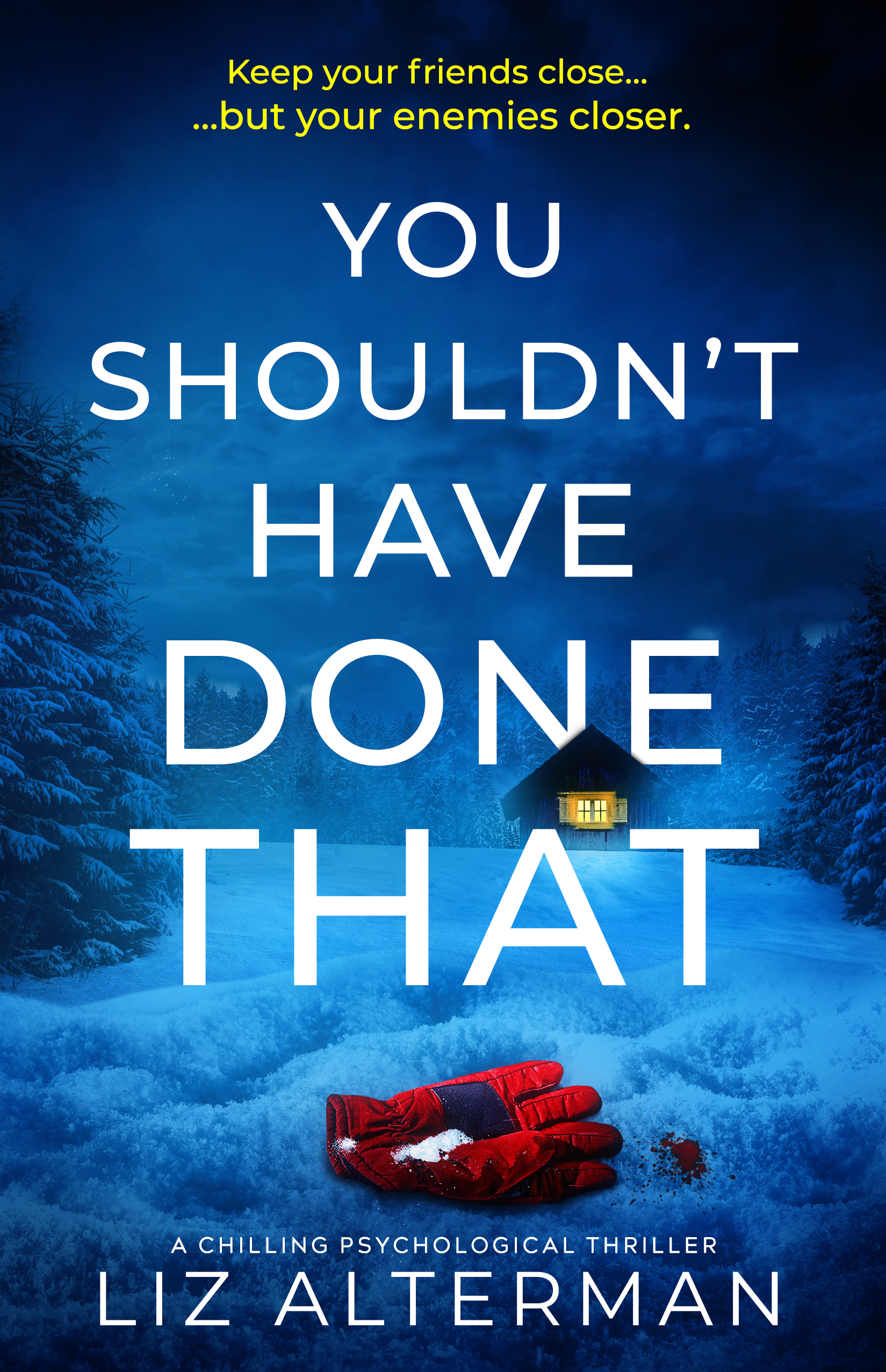
Guest Blogger ~ Millicent Eidson

Three years since my initial guest blog in 2022 (https://ladiesofmystery.com/?s=eidson), my microbial mystery world has expanded to multiple disease threats worldwide. It’s a good time to catch everyone up.

For decades, I was immersed in zoonotic diseases transmitted from animals. Scientists estimate that three-quarters of new or emerging infections are zoonoses.

As a veterinarian working in public health, I dropped smelly baits from a helicopter over the Adirondacks to vaccinate raccoons against rabies. I tracked down people with explosive diarrhea from a scenic New Mexico train ride. I coordinated reporting and collection of dead birds when West Nile virus showed up in the western hemisphere.

Serious illnesses and deaths are tragic but stamping out disease outbreaks is exciting. Each cluster of ill people is a mystery for a disease detective. Everyone knows about Rizzoli and Isles from the wonderful Tess Gerritsen thrillers. But veterinarians exposed to deadly hantavirus when collecting infected mice are less familiar medical heroes.

When I retired from fulltime work as a veterinary epidemiologist at the Centers for Disease Control and Prevention and two state health departments, I continued part-time teaching about zoonoses to graduate students. It’s rewarding to open up the eyes of new public health practitioners to the fascinating world of zoonoses. But I wondered if I could do the same for the general public.

Our daughter is adopted from China like thousands of orphans with the one-child policy. In my fiction, I wanted to explore how it might feel for someone whose Asian role models are replaced by Anglo, Hispanic, and Native American cultures embedded in a rich landscape.

And many of us struggle with mental and physical health challenges from birth, injury, or illness. Can someone wrestling with that history contribute fully to our demanding, fast-paced world?

So Maya Maguire was born, inspired by my daughter’s heritage and my own with mostly Irish ancestors. Like me, Maya Maguire starts her public health career after completing years of work toward veterinary and master’s degrees. Unlike me, she’s a bit of a genius and completes all her training young, adding further stress when expected to perform at the level of other more mature CDC trainees.

The initial three novels primarily immerse us in Maya’s world, other than diary excerpts from a mysterious young boy facing his own roadblocks near the Arizona/Utah border. In “Anthracis,” Maya is in her first year of training as a CDC Epidemic Intelligence Service officer stationed in New Mexico. Along with veterinary and physician colleagues, she battles perplexing new means of anthrax infection in the Southwest.

Her second year of EIS training still finds Maya in the Southwest, tackling tick-borne Borrelia infections across Arizona and New Mexico. Then she joins a colleague based in Norway on outbreaks in multiple European countries and north Africa. Personal relationships are impossible to balance with her work obligations.

In “Corona,” Maya experiences the COVID-19 outbreak along with all of us, first in Arizona, then in Denmark with infected mink, and finally in her home country of China to find its origin in bats. Like many, she won’t escape the pandemic fully unscathed.

Mosquitoes bring “Dengue” from Puerto Rico to New York City, then New Mexico and Hawai‘i. This novel expands the MayaVerse by alternating point-of-view chapters between Maya and her public health veterinarian mentor, Faye Simpson. Faye’s a kick-ass character in her late sixties, transplanted from a childhood on a Colorado ranch to a career with the New York City health department.

“Ebola,” available this summer, broadens even more with the perspectives of multiple male characters confronting the virus in West Africa, New York City, and New Mexico. Maya’s finishing a final training year with the CDC and Faye is retired from fulltime public health work but still enmeshed in Ebola crises.

These brief summaries only touch on the lively characters in the stories. Fred Grinwold and Nancy Bingham are Maya’s physician supervisors in New Mexico and Arizona. Their early romance and outbreak puzzles are available along with other Faye Simpson stories in “Microbial Mysteries,” my short story collection.

Sci fi thrillers are entertaining but sometimes based on pure imagination. For a peek into the exciting real world of zoonotic disease control through the perspective of colorful and compelling characters, join me in the MayaVerse!

Dengue: A Microbial Mystery

Is dengue the next pandemic? Two veterinary medical detectives, decades apart in age and experience, battle the tropical disease on the mainland, then in Hawai‘i. Even in paradise, people can’t escape blood-thirsty mosquitoes spurred on by a warming climate. Join these resilient women as they push through personal challenges to discover the scientific truth and stop the relentless death toll.

From reviews:

Maya Maguire is a deeply complex character, with a backstory that contains both heartache and joy. I have thoroughly enjoyed getting to know her … As for the medical terminology in the book … You’re in capable hands. Dr. Eidson uses real-life medical words and situations in the book, but they’re always put into a context that allows the reader to understand exactly what’s going on. (As an aside, the research that must have gone into this book is mind-blowing.)

Buy Links: https://books2read.com/millicenteidson/  or  Dengue: A Microbial Mystery (MayaVerse): Eidson, Millicent: 9781955481168: Amazon.com: Books

Millicent Eidson, a master of intrigue and suspense, weaves her literary magic through the pages of the Maya Maguire microbial mystery series. With a keen eye for detail and a passion for scientific puzzles, she invites readers into a world where microbes hold secrets more treacherous than any criminal. Millicent’s career as a public health veterinarian and epidemiologist began at the Centers for Disease Control and Prevention. After days filled with pathogens and outbreaks, the nights belonged to whispered tales of microbes dancing in her imagination. Upon retirement, her passion for storytelling blossomed into the MayaVerse, https://drmayamaguire.com/.

She can be found at Facebook, Millicent Eidson, | LinkedIn, Millicent Eidson (@EidsonMillicent) / Twitter, and Millie Eidson (@drmayamaguire) • Instagram photos and videos

Left Coast Crime Conference

This month is sneaking up on me! I thought I had all my blog posts and events for the month taken care of and “poof!” I realized I still had this post to write.

I ended last month with a book-selling event that rolled into a week at the beach with two of my best friends. It was supposed to be a working week to get the next Spotted Pony Casino book moving along. However, we ended up doing more playing than me working. But I needed it.

Agate Beach on the Oregon Coast

Then I started out the beginning of March with family things to deal with and now, in two days, I’m headed to Denver for the Left Coast Crime conference. It is one of my favorites because there are readers there and authors get to be on panels and talk about how our books fit into whatever the panel is about. Authors also get to host special events with readers. I signed up to do this, however, I noticed I’m not on the list, so they must have lost my email in the myriad of emails they get. I will host a table at the banquet with author friend Sheri Lewis Wohl. We are excited about our table decorations and giveaways!

this will be on the table I’m hosting

I was lucky to get on two panels this year. One is about Animal Sidekicks, which we all know plays into all of my mystery series. Every one of my main characters has a dog sidekick. I’m excited to talk about Sheba, Dog, and Mugshot during the panel and how they help their people. This panel is at 3:45 on Thursday. Friday at 2:45, I’m on a panel about crime in small towns. Again- spot on for my books since they are all set in small towns/rural areas. This will be another fun panel.

The conference always needs volunteers I’m helping by being a runner for a few of the panels. I did this at last year’s conference and found it an easy way to help out without having to do too much peopling.

As an introvert, these conferences take a lot out of me. I usually spend at least one session a day in my room, regrouping. Even though it makes the conference more expensive, I don’t have roommates. I need complete quiet when I go to my room at night. I feel like my ears ring for hours afterward. It takes a lot for me to put myself out there but I know that the more exposure I get, the more likely readers will pick up my books and try them.

I also enjoy talking to readers. When I can engage with them and talk about my books and what they like to read, I feel I’m gaining more perspective for what I write and how the reader perceives it. That is invaluable.

My bag is packed. I have 16 books to give away after my panels. They have either damaged covers or were printed wrong. And I have the mugs I’m giving to the people at my table, bundled in with the books and my clothes. My suitcase should be much lighter on the way home. I’m just counting down the days until my hubby takes me to the airport and I head for Denver.

If you’re at the Left Coast Crime conference, attend one of my panels and come say “hi!”

Guest Blogger ~ Mike Nemeth

Why Does a Nice boy from Wisconsin Write Murder Mysteries?

The simple answer is: I grew up reading detective stories, from John D. MacDonald to Ross Macdonald to Eric Ambler. I admired the intricate plotting that kept me guessing as their stories unfolded. Later, I discovered Elmore “Dutch” Leonard, a prolific writer of tales about ex-cons and petty thieves looking to strike it rich with their next caper and usually failing miserably. You may know Dutch by the many movie adaptations of his novels including, Be Cool, Get Shorty, Fire in the Hole, Killshot, Jackie Brown, Out of Sight, 3:10 to Yuma, Cat Chaser, 52 Pickup, Hombre, The Big Bounce, Stick, Mr. Majestyk, and Freaky Deaky. As much as I enjoyed Dutch’s stories, I was influenced most by his cinematic style. He never got in the way of his characters and let them tell their stories through dialog and action scenes.

The second reason I write murder mysteries is that the genre allows the writer to fold in subplots from other genres that become clues in the solution to the murder. In most of my novels an unexpected love story comes from out of nowhere and smacks the protagonist upside the head, the sort of romance that causes the protagonist to wake up and pay attention. Such is the case in The Two Lives of Eddie Kovacs. Eddie, a grieving widower, goes undercover to solve suspicious deaths at a luxury condo complex and runs into Madeleine, a wealthy widow who awakens long-dormant feelings in Eddie but is also the key to the mystery. She becomes the focal point for Eddie’s decisions about the case, his desire for redemption, and his future.

My third reason for writing murder mysteries is that a good story must contain high stakes for the protagonist and few stakes are higher or more enticing than murder. And two murders are better than one. In The Two Lives of Eddie Kovacs, the unsolved murder of Eddie’s investigative partner during his stint in the Army has haunted him for decades. Eddie has always wondered if he had inadvertently set his partner up for the crime. When another murder occurs at the condo complex during his surreptitious investigation, Eddie begins to connect the dots and sees the truth.

And finally, the murder mystery genre allows for an underlying theme that isn’t preachy and doesn’t detract from the pleasure of solving a complicated crime. In The Two Lives of Eddie Kovacs, the solution to the murders calls into question the boundary between personal freedom and the encroachment of the law. This question is a dilemma for Eddie as he grapples with love, his integrity as a lawman, and his desire for redemption.

Murder mysteries are such fun!

Propelled by two murder cases, separated by decades, The Two Lives of Eddie Kovacs is, at its heart, a provocative and suspenseful love story that explores the unbreakable connection between the past and the present, and the boundary between personal freedom and the law.

Eddie Kovacs is tormented by his experience in Vietnam when he derailed an illegal CIA plot, and deflated over his forced retirement as a DA’s investigator. When the sheriff of Chatham County, Georgia offers him an undercover assignment, Eddie jumps at the chance to end his career in a blaze of glory. His assignment is to solve the riddle of suspicious deaths at a luxury condo complex on Tybee Island before the DEA exposes the scandal that would dash the sheriff’s political ambitions.

Eddie has spent his life looking over his shoulder for the vengeful CIA agents who have tirelessly pursued him. As he investigates the deaths, he discovers that a former agent has remained vigilant for fifty years and is in the building, stalking Eddie. To make matters worse, Eddie is a grieving widower irresistibly drawn to a resident named Madeleine, and his infatuation feels like infidelity, not to mention a betrayal of his badge. In a race with the DEA and hunted by the CIA, Eddie lays a trap for his suspect and discovers Madeleine’s darkest secret—a secret that forces Eddie to choose between love and redemption.

The Two Lives of Eddie Kovacs can be found on Amazon at amzn.to/3CVzMY4 (that’s Bit.Ly short form link).

It is also in the Ingram system and can be ordered at any bookstore or online from Ingram. 

Mike Nemeth is the author of Defiled, which became an Amazon bestseller, The Undiscovered Country, which won the Beverly Hills Book Award for Southern Fiction and the Augusta Literary Festival’s Frank Yerby Award for Fiction, and Parker’s Choice, which has won a Firebird Award for Thrillers, and American Fiction Awards for Romantic Mystery and Diverse & Multicultural Mystery. Creative Loafing named Mike Atlanta’s Best Local Author for 2018.

The recurring theme of Mike’s novels is that morality and legality are two different things. The stories are romances tucked inside mysteries.

https://mikenemethauthor.com/

One of My Favorite Things About Writing

My favorite part about writing is learning. When I wrote historical western romance, I enjoyed visiting museums and libraries in the areas where the books were set to learn local history and to find maps of the towns. I read newspapers on microfiche to get a feel for the setting and the people. The small-town newspapers back in the 1800’s were as much gossip columns as they were filled with political news.

Writing historicals, I had to learn a lot, and I loved every minute of it. I was a nerd in school. I’d take my history, geography, and social science textbooks home even if my work was finished so I could read ahead and learn more.

Writing contemporary books, I always come across occupations or places I don’t know anything about and spend hours learning. Even if all that learning may only end up as one paragraph in the whole book.

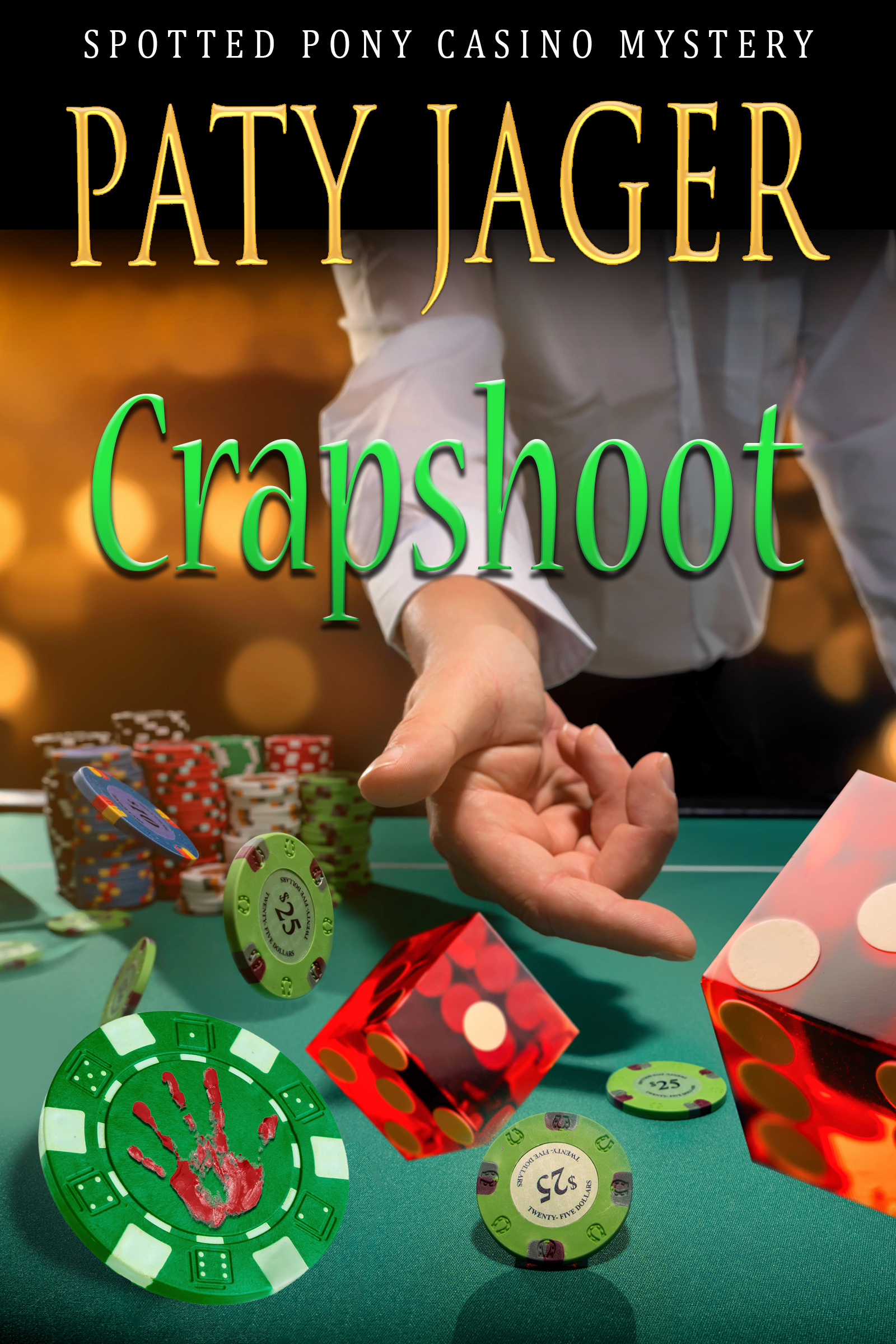
When I write mysteries, I have to research causes of death, how law enforcement works, occupations, and settings. My horizons are always expanded when I start a new book. I’m currently researching for the next Spotted Pony Casino book, Crap Shoot. I know it will deal with MMIW (Missing and Murdered Indigenous Women) I have three articles that I’ve set aside until now to help me determine how I want to handle the subject and whether the character will be just missing or murdered. Whether it will be domestic or a stranger. So many possibilities and the research I’m doing will help me to see the direction of the story.

I’m also attending an event called- Winter Fishtrap: What is the West? Fishtrap is a gathering of writers from the West. The organization puts on several events throughout the year in the county where I grew up and where my Hawke books are set. This Winter Fishtrap has some great topics and many of the speakers are Indigenous. I’m hoping to get a better sense of that it means for them to be in Wallowa County and telling their stories from this event. To hopefully help me better articulate my character Gabriel Hawke and my character Heath Seaver from the Spotted Pony Casino Mysteries.

I first attended a Fishtrap event back in the 1980’s and quickly discovered it was more about literary writing than genre writing. that was the only multi-day event I attended. I have been in the county visiting family when they had readings and attended those with a family member, This will be the first multiday event since the 80s. I’m hoping it will be as good as it sounds.

Speaking of my Gabriel Hawke series… Wolverine Instincts is now available.

In the heart of the wilderness, the hunter becomes the hunted.

Gunshots shatter the quiet of Oregon’s Eagle Cap Wilderness, drawing Oregon State Trooper Gabriel Hawke into action. Following the sound, he stumbles upon a shredded cage, the sharp musk of a wolverine, and a dead hiker.

Tracking footprints through the rugged terrain, Hawke uncovers a second victim. It’s clear—he’s hunting a killer who’s hunting humans.

With Dog by his side, Hawke’s search leads to two brothers, one gravely injured. Enlisting the help of pilot Dani Singer, he gets the injured man to safety before returning to the wilderness.

Teaming up with a reclusive, disabled veteran who knows the Eagle Cap as well as he does, Hawke pieces together the killer’s twisted game. They suspect a poacher—one as ruthless and elusive as the wolverine he’s still chasing.

In a deadly wilderness where survival is the only rule, Hawke must outsmart a predator who knows no bounds.

Universal buy link: https://books2read.com/u/m2yARG

OR Purchase direct from the author in ebook and print from these links:

ebook link – https://www.patyjager.net/product/wolverine-instincts-ebook/  

print link- https://www.patyjager.net/product/wolverine-instincts/

Guest Blogger ~ Claudia Riess

Choosing to write an art history mystery series came relatively late in my career, but the seed was planted very early in childhood, and was as much a part of the natural course of events as learning to read and being read to—Winnie the Pooh, Mary Poppins, Alice in Wonderland—and being told laugh-out-loud stories, ad-libbed by my father, about a little girl named Jeanie, clearly my alias, and her adventures with her anonymous daddy, clearly my own.  And like bedtime stories, my introduction to art—my association with art—was, and is, bound up with family, adventure, safe harbor. 

It began with outings to museums.  We lived in Brooklyn, and a couple of the great ones were a short subway ride away.  The Metropolitan, the Museum of Modern Art, the Frick, the Brooklyn Museum.  Typically, these outings were followed by take-out Chinese food and talks around the kitchen table about what we had seen that day.  We talked about the different ways painters saw the world; debated about which perspective better described the real world—and what the real world really was.  Color and light?  Shape and dimension?  And what about imagination? Created imagery.  Distorted reality.  Ideas about the relative nature of beauty and truth were woven into these conversations, and all the while we were savoring our chicken chow mein and fried rice with lobster sauce.

It stands to reason that my idea of the art world was a romanticized one, but by the time I’d written a few rom-com-like novels and murder mysteries and was considering writing an art suspense novel, I’d learned a lot more about its seamier side.  How the price of art is virtually uncontrolled, dependent on the whims of collectors and dealers and the transient tastes and fads of the times.  How art is ransomed, forged, used to launder money, stolen then sold on the black market.  In short, that the art world is where the most sublime of human instincts collide with its basest.  What a great amalgam for fiction!

I pitched the idea of my writing an art suspense novel to my brother, Jonathan, an art history professor at the University of Cincinnati, and he off-handedly suggested, “What about finding a lost study of Michelangelo’s Battle of Cascina?”  As he enlarged on the subject, a conversation I’d had years ago popped into mind.  It was my first week at Vassar College, and I was out of my social depth, trying to hold my own with one of my classmates, a seasoned debutant.  I suppose the incident remained etched in memory because our life experiences were so disparate.  Especially vivid was the story of how her father’s sugar plantation in Cuba had been confiscated by Fidel Castro’s government.  It was this historical nugget that instantly dovetailed with my brother’s suggestion.  In that moment, the American sugar plantation owner became an art collector, and as he and a freshly materialized plantation manager and a lovely cook’s assistant hid out in a basement storeroom, the art collection was being hauled off by a band of wannabe Castro rebels looking to raise money to buy arms.

The imagekicked off the prologue to Stolen Light, Book 1 of my art history mystery series.  I’m a stickler for historical accuracy, and as a rule I take off from it, filling the gap with events that conform to its character, and therefore might have been.  Then, in a butterfly-effect maneuver, I fast-forward to the present and drop a pair of resourceful lovers into the challenging set of circumstances that has developed—multiple murders included—and see if the sleuthing duo can sort it out. 

For example, the impetus for Knight Light, Book 3 in the series, came from two quotes.  From the painter Marcel Duchamp: “Not all artists are chess players, but all chess players are artists.”  From World Chess Champion, Alexander Alekhine: “Chess for me is not a game, but an art.”  From there, I discovered that the two had actually been team-mates on the French chess team in the 1933 Chess Olympiad.  And that furthermore, Alekhine’s death in 1946 has been considered a cold case to this day.  My fiction, integrated with the facts, took off from there.

Dying for Monet, Book 5 and the most recent in the series, is structured with the same criteria, except this time a crucial plot-twisting component hog-ties me to a bare-boned blurb.  I’ve never felt more in danger of giving away the spoiler.  I’m okay discussing Claude Monet and the Impressionists; Paul Ruand-Durell, the renowned art dealer based in Paris, carrying on in London during the Franco-Prussian War; the art museums in London; the disappearance of a still life painting; a brutal murder.  Even the End Notes, where I mention books that were part of the research phase, omits a critical one whose title would blow it.  Luckily, I’ve got my two sleuthing protagonists, Erika and Harrison, about whose ever-evolving love story I could go on forever.

Book 6, the last in the series, is in the works.  Its plot is powered by the subject of artificial intelligence, boon and curse of the art world, depending on your definition of art or stake in its profits.  My fascination was doubly sparked by an episode of CNN’s “The Whole Story with Anderson Cooper,” which focused on the Dead End Gallery in Amsterdam, the world’s first art gallery dealing solely in art generated by AI, and the Whitney Museum’s exhibition of Harold Cohen’s AARON, the world’s first AI program for art-making. These experiences raised questions regarding the genesis of inspiration, the act of creation, and the boundaries of ownership, all of which are potential harbingers of conflict, including the most deadly.

Dying for Monet

A gala evening auction at Laszlo’s, an upstart auction house in New York City, is in progress.  Without notice, a much sought-after Impressionist painting is withdrawn from the block.  Moments later, its broker is found dead at the foot of an imposing statue in Laszlo’s courtyard.

Amateur sleuths Erika Shawn, art magazine editor, and Harrison Wheatley, art history professor, are once again drawn into an investigation involving an art-related homicide, this time sharing an unnerving coincidence with violent crimes occurring abroad.

As Harrison searches for clues in the archives at the Ashmolean Museum in Oxford, Erika is on a stakeout in Brooklyn Heights gathering information on the owner of the hijacked still life.  After Harrison experiences a disastrous encounter in London, he returns home, where he and Erika, along with a few of their usual cohorts, find themselves ever more deeply at odds with the movers and shakers on the dark side of fine arts commerce.

https://www.amazon.com/Dying-Monet-Art-History-Mystery/dp/1685126545

Claudia Riess is an award-winning author who has worked in the editorial departments of The New Yorker and Holt, Rinehart and Winston, and has edited several art history monographs.  Stolen Light, the first book in her art history mystery series, was chosen by Vassar’s Latin American history professor for distribution to the college’s people-to-people trips to Cuba.  To Kingdom Come, the fourth, will be added to the syllabus of a survey course on West and Central African Art at a prominent Midwestern university.  Claudia has written articles for Mystery Readers Journal, Women’s National Book Association, the Sisters in Crime Bloodletter, and Mystery Scene magazine.  She has been featured on a variety of podcasts, blogs and Zoom events.

claudiariessbooks.com.

https://www.facebook.com/ClaudiaRiessBooks