Guest Blogger ~ Midge Raymond & John Yunker

The Devil’s in the Details: Eco-fiction in the mystery genre

When my husband, John Yunker, and I embarked on a four-day hiking trip in one of the most remote areas of the world, we had no idea we’d bring home the idea for a novel we would write together. (We also had no idea we would survive writing a murder mystery together.)

But though Devils Island is our first co-authored book, it’s not our first collaboration. In 2011, noticing a dearth of opportunities for authors writing environmental fiction, we co-founded Ashland Creek Press, a boutique publisher focused on books about the environment and animal protection. From the day we opened for submissions, we’ve received far more environmental novels than we could ever publish — and now, thirteen years later, “cli-fi” has become a genre of its own.

Both John and I have written our own novels about endangered species — John in The Tourist Trail, and me in My Last Continent and Floreana — and once we learned about the plight of Tasmanian devils in Australia, we knew we’d found our next project.

But we had to ask ourselves: Can a serious environmental topic like endangered species be addressed in a genre often considered “beach reading”? The answer we came up with is: Absolutely. And perhaps it’s even more effective than tackling such subjects in a more “literary” genre.

Here’s why: We’ve seen, over the years, as both writers and publishers, that readers can be wary of environmental books. When it comes to climate change and animal protection, the news out there can be difficult: the planet is heating up; species are disappearing. Readers like to read, in part, to escape to somewhere else — mentally and emotionally, even if not physically. So we aimed, with Devils Island, to write a story that offers a fun escape (a glamping trip in one of the most beautiful places in the world), while also sharing what makes the real-life island of the novel so important (it is part of the conservation effort to save Tasmanian devils).

Maria Island

What we learned during our journey to Maria Island, a tiny island off the coast of Tasmania, is that Tassie devils are being reintroduced there because it is so remote; it’s the one place offering them hope for survival from a contagious facial tumor disease. To give ourselves literary freedom, we call our fictional island Marbury, and we created Kerry, a naturalist-turned-guide who herself is escaping the tough world of rescue to lead tourists on a trip where she’ll get to feel the optimism of sharing a place of hope with travelers. (Little did she know one of her guests would go missing, and a storm would cut off all communication with the outside world.) The secrets and lies of the hikers — and the disappearance of one of them and the death of another — is the focus of the story, but along the way, we’ve snuck in myriad details that will teach readers about the amazing Tasmanian devils (among other creatures) and the efforts to protect them.

And this is where eco-fiction meets mystery — in the details. Locked-room and closed-room mysteries are nothing new to the genre, but by setting a suspense novel on an island where conservationists are rehabilitating an endangered species is a detail that goes a long way toward readers’ understanding of the issues. And while the human characters are center stage in Devils Island, an individual devil character plays a small but important role — and myriad other animals make appearances as well.

Mystery novels include plenty of red herrings — but these don’t have to be limited by human plot twists. We decided that one subplot of Devils Island would be all the more resonant if it was about another issue facing Australia, that of poaching and wildlife smuggling.

Maria Island Lagoon

And mystery writers never neglect setting — and this, too, can be effective in an eco-mystery. Nearly every part of the world is suffering the effects of climate change, from stronger hurricanes to increasing wildfires. In Devils Island, it wasn’t a stretch to conjure a storm that would cut off all contact between the hikers and the outside world. Alternatively, climate change can provide an atmospheric backdrop, as in Jane Harper’s bestseller The Dry, in which the tinder-dry farming community that has suffered from years of drought reveals the stress of the climate crisis on this community and ratchets up the tension in the story as well.

Characters, of course, propel stories forward — and they can also provide details of context and backstory for animals and the environment. In Devils Island, Kerry brings both naivete (this being her first time around as a lead guide) as well as expertise (she knows everything about devils and most of the wildlife from her former job). Another thing characters provide is conflict, and author Cher Fischer provided plenty of this in her eco-mystery Falling Into Green (published by Ashland Creek Press) in which ecopsychologist Esmeralda Green, a vegan with an electric car, falls in love with a carnivorous, Hummer-driving television reporter.

Mystery novels are all about figuring out who did what, and an eco-mystery is no exception. But adding details that reveal environmental issues, the plight of animals, and our changing world can create stories that are not only fun to read but make us think about our planet as well. 

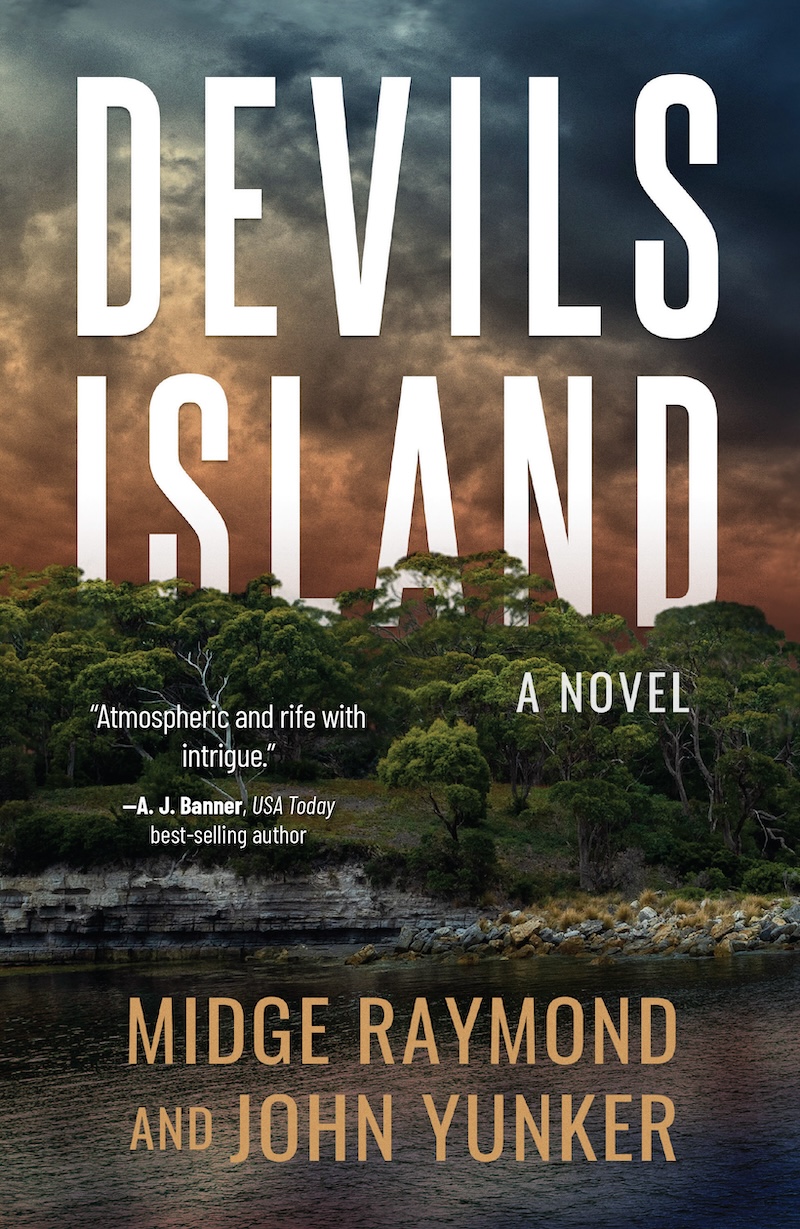
Devil’s Island

On a remote island off the coast of Tasmania, an Australian wilderness guide embarks on a four-day hike with six guests—and arrives at their destination with only two.

Devils Island is home to abundant wildlife and is the ideal place to re-introduce endangered Tasmanian devils. It’s also a region where travelers can see firsthand the unspoiled drama of Australia’s wild places. For naturalist guide Kerry, the trip offers a respite from the grueling work of trying to save an endangered species. American college classmates Brooke and Jane have a chance to reconnect after years of estrangement. Two Australian couples hope to escape their big-city lives and enjoy the company of longtime friends.

When Jane disappears on the first night, the group assumes she has wandered too far in the stormy weather. Yet it turns out she has a secret connection to one of the other guests—and when another hiker is found dead in camp, the group finds itself isolated by the worsening storm and wondering who among them might be responsible.

Amazon: https://www.amazon.com/Devils-Island-John-Yunker/dp/1608096149

Bookshop.org: https://bookshop.org/p/books/devils-island-midge-raymond/21171253?ean=9781608096145

Barnes & Noble: https://www.barnesandnoble.com/w/devils-island-john-yunker/1144401474?ean=9781608096145

Oceanview Publishing: https://www.oceanviewpub.com/books/devils-island

Buy a signed copy: https://midgeandjohn.com/purchase.html

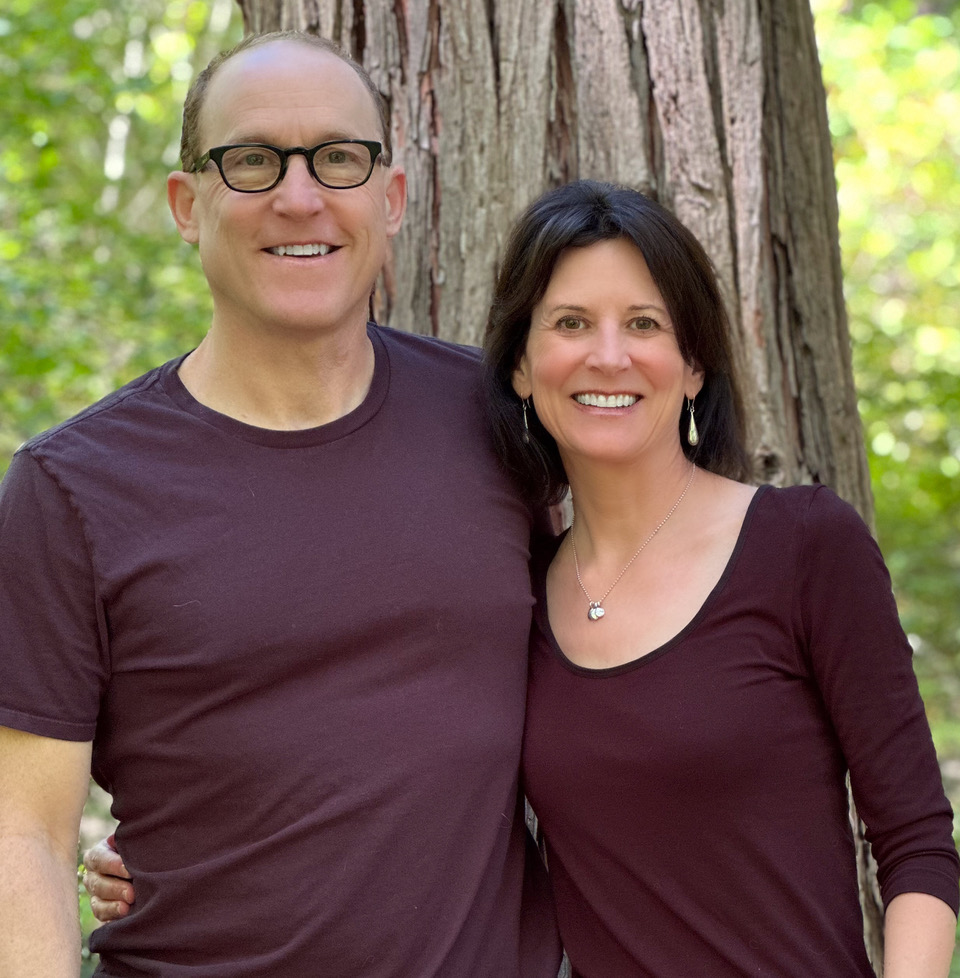
Devils Island is the debut collaboration by Midge Raymond and John Yunker. Midge is the author of the novels Floreana and My Last Continent and the award-winning short-story collection Forgetting English. Her writing has appeared in TriQuarterly, American Literary Review, Bellevue Literary Review, the Los Angeles Times, the Chicago Tribune, Poets & Writers, and other publications. She earned a certificate in private investigation from the University of Washington. John is the author of the novel The Tourist Trail; editor of the Among Animals fiction series and a nonfiction anthology, Writing for Animals; and his plays have been produced or staged at such venues as the Oregon Contemporary Theatre, the Source Festival, the Centre Stage New Play Festival, and Association for Theatre in Higher Education conference.

Website: https://midgeandjohn.com/

Instagram: https://www.instagram.com/midge_and_john/

Facebook: https://www.facebook.com/MidgeandJohn/

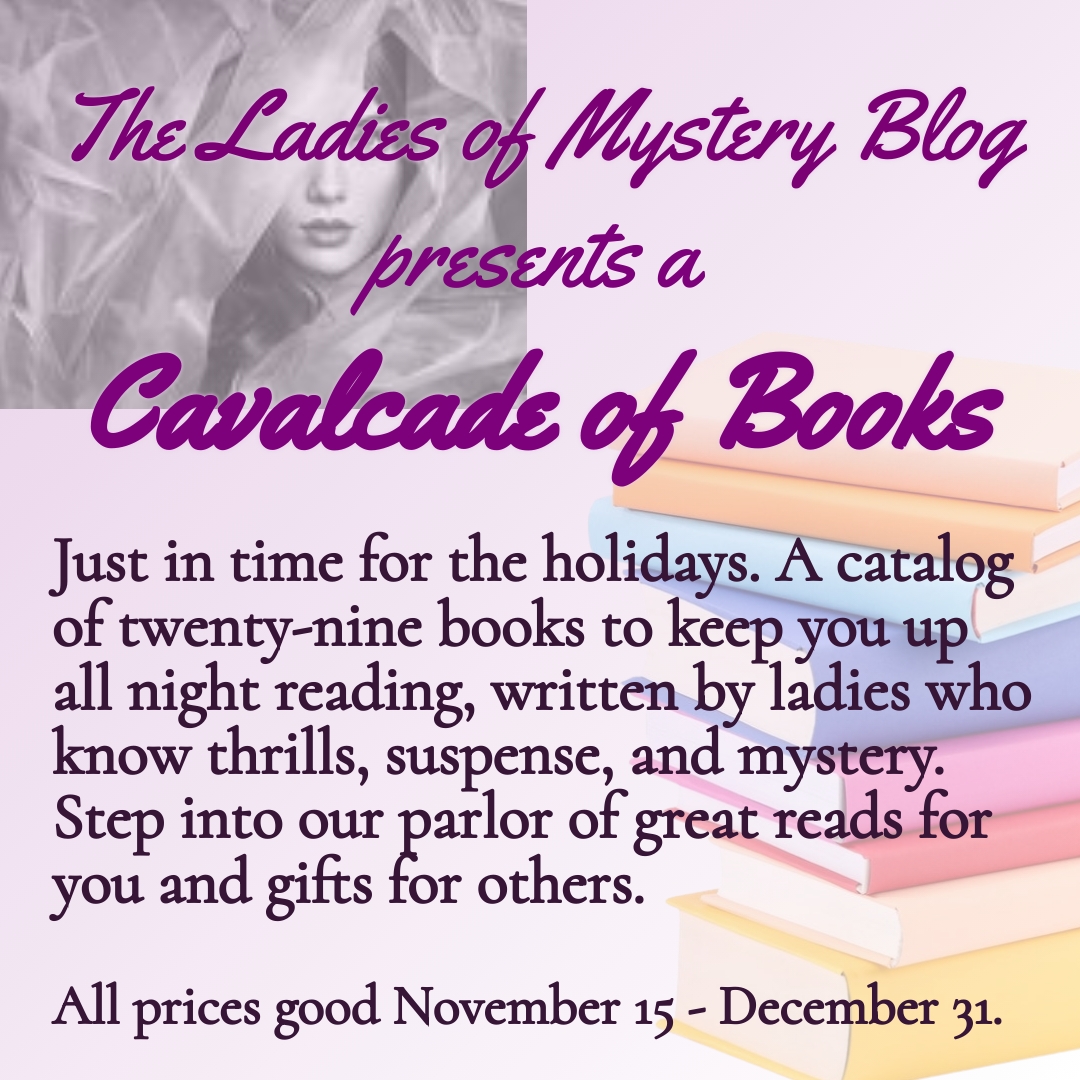
Cavalcade of Books

Since my Saturday guest didn’t get their post to me I decided to promote the Ladies of Mystery Cavalcade of books. This is an online site where you can find books by the ladies who post once a month on this blog. There are 29 books of various subgenres of mystery. Head on over and browse the selection.

https://bodiebluebooks.com/ladies

Some books are on sale through this month and some books are just there so you can pick and choose which authors’ books you might like to read.

Please, no, not another book idea!

I get asked all the time, “Where do you get your ideas or how do you come up with so many ideas for stories?”

Nia

I like to call it my superpower, but then something like this happens: My friend and I who sell books twice a year at an outdoor flea market enjoy watching all the dogs go by and try to figure out their breeds or crossbreeds. It’s just a fun game. Then, this past summer, I had my little dog Nia with me at one of the events. A woman came in to look at our books and, of course, asked to pet Nia. My little Chiweenie is a people dog. She loves kids, she loves anyone that isn’t wearing a hat and built large. The woman pet her and talked to her for several minutes then looked up at me and said, “You should use her as a therapy dog. She has the right temperament and look at that loving caring face.” The woman went on to tell me all the places I could take Nia to comfort people.

After she left, my friend and I were talking about it and instead of doing the humanitarian thing with this information, I flipped it and said that would make a great way to have an amateur sleuth get involved in all kinds of murders. (Yes, an idea for another series popped into my head and hasn’t left.)

Then someone was playing old time records on a record player as a means to bring in customers and sell the record player. The song Merry, Merry, Merry Christmas came on and as the song progressed, my mind went to what a great title for a book. Merry, Merry, Merry Murder. And make it set at Christmas. Now this stuck and has been brewing in my mind as the holidays are fast approaching. Too late for this year, but I will have a book with that title coming out next year.

But wait, how can I get this title to work with the two series I have right now? All the Gabriel Hawke series titles have animals in the titles. It would be out of sync with the rest of the series. Same goes with the Spotted Pony Casino Mystery series. Those titles all have to do with gambling terms. How can I use this title to write a Christmas murder mystery if I can’t make it fit the two series I already have going?

Pop back to the new shiny idea of the woman with therapy animals who travels to schools, hospitals, nursing homes, outreach centers, and so on. She could start her series with Merry, Merry, Merry Murder. Or I can make it a standalone Christmas Mystery.

But wait. This has all been spinning in my head for several months now and two days ago when I was finishing up sewing Christmas presents, I had Christmas music playing. Christmas Classics to be exact. The Jackson 5 were singing, I Saw Mommy Kissing Santa Claus. There is a spot in the song where Michael stops singing and says he’s going to tell Daddy. He says it like he’s mad at his mom. And BAM! The whole idea for the murder and who is blamed and who really did it came flashing into my head. I had to leave the sewing machine to find a piece of paper and a pen to write down all the things that had come together to make the story work.

And now, I just have to decide if it will be a standalone book or the beginning of a new series… I really don’t want to juggle three series, but I also like the idea of the shorter cozy style mystery. Maybe one of those a year…. So I can keep putting out two books a year in the other two series. We’ll see!

If you’re looking for some great gifts for the readers on your Christmas list, check out the Ladies of Mystery Cavalcade of Books. An online place to find some of our books on sale and just some of our books. https://bodiebluebooks.com/ladiesofmystery/

Guest Blogger ~ Libby Fischer Hellmann

The “What-if” Thriller Game

Most thriller writers are suckers for a good story. I’m one of them. And if the story is true, many of us start playing the “what-if” game. What if I took a character and imagined it happened to her? What if I set the story in Chicago? What if I created a backstory that explained the current situation?

“What-if’ing” is often the first step I take to suss out a new story or novel. In fact, I’m pretty sure I started writing historical thrillers because I “what-if”ed an ordinary person living through a period of extraordinary turmoil. What if a group of hippies lived together during the 1968 Chicago Democratic Convention? That became Set The Night on Fire. What if a young American woman got caught in the 1979 Iranian Revolution? A Bitter Veil. What if two Vietnamese sisters had to cope with the Vietnam War? A Bend in the River.

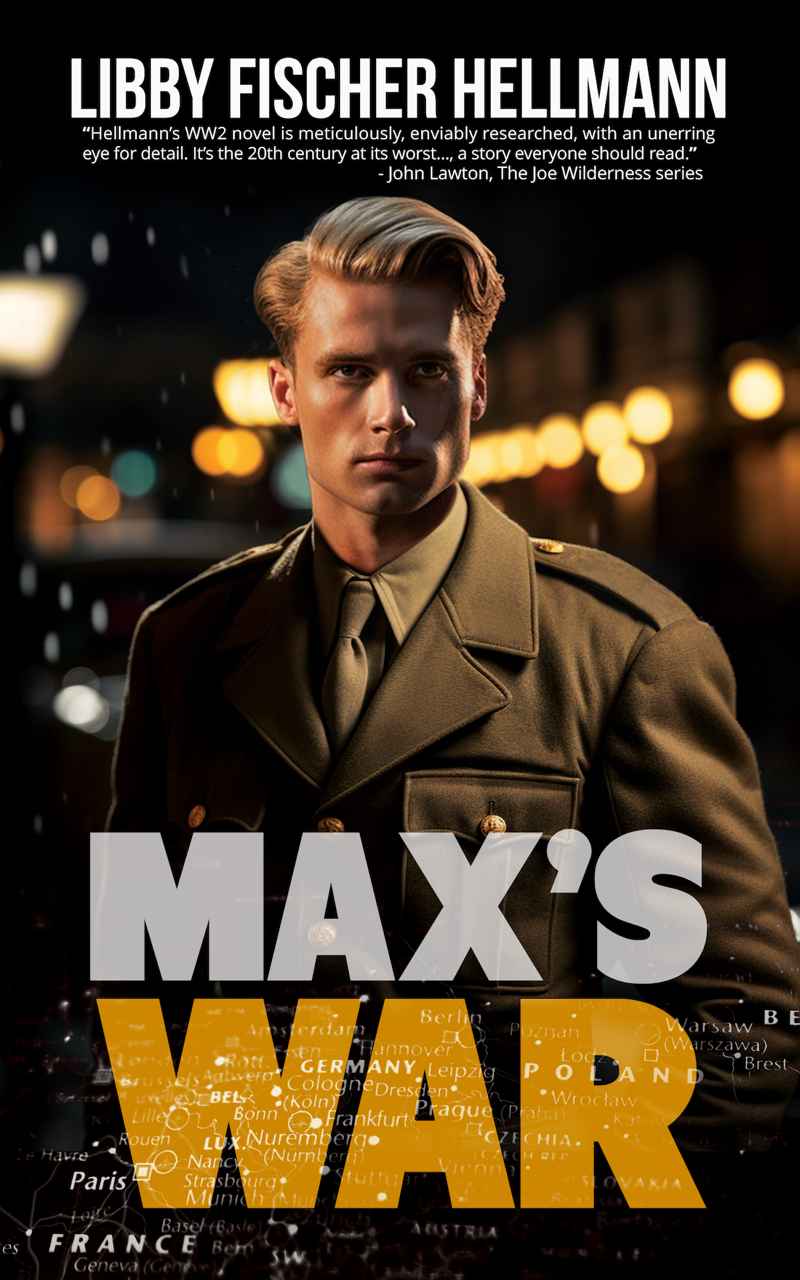
However, I didn’t have to “what-if” the circumstances of my recent thriller, Max’s War, published in April, 2024. My late father-in-law, Fred Hellmann, was an immigrant from Germany. He was “off the boat” in 1939. He’d grown up in affluence in Regensburg, a city that, as far back as the Middle Ages, was a center for trade and commerce. Growing up, Fred had his own horse and carriage. His father bred racehorses and owned a bicycle and wheel shop. They lived in the best part of town with plenty of household help.

All of that changed when Hitler came to power—the Hellmanns were Jewish. From 1933 on, the Nazi government tightened the noose on all German Jews by issuing laws that slowly, inexorably restricted their education, their ability to make a living, their social lives, and their freedom. Goebbels piled on with misinformation that depicted Jews as odious creatures who couldn’t be trusted. In the early 1930s Jews were encouraged to leave Germany. Or else.

Fred’s family heeded the warning and moved to Holland, which at the time, was a neutral country. The Netherlands had a history of tolerance. Jews assimilated and inter-married. For a couple of years things after they moved, life was peaceful. The Hellmanns even imagined returning to Germany after Hitler was thrown out of power.

Except they never did.

With the looming invasion of Holland a certainty, a relative in Philadelphia offered to sponsor Fred if he emigrated to the US. She couldn’t sponsor his parents, though. Only him. Fred’s family made a heartbreaking decision. Fred would go to America. His parents would remain in Holland. Leaving was problematic, however. It was no longer permitted. So, in 1939 Fred hid in a truck filled with coffins. He made it to the ship that brought him from Rotterdam to New York. From there he took a train to Philadelphia.

For two years he took odd jobs as a delivery boy and studied English. He learned he was the sole survivor of his family. Sometime after Pearl Harbor he was drafted into the US Army.

Because he was German and an immigrant, he was sent to Ontario, Canada, after Basic Training, where he was trained by the OSS to interrogate German POWs and to ferret out intel about German troop movements: where they were, where they were planning to go, and how well equipped they were.

Fred was sent back behind enemy lines at the end of 1943. He spent almost two years as an interrogator and a spy. In 1945 he was asked to remain with the OSS for another year. But he’d become engaged to a  lady in Philadelphia who said enough was enough. She couldn’t wait another year. So Fred came back to the States. He married Lucy, and their first son Mark was born in 1946. I married Mark in 1979.

While not as dramatic as the first part of his life, Fred’s post-war life was marked by what we now know as PTSD.  As far as we knew, he never talked about the war… not to his two sons or his friends. Once in a while, an anecdote leaked out. The coffin story… how he came to have a German knife and Lugar… how he impersonated a Wehrmacht officer to elicit information from German POWs. How his best OSS buddy substituted for him during a mission and was killed. I’ve included a fictionalization of those events in Max’s War. And added to them.

Still, those are just scattered remembrances. We tried to get his Army records so we’d know exactly where he was trained and deployed, but they were destroyed in a fire at the St. Louis Army record center shortly after it opened.

As a thriller writer who’s fascinated with spy-craft, I’ve wanted to write about his exploits for years. When I heard about the Ritchie Boys and how they did exactly what Fred did during the war, I wondered whether he trained with them. Long story short: We have no proof one way or the other. But I have since learned that the OSS and Ritchie Boys were kissing cousins during the war. They often shared training and missions. More than a few soldiers floated between the two organizations. In fact, an OSS camp lay just a few miles from Camp Ritchie in rural Maryland. So it’s entirely possible.

The great thing about fiction is that we can create stories that raise issues of extraordinary conflict, morality, and good vs. evil. While Fred’s story will always have a few loose ends, Max’s doesn’t. The plot of Max’s War emerged organically from Fred’s story. Where I didn’t know the facts, the “what-if” exercise helped me fashion what I hope are plausible events. In that respect, it is both the easiest and most difficult novel I’ve ever written. I hope you will agree.

 A sweeping World War 2 saga in which a young German Jew flees Europe, emigrates to America, and joins the Army to fight Nazis

Additional description (If you want it): As the Nazis conquer Europe, Jewish teen Max and his parents flee persecution in Germany for Holland, where Max finds true friends and a life-altering romance. But when Hitler invades in 1940, Max must escape to Chicago, leaving his parents and friends behind. When he learns of his parents’ deportation and murder, Max immediately enlists in the US Army. After basic training he is sent to Camp Ritchie, Maryland, where he is trained in interrogation and counterintelligence.


Deployed to the OSS as well, Max carries out dangerous missions in occupied countries. He also interrogates scores of German POWs, especially after D-Day and the Battle of the Bulge, where, despite life-threatening conditions, he elicits critical information about German troop movements.

Post-war, he works for the Americans in the German denazification program, bringing him back to his Bavarian childhood home of Regensburg. Though the city avoided large-scale destruction, the Jewish community has been decimated. Max roams familiar yet strange streets, replaying memories of lives lost to unspeakable tragedy. While there, however, he reunites with someone from his past, who, like him, sought refuge abroad. Can they rebuild their lives… together?

Buy link:https://www.amazon.com/gp/product/B0CMBK15LM

Libby Fischer Hellmann left a career in broadcast news in Washington, DC and moved to Chicago a long time ago, where she, naturally, began to write gritty crime fiction. She soon began writing historical fiction as well. Eighteen novels and twenty-five short stories later, she claims they’ll take her out of the Windy City feet first. She has been nominated for many awards in the mystery and crime writing community and has even won a few.

She has been a finalist twice for the Anthony and the Shamus; and four times for Foreword Magazine’s Book of the Year. She has also been nominated for the Agatha, the Daphne, and she won the Chicago Writers Association Book of the Year in 2021. She has won the IPPY, Foreword Magazine’s Indie Awards, and the Readers Choice Award multiple times.

Her latest novel is Max’s War: The Story of a Ritchie Boy, the little known group of German Jewish immigrants to the US who escaped Hitler and joined the Army to fight Nazis.

https://libbyhellmann.com/

https://www.amazon.com/stores/Libby-Fischer-Hellmann/author/B001HMMDZU

https://www.facebook.com/authorLibbyFischerHellmann

Guest Blogger ~ Susie Black

How I Develop My Characters and Plan My Mysteries

By nature, I am a people person, so, developing characters is where I begin when planning a story. Once the characters are created, the plot is built around them, not the reverse. So, how do I develop my characters? I have kept a daily journal chronicling all the interesting, difficult, and oddball people I have encountered as well as the crazy situations I’ve gotten myself into and out of during my apparel sales career.  The journal entries are the foundation of my mysteries. All my characters are based on people I have encountered in my career as a ladies’ swimwear sales exec. I take the characteristics, quirks, traits, and personalities of these real people as the foundation and then build upon them to create the cast members I want in the tale. Basing my characters on people I know has given my cast a ring of authenticity and that believability has translated into memorable characters readers root for or boo at, but either way, invest in.

To illustrate my character development technique, I’ll detail how I created Holly Schlivnik, the protagonist of the Holly Swimsuit Mystery Series. Holly Schlivnik is based on me. She is the me I always wanted to be and more. She is fearless, loyal to a fault, and smart. 

Holly is infused with me in every respect- from her physical description to her personality to her life experiences, career, family, friends, the kind of car she drives, and where she lives.

Physical Description:

Holly is slim as I am and is my height- 4 feet 8 inches to be exact. I have made the consequences of her height lack of it, a key component of the messes she gets herself into and the adjustments she’s had to make in her everyday life to accommodate her height. These situations add to her personality and turn into some of the funniest schticks of the series. She has brown eyes and short brown hair like mine.

Personality:

Like me, she is funny, sarcastic, stubborn, wise-cracking, and irreverent.

Idiosyncrasies, and inherited traits:

I inherited a fear of death from my maternal grandmother that we both overcompensated with the nervous habit of laughing, often inappropriately. I incorporated this idiosyncrasy into Holly’s personality and made it one of the main characteristics that identify her. I also inherited my grandmother’s rapier wit and a love of perfume and jewelry. I blended these into Holly’s personality as well.

Family: My dad was a ladies’ apparel manufacturer’s representative and I started my career working for him and so is Holly’s dad. I got into the rag biz by accident and so did Holly.  Holly also started her apparel career working for her father. My parents were complete opposites who had a very successful marriage and so are Holly’s. Holly’s parents, bigger-than-life maternal grandmother, and siblings were all based on my family. 

Religion: Like me, Holly is Jewish and the traditions and history are woven throughout the series and add to the richness and authenticity of each story.

Love Life: While I lived in the South, I did have two men in my life one of who I have introduced into Holly’s life.  Unlike Holly, I have never had a personal relationship with a police detective.

Pets: Sigmund Freud, Holly’s wildly popular standard poodle/psychiatrist and amateur sleuth, is based on the personalities of my own two springer spaniels. While he can’t talk, like my two hounds, Siggie gets his point across. He shakes his head yes and no, rolls his eyes, barks if he disagrees with Holly, and has been known to pull her in the opposite direction if he doesn’t think Holly is going the right way.

Health and habits: To keep my girlish figure, I am a dedicated walker I walk three miles every day- and have made Holly’s daily walks with Sigmund to the Washington Street Pier an important part of her routine. “Pop,” the senior citizen fisherman she has befriended and shares morning coffee with on the pier has helped her solve several murders.

Hobbies: I have been an avid stamp collector since my pre-teen years. In book number six, which was recently released, it is revealed that Holly is a stamp collector. She encounters someone tangentially involved in a murder while at her stamp dealer’s store.

Car: I have owned convertible cars throughout my driving career. I incorporated my love of convertibles into my stories by having Holly drive a bubblegum pink classic convertible passed down to her by her mother. 

Home: I lived on a houseboat in Marina del Rey for ten years. I loved living on the water in a houseboat and amalgamated that into the series by having Holly live on a houseboat in Marina del Rey, California. I have used Holly’s houseboat and marina locale as an integral part of Holly’s personality as well as the site of her adventures and misadventures as an amateur sleuth. 

Age: Holly is on the shady side of her twenties when she is promoted from a sales rep to a management position. This is the same age when I made the leap from sales rep to executive management.

Friends and colleagues:  Like me, Holly is in a traditionally male-dominated industry and is one of the very few females in a management position. I surrounded her with a group of female professional colleagues and friends who supported her and mentored her like the ones I was fortunate enough to have had to do the same for me. The Yentas are based on that group of wonderful women.

Career:

Holly is the same successful ladies’ swimwear sales exec based in the Los Angeles apparel center as me. 

Employment: Ditzy Swimwear and Mermaid Swimwear are based on two swimwear companies I worked for.

I have created a fictionalized me that has been fun to bring to life. Fortunately, unlike Holly Schlivnik, I have never discovered a murdered person or hunted down a killer…at least, not yet!

Death by Jelly Beans

“Brings a whole new meaning to the rabbit died.”

Mermaid Swimwear President Holly Schlivnik discovers the Bainbridge Department Store Easter Bunny slumped over dead and obnoxious swimwear buyer Sue Ellen Magee is arrested for the crime. Despite her differences with the nasty buyer, Holly is convinced the Queen of Mean didn’t do it. The wise-cracking, irreverent amateur sleuth jumps into action to nail the real killer. But the trail has more twists than a pretzel and more turns than a rollercoaster. And nothing turns out the way Holly thinks it will as she tangles with a clever killer hellbent on revenge.

https://www.amazon.com/Death-Jelly-Beans-Swimsuit-Mystery/dp/B0D88FNBSS

https://www.barnesandnoble.com/w/death-by-jelly-beans-susie-black/1145804565?ean=2940186124580

https://www.goodreads.com/book/show/212700868-death-by-jelly-beans?ac=1&from_search=true&qid=PWl56Hmfkz&rank=1

https://www.bookbub.com/books/death-by-jelly-beans-holly-swimsuit-mystery-book-5-by-susie-black

Named Best US Author of the Year by N. N. Lights Book Heaven, award-winning cozy mystery author Susie Black was born in the Big Apple but now calls sunny Southern California home. Like the protagonist in her Holly Swimsuit Mystery Series, Susie is a successful apparel sales executive. Susie began telling stories as soon as she learned to talk. Now she’s telling all the stories from her garment industry experiences in humorous mysteries.

She reads, writes, and speaks Spanish, albeit with an accent that sounds like Mildred from Michigan went on a Mexican vacation and is trying to fit in with the locals. Since life without pizza and ice cream as her core food groups wouldn’t be worth living, she’s a dedicated walker to keep her girlish figure. A voracious reader, she’s also an avid stamp collector. Susie lives with a highly intelligent man and has one incredibly brainy but smart-aleck adult son who inexplicably blames his sarcasm on an inherited genetic defect.

Looking for more? Contact Susie at:

Website: www.authorsusieblack.com

E-mail: mysteries_@authorsusieblack.com

Book Bub: www.bookbub.com/authors/susie-black

Facebook:    https://facebook.com/TheHollySwimsuitMysterySeries

Good Reads: https://www.goodreads.com/search?q=susieblack&qid=MDCXK0T4FC

Instagram:   Susie Black (@hollyswimsuit) • Instagram photos and videos

Linkedin: https://www.linkedin.com/in/authorsusieblack-61941011

Pinterest:  https://www.pinterest.com/hollysusie1_saved/

Twitter:    http://twitter.com/@hollyswimsuit