

Unlike the past, today’s mystery fiction has a lot more chit-chat between characters. There was a time when an author would write pages and pages of narrative describing the contents of a room, clothing, or the physicality of a character down to nose hairs. Oftentimes the narrator would describe how the characters were feeling rather than having them say the words for themselves. I’m thinking of Wilkie Collins’s The Woman in White, which may not be the first detective novel ever written, chronologically, but it certainly is one of the earliest. I can remember reading most of a chapter with nothing but descriptions of a room or an entering character before anyone actually spoke a word.
But even writing has its trends, and today the style for the most part, is to keep narrative to a minimum. It’s often described by instructors as, “Show. Don’t tell.” Speaking of trends, it has become incumbent upon the writer to use the word “that” only when absolutely necessary. No writing “I wish that I could go.” No, no. Today we write, “I wish I could go.” It may be cleaner, it may be neater, but sometimes I miss my “that.”
But back to narrative writing. Today a description of something might go on for a paragraph or two, maybe three, and then it’s time to have somebody talk. Rarely are there rambling, run-on sentences about an overhead chandelier, unless, of course, it’s about to drop on somebody’s head and start our mystery going. Of course, there are exceptions to this rule (and YOU may be one of them). P.D. James, for instance, will turn over two, three, or four pages of a chapter to the victim’s study, even describing furniture in great detail. Carolyn Hart starts out the majority of her novels with elaborate details on the wants, needs, and secrets of every character who may be a potential suspect. And these ladies write one dang, fine mystery.
But for many of us, we like to keep the dialog rolling. That means we are extra careful with the words we choose for our characters to say. Every character speaks differently, has different word choices, and a unique rhythm or cadence. The dialog sets up who and what they are. It also helps to separate one character from another, without having to add “she said, he said.” The words in the sentence tell the reader who’s speaking. I have two distinctively different protagonists and the fact they are both women, roughly the same age, and private detectives means little. These two women are as different as a Schlitz Beer and a shaken, not stirred, extra-dry martini.
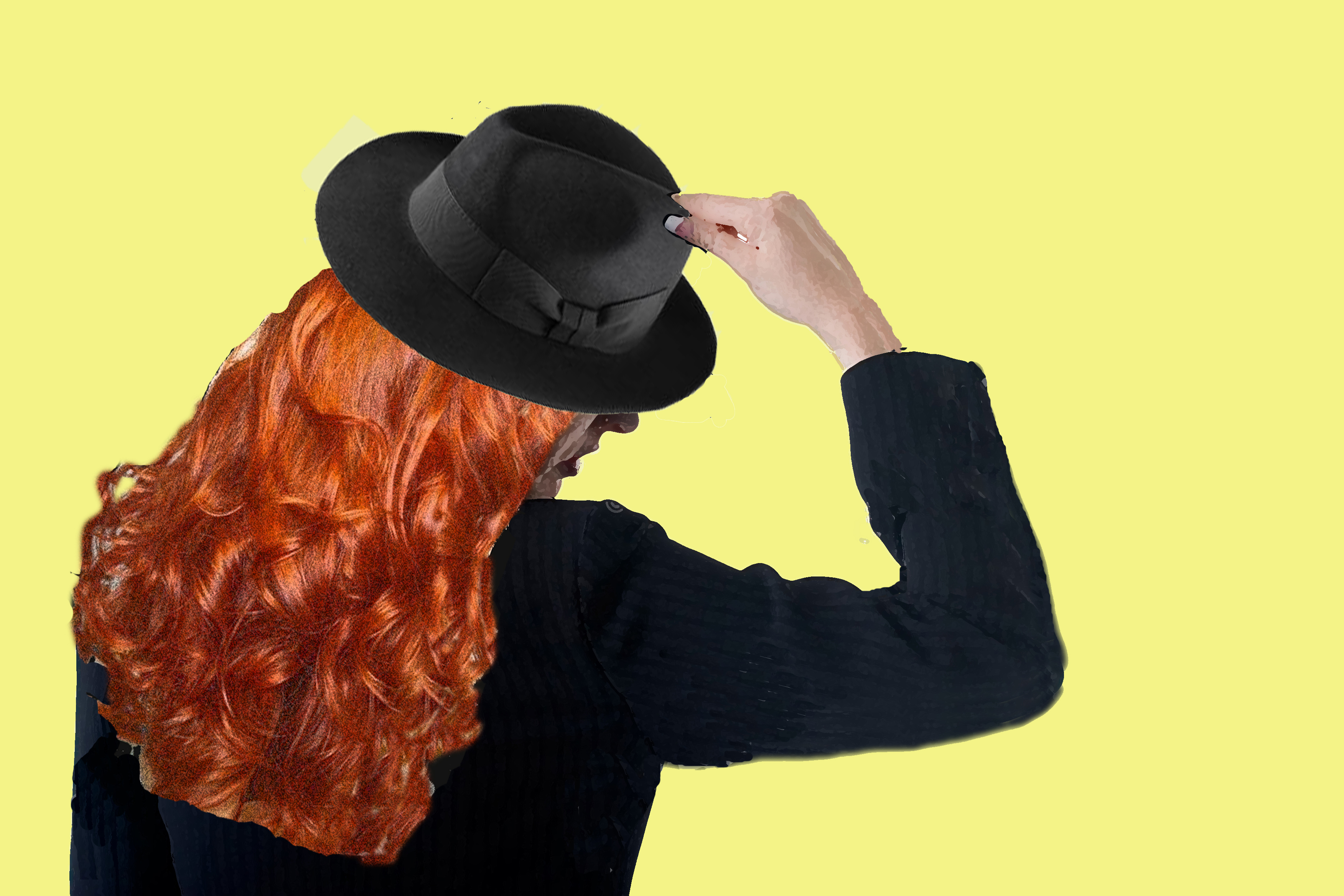
At 5’11” tall and 185 pounds, Persephone “Percy” Cole lives in lower Manhattan during the 1940s, is divorced, and has an eight-year-old son. World War II looms overhead. Percy is one of the groundbreaking women detectives of the time, lives in a man’s world, and faces that challenge readily. Whoops! Used the word “that.” Dang. Back to Percy. She is a savvy, street-smart woman, who takes boxing lessons and will sometimes punch out a criminal if they ask for it. And maybe if they don’t. She not only uses the colorful language of New York’s 1940s, she is a woman of few words and a lot of action. She uses phrases like, “Oh, yeah? Sez you.”

Enter Liana “Lee” Alvarez, the other protagonist. Lee sparkles in today’s Palo Alto, California. She is 5’8″ with a dancer’s body, and a face reminiscent of Elizabeth Taylor in her glory days, should anyone be old enough to remember dear Liz. Lee’s now deceased father was a Mexican immigrant who made good, and her mother a blueblood from one of Palo Alto’s first families. Lee’s often torn between who she is, who she should be, and who she wants to be. But she is above all an ace private investigator, albeit in designer clothes, and a credit to the family-owned, Silicon Valley detective agency. Recently married, she has a blackbelt in Karate and can take care of herself. Lee utters things like, “Listen, I don’t mean to be rude, but if you’re going to wave a gun in my face, I’m going to take it personally.”
And then, of course, all the family members, side characters, and people I throw in and out, all have their own way of speaking and their own choice of words. From a one-liner to a major character. I can hear them in my head. Like an earworm.








You must be logged in to post a comment.