
I’ve admitted it before; I’m a setting thief. I also steal dialogue, people, and events. But book seven in my PIP Inc. Mysteries series takes my thievery to a whole new level. Last year I participated in something called Santa’s Shelves at the Felton Fire Protection District’s Fire Station. It’s an annual event, with vendors paying a fee to be included in the fundraiser for the district. The fire station is home to 30 volunteer firefighters, full-time EMTs, Captains, and a Fire Chief, serving 6,000 permanent residents and up to 15,000 summer visitors.
At the two-day Christmas faire last year, opportunities for theft of setting, dialogue, characters, and murder, presented themselves and I decided to steal all of them. I’ve done it before. The bank robbery in “Mags and the AARP Gang” took

place where I bank and my admission that I was “casing the place” to understand how to rob it made bank officials exceedingly anxious and got me put under surveillance until the book came out and I presented the manager with a copy so he and the nervous employees would understand that my robbery was pure fiction.
And then there was the time I witnessed a death at a funeral and turned it into the beginning of
“The Funeral Murder.” In both of those thefts, I only used the setting, a soulless entity, and created the characters…well mostly. Setting a death at the eighteenth hole pond at the Delavega Golf Course for the “The Two- Faced Triplex, “

and the murder in the walkway near the post office for “What Lucy Heard”
was even more settings-driven without any potentially real characters.
I’m still amazed and delighted by how eager to help with ideas and means for murder so many people are when I tell them I’m writing a cozy murder mystery. They find flaws in my reasoning and make corrections which make the killings work so well that I often wonder how many innocent-seeming bystanders fantasize about committing murder and if only the prospect of getting caught keeps them from doing it.
For “A Faire to Remember,”
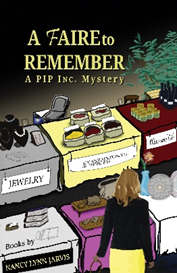
I went way beyond the norms of privacy by placing many real people in the book. I fictionalized them and made up their backstories, but they will know who they are and recognize their booths and the placement of them if they read the book. I also made the fire captain a serious suspect with motive and means to be a murderer. That last decision made me worry. Was he too real? Was the setting too real?
I wondered if I should make up a town and place it in the Santa Cruz Mountains. Fellow writer Victoria Kazarian does a series set in River Grove but assures me her setting is really Felton, California. Should I borrow her town? I like that my books are set in real places and many readers enjoy recognizing local references so I really didn’t want to do that.
With the book off to the editor, I finally had to confront my dilemma. I called the fire station and explained to the volunteer who answered the phone that I had been a vendor last year when the lights strobed and a towel was put over them…
“That was me,” he exclaimed. “I’m the one who put the towel over the light fixture. Is my name in the book?”
“You’re referenced but not named,” I offered. “Cool! But if you want to use my name, I’m good with that!”
“I hope your captain will feel the same because he’s a suspect.”
“Send him an email and ask him.”
I did. He wants to read the book when it comes out.


I do the same thing. I use events that happen in the areas that I write about. I think it not only gives more validity to the settings but it also gets readers intrigued so they want to see the place. Though I must admit, I change names of towns and populate them with fictional businesses so the locals don’t think I’m writing about them. I had a reader email me this summer to let me know she and her husband who read my Gabriel Hawke books, made the trip to Wallowa County and the lake to see where Hawke worked. They enjoyed the trip and she said , she kept thinking she’d see Hawke drive around a corner. LOL That’s what I love. When people expect to see my characters where the books are set. Great post!!
LikeLike
I don’t think I could function as a writer if I had to avoid real places. My Mellingham series is set in a small town I know very well, and it keeps me “grounded,” able to focus on how characters move in the story (and their lives). I have no sense of distance or navigation without real markers. I love the fire department folks’ responses to your using their station and firemen. Good post.
LikeLike