

I recently returned from a trip to Italy. I started in Naples on my own, then headed to Rome to join a Road Scholar tour that took me through Rome, Florence and Venice. I enjoyed art, architecture, the countryside, the history, the people, the street life—also the pasta and gelato.
As a writer, I am constantly on the lookout for story ideas. I was sure that my sojourn in Bella Italia would provide. Indeed, it did.
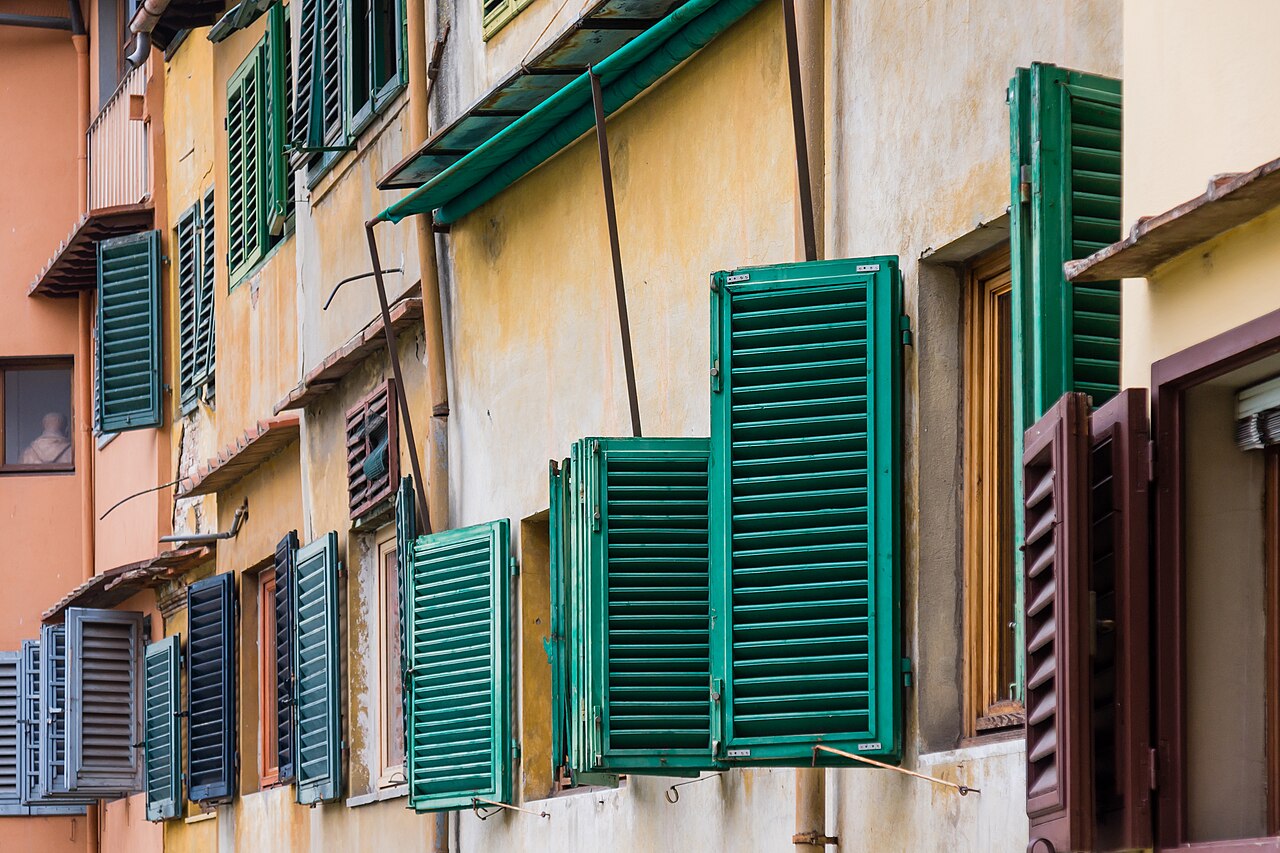
The tour included lectures by various experts who discussed everything from the Forum and the Colosseum in Rome, to the Duomo in Florence, and the Bridge of Sighs that spans a canal in Venice.
In the middle of one such lecture, my plot walked in, giving me that wonderful feeling. The feeling that says: That’s it! Here’s where I can hang my novel!
I’m not going to tell you what it is. I don’t discuss my ideas before I have a chance to develop them further. Suffice to say, it’s a good idea. An excellent excuse to take another trip to Italy.
Hmm, does one really need an excuse to go to Italy?
I write a historical mystery series featuring Jill McLeod, who is a Zephyrette, or train hostess, traveling on the old California Zephyr, a streamliner train that ran between the Bay Area from 1949 to 1970. For this series, my character walked in first. Once I learned about Zephyrettes, I had to write a mystery with one as a protagonist.
The plot of the third book walked in when I took an excursion on a private Pullman sleeper car similar to those found on the California Zephyr. In this case the car was attached to the rear of an Amtrak train and we were making a trip from Los Angeles to San Diego.
When we were parked in the station at San Diego, the rail car’s owner told the passengers a tale about another excursion. The passengers on that trip had commented that there was something odd happening in one of the sleeper. They were hearing voices and hearing bells rings. Maybe he had a ghost, we said.
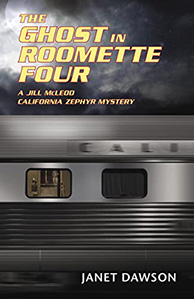
That idea walked into my fertile mystery writer’s brain. Soon my fictional Zephyrette Jill was returning to her onboard compartment late at night when she encountered something she couldn’t explain. And that’s how I came to write The Ghost in Roomette Four.
I was planning a trip to Paris at the same time I was working on the Jeri Howard novel Witness to Evil. Well, if I was going to Paris, so was Jeri.
Why would an Oakland private investigator take a trip to Paris and wind up investigating a case? I could think of two reasons for Jeri’s trip to La Belle France: because she is paid to do so, to retrieve something—or someone. Turns out the someone is the catalyst. Seventeen-year-old Darcy, a problem child if ever there was one, swiped Mom’s credit card and flew to Paris. Darcy’s parents hire Jeri to find her and bring her back.
Jeri thinks that these two people have more money than sense, but hey, a job’s a job. She flies to the City of Lights and searches for Darcy, interested in the teenager’s why as well as her whereabouts. I figured once I got to Paris, I would figure out what I needed for my plot.
I kept bumping up against the Holocaust.

On the Île de la Cité, tucked behind Notre Dame, is the Mémorial des Martyrs de la Déportation. It’s a sobering place to visit, honoring the 200,000 French citizens deported to Nazi concentration camps during World War II.
Later during that visit, I wandered through the Marais, the historic district of Paris that includes portions of the Third and Fourth Arrondissements. In the late nineteenth and early twentieth centuries, this district had a thriving Jewish community. I was looking for a museum. I didn’t find that particular museum. But I found something else—an exhibit about the deportation of the French Jews.
What stays with me all these years later are the posters that family members put up after the liberation, searching for news of family members who disappeared during the war.
How does that figure into the plot of Witness to Evil? Read the book and find out.


I love hearing I’m not the only one who hopes for a good reason to have my characters travel where I travel. That’s how a few of my books have come about. Fun post! Keep traveling and putting out great books!
LikeLike
How authors get their ideas is endlessly fascinating to me. Thanks for sharing these experiences.
LikeLike
After a long hiatus I made a return trip to India. On my first morning back I went down to breakfast and listened to the other guests (only 4 at the time), and there was my next novel. That’s the best feeling in the world–a story coming on in a new place. And you were in Paris and Italy! Even better.
LikeLike
Susan, ah, yes, eavesdropping. That’s how I got the plot for one of my short stories.
LikeLike
The furtive and winning mind of a novelist. Never ceases to amaze. Well, not really furtive. but I love the word. And had to buy Witness to Evil, which is one of the Jeri Howard books I haven’t read yet. Looking forward to it.
LikeLike
Heather, I hope you enjoy the Witness. The original title was We’ll Always Have Paris, but it changed, and therein lies another tale.
LikeLike