Hey, it’s my book. I’ll kill whomever I want

I wrote my first book, The Death Contingency, when I was an active realtor. It became part of a seven-book series, the Regan McHenry Real Estate Mysteries, but when I was working on that first book, it was only a game for me, a puzzle to be solved, and an opportunity to right a few wrongs in dealings where I felt slighted or abused by the realtor on the other side of a transaction. You might say in addition to being a murder mystery, it was a revenge book.

Most realtors are nice hard-working people who care about their clients, but if you work in that business long enough, you come across people who aren’t. Writing a book outing some shady dealers promised to be satisfying.

 I assumed the people who read the book would be realtors holding open houses so it was designed to be read in small bursts during downtime between visitors. I thought if I carefully dropped clues about the identities of the real agents I turned into villains, astute fellow realtors would figure out who they were even if their names had been changed.

I was mistaken about that first book on many levels. It turns out most realtors don’t read books, or at least not mysteries written about their associates.  The few local realtors who did read my first book didn’t have any idea who I used as my characters even when it was incredibly obvious and it was great fun when they argued with me about the real identity of a character.

But based on the messages I received from realtors working in other communities, there must be many people out there who’s actions are similar because they’d say things like, “You never met Kathy from my office, but you sure nailed her.”

I always use the phrase, “This is a work of fiction. Unless specifically credited, names, characters, places, and incidents are either products of the author’s imagination or are used fictitiously. Any resemblance to actual events, locales, or persons, living or dead, is entirely coincidental.” It’s a lie.

I eavesdrop unabashedly. I freely steal snippets of other people’s lives to use in my books. The admonition, “Be nice to me or I’ll kill you in a book,” works for me. And that’s not all. Some of my best side stories come from writing about the foibles of others. (I’m not proud, though.  Sometimes I’m the one being parodied.) When I speak at book clubs or in front of audiences about the Regan McHenry Real Estate Mysteries, I always tell people that the murders are made up but the real estate stories, no matter how farfetched they seem, are real and happened to me or to an associate.

I have the feeling other writers do the same sort of things. The baker-protagonist writer has probably seen real flour-throwing incidents similar to the one she used to help her character escape from a killer. The yachting-protagonist writer may have watched an attempted drowning. The chef-protagonist writer has all those handy knives to work with not to mention flaming cooktops and opportunities to add poison to a dish.

Who knew writing murder mysteries could be so much fun…and so therapeutic?

Bella Italia!

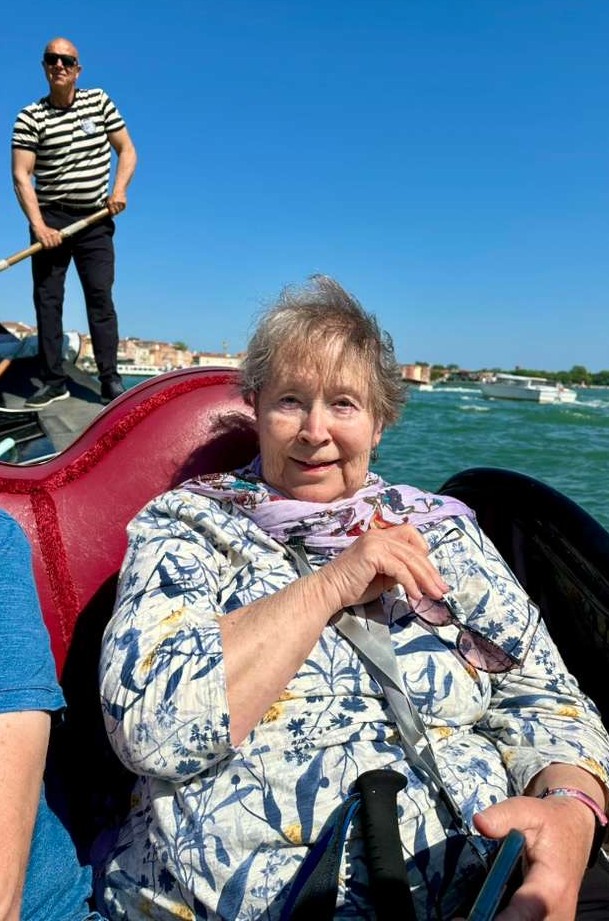
I rode in the gondola. Of course I did. It’s one of those touristy things I just had to do.

I was in Italy, after all. In Venice, built on 126 islands, separated by expanses of water and canals, linked by 472 bridges. Away from the Grand Canal, the main thoroughfare of the largest island, one can get lost in those narrow canals, with their pathways and bridges. Public transit is water buses, known as vaporettos.

My recent trip to Bella Italia started farther south, in Naples. I wanted to see Pompeii and Herculaneum, both cities destroyed by the 79 AD eruption of Vesuvius. On the first day in Napoli, I went to local museums. I also met some fellow travelers in the hotel courtyard who invited me to join them for dinner that evening. That’s one of the delights of travel.

The next day was my guided tour. According to my Fitbit, I logged six miles walking around the two ancient cities. Which are now surrounded by modern cities. In the distance, Vesuvius looms, looking benign—for the time being.

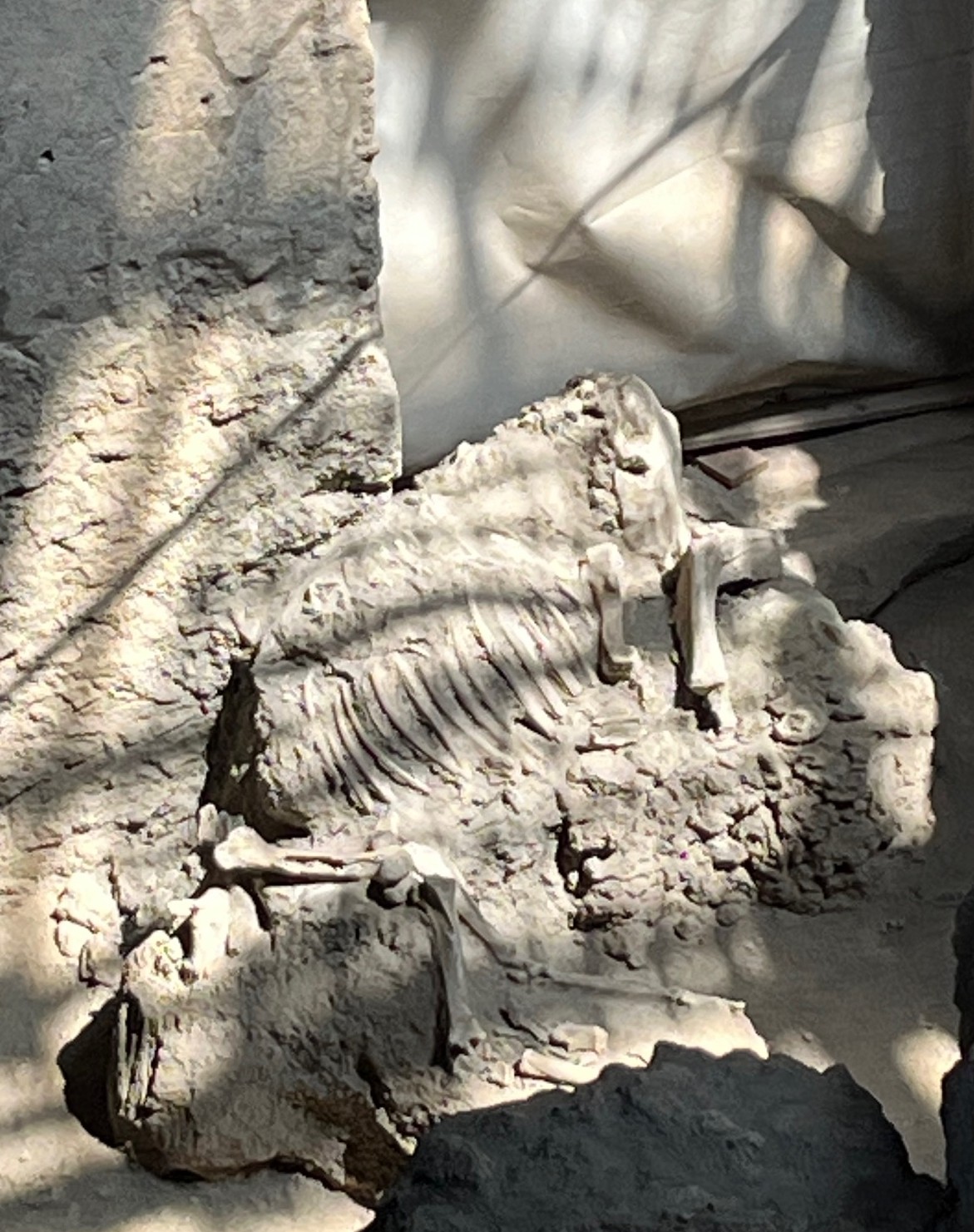
Herculaneum first, a rather compact footprint. It was buried under 20 feet of ash when the volcano erupted. The vast acreage of Pompeii was subjected to 18 hours of falling pumice, then a pyroclastic flow of dense, fast-moving ash that buried everything in its patch, suffocating those inhabitants who had been unable to escape. Most of the city has been excavated, but they are still digging. While I was there, our tour looked at one site that was recently uncovered. In one of the rooms, the eye is drawn to a donkey’s skeleton.

From Naples, I took a high-speed train to Rome. It took all of one hour and 10 minutes. I wish we had such efficient and comfortable transport here in the United States. Ah, that’s a subject for another blog.

In the Eternal City of Rome, I joined a Road Scholar tour, logging more miles on my Fitbit as we marveled at the Forum and the Colosseum, hiked from the Piazza di Popoli to the Spanish Steps, Trevi Fountain and the Pantheon. On the way, we passed the oldest existing aqueduct in Rome, built in 19 BC by the Emperor Augustus. It’s still in use today.

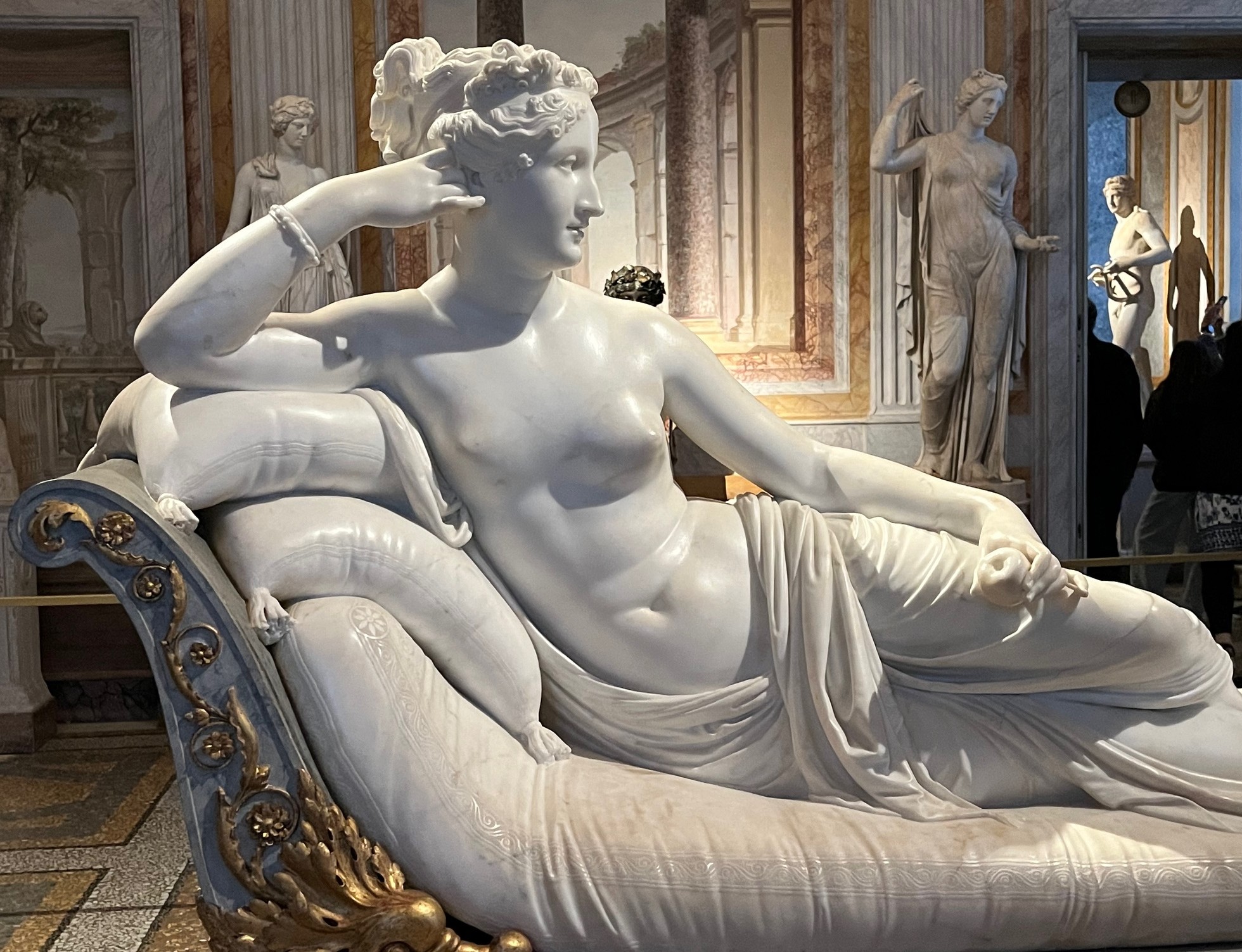
On the following day we went to the Borghese Gallery. I love the sculpture of Paulina Bonaparte Borghese, by Antonio Canova. It was considered quite scandalous in its day. And of course, all the beautiful sculptures by Gian Lorenzo Bernini.

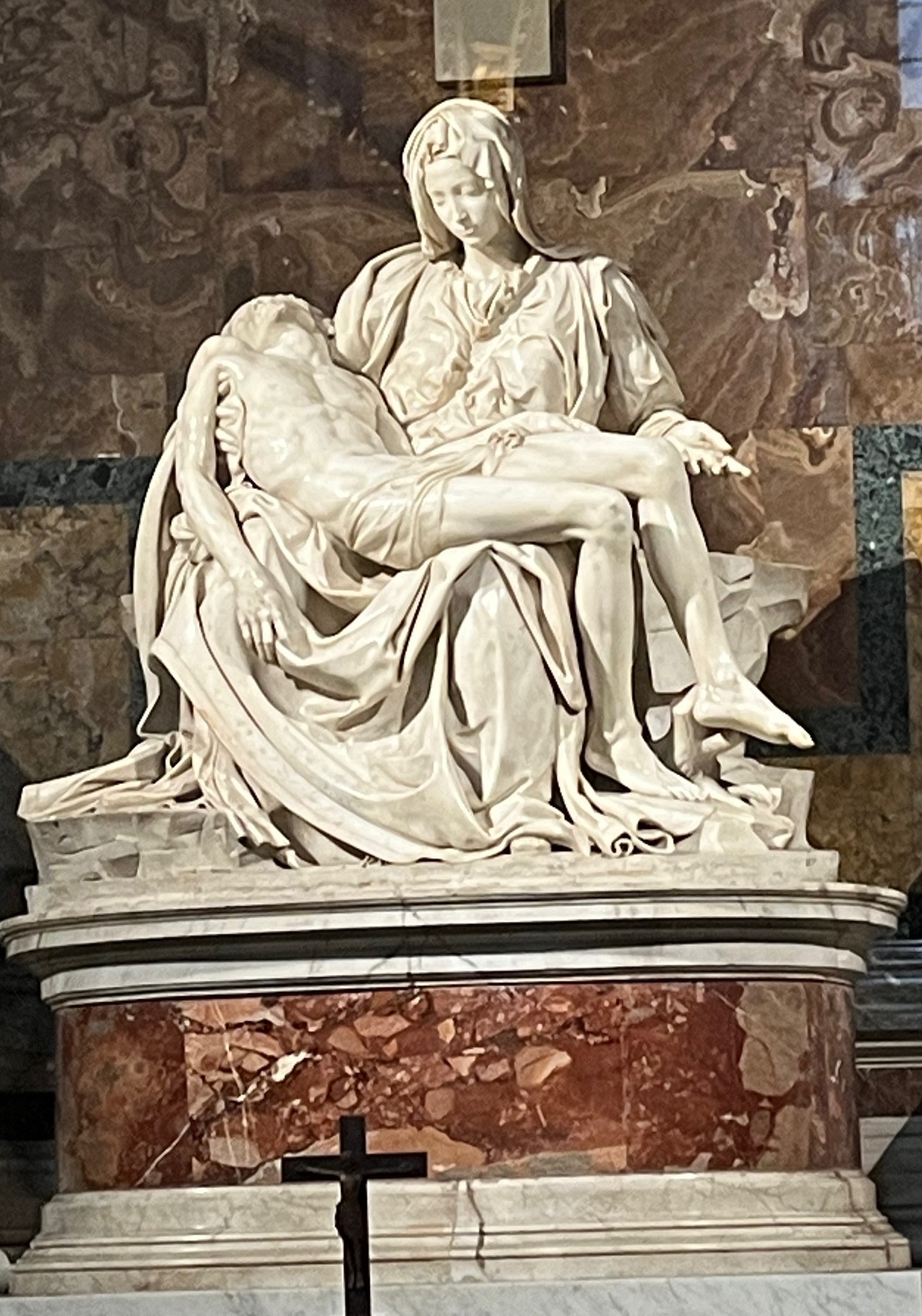
Then a side trip to the Vatican where I saw Michelangelo’s jaw-dropping works of art—the ceiling of the Sistine Chapel and inside St. Peter’s Basilica, where I stood staring at the Pieta, now behind a glass wall since someone whacked it with a hammer back in 1972, causing serious damage.

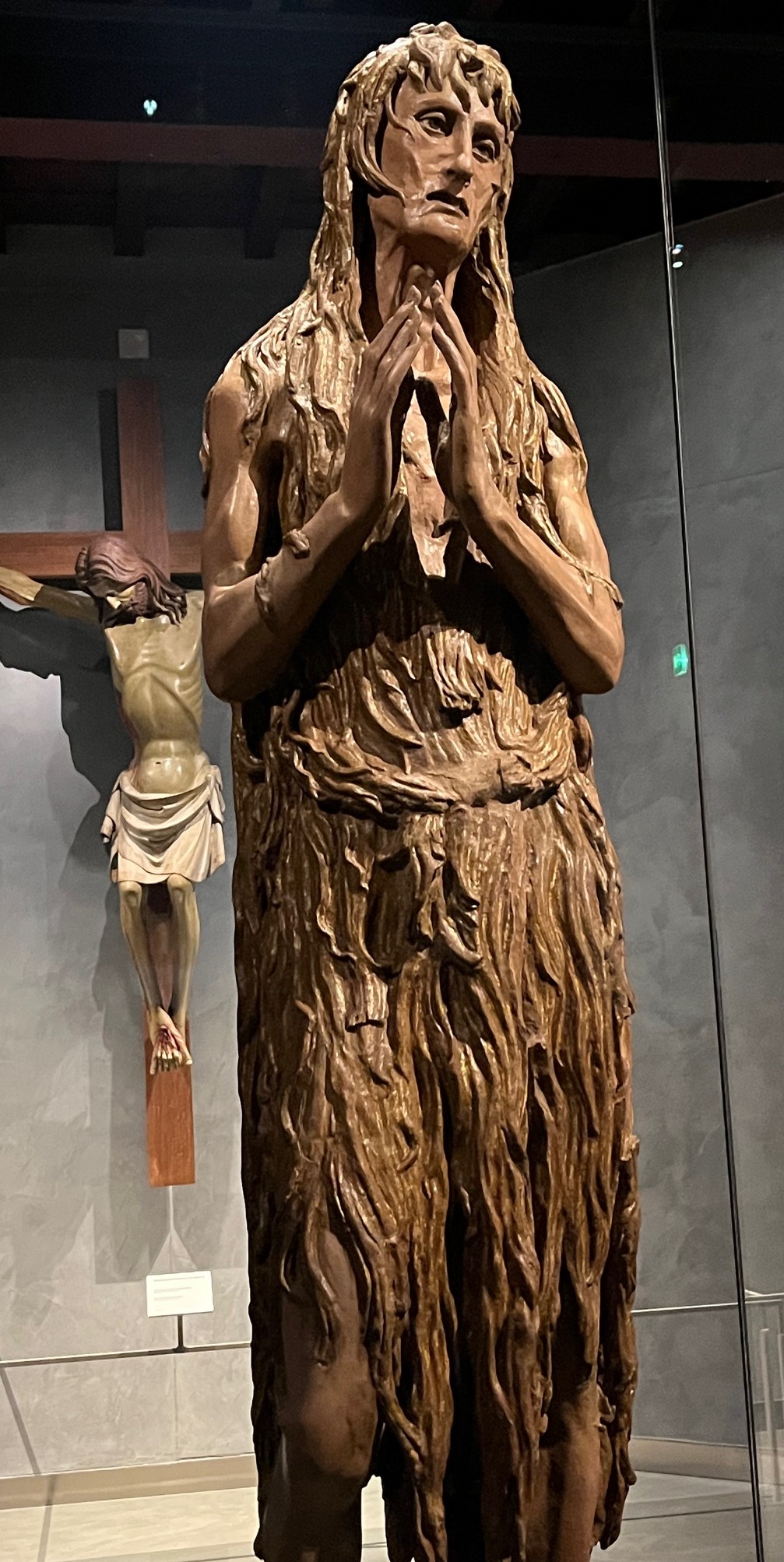
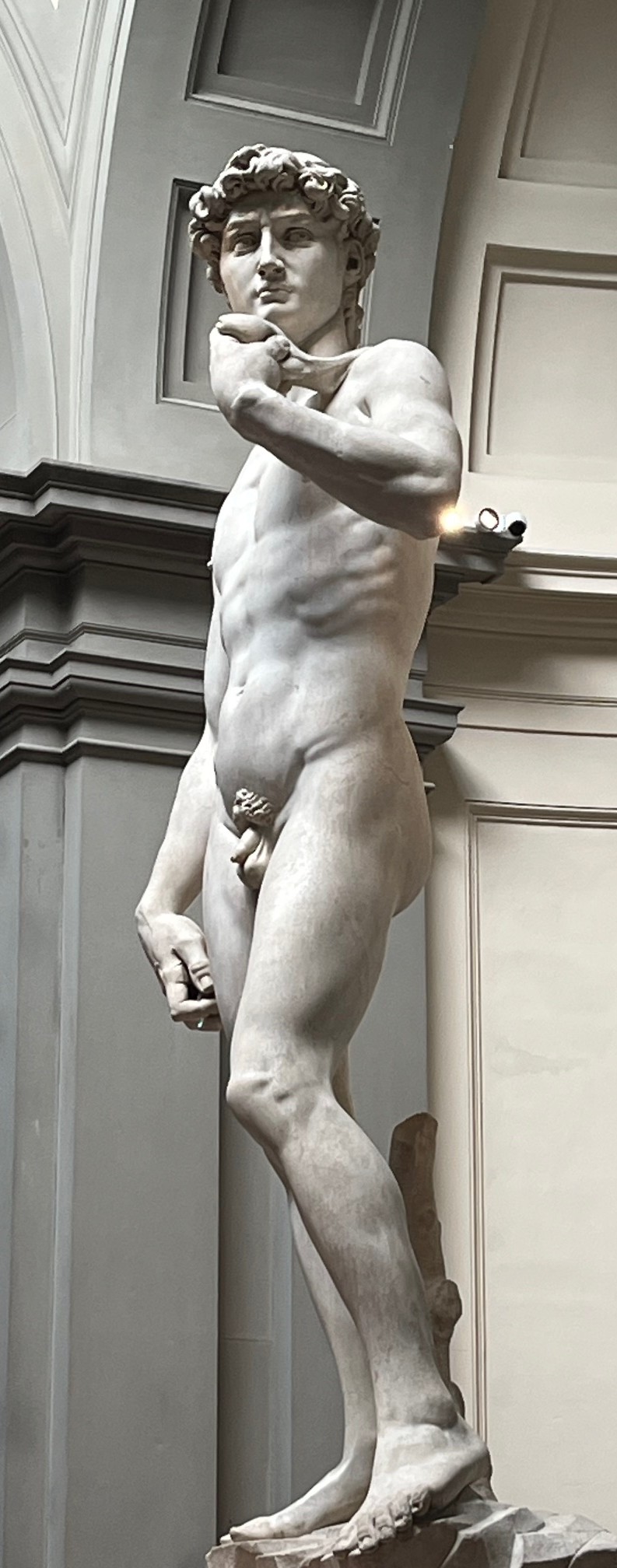
Another day, another high-speed train, to Florence. The stunning Michelangelo painting of the Holy Family in the Uffizi Gallery. Berlusconi’s Duomo. The adjoining museum contains a remarkable Donatello sculpture of Mary Magdalene. And then the Accademia Museum, where Michelangelo’s beautiful David stands, ready to confront Goliath.

One of my fellow travelers and I went to the Pitti Palace, another museum full of paintings and sculpture. We stood on line at the entrance with three Greek Orthodox nuns from Macedonia and had a pleasant conversation, also one of the delights of travel.

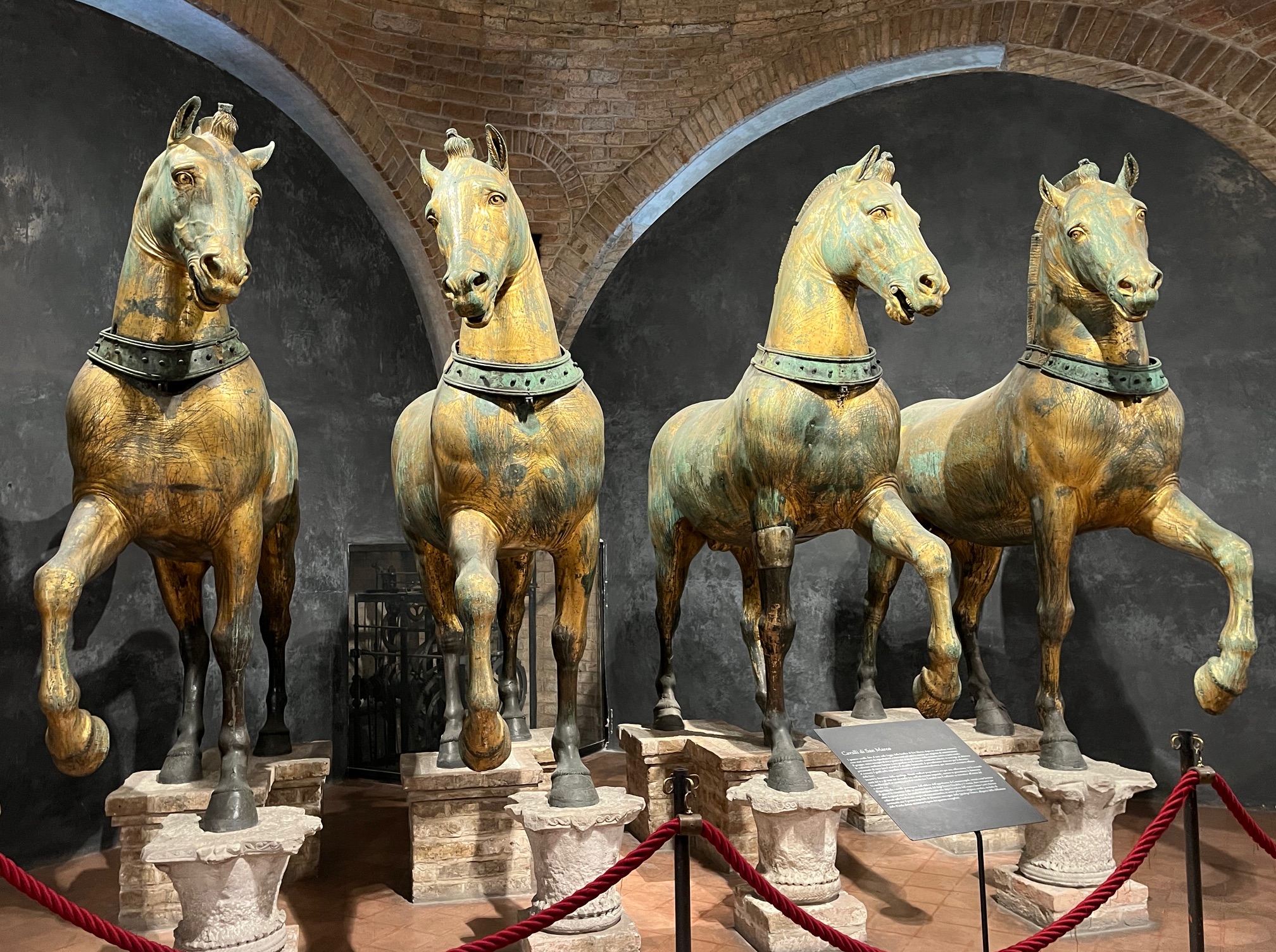
Venice next, with the riches of St. Mark’s Basilica and the Doge’s Palace. We also saw something of workaday Venice, when our vaporetto went through the port, seeing boats loaded with packages and luggage. Boats pick up the hotel’s laundry every day. And at one vaporetto stop, a woman got on wearing a Post Italiane uniform, pushing a cart full of mail to be delivered.

When my tour was over and it was time to head for the airport, I traveled by water taxi, speeding over the lagoon to the docks outside the airport.

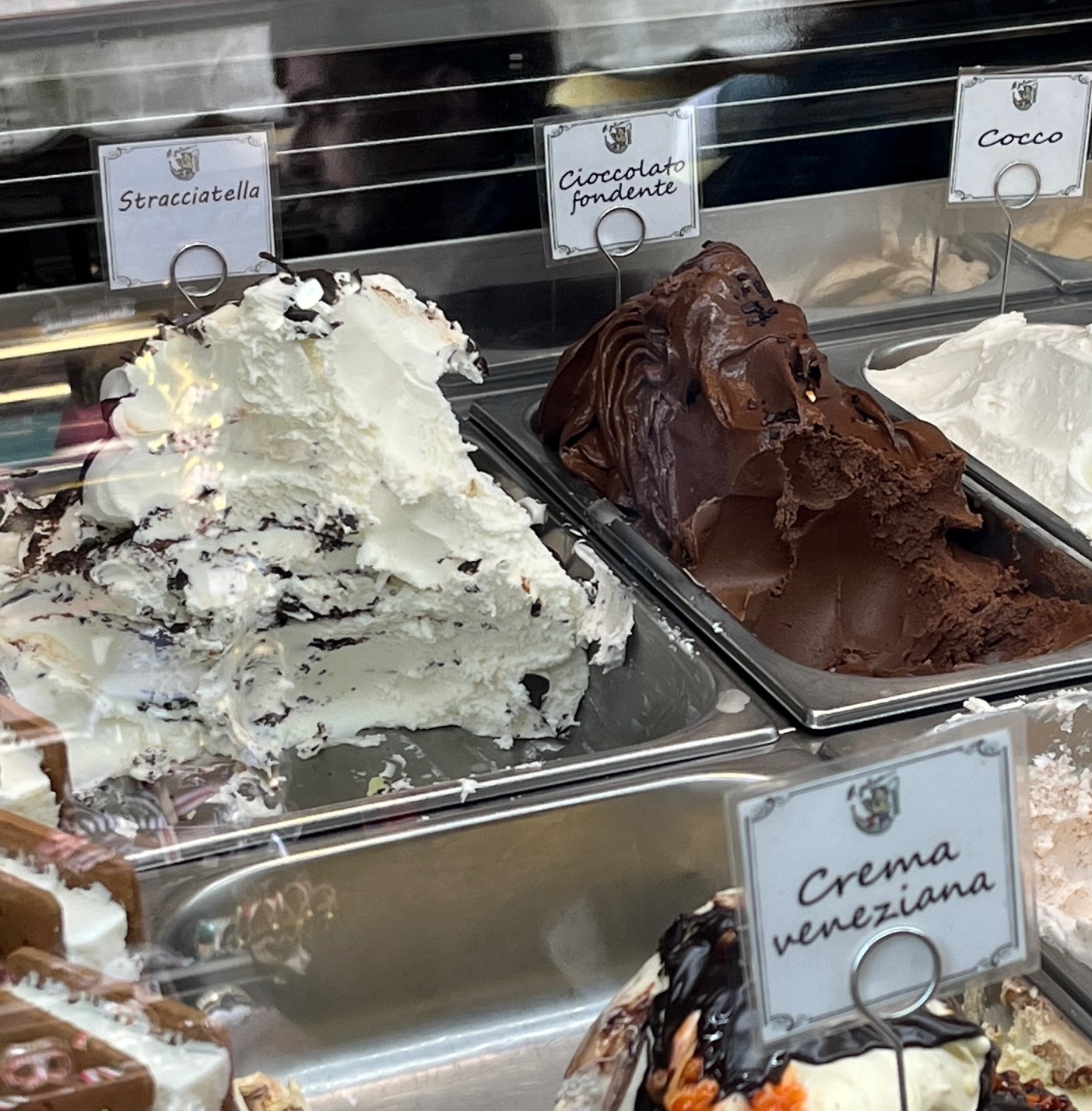
The food! Wonderful pastas and salads, delicious pizza, and I must confess that I sampled gelato everywhere. My favorite is stracciatella, vanilla ice cream drizzled with strands of chocolate. Good thing I was doing all that walking.

I just returned from my trip a few days ago. It was late evening, so I unearthed my toothbrush from my bag, took a hot shower, and went to bed. After my two-week absence, my three cats were ecstatic to see me. Unpacking could wait until the next day, after the necessary grocery run and laundry. The jet lag is kicking my butt, of course.

I do have my plot, however. Yes, there will be a novel set in Italy. The idea is taking shape in my mind.

In the meantime, I have some fiction suggestions. Pompeii, by Robert Harris, historical fiction that takes place before and during the eruption. An official from Rome arrives in Pompeii to check out problems with the local aqueduct and suspects that Vesuvius is the cause. North from Rome, by Helen MacInnes. Set in the 1950s, a playwright travels to Rome when his fiancée, a secretary at the U.S. Embassy, ends their engagement and accepts a proposal from an Italian businessman. Soon he and the other characters are caught up in deadly Cold War intrigue.

For Florence and the Tuscan countryside, I recommend Turn to Stone, by James Ziskin. It’s part of his series set in the early 1960s featuring reporter Ellie Stone, in Florence because her late father is being honored at a symposium. The event organizer winds up dead in the Arno River. Was it an accident, suicide, or murder? Ellie’s search for answers leads back to the traumatic years before and during World War II. As for Venice, Donna Leon’s Commissario Brunetti novels have been recommended but I haven’t read one, yet. I will soon remedy that.

Ciao! Here’s to pasta and gelato!

Guest Blogger ~Michelle (M.M.) Chouinard

It all started in my car, outside a veterinary office during the pandemic.

You remember how it was back then, how you had to wait outside while your beloved pet disappeared into the bowels of the building, not sure which of the two of you was more freaked out about the separation. I knew it was going to be a long visit (it ended up being over four hours, but I digress) so I had a bunch of true-crime podcasts lined up and ready to go. I started with one about The Doodler, a San Francisco serial killer who’s never been caught. As I sank into the story, the references to places in San Francisco rankled my exposed emotional nerve endings—at that point it had been close to a year since I’d been able to go pretty much anywhere, and the mental images set off a strange form of homesickness. “I’m so tired of this,” I blurted out aloud. “When this pandemic is over, I’m going to go to every single place they mention in this podcast. I’m going to do my own little tour, like a serial-killer tour of San Francisco—”

 My brain stutter-stepped over the phrase. Not so much as a concept for an actual walking tour of San Francisco—although that would definitely be awesome and I’d go on that tour in a hot second—but as a concept for a book. How cool would it be to write about someone who gave true-crime tours? Someone who knew of all the most notorious crimes that had taken place in the City, and who used their extensive knowledge of true-crime cases to help solve murders that came their way?

As I waited for my sweet kitty to return to me, my mind raced on down those mental tracks. What sort of person would find themselves making a living giving serial-killer tours? What sort of ‘wound’—life trauma they were still working through—would draw them to such a profession and keep them stuck in that world? The answer came to me in a rush: someone related to a serial killer.

I’d seen more than one interview with parents, siblings, and children of serial killers, and had always wondered what it would be like to live with that legacy. How did people treat you when you were related to a serial killer? Did they assume you must have known what the killer was doing? Did they assume there must be something in you that could do the same thing since you share some portion their genes? And what would that do to your own psyche, to wonder about those shared genes? Was it easy to dismiss any possible similarities you shared with the killer, or did little doubts always linger at the back of your brain about what might be buried deep inside you?

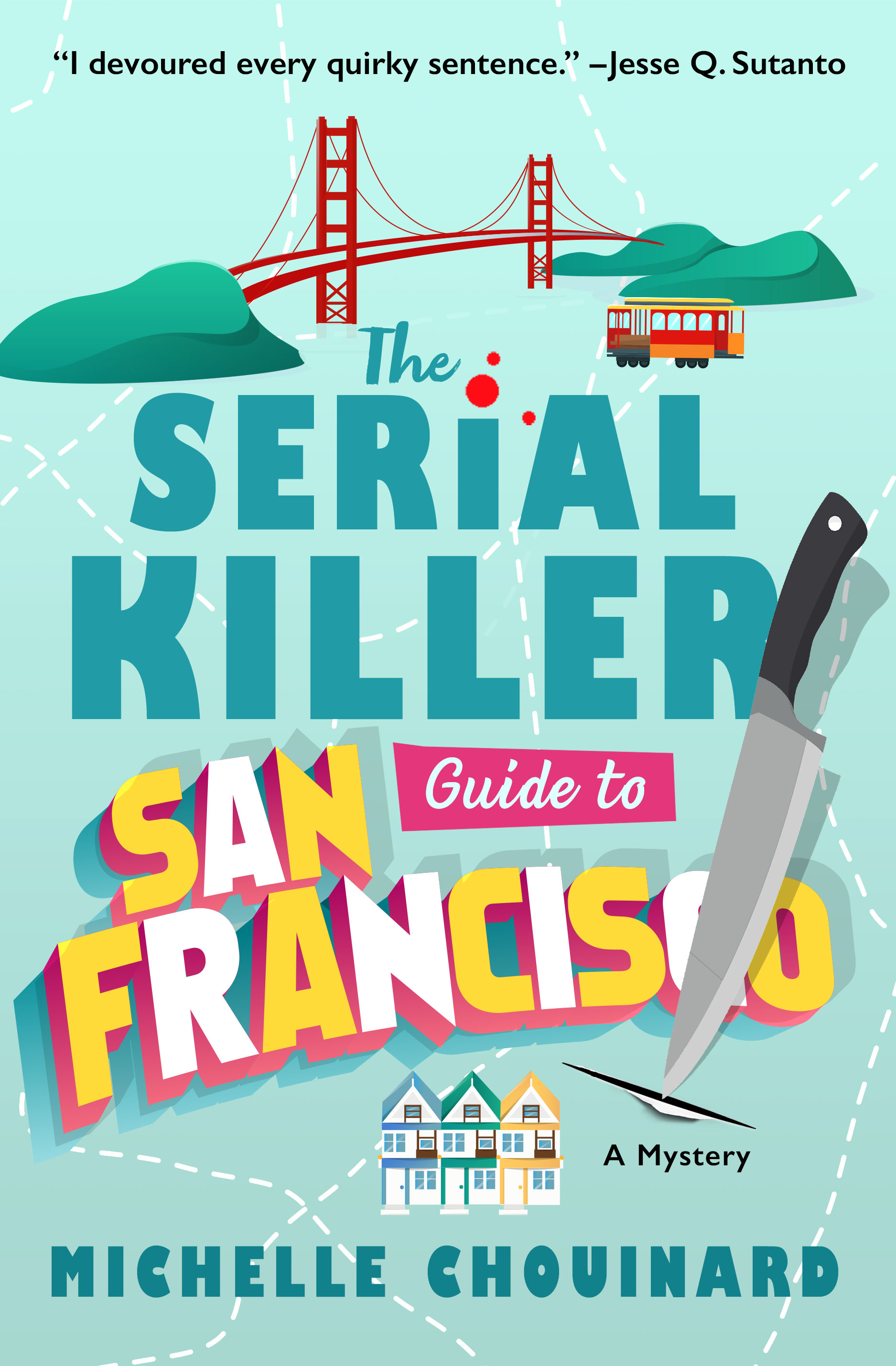
And so Capri Sanzio, granddaughter of the fictional serial killer Overkill Bill, was born. Or rather, she was the granddaughter of the man who’d been convicted of the Overkill Bill murders, but who’d always protested his innocence. Separating her by a generation would allow me to explore how different people in the family had been impacted by Overkill Bill, and how they dealt with that relationship differently. In Capri’s case, since she never really knew her grandfather, she’d spend her life wondering whether he’d been telling the truth or really was a serial killer, and she’d be desperate to get those answers. Except that Capri’s father, the son of Overkill Bill, would forbid anyone from ever mentioning the name Overkill Bill in the house, because of the judgment and bullying he’d had to endure his whole life because of what his father had purportedly done. He just wanted peace, to be able to move on with his own life, and despite Capri’s obsession with knowing the truth, she loved her father dearly and didn’t want to hurt him. So, they’d be caught up in an uncomfortable detente where neither of them really got what they wanted and the generational trauma simmered under both of their surfaces.

Until something came along to boil that trauma right over the top—a series of new murders that copycatted Overkill Bill’s distinctive methods. To paraphrase Michael Connelly, the most interesting mysteries are the ones where the murders involved tap into whatever trauma the protagonist is trying to avoid dealing with; so of course Capri would become a suspect in the investigation of those new murders—I’d make sure of that by making one of the victims her ex mother-in-law—and she’d have to solve both the contemporary murders and the vintage Overkill Bill slaying in order to keep herself out of jail. But, by raking up the past, she’d have to risk fatally damaging her relationship with her father.

And with that, I was off to the races, and I’ve never looked back. Writing Capri has been one of the deepest, most interesting journeys I’ve taken with any of my characters, and I quickly fell in love with her. She’s flawed, she has self-doubts, and nobody would call her choices safe—but she’s passionate about the people she loves and about getting justice for victims who can’t get justice for themselves.

And, in the process, I get the perfect excuse to write up real stops on that awesome serial-killer tour of San Francisco that I promised myself in the vet parking lot that day. 

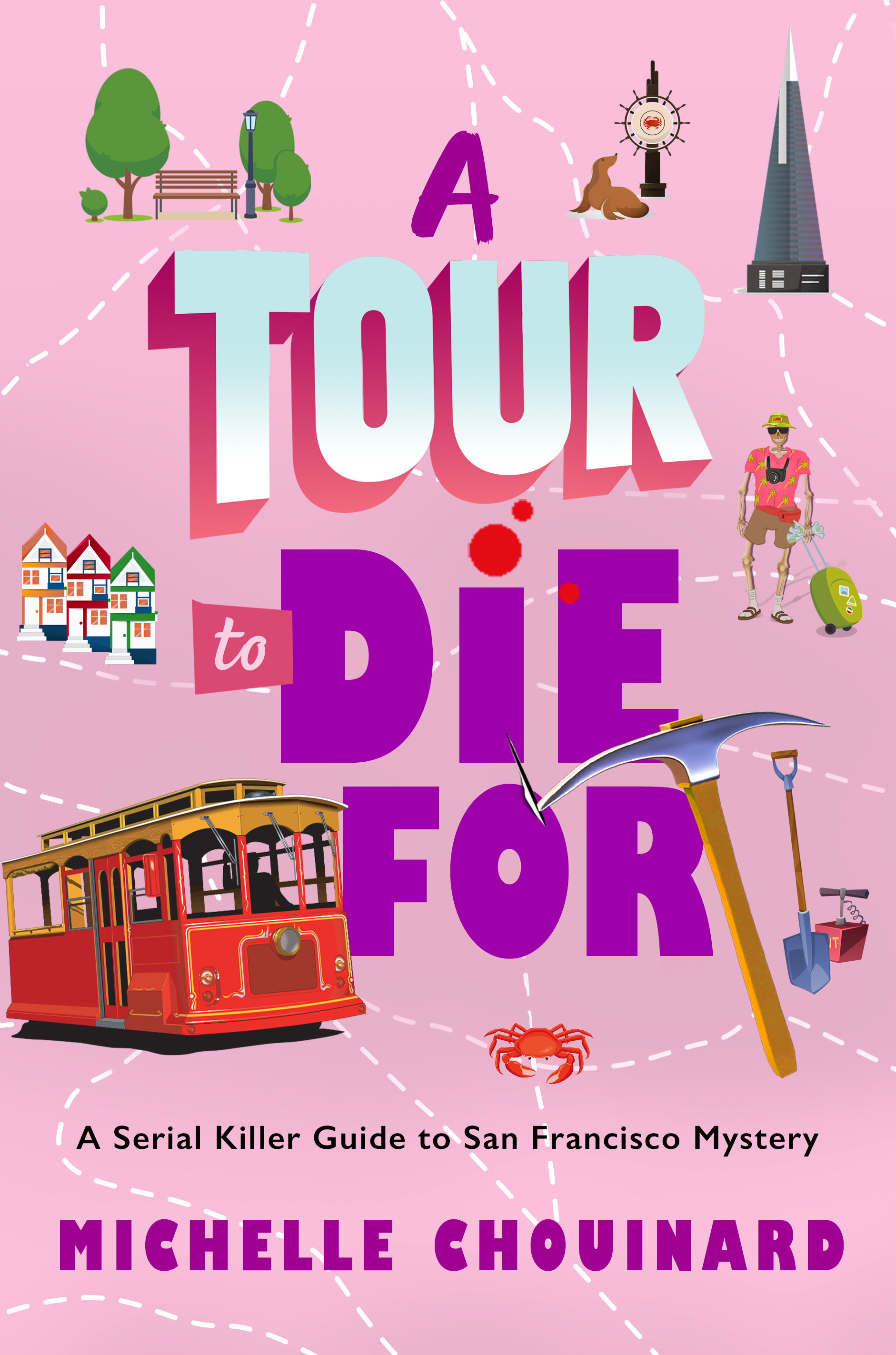
A Tour to Die For: 

In Michelle Chouinard’s A Tour to Die For, Capri Sanzio is back, giving a true crime tour her guests won’t soon forget. After all, a tour guide who specializes in serial killers knows better than most that San Francisco is a city with killer charm.

Capri Sanzio knows that when you give serial killer walking tours for a living, unexpected situations are more common than San Francisco’s famous fog. So, when one of her guests claims to see a woman being attacked during a tour, Capri remains unphased. The police search the apartment in question and find no evidence of anything amiss, so they chalk it up to a false report from a true crime fanatic looking to be a part of a case. And Capri thinks they might be right, since lately her tours have been attracting even more obsessives than usual—as it turns out, finding the actual serial killer who committed the “Overkill Bill” murders didn’t stop the constant questions about her grandfather’s supposed crimes, it only intensified them.

But Capri would never forgive herself if someone is in trouble and she walks away. Plus, something about the whole situation has every one of Capri’s investigative journalist instincts going haywire—why would someone lie about seeing an attack? So Capri starts to dig, and when her questions lead to a body, she finds herself at the center of another murder investigation.

Buy link: https://read.macmillan.com/lp/a-tour-to-die-for-9781250910011/

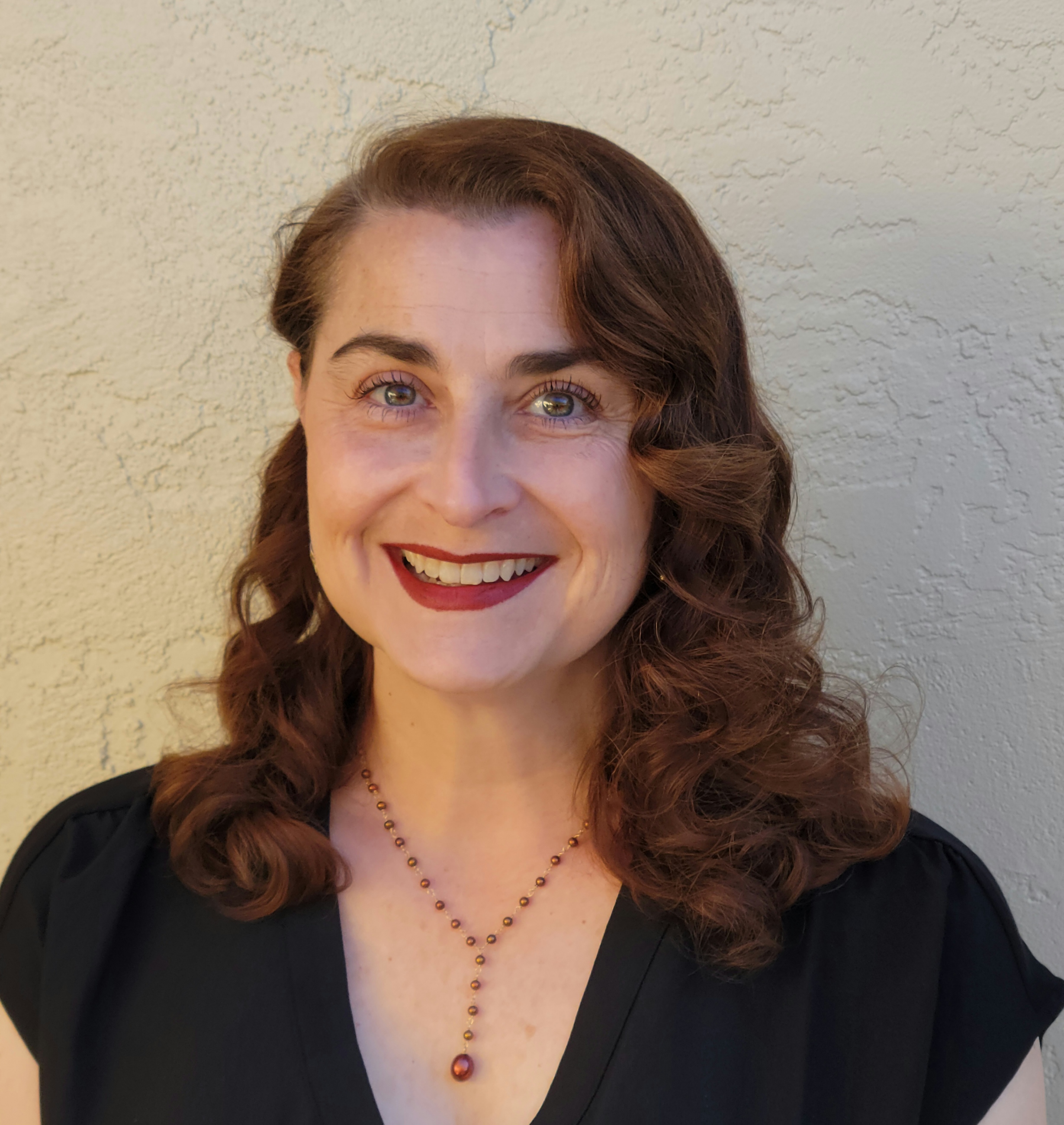
Michelle (M.M.) Chouinard is the Mary Higgins Clark Award nominated, USA Today, Publishers Weekly, and San Francisco Chronicle bestselling author of The Serial-Killer Guide to San Francisco series, the Detective Jo Fournier thriller series, and the standalone psychological thriller The Vacation. She has a Ph.D in developmental psychology from Stanford University and was one of the founding faculty members of U.C. Merced. She enjoys caffeine in all forms, amateur genealogy, crafting, baking, and Halloween. She’s owned by three cats and a dog, and is held together by caffeine and dry shampoo. 

Website: http://www.mmchouinard.com

Facebook: https://www.facebook.com/mmchouinardauthor/

Twitter: https://twitter.com/m_m_chouinard

Instagram: https://www.instagram.com/mmchouinard/

TikTok: https://www.tiktok.com/@m.m.chouinard?lang=en