
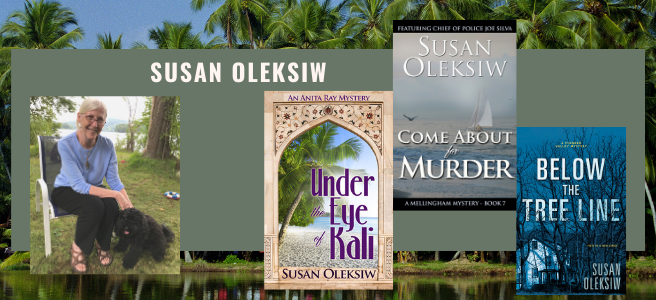
Every writer learns early or late that readers have views. We’re used to the views of paid or unpaid reviewers, and learn a way to respond to them—ignore the reviews, take them personally, or some response between the two. The views of ordinary readers, those not expecting to see their opinions in print, have come to be more important to me.
One of the first reader responses came in the form of a postcard. A reader in the 1990s in the Pacific Northwest wrote to tell me, in terse language, that she’d just finished reading Double Take and she wouldn’t kill for the motive I ascribed to the killer. My first reaction was something sarcastic, but then I thought she was telling me something—this reader wanted a motive she could relate to, which in turn meant she wanted a killer more complicated, as well as more relatable. This is fair, and a pretty good lesson for any writer, so I’ve kept it in mind.
I found an unusual report on OSHA about a home-heating device that filled a home with a kind of exhaust, depriving it of oxygen. A woman arrived at the summer cottage as expected and after a while felt ill. She tried to light a match to start a fire, but the match wouldn’t light; she gave up, and went out onto the porch, where the reception was better, to call her husband on her cell. An editor found the situation unbelievable, but I cited the OSHA report. That wasn’t enough, she said, because the reader wouldn’t be likely to know this technical point, so the story didn’t work overall. The lesson there is to fit the technical information into the story before it’s necessary, or at the point where it can counter the reader’s skepticism. I followed that lesson in another story that depended on the victim having technical knowledge not available to the villain to enable her to survive.
Conferences are a great opportunity to hear from readers, as we all know, and in my experience they tell me exactly what I’m overlooking. I treated Chief Joe Silva in the Mellingham series as an iconic figure—he literally appeared in the town square in an early chapter, and I liked his independence and unattached presence. Not only did he not have a lady friend, a partner, even an occasional visitor, he never mentioned his family. And my readers felt the absence. They wanted to know about Joe’s family. While I was populating the small town of Mellingham with all the quirky souls I loved, my fans were reading between the lines in search of hints about Joe’s parents and siblings, perhaps an ex-wife or two hiding somewhere. It took me a while, but in the end Joe’s family got two books, one for his birth family and one for his own, constructed family.
I’m not always sure what the best response is to some reactions. In Below the Tree Line, the first in a series about farmer Felicity O’Brien, the action revolves in part around timbering. As a former farm owner working with state and private foresters, I knew something about managing a forest for income (it’s not lucrative). But what we call timberingin New England is called logging in the West, and this difference surprised the reviewer. I read the reviewer’s own mystery, also about a woman who owned a farm, and even allowing for the license allowed a writer of a mystery novel, I was appalled at some of her behavior. I couldn’t see it happening in New England, at least not without consequences. Certain aspects of life are more geographically defined than I realized—and this goes well beyond local accents.
In the Felicity O’Brien series I was prepared for the concern some readers expressed about cats in mysteries, and made a point of feeding my cat, Miss Anthropy, on time and giving her attention, even though she was not one for cuddling. The rescue dog, however, brought out a lot of unexpected advice, most of it unnecessary but interesting. It was a reminder of the boundaries of our chosen genre, and the core decency of our readers. Violate the standards at your peril.
The last lesson comes more from watching readers react to changes in other series, reactions I’ve heeded as warnings. In the Mellingham series, Joe Silva can grow and change in relation to the world around him. Because he is who he is, a middle-aged police chief in his prime, without the handicap of a dark past, he’s expected to grow into relationships like any other normal person. And he does. In the Anita Ray series, Anita’s environment is the hotel with her beloved Auntie Meena, the desk clerk Ravi, and other staff members from the surrounding village. This is a light-hearted, static world, and somewhere along the line I understood she could not change without disrupting that world. New hotels might go up, tourists from newly independent countries might arrive, war might break out, but Anita and her compatriots would remain the same. Joe’s world is dynamic, as is Felicity’s, but Anita’s is not.
The interaction between reader and writer in crime fiction is one of the best features of this genre—the community is so fully engaged that we as writers can only benefit. It may not always feel that way (So, exactly why did Felicity do that?), but in the end the readers are usually on to something, and I’m ready to listen.


Thanks, Paty. I just hate it when a reviewer is right, but I do get over it–and may be learn something.
LikeLiked by 1 person
Susan, your open mindness is a lesson to every writer. I try to pay attention, as well, to whatever a fan tells me Most of them are intelligent people and have something to offer. Also, they care. One reader told me she didn’t like the fact that my protagonist and husband say terms of endearment to one another nearly all the time. I went back, reread a certain passage, and by golly, on the face of it, she was right. I explained to her that often the ‘dear’ and ‘darling’ were said in slight annoyance or as a challenge during certain conversations, but I, as the writer, hadn’t made that clear. My bad. Thanks again for an inciteful post.
LikeLiked by 1 person
I consider myself fortunate if a reader is so attentive as to notice exactly what language I’m using, like your “dear,” etc., and thinks about it. Not every comment is a gem, but some are worth that ouch of embarrassment.
LikeLike
Susan, I agree. Some of the reviews that burned me the most, after I cooled off, I realized they had a point. So I now look at reviews (when I read them) with a more critical eye as to whether the reader had a valid point. Good post!
LikeLiked by 1 person