Guest Blogger ~ Nancy Nau Sullivan

Blanche, Nan, and Traveling Mayhem: The Blanche Murninghan Mystery Series

By Nancy Nau Sullivan

Blanche “Bang” Murninghan is a Florida island girl with a wandering heart. One challenge after another invades her idyllic way of life on the beach, and she’s off to far lands. 

In the second misadventure of the mystery series, Trouble Down Mexico Way, Blanche heads to Mexico City and gets caught up in a murder-for-art scheme. It starts with a visit to the Palacio Nacional and discovery of a “fake” mummy in the exhibit. Though she’s no expert in mummies, the skin looks fried. And it’s wearing a pink plastic barrette in its hair. The burning question, right off the bat, is: Why would a mummy be wearing such a piece of hair-ware? 

Blanche is supposed to be writing travel articles for her hometown newspaper, but the mission is immediately derailed. Her curiosity is like a door that begs to be opened. Once she begins this search for the origin of the “fake” mummy, Mexico City suddenly becomes a maze of twists and turns. The police have questions for her. The mummy has spoken with clues that lead Blanche and the authorities on a chase to unravel an obvious murder and the motive behind it.  

I thought up this mystery during the year I lived in Mexico—totally out of the fabric of imagination. Shortly after I arrived, I visited the Palacio Nacional in Mexico City where were displayed hundreds of ancient Mayan artifacts newly discovered in Mexico and Central America. The animated clay figures played ball (with skulls), the women squatted and cooked, the men hunted, the children leaped around with their smiling dog. A thousand-year-old dog. The exhibit also featured violent, colorful, and respectful rituals of death.

The celebration of Day of the Dead soon followed. Nothing is more colorful than the celebration of death in Mexico. From October 31 to November 6, depending on where you happen to be, the town plazas, homes, and shops are swept up in swaths of color, impromptu dancing and music in native dress, whole families out until midnight celebrating their deceased relatives. Their photos are posted on altars (ofrendas) carpeted with bright yellow and orange marigolds and celosias, and piled next are bread and wine and beer and, of course, tequila and mescal, all arranged on embroidered linen, ropes of flowers and handmade baskets, favorites that marked the family tradition together. Family members sit at the altars in the plazas and talk about their ancestors. It is solemn and raucous and lovely all at once, enough to make a newcomer fall completely in love with the culture.

Trouble Down Mexico Way spins off wildly from the adventure of my first days in Mexico City. But, as in all my mysteries, I celebrate the places I’ve lived, enjoyed, worked as a teacher. I like to add a folk tale in each book, history,  and the details of food and smells and color. I’ve always kept journals to refer to in the writing, but I don’t trust my spotty, unreadable notes—once written while sitting on a horse. I research the settings for months before writing to round out the historical context in each story. It can’t all be about murder. And in Blanche’s case in Mexico, it’s also about love when she meets Emilio Del Sierra, a handsome young doctor with a lot of patience and a talent for the guitar.

Before Mexico, the first book in the series was inspired by Anna Maria Island, Florida, the place I spent years with family. Saving Tuna Street—a finalist at Foreword Reviews for best INDIE mystery—meets environmental disaster and chicanery head on. After Trouble Down Mexico Way, Blanche goes to Vietnam, Ireland, and Argentina in a succession of books where she survives hair-raising capers. She always returns to her cabin on the beach where she manages to keep her feet on the ground. Well, sand. When curiosity comes knocking, she’s ready—with a little help from her friends—for more mayhem and misadventure.

Trouble Down Mexico Way

Trouble Down Mexico Way is the second stand-alone mystery in the Blanche Murninghan Mysteries.

Blanche “Bang” Murninghan is a part-time journalist with a penchant for walking the beach — and walking into trouble. In Saving Tuna Street, first in the cozy mystery series, she fends off developers and drug dealers in an attempt to save her beloved Santa Maria Island. But Blanche has feet of sand and a love of travel. The adventure continues in Trouble Down Mexico Way with a “fake” mummy and murder; in Vietnam Mission Improbable: Vietnam, Blanche helps a friend find her mother in that beautiful country. For the fourth misadventure, A Deathly Irish Secret, Blanche inherits a castle and more than she bargained for—a murder charge. She pulls out of that fracas, too. Lastly, she travels to Argentina with handsome hunk Emilio Del Sierra to save his relatives from Nazis on the pampa. Wherever she goes, she always returns to her cabin, the white sand and sunsets, and to her wonderful quirky family on the little Florida Gulf island. 

Link to book on amazon

https://www.amazon.com/Trouble-Mexico-Blanche-Murninghan-Mystery/dp/1611533759

Link to book on Barnes & Noble

https://www.barnesandnoble.com/w/trouble-down-mexico-way-nancy-nau-sullivan-ms/1137370750

Link to Kobo

https://www.kobo.com/us/en/ebook/trouble-down-mexico-way

Kirkus Reviews says: “Blanche alone puts the bang in the book, and her debut should make readers sit up and notice. A welcome newcomer to the South Florida genre.”
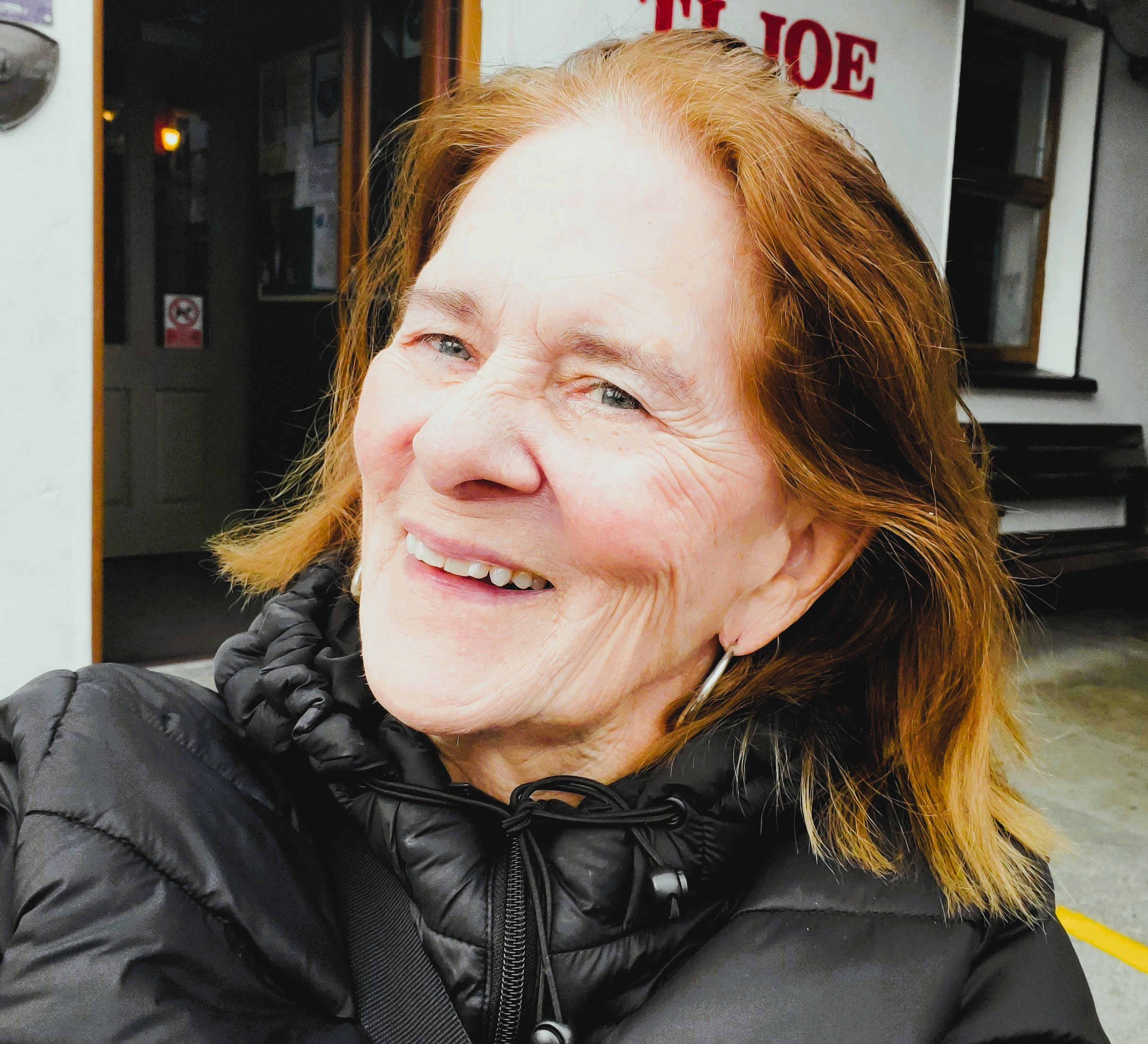
A former newspaper journalist—and, presently, traveler–Nancy Nau Sullivan grew up in the Midwest but often stayed on Anna Maria Island, Florida. The setting inspired Saving Tuna Street, first in the Blanche Murninghan mystery series; the fifth installment, Hot Tango in Argentina, launched in April. Nancy’s memoir, The Last Cadillac, received two Eric Hoffer awards, and her novel, The Boys of Alpha Block, is based on her teaching at a boys’ prison. She’s taught in Argentina and Mexico and now writes and teaches part-time near the beautiful beaches of the Gulf of Mexico. Find Nancy at www.nancynausullivan.com.

Social media:

https://www.facebook.com/nancy.sullivan.9638/

https://www.bookbub.com/profile/nancy-nau-sullivan

https://www.instagram.com/nancynausullivan/

https://www.linkedin.com/in/nancy-nau-sullivan-712b2015a/

Day of the Dead photo from: www.freepik.com
MULTITASKING ONCE AGAIN

Hello, Ladies ~

While I am sad about the loss of three family members over the last three months, I am also relieved that the past eighteen months are behind me. I’m finally back to weaving words together as I work on three novels at once.

I know it sounds daunting—and maybe even a little crazy—but being immersed in a story is my happy place.

The wonder I have for my creativity is endless. I mean, how is it possible to have a character in “Lost in Loreto” looking for a missing wife? A wife, he thought, had divorced him. And at the same time, I’m back in Stoneybrook following Wyatt and his deputies as the hunt for not one, but two killers in “Fatal Falls.” Then, just to keep things interesting, I’m sailing on a 1757 Schooner as it tries to outrun a Spanish Galleon with three youngsters who have been transported from the present back in time in my middle school fantasy novel, “Midnight Sail.”

I’ll admit that while I was dealing with what seemed like endless family issues, I felt that my creativity had abandoned me. It seemed every time I sat down to work on my novel at the time, “Chaos in Cabo,” that I couldn’t string together two sentences that read well. Still, I plodded along, working and reworking sentences, rearranging paragraphs, and adding more chapters.

I’m not going to lie, when my Beta readers reported back that they loved the book, I was thrilled. One even said she thought it was my best book yet. What?!? Now, armed with renewed confidence that my creativity works just fine even if I’m a little distracted, I’m excited again to have three projects to work on at once.

In “Lost in Loreto,” I’m back in Mexico. As luck would have it, I get to visit this city in March while on a Mexican cruise of the Sea of Cortés. I’m excited to stroll the same streets my characters walk. But mostly I like the idea of verifying some of the things I’ve learned about the city via Google searches. Even though I sometimes take creative license with locales, I try to stay as true to the places in my books as possible. Something else I’m excited about with this book is the character dynamics, which already offer huge potential for fun character arcs. Oh, and did I mention there might be a rattlesnake that doesn’t actually have a rattle at the end of its tail?

Of course, my favorite part of being back in Stoneybrook is that I get to write a story thread that honors my son, Derrick, the model for my autistic fictional deputy. I love all of the Stoneybrook characters, most of whom reflect the personalities of people in my life. But it’s also fun creating new characters, and in the case of “Fatal Falls,” the villain is taking an even darker turn than I had planned. One of the upsides of an evil villain is plotting how he will get his just desserts.  Another upside to writing about the town of Stoneybrook is that it’s similar to creating a fantasy or sci-fi world; I can bring my imagination to life in various ways.

Okay, so I’m guessing you’re all scratching your heads, asking how she can write a kids’ book when she’s so dark and twisty. I have had the idea for “Midnight Sail” since I still had kids at home. Then I was going to write the book for my grandkids, now fifteen and thirteen. But a good idea never truly leaves you, and one day I met a ten-year-old boy who brought my main character, Cyrus, to life. After our chance meeting, I couldn’t let go of his winning personality and curious mind. When I started working on the book, it seemed meant to be, because the other characters presented themselves with little effort. Once again, I found myself “sailing” Google, researching pirates and old vessels that once sailed the Oregon coast. As a native Oregonian, I was shocked at the many pirate stories I discovered. Turns out my buried treasure story idea from forty-plus years ago wasn’t such a stretch after all.

Obviously, I’m thrilled to be back in my writing groove. Whether it’s a brief note in the Halloween cards I send to my grandkids, great-nieces and great-nephews, or writing a blog I hope others will enjoy, all writing is good writing.

So, I must bid you adieu and get back to those three stories!!!

Happy Halloween, Ladies!

The Irrational Terror of it All or Losing the File

I lost a file.

I’m of course not talking about any file. I’m talking about the file, the one where you’ve gotten the last draft almost exactly where you want it. You know, sage, wise, fast-paced, thrilling, the bad guys are really bad, the good guys are in character. In short, if your readers are paying attention, they know who did it and what’s going on. Pride fills you; you make a note that bliss has been reached.

Then, the file is gone. Without a trace. A weird sort of calm sets in. You can handle this. Did I misfile it, like accidentally drop it into another folder? You search the file name through every blasted folder in your writing directory. Then the whole computer. Nope, it’s gone.

You check your backup. Nope. Gone. I mean, really, how can that even happen? What is the backup for if not to backup? What is the trash bin for, if not to collect deleted files and accidentally deleted ones? Reason takes flight. You begin to pant like Sigourney Weaver in Ghostbusters. You know how dangerous this is; people faint. Remember the kids’ game? So you take a breath.

Now, I’m no amateur at finding files. In my day, I ran a proposal center that produced pages and pages of explicit, required text. Four proposal managers and a host of support people kept this churning. Files went missing. I had an assistant who could locate most files, even the ones you didn’t want unearthed. But when we arrived one day at 5 am, a vast swath of a proposal due to ship in two days had gone walkabout, in the Aboriginal sense. Gone, nowhere, unfindable, outta here. People were waiting to edit, print, and collate it. I’m talking millions and millions of dollars on the line.

We cocked our heads in opposite directions at near the exact moment. The last person in the file was our most precise and careful proposal manager, who was assisting the proposal manager in charge because she was on the verge of hysteria. You know the look after a while. I opened our rather massive file base, my assistant over my shoulder, and tried to think like a man. We found the files squirreled away in a directory in his sector, not the proposal sector, marked XXXX.

The moment he waltzed in, I walked into his office and uttered something akin to #$^%& were you thinking? His answer? “They’re in the proposal files.” I challenged him to find them. He couldn’t. Turns out, dog-tired, he had cleaned up a bit … you know how that goes, slide the files into the wrong sector, log out, go home at 4 am, get a shave and grab some food, come back at 10. What a piker.

So, you’d think I could handle losing a file. But no. I lost my tiny little mind. Thinking, thinking. If I accidentally deleted it and it wasn’t in the trash bin, might it not magically appear if I went back in time? I went to OneDrive and ordered my files restored to one day before the file took a hike. Don’t do this. Ever. Well, not ever, it can be beneficial.

When I checked the restore, the file wasn’t there, nor were any of the other changes I’d made in the last three days, all wiped out in my madness. Luckily, it was mostly the Bodie Blue Books newsletter (a copy of which I’d sent to my BBB partner) and sales reporting (which was recoverable).

Still, I thought, who cares? I’d used my ReMarkable for the final run-through and had my handwritten edits; all I had to do was open my unedited file and make those changes again.

Sigh. The notes were there yesterday, not today. Why, because the OneDrive restore resets the ReMarkable, wiping out all my edits. After considering several implements with which to slit my wrists, I had this major cool idea. What if I restored the OneDrive to yesterday?

We’ll see how that turns out. It’s not like I lost the whole book. Right?

For now, I await the recovery of my OneDrive files, hoping the notes on my ReMarkable magically reappear. If not, well, you know how that goes.

Let this be a lesson to you. Do not be me!

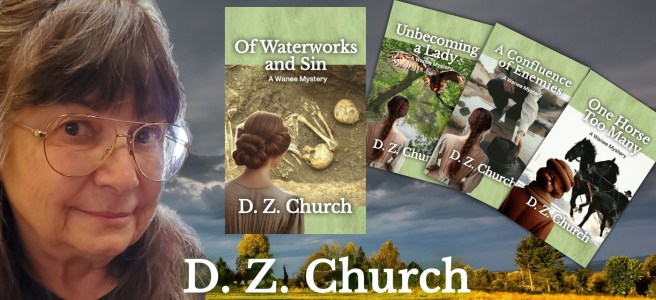
Discover more about D.Z. Church and the Wanee Mysteries, The Cooper Vietnam Era Quartet and my thrillers: Saving Calypso, Booth Island and Perfidia at https://dzchurch.com

I found joy – as a jellyfish (and other aquatic animals)

By donalee Moulton

My newest book is Melt. It’s the second in my Lotus Detective Agency series, and it focuses, as does the first book, Bind, on three women who meet in yoga studio and discover there is more to life than a downward dog. There are crimes to be solved.

Long before the series was even an inkling of an idea, I was practising yoga – and writing about life as a crow, a bird of paradise, and a pigeon. The article below, originally published in The Globe and Mail, unveils how I ended up birdlike and otherwise on a yoga mat, twisted, inverted, and smiling. 

There were several occasions in the last three decades when I took a yoga class, four by my latest count. Nothing stuck for more than 60 minutes. Now I’m on the mat (as we, ahem, like to say) four or five times a week.

Not sure what happened between decades three and four, but here I am today in my 60s actively seeking out a yoga flow class, searching YouTube for restorative practice and talking retreats with new-found friends. I have blocks, straps, pillows, bolsters, blankets and mats in many colours, designs and grips. I even have a plastic frog in full lotus. Truth is, I have a yoga room.

I’m not an exercise person. I have never had the desire to scale mountains, ski down or hike mountainous terrain. I’m equally averse to water aerobics: surfing, paddling, polo. Give it all the cool names you want – finswimming, aquajogging, wakeskating – and I’m staying on terra firma.

Fact is, I’d rather have an enema than exercise.

Actually, that was the old me. The new me would rather do a downward dog.

I’m not sure which came first – not being good at sports or not being interested in sports. They are indelibly intertwined, like chicken and egg or the yoga pose eagle arms and legs (which I can do).

Regardless, here I am, sports unenthusiast. I want to be healthy. What I’ve never wanted is to work at being healthy because it’s boring and hard (so I had come to believe). Yet, periodically I would propel myself to some gym, some piece of equipment, or even some yoga mat to get my body in shape.

In the case of yoga, that lasted for a full 240 minutes over 30 years. (In the case of lifting weights, running on the treadmill, aquacise, the number is much, much lower.)

The turning point in my yoga journey, it turned out, was around the corner from where I live. An instructor started renting studio space in a new building, and my aunt and I decided to give it a try. We liked it. We really liked it.

I’m not sure why. It may be the variety of poses we learned, that each class was new and different, that we got to know participants. But I had all that before. The reason, I discovered, is not important. The reality is.

At some point, actually several points, my body responded in ways it never had before. My feet touched the mat, both of them, when I did a downward dog; my hands (both of them) held each other doing a bound side angle.

I also noticed a marked improvement in my knee. My doctor had diagnosed a tear in my meniscus and wished me well. When I couldn’t complete a yoga pose because of it, an instructor recommended putting something like a sock between my knee and my bent leg. It worked. As I spent more time on the mat, I used the sock less and less. Today, I get no complaints from my knee, and use socks only to cover my feet.

It wasn’t only my knee that got better. My strength, my balance and my flexibility improved.

Perspective changes on the mat. There is a common yoga pose called child’s pose. You put thighs on calves, buttocks on heels, and fold yourself into a ball. It’s supposed to be a resting position, one you come to after other poses have offended your body in ways you didn’t know existed. For most of us, child’s pose is, at first, the farthest thing from a rest primarily because there is a wide gap between our bottom and our heels. Most of us accommodate, as yoga teaches us. We shove bolsters, blankets and blocks under our rear to close the gap. Still a faint wisp of failure lingers.

I’m in an extended child’s pose during one class and realize I’m enjoying this fetal shape. I am relaxed, breathing deeply, and feeling something new: contentment. I tried to figure out what had shifted and realized, in part, the answer was physical. My rear end was not pointed heavenward; it was nestled on my feet. I was a ball without the need of a bolster.

There are those poses that continue to confound. My legs refuse to rearrange themselves into a lotus, although they are inching closer. Crow pose eludes me. Both feet refuse to come off the floor, but one will, so I’m making progress. And there are those poses I have yet to attempt. Their names will tell you why: formidable face pose, handstand scorpion, destroyer of the universe.

Overall, however, I find a sense of peace and contentment in many poses and in my practice. Indeed, I find more than this. Yoga has taught me that practice is about more than positioning the body. It is about body, mind and spirit. It is about connecting with yourself. It is about finding balance. It is about going to the edge, but not over the cliff. It is about acknowledging growth and recognizing limitations. It is about joy. The joy that comes from sitting on a mat with your heels stuffed into your bottom and your heart soaring.

Ultimately yoga has taught me patience and acceptance. The fundamental reality of any practice is this: yoga teachers cannot count. They put you in a pose, say warrior II, then they suggest you place your right shoulder against your inner thigh while extending your left arm toward the ceiling, bending your elbow, bringing your left arm behind you, and clasping your right hand. It’s like scrubbing the floor while looking at mold on the ceiling.

I can actually do this. And I can hear my yoga instructor saying, “Hold for three breaths,” just before launching into a tale about their morning drive to work. Three minutes later – not three breaths – we unbind and unbend. All yoga teachers are trained to do this.

When instructors tell you to hold for five breaths – a lifetime when your hips are squared, your shoulders flexed, and your legs interwoven – they are lying. Admittedly, they are well intended. Some even come with timers, beacons of false hope.

In the end, it doesn’t matter. I am on the mat, moving in sync with my breath, finding my body moving with me (or against me) and I’m okay with that. I have learned the challenging poses – lizard, dolphin, fish – are friends. We meet here on this rectangular piece of vinyl, and I take pieces of them with me when I roll up my mat, put away my straps and head out the door.

The joy of having been for a time an aquatic animal infuses and informs. It is so much more than legs splayed, ankles nestled, arms extended. And holding for five delicious breaths.

Ish.

Guest Blogger ~ M.E. Proctor

Pretty as a Picture and Far from Innocent

By M.E. Proctor

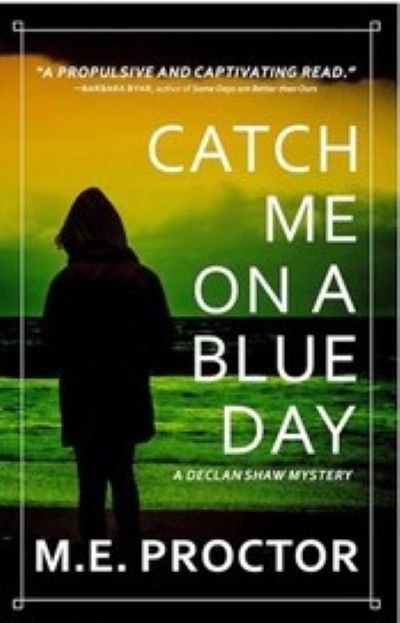
Catch Me on a Blue Day, Book 2 of the Declan Shaw mystery series, takes place in Old Mapleton, a postcard-perfect town on the Connecticut coast.

It comes with Queen Anne cottages, a yacht club, a bakery-chocolatier, an art gallery, several cafés, including one next to the marina that serves delicious crab cakes and lobster rolls. The police station is in the Tudor style, and its dark beams and stained glass windows give it the appearance of a tavern, or an inn—Ye Olde Copper’s Nest, Declan Shaw muses when he first sets eyes on it. The old Customs House, restored, is a private residence on a point next to the commercial fishing harbor. The camp of a lesser robber baron is now a B&B, and art afficionados can visit an artist colony on the outskirts of town, by appointment.

Families flock to the beaches from Memorial Day to Labor Day. Dogs are not allowed on the beach. Other things are not allowed. The list is long; it includes ‘horsing around’.

Doesn’t it look like the perfect setting for a cozy mystery?

Before you settle down in a comfortable armchair with grandma’s Delft teapot in easy reach (I just read that Delft is fashionable again), I must warn you: I don’t write cozies.

Bad people do nasty things no matter the landscape. There are homicidal maniacs in Neverland. And all the notices painstakingly posted by the city council won’t stop mischief. Violence is even uglier in an ideal setting because nobody expects it.

But you, readers of Ladies of Mystery, have consumed metric tons of crime fiction and you’re already making guesses about what comes next.

  1. Small towns have secrets, buried deep.
  2. The detective has a good shovel.
  3. A love interest delivers inside information.   

I’ll try to stay away from big spoilers, I don’t want to ruin the fun, but I’ll knock down a few hypotheses.

Old Mapleton, CT, has a dirty past. Not in a Stephen King kind of way—it isn’t built on a burial ground, and it doesn’t suffer from recurring murder sprees—but it went through a traumatic episode of collective hysteria. A horrible murder happened there thirty years ago. A little girl, Ella, was killed. The town tore itself apart in a frenzy of suspicion, denunciations, anonymous letters, and recanted confessions, with the media stoking the fire. To this day, the case is still open. Lives were destroyed, and long-time residents remember. None of this is secret. Ella and Old Mapleton made headlines far and wide.

The detective, Declan Shaw, doesn’t come to town to poke in the trash of the past. An old friend, Carlton Marsh, asked him to help with research for his book. Marsh was a war correspondent and he’s gathering his articles on the Salvadoran civil war of the 1980s. Declan is recovering from a severe leg injury and intends to take it easy. Learning, upon arrival, that Marsh committed suicide throws him off kilter. Nothing in his last conversation with the reporter indicated that he was in any kind of trouble. The Old Mapleton chief of police agrees … even if he’s not eager to have a PI sniffing around. No fisticuffs and roughing up, the two men get along. In the claustrophobic town, they’re both outsiders. The chief calls himself ‘the token punk’, he doesn’t belong to the local elite and has a lot more in common with the rough trade on the wrong side of the tracks.

The love interest. Ha! The title of this post applies to her as much as it applies to the town. Isabel is in her late twenties, smart, pretty, not too hindered by morality, and bored out of her skull. When Declan walks into the art gallery she manages, her first thought is that maybe her summer isn’t a complete waste of time. This would be a meet cute if the lust thermometer wasn’t stuck in the high nineties. I had a lot of fun writing Isabel’s point of view. Let’s say that she has very, very, little self-control … and no, she doesn’t know anything about the cold case, or Marsh’s suicide, which will not keep her out of trouble.

I like complex narratives. How does a little’s girl death in New England connect to political upheaval in Central America? Carlton Marsh knew but he’s no longer around to make Declan wise. The path to the truth will be sinuous and dark. Through the woods where Ella was found, many years ago.

—-

Catch Me on a Blue Day

A Declan Shaw Mystery

“For Ella and all the innocents slain by soulless men.”

It’s the dedication of the book on the Salvadoran civil war retired reporter Carlton Marsh was writing before he committed suicide.

A shocking death. Marsh had asked Declan Shaw to come to Old Mapleton, Connecticut to help him with research. He looked forward to Declan’s visit: “See you at cocktail time, a fine whiskey’s waiting.” They talked on the phone a few hours before the man put a bullet in his brains.

Now Declan stands in the office of the local police chief. The cop would prefer to see him fly back to Houston. He’s never dealt with a private detective, but everybody knows they are trouble. If only there weren’t so many unanswered questions around Marsh’s death … the haunting first three chapters of his book, and that dedication to Ella, a girl whose murder thirty years ago brought the town to its knees.

In Catch Me on a Blue Day, Declan is far from his regular Texas stomping grounds. He’s off balance in more ways than one, and the crimes he uncovers are of a magnitude he could not foresee.

Between the sins of an old New England town and the violence of 1980s El Salvador. And the links between the two.

Buy Links:

Catch Me on a Blue day is available in eBook and paperback

On Amazon at

https://www.amazon.com/Catch-Blue-Declan-Shaw-Mysteries-ebook/dp/B0FR3DWYGD/

From reviews:
“In Catch Me on a Blue Day, she combines the strengths of the best of the best mystery writers, writers like Raymond Chandler, Agatha Christie, and Janet Evanovich, to create a mystery novel that will have you saying, where has this terrific mystery writer been all my life?” —John Guzlowski, author of Suitcase Charlie, a Hank and Marvin mystery

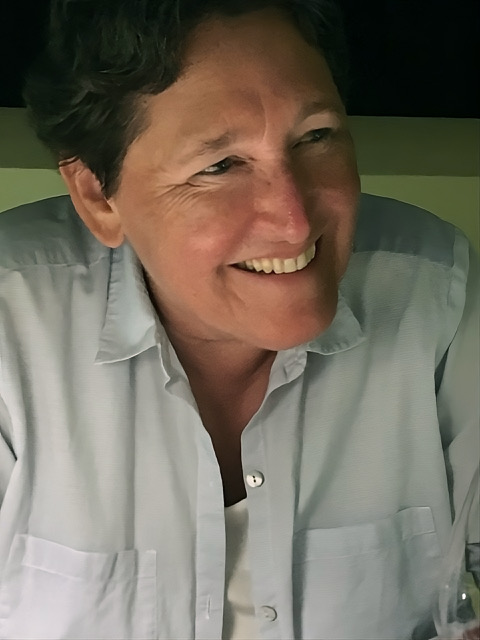
M.E. Proctor was born in Brussels and lives in Texas. She’s the author of the Declan Shaw detective mysteries. The first book, Love You Till Tuesday, came out from Shotgun Honey. Catch Me on a Blue Day is the next installment in the series. She’s the author of a short story collection, Family and Other Ailments, and the co-author of a retro-noir novella, Bop City Swing. Her fiction has appeared in VautrinToughRock and a Hard PlaceBristol NoirMystery TribuneReckon Review, and Black Cat Weekly among others. She’s a Shamus and Derringer short story nominee.

Social Links

Author Website: www.shawmystery.com

On Substack: https://meproctor.substack.com

Facebook: https://www.facebook.com/martine.proctor

Twitter: https://twitter.com/MEProctor3

BlueSky: https://bsky.app/profile/meproctor.bsky.social

Instagram: https://www.instagram.com/proctormartine/