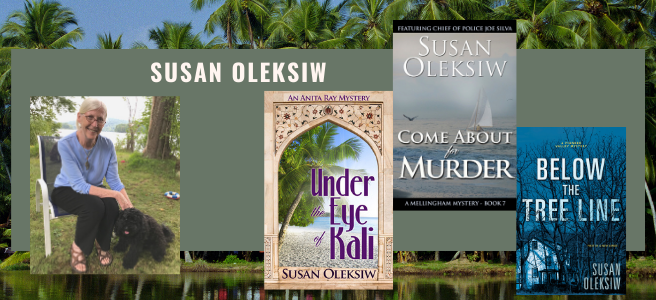
GREETINGS FROM CABO

¡Buenos días desde Cabo San Lucas!

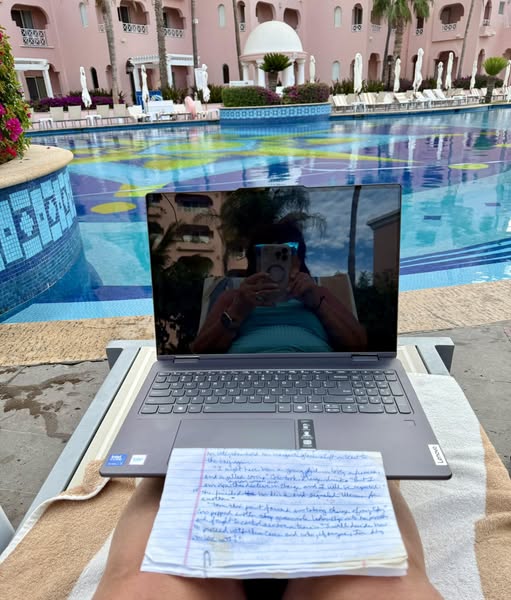
How blessed am I to be able to write this blog while poolside at the Pueblo Bonito Rose Resort? I meant to post this last night, but at eleven-ish, I noticed I hadn’t quite finished my train of thought and decided this morning would be a better time to edit before too many cocktails.

Randy and I have had a relaxing vacation so far. Though I’ll be sad to fly back to Oregon on Saturday, I’m thrilled that I’ve been able to write and hopefully finish “Chaos in Cabo” while in Cabo!

I’d hoped to have this book done before now, but that thing called life threw me more curve balls than a major league baseball game over the last six months, so I’ve worked on the manuscript here and there.

But once we were at our resort, drink in hand, sunshine turning my skin a lovely reddish pink; I felt the creative juices flowing. The first thing I did was reacquaint myself with the story and characters. And oh, how I’d missed them. I hadn’t realized I’d left Coco and Amado in a fight over whether they loved each other enough to sacrifice their separate lives to be together. And how could I set up my villainess to have a major secret revealed and then not write the scene?

Those weren’t the only threads that needed attention. When I walked along the beach basking in the waves from Medano Bay, it occurred to me that in my book, I call the bay the Sea of Cortés. And worse yet, I’d written that Amado and Coco used to surf off of “Lover’s Beach.” An impossibility since the beach sits within the bay.

Like I said, I am so blessed to be able to be here where the story occurs and realize my mistakes!

After a few days of editing and rewriting, I could continue with the novel. And I wasn’t the only one ready! These characters don’t care that I’m on vacation and should be sleeping late before relaxing by the pool. They’ve been waking me up at five-thirty, demanding I set my fingers to the keys of my laptop or pen to paper as I stand in the pool … and get busy.

As you may remember, I write my novels from the POV of the three main characters, rotating chapters with their POV. I love this style because it always allows me to flesh out my characters more and contemplate what happens to them next and how their story moves the whole story forward.

But that hasn’t been enough for these characters. Coco decided before it was her turn to regain control of her life and put the two men vying for her heart in their places. Amado believes he’s lost his quest to sail off into the sunset with Coco and live happily ever after, and he makes a huge mistake. Alida feels she’s made an error in judgment by falling in love with the office manager for her scam-calling crew and fears he may be her undoing.

I’ve mentioned before that sometimes my secondary characters decide they need a better story, too, and do things I hadn’t originally planned. That’s the case with Antonio, Alida’s soft-spoken office manager. Oh, the story he tells about his previous life … even I was enthralled. And when did Nacho decide to disappear with his wife and son?

I swear this novel seems to be writing itself. Is it because I’m here in my México, in the land of sun, sea, and margaritas? Is my creativeness heightened because I can see my characters living in this tropical paradise? Should I get a job as a waitress, learn to speak better Spanish, and stay until all the novels in my Mexico Mayhem series are written?

I doubt my husband would support me staying, so I hope my characters pack up and come home with me when I pack my bags to return to Oregon. I believe I will retain some of the beauty and wonder of Cabo once I’m home, but writing “Chaos in Cabo” while in Cabo has been one of the highlights of my writing career.

So, for now, I bid you adiós as I go in search of my first mimosa of the day. ¡Salud!

Feliz escritura, señoras ~
Building the Story

I’ve just finished writing a story that took me almost twenty-five years to compose, and not because I’m a slow writer either. Doris Lessing once said that “writing is probably like a scientist thinking about some scientific problem, or an engineer about an engineering problem.” Based on my experience with this story, I have to agree.

All those years ago I heard a woman make a comment about a divorced man’s new life. She was a friend of his ex-wife, who remained not so much bitter as still stunned years later. As I learned more about his conduct, I could understand her reaction to the divorce. The scene the friend described to me remained vivid in my memory, and I couldn’t put it to rest, forget about it and bury in in the ash heap of ideas that never went anywhere. So I thought about it. 

Just sitting down and composing a story of the tacky, mean-spirited, selfish ex-husband wouldn’t make an edifying story—we all know too many people like that. So what was the story? And who would tell it? That last question was the key—someone on the outside, not in the family and not in the circle of friends. I landed on a low-level staff person in his office, and at that point the story opened up. It rolled out in front of me like the proverbial red carpet, the stairs up into the blue sky, the plane on the runway. I didn’t know where I was going but I knew I was moving.

Because I was focusing on one character in particular as she dealt with a man of very specific weaknesses I knew all I had to do was follow her through her work and off days. The story from my friend, only a scene she had viewed, developed into this young woman’s story, and went where neither one of us expected. 

This sounds easy—just listen to someone else’s throwaway comment and you have a story. But it wasn’t that easy. I had the scene in my head for all those years, and I could not feel anything growing whenever I thought about it. What finally worked was looking at it as a problem to be solved. Here is the scene. This is the kernel of the story—this can’t be changed. It leads to the end. How do I get there? What do I need? I need a main character to follow, a setting where this man can reveal his weaknesses, a cast of characters that will reveal themselves at the crisis, and an ending that is honest no matter how awful or unsatisfying. (Just looking back at it now the whole thing seems daunting. As long as I didn’t think about all this at once I could make progress.)

I do some of this with other short stories and crime novels, but in those I have more control over where I go with the plot. In this story I was committed to ending with that scene given to me by my friend—it said far more than any one of us wants to hear, see, or experience.

When the story was finished, I was mildly depressed. I felt drained. That’s very unusual for me. My imagination might feel tapped out some days after meeting a deadline, but my emotional reserves have almost always felt bottomless (an illusion, but I like it), and I cheerfully look around for the next project.

Not every story proceeds in this manner. Some are so much fun to write that I’m sad when they come to an end. Some are easily and obviously constructed and I delight in their form and flow, and almost want to pat them on the head, like a well-behaved dog, at the end. But this one left me feeling satisfied, like I had just accomplished something I’d finally set out to do. I also think it’s one of my best. 

You can read it for yourself and be the judge. It’ll be in Snakeberry, the 2025 anthology from Crime Spell Books, out in November.

The Challenge of Romance

First, I write mysteries and thrillers, not romances. So, although romance plays a part in my thrillers, they are, in fact, not romantic thrillers. One features three suitors, all a bit shady. Another antagonist is a teen, now a man, sent to war for another teen’s death. And finally, the only man who can save the heroine just happens to have killed her parents. Indeed, a motley crew. As for the heroine of each. One discovers she isn’t who she thought she was. One seeks closure for her teen brother’s death. And one holds a patent that can change the world. Come on! Mix the guys with the gals, and you have a veritable hotbed for romance. How does it all turn out? The best answer I can give without issuing huge spoiler alerts is to read Perfidia, Booth Island, and Saving Calypso.

Favorite first meet lines from each:

Saving Calypso. “Last time I saw those shoulders, the owner stumbled drunk out of the car he used to kill my mother?” she snarled. “Turn and face me, Washburn. Just do it!”  

Booth Island. Sturdevant’s eyes roved over my shirt and down my shorts to my sandals. Meanwhile, I studied the jagged scar over his left eye that continued into his hairline. It was new since he was cuffed and taken into custody, as were the glasses he now wore.

What if there is more than one suitor? Here’s a first meet with one of the three scoundrels in Perfidia: Feron grabbed my hand. I was pretty sure I hadn’t accepted, but here I was, walking behind him as though his arm was a leash. The minute we gained the dance floor, he rolled me into his arms, one hand on the small of my back, the other holding my right hand. At the first step, I knew I was in trouble.  

The thing is, we all view romance through our own lenses. Oh, there are tropes we’ve come to know or are trained to expect, and even write. The meet cute. The sudden crisis or romantic misunderstanding. The happily ever after despite the odds ending. It’s what goes on between the tropes that matters, and further, isn’t it nice when the trope is just a wee bit off? I think no one truly likes the ongoing theme of a couple who never quite get together despite a heap of sexual tension. The one where something tears them apart, only to find them redefining their relationship endlessly across book after book after book. Move on, already!

I do love it when an ageless romance is sorted out over the course of the series, and the parties begin a life and partnership together. For instance, I’ve always admired how Elizabeth Peters handled Amelia Peabody and Radcliffe Emerson. Their admiration and love grow across tales seasoned by the spice of each partner’s oddities. It’s great stuff. And hard to accomplish and to maintain, especially in a series where each book provides a new challenge for the protagonist. A romance may not always fit in the telling. Partners can, in fact, get in the way. And readers’ expectations can be dashed. As in, I wanted him to win her heart, what happened, where is he?

Maintaining and growing relationships in historical novels or mysteries can be especially challenging. The norms were different way back when, when rules of comportment reigned. No wild parties but a few telling waltzes. A gesture. Standing close but not too close. The dance of language. It takes a deft touch to get it perfect, flirtatious enough but in keeping with the times. And, of course, retaining the mores as the relationship heats up. Come to think of it, maybe that’s the fun of it.

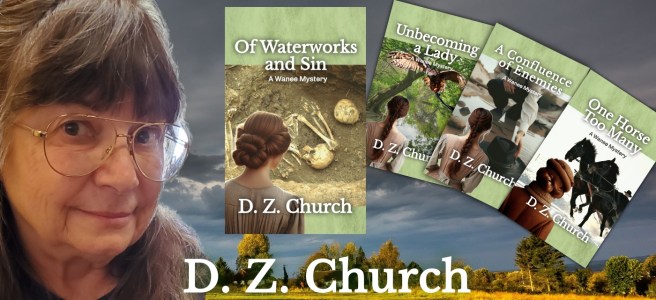
In the Wanee Mysteries, Cora Countryman has two suitors, Sebastian Kanady and Dr. Philip Shaw, despite her clearly and oft-stated intent to devote herself to a life of mystery, learning and adventure. Most in town refer to her suitors as her Mr. Kanady or her Doctor Shaw. In all instances, she responds, he is not my Mr. Kanady or he is not my Dr. Shaw. But … something is going on:

Unbecoming a Lady:

“Cora, please, if your inquiries are pursuing either your mother’s disappearance or Michael Thomas’s head-bashing, stop now. It is unbecoming a lady.”

“Is that what you think of me?”

“That you are a lady? Are you not?”

Grabbing her button and package, Cora twirled out the door, confused by the look on Mr. Kanady’s expressive face.

A Confluence of Enemies:

“And you? I do like the way you have your hair this evening. Not quite up, though, is it?”

“Do you spend your days fixing on things you can say to annoy me?”

“Generally,” he grinned, his broad masculine mouth higher on the right, highlighting a thin scar on his upper lip. “Sometimes, I just imagine kissing you.” 

One Horse Too Many: Cora touched Kanady’s hat. His blue-blue eyes followed the movement of her hand as she ran her index finger lightly around the band.  

Oh, my!

Of Waterworks and Sin, Cora’s newest adventure:

“Easily. Everyone in this town tells you everything. And you have a fierce nose for trouble. It will be like braiding that hair of yours, which you can do with your eyes shut.”

“You have been gawking up at my bedroom window again?’

He grinned. “Like a moonstruck puppy.”

“You would flatter me and say anything to get me to take on your newspaper while you are out endangering your life. Do not lie.”

And so it goes for Cora and Kanady. The most challenging bit of all is maintaining just the right tone. Cora and Kanady are light with each other. But their affection is always apparent and muted by Cora’s desire for a life without the weight of marriage or children. Despite being obstacles to her greatest wish, Kanady and her other suitor, Dr. Shaw, compete for her. Is there a way forward? I hope you’ll enjoy finding out. Ah — to romance amid thrills, mayhem, and murder.

Find out more about me at https://dzchurch.com and sign up for my newsletter.

See me at the NorCal Sisters in Crime Spring Showcase on May 18 at Book Passage in Corte Madera, CA. Here is a link if you’d like more information: https://www.bookpassage.com/event/norcal-sisters-crime-spring-showcase-event-2025-corte-madera-store

Entitled 2: Giving your book a title to remember

Last month we talked about giving your story a title. Unlike article titles, book titles are usually the domain of the writer.

This may be because the writer has a closer connection to the topic, the editor wants the writer to do the work, or the writer and editor see it as the author’s prerogative. But just because the book writer usually develops the title doesn’t mean the editor will accept it. They will tell you if they don’t like it, and why. They will tell you if it won’t work, and why.Let’s look at what constitutes – usually – a good book title, and then I will use my first book as an example.

Because book titles are one of the first things a potential reader sees, they need to hook that reader. It’s recommended the title give away a little something about the plot and the nature of your book. Is it going to be action-packed, romantic, whimsical?

Here are the three main ingredients in a strong title:


LENGTH. 
Shorter is better. Shorter tends to be more memorable, more powerful. Some experts advocate for the one-word title, but one-word titles are more limiting for search engines. Fewer examples are found. The recommendation: three or four words.


IMPACT.  
The title should draw the reader in because it is evocative; it speaks to what lies within the pages of the book. It sets the stage for what they can expect.


UNIQUENESS.
Titles that we can remember, titles that stand out from the crowd are winners. This may be a play on words, a pun, a jab, a literary reference, a phrase that speaks to mind, heart and spirit.

In short, titles are essential to the sale of a book. And they are not easy. Let’s look at one title I’m very familiar with.

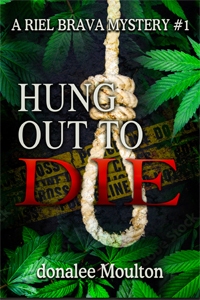
My first book is Hung Out to Die. It’s a murder mystery. The main character is CEO of a cannabis-production company in Elmsdale, Nova Scotia. As I was writing this book, a funny aside started to take place involving a word the main character had never heard before: Chunderfuck. In my mind, that became the title of the book with asterisks replacing two of the letters in the last syllable. I then built on this concept. Future books would have similar fun but profane titles: Numb Nuts, Dick Wad…. You get the idea.

book cover from Hung Out To Die

It was not meant to be. As I was starting to shop around my book, I realized the title might lead agents and publishers to conclude the book would be darker, edgier, grittier than it is. Indeed, it’s actually funny. I also didn’t want to turn off publishers before they even read the book. I went with a working title instead: So, A psychopath walked into a bar. In my mind, the book would still be called Chunderf**k, an issue I would raise with my publisher as soon as I had one. Which I (with gratitude) did. My publisher, BWL Publishing, was more than open to changing the title. But not to Chunderf**k – and not for the reason you might think. Search engines don’t pick up asterisks.

Dammit.

So the book became Hung Out to Die. It’s a play on words, drying plants is linked to cannabis, and the victim dies by hanging. It’s short, it’s got some oomph, but let’s face it. It’s no Chunderf**k.

I’d love to hear your thoughts on titles. And asterisks.

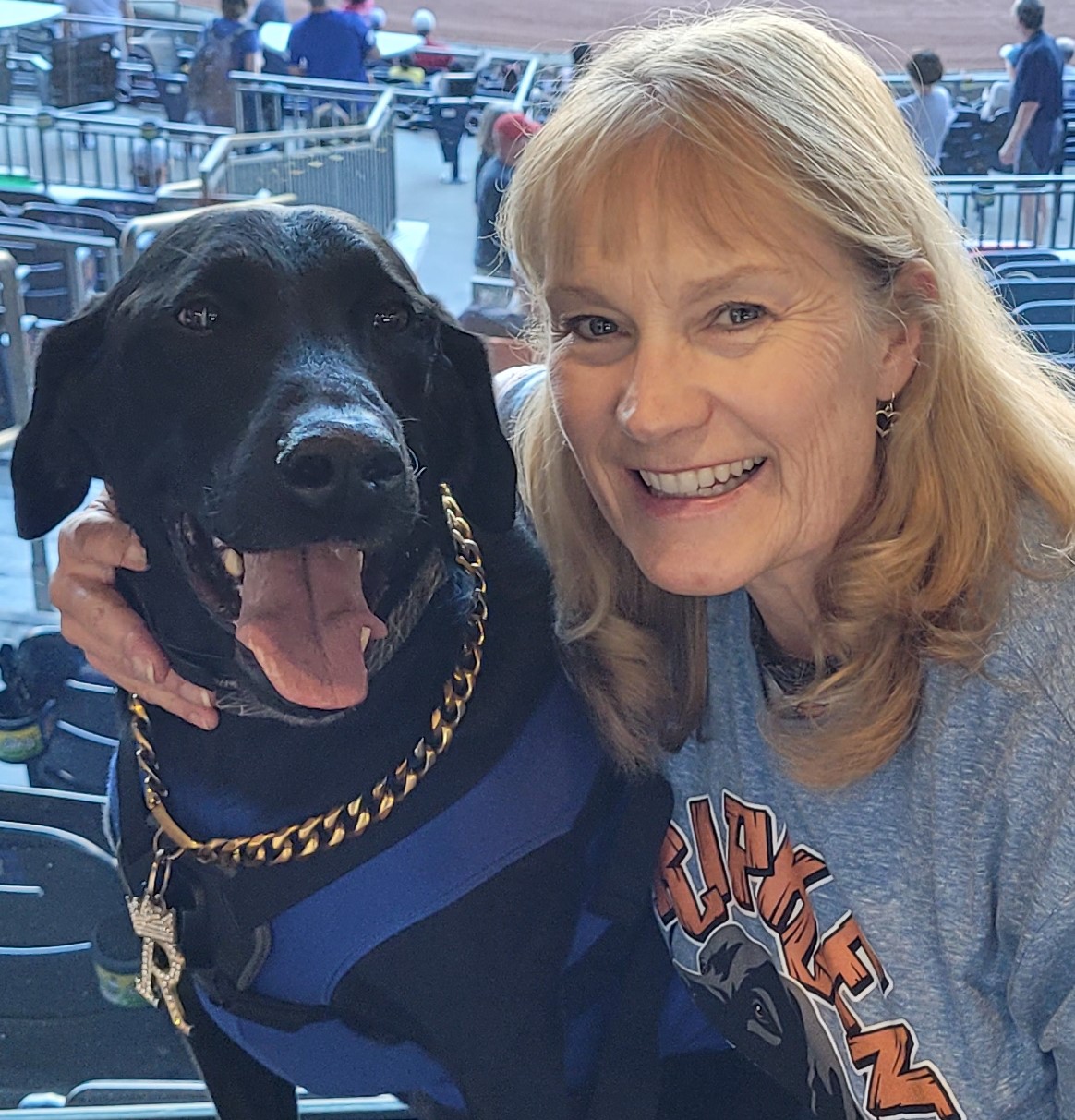
Guest Blogger ~ C.B. Wilson

The Land of Aloha

By C.B. Wilson

Aloha! From savoring high tea at the Moana Surf to relaxing on Turtle Beach near Haleiwa, Hawaii has always been my happy place. In fact, I am lucky to admit that my family lives on Oahu and I do get to “go home to Hawaii” for the holidays.

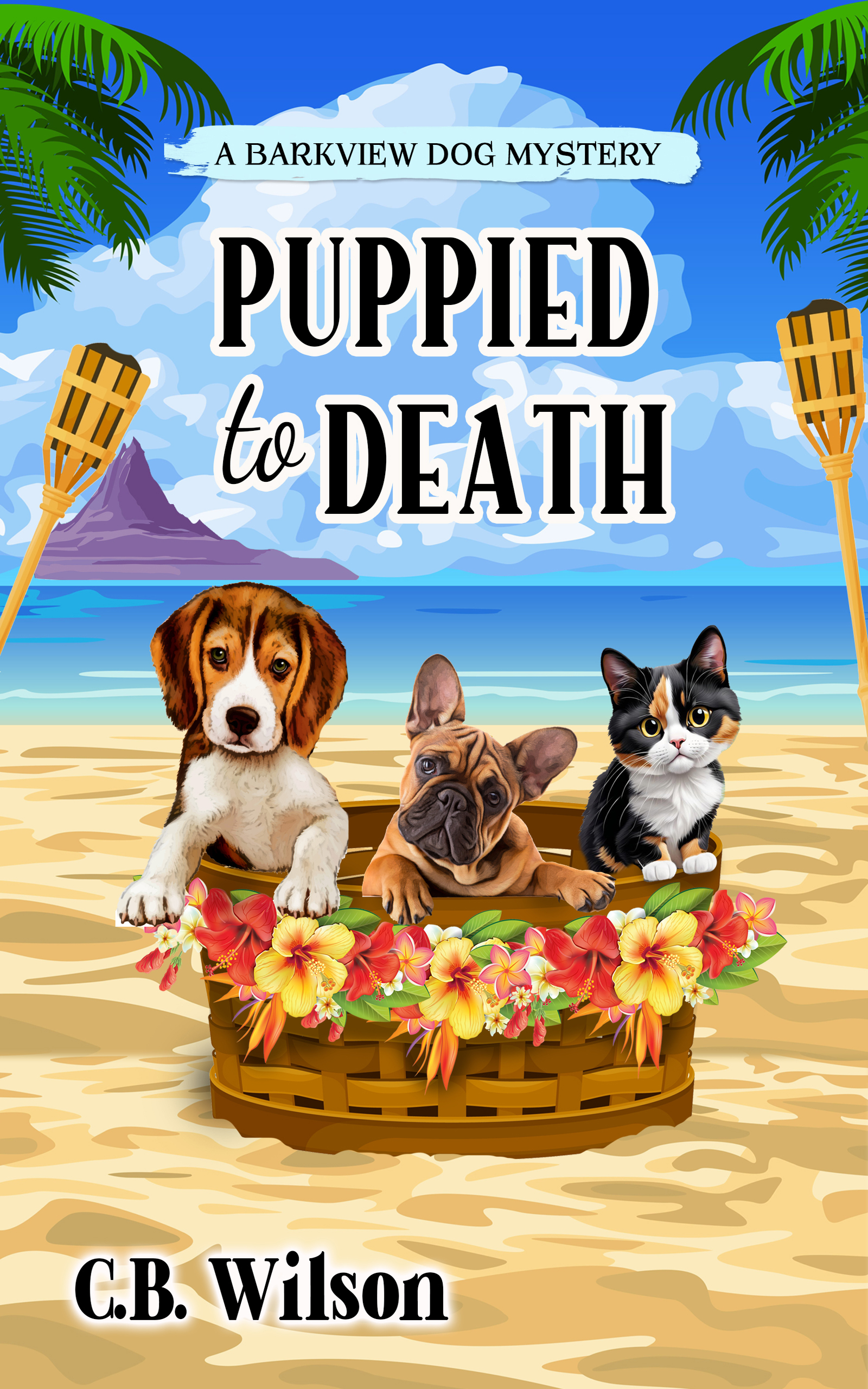
The island’s concept of Ohana (meaning family) inspired my newest novel, Puppied to Death. In this ninth installment of the Barkview Mysteries, protagonist Cat Wright Hawl travels from Barkview, America’s dog-friendliest city, to Hawaii. There, she must protect her half-sister from a murderer while reconciling with her late father’s absence and navigating her complex relationship with her mother. Oh, and as the title suggests, there are puppies!

No Hawaiian adventure is complete without immersing oneself in the island’s distinctive culture. When the mystery’s clues revolve around a traditional Chinese Mahjong game, Cat finds herself depending on the dubious detective abilities of the Miss Marple Mahjong Mamas and their distinctive perspective on Chinese immigration. (Take a peek at the below clue. Can you solve the puzzle?)

Yes, I do play Mahjong. Creating the clues required a deep dive into Mahjong’s history and the true meaning of the tiles. I have a new appreciation for winds and dragons.

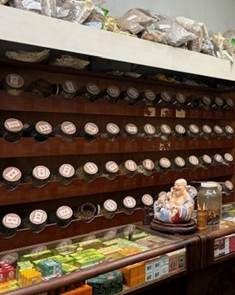
When I wrote Puppied to Death, I wanted the story to be more than a fun visit to Hawaii. My consultations with Chinatown’s TCM (Traditional Chinese Medicine) practitioners gave me a wonderful insight into the value of lā’au lapa’au (herbal remedies) that I use today. A word of advice when meeting the practitioner for the first time: don’t ask them what Hawaiian plants can kill someone. I swear a Chinatown police officer followed me the entire day.

I also spent time at the Hamilton Library located at the University of Hawaii Manoa. The information in the China Collection is fantastic. It has inspired me to write another Chinese history-based novel. (More to come on that.) While digging through immigration documents and diaries, I learned that the challenges faced by early 20th-century female immigrants parallelled many struggles of contemporary women raising children, genuinely adding a timelessness to Cat’s underlying problem and the conflict between her and the all-knowing Chinese matriarch in the story. 

When a tea sommelier is found murdered, an ancient Chinese secret dating back to the Qiang Dynasty falls under threat, and a French Bulldog, a Beagle, and a cat hold the answer to the mystery; only one intrepid sleuth has the ability to cut through the confusion and capture the true culprit.

I hope you enjoy your island journey. For those returning, prepare for a nostalgic trip to your beloved landmarks across Waikiki, Chinatown, and the North Shore. For first-time visitors, a heartfelt Aloha e komo mai—welcome to paradise.

A Murder, an Ancient Secret, and a Puppy You Can’t Help but Love

A desperate call from her sister sends investigative reporter Cat Hawl on a rescue mission to Hawaii. But when she arrives, it’s more than she bargained for. Not only is a tea sommelier found dead, but a mischievous puppy has turned the crime scene into a dog’s breakfast. And to top it off, Cat’s sister, Lani, has gone missing. Is she a witness or on the run?

Join Cat on her quirky, whirlwind adventure, where a trail of tea leaves leads her through a mystery that’s as puzzling as a puppy’s antics. Cozy mystery lovers will find themselves charmed and intrigued at every twist and turn!

Universal link: https://mybook.to/PuppiedtoDeath

Award-winning author C.B. Wilson’s love of writing was spurred by an early childhood encounter with a Nancy Drew book where she wrote what she felt was a better ending.

An animal lover, the Barkview Mysteries combine C. B.’s love of mysteries and dogs. The current 10 book series follows Cat Wright, a feline-loving, former investigative reporter’s, journey to find the right dog for her. C.B.’s motivation to grow this popular series is a result of her belief that every animal deserves a forever home. You will likely find adoptable dogs at her appearances.

Join C.B. in Barkview and help Cat decide if there is a perfect dog for our resident cat lover. 

Social Media:

https://www.facebook.com/cbwilsonauthor

Goodreads:  https://www.goodreads.com/user/show/137800079

Bookbub: https://www.bookbub.com/profile/c-b-wilson

Instagram: www.instagram.com@cbwilsonauthor

Linktree. https://linktr.ee/cbwilsonauthor

YouTube:  https://www.youtube.com/channel/UC1HfOVqN7aBccTW70_wlL0w

tikTok: https://www.tiktok.com/@author.cb.wilson