
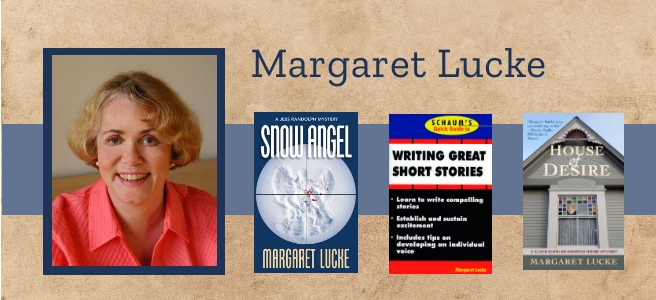
by Margaret Lucke
The other day I received word that a short story I’ve written has been turned down by the publication I submitted it to. A disappointment for sure, but I like the story, and I’m confident I’ll find a home for it.
In the earliest days of my writing career, I read a biography of the iconic author F. Scott Fitzgerald. It mentioned that Fitzgerald received 287 rejections before he ever sold a word. He papered his bedroom walls with them. This may not be the exact figure, but it’s close, and it’s the number that sticks in my mind.
Let’s face it, rejection is a fact of life for writers. If we let it discourage us, pretty soon we’d be writing nothing but grocery lists.
Sometimes it’s hard to accept that no means no, straight and simple. When we receive a rejection letter, we try to read between the lines. Was my story rejected because it’s awful and I’m a terrible person who should never set my fingers on a pen or a keyboard again? Of course not, though with my first few rejections it was easy to read them this way. But there are lots of reasons why rejection can happen. Maybe the editor was rejecting everything on the day she read my story because a headache or a fight with her boyfriend had put her in a foul mood. Maybe my story was the twelfth one she’d read that week to feature a four-foot-high green-haired vampire as the detective and she was weary of concept by the time she got to mine.
Being on my way to assembling my own collection of rejection slips, I took heart from this. If a literary icon like Fitzgerald could be rejected that often, and persevere and succeed, then so could I.
I’ve discovered that there are hierarchies of rejection, and I’ve received them at every level. At the bottom of the list is silence. After you submit your work, you wait …and wait … and wait … for a reply, but you never receive one. Apparently the editor or agent you sent it to is too busy to say a simple no and assumes that if several months go by and you haven’t heard from them, you’ll figure out that they’re not interested. This is rude, in my opinion, but it has become all-too-common practice in today’s publishing world.
Next comes the basic form letter that says, “We regret that your submission does not meet our present needs.” Maybe that’s true, or maybe the publisher words it that way because it sounds slightly better than “Are you kidding? You were really thinking we’d ever publish something this terrible?”
Somewhat better is the form letter with the electronic equivalent of a handwritten scribble — the words “thank you” or, even better, a personal note.
At the fourth level is an invitation to submit something else “Try us again.”
If I’m really lucky I’ll achieve the fifth level, getting a comment that refers to details in the story so I know someone actually read it.
At the top of the pyramid is the personal letter so glowing and complimentary I have to read it twice to realize they’ve rejected me. Though I’ve never received one as flattering as this legendary rejection, purportedly sent to a would-be contributor by the China Economic Review:
“We have read your manuscript with boundless delight. If we were to publish your paper it would be impossible for us to publish any work of a lower standard. And, as it is unthinkable that, in the next thousand years, we shall see its equal, we are, to our regret, compelled to return your divine composition, and to beg you to overlook our short sight and timidity.”
At the other extreme, I’ve also never received rejections as chilling as these letters, cited by novelist Lawrence Block in one of his Writer’s Digest fiction-writing columns years ago. (Note: They weren’t addressed to him; they were examples provided by publishing industry sources.) The first was brief and to the point:
“I regret that I must return the enclosed shipment of paper as unsatisfactory. Someone has spoiled it by typing gibberish on every single sheet.”
The second provided detailed instructions to the writer, who had sent a literary agent a novel that was apparently a vicious racist screed:
“I suggest you take the following steps with regard to your manuscript. 1) Go out in the back yard and dig a hole several feet deep. 2) Place your manuscript at the bottom of the hole. 3) Fill in the hole and firm the soil in place. 4) Do not plant anything intended for human consumption in that portion of your garden for at least seven years.”
These make the standard form letter look good, don’t you think?
It’s time to send that turned-down tale of mine to the next market on my list.

 Ladies of Mystery
I thought I replied to this article, Peggy! So sorry. I just love reading your posts. They are thought provoking, well written articles about subjects I think about a lot but never know quite how to put into words. But you do. I have been rejected so many times, especially when I was sending out work in New York, I actually did consider papering the bathroom with all of my rejection letters. My mother talked me out of this. She said to me, “Heather, all the moisture in the room is just gonna make them fall right off the wall. So don’t bother.” So I didn’t.
LikeLike
I believe sharp criticism from a reader who only remarks on one thing can rank us despite many other good reviews. For my second novel, I resolve to miss reviews from readers and never press for them.
LikeLike
Yes, a lot of us have a love-hate relationship with reviews!
LikeLike
I don’t mind useful criticism but I don’t appreciate personal attacks on my character.
LikeLike
I don’t think anyone is truly a published writer until they have suffered multiple rejection letters! LOL I had a folder full of them before I finally had a published book. It is the rite of passage for a writer. Good post!
LikeLike
You’re right, Paty! We’ve all been through it, and we come to realize it’s part of the process. But it can seem heartbreaking the first few times we go through it.
LikeLike