Guest Blogger ~ Ron Roman

How Of Ashes and Dust Came To Be Written

    The timeline for the composition of Of Ashes and Dust dates to when I was teaching college courses to the US military on Diego Garcia, an atoll in the Indian Ocean; a beautiful spot if there ever was one. That was a halcyon interlude in my life; there was plenty of time to linger on the beach every morning, since I taught evening classes, pondering the story arc, which appeared seamlessly out of nowhere in my mind. Perhaps it was the charming and calming atmosphere of the place that so easily birthed in my mind’s eye this novel’s initial events. Everything just fell into place; it wasn’t until later, when I left the island after about five months, that difficulties arose in the narrative flow and at almost every juncture in it. Episodes of doubt and stagnation occurred almost consistently, the bane of any writer. The following are appetizers, some profound, others perhaps not that deep, for readers to nibble ….  

    Envisioning the plot came easier to me than the development of the three main characters. I knew I wanted to write an alternate-history apocalyptic doomsday thriller set in rural New England around the time of the Millennium. Something about the rounded-off number 2000 buried itself in my head. I wasn’t the only one. Older readers may recall the expression “Y2K” for Year 2000, a neologism that soon fell into disuse and ultimately oblivion when civilization didn’t collapse after all. To be sure, just before the Millennium there were calls from hotheads to bring the world as we knew it down.  “Let’s get it on now!” and “Why wait!” went the refrain.  There was even an exchange of high-ranking officers between the Pentagon and the Kremlin; each had their man in the bowels of the other’s secret war room to disable any accidental computerized nuclear launch. (It was feared that computer systems, even sophisticated nuclear-weaponized ones, could go haywire after midnight of the last day of the Millennium for not having been programmed to function after the 20th century; that planes might fall out of the sky in mid-flight, etc.). The worst thing to happen was that a guy in Ohio, or so I believe it was, got an astronomical fine for a public library book believed overdue by a century. Yet even he survived. In Of Ashes and Dust, except for the protagonist, tortured Vietnam War veteran Professor Will Watson and his Japanese-born paramour Kimiko Tanimoto, along with another local couple, nobody else is initially that lucky. Nobody.

    Speaking of Watson and Tanimoto, their names and character development came easily. Watson was a compilation of several military vets I’ve come to know; Tanimoto was the compilation of several, if not many, Oriental women I’ve come to know equally well. (Use of the term “Oriental,” which some may consider outdated, is deliberate. No time for elaboration here).  “Tanimoto” was the name of a soldier in my own Army unit; it stuck to me long after my discharge from the way it rolled off the tongue. Mine, at least. Also, the name of the third major character, Watson’s friend, confidant and fellow Vietnam War vet Mark Mercotti, was named after a college football player I used to work out with in the local YMCA. Development of his character, however, was more diffuse, having been derived from many guys I’ve gotten to know down the years.

    As for the origins of the rest of the story and its explosive ending, buy and read the text. No explanation forthcoming here, dear reader. So, shake a leg, get the book, and bear witness to the kaleidoscopic patterns of unholy madness in Of Ashes and Dust. It’s the ultimate “alternate truth.”*  

Of Ashes and Dust

At the turn of the Millennium, a trio of tormented souls grapple with their existence in a humble town in New Hampshire while the world spirals into anarchy. Unbeknownst to one another, they hold dark secrets that would eventially ignite a conflict.

Their tale traces back to two covert operations from the Vietnam War era–a revelation about UFOs from the U.S. Air Force and the clandestine Project Sixty-Seven.

At the heart of the story is Professor Will Watson–a war-ravaged Vietnam veteran, a fervent activist of the New Hampshire Liberty Militia, and a man haunted by specters of his past. As the world edges toward Armageddon, he seeks solace in the arms of his Japanese graduate student assistant, Kimiko Tanimoto. Amidst escalating pursuit by the State Police and FBI, Watson is confronted with the harsh realities of his traumatic past and the imminent downfall of a world crumbling around him.

The ebook is currently on sale for only $0.99!

Buy link: https://a.co/d/8V9oYe2

Associate Professor of English, ESL, and Humanities Ron Roman taught with the University of Maryland Global Campus (UMGC- Asia) since 1996.  He retired from full-time employ and later as adjunct during the COVID-19 crisis (2020).  His hobbies include jogging, hiking, camping, weightlifting, roller-coasters–and his beloved 1968 Rambler American antique auto for which he received Third Prize in the Hemmings (Motor News) National Antique Auto Show in Bennington, Vermont shortly before returning overseas.  (The Rambler has undergone a complete restoration.) 

He has written extensive travel, academic, and political articles for regional, national, and international publications. He studied writing (both fiction and creative) for his third graduate degree (Humanities) from Wesleyan University/Connecticut.  Currently he resides in South Korea with his wife where he works on US military installations assisting US military retirees and dependents.  He continues to write and has acted in numerous Korean TV dramas and motion pictures like Operation Chromite portraying Admiral Forrest Sherman opposite Liam Neeson as General Douglas MacArthur.  His alternate-history apocalyptic doomsday thriller Of Ashes and Dust was a 22 November 2022 release by Histria Books.

www.writerronroman.com

The Devil Of Writing A Series by Heather Haven

Writing a series with a continuing cast of characters has its drawbacks. Sure, I know everybody, like everybody, even the villains. But there are a few inherent problems. The main one is I have to remember all that has gone before, especially character names and traits. I mean, really? I’ve just finished the 10th book of the Alvarez Family Murder Mysteries and I’m supposed to remember what I wrote in Murder is a Family Business, book 1? Unfortunately, yes.

I can’t change the eye color of a character, for instance. No blue eyes in one book and brown in another. Unless the character is wearing contacts for some reason. Of course, I can justify just about anything on a temporary basis, but the eye color, height, and age of a character, where they were born, their parents, all that basic stuff just can’t be tossed around, willy-nilly. Willy is willing but Nilly doesn’t like it at all.

If I have a character who is a pegleg sea captain in one book and in the next book I have him running a marathon, I’d better come up with a pretty danged good reason as to how that can happen. That’s why I probably should be keeping copious notes on the physical, emotional, and mental goings on with each continuing character. But do I? Well, I did have one somewhere, but like most of my lists, after I write them they seem to take a hike. I am even plotted against by the universe. I had a fabulous running list on the computer once and then my computer crashed. The only thing that couldn’t be restored was that stupid list. I gave up after that. So on the rare occasion I’ve forgotten something, back I go into each book searching for a specific something. A refresher course, if you will.

I just ran into this problem with my WIP, Cleopatra Slept Here, book 11, almost on the first page. I couldn’t remember Gurn’s mother’s first name. Or his father’s first name, either. I went into a panic. I usually remember things like that (probably another reason why I am sloppy about my lists) but this shocked me. So I went back into The CEO Came DOA when his parents first showed up, and discovered I never gave them first names. Lee and Gurn’s wedding turned out to be a free-for-all where anything that can go wrong did and the weather was the number one culprit/character. If I was going to give a name to anything, it would have been the wind, and as we all know from the song, I call the wind Mariah. So did the lyricist.

On the plus side, when I go back to previous books, I sometimes discover a sentence that could be written better. So I do just that and upload it. Now and then I discover certain phrases I tend to use over again (stop that, stop that, stop that!). I rewrite those, too. Because as we all know, writing is rewriting. And if you don’t want it to be finished, it doesn’t have to be.

So, on those frankly-not-too-common occasions when I have no idea what I wrote before, I try to use the experience for the better. Lemonade, doncha know. Which reminds, me I should remember to buy lemons. Where’s that list?

A Change of Scene

As I write this, I’m living in a hotel, with my cats, because new flooring is being installed in my condo—finally! It has been six months since the great condo flood upended my life. I never thought it would take this long, but it has. Now I can see that light glimmering at the end of the proverbial tunnel. Soon my cats and I can come home!

A change of scene can be valuable when writing, in a couple of ways. I’m in this hotel room, supposedly with no distractions, unless I count the cats walking over the keyboard. But they do that at home. Surely I can focus on the book I’ve been writing (or neglecting, of late).

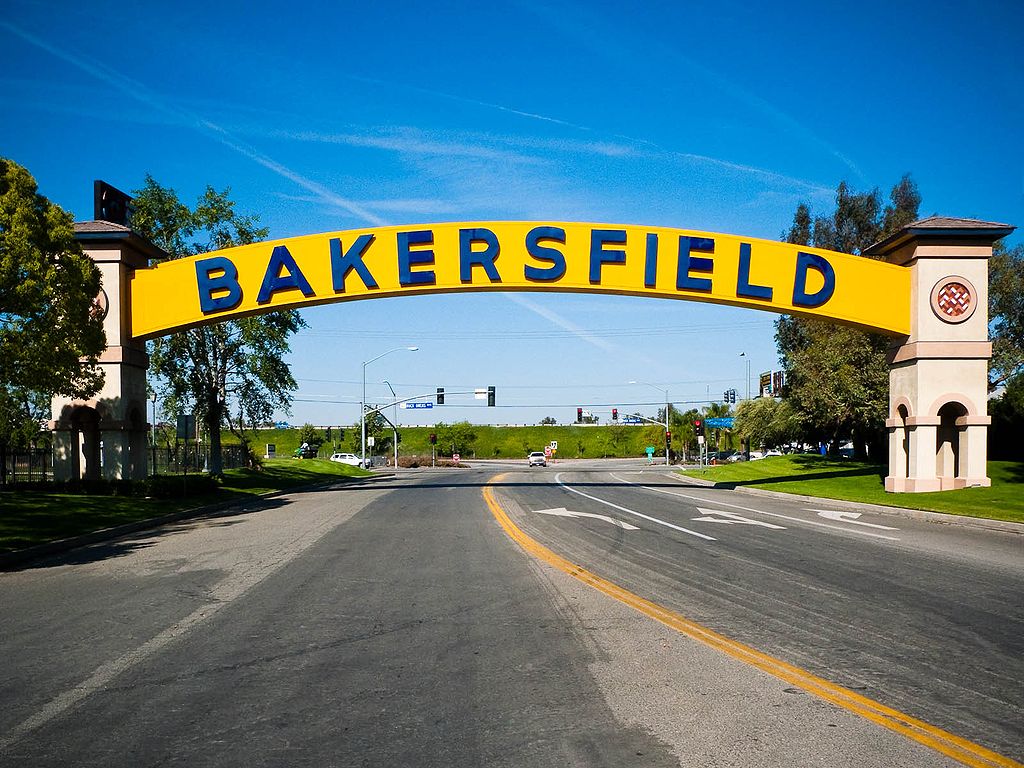
Changing location works in other ways. Case in point, Witness to Evil, the seventh Jeri Howard novel. The first half of the book is set in Paris, while the latter half takes place in Bakersfield, California. Talk about a change in scene! I did location research in both places, though a second trip to Bakersfield was a lot easier, since all I had to do was get on the freeway and drive.

At some point during the writing process, I found myself staring at a virtual brick wall. What happens next? I didn’t know. What I did know was Jeri had to go to Los Angeles to follow a lead. So, I put her on highway 99, headed south. Following one lead led to another and yet another. I wrote six chapters in rapid succession, taking Jeri from Los Angeles to San Luis Obispo to Fresno. When Jeri and I got back to Bakersfield, I had a clearer picture of where I was headed with that book, and where I needed to fill in information and clues.

I had another change of scene in the early stages of writing Death Above the Line. It’s the fourth book in the historical series featuring my sleuthing Zephyrette, Jill McLeod. She’s accustomed to working aboard the sleek silver streamliner known as the California Zephyr, as it makes daily runs between the Bay Area and Chicago. However, in this novel, she’s been roped into playing a Zephyrette in a film noir. In the first draft, I had Jill reporting for duty at a movie studio located in the waterfront district of Oakland. It’s an area I’m familiar with, having worked there in one of my day jobs.

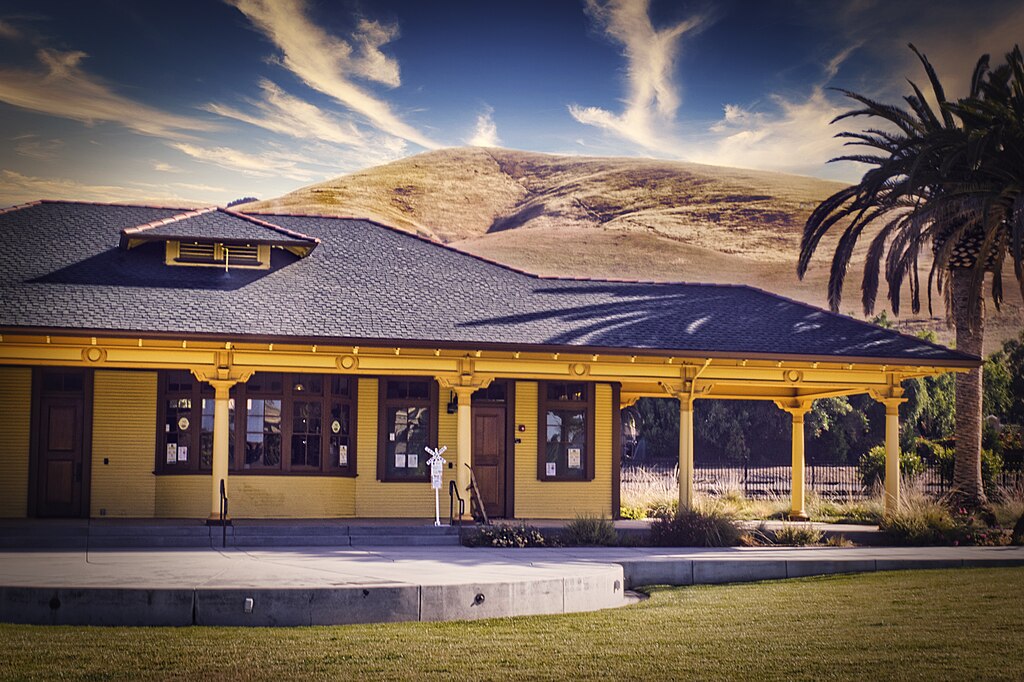
But the location just wasn’t working. I had to make a change. I moved my movie studio to Niles. It’s part of Fremont now, but at the time I’m writing about, 1953, it was a separate township at the mouth of a canyon carved by Alameda Creek. And it has a movie-making history. The town was the western site of Essanay Studios, which made silent films there from 1912 to 1916. That’s where Charlie Chaplin filmed The Tramp.

I put my fictional studio in an old warehouse near the historical Niles train station. The change of scene worked. Since I’ve been to Niles many times, riding the historic train there and having afternoon tea at a favorite shop, I was able to visualize my characters moving in and out of the building, walking the familiar streets.

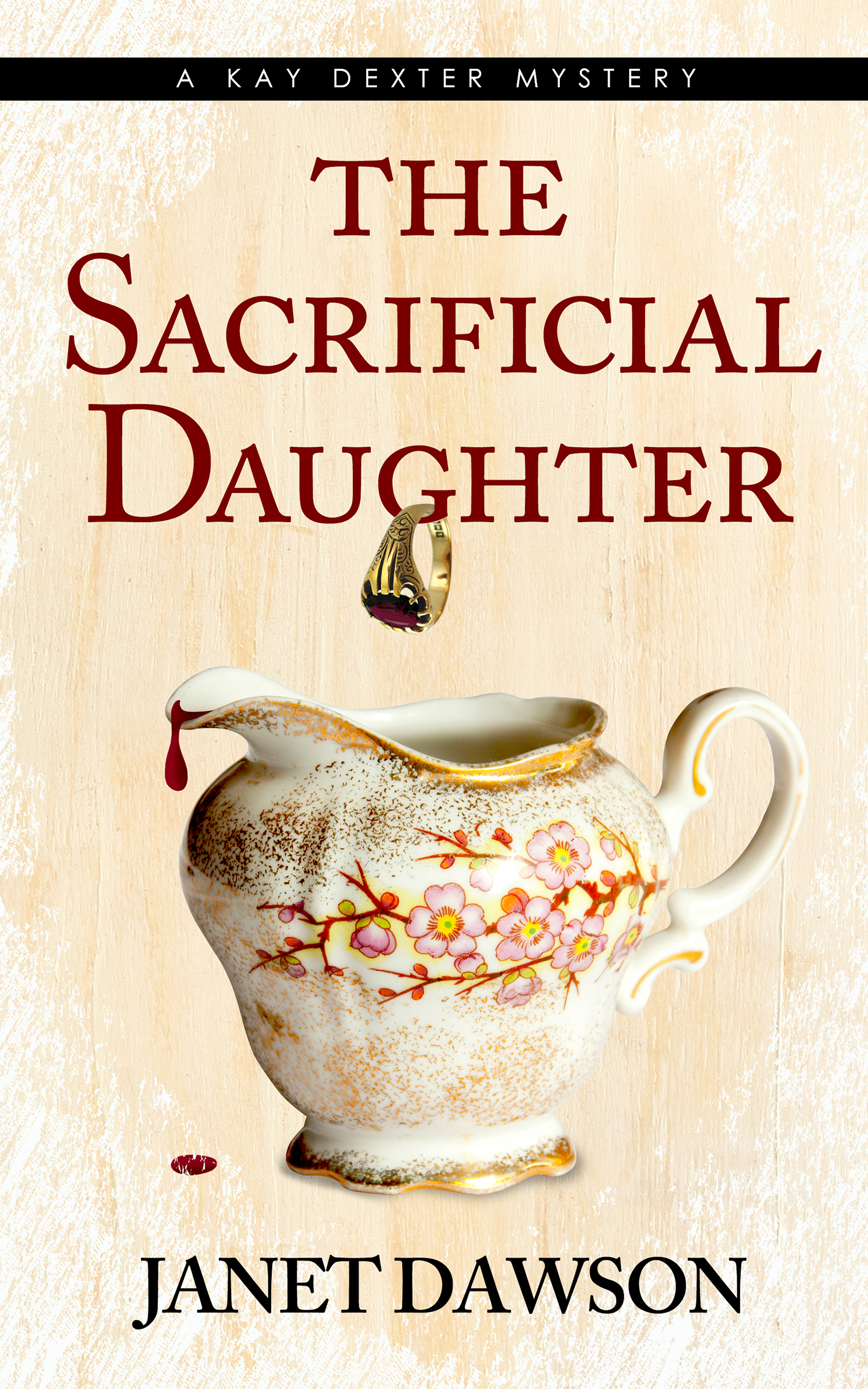
Another change of scene occurred when I was writing the first book in my series featuring geriatric care manager Kay Dexter, titled The Sacrificial Daughter. I use actual locations for my other books. For this series, however, I decided to use a fictional town set in a fictional county in the Northern California Sierra Nevada. Both the town and the county are called Rocoso, a Spanish word for rocky. This was definitely a change of scene, in several ways. A fictional setting allows me to make up the way a place looks, as well as its history, culture and inhabitants. Another way it works is that I borrowed a great deal of the location and terrain from a real place, picking up a real Colorado town and moving aspects of it to Northern California.

Whether it’s Bakersfield, Niles, or Rocoso, a change of scene invigorates my writing.