
By Margaret Lucke

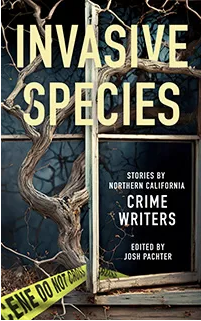
This weekend I’m in the Seattle area attending Left Coast Crime, a wonderful convention of mystery writers and readers. One of the highlights for me came on Thursday night, when the Northern California chapter of Sisters in Crime celebrated the official launch of its new anthology, Invasive Species. I’m thrilled that the book includes a story of mine. Called “Open House,” this tale recounts what happens two unwelcome visitors arrive at a showing of a home for sale.
So lately short stories have been on my mind, though not for the first time. I’ve always been fascinated by the power of stories and the joy of creating them. From the time I was very small, I thought of once upon a time as magic words with which to conjure a fascinating adventure. I started writing stories of my own when I was four.
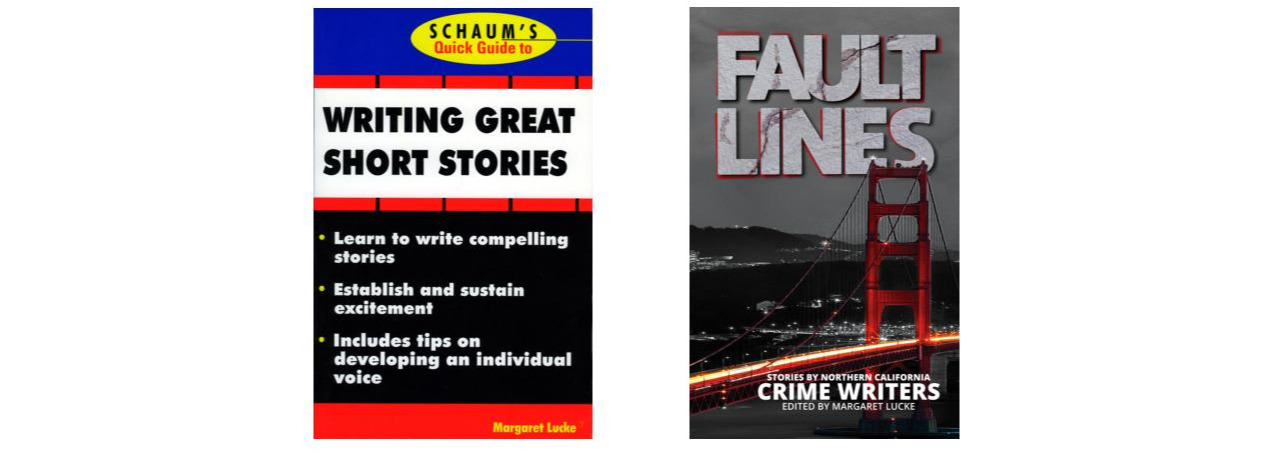
I teach fiction writing classes for the University of California-Berkeley’s Extension program. That gave rise to the opportunity to write a book for McGraw-Hill called Schaum’s Quick Guide to Writing Great Short Stories, which I’m told is a pretty good handbook for aspiring writers. I’ve edited story collections for a couple of authors, and a few years ago I had the privilege of being the editor for Sisters in Crime NorCal’s first anthology, Fault Lines.
What does it take to write a good short story? Writing a successful one takes less time than writing a novel, but in many ways it can present an equal challenge.
Not long ago, a local writers organization asked me to be the judge for their short story contest. A panel had narrowed the roster of entries to eight finalists, and my task was to choose which one would win first place.
It turned out not be an easy task. Too many of the entries were not, in fact, short stories. They were character sketches, anecdotes, or descriptions of random events. Some had no clear protagonist. In others, the narrative wandered around too long before settling into a plot. Several lacked tension. Too often, the narrative didn’t build to a logical ending, but simply stopped.
Since none of the stories stood out as the winner, I did a deep dive. After charting their strengths and weaknesses, I came up with a rating system, assigning scores to how well they handled characterization, plot, point of view, reader experience, language and style. When I totaled their points, the winner became clear.
When it comes to writing a short story, it helps to pay attention to two key words: short and story. That seems obvious, right? But it turns out that both words may be a little more complicated than they seem.
Let’s start with story, as this was something that several of the contest entrants didn’t seem to understand. In order to have a story, Something Happens to change a character’s life in some large or small way.
Here’s a definition I’ve found helpful: A story is an account of the journey that a person takes as they move from one point in their life to another.
This might be a physical or geographical journey as the person moves from one spot on the map to another. The journey could cover a long distance, like a trip to a different city or a faraway planet, or a short one. Even getting out of bed in the morning can constitute a journey for some of us.
Or it might be mental or emotional journey, as the person gains new knowledge, new ideas, or a new understanding of themselves or others.
Early in the story, something happens that creates a challenge, a problem, or an opportunity for our person. So the person sets out on a path to meet the challenge, solve the problem or take advantage of the opportunity. Along the way, they encounter conflicts and obstacles that they must overcome if they are to succeed.
By the end of the story the person and their circumstances are different in some large or small way. Because of their accomplishment, or their failure, or the insights they’ve gained, nothing will ever quite be the same.
Change is the key—what is different for the person as a result of what happens? If there is no change there’s no story.
The protagonist in my short story “Open House” is a woman who, in midlife, is starting a new career in real estate. She is holding her first open house and has high hopes of having a buyer by the end of the day. That plan is derailed with the arrival of the two unsavory characters who are up to no good, but the encounter teaches her some valuable lessons about her own capabilities.
Then there’s short. Some sources define a short story as 10,000 words or fewer; others say 7,500. But it really depends on the market you’re aiming for. For Fault Lines we set a limit of 5,000 words, and I recently submitted a story to a different publication whose cap was 3,500.
But short means more than word count. It’s also a matter of focus. Compared to novels, short stories focus tightly on one event or sequence of events. They have fewer characters, cover a shorter timespan, and take place in a limited number of locales. They have room to raise and answer only one or two questions, to deal with only one or two themes. While a novel allows you delve into a complex series of events, relationships, backstories, and subplots, a short story requires you to make your point quickly and move on.
And while a novel might forgive you for meandering a bit, in a short story every single word has to pull its weight.
Yet a short story also grants you a certain amount of freedom. You have the opportunity to to explore and experiment with language and form in ways that would be hard to sustain in a novel.
So go ahead and write your story in second person, tell it from the point of view of a giraffe in a zoo, and end it with an explosive twist. Have fun, and enjoy the challenge and creative reward that writing a short story provides.


This is the perfect post for someone who is writing or is thinking about writing a short story! Nicely done!
LikeLike
P.S. Just downloaded Invasive Species. Looking forward to your short story!
LikeLike
Wow! I am printing out this article and posting it on my board. Every word is golden. But that is true for everything you write. Glad to have shared some of LCC with you. Glad to call you friend.
LikeLike
This is an excellent introduction to the short story. You cover all the important points, and make it all sound straightforward and simple, though we know it isn’t. Great post.
LikeLike
What a fabulous article! I am now off to purchase your book!
LikeLike
Congratulations. And a good description of a short story! I think there needs to be more teaching on the topic. In fact, I think you should offer to teach a workshop for those eight entrants. .
LikeLike
Thank you, Jackie! I agree that the art and craft of short stories would make a good subject for a class.
LikeLike