Nothing Ever Happens To Me

Bad luck comes in threes, right? You’ve heard that one. Where does that saying come from?

In a post back in 2017, the website Folklore Thursday looked at the origins of what it called the superstition of threes.

For example: “Three strikes of a match.” That originates from wartime. The bad luck of “three strikes of a match” comes from trench warfare. If a match burns long enough for three men to light cigarettes, that’s enough time to be spotted by the enemy, pinpoint the position, and launch an attack.

But what about the other half of the equation? Consider the phrase, “third time’s a charm.”

Three is a familiar pattern and maybe if we put a limit on those bad things, we can see that the run of bad luck will end. It’s one small way to gain control of our lives in unpredictable times.

And there’s another familiar phrase to consider: What doesn’t kill you makes you stronger. I’ll go with that one.

When I started writing this blog post, I figured I’d had my three bad things for 2023. But the universe had another surprise in store for me.

To recap: In July, it was the computer/hard drive/cloud storage meltdown. I lost the book I was working on, as well as notes for several others. I had to start the book all over. I am still working to pull the story out of my head. At least it’s in my head. Despite all the claims for the benefits of cloud storage, it certainly didn’t wind up in the cloud.

In August, my 99-year-old mother came to the end of her life. I’d been a long-distance caregiver for years. I hoped that we could see her celebrate her 100th birthday, but that was not to be. At the start of what I figured would be a two-week trip, I thought I’d see her through the hospital stay and rehab, then she’d go home and get along as before, with more local caregiving assistance. I didn’t think I’d be planning a memorial service. Those two weeks lengthened into four.

September brought the condo flood. It was just after midnight when I woke up, thinking it was raining. It wasn’t, at least not outside. I got up to investigate and discovered water pouring from the light fixtures in the kitchen and dining room, courtesy of a pipe under the upstairs neighbors’ sink. They were unaware of the situation until I pounded on their door. They managed to stop the flow and helped me mop up water, using nearly every towel I had. Then came the water mitigation crews with their industrial-sized dehumidifiers and high-speed fans. All that noise for nearly two weeks. The cats were freaked out and my stress level went through the roof.

Weeks later, I’m still dealing with the fallout. The carpet went away, leaving me with bare concrete floors. Many of my belongings were packed into boxes. Those boxes, and much of the furniture, were picked up and moved to storage. Water in the ceilings and walls meant the sheetrock had to be cut open, those big dehumidifiers set so they would dry out the wood. Next step is sheetrock repairs and painting. Then I can think about new flooring. Before that happens, though, the remainder of my belongings must be packed up and put in storage.

Life in the construction zone was put on hold in October, for my long-planned and much-anticipated trip to Greece. Which I thoroughly enjoyed. I climbed to the top of the Acropolis, and back down again. I went to Delphi and saw the Temple of Apollo. I saw beautiful scenery and ancient sites in the Peloponnese, Crete and Santorini. And ate lots of wonderful food.

All in all, the trip of a lifetime. Except for the part about testing positive for COVID-19. That was definitely not on the itinerary.

I’d had all the boosters. I like to think I was careful. But . . . The tour company protocols said I could not sightsee or eat meals with the group. However, that didn’t prevent me from sightseeing on my own. I particularly wanted to see the archeological excavations at Akrotiri on Santorini. After all, I’d come that far and spent a good deal of money on the trip. I wasn’t going to miss a significant archeological site that ranks with Pompeii. Not able to travel on the tour bus? I wore a mask and took a taxi.

I’m home now, testing negative, back to the construction zone. Neither the cats nor the gremlins made repairs in my absence.

Three, or four, bad things. Are they bad? Maybe it’s how I look at them. Challenges, and I’ve had more than my share this year. Dealing with these challenges has made it more difficult for me to write. It takes concentration to write fiction, to organize and pull those thoughts and ideas out of my head. That’s hard to do with all the chaos I’ve been experiencing. It has certainly made it more difficult for me to get ideas out of my head and into the computer.

That computer meltdown and losing the first draft of the book—I hope that the book I’m working on now will be even better. As for the flood and the resulting construction zone—well, I was thinking about replacing the carpet anyway. Just not right now. And the trip to Greece, COVID-19 or not, I came away with ideas for two books.

Besides, there’s something wonderful about reading Mary Stewart’s classic My Brother Michael, which is set in Delphi, after having been to Delphi. As I reread the book, I could see the terrain of Mount Parnassus—because I’d just been there.

And that book has one of the best first lines ever written: “Nothing ever happens to me.”

Guest Blogger ~ Debbie Burke

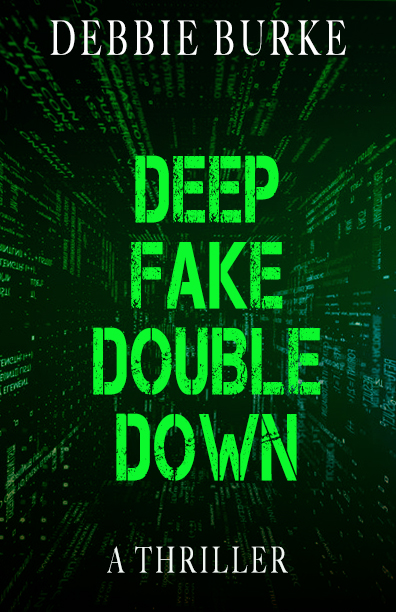
What if a video goes viral showing you committing a crime? You’re innocent but how do you defend yourself when a million people on social media saw you do it. Once the court of public opinion finds you guilty, can you get a fair trial?

That’s the premise for Deep Fake Double Down, the eighth novel in my Tawny Lindholm Thriller series.

As a mystery/suspense/thriller author, I felt compelled to explore what happens when you can no longer believe what you see. How could deep fakes be used to create false evidence?

Deep fakes are often called “Photoshop on Steroids” and they frequently make news. Using software, video of real people is manipulated to make them say words they never said and do acts they never did.

Some recent examples of deep fakes are silly entertainment, like the Pope wearing a satin Balenciaga puffer coat.

But, in the wrong hands, deep fake technology becomes a weapon that can potentially affect world history. One not-so-amusing example was a fraudulent video in 2022 of the Ukrainian president ordering his troops to surrender to the Russians. In May 2023, a photo of a supposed explosion at the Pentagon caused stock market jitters before it was determined to be fake.

When I first began researching the topic a couple of years ago, deep fakes were difficult and time-consuming to create, yet fairly easy to detect. But, during the nine months when I was writing Deep Fake Double Down, technology took a giant leap forward. Now anyone with basic computer knowledge can download free or low-cost programs from the net. Then simply record a few seconds of a person’s face, body, movements, and voice, and you can create a video clone that’s nearly impossible to distinguish from the real person.

Scary? You bet!

In my new thriller, deep fakes mean deep trouble for intrepid investigator Tawny Lindholm and her charismatic attorney-husband Tillman Rosenbaum. A biracial female corrections officer begs them for help after video shows her aiding a young Native inmate in a prison escape. She swears she’s innocent and claims her life is in danger because she witnessed a murder. Then she disappears.

At the same time, Tillman’s troubled teenage son makes a deep fake video of his own kidnapping, but that prank takes an unexpected and frightening turn.

In both situations, Tawny and Tillman discover deep fake technology creates convincing but false evidence. While they struggle to save their client and their son, hidden enemies are ready to kill to keep the truth buried. Will deep fakes lead to real deaths?

Deep Fake Double Down is available from online retailers at this link: https://books2read.com/deep-fake-double-down

Or ask your favorite independent bookstore to order the paperback.

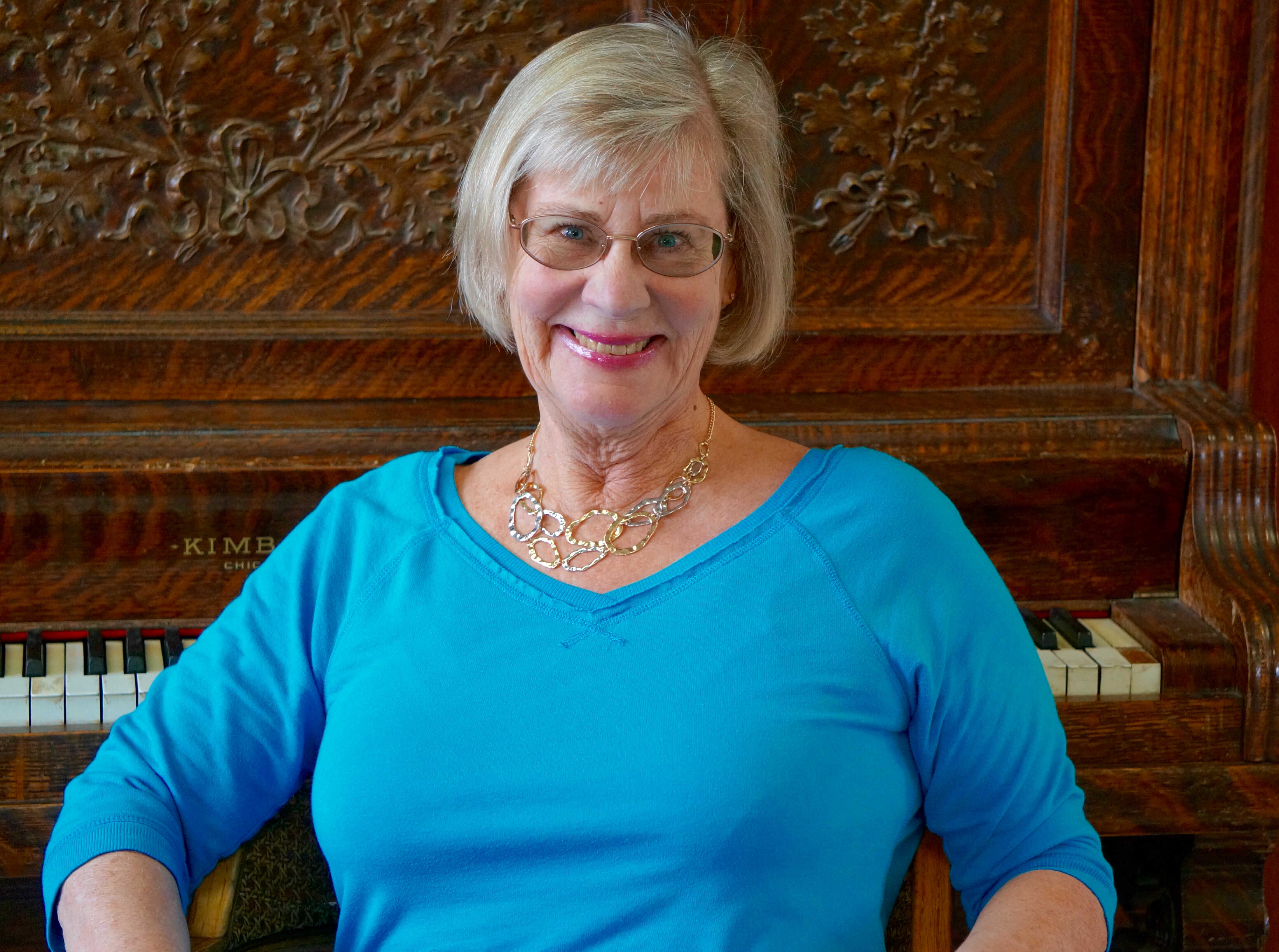
Debbie Burke is an award-winning journalist, crime novelist, freelance editor, and blogger on The Kill Zone. She writes from her home in Montana where the scenic, rugged Rocky Mountains offer plenty of locations to kill people…on the page, that is! 

Please visit https://debbieburkewriter.com to learn about my other books in the Tawny Lindholm Thriller series. Join my readers group and receive a FREE bonus short story about Tawny and Tillman.

Email: debbieburkewriter@gmail.com

Twitter/X: @burke_writer

Finding the Right Word by Heather Haven

Writing a novel has its frustrations. For me, one of them is often having at hand a word that kinda fits what I’m trying to say, but isn’t the right one. Thus begins the search for the missing word, the forgotten word, the word just somewhere off in the ether taunting me with its proximity.

For those all too frequent times, I have my online Thinkmap Visual Thesaurus for which I pay good money. I also have the thesaurus in Word. Both can help. But not always. When all is lost I have hubby, a former English teacher. I will babble the sentence to him, give him the awful word that came to me, the one I reject with every fiber of my being, and hope he knows what I am trying to say. Sometimes he does, sometimes he doesn’t.

If this word is still eluding me I have a decision to make. Do I stop what I am doing and begin a wholehearted search as if I were Juan Ponce de León looking for the Lost Fountain of Youth? Which he never found, by the way. Or do I carry on writing, hoping this errant word will come to me eventually? Decisions, decisions.

Dropping everything and searching for the right word pulls me out of my work, causing me to lose focus. And I also have a disease known as Maniacal Searchitus. It’s not catching, and I’ve known many other writers with this disease. I include them not because it gives me hope for a cure, but simply because misery loves company.

If left to my own devices, I can spend hours if not days getting lost in a plethora of words that suddenly appeal to me but have nothing to do with my original search. Take the word ululation. When I was at the Visual Thesaurus website, there it was. The word of the day. Ululation: the art of crying out in a high-pitched loud voice while rapidly moving the tongue and the uvula. I refrained from going to YouTube and watching a video showing this practice.

If it’s a verb I’m looking for, another trick is to go online and look at a product description. Everything is for sale. I could probably find another husband on Amazon if the one I have doesn’t learn to stack the dishwasher right. Product descriptions don’t always work. A lot of them are hackneyed and old hat. But sometimes they trigger the word I’m desperately seeking to come forward in my mind. Also, I’ve bought many an item I didn’t even know I needed using this method.

But the tested, tried, and true for me (yes, I know, hackneyed and old hat) is to put that first, awful word that came to me into the sentence, ghastliness and all. Not only does this allow me to continue with my writing, but the word will grate on me every time I see it and make me crazy. I will begin to ululate in sheer frustration. Eventually, I will stop everything I’m doing and work on the sentence until I find the exact word I need or throw the sentence out. It’s one or the other.

Because no writer wants thwarted readers ululating when the wrong word is allowed to get by.