What’s in a Title? by Heather Haven

A lot of times the story itself comes fairly easily to me, but the title often doesn’t. What to call my novel? How do I catch the reader’s eye and have them want to buy my book, just by reading that stellar title? How, how, how? Hmmmm.

And to make things worse, book titles seem to go through fads or phases. For instance, the word “girl” has been used in just about every best-selling book’s title in the last few years. While using that word may not have catapulted them to becoming a best-seller, the following books were best sellers: Girl Gone; The Girl on a Train; Girl, Interrupted; Girl with the Pearl Earring; The Other Boleyn Girl; and of course, Stieg Larsson’s trilogy, The Girl with the Dragon Tattoo; The Girl Who Played with Fire; and The Girl Who Kicked the Hornet’s Nest.  
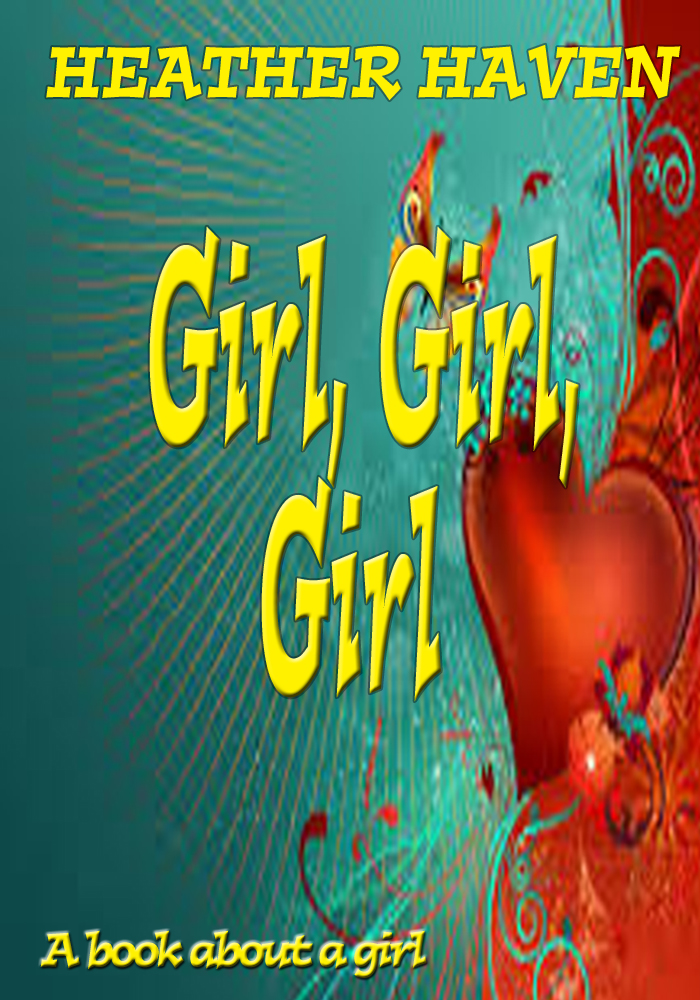
Hence, I decided to use the word “girl” in the title of a book and see what happens. I came up with Girl, Girl, Girl (see book cover). Amazingly, it didn’t sell. Maybe my heart wasn’t in it? Besides, I don’t think of human females as girls unless they’re under the age of 17. I’m not sure why that’s my cut-off age, but it is. I think once you’ve graduated from high school, you’re a young woman. Girl-kid, Woman-adult.
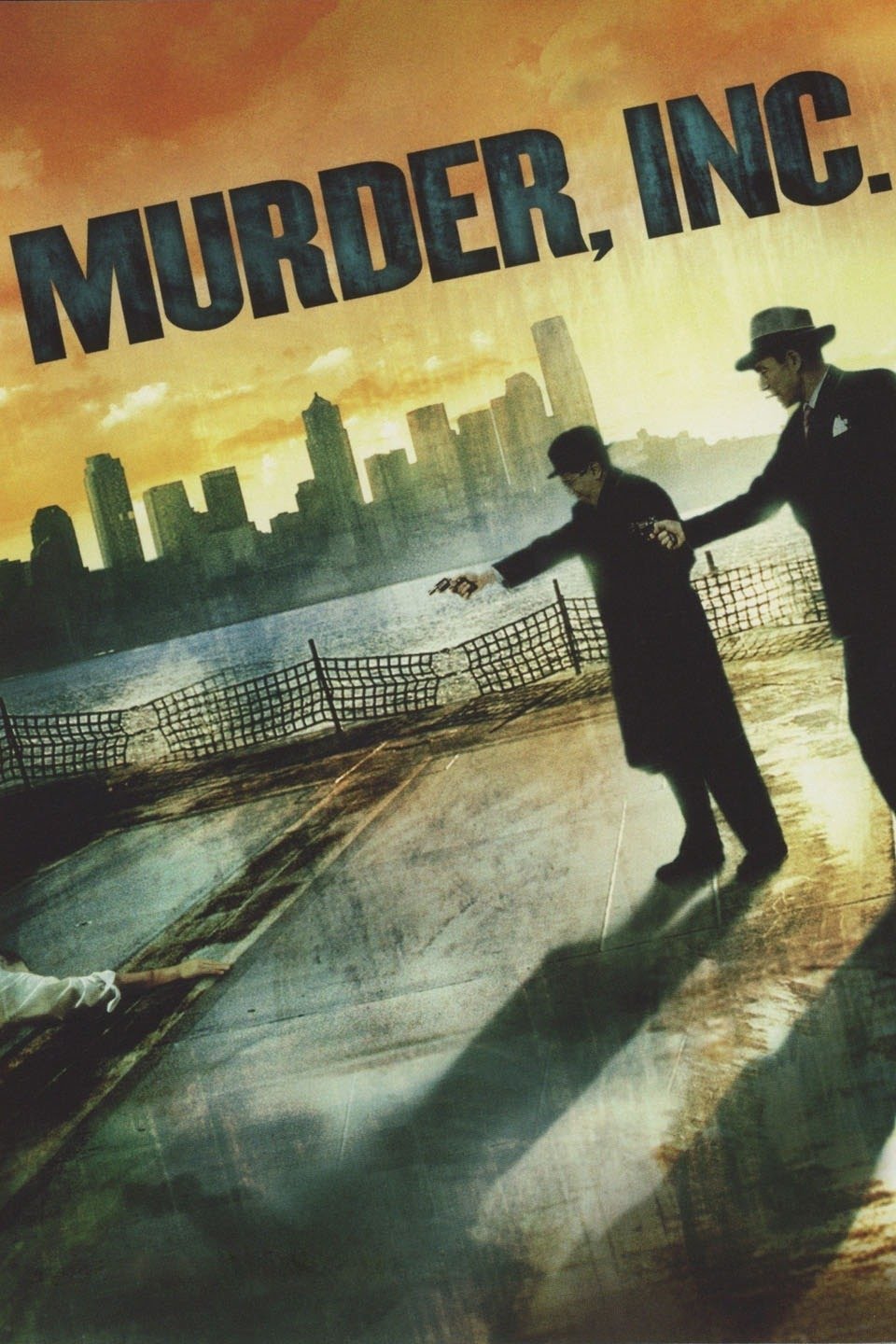
Often the title lets the reader know what kind of book they will be reading. I hope I’ve done that with my books. Whoops. The exception to this was the title of the very first book of the Alvarez Family Murder Mysteries, Murder is a Family Business. Looking back on it, I believe the title conveys a weightier book than mine. I had forgotten a famous crime syndicate called, Murder, Inc. was still in a lot of people’s minds. Guilt by association was my problem. Some readers, especially men, bought my book thinking it was going to be yet another exposé of the mob. Or possibly a written spin-off of the movie Murder, Inc, the film that launched Peter Falk’s career in his first major role as a contract killer.
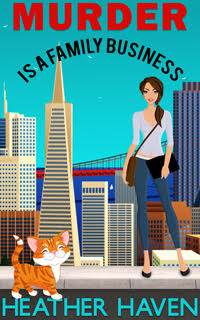
Yikes. None of the above is anything like my book, a light-hearted romp through California’s Bay Area where not only is the murderer brought to justice but the shoes and handbags match. If I could, I would change the title, but the book has been hanging around for a certain amount of time, has had some small measure of success, and, besides, I can’t think of anything better. So, Murder is a Family Business it remains.

But since that goof with the first title, I tried to be careful in naming the rest. My latest book, a work in progress, has the working title, Bewitched, Bothered, and Beheaded. Hopefully, it conveys magic and murder. And if someone thinks of a guillotine, so much the better.
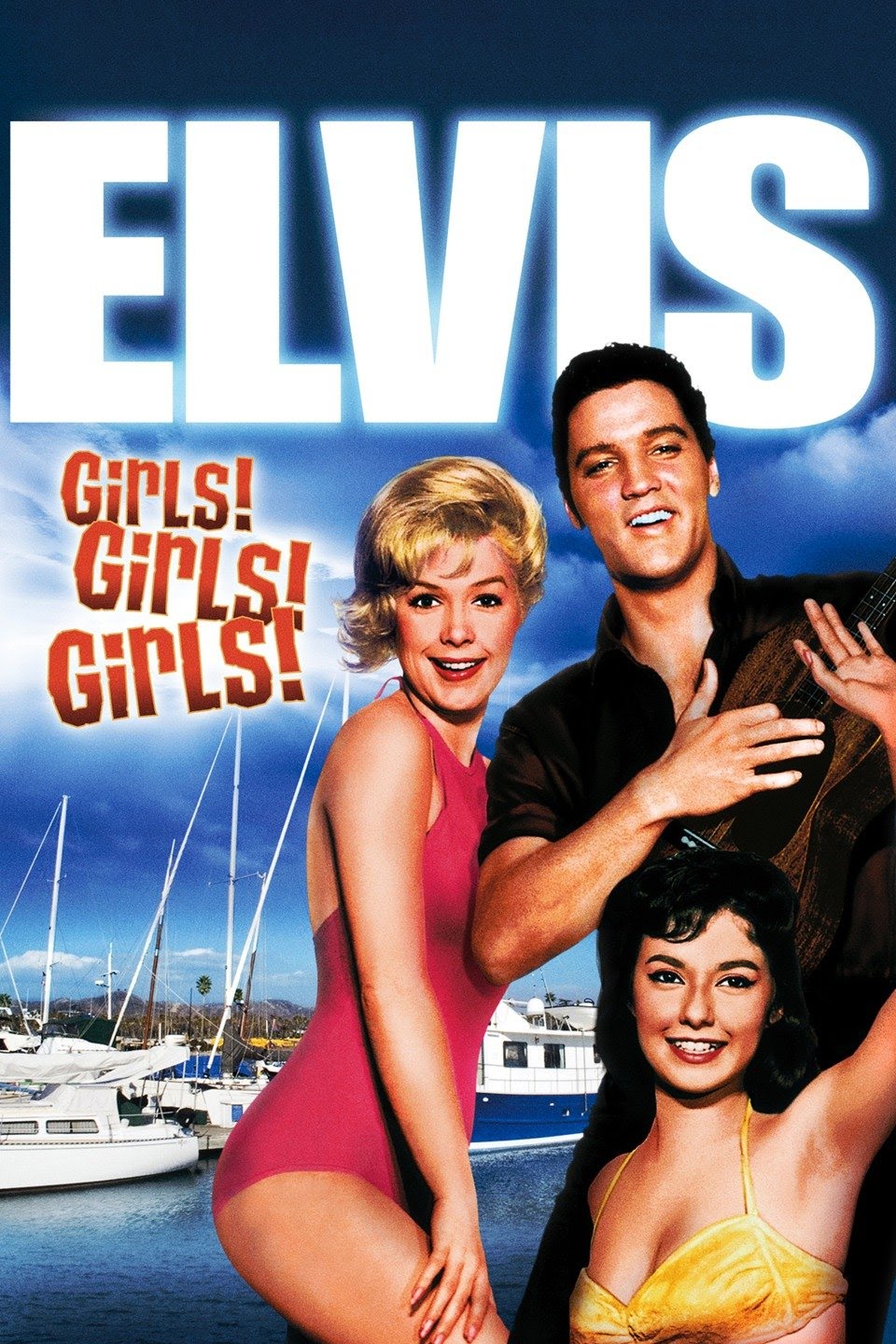
In closing, I should probably mention the title of an Elvis Presley movie, Girls, Girls, Girls. It has nothing to do with any of this, but I am a huge Elvis fan.
We the Jury

I have a jury duty summons for July. In California, I’ll check my county’s website a few days before that date to find out if I must report in person at the Alameda County Courthouse in downtown Oakland. In the past, I’ve reported several times, only to be told later that morning to go home. A few times I’ve made it into the jury pool, which means a trip to the courtroom to find out more. In a couple of instances, it’s been a civil matter.

I always figured if I was going to be on a jury, at least make it something interesting. More than a decade ago, it was.

On that morning, the jury pool was large, with people crowding the first-floor jury reporting room. To me, that said this was a serious case. We were summoned to the courtroom in groups and informed that this was a murder trial, with two defendants.

Back in the jury room, we filled out long questionnaires. Those who felt they had a good reason for not serving on the jury were told they would have the opportunity that afternoon to discuss their situations with the Superior Court judge presiding over the trial. The jury pool of 150 people, we were told, would be cut down to 75 people. Then a series of interviews to be held the following week would winnow down the pool, leaving twelve jurors and three alternates.

I have no objection to serving on a jury. It’s my duty as a citizen. At that time, I’d never had the opportunity before. But I thought my status as a writer of crime fiction would disqualify me. In fact, a few years later, when I was summoned to the courtroom for another murder trial, the defense attorney in that case dismissed me from the pool in record time.

But this earlier case was different. I made the first cut and was called back the following week for jury interviews.

The judge informed us that this was not a case where the jury would determine who killed the victim. One defendant had already confessed. The jury’s job was to determine whether this killing was murder in the first or second degree, or whether it was manslaughter, voluntary or involuntary. The jury would also determine whether the second defendant was an accessory. There were various other charges as well.

The jury interviews were revealing. Some people felt that anyone charged with murder must surely be guilty and that was that. Others revealed prejudices and biases that led to their disqualification. Many felt that they could be open and unbiased, making their decision based on the evidence presented during the trial, despite the fact that many of the witnesses, as we were warned, had various misdemeanor and felony convictions.

During my interview, the judge remarked on my status as a mystery writer. He asked questions about my ability to sift fact from fiction and used this as a springboard for comments about how this wasn’t an episode of a TV show. The defense attorney asked if this case would wind up in one of my books. My answer was frank and truthful. I told the court that everything that occurs in my life is grist for the mill, and I might very well use my juror experiences in fiction.

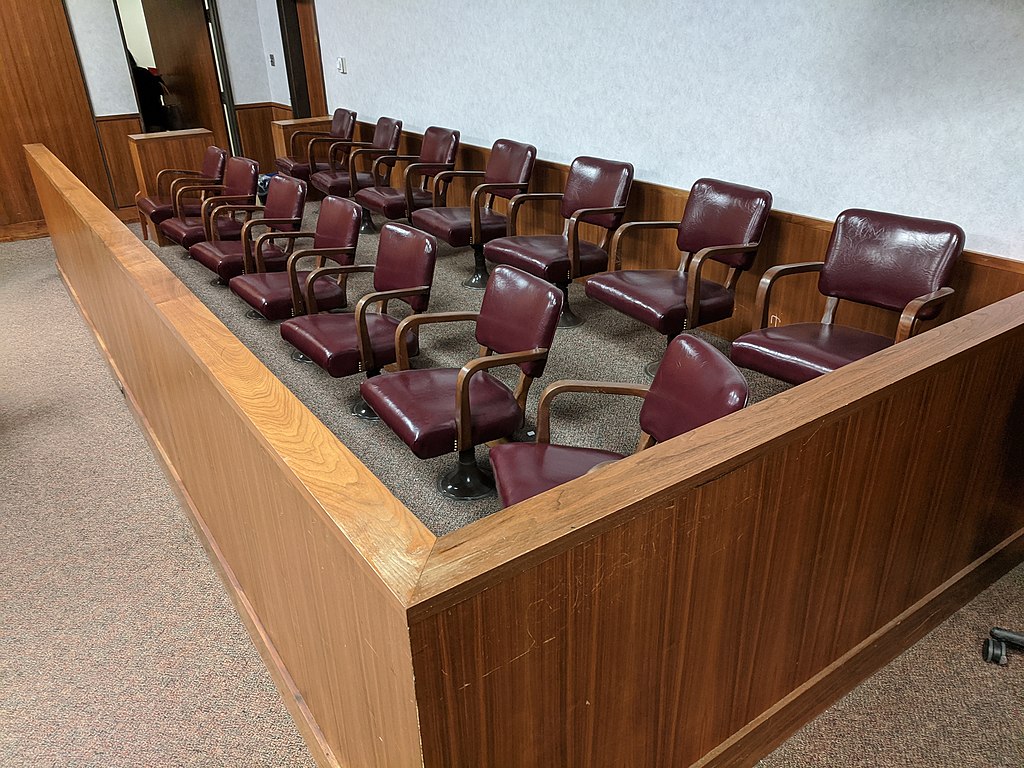
At that point, I was sure I’d wind up on the jury. I was right. For five weeks, I was in that courtroom, listening to witnesses, or in the jury room upstairs with my fellow jurors, where we were under strict orders not to discuss the case.

The experience made a lasting impression. At the start, I thought the case was going to be straightforward, another senseless killing in a rough neighborhood. But it wasn’t that simple.

I listened to the testimony of witnesses who contradicted each other, making an effort to determine who was telling the truth. I got a sobering picture of the aimless lives of many of the people involved in this case.

Then there were the crime scene photos. Those images will stay with me. They showed the damage done to a human body by a semi-automatic weapon fired a close range.

We the jury – we took our job very seriously. We were aware that we held in our hands the fate of these two defendants.

We spent days deliberating and discussing the evidence. The jury instructions given to us by the judge became our Bible. All the information we needed was there, if only we could parse it out. None of this was easy, or cut-and-dried.

The verdicts? In the case of the first defendant, guilty of voluntary manslaughter and several other charges. Later that year, he was sentenced to thirty years in prison. The second defendant: not guilty of the accessory to murder charge, guilty of several other charges.

Guest Blogger ~ Suzanne Baginskie

How Entering a Contest Advanced My Goal to Authorship

Readers and writers are always interested in how I started writing my first romantic suspense book and developed it into a series. After nineteen years of submitting and selling short mystery and romance fiction, I entered a Harlequin Romantic Suspense novel contest in 2018. Their guidelines asked for a blurb and a synopsis. I literally had to devise a fictional story plot! Challenged, I sat at my desk and created Dangerous Charade in less than two weeks. I submitted my idea and waited for the results.

When the email for round one arrived, fifty novel premises were accepted and one of them was mine. I’d made it in. Now the next request required three written chapters. Time of the essence, I thought of nothing else. I fleshed-out the characters, added the crime and suspense, and weaved in romantic affairs of the heart. I worked hard, rewrote, and polished them again, and when the due date arrived, I hit send.

Three weeks later I heard the news, my entry made it in along with twenty-four other writers. Their last instructions asked for the full novel. Competition was stiff. We had a month, but time flew by fast as life got in the way. It wasn’t easy, but I applied myself and soon wrote: The End. I submitted my manuscript and hoped for the best.

In the meantime, I started another book and patiently waited. The day that final emailed response appeared in my inbox, I held my breath and clicked it opened. The message brought both good and bad news, I’d made it into the last ten entries but only one novel could win, and it wasn’t mine. Rejection hurt, but I had completed my first novel.

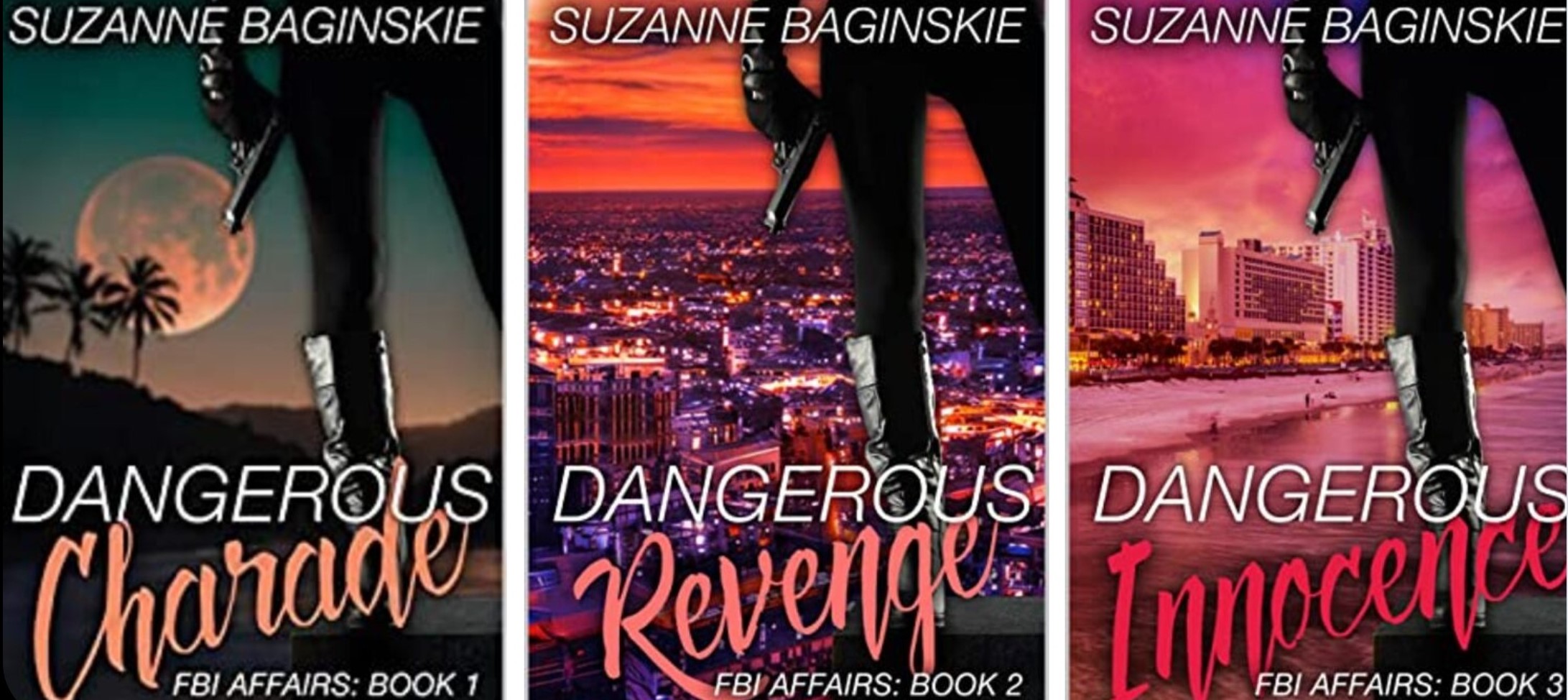
When COVID-19 reared its ugly head for the second year in 2021, I saw a call out for romance novels from a traditional publisher, Magnolia Blossom Publishing. I immediately revised and submitted Dangerous Charade. A couple of weeks later, I was offered a contract through a Zoom video call. When they asked me for a series name book two was half finished. It had a different set of characters and crime, but I used the same FBI agents premise. The terrible danger these partners faced together trying to catch criminals and stay alive allowed an emotional relationship to blossom between them. So, I chose FBI and the second word Affairs for the title. It hinted at the hazards of working undercover and affairs of their hearts. Thus, the FBI Affairs Series was born.

I continued the theme and completed Dangerous Revenge-Book two, and Dangerous Innocence-Book three. Each of my novels introduce you to new FBI protagonists who are involved in bizarre criminal situations. They can be read in or out of order, as each novel is a standalone.

Entering that contest in 2018 advanced my goal for authorship. Thankfully, it pointed me in the direction of writing characters who thrived on dangerous ventures, took ultimate risks, and in the end fell in love along the way. Check out my FBI Affairs Series.

Suzanne Baginskie

Dangerous Charade

Book one of the FBI Affairs Series

When an undercover sting in a Las Vegas Casino goes wrong, FBI Agent Noelle Farrell’s cover is blown, and someone wants revenge. Noelle’s sent to Florida under the Witness Protection Program where she runs into her old partner, Agent Kyle Rivers. A man she worked closely with and admired. Kyle’s mourning his father. He failed to keep him safe from a deadly stalker. Deep in hiding, someone targets Noelle. She fears for her safety. Noelle leans into her faith and struggles to keep her independence. Kyle vows to protect Noelle, unaware she has a secret—one her assailants already know. 

Buy Link: http://www.amazon.com/dp/B09JPCX2CX

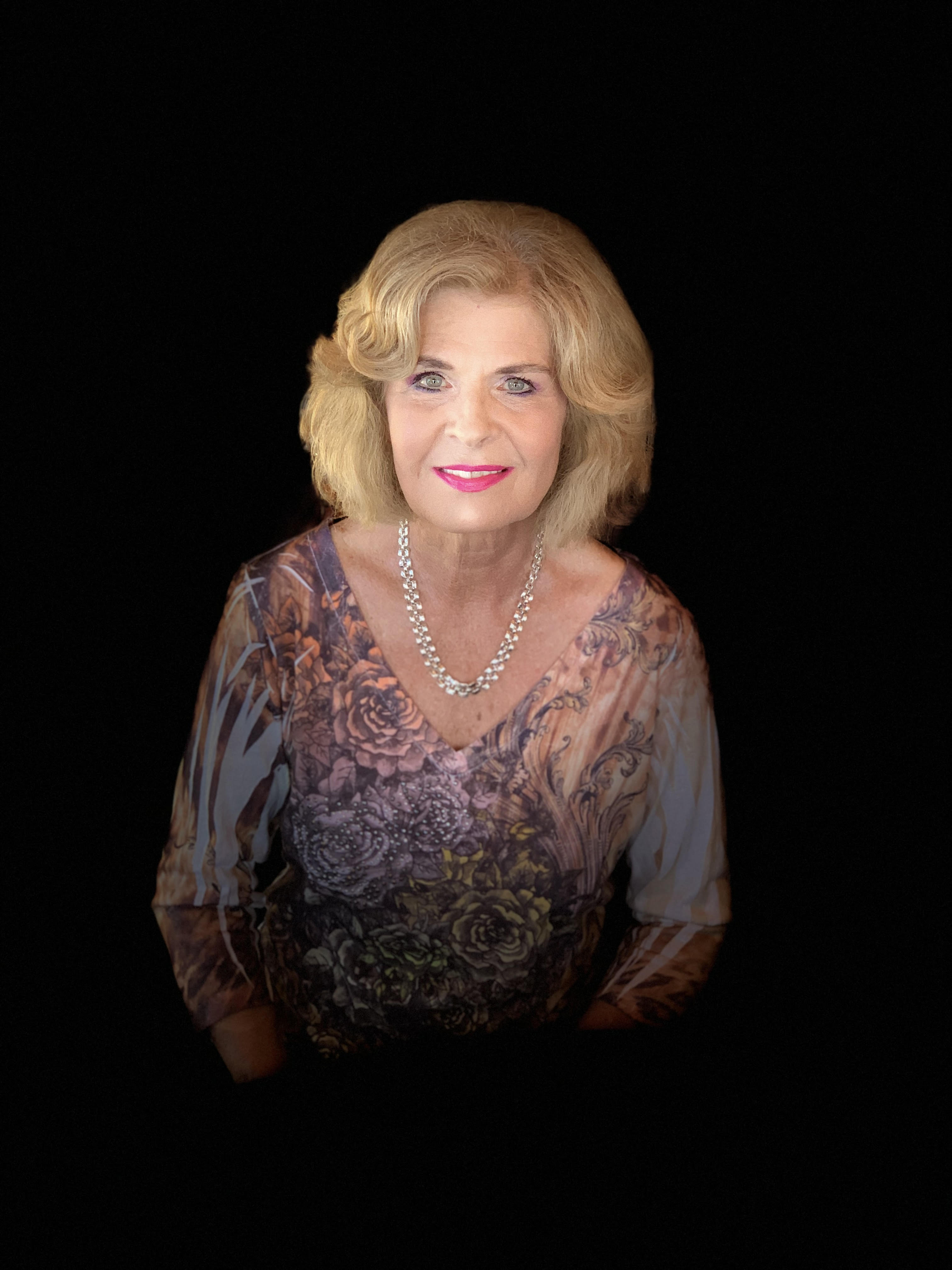
Suzanne Baginskie and her husband, Al, left New Jersey and relocated to the west central coast of Florida. She’s been writing ever since her mother gifted her a five year diary for her eighth birthday. Unknowingly, her mother’s inspirational nudge helped the writer inside her emerge. She recently retired from a law firm as a paralegal-office manager. Now she writes daily spinning tales of romantic suspense that pair tantalizing mystery with compelling romance. She starts each day with a four mile walk and meditates on her current writing project. A voracious reader, she supports her local library association as a friend. She loves traveling, especially on cruise ships. Most sea days on board, you’ll find her plotting stories outside on the deck gazing at the ocean. Currently, she is working on her fourth book in the series.

Website: http://www.suzannebaginskie.com