A Question with a Hundred Possible Answers

There is nothing a mystery author likes better than a question that could have a hundred possible answers, especially when it comes in the form of a dead body (gruesome!) or a missing person (my personal favorite).

Photo by Sagui Andrea on Pexels.com

So how does a writer come up with a scenario that fits this bill? If you are writing a cozy or a closed-door sort of mystery, you create a situation where a crowd of people have motives and opportunities to bump off the victim. But what if, like me, you prefer to set your stories in rural or wilderness environments? At first, you might think that there aren’t dozens of perpetrators to investigate “out there.”

I am often slapped in the face by real-life problems like these. The first came when I was attending a Great Old Broads educational campout near the border wall in Arizona. I’m naturally focused on wildlife and wilderness issues, but as I learned more about the human situations on both sides of the border, I had no choice but to set a mystery of a Hispanic woman’s disappearance in that area.
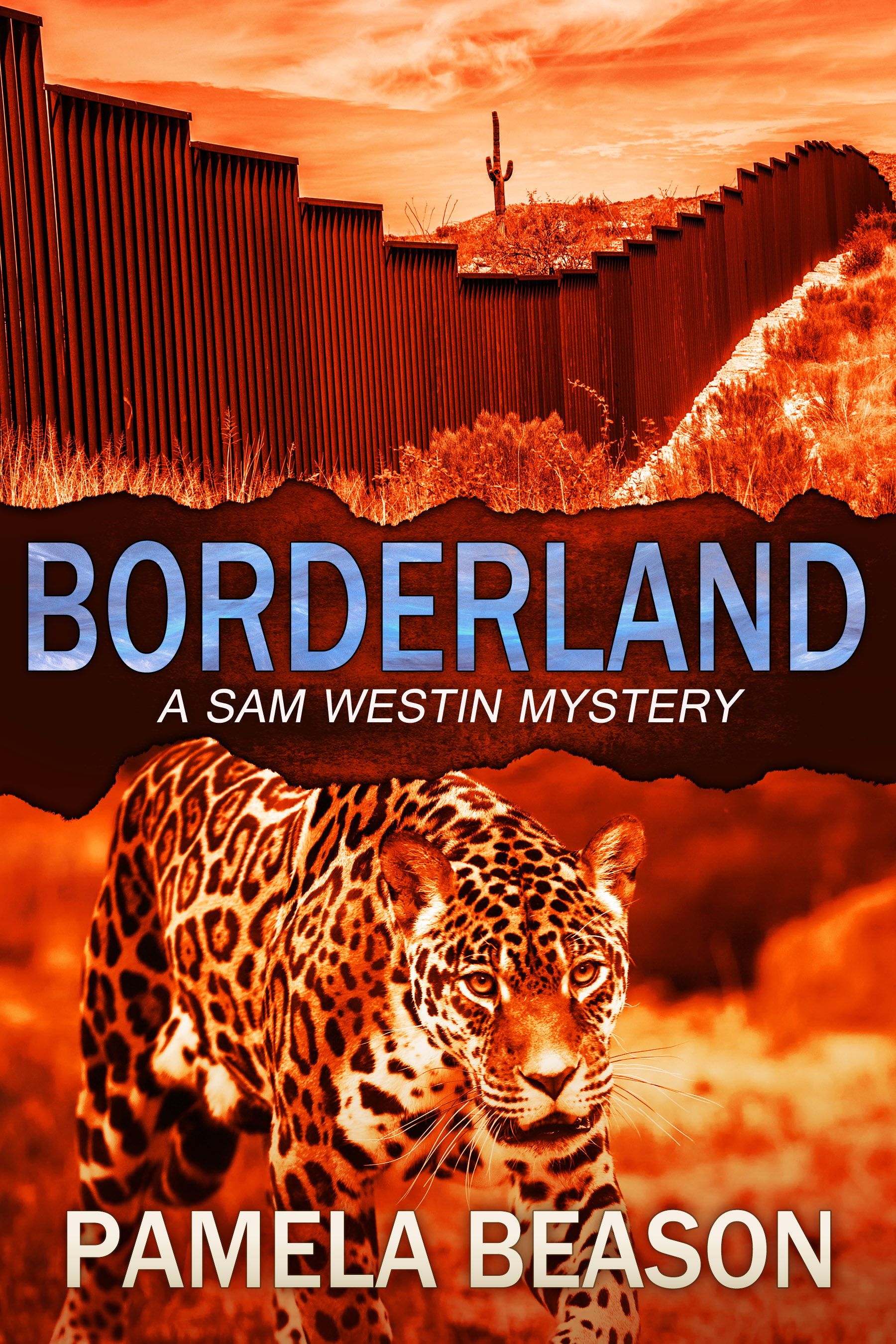
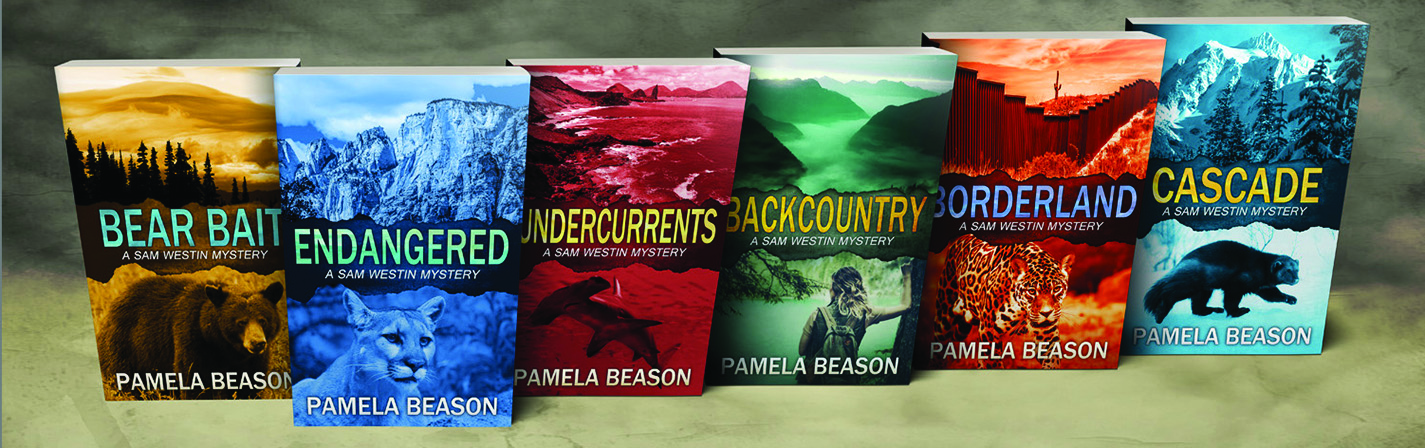
Because, heavens, anything could have happened to my character, Jade Silva. Americans of Hispanic descent are often stopped by Border Patrol agents for questioning. A few who could not readily supply documentation have even been mistakenly deported. Women have been kidnapped for human trafficking. There is drug running and killing of competitors and witnesses by cartels. Desperate migrants traveling in secret often die in the desert. Such an environment cries out for a missing-person mystery. The one I wrote is Borderland.

I am an avid hiker, so I am often exploring public lands—national forests, national parks, BLM areas, state parks, etc. In Washington State, we are blessed with millions of acres of wilderness. When I start off at a trailhead, I am frequently greeted by a poster featuring a missing hiker, sometimes a recent one, sometimes one from years past. More than 1600 people are currently listed as missing on US public lands. And that’s only the ones whom someone bothered to report; there are probably far more. And anything could have happened to most of these hikers. In some areas, it’s easy to get lost and succumb to cold or heat or thirst. It might be easy to fall off a cliff or into an abandoned mine shaft. There are raging rivers to cross, and ice-cold mountain lakes that may look inviting but can quickly incapacitate the unwary. Rockslides. Avalanches. Bears. Cougars. Elk. Moose. Wolves. And of course, the most dangerous animal of all, humans, especially those who are careless with guns.

So, I’m setting my new suspense novel in the North Cascades area, which has all those possibilities for a hiker to get into deadly trouble. To add to all that, in the northern states like Washington, many public lands border Canada. Like our southern border, a hiker here might cross the border and vanish into another country. So, it is with all these possibilities in mind that I’m crafting my new novel, so far untitled and only half finished. (Hey, it’s summer, I’m hiking!)

And did I mention that my hiker Sam Westin’s adventure is only half of the story? The other half belongs to Neema, the signing gorilla star of my other series. How will I straighten out this tangle of plots and scenarios? Talk about a question with a hundred possible answers!
Dealing with a Tough Topic

My latest WIP- Work In Progress-came about from two separate things my parents told me at different times. My mom was a nurse at a clinic. She commented that there were too many teenage pregnancies in the county. And years later my dad made the comment about a deacon of a church who cheated people and slept with other men’s wives.

Fast forward to now and my overactive imagination putting those two things together to come up with a murder mystery set in a small community where the pastor of a church “teaches” young women how to be good wives.

I have a secondary character whose point of view is shared in the book. She is a midwife who has brought the pastor’s offspring into the world after he sexually assaulted the teenagers and young women. The midwife tried to get the police to do something, but the charismatic pastor shined a bad light on her, and they wouldn’t listen. She is trying to keep the women’s names out of it knowing how many families and lives will be torn apart should it come out. At the same time, she wishes something would happen to the man.

And it does.

I am halfway through this book and my newest critique partner quit on me after saying the story was too dark and she didn’t like the way my main character Gabriel Hawke was acting.

Whoa!

The new CP thought I wrote cozy mystery like her. I never said I wrote cozy and had thought she would have looked up my books. I tried to look up hers, but she is a new writer. She has been giving me good thoughts and information coming into the series at book 11. But her last comments made me sit back and think about how the story is being portrayed. She said I was doing a good job with the midwife. She liked her attitude and how she was going about helping a suspect and keeping the victims from being brought public. But Hawke was too insensitive.

I have readers who say they love Hawke. I don’t want them to not like him after reading this book. Thinking long and hard about what she’d said, I realized, I was portraying the midwife how I would want someone hiding my secrets to be and I am portraying Hawke as a person out for revenge.

Stepping back, I roll things around in my head.

I know that the revenge comes from things that have happened in my past. Things I would love to have Rosa, the midwife, keep secret if she knew. But I’m instilling my revenge for being a victim into my Hawke character. While he does champion the underdog and will find justice even for a nasty piece of work as the victim, he needs to be more sensitive to the dead pastor’s victims.

And so, I spent all of last week with printed pages of my manuscript, going through and moving scenes, adding more scenes with Hawke learning from Rosa and his partner about how the victims of this man’s assaults have justice now that he is dead but need help to heal and not be put in the headlines of the local paper.  Or brought in for questioning about something that can no longer be punished.

I have to override Hawke’s need to put the last piece of the puzzle in the right place. And my need for revenge.

And though I wish my CP was willing to keep working with me, she did me a major favor by telling me how she felt about the story and my characters.

Guest Blogger ~ Valerie Nieman

Accidentally on purpose

            I sort of backed into writing mysteries.

            It’s not that I didn’t love them, at least the darker, creepier kind. Thanks to a home library of classics, I read Poe as a child and so gained acquaintance with the morbid, the gothic, and the methods of detection at a tender age. Later, I encountered Sherlock Holmes, through Basil Rathbone films and the original stories.

            But while I reveled in the clues and conundrums, I never thought I could write a mystery. How to get those clues in? How to twist a satisfactory plot?

            I first approached the genre with a novel called Blood Clay, which had the death of a child in the opening chapters but no mystery about the cause. It was a crime novel, and a study of the stranger in community, but not a whodunit.

            When I wrote To the Bones, the mystery was there from the start. A man wakes up in a pit of bones. Why is he there? Who did it? What happens when he manages to get out? Still, I didn’t think I was writing a classic mystery—more of an Appalachian folk horror novel with an environmental twist. The biggest mystery was not the man in the mine crack, but the murder of a river.

            I was lured into writing In the Lonely Backwater by the powerful voice of the main character. As soon as Maggie voiced the opening lines, I knew that I was in for a ride. And gradually the mystery, or mysteries, emerged and became clearer. I had to do a good bit of rewriting to weave in various elements, but when is that not the case?

            And Maggie herself? Well, there is a lot of her in me, or me in her, more than the usual self-identification of creator with characters. I grew up in the country and was a similarly solitary girl wandering the woods, toting around my Golden Guides to identify the rocks, insects, plants that I gathered on my treks.

            I can trace her devotion to Linnaeus and the delights of classification to my own memory of a fine high school biology teacher, and then reading the Fred Chappell story “Linnaeus Forgets,” that reawakened my interest in the Father of Taxonomy. My research, other than continued woods-wandering, included time spent at the University of North Carolina libraries with a 19th-century translation of A Tour in Lapland, Linnaeus’s fascinating diary of his early explorations and a book that comes into Maggie’s hands at a critical point.

            While the death of her beautiful cousin Charisse and the search for her killer form the backbone of the plot, the story is really a character study of a teenager struggling to shape her own life. As Chappell said in his review, “The heart of the mystery is at last (Maggie’s) own heart.”

            And the next? Maybe Maggie has more trouble….

All seventeen-year-old Maggie Warshauer wants is to leave her stifled life in Filliyaw Creek behind and head to college. An outsider at school and uncertain of her own sexual identity, Maggie longs to start again somewhere new. Inspired by a long-dead biologist’s journals, scientific-minded Maggie spends her days sailing, exploring, and categorizing life around her. But when her beautiful cousin Charisse disappears on prom night and is found dead at the marina where Maggie lives, Maggie’s plans begin to unravel. A mysterious stranger begins stalking her and a local detective on the case leaves her struggling to hold on to her secrets—her father’s alcoholism, her mother’s abandonment, a boyfriend who may or may not exist, and her own actions on prom night. As the detective gets closer to finding the truth, and Maggie’s stalker is closing in, she is forced to comes to terms with the one person who might hold the answers—herself.

Buy Links:

https://www.regalhousepublishing.com

Bookshop – https://bookshop.org/shop/ValerieNieman

B&N – https://www.barnesandnoble.com/w/in-the-lonely-backwater-valerie-nieman/1139962914

Amazon – https://www.amazon.com/s?k=Valerie+nieman&i=stripbooks&ref=nb_sb_noss

Valerie Nieman has been a reporter, farmer, sailor, teacher, and always a walker. She is the author of In the Lonely Backwater and four earlier novels, and books of short fiction and poetry. A graduate of West Virginia University and Queens University of Charlotte, she has held state and NEA fellowships.

Facebook – https://www.facebook.com/valerienieman1/

Twitter – https://twitter.com/valnieman

Instagram – https://www.instagram.com/valnieman/

Website – http://www.valnieman.com

Linked in – https://www.linkedin.com/in/valnieman/

Goodreads – https://www.goodreads.com/author/show/529629.Valerie_Nieman

Scams and Cheats and Crooks, Oh My!

by Janis Patterson

Okay, I am officially livid. How long are people going to have to put up with such blatant criminality?

To explain – a couple of days ago I went to a meeting at one of my ladies’ clubs. It’s an old club, and most of the members are older. It’s very dignified, very much hats-and-gloves proper. I love it, though I do sometimes feel that – since I am a ‘creative’ type – I’m their token artist.

I digress. It’s no secret there that I’m a novelist, and some of the ladies just love to talk books with me. This time a very nice older member whom I know slightly brought a guest of approximate the same fairly advanced age, and asked if they could talk with me. Sure. I’m friendly…

Turns out that her guest (and dear friend) wanted to know how long it should take for a publisher to bring out a children’s book. Legitimate question. I told her honestly I didn’t know too much about the children’s market, having only done one myself, but that a general rule of thumb for traditional publishing from contract to release could be a long as two, two and a half years.

The writer began to cry, and said “But it’s been over four, and I don’t have any more money!”

Uh-oh.

Not wanting to have her embarrassed, I pulled her and her friend into a small parlor and closed the door so I could get the entire story, which is one that is all too familiar. She had written a children’s book which she wanted to get published, so she answered an ad in a popular magazine. You’re all seen them – “Publisher Seeking Manuscripts – 100 years in business.”

It should read Publisher Seeking Money – 100 years of stealing.

This poor woman had signed a contract (which she didn’t remember what said or even if she had a copy of it) and every time they asked for money to cover editing, or an artist, or an artist to replace the first, or an artist to replace the artist that replaced the first, or copyright (which she never saw), or some other d*mn*d thing that made no sense to this poor woman. Of course, time and again they couldn’t go any further until they had more money. Four years and close to $70,000 (yes, SEVENTY THOUSAND, seven and four zeroes) later, they still hadn’t released the book.

By this time I was so red-eyed furious I was ready to do a violence. As gently as I could I told this woman a few truths about the publishing industry… you know – that money always flows TO the author and NOT away from, that authors should be appraised of every step in the process, that legitimate publishers get so many submissions they not only don’t have to advertise for manuscripts but instead are very picky about the submissions they receive even from agents and other industry professionals, that this company is making their money from charging authors instead of selling the author’s books, that before signing a contract with anyone you have to do your due diligence… If you don’t know about the publishing industry, find someone who does! I tried to be as gentle as possible, but by the time I was finished this poor lady was just howling.

So, you ask, why didn’t this woman do some of these things, like check the company? Well, the company really has been in business for over 100 years (which to my mind says something dreadful about their morals and the efficacy of law enforcement) and some people say it does provide a decent vanity press service. Vanity press, not a publisher presence. That difference is as big as the difference between a jobbing printer and a legitimate publisher. Or a Hot Wheels and a BMW.

Now this lady is in her late seventies or early eighties. Her husband is long dead. Her two children live at opposite ends of the country. She is pretty much on her own. She is also, her friend confided to me later, dancing on the edge of something Alzheimer’s-like.

In other words, prime picking for crooked, conscienceless vultures like this ‘publishing’ company.

I gave both ladies my phone number and said they could call me any time they had questions. I also stated firmly that she needed to let her children know what was going on, that she needed to request a copy of the contract she signed and she needed to contact her attorney. Now. In reality, there is not much else I can do, except beg everyone to spread the word –

1) legitimate publishers DO NOT advertise in magazines for submissions

2) money flows TO the author, not away from

3) do your due diligence and investigate before you sign anything – if you don’t know anything about publishing, talk to someone who does

4) contact an attorney before you sign anything

Somehow we have to stop these predators. They skirt the law and have a lot of experience in doing close-to-criminal things that if not exactly illegal are definitely immoral. The cost in human emotion and plain old money is enormous. Spread the word.

Pantsing and Plotting to the Finish

Pantser or plotter?

Well, I’m somewhere in the middle, but probably closer to pantser.

A plotter is a writer who plots before writing the book. A pantser writes by the seat of the pants. Most writers I know are a bit of both, like me.

The pantser-or-plotter question came up recently at a library event, with a question about writing process. A fellow author said that he researches his book for several months, then writes a detailed outline, which could also take several months. Then he writes the book. He needs to know exactly what happens along the way and by the time he finishes a first draft, it’s polished and doesn’t require revisions.

I’m glad that works for him. Not me. My process is messy and always involves multiple rewrites, revisions, tweaks, fine-tuning—you name it.

When I envision a book, I know where I’m going to start and where I’m going to finish. It’s those pesky middles where the hard work takes place. Often the middles get rearranged, because I discover that particular scene works better over here, and another scene needs to be moved there. Sometimes I revise a chapter to foreshadow future events, or go back to a previous chapter to drop in a clue I just discovered.

I start with a timeline, a list of events that happened before the book opens. Those past events are what leads to the current mystery. This process also helps me understand how the characters have evolved. Why is that character the way she is now? Perhaps it’s due to something that happened years ago.

The same is true of settings. In The Sacrificial Daughter, the first in the Kay Dexter series, there’s a long-abandoned hot springs resort. The locals like to hike down to the derelict building and hang out in the creek’s warm pools. There’s a scene at the old resort in the middle of the book, but the place’s back story is important to the plot.

I’ve found that in the middle of writing a book, I need to revise the timeline to incorporate everything I’ve learned since I started out. I also like to leave room for detours and blind alleys. Or, as in a quote attributed to Tony Hillerman, write myself into a corner and see if I can write my way out. Another quote, supposedly from Raymond Chandler, when I get stuck, send two guys with guns through the door.

That happened when Jeri Howard, my Oakland private eye, went to Monterey in Don’t Turn Your Back on the Ocean. I knew that one character, her cousin, was a person of interest in the death of his girlfriend. I didn’t send two guys with guns through the door, just a cop with handcuffs. I upped the ante by having him arrested.

Instead of writing from start to finish, I often jump ahead. It helps me get past places where I’m stuck. When writing Witness to Evil, Jeri was in Bakersfield, in California Central Valley, investigating a case. Then I got stuck. As in, what happens next? I knew that Jeri needed to go to Los Angeles to follow a lead, so off she went, heading south to the City of Angels. I wrote six chapters in rapid order and when I got Jeri back to Bakersfield, I had a very good idea of where I was going forward, and what I needed to go back and fill in.

So, pantser or plotter? I have one foot in each place.