
The Freedoms and Constraints of Genre
I love art, mystery and romance and wanted to explore all three. The notion of “genre” was secondary. For efficiency my present genre’s been labeled “mystery,” but more accurately, it’s “hybrid.”
What sparked Stolen Light, the first book in what was to become my art mystery series, was an offhand remark by my brother, an art historian, about the possibility of unearthing a presentation drawing or cartoon fragment of Michelangelo’s Battle of Cascina. The idea instantly conjoined with a conversation I’d had many years prior with a Vassar College mate, who spoke of her father’s sugar plantation having been confiscated during the Cuban Revolution. (To me, the daughter of an English professor, whose worldly possessions had never crossed the borders of Brooklyn, New York, this was a collision of societal classes never before experienced first-hand. The memory would remain intact.) Without losing a beat, I reconfigured events, made the plantation owner an art enthusiast whose art collection is looted during the turmoil of 1958, in an incident shrouded in mystery that would resurface six decades later. My protagonists, Erika Shawn, a young art magazine editor, and Harrison Wheatley, a more seasoned art history professor, would come into being a few hours later, when I was sitting in front of my computer, staring at a blinking cursor on an otherwise blank screen. Erika and Harrison, I decided, would would find themselves thrown together in both an academic sleuthing adventure that turns deadly, as well as a burgeoning romance with hazards of its own.
What pressed me into writing False Light, the second book in the series, and whose plot pivots around the notorious forger, Eric Hebborn (Born to Trouble, a memoir, 1991), is two-fold. I was now hooked on tackling exploits in the art world, where man’s most sublime aspirations conflict with his basest (a great amalgam for fiction!), and also Erika and Harrison were insisting I allow them to get on with their lives.
The third book in the series, Knight Light, would focus on the recovery of art seized during Germany’s occupation of Paris, and the fourth and most recent, To Kingdom Come, on the repatriation of art looted from Africa during the late nineteenth century.
Working in a hybrid medium, where the protagonists are amateur sleuths helping solve crimes, often gruesome, in the art world, and also engaged in a dynamic romantic relationship, can be challenging. One way I deal with the balancing act is seeing that the principal driving force is the mystery and sticking to it. To prevent the plot from stalling, I make sure that Erika and Harrison’s personal conflicts have a bearing on their crime-solving. In one instance, say, Erika goes off on a risky mission on the sly, despite Harrison’s adamant opposition. Her decision and his reaction play an integral part in how the mystery evolves.
Something I have to be on guard about is digressing too long on intimate encounters or personal-issue-centered dialogue. Both can break the forward motion of the central plot. I have a tendency to get swept into the emotional drama at hand, and it’s only later, when I’m reading through the section where the interlude occurs, that I realize the main thread’s been lost. Luckily, most of the time all it takes to resolve the problem is a bit of pruning. On occasion, though, it requires the interlude’s excision. This can be painful, but sometimes cutting a manuscript—and a writer’s ego—down to size can be a constructive experience.
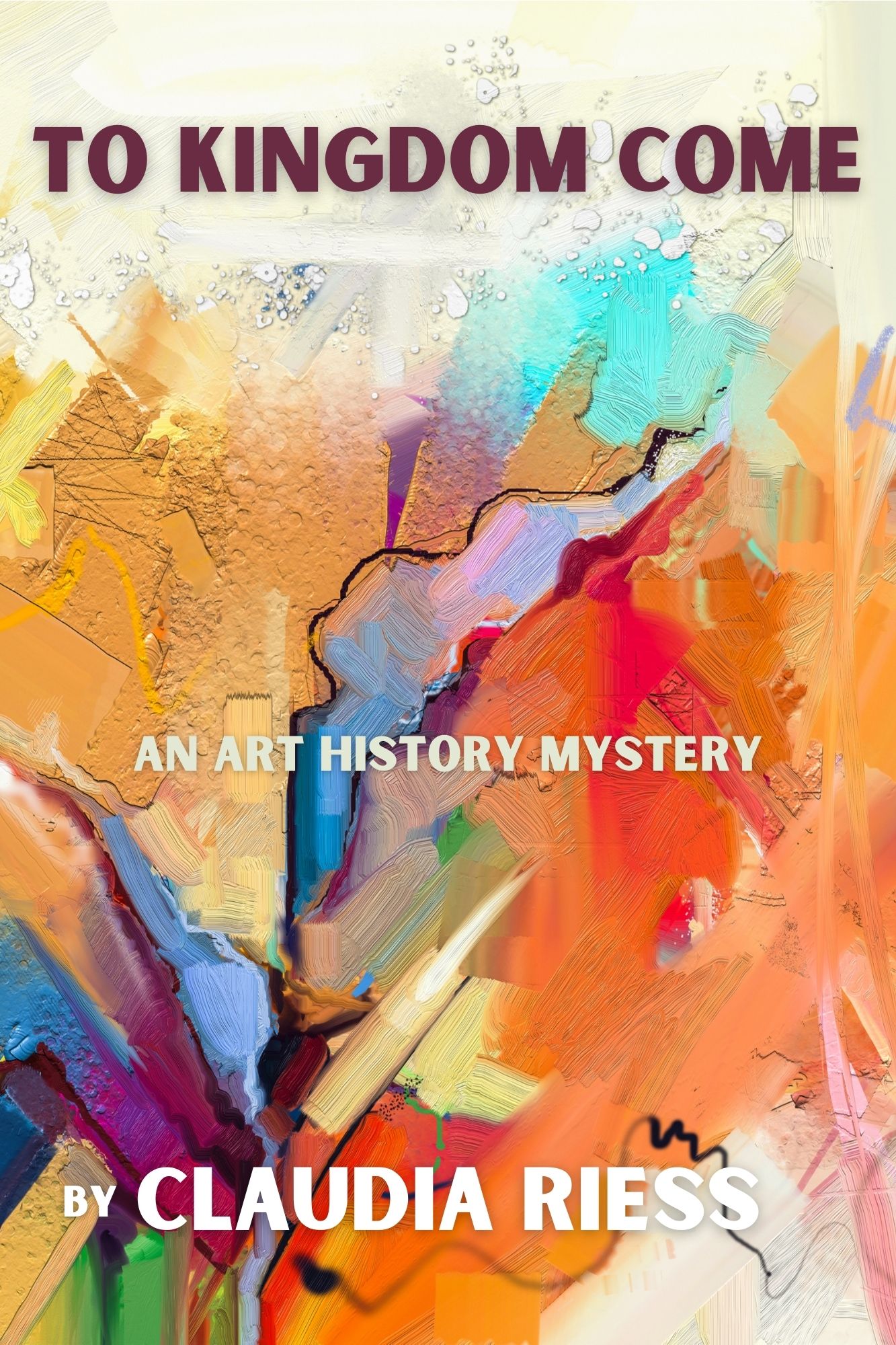
Amateur sleuths, Erika Shawn-Wheatley, art magazine editor, and Harrison Wheatley, art history professor, attend a Zoom meeting of individuals from around the globe whose common goal is to expedite the return of African art looted during the colonial era. Olivia Chatham, a math instructor at London University, has just begun speaking about her recent find, a journal penned by her great-granduncle, Andrew Barrett, active member of the Royal Army Medical Service during England’s 1897 “punitive expedition” launched against the Kingdom of Benin.
Olivia is about to disclose what she hopes the sleuthing duo will bring to light, when the proceedings are disrupted by an unusual movement in one of the squares on the grid. Frozen disbelief erupts into a frenzy of calls for help as the group, including the victim, watch in horror the enactment of a murder videotaped in real time.
It will not be the only murder or act of brutality Erika and Harrison encounter in their two-pronged effort to hunt down the source of violence and unearth a cache of African treasures alluded to in Barrett’s journal.
Much of the action takes place in London, scene of the crimes and quest for redemption.
Buy links: https://www.amazon.com/Kingdom-Come-Art-History-Mystery-ebook/dp/B09Z1KFNB4
https://www.levelbestbooks.us/

Claudia Riess, award-winning author of seven novels, is a Vassar graduate who has worked in the editorial departments of The New Yorker and Holt, Rinehart and Winston, and has edited several art monographs.


 Ladies of Mystery
You must be logged in to post a comment.