Can I Write a Crossover Novel?

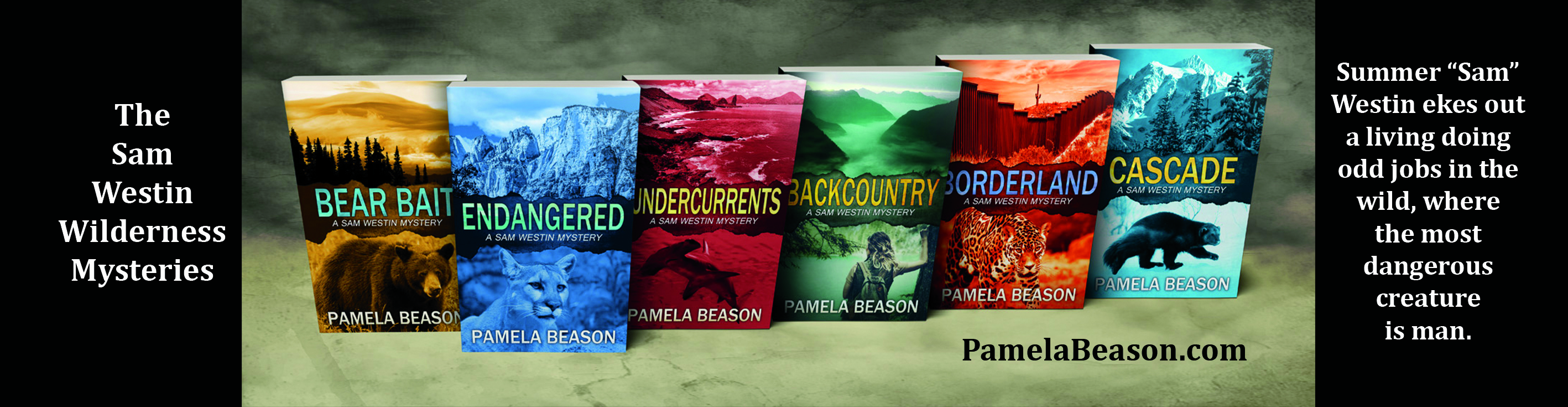
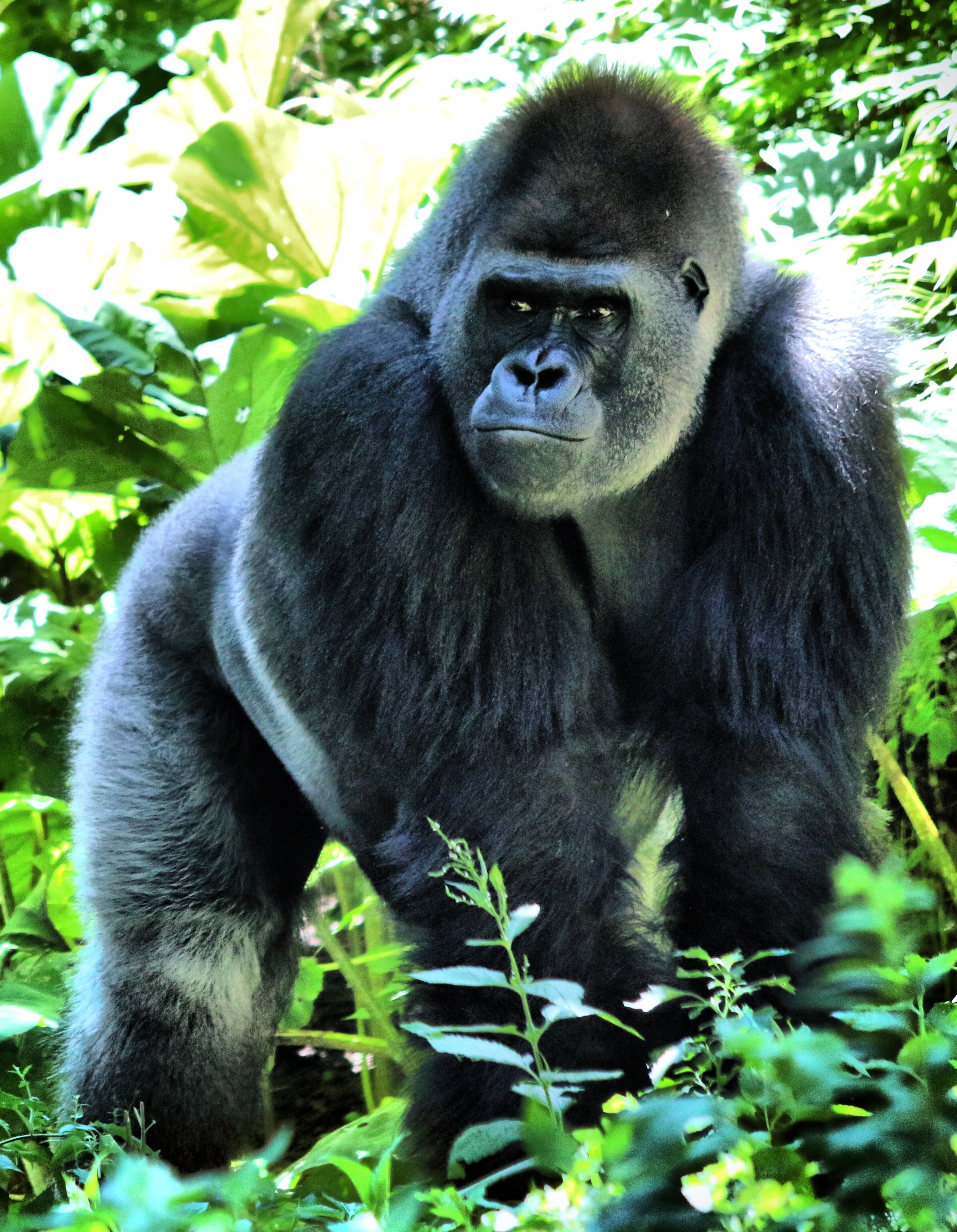
I’m not a bestselling author, but I still have loyal fans who write to me, especially readers for my Sam Westin Wilderness Mysteries, which currently includes six books, and my Neema the Gorilla Mysteries, which has three. The number one reason fans send me email is to ask when the next book in the series will be out. This question makes me simultaneously cheer and groan. While readers excitedly report that it took them only two or three days to finish the book, I remember that it took me ten or twelve months to write and publish it.
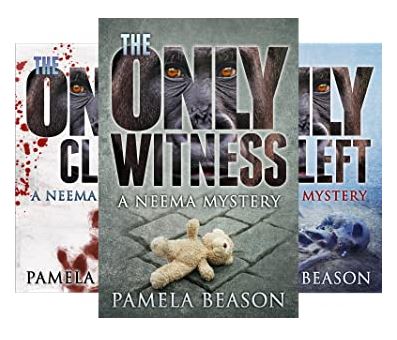
So, I recently had the bright idea to solve this dilemma by writing a crossover novel, in which the characters (or at least the main ones) will appear in the same novel. Bright idea? The problem is that these two series are very different. The Sam Westin mysteries always involve wild animals in wild places, so there’s a lot of hiking and descriptions of rugged areas. The Neema series involves captive gorillas that are learning American sign language, and a beleaguered small-town police detective who gets drawn into vague mysteries when the gorillas observe something frightening and give him cryptic clues, such as snake arm and tree candy. (Poor man, trying to interpret gorilla signs that could be vital clues about a crime or hints about what Neema wants for lunch.)

How the heck am I going to get these two series to mingle? What the heck could these characters ever have in common? In the Sam Westin series, I’ve already focused on cougars, bears, sharks, and wolverines, so I decided to include wolves in her next adventure. How could captive gorillas and wild wolves ever mix? And the answer is: of course they don’t! And they won’t in this next novel, either.
Although my books include a lot of animals (obviously), the crimes are always committed by humans. So I need a human thread—something mysterious, of course—to bring the gorilla world and the wildlife world together. I mulled this challenge over for a while on my break for the last five months. (Some would say this was actually my prolonged period of procrastination, which I have perfected over the most recent years.) While I was in Vietnam last November, I met a fascinating woman who works for the Red Cross locating refugees and their relatives in the United States and elsewhere. I asked her a million questions about immigrants (both legal and illegal) and refugees, which are a legally designated and protected category of migrants here.

Migrants who come to the U.S. are often seeking to join relatives who are already here, and sometimes groups of migrants get broken up, either by the need to travel separately or by one person successfully entering the country while another can’t.
So I plan to have one undocumented immigrant mysteriously killed in the vicinity of the gorillas, leaving behind a toddler who cannot speak English. (Sorry, but this is a mystery and we all know some tragedy is called for.) Poor Detective Finn gets to figure out what happened to mom and who the heck this abandoned child is and how she connected with the gorillas.

Meanwhile, Sam Westin is going to backpack into North Cascades National Park in hopes of finding wolves that have been reported there, only to discover an injured foreigner and an injured horse lost in the wilderness. And then someone will try to kill them all before they can reach civilization.

Okay, there are so many questions left. Who the heck is the foreigner lost in the wilderness, and why is a horse wandering in the woods? And most urgent of all, who is shooting when Sam is trying to rescue the unfortunate man and beast? And what is the possible connection between the abandoned toddler and the illegal migrant Sam has encountered?

I’m not going to tell you all that (okay, so far I only have vague ideas about those challenges), and I can’t even tell you the title for my new novel, because the Neema series books always have “The Only” in the title, and the Sam Westin books are usually one word (Endangered, Bear Bait, Undercurrents, Backcountry, Borderland, Cascade). So what title can I use that will make sense? And how will I advertise this crossover novel?

Only time will tell whether writing a crossover novel will please the readers of one series and introduce them to the other (thereby saving me a year of writing another book), or whether I’ll be the next victim running through the woods, trying to escape angry fans.

Hitting the Road to Write a Book

I’m heading on a road trip Wednesday to check out some locations I’ve written into the 4th book, The Squeeze, in the Spotted Pony Casino Mystery series. While I grew up close to the area and had quite a few trips to there, it has changed since I was a teenager.

I’m also going to the library in Pendleton to use their archives of the local paper to go through the motions my character will be doing in my book. And I need to see a restaurant and store that I use in the book. Then I’ll be headed to the Umatilla Reservation to drink in more of the atmosphere there. I plan to sit for an hour or more in the small store with a sandwich shop to watch interactions and if I’m lucky I’ll find someone to talk to about living there. After that, I’ll go to the museum and check out the books at the store in the museum to see if there are any books that I can use to learn more. And finally, I’ll sit in the casino an hour or two to soak up that atmosphere and add it to my story. I may even venture out to where I have my character’s house just to get view of it in a different season.

I’d hoped to visit with a tribal member that has been helping me with the culture of the reservation. He can’t get away to talk to me the days I could get to the Reservation.

It will be a five-hour drive from where I live to Pendleton. I’ll either spend the night at the casino if I don’t have enough time to do all I want, or if I do get my research finished and don’t have to go back, I’ll spend the night at my oldest daughter’s an hour from Pendleton and head home on Thursday.

This isn’t the first nor the last time I’ll be taking research trips for books. The 5th book in the series is set at an Indian casino on the Oregon Coast. I’m headed there in March with a friend to do research for that book.

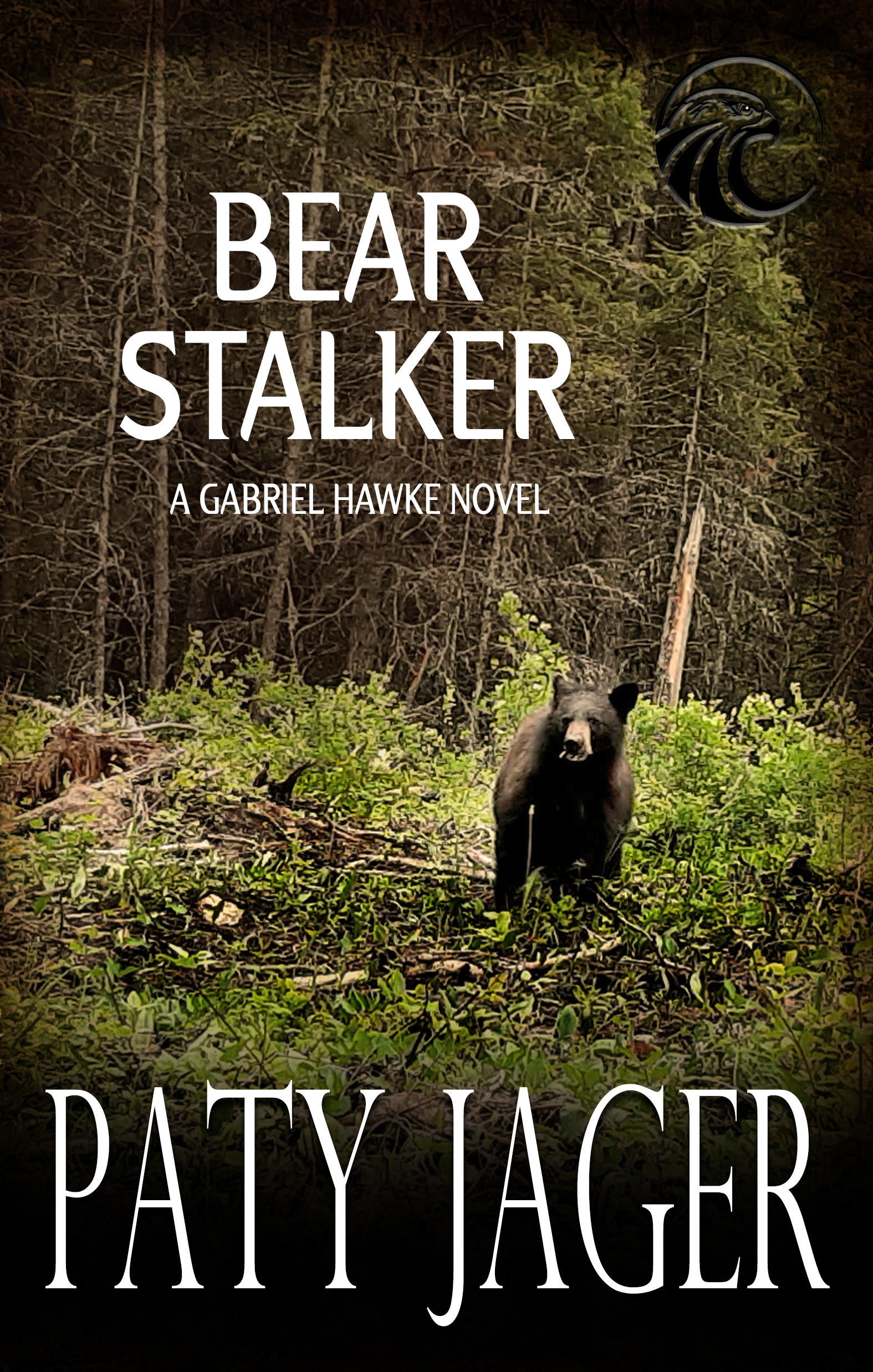
And over the summer I took a trip with my sister-in-law for book 10 in my Gabriel Hawke series. Bear Stalker is now available in ebook and print and we are working on the audiobook.

Here is the blurb, cover, and buy link:

Book 10 in the Gabriel Hawke Series

Greed, Misdirection, and Murder

Oregon State Trooper Gabriel Hawke’s sister, Marion, is on a corporate retreat in Montana when she becomes a murder suspect. Running for her life from the real killer, she contacts Hawke for help.  

Hawke heads to Montana to find his sister and prove she isn’t a murderer. He hasn’t seen Marion in over twenty years but he knows she wouldn’t kill the man she was about to marry.

As they dig into possible embezzlement, two more murders, and find themselves trying to outsmart a wilderness-wise kidnapper, Hawke realizes his sister needs to return home and immerse herself in their heritage. Grief is a journey that must be traveled and knowing her fiancé had wanted Marion to dance again, Hawke believes their culture would help her heal.

https://books2read.com/u/mdjNzW

Guest Blogger ~ Saralyn Richard

The Origin of Detective Oliver Parrott

By Saralyn Richard

I hate to admit this, but the protagonist in my Detective Parrott Mystery Series began as an afterthought. Shameful, I know, but truthful, nonetheless. The first book in the series, MURDER IN THE ONE PERCENT, begins with an elegant party—a weekend retreat at a country mansion in Brandywine Valley, Pennsylvania, where some of America’s wealthiest and most powerful live.

I was so focused on the party—the guests, the invitation, the menu—I lost sight of the fact that the plot was barreling towards a mysterious death in the bedroom on the fourth floor. Once I had the body, and I’d carefully lined up the various suspects, I realized I needed a detective. Of course, I did. So, I fleshed out the details of the detective’s appearance, his background, his personality. Parrott was an outsider, having little in common with the people in Brandywine. He was young and African American, smart and well-organized, undaunted by the glamor or power, and able to see through the subterfuge and dissembling that was thrown at him.

I’d had students like Parrott. I knew him inside and out. I decided to name him Parrott after Agatha Christie’s detective, Hercule Poirot. (His name is pronounced like “parrot,” the bird.) Once I got further into writing the book, I realized that Parrott was the main character. With that in mind, I rewrote the first chapters of the book to shine the spotlight on him from the start.

The more scenes I wrote with Parrott in them, the more I admired and appreciated his qualities and the way he worked. I loved the way he treated others, too. I still didn’t fathom how much readers would root for him. It wasn’t until MURDER IN THE ONE PERCENT was published, and a clamoring for more Parrott books started that I even considered writing a series.

Here we are, four years and three books later. A PALETTE FOR LOVE AND MURDER was published in 2019, and CRYSTAL BLUE MURDER was just released in September. The Detective Parrott Mystery Series continues to thrive, and so does Detective Parrott, the protagonist who was actually an afterthought.

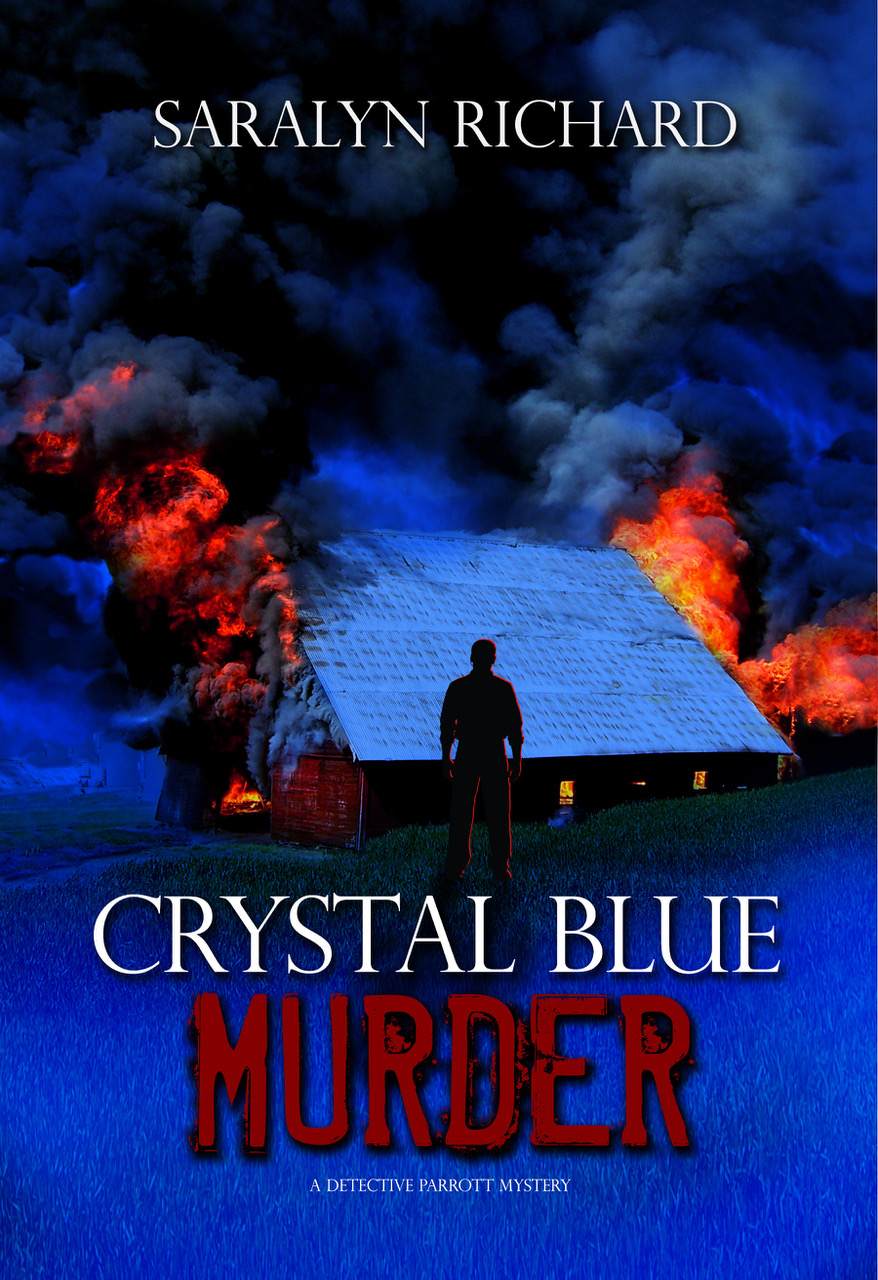
CRYSTAL BLUE MURDER

METH, MURDER, AND EXPLOSIONS OF THE HEART

In the heart of tranquil, lavish Brandywine Valley, Detective Parrott confronts a meth explosion, a dismembered corpse, and an intricate trail of deceitful secrets that shake up many lives — including his own. When celebrity hostess Claire Whitman’s renovated barn explodes into flames, Parrott delves into the privileged lives of all who are affected. Tension from Parrott’s personal life crosses over into the case, and secrets, deceptions, and crimes create an even bigger explosion. Third in the Detective Parrott Mystery Series, Crystal Blue Murder explores the complexities of life in an entitled world where many of America’s wealthiest and most powerful elite have their own definitions of right and wrong.

Buy links: https://www.amazon.com/Crystal-Blue-Murder-Detective-Parrott/dp/0989625567

Crystal Blue Murder by Saralyn Richard, Paperback | Barnes & Noble® (barnesandnoble.com)

https://books2read.com/u/4X2ae6

Saralyn Richard is the author of award-winning mysteries that pull back the curtain on people in settings as diverse as elite country manor houses and disadvantaged urban high schools. An active member of International Thriller Writers and Mystery Writers of America, Saralyn teaches creative writing and literature. Her favorite thing about being an author is connecting with readers like you. Follow Saralyn and subscribe to her monthly newsletter at http://saralynrichard.com.

Social media links:  https://twitter.com/SaralynRichard

https://www.facebook.com/saralyn.richard

https://www.linkedin.com/in/saralyn-richard-b06b6355/

https://www.instagram.com/naughty_nana_sheepdog/

https://www.goodreads.com/author/show/7338961.Saralyn_Richard

https://www.bookbub.com/profile/saralyn-richard

The Magic Factor

by Janis Patterson

There are many mysteries in this world, and many – as we all know – are in the writing game, not the least of which is the Best Seller. Now a dedicated media campaign, the work of many people, a LOT of money and the backing of a prestigious publisher can create a national best seller out of an unimaginably dull and occasionally pedestrian book. On a smaller, more human scale, in the self-publishing world the same pattern will hold, though with generally less rarified results. A lot of (usually) friends, some dedicated and probably expensive PR, and determined social media presence can elevate a piece of pure dreck to more than respectable sales. Everyone knows that.

What everyone doesn’t know – and what can’t be guaranteed – is the Magic Factor.

That is the unquantifiable something which no one can guarantee, cause or even predict which strikes at random and elevates an ordinary – or even less-than ordinary – book to stellar heights.

I just experienced this phenomenon and no matter how I have tried I simply cannot analyze why it has happened.

The book in question is a romance, a perfectly ordinary romance which was written (in some haste, I might add) for inclusion into an anthology many years ago and republished under my own imprint at least half-a-dozen years ago. Since then it just sort of lay there; I didn’t publicize it other than putting an excerpt on my website (which I do for all my books). It hasn’t sold a single copy in any format in at least two or perhaps three years.

Until about a month ago.

I was surprised but happy when a copy sold – in paperback, no less. When that number jumped to six, still in paperback, I was delighted. When in the course of about three weeks about thirty paperbacks (including a smattering of ebook versions and KU reads) were sold I was astonished. When it was selling more copies than any other of my books I was totally gobsmacked.

Why? And why this book, which while reasonably well-written and originally well-received but is still not one of my best or even favorite stories?

I don’t know. I like the book, but have no idea of why this sales surge is happening. (And it is still happening, believe it or not.) Perhaps a book club discovered it and wanted a shortish, pleasant, clean read? Perhaps some college writing class wanting a good example of how to write a genre novel? Or – horrors! – perhaps how NOT to write a genre novel? I really don’t care – it’s all subjective anyway, and I get my royalties no matter what.

Perhaps the best of all, the surge of interest has sparked an interest in my other (similar) stories, though none of them have taken off like this one has.

That’s what I mean by the Magic Factor. I had nothing to do with it, and the reasons are totally unknown, at least to me. Magic!

Now if we could just figure a way to bottle it…

My Characters Won’t Behave!

I recently watched the delightful holiday movie, The Man Who Invented Christmas. Charles Dickens, played by Dan Stevens, is irked by poor sales figures on two recent books. He’s got family issues, financial stress, and this leads to writer’s block.

He needs money, so he must write another book. When his publishers pass on his idea for a Christmas novel, he vows to publish it himself. Sound familiar? Yes, it does these days.

Trouble is, Dickens doesn’t have an idea—yet. It creeps into his head, fostered by his habit of writing down interesting names and collecting words and phrases. Then he searches for an appropriate name for his main character which, as any writer knows, must have the right sound and personify the character.

Scrooge—if ever there was a perfect name for a character, that’s it. Dickens speaks the name and quicker than you can say “Bah, humbug!” Ebenezer appears, grumpily played by Christopher Plummer.

He’s not happy. He’s not cooperating either. Neither are the other characters who show up to plague Dickens. Mr. and Mrs. Fezziwig, Marley’s Ghost—they’re upset that Dickens plans to kill off Tiny Tim and they won’t shut up. As for Scrooge, he’s nasty and on target when he lobs his opinions and observations at Dickens.

All the writers among you, raise your virtual hand if this has ever happened to you.

It does to me, despite the fact that I say, “Wait a minute, you’re not real. I made you up. How dare you have a mind of your own.”

In Till the Old Men Die, I was sure that one character was responsible for the deaths of two murder victims. Then another character jumped up and down, hands waving, and said, “No, I did it!”

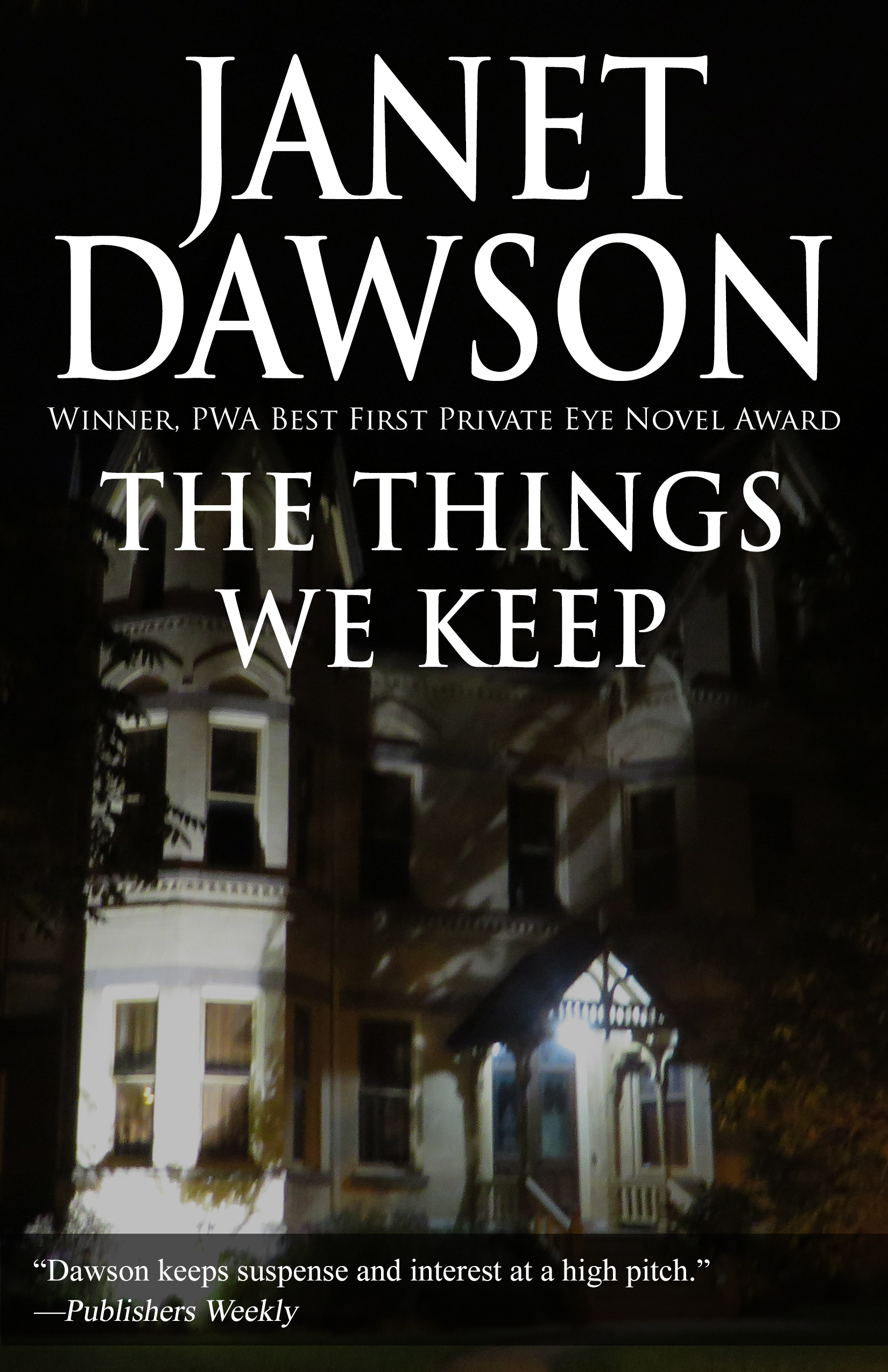
Then there are the characters who are supposed to be walk-ons, there to further the plot of one particular book. However, not content with being one-offs, they start showing up in other plots. I have a character from an earlier Jeri Howard book, Water Signs, who appears in The Devil Close Behind and my new book, The Things We Keep. Another character who had a brief role in Jeri’s case Witness to Evil wound up as the protagonist of my suspense novel What You Wish For. And there’s Tidsy, in Death Rides the Zephyr, the first in the Jill McLeod California Zephyr series. She’s in two books out of the next three and may wind up with her own novel.

Ah, well. Follow where the characters lead. I’ve discovered that if I try to make them do things they don’t want to do, I wind up wandering through the writer’s block maze.

The character who now exhibits a mind of her own is Jeri Howard, the protagonist of my long-running private eye series. After The Devil Close Behind was published, I thought it might be time to close the book on Jeri. After all, 13 books is a good long run. At the time I didn’t have an idea for #14.

Then it began to creep into my head, shoving aside the historical novel I’d just started and elbowing its way to the front of the line. A house in Alameda that looked neglected, one I saw in the neighborhood near the Saturday farmers market. It wasn’t abandoned, though. Someone was living there.

The writer in me began asking questions. Especially, what if? What if there was an old Navy footlocker hidden in that house? What if Jeri opened it, and found human bones? Of course, Jeri is going to find out whose bones and what happened to those people.

Find out in The Things We Keep, which will be published in March 2023.