
Guest Blogger ~ Erica Miner

BRINGING MURDER AND MUSIC TOGETHER

Opera can kill you.

That’s what young violin prodigy Julia Kogan discovers on the night of her debut in the orchestra at the Metropolitan Opera.

Julia is the protagonist in my Opera Mystery novel series. I know her very well. She is my alter ego, my clone: myself at that age, when I first started out as a newbie in the Met Orchestra.

How did a Met Opera violinist morph into a writer of mysteries? The answer lies in a sad story with a happy outcome.

When I was in my twenties, I had the good fortune to be playing in the pit at the Met, where I was privileged to watch and learn from some of the most glittering celebrities ever to grace the opera stage. Rehearsing and performing with the likes of Luciano Pavarotti and Plácido Domingo was an almost daily occurrence, and dreamlike in its splendor. Night after night I watched the dazzling Austrian crystal chandeliers rise to the ceiling, heralding another first act curtain about to rise at the world’s most prestigious opera house. It was hard work but rewarding.

Alas, after 21 years of opera spectacles from Mozart to Verdi to Wagner, injuries suffered in a car accident forced me to give up my Met career. What new creative outlet could I replace it with? It was writing that saved me.

I had always written, since I was a kid in grade school and was placed in an after-school program for Creative Writing. That was when I discovered my love for the art: inventing characters and plot lines and weaving them together to tell stories. Even when I was at the Met, I took writing classes whenever I could fit them into my schedule. That passion for telling stories has not faltered. I never expected it would one day become the key to my artistic survival. Nor did I anticipate that the Met itself would be a source of inspiration for future novels.

While I was at the Met, I had learned something surprising about the venerable institution. When I observed the backstage intrigues that went on behind that famous “Golden Curtain,” I found that in every department of the company, from the biggest onstage stars to the orchestra musicians to the stagehands and more, egos and rivalries ruled the day. These people were always at odds with each other. The place was a musical Tower of Babel.

Take the orchestra, for instance. 100 neurotic musicians thrown together in a hole in the ground, with no light and no air, 7 days a week. You see more of these people than your own families. Sooner or later, someone’s going to want to kill someone. And there were some nefarious goings-on as well. True events that would curl your ears.

How could I not write about this place? I let my wicked imagination take over, and before I knew it, I had created my Julia Kogan Opera Mystery series. Book One, Aria for Murder, takes place at the Met, where neophyte Julia becomes entangled in a murder investigation. When she realizes her probing has placed her in danger of becoming the killer’s next victim, she must use every shred of her inner strength to save her own life.

I could never be as brave or as plucky as Julia. But I have gotten limitless vicarious thrills from concocting jeopardy for her as she survives the Met and, in upcoming sequels, finds danger lurking in the dark corners and hidden hallways of other opera houses. The violinist in me continues to provide the background for my novels. But I consider myself doubly blessed to be a violinist who writes.
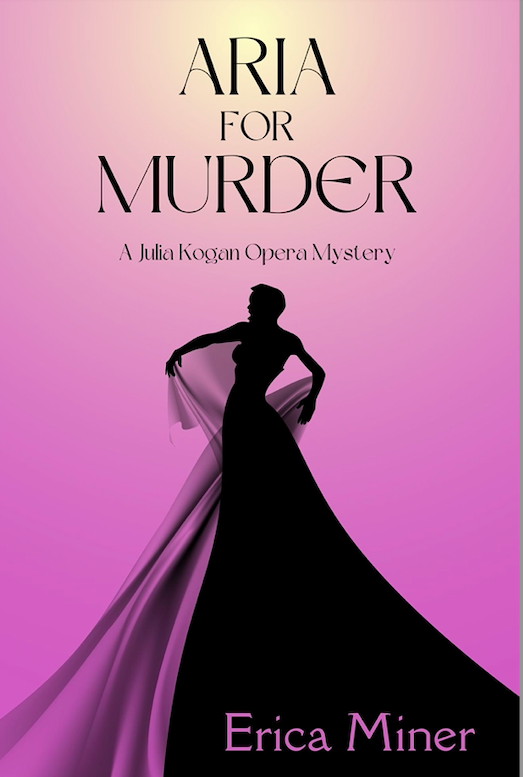
Erica Miner, the Agatha Christie of the opera world, continues the genre with a wickedly wonderful, brand-new thriller, Aria for Murder. Mystery and opera lovers alike will be fascinated to move beyond the famous “Golden Curtain” and glam atmosphere of the world’s most prestigious opera house to the dark hallways and hidden stairways of a theatre rife with danger and intrigue.

Excitement mounts as the moment arrives for brilliant young violinist Julia Kogan’s debut in the orchestra of the world-renowned Metropolitan Opera. But the high-stakes milieu of this musical mecca is rocked to its core when, during an onstage murder scene, Julia’s mentor, a famous conductor, is assassinated on the podium.

Julia is paralyzed with grief, but when her closest colleague in the orchestra is named chief suspect, Julia is thrown into high gear and teams up with opera-loving NYPD detective Larry Somers to solve the murder. As the investigation escalates, Julia and Larry are shocked to discover that the venerable opera house is rife with a web of secrets, intrigue, and lethal rivalries.

But when Julia finds threatening notes attached to her music and barely misses being crushed by falling scenery, she suddenly realizes she may be the real killer’s next victim. Then she is forced to act to save her own life—before it’s too late.

Buy links: https://www.amazon.com/Aria-Murder-Julia-Kogan-Mystery/dp/1685121985/

https://www.barnesandnoble.com/w/aria-for-murder-erica-miner/1142495216?ean=9781685121983
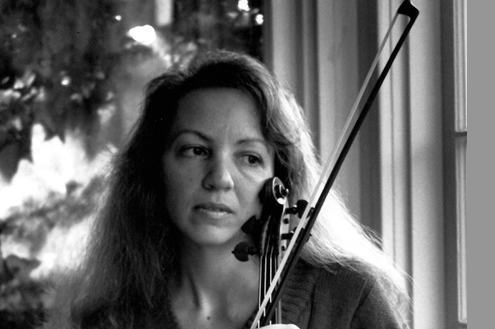
Erica Miner is the award-winning author of the Julia Kogan Opera Mystery series. Aria for Murder, her recent release from Level Best Books, has garnered 5-star reviews on Amazon and Goodreads.

https://www.ericaminer.com

https://www.facebook.com/erica.miner1/
https://twitter.com/EmwrtrErica

https://www.instagram.com/emwriter3/

Clueless by Heather Haven

I suffered an illness in 2022 which took me months to recover from. During that time, if I did any writing, it was here and there. Not a steady diet. I could usually find a blog or an article to do, not a cohesive structure such as a novel, but at the time, fairly fulfilling. But I got out of the habit of writing every day.

However, when I realized I was a year past due on my fourth Persephone Cole Vintage Mysteries, Hotshot Shamus, I knew I had to buckle down. So, I did. Or tried to. It didn’t work. I was easily distracted and the drive to write something as daunting as a novel was so tamped down, I wasn’t sure I could resurrect it again. It was frightening. 

On November 1st, I decided to try NaNoWriMo. On the surface of it, it worked. NaNoWriMo was just the jumpstart I needed. Every day I got up and wrote 1500 words no matter what. In the past, I was writing 5000 words a day, so once I committed to sitting down and writing, it wasn’t hard to do 1500.

On November 2nd, however, is when I realized I wasn’t prepared to write this novel. I didn’t have a storyline, not really, and didn’t know where I was heading, except to the coffee pot for more cups of java. I had just a vague notion, doncha-know. My usual style is to think the story through and write chronologically. I more or less follow a one-day-after-the-other pattern or one consequential scene after the other. Of course, there would be an insert here and there or I’d move a chapter or two around, but it was all fairly controlled.

Not this time. It was like throwing spaghetti on the wall and seeing what would stick where. I’d invent a scenario involving the protagonist and be off and away. If it didn’t reflect or match the ha-ha storyline, I told myself I’d deal with it later. Basically, it was characters, situations, plots, clues, and actions all banged into the keyboard appearing magically on the page. Every day for a month. Needless to say, I graduated NaNoWriMo. 50 thousand plus words were not that hard, especially when most of the words didn’t make any sense.

December had me piecing the story together. Then I added another 15 thousand words or so to make a complete 1st draft.  I cut, swapped out, repurposed, and eliminated scenes and chapters until I got some sort of cohesion. Eureka! A beginning, a middle, and an end. But I am nowhere near done.

Putting aside the rewrites, I am focusing on yet another result of my slapdash approach: the clues. Clues may be mandatory in a mystery but are like cookies. You may think you can never have too many cookies, but overindulge and it will give you a real, live stomach ache.

Unfortunately, the month of November saw me as a wild, reckless writer. Aside from writing anything that came into my head, I would throw in a new clue nearly every day. I’ve wound up with about three times as many clues as needed. I am awash in them. And while I think nothing of throwing away a whole scene that isn’t working, for some reason I am reluctant to let go of even one clue. Let’s face it, I love my clues.

So, January, February, and probably much of March will be devoted to rewrites and getting my clues in order. But I will get there. I shook things up and I’m grateful to NaNoWriMo for the jumpstart. But I have such a stomach ache!

Getting it Right

The historical mystery looked promising on the library shelves. I checked it out and started reading. A few chapters in, a glaring historical inaccuracy pulled me right out of the narrative.

The book takes place in 1855, in a New England town. In one scene, the protagonist goes to the post office—which has a sign reading United States Postal Service.

No. No. No. Definitely no.

The United States Postal Service didn’t exist until 1971, after former President Richard Nixon signed the Postal Reorganization Act of 1970. Before that, it was known as the Post Office Department, or simply the Post Office.

I had a similar experience when reading another historical mystery set in 1950. The protagonist mentioned having read a world-famous novel in the early 1940s. That would have been nearly 20 years before the novel was published.

I found myself thinking that a good editor—or copyeditor—should have caught that. Of course, editors these days were probably born after the Postal Reorganization Act went into effect.

I realize I’m writing fiction, a delicate balancing act between plot, characters and setting. It’s that framework we call willing suspension of disbelief. I write a good story and readers accept that reality and those characters who move around my plot and setting. I want readers to believe that a private eye named Jeri Howard and a Zephyrette named Jill McLeod can solve crimes and catch killers.

When writing my novels, whether set in the present (with historical references) or set in the past, I strive for accuracy. To be fair, I may get it wrong. But I’m careful.

I knew that was important for the Jill McLeod California Zephyr series, set in the early 1950s. There are train buffs call railfans, a natural audience for the books, since my protagonist is a Zephyrette, a train hostess and a member of the onboard crew. I knew that if I made any mistakes, I would hear about it from the railfans.

I was quite chuffed, as the British say, when I did a book event for the first in the series, Death Rides the Zephyr, at the Western Pacific Railroad Museum in Portola, California. One of the volunteers, an older man, approached me. He said he’d read the book and he wanted me to know that I got it right, both the train stuff and the history.

Music to my ears.

I want readers to get caught up in my stories. I don’t want to make errors, however small, that that pull readers out of the story. They might not return.