Disturbing Coincidences

Ever had that oh-no-no-no feeling that you’ve written the same book as another author? Or borrowed a character’s name, or inadvertently duplicated a clever conversation from another book?
This sort of thing has happened to me multiple times. After I wrote my first Summer “Sam” Westin mystery, Endangered, I sent it out to multiple editors at publishing houses. They all told me that it was very good, but way too similar to Nevada Barr’s Track of the Cat.

What? At the time, I’d never heard of Nevada Barr. But I bought the book, and dang, if the editors weren’t right! We both had female park ranger protagonists and cougars in our plots. We even wrote in similar styles! Nevada and I are clearly twins separated at birth.

So, I rewrote Endangered, making my protagonist an internet blogger type working for conservation nonprofits and outdoor adventure organizations. I changed my writing style a bit. And finally sold that book, along with two sequels, Bear Bait and Undercurrents.

Since then, I’ve published three other books in the Sam Westin series, as well as my three Neema the Gorilla Mysteries, and my Run for Your Life trilogy. For years now, Nevada Barr has been one of my favorite authors. Jodi Picoult is another.

A few years ago, when I read Picoult’s latest novel, Leaving Time, I immediately panicked. Like my Run for Your Life trilogy, the protagonist of Leaving Time is an orphaned teenage girl. And elephants romp through both our plots. Yikes! I emailed Jodi Picoult about the similarities. She was kind enough to reply, and said she wasn’t concerned.

As a lesser-known novelist than these two famous authors, I worry that readers may think I’m borrowing from them. But hey, my trilogy came out before Jodi Picoult’s novel, and really, the plots and tone of hers and mine are nothing alike. Then, just as I was working on my book Cascade, which includes a wolverine, Alice Henderson’s first novel, A Solitude of Wolverines, was published. Wildlife researcher, wolverines, winter setting… Not such a similar plot to Cascade (thank goodness), but still a lot of similarities. Her latest book, A Ghost of Caribou, is set in Washington State. Where I live and hike and write. (But not about caribou.)

Am I on the same brainwave frequency as these other gals? It’s downright scary! When I wrote my Neema mysteries, I came up with the name Neema by perusing lists of words in Swahili. I didn’t want to use any name close to Koko, the real signing gorilla that I used for inspiration. Now, just a couple of days ago, I read an article about a gorilla named Neema in the Munich zoo, who (sadly) rejected her baby.

I just can’t get away from all these coincidences. But hey, I just Googled “Neema the gorilla” and guess what? My Neema mysteries top the results list. Either the Munich zookeepers and I are on the same wavelength, or maybe that gorilla is named after my Neema.

So, I guess I’ll stop worrying about all this. At least until the next time it happens.
Reflections on Winter by Karen Shughart

When I was growing up, we lived within walking distance to a large, public park. Our local recreation department held a Twelfth Night bonfire where families brought their Christmas trees and, as we watched the dazzling flames light up the night, we sang seasonal songs and drank hot chocolate.

After a snowfall, my friends and I would drag our sleds to a large estate at the end of our block that had been willed to the city and was now part of that park. The mansion had been transformed into an art gallery, but the grounds were perfect for sledding. We’d form a chain and with our feet moving forward in tandem, push our sleds off the top of a bluff down a steep hill to the bottom. We shrieked with laughter, sometimes tumbling in a heap before we landed, and when we were chilled to the bone, we trudged home for steaming hot chocolate and cookies.

Around that same time, I discovered a series of books that were set on Lake Superior, and while the author and the titles completely escape me, I remember vividly that most of the books were set in winter, the main characters a family whose lives centered around outdoor activities near the ice-encrusted lake. I was completely enchanted.

When my own children were young, their friends would convene at our house after a snowfall and make snow angels and build snow forts in our backyard, laughing and chattering until they, too, were chilled to the bone. Then they’d all waddle into our mudroom to remove their boots and wet jackets, snow pants, scarves, and mittens, and like my mother before me, I’d serve hot chocolate and cookies.

A few years ago, at the end of the summer, my husband and I took a cruise to the Canadian Maritime Provinces and Greenland. You’d probably not be surprised to learn that my favorite part of the trip was Greenland, where the temperature was in the 30s and 40s, and we were walking around wearing down jackets and mittens in early September. I loved the starkness of the landscape and the view from the shore of small icebergs brightening the dark sea with brilliant light.

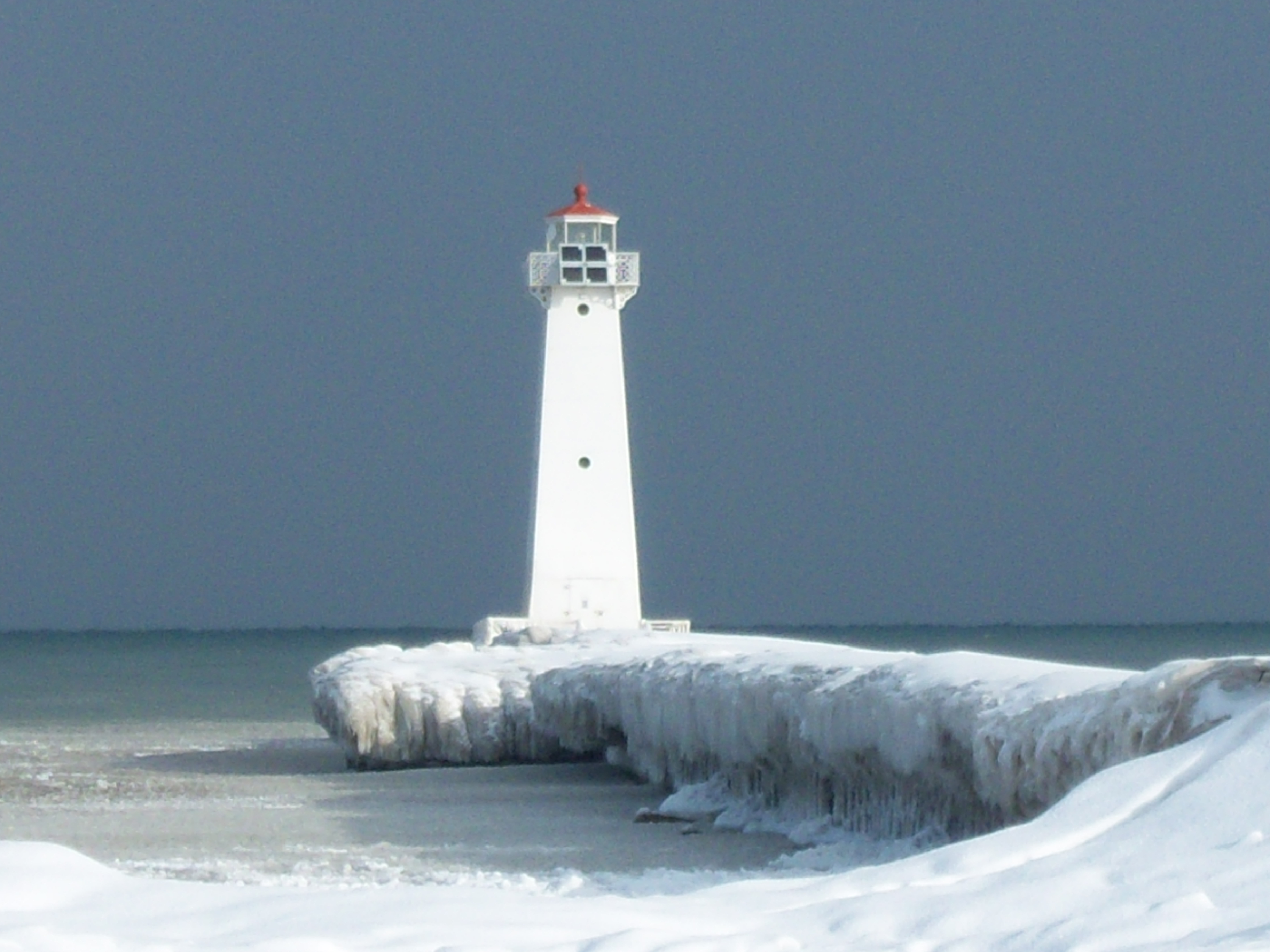
I have thought often what it is about winter that I find so compelling, enough so that in retirement we moved north rather than south. We now live in a village on Lake Ontario, where the winters can be cold and and snow-covered for at least several weeks or months during the season.

There are complex reasons, I am certain: as an introvert I like settling in with a crackling fire in the fireplace, to read books, a warming cup of tea in hand. I enjoy cooking comfort meals, walking or snowshoeing in the snow, and meeting friends at cozy pubs that in summer months are filled with happy, noisy tourists. And I’m thrilled when I catch a glimpse of ice boats gliding across our bay.

Winter is a time for reflection, too, and a time when I give myself permission to just be without having to purposely shut out the extraneous noise and activity that’s so much a part of my life during other seasons.. It’s also when I am most productive with my writing, and quietude and solitude recharge my weary body and soul.

Karen Shughart is the author of the Edmund DeCleryk Cozy mystery series. Her third book, Murder at Freedom Hill, was released in November.

Guest Blogger ~ Robin Henry

Great mystery/thriller books writers should read… by Robin Henry

It is time for year end lists!  Here’s my list of favorite mysteries and thrillers I read in 2022.  NOTE—I read these in 2022, some of them were published earlier…

Each of these are a great mini-masterclass for mystery writers, too. Each does a wonderful job of keeping the reader curious, building suspense, but without frustrating the reader.  Several of them are also playing with form, like epistolary or traditional historical.  If you want to write a great mystery or just get lost in one for a while, these are all excellent choices.

The Appeal by Janice Hallett

An excellent use of the epistolary form, and just a fun mystery with a load of crazy characters who will keep you guessing.  Definitely recommended for Cozy fans…

Apples Never Fall by Liane Moriarty

Domestic Thriller by the current Queen of the Genre in my opinion.  So many family secrets…but somehow all loose ends are explained and tied up at the end.

The Paris Apartment by Lucy Foley

Need a book that will make you stay up until 2 AM?  Look no further.  This apartment building is creepy and so are the people who live there…

The Bullet That Missed by Richard Osman

You’ll laugh, you’ll tear up, you’ll love every moment you spend with the gang. One of the most fun things about Osman is the observations he makes about the world through the eyes of his characters.  Surrender to it and you won’t be sorry.

Apothecary Melchior and the Mystery of St. Olaf’s Church by Indrek Hargla

English translation by Adam Cullen, English version published by Peter Owen

A finely plotted traditional medieval whodunit.  If you’ve been wishing for a new Father Cædful, try Apothecary Melchior…

Fatherland by Robert Harris

Gritty, alternative history mystery set in the Berlin of a partially victorious Third Reich.  The Cold War looks a little different and the Americans under President Joe Kennedy (mobster father of John, Ted, and Robert) is cozying up to the fascists. The book is simply fantastic and also a little frightening because of the way Harris understands human nature.

See more book reviews along with free writing tools at http://readerly.net

Robin Henry is a librarian and independent scholar turned book coach who loves history and mysteries along with her hot beverage.  You can find out more at http://readerly.net or contact her at readerlybooks@gmail.com 

If Wishes Were Horses…

by Janis Patterson

Hello. My name is Janis and I am a word nerd.


I love old words, convoluted words, obscure words… Unfortunately, it is definitely genetic. My father was the same way, and one of the delights of my early youth was playing esoteric word games with him. Which, I might add, gave me an everyday (to me, at least) vocabulary that did not endear me to the educational system. In grade school I learned quickly to accept that my automatic use of what were to me perfectly ordinary words would upset and draw the derision of my classmates; what I did not expect was that it would have a similar effect on the teachers, who had to have it proven that the words I used were not made up nonsense syllables but perfectly good – if not really common – English words. For several years I had to make it a practice to always carry a large dictionary with me. That was only one of the things about public education which earned my (well-deserved) contempt. I have never suffered fools gladly.


Anyway, that is an overly long explanation for why I’m on several word-a-day type daily emails. About half the time the words are too common to be much noticed, but every so often there is a really good one. Today I received the word velleity, which means “a wish or inclination not strong enough to lead to action.”


Wow! Who hasn’t felt like that at least once if not many times?


We all know those people who say “I want to write a novel” but never actually do anything toward it. Then there are those of us who do write who say “I would like to do a book about … (whatever subject is currently teasing our mind)” but the project never goes beyond a vague wish. There are millions of possibilities, and everyone indulges occasionally. My grandmother would have called it daydreaming.


And that’s okay. We all work on many levels at all times, and not all ideas/wishes/concepts are destined to bear fruit. Sometimes it’s little more than ‘play-time’ for our minds, which probably need it more than the rest of us. Nothing can do work all the time, and play time is essential.


It also goes beyond writing. Multiple times I personally have expressed a wish for some unknown reason to learn how to crochet, once even going so far as to buy a hook and some yarn. Both of them are now gathering metaphoric dust at the bottom of some drawer or other, as that is as far as I have ever gone. Velleity in action. The same goes for reorganizing my kitchen (where I usually spend as little time as possible), or creating an herb bed in the back yard (when I sadly possess a black thumb invariably deadly to all living plants), or any number of momentarily alluring but basically low/no priority daydreams.


However, I am a true believer that energy is never wasted, even the ephemeral energy of a transitory daydream. It merely changes form. Case in point, the herb garden. I actually did some reading on herb gardens and while a real herb garden never appeared in my life, it did in one of my books, enhancing it greatly. See? Energy really is never wasted.
So, dream your dreams – just don’t let them take over your life. You might never bring them to the fruition of reality, but someday somewhere somehow they might be just the thing you need to complete some other venue.


Now I must go, because I’m thinking about how nice it would be to paint our guest bathroom…

Voice as Unique as a Fingerprint

My mind spins so many different directions when I’m “stewing and brewing” the next book or chapter. The other day, as browsed the email of free photos from Depositphotos a vector caught my attention. It is in this post. I thought could I use that for anything, and poof! the idea for this post came to mind.

Everyone has a unique to them fingerprint. It is theirs and theirs alone.

The same can be said for a writer’s voice. Not their speaking voice, their style of writing. Some writers use long, elaborate words or sentences. They spin their tales with sinewy prose, weaving the tale in between the actual words on the page. Then there are others who use precise words, short sentences, and graphic descriptions.

No matter what the writer writes there is a telltale “fingerprint” to their writing. Think about some of your favorite authors. Why do you read each one of their books? Is it how the story is worded? The characters? The plotting?

Characters? Plotting? How can that be voice? Again, think about your favorite authors. Do the characters seem similar even if they have different names, backgrounds, and ethnicity? Every author puts a little of themselves into their main and sometimes secondary characters. They can’t help it. Otherwise, how would they be able to describe feelings, emotions, and even the setting around them, if they didn’t allow a bit of themselves to slip into the characters.

And Plotting- You can give five authors the same basic theme for a book and each one would put their own spin on how that theme or plot played out. Again, they would each put their knowledge, feelings, and imagination into that story, making it their own with their unique voice.

I’ve always thought of my writing as simple and engaging- not really having a memorable voice. However, many readers tell me they enjoy the simplicity of my writing. They can see the story as it unfolds and not have to guess what words mean. I take that as a compliment to my style. Especially, when I’ve had several people also say that my books brought them back to reading.

My true voice, I think, is that all my stories are about justice. Not just the bad guy getting what he deserves but also showing the injustices that are in the world. I will throw in a cause here and there in my books to bring it to the attention of my readers. And thankfully, they understand that is what I’m doing. I don’t preach. I reveal the injustice and leave it up to the reader to do more digging if it intrigues them. That is my voice. As unique to me as my fingerprints.

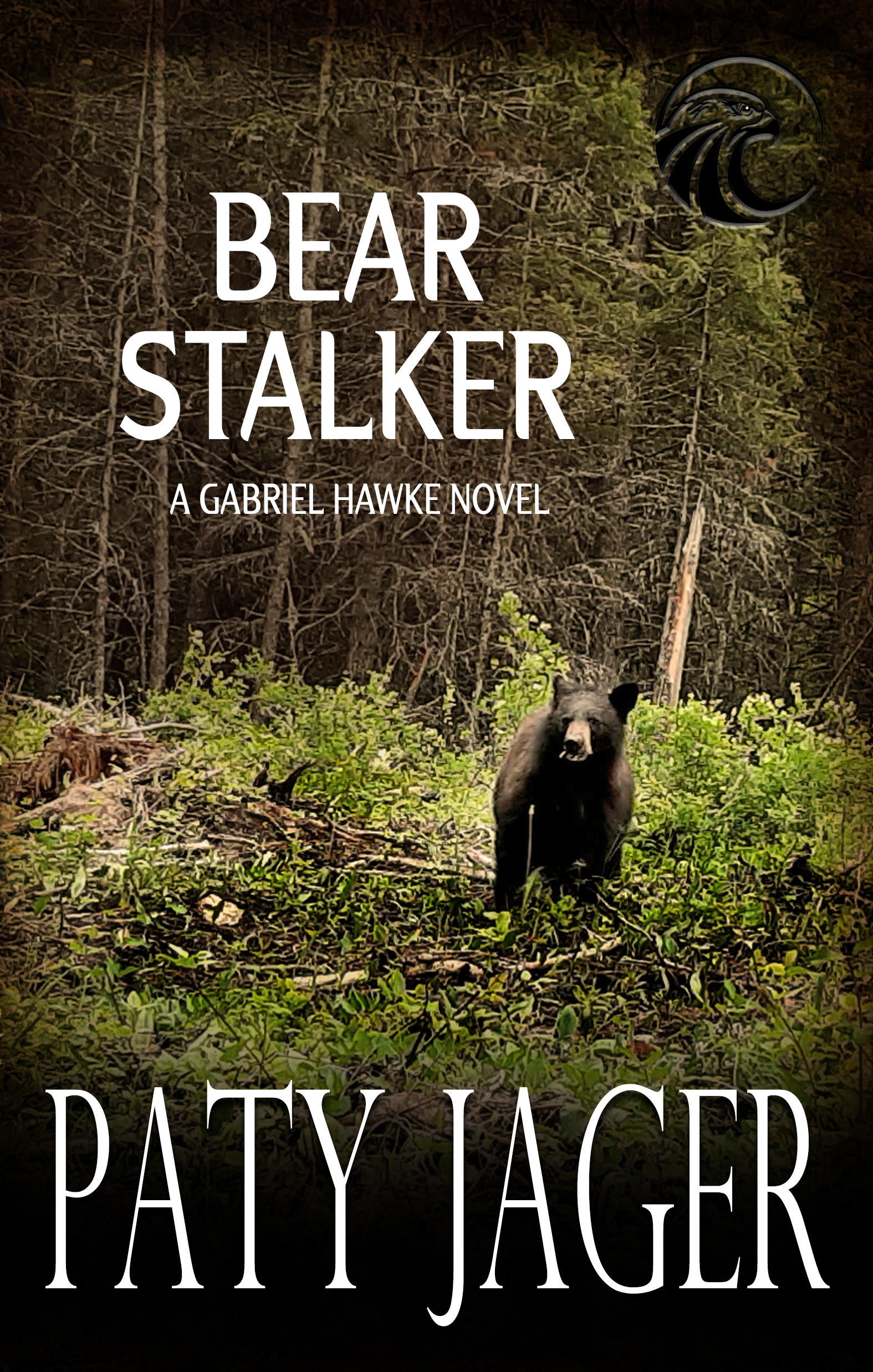
Coming at the end of this month, book 10 in my Gabriel Hawke series, Bear Stalker.

Greed, misdirection, and murder has Hawke rushing to track his sister in the Montana wilderness before she becomes the next victim.

Oregon State Trooper Gabriel Hawke’s sister, Marion, is on a corporate retreat in Montana when she is suspected of murder. Running for her life from the real killer, she contacts Hawke for help. 

Hawke heads to Montana to find his sister and prove she isn’t a murderer. He hasn’t seen Marion in over twenty years but he knows she wouldn’t kill the man she was about to marry.

As they dig into possible embezzlement, two more murders, and find themselves trying to outsmart a wilderness-wise kidnapper, Hawke realizes his sister needs to return home and immerse herself in their heritage. Grief is a journey that must be traveled and knowing her fiancé had wanted Marion to dance again, Hawke believes their culture would help her heal.

You can pre-order it here:

https://books2read.com/u/mdjNzW