The Words No Writer Wants to Hear

Not for us. Good luck elsewhere.

Okay, that’s one we’ve all heard, or at least seen, in rejection slips. I no longer take this personally, because I understand that every publisher buys only a certain number of books per year; some slots are taken by their established authors; and my timing is off. (I recognize there’s also a slight possibility that they just don’t like my story or my style.) No problem, I’ll just publish it myself.

“I don’t really read.”

What? I’m never quite sure how to react to that statement. Does it mean that the person I’m talking to has no imagination, or that s/he is just so happy with the status quo of her/his own life that s/he needs nothing more? Sometimes I attempt to sleuth out whether that person at least adores movies so I can be assured that s/he does appreciate stories. But mostly, I just take my glass of wine over to talk to the next person who might know how to read. Personally, real life is just not enough for me.

“How much money do you make from your books?”

Really? Do I ask you how much money you make at your job? When this is followed by questions about lavish book tours or sumptuous dinners with my editor, I know this person has fallen for the movie stereotype of the bestselling-author. A very rare species indeed.

And then, in recent years, here’s one that I’ve heard too often, from the voracious readers that we might expect to be our best friends:

“I couldn’t put that book down! I read it in only two days, so I returned it and didn’t even have to pay for it!”

If you write fast-paced stories (like I always try to), you too may be aware that Amazon allows buyers to return ebooks within seven days of buying them. This is happening to me more and more, and has me wanting to belt out “R-E-S-P-E-C-T! You know what that means to me?” (Okay, I changed that line “just a little bit.”) I typically price my ebooks at $4.99, and these smart shoppers want to keep me from my massive $3.49 royalty? That hurts, readers! How am I supposed to pay my cat food bill? I’ve never even returned ebooks that I detested.

In general, Amazon has been nicer to me than my traditional publishers and certainly nicer than most bookstores, who think nothing of “returning” (or in reality, destroying) print books (that the publishers and authors have to pay for), but allowing returns on ebooks for seven days after purchase? That’s a punishment authors don’t deserve, Amazon. Show us a little R-E-S-P-E-C-T and shorten that up to 24 hours! (I realize anyone can make a mistake and purchase a book twice; God knows I’ve borrowed the same book more than once from my local library.)

Readers, if you really must plow through my ebooks and then return them to Amazon, at least do me the favor of writing me a nice review, okay?

Writers deserve R-E-S-P-E-C-T.

Words are Power by Paty Jager

When I looked up the word “limbo” to make sure I was using it correctly, I found more than one meaning! That is what I love about words and using them to make stories. If you use a word one way it means one thing and the same word can mean something else when used in a different sentence.

The mystery of words has always fascinated me. When my, by one year, older than me brother started reading, I peered over his shoulder, capturing the words and discovering the sounds letters made if they were placed with this letter or a different letter.

Who came up with that? I mean over the centuries the various cultures and people came up with their own set of marks that made sense to them. But how did they distinguish the sounds each mark or letter made? How did they decide which letters together made which sounds?

For my Spotted Pony Casino mystery books, I’ve been incorporating Umatilla language words into the story. It helps to show the culture and bring a little more Indigenous feel to my characters who are Umatilla. I’ve listened to Youtube videos where they speak the language. It sounds so different from the words that are spelled out with unique characters.

The Indigenous languages were spoken long before the Anglo people arrived with their alphabet. How did they, the Indigenous people decide which of the Anglo alphabet worked for their words? I’ll have to ask a Umatilla linguist I know and see if he can help me with this, one of many question that stir around in my head at 2 AM the nights my brain won’t shut down.

Words are so useful and yet can also destroy a relationship, a person, even a country. Knowing the right words to string together is powerful. Or it can be destructive. Words are power!

Book three in the Spotted Pony Casino mysteries will be released in ebook and the following week in print.

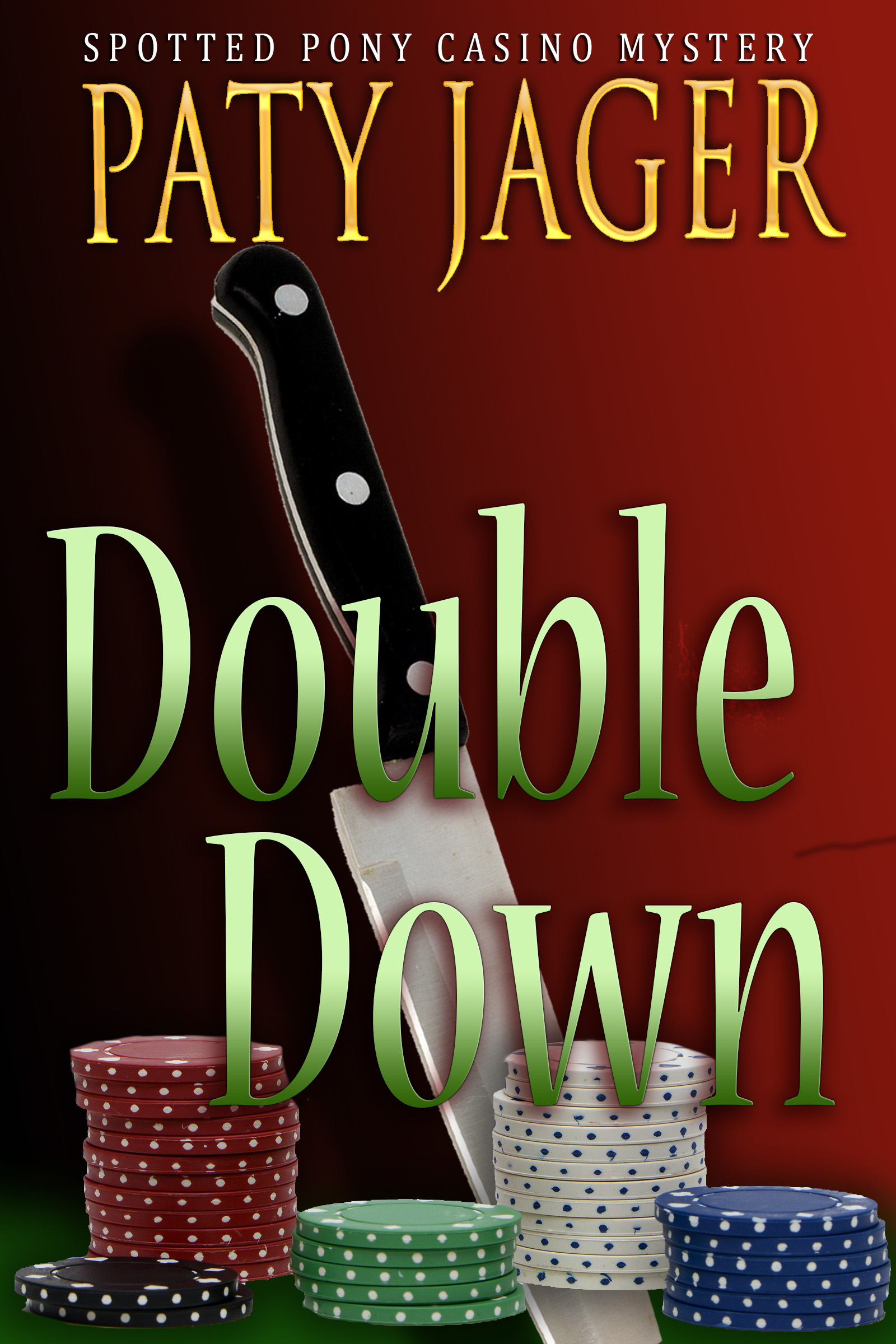
Double Down

A donkey, a three-legged dog, and a war-scarred veteran outwit the killer.

Dela Alvaro is the main suspect in the stabbing death of a man she stopped from beating his wife to death.  The detective she abhors is ready to toss her in jail and not look for any other suspects. When FBI Special Agent Quinn Pierce is called in and Tribal Officer Heath Seaver is forbidden to work the case, Dela decides to find the killer.

Was it the wife, the drug dealer, or the man wanting to take over the victim’s business? Dela and Heath ask questions and work to prove her innocence. If she is found guilty not only will she lose her life but she’ll never be able to solve the secret of her father.  

Universal Buy Link:

https://books2read.com/u/4D6Wa7

Paraprosdokians – A New Look at an Old Technique

by Janis Patterson

As some of you may know, I’m on my way out of the country for my Very Big Vacation… which I’ll be writing about in my new newsletter when I come home. If you’re interested, you can subscribe from my website. However – I didn’t want to neglect this blog or you, so here is an essay I did several years ago and which I still quite like!

I’ll admit, I didn’t know what a paraprosdokian was until a friend sent me a list of them. She’s always sending me jokes and funnies and, I’ll admit, I laughed heartily on reading them. Then the writing brain took over (doesn’t it always?) and I read them again, finally realizing that they were a lesson all in themselves.

By definition, a paraprosdokian is a figure of speech in which the latter part of a sentence or phrase is surprising or unexpected in a way that causes the reader or listener to reframe or reinterpret the first part. It is frequently used for humorous or dramatic effect. Here are a few of the best ones :

— I asked God for a bike, but I know God doesn’t work that way, so I stole a bike and asked for forgiveness.

— I want to die peacefully in my sleep, like my grandfather. Not screaming and yelling like the passengers in his car.

— To steal ideas from one person is plagiarism. To steal from many is research.

— A bus station is where a bus stops. A railway station is where a train stops. My desk is a work station.

— You do not need a parachute to skydive. You only need a parachute to skydive more than once.

— The voices in my head may not be real, but they have some good ideas.

— To be sure of hitting the target, shoot first and call whatever you hit the target.

— Change is inevitable, except from a vending machine.

You see what I mean? Each starts out with a statement that gives you an idea – then the second part puts an entirely new spin on the idea, usually turning your perception of it 90 degrees in a different direction. In other words, a turning point.

In real life, with real people, I’ll bet that most of us like a smooth stream – learn, meet, love, prosper, happy every after with no catastrophes or dead bodies or evil villains or whatnot. Such a progression is comforting and happy – and boring, at least from a story point of view. In our books, whether mystery or sci-fi or romance or whatever, we love to torture our characters and that is best done by surprise and change.

The character we trust turns out to be the villain. The safe house isn’t. The clue that proves the hero innocent is false. (See where I’m going?) A single incident pops up and suddenly the entire story is careening off in a different direction. Could we call these ‘plot paraprosdokians?’ Sure – if we can remember that tongue twister of a word! (You’re on your own there.)

Sometimes these plot twists can happen in a single sentence. Or paragraph. Or, in some rare cases, a chapter or more. It depends, as so much does, on the style of the writer and on the story itself, But they must happen, or your story becomes a sweet, linear telling of events that have no excitement, no challenge, and very probably no real interest.

For example, Bob comes home from work and finds a dead body lying in his driveway. He calls the police. The police find he has nothing to do with the body. Bob goes on and lives his life. Snoooooooze! Even though, if I were Bob, that’s what I’d want to happen in real life, but it makes for a boring and unsellable story.

By contrast, Bob comes home from work and finds a dead body lying in his driveway. The body is that of a fraternity brother from his college days, one who ostensibly died in a frat house fire years before. Also, unbeknownst to Bob, the body was Bob’s new wife’s brother.

See? You can go on and on, turning each plot twist in on itself, each time giving your story more depth and complexity, as well as more danger and higher stakes for your protagonist.

Deepen your plotting – become a practicing paraprosdokianist. I think I just broke my spell-check. Whether you can spell it or not, though it works. Give it a try.

Fresh Eyes

I recently sent the manuscript of my latest Jeri Howard novel, The Things We Keep, to a writer friend. This is the third complete draft and it’s ready for a pair of fresh eyes.  At this point I’ve been working on the book for nearly two years, give or take a few hiccups in my life and adventures.

I know what I mean to say. And since this is the 14th book in the series, I am quite familiar with Jeri and her world. Plot, character, setting—I think all the parts fit.

But— Did I say it in a way that will engage readers and draw them into the book? Are there any plot holes lurking between points A and Z? Are the characters behaving the way I’d intended? Or are they escaping from their personas, wandering down byways I didn’t intend and bouncing off unexpected walls?

Will that other writer’s fresh eyes see what I see?

Well, I just got those comments, so I’ll find out.

Speaking of fresh eyes, yeah, I have a pair of actual fresh eyes. Well, fresher. I had cataract surgery in August. Double knee replacement last year, cataract surgery on both eyes this year.

I really hope I’m done with repairing and patching body parts, at least for the time being.

When traveling by air, I have to tell the TSA folks at the airport that I have bionic knees so they can send me through that booth where I have to raise my arms and get scanned. I learned that the hard way when I set off the alarms at Denver International Airport.

As for the eyes, the surgery is recent and I’m still doing the drill with eyedrops, being careful about bending and lifting. I’m told it can take four to six weeks to adjust. So far, so good.

My ophthalmologist tells me my vision is now 20/20 in both eyes. Considering that I’ve worn glasses since I was ten years old, and probably needed them before then, this is a big deal. I still wear glasses for reading and the computer, essential activities for a writer, of course. I can now drive without glasses perched on my nose. And things are really, really bright. Wearing sunglasses all the time when I go outside.

The onset of cataracts was gradual. Optometrists started mentioning it about 15 years ago, saying something like, “You’ve got the start of cataracts but it’s not too bad yet.”

Last year, I went to see the optometrist and told him my distance vision had “gone to hell,” as I put it. It was increasingly difficult to see street signs. Those cataracts that weren’t yet a problem? Now they were. Like having gray clouds in my field of vision. Now I don’t. Did I mention that things are really, really bright?

Fresh eyes. All the better to edit and revise The Things We Keep.

Guest Blogger ~ Eileen Curley Hammond

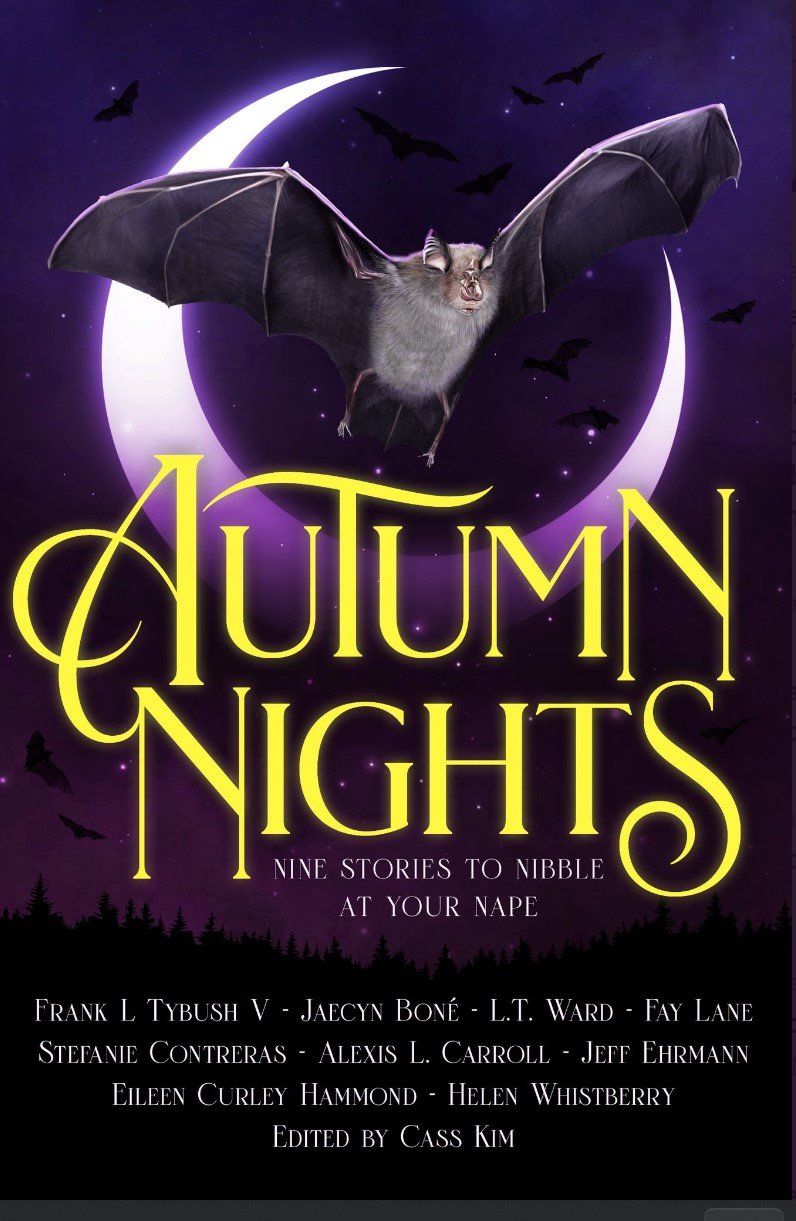
I was in the middle of writing the seventh book in my Merry March cozy mystery series, and to be honest, I was struggling. Then, editor Cass Kim sent a Twitter request for the annual charity short story anthology, Autumn Nights: Nine Stories to Nibble at your Nape.

Even though I love writing daily micro-stories on Twitter, my total experience with slightly longer shorts was holiday ones for our local Sisters in Crime chapter (Buckeye Crime Writers). Luckily, Cass had been following my writing, so I was accepted into the Anthology.

The required elements were to include a bat(s), autumn themes, and be spooky. I’m a pantser and cozy mystery writer, so it should come as no shock that what emerged on the page was a cozy mystery that happens to have a bat as one of the main characters.

You would think that short stories would be easier to write. After all, the word count for the project was less than 8,000, and cozy mystery novels are usually 60,000 plus. But remember, you still need a beginning, a middle, and an end that make sense. Plus, it’s confusing to the reader to have too many characters in a short space, so your potential for red herrings is limited.

I love a challenge, and this was a fun one. It was also good to know that profits from this book will benefit The Trevor Project, which is dedicated to providing crisis support and safe spaces for young LBTQ+ individuals.

The Autumn Nights Anthology is available as both an e-book and paperback. Here is a teaser about my story in the Anthology:

An Unexpected Talent: Miranda had a bad day that she thought couldn’t get a lot worse. And that was before she stumbled over the dead body. Now she’s in the middle of a Halloween murderer hunt, and failing to uncover the perpetrator will mean the end of the world.

I’m pleased with where the story ended up and was very happy with the beta readers and editor, who made it even sharper. Writing the short story also allowed me to experiment more with humor, which I’m actively trying to incorporate into my novels as a break in the suspense. And the even better news is that a hiatus reenergized me, and I am now close to finishing my seventh book, which should be released in November. You can find all of my Merry March cozy mysteries here.

Eileen Curley Hammond retired from a successful marketing career in the insurance industry and now writes the Merry March cozy mystery series. When not pondering all that bats contribute to this world, she is hard at work on book seven of the series. To learn more about her and to sign up for her newsletter, check out her website:

www.eileencurleyhammond.com