Guest Blogger ~ Millicent Eidson

Microscopic microbes that kill—those have been my life’s blood for forty years as a veterinary epidemiologist with state health departments and the Centers for Disease Control and Prevention. Now focused on communicating public health through creative writing, I’ve published ten shorter works and the first novel of my alphabetical series, “Anthracis: A Microbial Mystery.”

Epidemiologists used to joke that everyone thought we were skin doctors. Now in the age of COVID, much of the public is sick to death of public health pronouncements. But there are enough people who are fascinated by the science and inside story of how diseases are routed out and conquered. The West Wing immersed us in the personal and professional challenges for public servants in the White House. The MayaVerse provides a backstage pass to veterinarians in public rather than private practice.

Medical thrillers usually have physician pathologists as the heroes, but medical detectives can include veterinarians specializing in zoonoses, diseases transmitted from animals. “One Health” is the concept that humans, other species, and the environment are intricately intertwined. Ignoring one part places the others at peril.

The MayaVerse is the world of Dr. Maya Maguire, a young veterinary epidemiologist starting her first assignment as part of the CDC shock troops called Epidemic Intelligence Service Officers. I had the honor of beginning my own public health career as an EIS Officer, and my creative writing is inspired by my mentors, peers, and successors. Maya is partially modeled on my daughter, adopted as an infant from China. She’s been a close collaborator at creating the story of a ‘fish out of water’ growing up Asian in the American Southwest.

The author Edward Abbey said that our definition of beauty is formed by the land imprinting our brains during childhood. I bless my good fortune for growing up in Arizona. No place on earth is more spectacular to me than the Sonoran desert.

With climate change scorching the earth and increasing asthma-inducing wildfires, my retirement home is along the gorgeous shores of Lake Champlain in Vermont. However, the Southwest still has my soul and is the initial setting for the MayaVerse. In the second novel “Borrelia” to be published June, 2022, Maya’s investigations into this squiggly spirochete will take her to Europe, and the fifteen years of her life until “Zika” will take us all on a worldwide adventure.

Shorter works, many available for free at HOME (drmayamaguire.com), provide some prequels and side stories for lively secondary characters. Those who sign up for my Reader list will be emailed the e-book and pdf versions of my award-winning short play “Monuments,” which dramatizes a fictional encounter in Santa Fe’s Plaza inspired by real-life controversy over its phallic monument.

 “Anthracis” is published wide so available through bookstores, libraries, and multiple online sources including Amazon. Links for the e-book, paperback, hardcover, and large print versions are available at ANTHRACIS (drmayamaguire.com). Please join me on this grand adventure through the microbial world!

Anthracis: A Microbial Mystery
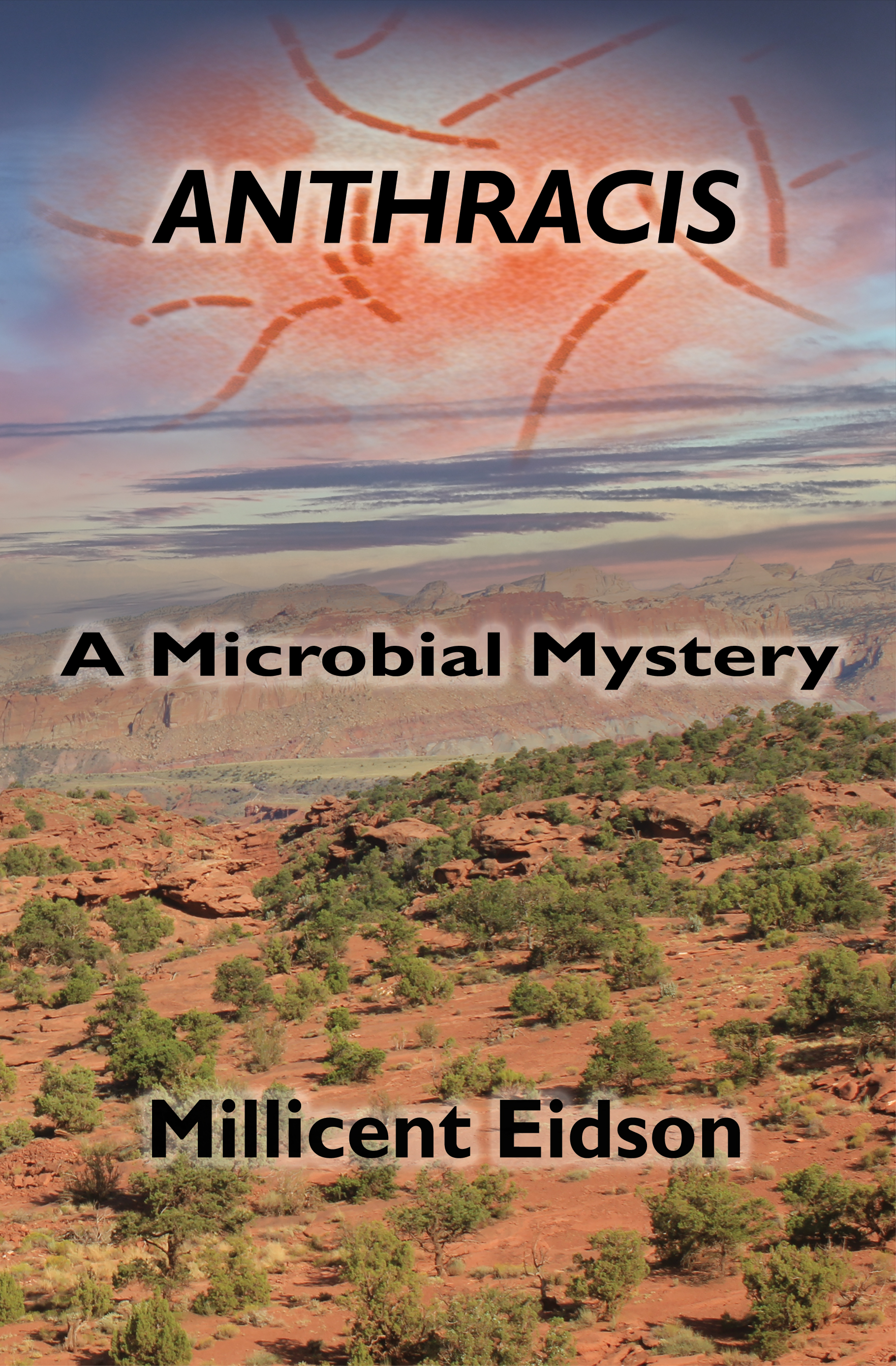
In the hottest summer on record, the spectacular southwestern desert is alive with Bacillus anthracis spores. Maya Maguire, new veterinarian with the Centers for Disease Control and Prevention, battles the largest anthrax outbreak in U.S. history.

Despite lingering trauma from a childhood accident, Maya’s confidence builds with a supportive team of passionate physician Manolo Miranda and enigmatic veterinarian Dave Schwartz.

But Homeland Security and the FBI are suspicious when spores match Dave’s home Texas Triangle of Death. If Maya can’t find the source, thousands may perish. Anthracis takes us to the front lines with scientists betting their lives on the investigation outcome.

Buy Links: https://drmayamaguire.com/anthracis
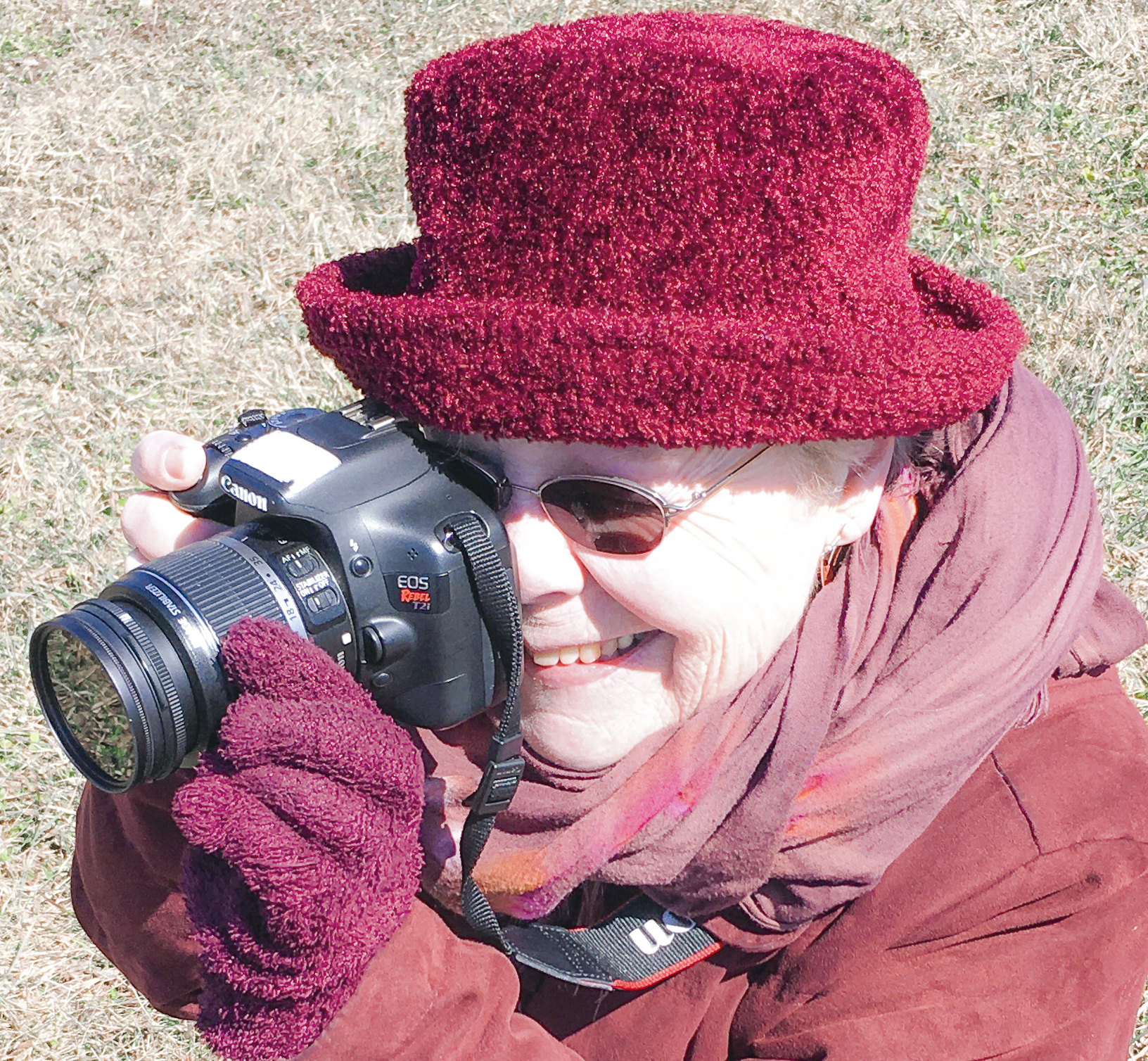
MILLICENT EIDSON is the author of the alphabetical Maya Maguire microbial mystery series. The MayaVerse at https://drmayamaguire.com includes prequels, “El Chinche” in Danse Macabre and “What’s Within” in Fiction on the Web, and a side story, “Pérdida” in El Portal Literary Journal. Author awards include Best Play in Synkroniciti and Honorable Mention from the Arizona Mystery Writers.

Dr. Eidson’s work as a public health veterinarian and epidemiologist began with the Centers for Disease Control and Prevention and continued at the New Mexico and New York state health departments. She is a public health faculty member at the University at Albany and the University of Vermont.

Millicent discusses her first novel “Anthracis: A Microbial Mystery” at Microbial Mystery Author Dr Millicent Eidson on Big Blend Radio – YouTube.

She can be found on Twitter, @EidsonMillicent, and Instagram, @drmayamaguire.

Curious and Curiouser

Don’t you love starting a new book? A new series? I do. It is the blank page of it all that is both delightful and daunting. As I considered my next series, I asked myself what stories I wanted to tell, why, what I could bring to it, would it be in the present or be about the past. Where and when would it all take place? Its questions like this that drive me down the rabbit hole of research, disappearing for about two weeks then reappearing with either a plan or holding a handful of rabbit fur and spitting dirt. If spitting dirt, I realize I took the wrong tunnel and head back down again.

This time, I emerged from the hole with an idea for a series about a spunky boarding house owner and a newspaperman in a small village in northwestern Illinois. The series begins in 1876 the year a big city company built a boilermaker plant on the wrong side of the tracks.

I was born in such a town, one that happens to have a wonderful Historical Society with a fine website that includes the police logs from the 1870s, select daily newspapers and the 1876 city directory with business advertisements. Wonderful reference materials filled with future plots. The newspaper was a bi-fold sheet that included local news, crimes, socials, births, deaths, and church services. The real story in between the lines is the friction of growth, of newcomers, of illness, of drought, and the pain of unpredictable accidents. To gain an understanding of the times, I researched mining coal walls, building boilermakers, the effects of the railroad on growth, raising and shipping livestock (specifically hogs), the effects of the Civil War and Reconstruction on the country, and how all these effected the tiny, Christian communes clinging to their beliefs and way of life that littered northwestern Illinois.

As the town migrated from farming to building boilers that changed the world, mining coal, and making wagons, men set adrift by the War and families seeking work arrived looking for a place to call home. Mind you, in the 1870s there was no village water, sewer, or other infrastructure to support the growth, not to mention building codes. The law was a Constable riding a circuit that included the burgeoning town. Expecting the growth to continue forever, the village Trustees had big plans for it.

The town in my books has a lot in common with my hometown but isn’t, which in no way negates the responsibility to accurately portray the times. It is bucolic with big park, a growing restlessness, surging growth, and lots of potential for mayhem. I get to pick my plots, research endlessly, check 1876 appropriate word usage (it seems every other sentence), discover (serendipitously) that the Pinkertons had a famous female detective working out of Chicago, that both the Winchester ’73 rifle and the Frontier Colt revolver used .44-40 cartridges, and that every day of the week had a purpose and if skillful a woman might have all day Thursday off from her chores.  (Yes, that was one sentence.)

Don’t forget the proper clothing, culture, and morays — if I weren’t a writer, I’d be a research librarian — oops, did that in college, though far too briefly. I conclude that mystery writers need a passion to learn, access to the internet, to donate to Wikipedia from time to time out of guilt, and permission from themselves to order weird books such as Miss Beecher’s Domestic Receipt Book and The Doctrines and Discipline of the Methodist Episcopal Church, 1876. Add to the above requirements a brain that plots, conspires, considers motive, and psychology and off you go into the land of the curious and curiouser hopefully to emerge 70,000 or so well plotted, entertaining words later.

Another Month Gone

Can you believe it? January of 2022 is almost over. And unfortunately, a whole lot hasn’t changed from 2021.

I miss our monthly chapter’s Sisters in Crime meetings, and I fear this long hiatus has probably meant the end of this group. Our newsletter stopped and we’ve had no other contact. Another chapter I belong to has continued with Zoom meetings.

A local writers’ group I met with on a monthly basis is no longer meeting either, though members are in contact with one another.

The critique group I belong to is still meeting, but they meet at night, and at this time I need to be home to assist my husband in the evenings. However, a handful of us are meeting once a month at a local restaurant to enjoy each other’ company, have conversation, and have a nice lunch together.

I have been asked to be a speaker at a writers’ group on the coast, and it may be in person.

A women’s group here where I live has invited me to come to their regular meeting in May and tell them which of my Deputy Tempe Crabtree mysteries were inspired by real events. They are interested in the subject because that series is set in a town much like the one the members and I live in. I’m delighted and will bring copies of the books I’m going to tell about. Plus I’m invited for lunch—always a plus.

This tells me not to give up hope, things are changing, though at a much slower pace than I’d like. However, I’m grateful for what little is happening.

What about the rest of you? Are you seeing any signs of life getting back to normal where you live?

Marilyn

Photography and Plotting

I don’t ever think of myself as having writer’s block but I know that when I’m not sure about what comes next in the novel I’m working on, I tend to turn to photography and play with the camera and old photographs. Aside from my love of photography in general, I find this other art form stimulating in a way different from writing.

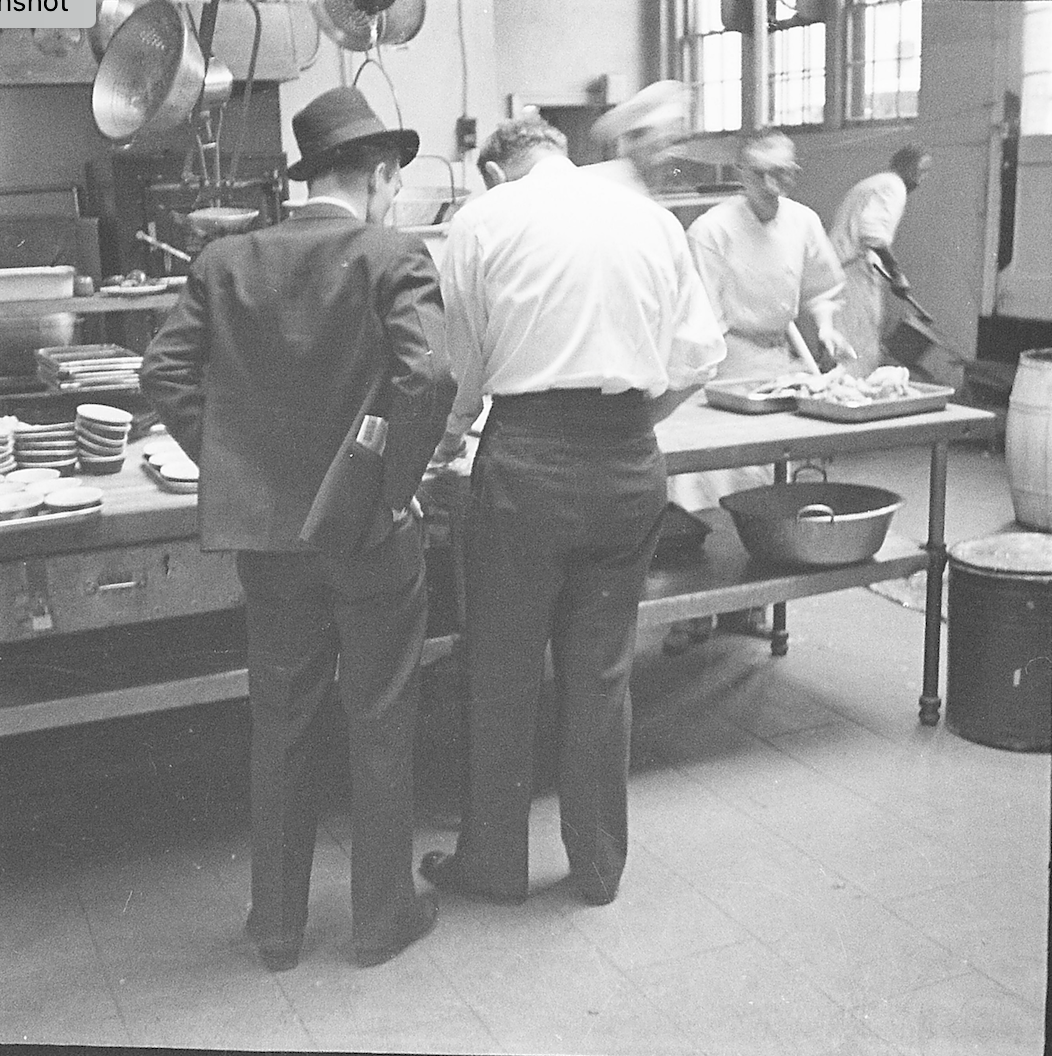
lately I’ve been going through old photographs, some dating to the 1930s taken by various relatives and a few dating to just the early 1900s when my grandparents were courting. My grandfather photographed as a sideline and occasionally sold photographs to Look and Life when they were new.  Granddad preferred the modern world—photographing machinery, industrial sites, and 1950s gas stations and fast-food joints lining a highway. My mother preferred landscapes. I like people and color. Granddad was a milk inspector for much of is career.

My family traveled around the United States in the 1940s, 1950s, 1960s, so I have photographs of us visiting various national parks, camping, riding, hiking, and, rarely, looking into shop windows. One summer we rented an RV and traveled up and down the Pacific coast, pulling up next to an RV from California or another western state. My dad often commented, “Too bad we don’t have a license plate from home.” He meant Massachusetts. Any time a park service officer found out where we were from, we were treated like celebrities. This was in 1959, when you could arrive at the Grand Canyon at five o’clock in the afternoon and find a good camping spot still available. 

Most of the photos from this trip are of magnificent canyons, mountains, lakes, and other scenery. We never had trouble getting a good view; there were few crowds and no cell phones—no one taking selfies but lots of people taking pictures of each other on the top of a mountain or paddling a canoe.

It’s an odd habit but photographers often take several pictures of the same person in different positions and poses at the same event, and save all of them, not just the best one. Sometimes the photographer takes three or four of almost identical images. In one instance I came across so many of the same person that it looked like individual cells from an old movie. 

The images from the 1930s and 1940s are of people I didn’t know or know only through family lore, so I’m free to imagine their stories. I rearrange the images in different sequences, much like rearranging scenes in a mystery novel, and a variety of scenarios come up. I especially like the ones of my father chatting with new friends in Sicily in 1936, when my parents took an extended honeymoon to Italy and Greece. That’s Dad on the left.

After a few hours of this ideas for my current project start to bubble up and I quickly turn to taking notes. This afternoon, after feeling stalled about the ending though I was writing scenes that had to be written, I had a slew of ideas coming. I made lists of actions my characters had to take to get to the climax, each a scene by itself leading to the final confrontation. My attention is back on the novel, and I’m putting away the photography for another day. But it will be back.

Real Settings vs Fictional Settings

One of the important choices a novelist needs to make is whether to use a real or invented setting in a book. When this comes up, I envy science fiction or fantasy writers. Heck, just set the story on a made-up planet! Sure, you have to keep track of the rules you created to be sure your world stays consistent, but nobody is going to write to tell you that you didn’t describe the place accurately.

That can (and does) happen when you choose a real place as a setting. You may get readers commenting that there’s no way your character can drive from Main Street to Oak Boulevard in ten minutes, or that the turnoff to the waterfall is not at milepost 85. And if you mention a real business in your setting, you should check to make sure the owners don’t object to the corpse you’ve placed in their building, or they may complain that you damaged their reputation.

On the other hand, fictional locations can get you into trouble, too. My setting for Endangered was an invented park in Utah. One reviewer wrote “Fantastic descriptions! I can’t wait to visit Heritage National Monument.” Kind of embarrassing, when the setting doesn’t really exist.

So, I tend to compromise, using a real place for inspiration, then giving it a fictional name. (“No, I did not say the killer worked at Burger King, I said he worked at Burger Kingdom.” “Sure, in The Only Witness, the location of the gorilla compound may seem a lot like Ellensburg, Washington, but look again, those gorillas are in Evansburg.”)

Then, to make the issue more complex, setting includes not only place, but also time. And over time, things change. Now that I’ve been published for more than a decade, I’ve run into this time problem a lot. I recently read a good article (http://www.exactlywhatistime.com/other-aspects-of-time/time-in-literature/) that described four distinct time frames that will affect a book: author time (when the work was originally written or published), narrator time (when the narrator in a work of fiction supposedly narrates the story), plot time (when the action depicted takes place); and reader time (when a reader reads the work)

Ack! None of my books is historical, so each story is set in the “present,” and I’ve run into this time-tangle on multiple occasions. When I wrote Endangered , I did my best to incorporate state-of-the-art technology so my character could blog from the backcountry. Now all those gadgets are out of date. When I wrote my novel Backcountry, I was attending weekly country line dance lessons, and I set a pivotal scene in the dance club, convinced that this would help advertise the place. Around two weeks after that book was published, the club was sold and the name changed. Thanks to Covid, that club is now out of business. So much for using a real place for authenticity.

I also smack into this issue of author time vs reader time as a reader. I’ll be reading along and think, wow, this author is ignorant about recent events, then look at the copyright page to find that the book was published a decade ago. I hope my readers do that instead of choosing to believe that I don’t know what I’m talking about.

As a writer of suspense, I often run into problems with plot time in real settings. In my novel Undercurrents, those who are familiar with the Galapagos Islands may realize that there’s no way my character can get from this island to that one in only a few hours, but hey, I needed her to do that. It’s hard to maintain tension with a lot of travel time between islands, unless there’s a murderer on the boat.

My most recent Sam Westin mystery, Borderland, takes place along the Arizona-Mexico border wall. Sure, there’s a wall there now, but will there be a decade from now? This setting stuff is tricky.