Guest Blogger ~ Julie Weston

The Nellie Burns and Moonshine Mystery series began one full moon night. My husband and I had visited Galena Lodge in south central Idaho, near where we live, for a full moon dinner. On our way back down from this mountain pass between the Boulder Mountains and the Sawtooth Mountains, we stopped at Last Chance Ranch. My husband is a photographer and he longed to take a photograph of this ranch in the moonlight and snow. No lights were lit, so we climbed through the fence, he carrying his large format camera, tripod, and other camera gear. As he set up the camera to take the photograph, I watched the house and decided there could be a dead body in there. And lo, my Moon series of books began.

My protagonist is a young woman photographer who comes west from Chicago in the early 1920s. She yearns to be an artistic landscape photographer. Photographing Moonshadows (the name of the first book in the series) is high on her list. In addition to my husband, I have a line of photographers in my family on my maternal side, who came first to Idaho in the 1870s on their way to Oregon via wagon train. They stopped in Boise and never left Idaho. My grandmother and mother were born there, and I grew up in North Idaho in a mining town. The photographers in my family were named Burns. In early North Idaho, a woman photographer arrived from Chicago. Her name was Nellie Stockbridge. And lo, I had my first character: Nellie Burns.
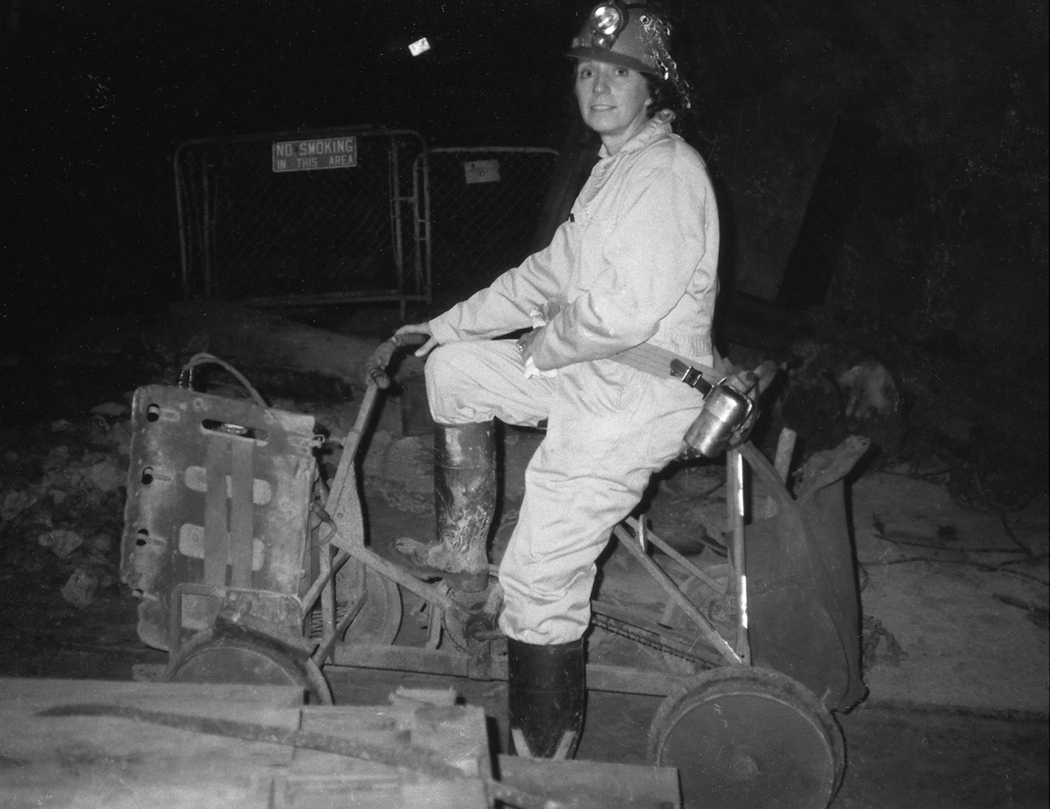
Author in a mine near where she grew up.

Other characters turned up almost immediately: Rosy Kipling, a retired miner from Hailey (our hometown now); Charlie Asteguigoiri, the Basque sheriff for the county; Goldie Bock, the owner of a rooming house in Ketchum; a Chinese mother and son; a sheep rancher, and other persons of interest. Nellie and her photographs help solve the mystery of the dead man at the ranch, along with Moonshine, a black Labrador dog, that Nellie adopts. He becomes her constant companion. And lo, I have a sidekick.

The second and third books in the series live in Idaho—in the Stanley Basin (Basque Moon) and in Craters of the Moon (Moonscape). Each time the landscapes become characters as well, partly because of my heritage and partly because I live here after having practiced law in Seattle for many years. My books have each won honors, including Basque Moon, which was a WILLA winner in historical fiction.

My latest book, MINERS’ MOON, coming out in December, 2021, grew out of my mining town of Kellogg. I descended the mines a while ago, and all I did and learned then became the basis for this newest book. Rosy, Charlie, and Nell get tangled up in two investigations: a mine explosion where several miners are killed, and bootlegging the federal revenuers seek to stop.

Idaho has so many wonderful and strange places and history, I see no end to my Nellie Burns and Moonshine series.

Miner’s Moon
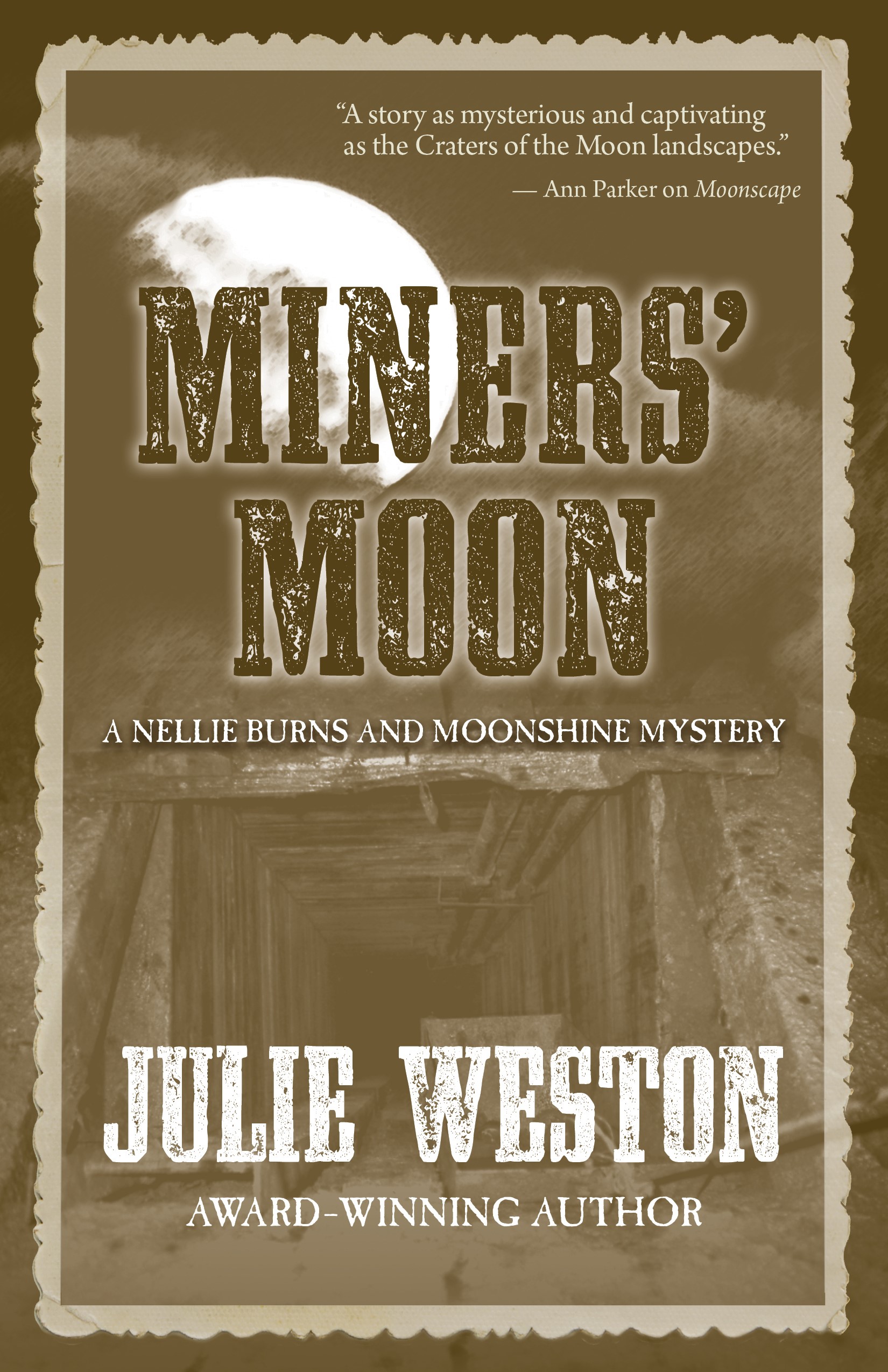
Crime photographer Nellie Burns and Basque Sheriff Charlie Asteguigoiri travel from central to northern Idaho to investigate bootlegging and possible complicit town officials. A suspicious mine explosion pulls them into a second investigation. Retired miner Rosy Kipling joins them, bringing Nell’s black Lab Moonshine.

While Charlie roams the backcountry in search of illegal stills, Nell questions survivors of the explosion and a madam. Rosy descends the principal mine to listen and pry. The two investigations lead all three to discover secrets and lies—from “soda drink” parlors, local brothels, worker hints deep in the mine shafts—that have deadly consequences. Predictably, Nellie gets in over her head. A rock burst seals off Charlie and Rosy in a mine collapse. Moonshine plays an instrumental role, and Nellie tries to rise to the occasion in spite of her debilitating fear. All four long to return to their high desert home, but cannot until they lay bare the crimes before their luck runs out.

Buy Links:

Indiebound:  https://www.indiebound.org/book/9781432888046

Amazon:   https://www.amazon.com/Miners-Nellie-Burns-Moonshine-Mystery/dp/1432888048/ 

Five Star Publishing:  gale.orders@cengage.com
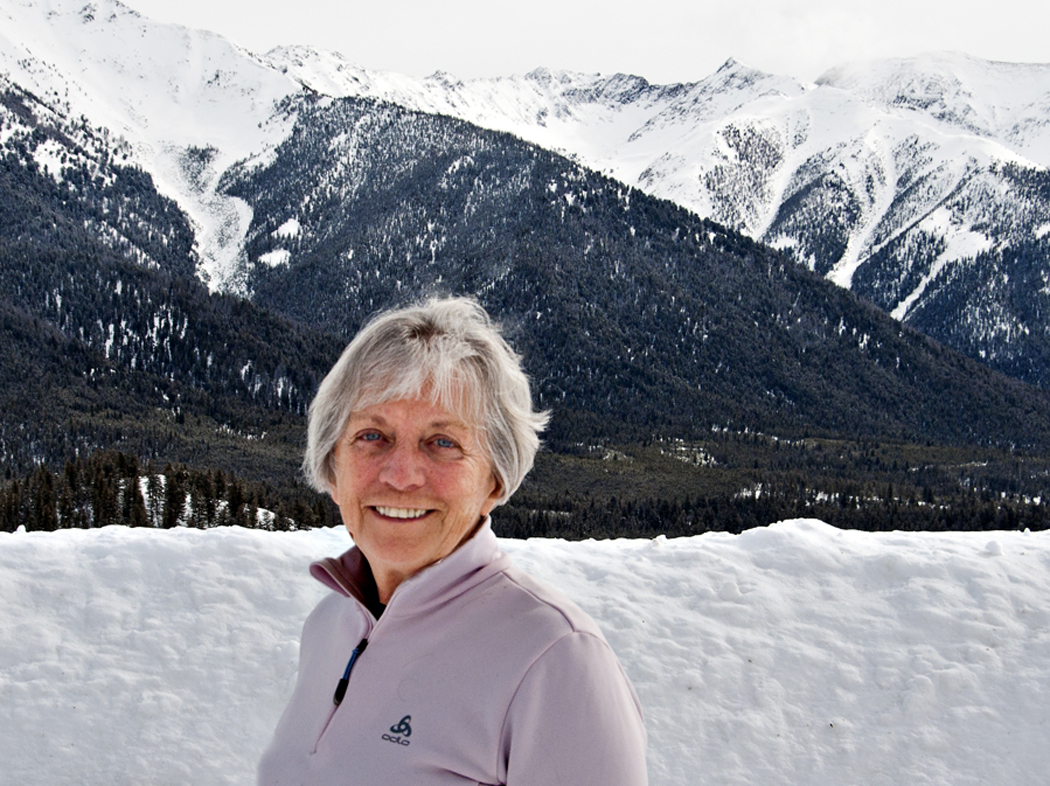
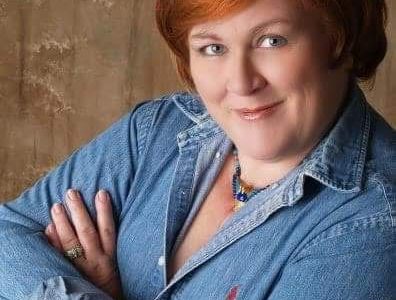
Julie Weston’s publications include mysteries set in Idaho in the 1920s, a memoir of place about Kellogg, Idaho, where she grew up; and a coffee table book with her photographer husband, Gerry Morrison. Essays and Stories have appeared in a variety of journals, including The Threepenny Review, The Saint Ann’s Review, IDAHO magazine and others.

Awards for Weston include the WILLA Award for Historical Fiction, Story Circle Finalist award for Moonshadows, Foreword Bronze Award for Mystery and Honorable Mention for her memoir in the 2009 Idaho Book of the Year Award, among others.

Social Media:

Facebook: Julie Weston and JulieWestonAuthor

Instagram: westmorjw

Email: westmorjw@aol.com, juliewweston@gmail.com

www.julieweston.com

www.bigwoodbooks.com

My Conflicted Feelings about Bookstores

I am a voracious reader as well as a mystery author. Although of course I read many books in my genre, I also enjoy nonfiction adventures, science fiction, and the so-called “women’s fiction” categories. (In my opinion, nearly all books are “women’s fiction” for most of us.) But I digress, as I so frequently do. Back to bookstores.

Photo by Pixabay on Pexels.com

I adore bookstores! What could be better for a reader than being able to sort through thousands of books? I find new authors and great reads in both new and used bookstores; they’re some of my favorite places. So, of course, as a reader, I am a big fan of bookstores.

As an indie author, I have very mixed feelings about bookstores. I am both the author and the publisher for my books. The thorny issue involves returns. If a bookstore orders books through a major distributor, as they all want to do, the publisher typically discounts the price by 40-55% so the bookstore can make some money. That’s painful enough for the publisher (and explains a lot about the cost of books), but if the bookstore doesn’t sell all the copies it orders, it can demand a refund to “return” the unsold books. (I put that word in quotes because due to the cost of shipping, “returned” books are typically destroyed instead of actually returned.) To make matters worse, many distributors/publishers have deadlines by which books must be returned, so if a book is approaching that date, bookstores may “return” them to get under the wire, knowing they can just order additional copies later, beginning the cycle again.

Self-published indie authors don’t have to make their books returnable, but if they don’t, the odds are that bookstores and libraries won’t put them on their shelves. As Publishers Weekly has written, “selling to the book trade is a gamble, and you need to decide your comfort level at playing the game. If you don’t play, you won’t sell.”

But when indie authors do decide to play the game (as I most often do), we can get burned big-time. My worst moment was when I was attending a Left Coast Crime Conference in Honolulu. A bookseller typically handles book sales at conferences, and when I walked into the book room in Hawaii, I saw piles of my books. While this might make some newbie authors celebrate, I cringed, knowing this would come back to haunt me. Number 1, I am not a well-known bestselling author. Number 2, most attendees for these conferences arrive via air, and they’re not going to lug back 100 pounds of printed books. Get a grip, bookstores! (But why should the bookseller care? They can simply “return” those books.)

Photo by Liza Summer on Pexels.com

Sure enough, I later got a bill from the printer/distributor for around $600 in returns (destroyed books) from that Hawaii conference. Having learned painful lessons like that over the years, I no longer sign up to have bookstores handle my books at conferences, unless that’s the only choice. Instead, I bring a few copies on consignment, and tons of bookmarks to remind interested readers later about my books. I sometimes supply books on consignment with local bookstores, too. Yes, I still have to discount those books and I have to pay for printing and shipping, and I have to deliver them, which reduces my profit to near zero, but I will get unsold copies back instead of having to pay for no-longer-existing books.

My understanding is that this whole “returns” business came about during the Great Depression of the 1930s to encourage stores to stock the non-necessity of books. And (of course) stores liked it so much that the policy has never gone away, to the detriment of publishers and authors. Traditional publishers consistently hold back a substantial portion of the royalties they owe authors in case there are future “returns.”

So now you can understand why indie authors have mixed feelings about bookstores. But please know that nearly any bookstore is willing to special order a book for you from your favorite indie author. If you’re willing to wait a bit for a book, you can support both the author and the bookstore that way.

Ideas Knocking at My Creative Self

There are times, like now, when I wish my creative self would take a vacation. However, I also don’t really want all of my creative self to go away. After all, I need that part of my brain to help me write books.

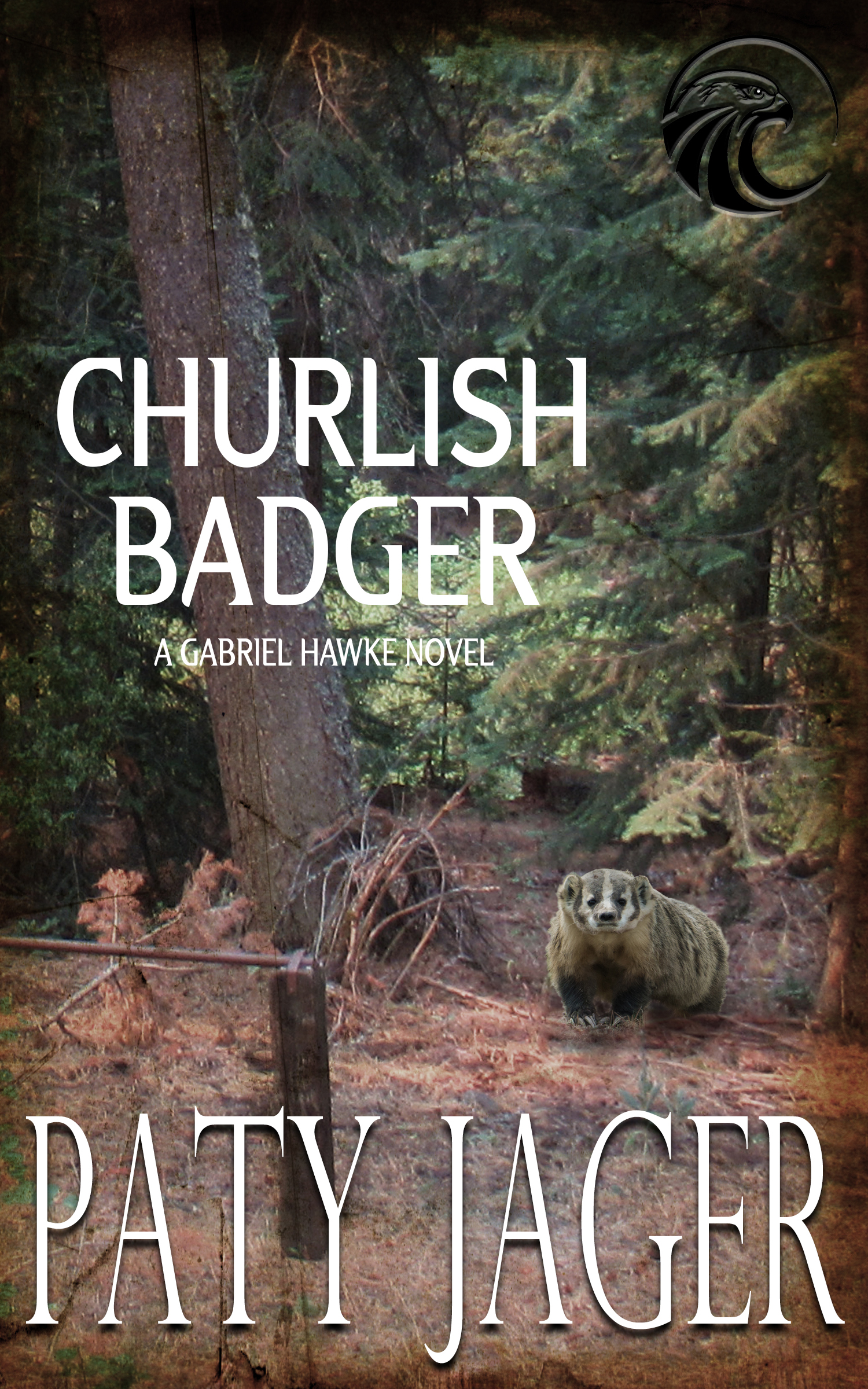
It’s the part of my brain that comes up with story ideas that could take a rest. While going through the final edits on my newly released Gabriel Hawke book, Churlish Badger, I came up with the premise for the next two books in that series. Which is awesome because that means I will have two more books in that series. 😉 The bad part is I’m so excited about them, it’s hard to concentrate on the Spotted Pony Casino book, House Edge, I’m writing now. Sigh.

I can never seem to write as fast as my ideas hit. An idea can come out of nowhere in seconds, but a book takes a good month to prepare and research, then another three (without interruptions) to write. That means, I have about two more months of finishing House Edge, to do the research for the next Hawke book and start writing it in February, if all goes as planned.

When it is written, then I’ll start on book 3 in the Spotted Pony Casino Mysteries, Double Down, which I started the premise for it in House Edge, which made me want to start on that book…. Yes, it is a never ending cycle for me. I get excited about the next book in a series, then have to wait to write it because, (oh, now why did I decided to write two series at once?) I have to write the next book in the other series.

I’m sure there are other writers out there nodding their heads. Yes, we understand, there are those of us who can’t work on one series at a time. Heaven forbid, we should get bored of that series and not want to write the next book. So we juggle, two, or three, or more series at once to keep the monotony of writing about the same characters all the time from becoming tedious.

As Churlish Badger publishes and House Edge is being written, I have three more books churning in the back of my mind. This is how I have spent most of my writing career. Always writing with two to three books on the back screen of my brain, fading in and out, as I dissect the new characters, plot, and setting. And I do the research for the next book while I’m writing another. If only I could plug into my brain and have it all pour out onto a computer screen.

Churlish Badger

Book 8 in the Gabriel Hawke Novels

An abandoned vehicle…

A missing man…

Oregon State Trooper Gabriel Hawke discovers an abandoned vehicle at a trailhead while checking hunters.

The owner of the vehicle never arrived at his destination. As Hawke follows leads, he learns the man was in the process of selling his farm over the objections of his wife who said he would only sell over her dead body.

Continuing to dig for clues, Hawke turns up two bodies buried on the farm. Who killed the two and why keeps Hawke circling for answers, backing the killer into a corner.

Buy link:  https://books2read.com/u/mZZx2l

Who? When?

by Janis Patterson

If there’s one thing in the writing world you learn very quickly it’s that no matter what you do you cannot please everyone. Sometimes it seems almost impossible to please anyone! Another thing you learn is that the ‘rules’ change almost as quickly as the weather.

Well, I don’t believe in ‘rules’ – other than the hard and fast ones like good grammar and spelling and a cohesive, interesting book, of course. What I dislike are the God-like pronouncements of how a story should be structured. Such as in romance, for example, say you have to have a ‘cute meet’ between the hero and heroine in the first three pages or (in certain kinds of romance) a hot sexual encounter no later than the second chapter. A corollary in mystery is that the body has to appear early in the book – ideally in the first three pages.

Well, being by nature a dedicated contrarian, I find such ‘rules’ to be inimical to the integrity of a story. They smack of ‘writing by pattern’ and while each genre has certain expectations like as a happy ending and justice done such arbitrary ‘rules’ are the antithesis of creativity… and all too often good storytelling.

That said, I have written – sometimes at the ‘behest’ (i.e., orders) of a publisher or out of pure mischief –  some stories that follow these ‘rules’ and some which most delightfully turned them on their heads. One example is a Regency Romance (written as Janis Susan May) where the hero and heroine, though lovers a decade or so before, do not meet in the here-and-now present of the novel until the last chapter. This particular book has won a couple of awards… and been used as an example of how not to write a romance.

On a different note, I once wrote a mystery where the body appeared as demanded in the second or third paragraph, and that was a very hard book to write. Murder is by definition a violent crime, no matter how delicately it is committed, and one should feel outraged that someone – anyone – should have their life taken from them. However, there is almost a prerequisite that to feel sympathy for a character you have to know them, and that’s almost impossible when said character first appears as a lifeless lump on someone’s rug.

How do you create empathy for a character about whom no one knows anything and feels less? This victim, this human, this person, is perforce little more than a stage prop who elicits very little feeling or sympathy. I gave him a name, simply because it was more convenient than calling him ‘the body’ or ‘the decedent’ or ‘the dead guy,’ but although he had the requisite number of arms and legs he never really became a real person – merely a humanoid construct.

I have been dinged and called down because in my mysteries (save that one) the murder doesn’t happen until one-third or one-half through the book. I feel by giving the reader such a delay it creates two mysteries instead of one. The first is, who is going to be murdered? while the second is, who is going to be the murder?

When I write a murder I want the reader to be outraged at the deliberate taking of a human life, no matter how much that person deserved to be offed – and believe me, in my mysteries there are several characters who deserve it. Don’t know why bad people are so interesting, but they are, so I always have several of them… just like in real life.

A murder victim – whether in a book or in real life – deserves to be more than a stage prop.

Writing the Season

Suddenly it’s December. Holidays. I celebrate, and so do my characters.

Death Rides the Zephyr, the first in the series featuring Zephyrette Jill McLeod, takes place in late December 1952. Jill is leaving Oakland on December 22. The eastbound run of the sleek train known as the California Zephyr is heading for Chicago, due to arrive Christmas Eve. Jill will have a layover in the Windy City, spending Christmas in a hotel rather than with her family. Before Jill leaves, her parents and siblings give her presents, including the latest Agatha Christie book (a Christie for Christmas!).

Her father tucks money in her new wallet. “So you can have a nice Christmas dinner while you’re in Chicago,” he said. “Go to the Pump Room. Your mother and I ate there once, before the war, and it was a real treat.”

When I researched the book, I learned that the Zephyrettes—train hostesses—would have parties for children traveling on the trains, especially during holidays. In keeping with that real life tradition, my fictional Zephyrette Jill hosts a mid-afternoon Christmas party in the train’s dining car. She’s picked up Christmas stockings and candy at Woolworth’s. Now she enlists the help of passenger Mike Scolari, a WWII veteran, to stuff the stockings.

Mike roots around in the bag of goodies and finds:

“Hey, Hershey’s Kisses. My favorite. Did you know there was a shortage of Hershey’s Kisses during the war?”

“Yes, and I really missed them.” Jill loved Hershey’s Kisses, and the little chocolate candies had been in short supply during and just after the war. Rationing of raw materials during that time meant no aluminum foil for the wrappers.

I discovered that tidbit during my research into what brands of candy were popular in the early 1950s. I had to use it!

It’s a great party, by the way. Even the conductor shows up to lead the kids in a chorus of “Jingle Bells.”

But it’s a mystery. It’s winter, the train is traveling through canyons next to a frozen river and rugged mountains covered with snow. A passenger disappears and then Jill finds a body in a sleeper car. We’re into murder-on-the-train territory. Even though Jill’s favorite Christie sleuth is Miss Marple, she will have to use her little gray cells to catch the killer.

One of my Jeri Howard novels features a different take on the holidays. Jeri is an Oakland private investigator. In Nobody’s Child, she looks into a young woman’s death and a child’s disappearance. Jeri feels grumpy, her holiday spirit missing, though she and family members have tickets to a theatrical version of A Christmas Carol. And she winds up seeing the Oakland Ballet version of The Nutcracker twice, which is one time too many. As she puts it, “I’m Nutcrackered out.”

I particularly like a scene where Jeri is in the lower-level lounge of the Paramount Theater in Oakland, where The Nutcracker performances take place: “There seemed to be a large contingent of little girls in frilly dresses and patent leather shoes, pirouetting over the black carpet. One of them grande jettéed right into my shin.”

Jeri searches for information on the dead woman’s past among the East Bay’s homeless community. When she sees A Christmas Carol, the juxtaposition of the homeless people on the streets outside the theater and Dickens’ words ring true—and close to home.

Then there’s this scene, where Jeri visits a house decorated for Christmas:

In the corner at the other end of the sofa, a small pine tree had been festooned with a couple of strands of lights, a meager collection of glass balls, and some homemade decorations, colorful construction paper loops, and popcorn chains made of popped kernels strung on thread. I saw a gray-and-brown striped tomcat sitting on the sofa arm, a blissed-out expression on his face as he gnawed at the popcorn. He’d already managed to pick clean several strands of the chain.

Toward the end of the book, Jeri tracks down Terry Lampert, looking for information on a homeless man who calls himself Rio. Lampert, who knows Rio from their shared past, says he gave Rio a ride. Why? Jeri asks.

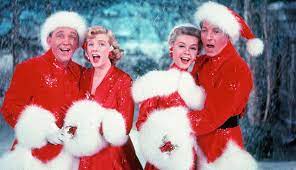
“You ever see White Christmas?” he asked. Then he smiled. “Of course you have. Everybody’s seen White Christmas. You remember that scene early on when Danny Kaye asks Bing Crosby why they’re gonna see the sister act? Ol’ Bing says, ‘Let’s just say we’re doing it for a pal in the Army.’”

“And Danny Kaye says, ‘It’s a reason. It’s not a good one, but it’s a reason.’” I smiled back at Lampert. “Is that the only reason?”

The man opposite me shrugged. “It’s a little bit of, there for the grace of God. If I hadn’t met my wife, that could be me, living on the streets.”

It’s a mystery, right? And Jeri’s going to get to the bottom of things. She finds the people she’s looking for, solves a murder, celebrates Christmas with her father, and spends New Year’s Eve with a new fella.

Whatever holidays you celebrate during this time of year, whether it’s winter solstice, Hannukah or Christmas, may you have companionship, wonderful things to eat, and hopes for the future.