I Am a Serial Killer Who Grieves for Each Death

Yes, I kill people. But only fictional people, characters in my mystery novels. And I don’t kill any character lightly. I actually prefer to write mysteries that don’t involve murders, because with a murder, the crime is over, there’s no hope for a happy outcome, and all that’s left to do is to prosecute the killer. As a private investigator, I worked on a death case, and it was sad and painful to interview everyone left behind. I much prefer to write about kidnapping or disappearances, because the outcome could go either way. But, as a mystery writer, I have found that now and then I simply have to kill a character, or readers would stop believing that could happen in my books.

Most of the time, I would like to kill off a despised character, the one who abuses animals or humans or takes advantage of everyone to make money. But who would grieve over those deaths? If dozens of people have motive to bump off that despicable person, then frankly, as a reader I can’t get very invested in discovering the killer because it seems like a public service, and I’m not sure that I want to see the perpetrator identified and punished.

No, to create suspense and interest, most often a mystery novelist needs to kill someone who the reader cares about. And, call me crazy (and many of us authors are), but it’s hard to create a likeable character and then kill them. It hurts. The most painful one for me was Alex Kazaki, a scuba-diving wildlife biologist that I had to bump off in the Galápagos (Undercurrents novel), long considered a magical place for all wildlife biologists. I really liked his gentle humor and kind heart, and I remember the day I concluded that I needed to kill him. His death still haunts me, as it does my series protagonist, Sam Westin. Alex left behind a wife and baby who loved him dearly.

Latina wildlife photographer Jade Silva died near the Arizona-Mexico wall (Borderland). She was gutsy. She was talented. I still feel that her death left a hole in the world, but I’m grateful for her last photo of a rare jaguar imprisoned by the border wall.

Then there are the clueless, who die doing foolish things because they are naïve or misguided. I had to kill one of those people off in The Only Clue because he didn’t understand how dangerous a silverback could be. Even a gorilla who knows sign language is still a gorilla. And I had to bump off two women in Bear Bait for two completely different reasons; neither of them deserved that. My novel Backcountry was inspired by the real-life murders of two women hikers, and as a hiker, those still-unsolved deaths are especially close to my heart.

I killed two beloved parents in my Run for Your Life trilogy, leaving my then 14-year-old protagonist an orphan. And—oh dear God—I included a dead infant in The Only Witness. Although that wasn’t murder, it still hurt me to imagine that tiny corpse buried in the field.

And now it occurs to me that recently I’ve killed even more, in a horrific avalanche, in the novel I’m currently writing. I guess it’s a blessing that they were all strangers to me. But I feel sorry for their relatives, whom my protagonist may meet in the novel. Yikes, my death tally is growing.

Being a mystery novelist can be a weird, emotional roller coaster ride of grief, fear, and—hopefully—eventual triumph. Am I alone in experiencing all these emotions while crafting my novels? Am I crazy?

The Illusive Word

Early on in my writing, I would have times when I’d be writing along and…nothing. I knew what I wanted to say but I couldn’t find the word I wanted. That was before I was writing on a computer. I would pull out my dictionary and look up a word similar to what I wanted. And hopefully by process of elimination, the right word would reveal itself.

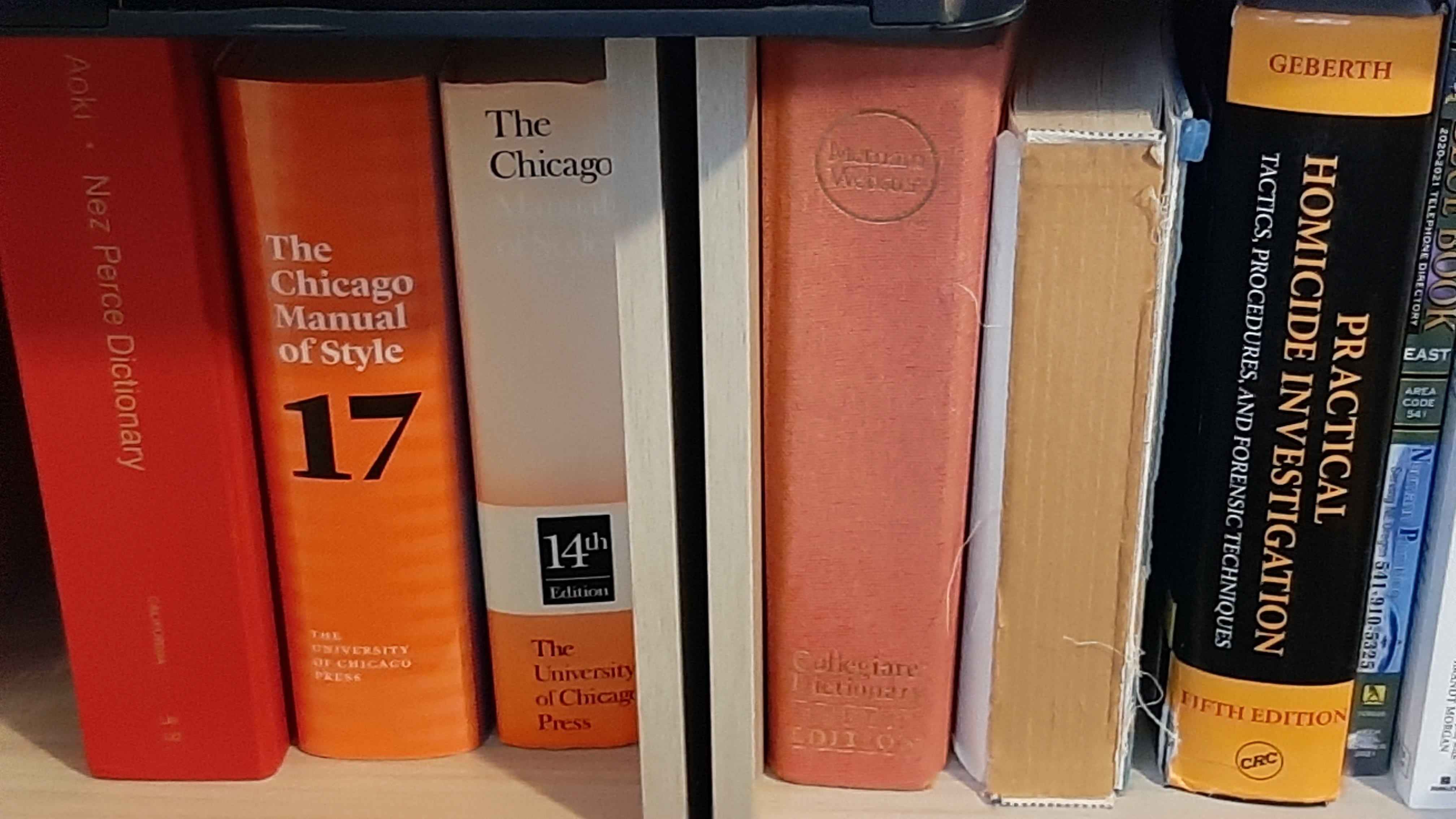
After attending my first RWA (Romance Writers of America) conference, I learned that every writer needs a dictionary( which I had), a thesaurus, The Chicago Manual of Style, and the book Goals, Motivation, and Conflict by Debra Dixon. I went home and found those books at my local bookstore and they have been on my shelf. I even purchased a newer version of The Chicago Manual of Style this year.

my shelf of reference books

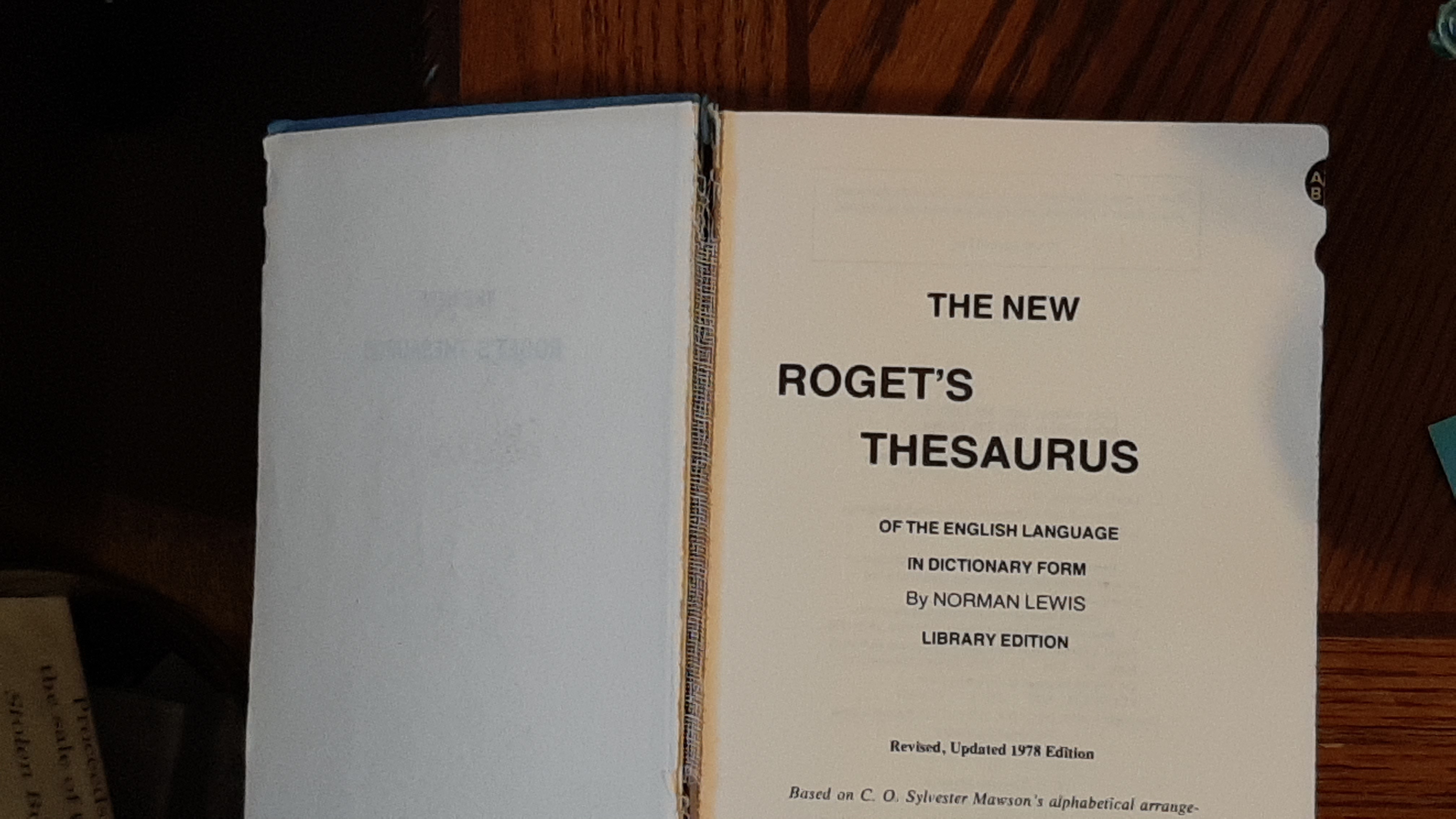
As you can tell by the ratty cover on the thesaurus, I have used it a lot. Even when I look up a word through Word Docs, I will end up going to the book. I sort through word after word, until I come up with the one that makes the sentence show what I want.

My falling apart thesaurus

There are days it feels like I stop my momentum more than I write. On those days my brain doesn’t spit out the words I want and I hunt and hunt. Then there are days I don’t touch any of the books as my fingers fly over the keys moving my story along with the precise words I need to convey the scene.

I know I will be going back and editing the story and could just put in what I want to say in parenthesis and move on. But my brain won’t let me. I have to have the exact word or I can’t move on with the story. Although there have been a couple of times when the right word couldn’t be conjured up with all my reference books. Then I do put down what I want to say in parenthesis and come back to it when I do the edits, hoping the brain is more engaged that day.

I think the need to have the “perfect” word is a curse to writers. I’m sure I’m not the only one who can use up writing time hunting down the illusive word that is on the tip of my fingers but can’t quite manifest in my mind.

For me, this is a second behind editing as the hardest and most dreaded part of writing for me. How about other writers? Do you also struggle at times to find the right word? Readers, have you ever read something and thought, “this word would have been a better choice?”

The Art of Being A D*ck

So I’m having a conversation with my more stubborn tri-lead MCs of the Casebooks. Goes a little something like this:

“I can fire you, you know,” I told him.
Jay Vincent Pedregon’s oh-so-blasé response went to his maniured nails. “Ha. You’ve been sayin’ that since I’ve known you–what, 1998, thereabouts?”
“Doesn’t excuse you being a real creep recently, but I think I figured out why you are.”
“Do tell, Ms. Dick.”
“That’s Missye or Big Sis to you, thank you; I am in mixed audience. It’s because I’m seeing another side of me, ever-present consciously, that’s also in you. It’s another antechamber of you making itself known to me.”
“My consciousness side is?” Jay Vincent asked.
“Yep,” I answered. “That gooshy-gooey stuff making you, you, you didn’t want me knowing about, but it–your mind past your mind–wanted me to know you because I’m knowing a deeper me. But the jerk side of you, it’s okay. We authors tolerate that mess more than necessary. We’ll pick up the esoteric topic later. Now I need to explain why my title reflects this conversation. Toodles.”
Jay Vincent waved, winked, wisped off. And true-to-his-d*ck form, gave me the finger. Ugh. Boys.

Apologies for the post’s opening title. It’s an aspect of the writing life, cast included, I hate dealing with in complicated, complex ways that’s hard to sort. I’ll do my best to explain.

Note: This post went out prematurely. The following is the updated and further edited version of this entry. Apologies for the inconvenience.

These past couple years were rough on all of us, but some of us (okay, me) felt it more than others. I needed a much-wanted breather from the grind of books, editing, characters, thinking myself out of plot tangles. And did I mention life crept in with its shadows and cockroaches and other vermin goodies the time in writing school doesn’t mention in the books, exams, pop quizzes, and reports back home? I kid, but you know what I mean.

You know what you like and don’t like, but something deeper within is pushing on all of us to be d*cks. We authors, poets, essayists, etc. compose music with words in turns-of-phrases, metaphors, aliterations, imagery. But if something’s or someone’s bothering you, whatever it is, you HAVE to be a d*ck and let it out. Sometimes that release isn’t well-orchestated–or well-received. Ordered books go to the wrong address; you have a breakdown at your daughter’s graduation party. Worse: the books don’t go out at all; the pig at the party refuses to accept responsibility or his atrocities. More worse: they’re the wrong book with an author’s similar name and/or title; he openly admits he enjoys that drepravity he’s into, or worse still: the copies are printed upside down, they arrive wet, muddied, smoke-tinged, or in another language you’ve not seen since college.

Or worse still: he literally got away with murder in the form of dismissed charge(s), time served, no charges ever filed–or no evidence found to convict.

It’s a meltdown years in the making, your body, soul, writing life, reader’s mental and emotional bookshelves, and so forth, can’t handle One. Second. More.

So your favorite go-to author’s been doing a cracker-jack job of helping you forget the doldrums to release your gorgeous minds to his beautiful imegery, the plot’s tight, the character’s badass as usual . . .and then this story weasels in a topic you’ve been struggling with, generationally perhaps, in your world. Maybe undealt with before today, or you’re in the middle of that emotional avalanche–you discard or burn that title, vowing never to read this author again. Congratulations. Your groaning-under-its-own-weight bookshelves collapsed from so many TBRs (to-be-reads) there the author triggered in you, unbeknownst to him or her. Maybe s/he was being a d*ck that way, but not purposefully. Or maybe they were, but used the only means to convey that in how they only knew to do: through somebody else’s story.

I was reminded of this in the teledrama The Temptations last night. Lead singer/Temps co-founder Otis Williams, at the time of recording the extended-play “Papa Was a Rolling Stone,” took issue with the songwriter’s reference to the 3rd of September. Only Brian Dozier (of Holland-Dozier-Holland fame) hadn’t any idea Williams’s father died that day; Williams had never told anyone this. The songwriter told Otis to use that anger while recording the song, since it’s so–and suddenly–personal.

The rest, as they say, is history.

We’re all human. We’re gonna make mistakes, great and small, to ger to the gold in mind expansion, mental, emotiona, professional, or familiar growth. Hell, even the Almighty did with the Flood and made a rainbow promise that would never happen again. Readers, when you see themes or topics in your favorite titles hitting closer than expected, or they make the character do what you’d never dreamed s/he’d do, in a way, the authors were being d*cks to broach topics or aspects of the character(s) that needed to be handled. Even the most even-keeled personalities among us are d*cks; you wouldn’t have gotten this age or stage in life without doing so to a degree. And writers: if your stories and plots are limp, raggedy from overuse, or just downright overdone ad nauseum, then be a d*ck and do something completely not your style, not you, just not, period. An interethnic relationship–I know of a Black man/Japanese woman union’s kid; even during the electric 1980s, this was still frowned upon–maybe, for the next book plot. Or today’s strange times, possibly–have a cast member refuse to go with whatever the stream of conventional thought is in your covid story, regardless what it might cost you and/or the cast. It takes a proud d*ck to stand on your moral compass; history proves this. It takes a d*ck attitude to test your cast, your beliefs and principles, even against what you’ve always known to be truthful and factual. If this means you’re a d*ck in someone else’s eyes for this position . . .then you are, and there you are. Gotta crack eggs to make an omlette. Gotta be a d*ck to get things done, mountains moved. In the quiet of the night, even knowing Jay Vincent Pedregon, I finally caught by that d*ck by his tail.

Happy reading and happy writing, always.

The Publicity Paradox

by Janis Patterson

It’s hard not to feel sorry for a poor writer. While most people think we are almost supernatural creatures living fantastic, fairy-tale lives, nothing could be further from the truth. In fact, sometimes the truth is downright depressing.

Rather than reclining on a luxurious chaise longue, looking over some spectacular view, dashing off a couple of thousand words while sipping champagne (if you’re a romance writer) or pounding on an ancient mechanical typewriter in some dimly lit room with wonky venetian blinds and a bottle of hard liquor at your elbow (if you’re a mystery writer) or ensconced in a book-lined library with a fancy fountain pen and a bottle of smelling salts handy in case your own genius overcomes you (if you’re a literary writer), the real poor writer of whatever stripe is usually trying to cram his output into the nooks and crannies of his life.

These days it’s rare that a writer can make a complete living solely by his writing; nearly all of us have distractions such as jobs, children, families, homes, responsibilities, health issues and Heaven only knows what other interferences mortal flesh is heir to. That, plus in this whacky modern world of publishing the writer is mainly responsible for editing and publicity, both in the realms of self-publishing AND traditional publishing.

Champagne? We’re lucky if we get a chance to grab a diet Dr Pepper!

For me, publicity is especially galling. I do what I must to keep my and my family’s life going. I work very hard at writing the best books I can. I will admit I suck at publicity, even though I was well trained in doing it, mainly because I don’t like doing it and because I was raised to believe it is slightly trashy to blow one’s own horn.

In my opinion, the worst part is the current trend to spread out your private life and make friends with all your readers. My question is, Why? The fact that I dislike brussels sprouts and refuse to wear the color orange should have nothing to do with the quality or content of my books. Plus, I already have many, many friends – real friends, whom sadly I do not get enough chance to see because I’m always having to work. To be real a friendship has to grow organically. I don’t need a pseudo-friendship connection with a fan who wants to exchange recipes and chat about what we’re having for dinner or give me suggestions about my next book. What I’m fixing/ordering for dinner is no one’s business except for me and my family.

What should matter is the book – the story. That is what the reader should be interested in, not whether I prefer Veuve Cliquot or Prosecco, or drive a BMW or a Chevrolet, or live in a condo downtown or a two story house in the country. We are writers – spinners of tales, creators of worlds, manufacturers of dreams – not zoo animals on display for the amusement and edification of the intrusive public.

It’s our books which matter, our books which the readers buy – not unlimited access to our home and family and private life. Private life should be exactly that – private. Writers write stories and readers read stories. That’s the basic contract between writer and reader… or it should be.

Got It Covered

Ebooks were a new thing when the rights for the first nine Jeri Howard books reverted to me. I wanted to republish the novels as ebooks myself. That was a time-consuming project, as I had to have them converted into electronic files, which involved having the actual books scanned. I found a service that would do this, but spent the next six months proofreading. All sorts of things affected scans, from the quality of the paper to specks of dust on the page.

I still find mistakes, though not as often now. The quality control gremlins at Amazon do point out those errors. At least now I’ve become quite skilled at correcting those files myself, thanks to Calibre software.

Cover art was an important aspect of republishing the books. Kindred Crimes, first in the series, was published by St. Martin’s Press, while the next eight were published by Fawcett Books. The US covers were all over the map. Some good, some that left me scratching my head.

The British covers? Awful. Really awful. Dreadful, even. The Japanese covers were terrific.

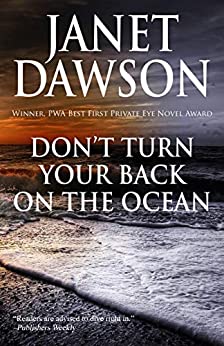
Original Paperback

For Don’t Turn Your Back on the Ocean, which mostly takes place in Monterey, I told my Fawcett editor that it would be nice if the cover had something to do with the contents of the book. I remember being quite pleased at the pelican that appeared on the cover. The new cover has a more brooding look, but still has that all-important ocean.

As for that business about the cover having something to do with what’s in the book, that’s apparently an author thing. People in marketing tell me that it doesn’t matter to the potential reader. After all, said reader is looking to buy a book and often that’s based on what they see in a small thumbnail on a computer screen.

New Ebook Cover

Back to those ebook covers. I really wanted to have a unifying look, something that said: this is a series. I’m now on my third set of covers for those first nine books and I’m please with them. The artwork for each cover is different but you can certainly tell they are all books in the Jeri Howard series.

I also have nine books published by Perseverance Press. The covers for the Jeri Howard books are quite different. Those for the Jill McLeod/California Zephyr series have a unifying look: trains, since they are historical mysteries about a Zephyrette on a long-distance train. Now that Perseverance Press is closing, the rights for those books are reverting back to me. For the Jeri Howard books, I’m working with a cover artist to put new covers on the ebooks, covers that jibe with those on the first nine ebooks.

As for the train books, as I call them, those will get a cover reboot. Back when they first came out, I was hoping to use the old California Zephyr advertisements, which have a distinctive 1950s look. But I couldn’t figure out who had the rights to those images. The train images that we used are great, but this is a cozy series and I’d like to rebrand them as such. The new covers may have illustrations that resemble the old ads.

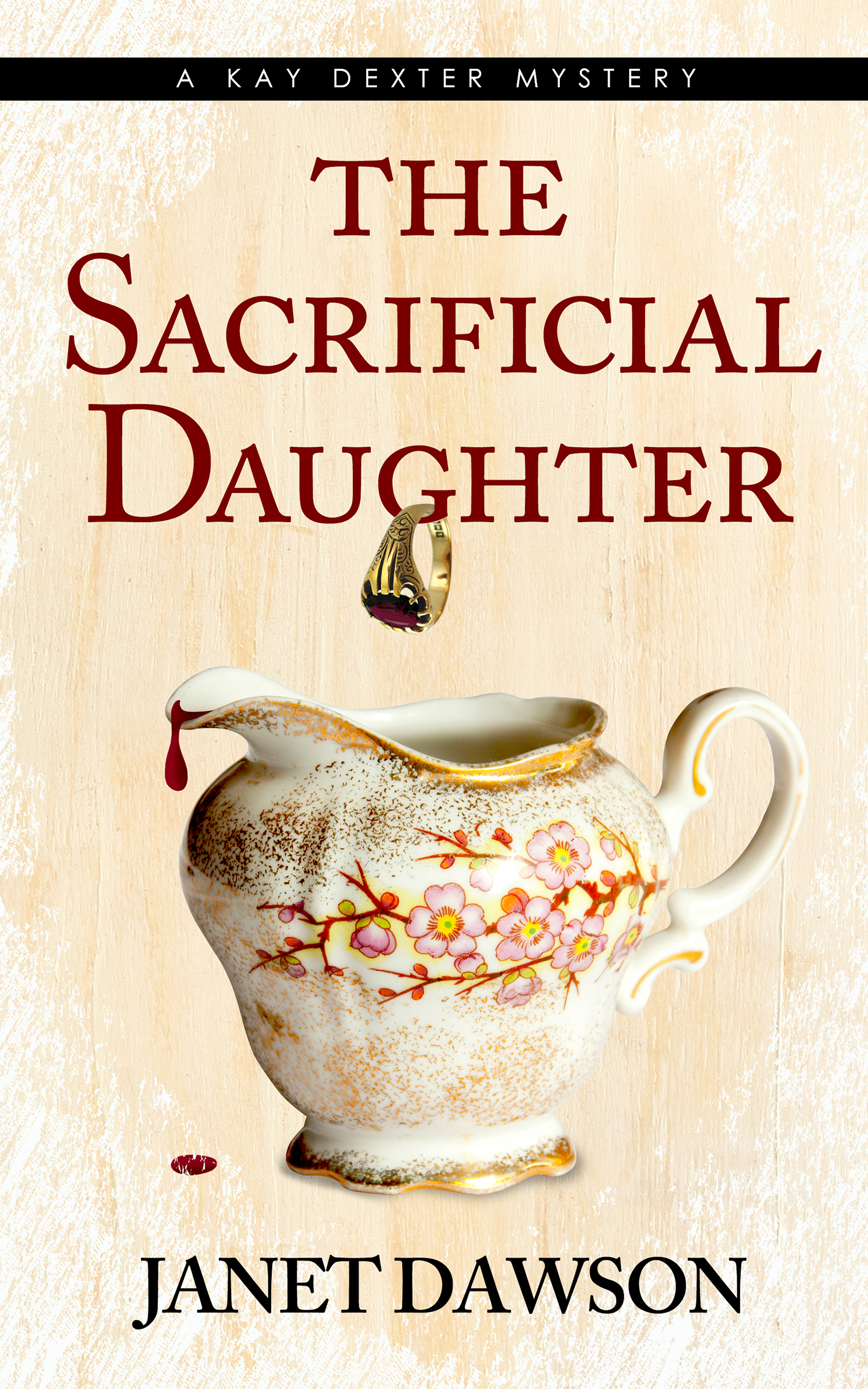
Earlier this year I published The Sacrificial Daughter, the first in the Kay Dexter series, which features a geriatric care manager in a fictional Northern California town. The series is more cozy than hard-boiled. I wanted a great cover, but I resisted the impulse to add a cat. I tried designing a cover myself and quickly discovered that’s not really my skill set.

I turned to a cover designer who read the book and came up with several designs based on suggestions I gave her. None of them worked. Some came close, but… Then the cover designer came up with something on her own, an image we hadn’t even discussed.

Yep, that was the one. It clicked. It was just right.

And that is what’s on the cover of the book.