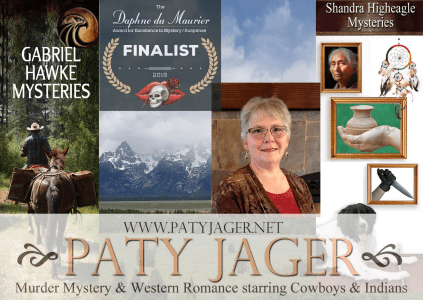
My Favorite Time of the Year by Paty Jager

While this year has been challenging in many ways, I have to say it has been rewarding for me as an author. I may not have been able to attend several conferences I’d hoped to participate in, however, the state of things made it possible for me to reach my word goal for the year, spend more time working on writing and writing related projects, and to see the path I want to take in the coming years.

I wrapped up my first mystery series. That book will publish in 2021. I’m sad to see this character go as Shandra was my mystery breakout series. The excitement over creating another character for a new series outweighs the sadness. 😉

My hero, Gabriel Hawke, will be protecting Wallowa County until he is retirement age or I can’t come up with a good murder for him to solve. 😉

Speaking of Gabriel Hawke. Book 6, Turkey’s Fiery Demise is available in ebook.
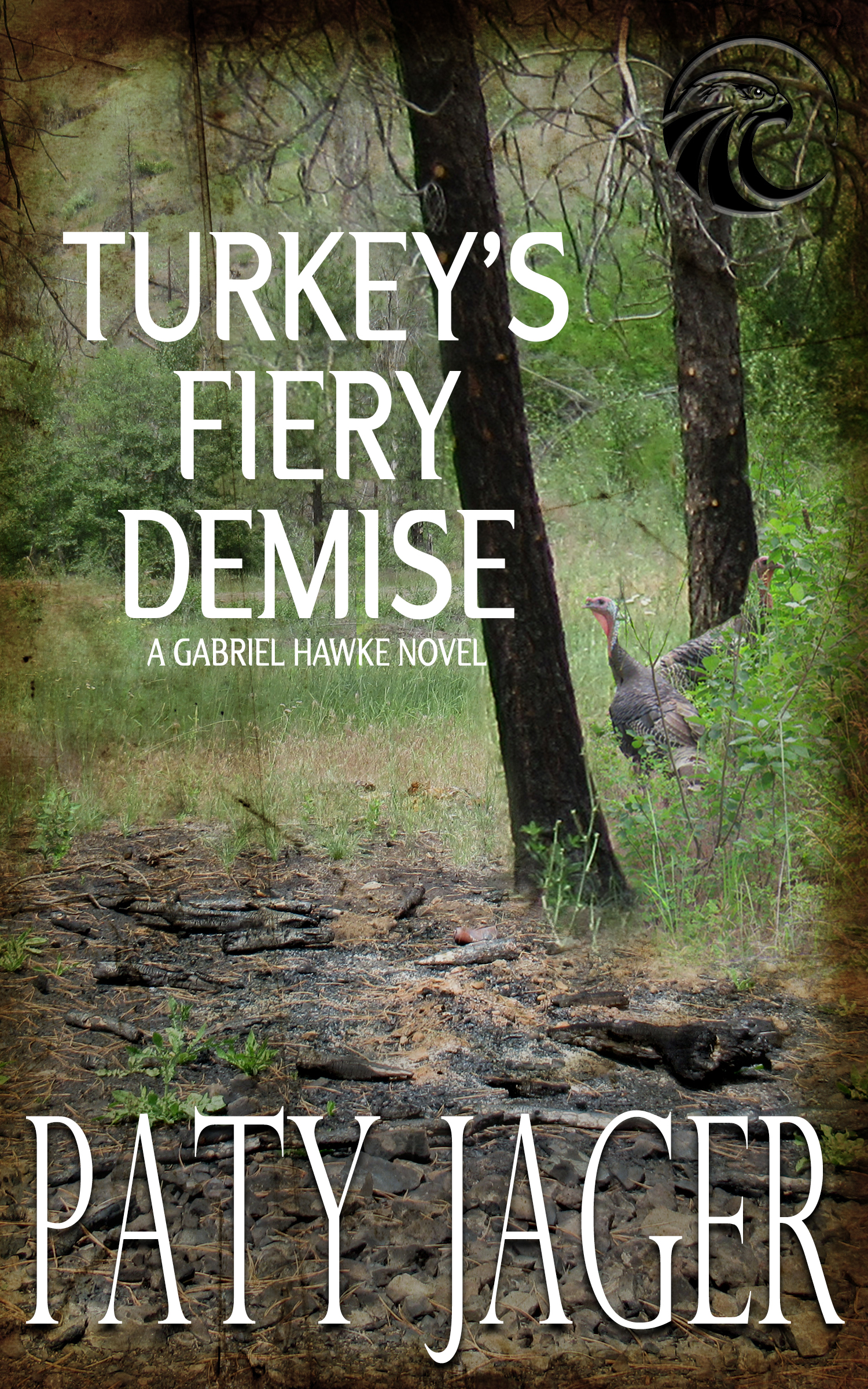
Accident or Homicide?

State Trooper Gabriel Hawke is called to a vehicle on fire. When the steam and smoke clears, a charred body is slumped over the steering wheel.

The Muzzleloader Rendezvous has attendees from all over the Pacific Northwest, but it’s the local club that raises Hawke’s suspicions. With the president of the club dead, rumors abound. If the gossip and tracking won’t reveal the truth to who killed the strutting turkey, Hawke’s focus on the truth will.  https://books2read.com/u/38RnOZ

Moving into 2021, I’m filling out character charts for the new character and secondary characters who will be part of her life. I’ll be gathering the information I need for the next Hawke book, set on the Confederated Tribes of the Umatilla Reservation, and digging around to come up with a list of murders that I can use for the two series.

I’ll also be throwing several Facebook parties, like my recent “Where in the world is Isabella Mumphrey?” I’ll be having a month-long event in May for my 50th published book. If you’re a reader, you might want to either follow my author page at Facebook, or join my newsletter to get in on all the fun. I’ll be posting here as well.

I love December because it is the last month of the year. It lets me think about what I’ve accomplished this year and look forward to planning for the next.  And that the month ends with two celebrations, Christmas and New Years, makes it the perfect way to end a year and start a new one. I have already written out my goals for 2021, in writing, publishing, and life. Not that the life ones ever completely happen, but I’m a stickler for getting my writing goals accomplished.

 Do you like December? Do you like to look back over the year and see what you’ve accomplished? Do you write out a plan for the coming year?
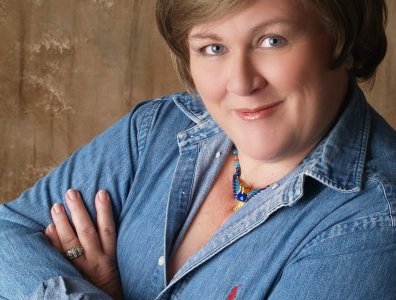
Writing as Discovery

by Janis Patterson

Want to start a lively ‘discussion’ among writers? All you have to do is say something about how ‘plotting’ or ‘pantsing’ is superior. It doesn’t make any difference which; both have their outspoken and extremely vocal adherents. Just make sure you can hold your ground or you have a direct path to an exit. Both sides have passionate adherents.

For those who aren’t familiar with the terms (if there are any of you left out there!) ‘plotting’ is basically an outline, yes, like you used to make in elementary school, but adapted toward a book. Whether it’s the old Roman numeral/Arabic numeral/alphanumeric letter – i.e., bullet point type of outline – or a paragraph style, the outline is a detailed road map of every twist and turn in your story. ‘Pantsing’ is taken from the old phrase ‘seat of your pants,’ meaning you just write and see what happens.

In general, pantsers tend to do more re-writing than plotters, but plotters spend more time on pre-writing work.

I am an avowed pantser. Sort of. My personal system is sort of like a suspension bridge. I know where the story begins. I know where the story will pretty much end – but that has been known to change. I know a couple of plot points in between, though they can be shifted a bit during writing. Then all that’s left is to spin the webwork of the story between them. Does my story change while I’m writing? Yes, it can and has, and I think that’s a good thing, because that means the story is growing organically and being true to itself and – more importantly – to its characters.

Plotters vary from those who put down only a few plot points and notes to those who put in every raise of the hero’s eyebrow and every shrug of the heroine’s shoulders. They also do lots of pre-plotting work, making character sheets, location maps and doing interviews with their characters. I once saw a character worksheet that was at least 5 pages long and included such things as the character’s favorite flavor of JellO and their maternal grandmother’s maiden name. Personally, I’ve had close friends for decades and I don’t know that much about them!

Always willing to improve my craft, I once took a much touted ten-box plotting course that was supposed to be almost magical in creating a book’s structure. A stubborn person, I finished it even though I knew from the second or third lesson that it wasn’t for me. After all, I had paid for it and believe in getting my money’s worth.

Basically you put every turning point and every reaction into one of the ten boxes. An outline, just minus the Roman and Arabic numerals. Using this system I plotted a pretty good romantic suspense novel about Egypt, antiquities smuggling, trust issues, terrorism and a dirty bomb thrown in for good measure.

It will never be written, at least not by me. By the time the last box was filled in I was so bored with the whole idea I never wanted to see it again. Believe me, it shows in the final product when the writer is bored with the project. No matter how good the writer is, the book is lifeless and mechanical.

Don’t think this is a vote either for or against plotting or pantsing. It’s one of those things to which there is no one ‘right’ answer for everyone. The writer has to decide for himself what works for him. And perhaps it is the reader who is the ultimate judge, though most don’t have the slightest idea of the writer’s process. They just know if they like the book or not.

So what do I do? I get an idea for an opening situation, I sit down and I start to write. If the idea is sound, if the story is a good one, the characters just take over and I become more scribe than writer. Do I have to go back and do some re-writing when the plot changes direction? Occasionally, but it only makes the story stronger. Sometimes it surprises me what comes up on the screen as I write, and to my mind that is a good thing. Remember, someone – I don’t remember who – said, “No surprise for the writer, no surprise for the reader.”

Wishing everyone a Merry Christmas, and a wonderful holiday season!

Writing as Discovery

by Janis Patterson

Want to start a lively ‘discussion’ among writers? All you have to do is say something about how ‘plotting’ or ‘pantsing’ is superior. It doesn’t make any difference which; both have their outspoken and extremely vocal adherents. Just make sure you can hold your ground or you have a direct path to an exit. Both sides have passionate adherents.

For those who aren’t familiar with the terms (if there are any of you left out there!) ‘plotting’ is basically an outline, yes, like you used to make in elementary school, but adapted toward a book. Whether it’s the old Roman numeral/Arabic numeral/alphanumeric letter – i.e., bullet point type of outline – or a paragraph style, the outline is a detailed road map of every twist and turn in your story. ‘Pantsing’ is taken from the old phrase ‘seat of your pants,’ meaning you just write and see what happens.

In general, pantsers tend to do more re-writing than plotters, but plotters spend more time on pre-writing work.

I am an avowed pantser. Sort of. My personal system is sort of like a suspension bridge. I know where the story begins. I know where the story will pretty much end – but that has been known to change. I know a couple of plot points in between, though they can be shifted a bit during writing. Then all that’s left is to spin the webwork of the story between them. Does my story change while I’m writing? Yes, it can and has, and I think that’s a good thing, because that means the story is growing organically and being true to itself and – more importantly – to its characters.

Plotters vary from those who put down only a few plot points and notes to those who put in every raise of the hero’s eyebrow and every shrug of the heroine’s shoulders. They also do lots of pre-plotting work, making character sheets, location maps and doing interviews with their characters. I once saw a character worksheet that was at least 5 pages long and included such things as the character’s favorite flavor of JellO and their maternal grandmother’s maiden name. Personally, I’ve had close friends for decades and I don’t know that much about them!

Always willing to improve my craft, I once took a much touted ten-box plotting course that was supposed to be almost magical in creating a book’s structure. A stubborn person, I finished it even though I knew from the second or third lesson that it wasn’t for me. After all, I had paid for it and believe in getting my money’s worth.

Basically you put every turning point and every reaction into one of the ten boxes. An outline, just minus the Roman and Arabic numerals. Using this system I plotted a pretty good romantic suspense novel about Egypt, antiquities smuggling, trust issues, terrorism and a dirty bomb thrown in for good measure.

It will never be written, at least not by me. By the time the last box was filled in I was so bored with the whole idea I never wanted to see it again. Believe me, it shows in the final product when the writer is bored with the project. No matter how good the writer is, the book is lifeless and mechanical.

Don’t think this is a vote either for or against plotting or pantsing. It’s one of those things to which there is no one ‘right’ answer for everyone. The writer has to decide for himself what works for him. And perhaps it is the reader who is the ultimate judge, though most don’t have the slightest idea of the writer’s process. They just know if they like the book or not.

So what do I do? I get an idea for an opening situation, I sit down and I start to write. If the idea is sound, if the story is a good one, the characters just take over and I become more scribe than writer. Do I have to go back and do some re-writing when the plot changes direction? Occasionally, but it only makes the story stronger. Sometimes it surprises me what comes up on the screen as I write, and to my mind that is a good thing. Remember, someone – I don’t remember who – said, “No surprise for the writer, no surprise for the reader.”

Wishing everyone a Merry Christmas, and a wonderful holiday season!

There’s A Cat in the Christmas Tree!

There are two cats in the Christmas tree photo above.

One is easy to spot. You’ll have to look for the other one. But he’s there.

I love my holiday rituals. That includes decorating my home and putting up a Christmas tree, usually the day after Thanksgiving.

Of course, when one has cats, and I do— Well, if you have cats, you know what I mean. If you don’t, I’ll tell you.

Bodie, an adventurous kitten.

Some cats don’t pay any attention to the Christmas tree. That has never been the case at my house. As soon as I start decorating, my feline companions gather, eagerly twitching their whiskers, as they happily contemplate that big cat toy that appears once a year.

Pearl, who went to the Rainbow Bridge decades ago, would carefully remove the shiny tinsel balls and bat them around the living room. She rarely broke one, unless she batted it into a chair leg.

Then there was Gus, also long departed, but still remembered fondly, especially for this story. One morning as I was getting ready for work, Gus was under the Christmas tree, checking out the presents and making the ornaments jingle and jangle. In a loud voice, I told him to get away from the tree.

To be fair, he did. But he was tangled in a string of lights, so he took the tree with him. He dragged it several feet across the living room, accompanied by the tinkle of broken ornaments.

The following year, I tied the tree to a sturdy piece of furniture.

I love the smell of a real pine Christmas tree. But disposing of the dried-out corpse at the end of the holiday season gives me the blues. The remedy for that was to go with an artificial tree. I bought a seven-footer at a local store’s after-Christmas sale. When I got it home, I put it up, just to see how it looked.

That’s when I discovered it would hold a full-grown cat. The cat in question, Dexter, was midway up the tree, resting comfortably on a branch.

Clio the kitten, perched midway up the tree.

The climbing-the-Christmas-tree baton was passed to Bodie and Clio, brother and sister, who appeared on my patio ten years ago with their mother, Lottie. That year as I put up the tree, the kittens enthusiastically climbed it.

The following year, I set up the tree and was getting ornaments out of the box when I glanced up and saw Clio precariously balancing at the very top. She stayed up there long enough for me to snap a photo.

Yes, that really is Clio at the top of the tree!

She doesn’t do that any more. The tree is smaller and she’s much fatter.

These days the Christmas tree tradition is mostly playing with the ornaments on the bottom and sleeping under the tree. Lottie likes to make a nest out of the Christmas tree skirt and snooze underneath. So do Bodie and Clio, both too big to climb the tree now. At least I hope so!

Bodie sits under the tree.

Happy holidays!

If you put up a Christmas tree, I hope it stays upright.

Guest Blogger- Tara Lush

As a journalist in Florida, I’ve written about the shady side of my sunny state for years.

Political corruption, horrific crime, drunken antics at tiki bars, alligators, naked people with machetes, cockroaches ending up in unmentionable places…nothing shocks me anymore. I’ve witnessed thirteen executions and covered numerous mass shootings.

I’ve long wanted to write crime fiction, and entertained the thought of doing true crime. But that seemed a little too close to my day job, and frankly, covering those horrific stories as a journalist sapped my desire to retell them in a novel.

My first forays into fiction were contemporary romances, and almost all were set in Florida. But crime fiction lurked in the corners of my brain, and in 2019, I sat down and finally plotted a murder mystery.

I adored the work of Carl Hiaasen, Tim Dorsey and Edna Buchanan — how could I not, they’re all journalists, like me — but when I started to write my debut mystery, I just couldn’t muster the cynicism or the edginess of the hardboiled noir. Perhaps the tumultuousness of recent years played a part in that.

As I scribbled my first mystery, I imagined a slightly less-dysfunctional tropical paradise, one that was loosely based on the things I’ve seen in my twenty-plus years as a reporter in Florida.

I knew I wanted to retain the quirkiness of Florida, though, so I created a fictional island in the Gulf of Mexico, chock full of eccentric characters. Devil’s Beach is where gossipy old hippies mingle with reformed mafiosos. Where the local newspaper writes stories about chicken nuggets shaped like manatees. Where a handsome Instagram-famous barista is found dead and no one bats an eye when a laid off journalist tries to figure out how the barista spent his final hours.

I also wanted a gentle anchor in the book, and that’s why I set it in the coffee shop of my dreams. It’s called Perkatory, a place decorated in hues of weathered wood with sky blue accents.

And then, my reporter’s brain kicked in. I drew inspiration from decades of covering crime in crafting my fictional murder. From the stilted language of cop-speak to wrangling over deadlines with editors, I used details from newspaper stories to seed clues into my fictional story. And the suspects, those were easy — they are all based on people I’ve covered in the past, folks who stood out as true characters.

There are also some fun Florida easter eggs in the details — for instance, the wild monkeys that inhabit a park on my fictional island can really be found in a place called Silver Springs.

I believe that for Florida residents, they’ll recognize many of the places, stories and details in the book. And for you non-Florida folks, I’m hopeful you’ll read my book and feel like you’re on a beach vacation, one where you get to know those quirky characters at the end of the tiki bar.

ABOUT GROUNDS FOR MURDER: Barista Lana Lewis’s sleuthing may land her in a latte trouble as Tara Lush launches her new Coffee Shop mysteries.

When Lana Lewis’ best — and most difficult — employee abruptly quits and goes to work for the competition just days before the Sunshine State Barista Championship, her café’s chances of winning the contest are creamed. In front of a gossipy crowd in the small Florida town of Devil’s Beach, Lana’s normally calm demeanor heats to a boil when she runs into the arrogant java slinger. Of course, Fabrizio “Fab” Bellucci has a slick explanation for jumping ship. But when he’s found dead the next morning under a palm tree in the alley behind Lana’s café, she becomes the prime suspect.

Even the island’s handsome police chief isn’t quite certain of her innocence. But Lana isn’t the only one in town who was angry with Fabrizio. Jilted lovers, a shrimp boat captain, and a surfer with ties to the mob are all suspects as trouble brews on the beach.

With her stoned, hippie dad, a Shih Tzu named Stanley, and a new, curious barista sporting a punk rock aesthetic at her side, Lana’s prepared to turn up the heat to catch the real killer. After all, she is a former award-winning reporter. As scandal hangs over her beachside café, can Lana clear her name and win the championship — or will she come to a bitter end?

LINK: books2read.com/u/4A7KLA 

Tara Lush is a Rita Award finalist, an Amtrak writing fellow, and a George C. Polk Award winning journalist. For the past decade, she’s been a reporter with the Associated Press, covering crime, alligators, natural disasters, and politics.

She also writes contemporary romance set in tropical locations under her real name, Tamara Lush. A fan of vintage pulp-fiction book covers, Sinatra-era jazz, and 1980s fashion, she lives with her husband and two dogs on the Gulf coast.