The Mystery of Movies

I grew up at the movies. Really, I did.

My mother’s family was in what they called the picture business. I’m not talking about the kind of pictures you put in frames. I’m talking about the picture show.

Way back in the silent years, before talkies became the rage, they owned movie theaters, in small rural towns, mostly in Oklahoma, but also in Nebraska and Arkansas.

Mom grew up in Purcell, Oklahoma. The family theaters had names that evoke Hollywood’s Golden Age—the Ritz, the Metro, and the McClain, because it was McClain County.
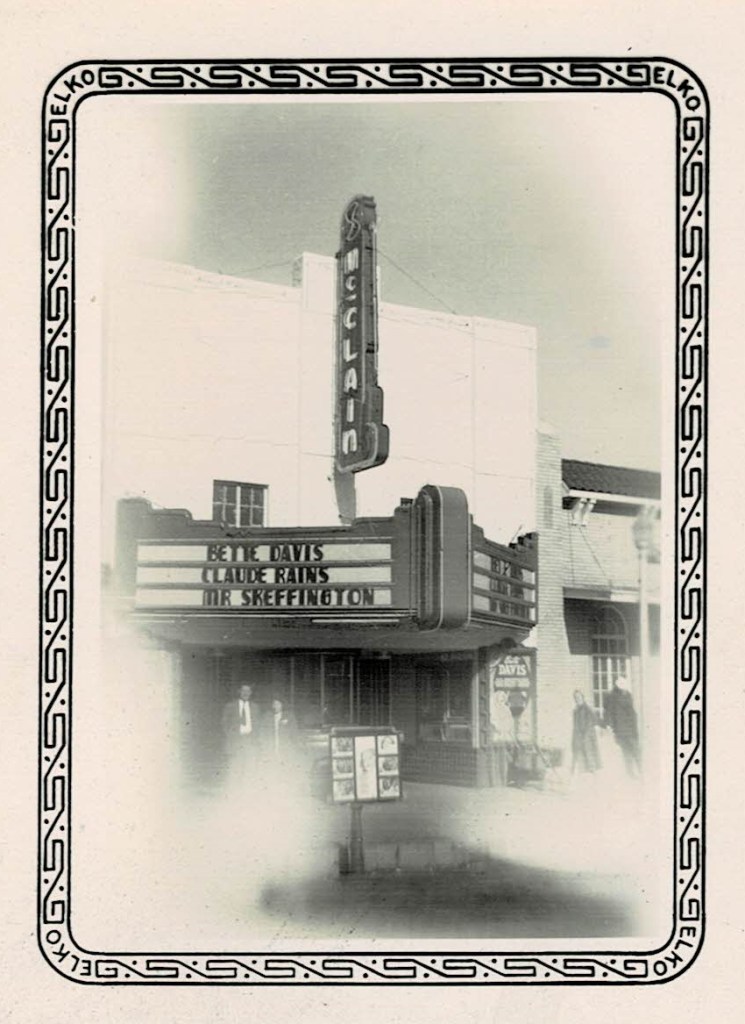
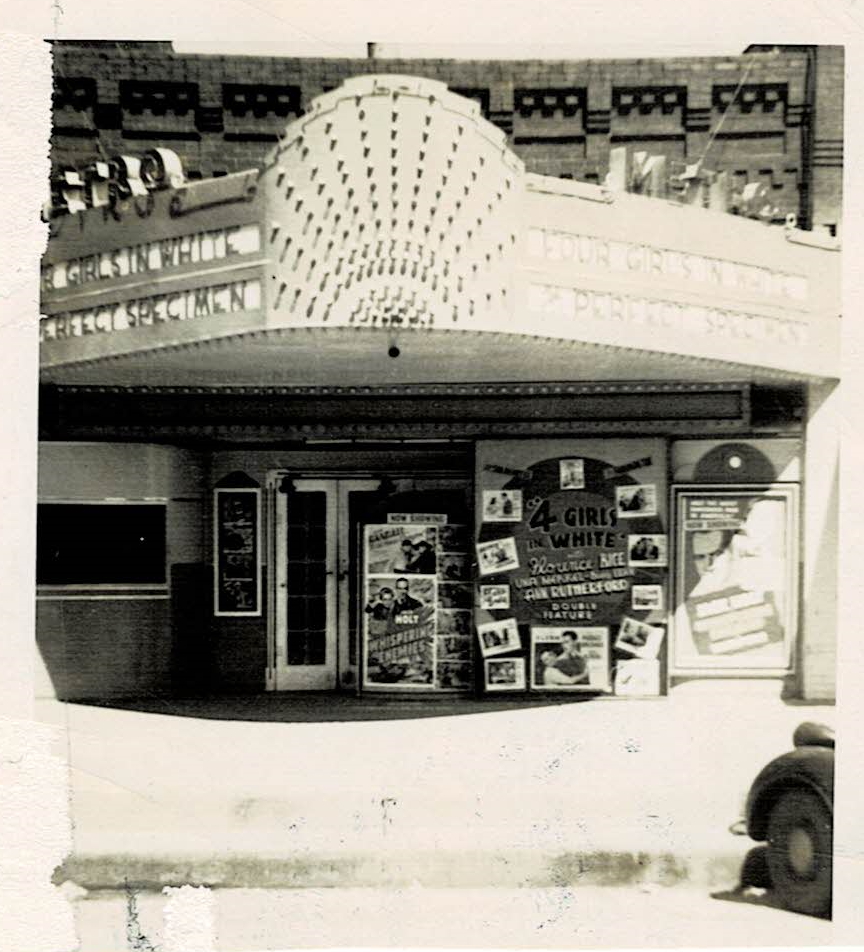
My uncles ran the projectors. Mom and her sisters sold tickets, candy, and popcorn. In fact, Mom was selling tickets one evening during World War II when she met Dad, a young sailor from a nearby Navy training center. Mom’s older sister Flo met her husband the same way, at another movie theater in nearby Norman.

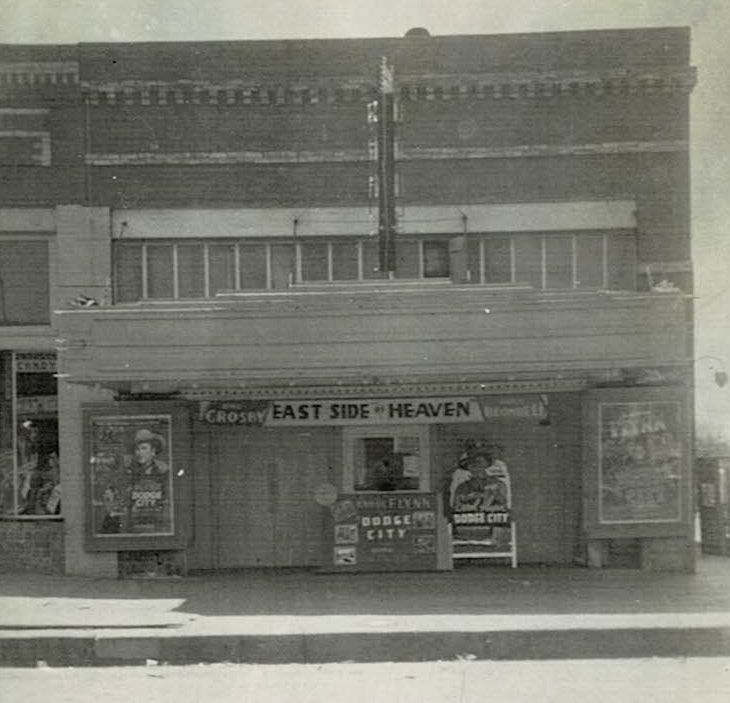
Years later, my Uncle Levi built a theater called the Canadian, because Purcell is located on the Canadian River. He also had a drive-in, the Sky Vue, south of town. The Canadian is the movie theater that’s imprinted on my childhood. When I was young, my family lived in Oklahoma City, some 45 miles north. On Sundays, after church, we’d drive to Grandma’s house in Purcell, for dinner with the family. Various aunts, uncles, and cousins would be there, but not Aunt Dorothy and Uncle Levi, because they were at the show.

The Canadian Theater in 1959, Purcell, Oklahoma

After dinner, the grownups would settle into Grandma’s living room and talk. The kids walked the the few blocks to downtown Purcell, where we were allowed to take tickets from movie patrons and work in what Aunt Dorothy always called the Sweet Shoppe. And we saw movies, lots of them.

Every now and then, I was allowed into the projection room at the Canadian or the Sky Vue. None of this digital stuff that they have now. This was back in the 1950s.

One of my clearest memories is of Uncle Levi, sweating in a sleeveless undershirt in that hot projection room, as he hoisted huge rolls of film onto the projector. Years later, when I saw Cinema Paradiso, I thought of my uncle.

The Canadian closed a long time ago, turned into first an antique mall and later an event center. These days, I’m more likely to stream a movie. But I still like seeing movies in a theater. Especially in the 1930s Art Deco gem in downtown Alameda.
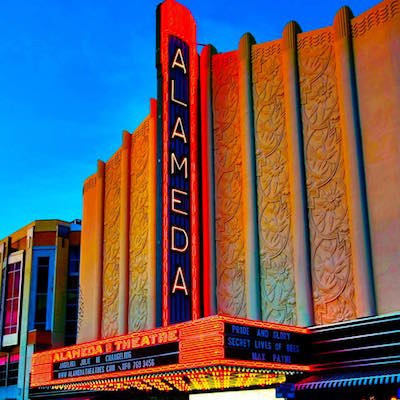
Alameda Theatre, Alameda, California, built 1932

As a mystery writer, I’ve mixed movies into my plots. My latest California Zephyr book, Death Above the Line, takes my sleuth Jill McLeod off the train and onto a set, playing a Zephyrette in a film noir. In Bit Player, private eye Jeri Howard investigates what happened long ago when her grandmother worked in 1940s Hollywood.

Check them out, and I’ll see you at the movies!
Guest Author – Tara Lush

Write What You Know (And always listen to your best friend)

By Tara Lush

When I first started writing fiction six years ago, I turned to romance. It was a genre that I’d read and loved — along with mystery and true crime, of course. When I told my oldest friend about my plan to write a steamy novel, she scrunched up her face.

“Why aren’t you writing crime fiction?”

It was an excellent question. I’ve been a newspaper and wire service journalist in Florida for two decades, with many of those years devoted to the weird, the horrific, and the criminal. I’ve covered many of the state’s biggest crime stories. High-profile ones such as Casey Anthony and Trayvon Martin. Lesser-known murderers who had abducted children and those who attacked fellow citizens in a drug-induced haze. I’ve also covered eleven mass shootings (including Parkland and Pulse) and witnessed thirteen executions in Florida’s death chamber.

“Pfft. Why would I write crime fiction?” I asked my friend. “It’s too depressing. Too much like my day job. I want to do something different. My muse is telling me to write about sex.”

And yet, my muse told me to write a romantic suspense for my first novel. I moved on from there, writing contemporary romance and erotic romance. And while I had some measure of success — a RITA finalist book in 2018 — it never felt a hundred percent right, either.

In 2019, I was on a trip to Vermont and sitting around my best friend’s house. I was musing aloud about my next steps for my fiction career. Self-publishing contemporary romance was increasingly difficult and competitive, I told her, and writing the happy-ever-after between the couple wasn’t as satisfying as it had been in previous years. I wanted to tell a story about justice, but with humor and nuance.

I’d recently finished a series about couples in a quirky Florida town, and let’s just say the eccentricities of the characters weren’t resonating with romance readers. I was frustrated.

“What about a mystery novel?” my friend asked.

I mulled this over for the entire month of August while I was on a monthlong vacation. I’d been reading Kathy Reichs’ Deja Dead, and although I loved it, I couldn’t imagine myself writing something so dark. There was the matter of the day job trauma, after all. But what if I could write something softer, something with a little romance and a twisty murder… something gentle.

A cozy mystery, perhaps?

While sitting in a café in Quebec City and drinking the best espresso I’d ever had, I sketched an outline for my cozy. I used my experience as a crime reporter to plot the murder. First I chose a victim. Then I chose a murderer. I worked backwards with the details and clues, thinking about all the police reports I’d read over the years, all the news conferences I’d been to, and all the cops I’d chatted up. Suddenly everything made sense.

You know those wooden puzzle boxes, the ones that seem so hard to open? That’s what my brain felt like. Each clue, each detail, unlocked something inside my creative soul in a way that romance didn’t. I was able to blend my quirky characters and my love of a Florida setting with a murder and a romantic subplot. Justice as an HEA was more alluring than a fictional marriage proposal.

What was this sorcery?

That fall, I wrote my cozy mystery and in March of this year, sold it to Crooked Lane Books.

The lesson here is to always listen to your best friend. And perhaps, listen to what your muse is whispering.

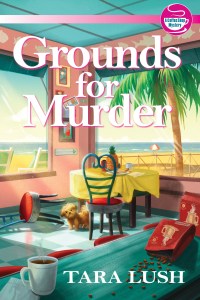
Barista Lana Lewis’s sleuthing may land her in a latte trouble as Tara Lush launches her debut mystery series.

When Lana Lewis’ best — and most difficult — employee abruptly quits and goes to work for the competition just days before the Sunshine State Barista Championship, her café’s chances of winning the contest are creamed. In front of a gossipy crowd in the small Florida town of Devil’s Beach, Lana’s normally calm demeanor heats to a boil when she runs into the arrogant java slinger. Of course, Fabrizio “Fab” Bellucci has a slick explanation for jumping ship. But when he’s found dead the next morning under a palm tree in the alley behind Lana’s café, she becomes the prime suspect.

Even the island’s handsome police chief isn’t quite certain of her innocence. But Lana isn’t the only one in town who was angry with Fabrizio. Jilted lovers, a shrimp boat captain, and a surfer with ties to the mob are all suspects as trouble brews on the beach.

With her stoned, hippie dad, a Shih Tzu named Stanley, and a new, curious barista sporting a punk rock aesthetic at her side, Lana’s prepared to turn up the heat to catch the real killer. After all, she is a former award-winning reporter. As scandal hangs over her beachside café, can Lana clear her name and win the championship — or will she come to a bitter end?

Preorder here: https://www.penguinrandomhouse.com/books/667052/grounds-for-murder-by-tara-lush/9781643856186/

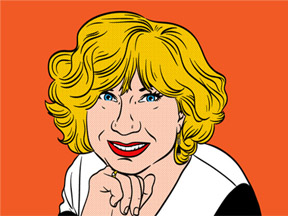
Tara Lush is a journalist with The Associated Press. Her debut cozy mystery, GROUNDS FOR MURDER, will be published Dec. 8. learn more about her and her books here:

P.G. Wodehouse and Me by Heather Haven

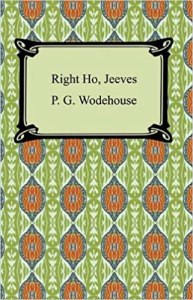
I was about nineteen years old when I read my first P.G. Wodehouse book. I will never forget it. It was called Right ho, Jeeves and it opened up a new world for me. Until that time, I hadn’t realized books could be funny, were meant to be funny, that their only job was to make you laugh instead of cry. And through it all, the books were well-written, worth reading for their entertainment value alone.

Right Ho, Jeeves started me down a long path of P.G. Wodehouse books that took me years and years to read. This is because he wrote over ninety of them. This is also because I would go back and reread certain ones, especially the Bertie Wooster and Jeeves collection, again and again.

Even though he was writing about the mores of the 1930’s upper English class, his style, his wit, his ability to evoke hilarious images, make outlandish situations seem almost real, heavily influenced my own writing. He was my hero, my idol, someone I aspired to becoming: a writer whose words alone could make you forget your troubles.

Then one day I found out he apparently had been a Nazi sympathizer. Or maybe his wife was and he went along with it. It was never made clear how it started with him, what drew him in. But I was crushed. Everything good and noble I thought he was came crashing down. My hero not only had feet of clay, he stood for everything I considered to be cruel and evil.

I stopped reading P.G. Wodehouse. And as I look back, on some level my world was the lesser for it. His writing had given me a sense of frivolity, a carefree and colorful look at the lighter aspects of life. But I was done with him. Sometimes you can’t get past things.

Recently, a friend of mine was moving and needed to clear out her book collection. She had a huge stash of Wodehouse books. She knew I write mostly funny novels and asked me if I wanted them. I found myself saying yes. In fact, yes, yes, yes.

It wasn’t just that we were in the middle of a pandemic and my life was closed off and scary. It was more that as I entered old age, I had to admit that while he was seriously flawed in his private life, he was still a mighty fine writer. A writer whose words I’d been missing. Somewhere through the years, maybe I even forgave him. Or maybe I’m working on it. Because as much as I laugh, it’s now tinged with a certain amount of sadness. Sadness that the world is not always what it seems. Sadness that sometimes those we admire are not always worthy of it.