October by Karen Shughart

The leaves have turned, some fallen, and walking through the village our feet trample upon a carpet of brilliant colors. Stacks of pumpkins: pale green, yellow, orange, and white, are artfully arranged on steps leading up to front porches or peek out among decaying flowers. Wreaths rimmed with leaves of every shape and color, small green and white gourds, slender wheat stalks and delicate twigs adorn doorways, some homemade; others purchased at local craft shows.    Artfully placed wicker or galvanized metal baskets filled with pinecones are redolent with cinnamon and cloves.

On a cool morning, just after the rising of the sun, small herds of deer congregate in yards, nibbling away at their morning libations, white-tipped tails pointed straight up, in case of danger. But in our village there’s no need to fret;  instead early walkers pull out cell-phone cameras to capture the moment and the deer, with their soulful eyes alert, continue their task once they realize they are safe.

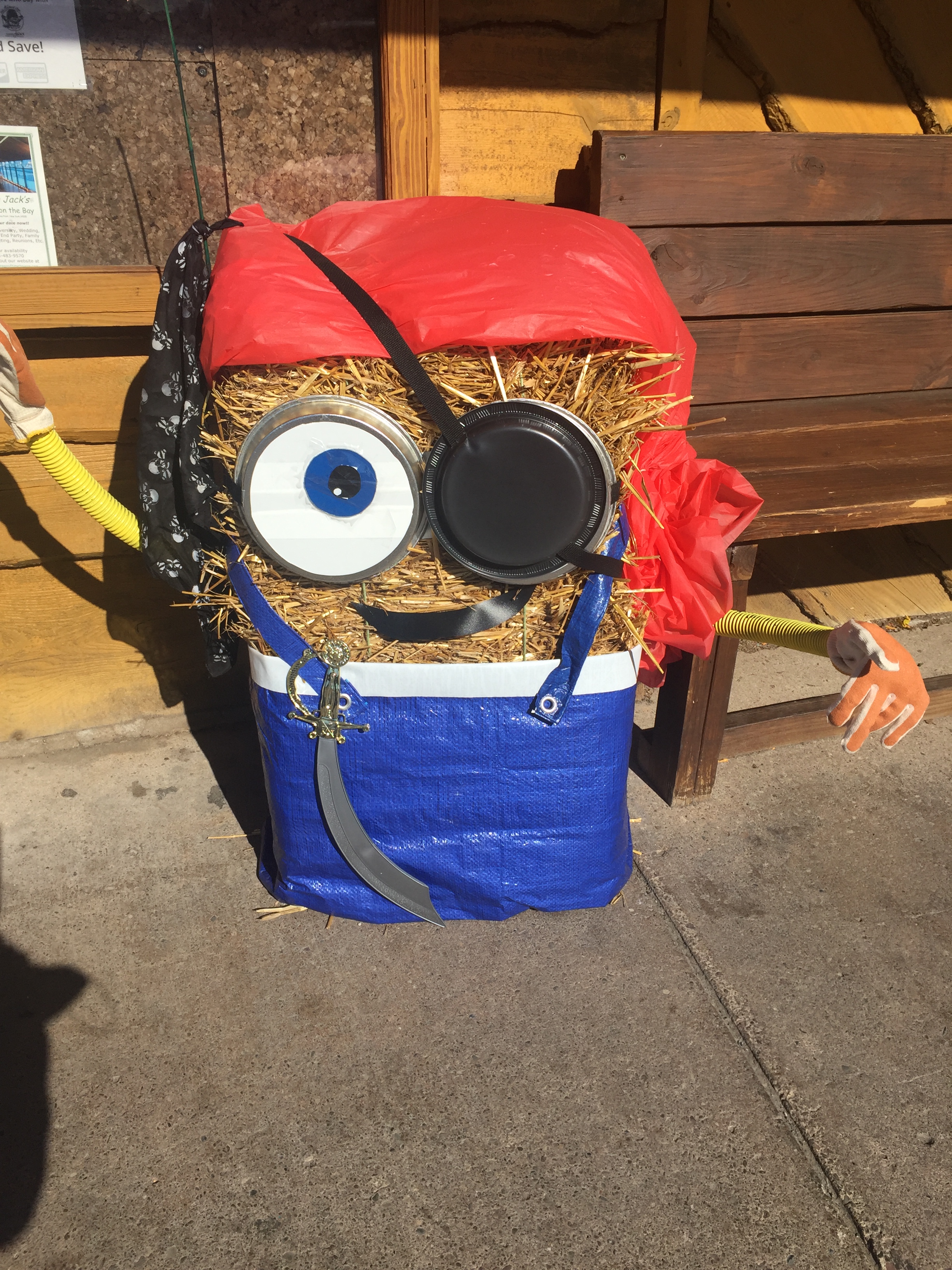
A block away our neighbors turn their yard into a ghoulish graveyard with tombstones covered in spidery cobwebs indicating those who are buried there:  Barry DaLive; Emma Goner; Ima Rotten, Ben Better, Anita Moore-Tishan, Berry D. Hatchet. Here and there, skeletons sway from the ghoulish branches of trees, some with limbs now barren, and you’ll see hay bales made to look like Minions, courtesy of the Neighborhood Association.

The screech owls, quiet during most of the summer and through September, now make their presence known. Their eerie sounds, terrifying at best, can be heard after most have of us have gone to bed, reminding us that something, soon, will be afoot. It’s called Halloween.

Halloween, here in our village on the south shore of Lake Ontario, when the nights are cold and an occasional early snowfall adds to the mood, is really a season. You can feel and see its presence starting not too long after Labor Day. Everyone is excited about Halloween: the children, most of all, and their parents who help them with their costumes, but also adults whose children have grown. There used to be house parties, and parties at restaurants and pubs, a time to let loose, enjoy the season, some folks in costume; others, not. This year will be different.

Here the celebration of Halloween is a throwback to earlier and safer times. Parents accompany the younger ones, who knock on our door yelling “trick or treat”, then reach out with their plastic pumpkins, open at the top, for the treats. It’s safe enough for the older ones to travel by themselves in groups. In our village, we all look after them. Well-trained in niceties, they remember to say “thank-you”, tiny ones urged on by their elders lest they forget. People in this village understand the concept of gratitude.

October is a time of transition. With its deep brilliancy it reminds us that slowly creeping stealthily in behind it is winter, a time of white silence and shadows.

Guest Author – Jacqueline Seewald

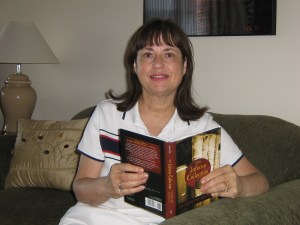
I’ve been asked how I came up with the main character in my mystery series.  I originally got my inspiration to write a mystery novel with an academic librarian as amateur sleuth during the time of my library studies at Rutgers University. Completing my MLS degree, I was required to attend symposiums. One speaker was a Princeton University librarian who spoke on the subject of inferno collections. His lecture was so fascinating and vivid that I was inspired to do further research. I became convinced the concept of inferno collections would be an excellent frame for a mystery novel and that no one else had written anything similar. (Briefly, inferno collections are banned books considered inappropriate for general public display and reading. Often these were books deemed salacious and kept separate or hidden in libraries under lock and key).

My novel THE INFERNO COLLECTION was the first in the Kim Reynolds series.

It was published in hardcover by Five Star/Gale, who published two more of the novels in the days when they did mystery fiction. All three of the books received fine reviews. They were also picked up by Harlequin Worldwide Mystery for paperback editions and distribution.

Kim Reynolds isn’t me. She’s a creation of my imagination, as are the other characters in the series. There are now five mystery novels with Kim as the main protagonist. The fifth novel, BLOOD FAMILY, was recently released by Encircle and has also garnered excellent reviews.

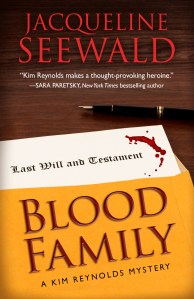
Blood Family

A Kim Reynolds Mystery

Blood Family is Jacqueline Seewald’s fifth Kim Reynolds Mystery. Kim, an academic  librarian, is intent on finding her biological father. Unfortunately after locating him, James Shaw dies unexpectedly. It is up to Kim to connect with the family she has never known. In doing so, she discovers a half-sister who is in need of her emotional support. Kim is concerned that Claire Shaw is being exploited and wants to help her. Kim also learns that Claire’s stepmother died under mysterious circumstances and her stepbrother disappeared. When Kim becomes involved, her life is placed in danger. Kim’s fiancé, Lieutenant Mike Gardner, Wilson Township homicide detective, investigates along with Sergeant Bert St. Croix.

Amzon but link: https://www.amazon.com/dp/1645990435

Encircled buy link: http://encirclepub.com/product/bloodfamily/

Multiple award-winning author, Jacqueline Seewald, has taught creative, expository and technical writing at Rutgers University as well as high school English. She also worked as both an academic librarian and an educational media specialist. Twenty of her books of fiction have been published to critical praise including books for adults, teens and children. Her most recent mystery novels are DEATH PROMISE and BLOOD FAMILY. Her short stories, poems, essays, reviews and articles have appeared in hundreds of diverse publications and numerous anthologies such as: THE WRITER, L.A. TIMES, READER’S DIGEST, PEDESTAL, SHERLOCK HOLMES MYSTERY MAGAZINE, OVER MY DEAD BODY!, GUMSHOE REVIEW, LIBRARY JOURNAL, PUBLISHERS WEEKLY and THE CHRISTIAN SCIENCE MONITOR. She enjoys painting landscapes and singing along to all kinds of music. Her writer’s blog can be found at: http://jacquelineseewald.blogspot.com

Push the Limits by Paty Jager

I have written two mystery series with Native American characters, while I am not Native American. I’ve read books by Native American authors, have a friend who lives on the Colville Reservation with her Native American husband, and I have lived in an area that has so much Native American history I feel it seeps into you.

But I am facing my biggest challenge as a writer, now, when it is more politically correct to be of the same heritage as the characters you write.

I started slowly, with my heroine, Shandra Higheagle being only half Native American so I could have her raised without that influence and have her discover it as I did writing her story.

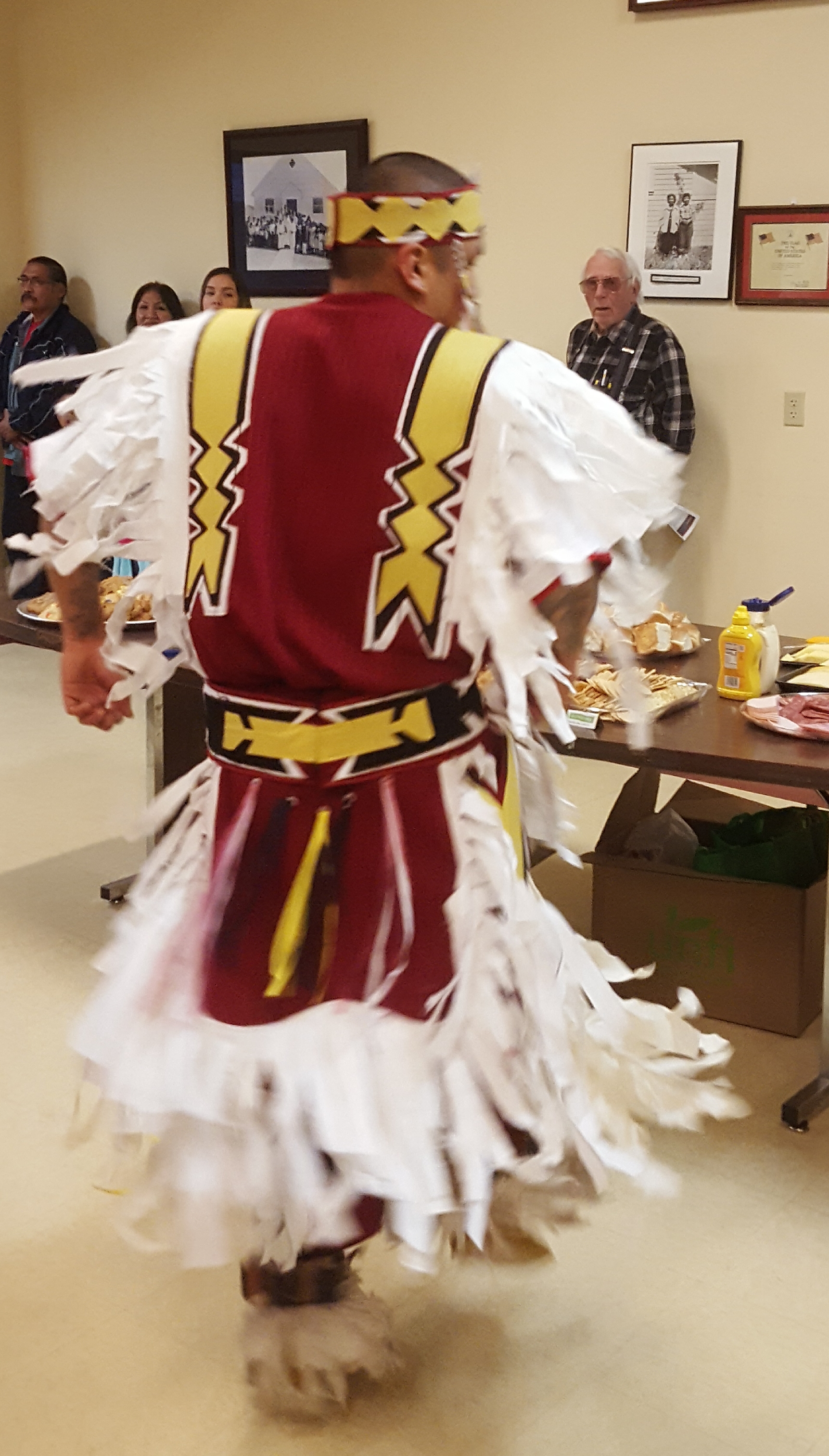
Paiute Dancer photo by me

But I felt the area where I grew up, needed more exposure about the people who lived and were stewards of the land before if was favored as lush feed for cattle. And that was how my character, Gabriel Hawke, came to be. He is of Nez Perce and Cayuse heritage. He is working as a State Trooper with the Fish and Wildlife Division in Wallowa County, the land where his ancestors summered and winter. While he hasn’t lived on the reservation since graduating high school, I feel I can pull off his loyalty to his ancestors and still have him respect his culture but not be fully immersed in it.

Now, as I am writing the last Shandra book and moving onto a new character, I have to tame the lump in my gut and start contacting people on the Umatilla Reservation. My next character will be living and working on the reservation. I will need first hand knowledge to make this character ring true and to make her not only show the life of someone trying to end the cycle of prejudice and move on, but also someone who values her people’s culture.

That my writer and reader friends is what I will be trying to achieve the next few months. Connecting with people who are willing to allow me into their world and to show a life that I am not a part of but believe in.

Wish me luck! And let me know if you have anyone on the Confederated Tribes of the Umatilla Reservation who would be willing to help me. I’m sending out feelers this week.

Dabble, Scribbler, & A Dash of Ampersand

Hi, Ladies of Mystery bloggers, LoM readers, and the general public! Has it been another month already? Good grief! Two more to go before we hit Level 12 of Jumanji how this dumpster fire of a year’s turned out to be. I don’t know about the rest of you, but I can’t wait to put 2020 in my rear windshield.

So . . . as the title indicaes, I’ve found some Easter egg writing-related goodies to keep my untreated ADHD mind happy as my imagination marinates on WIPs. These are fairly inexpensive and lots of fun if you’re bored of your typical writing routine, or are in the market of shaking up your writing arsenal. In either case, I hope you’ll have as much fun as I’m having.

DABBLE


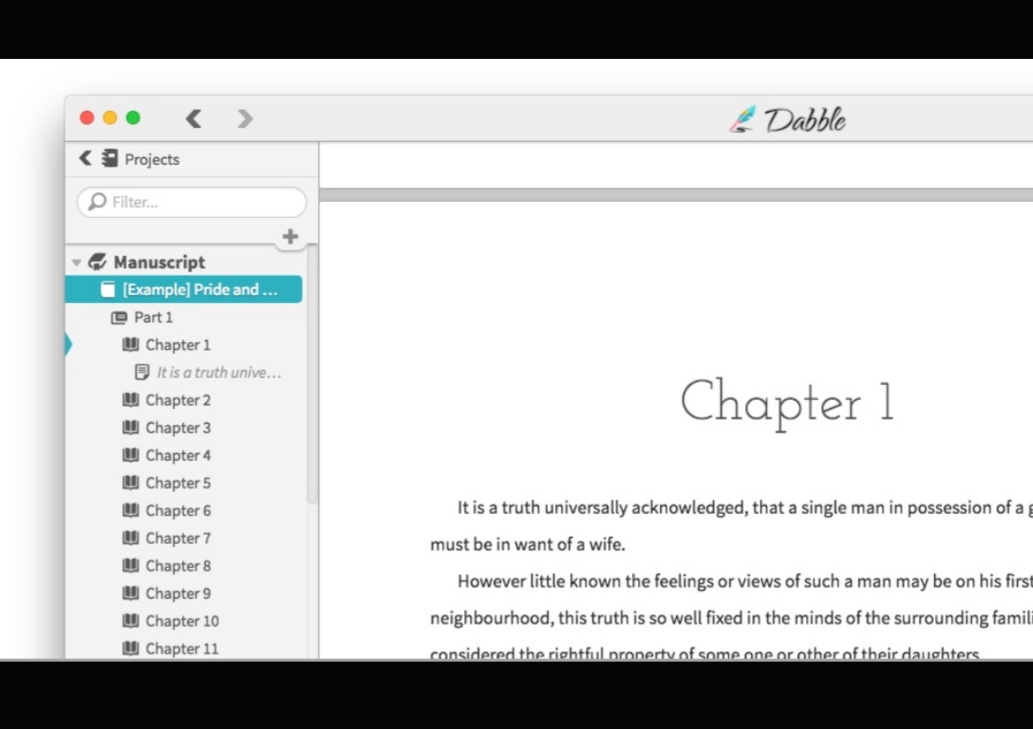
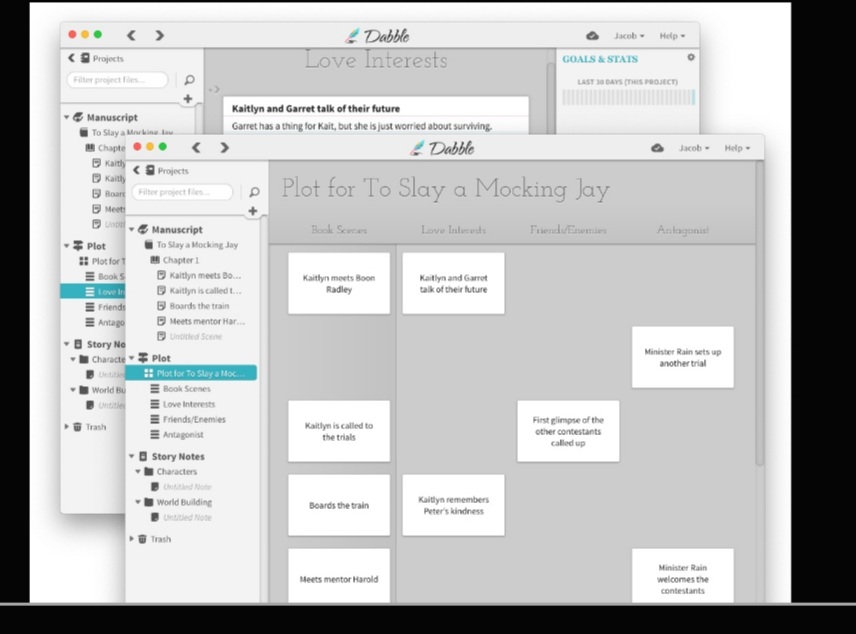
Dabble is a monthly subscription writing platform and a fantastic alternative to Scrivner or Microsoft Word if these software programs aren’t optional. This platform’s more user-friendly for the visually impaired or needing low vision assistance than Scrivner is, and has its own cloud service to store only your WIPs. Unlike Reedsy Editor, Dabble is laid out as Word is. But unlike Reedsy Editor, more font selections are available on Dabble, users can switch the screen to dark mode when writing during the day, and Dabble’s left side menu offers sections to organize scenes, world-building artifacts, a place to blueprint your plot, a built-in dictionary and spell-check, a trash bin to cut what isn’t working, and a progress and goal tracker for daily word counts and days spent on your project. It reminds me of digital 4×6 tacked, corkboarded note cards to keep your story on task. Depending on which best fits your pocketbook for a monthly or annual package, you’ll have access to live-time support assistance if you aren’t tech savvy to ough some of this service’s features. I happened to find Dabble during 2019’s NaNoWriMo when the company offered a discount for completing the month-long marathon. I’m especially impressed with the tech team making this platform possible, and especially love the CS’s team’s patience with my seemingly endless questions of the platform’s bells and whistles, levelheadedness, and courteousness. On a deeper personal note, with what’s been recently disocvered about the Chinese virus, I’m thrilled to use a service or two with zero political skin in the game on the world’s stage. I’m especially happy both Reedsy Editor and Dabble make it possible to end my monthly dimes going into that nasty MS Word creator’s unethical, worldly pockets.
SCRIBBLER

Thrown over my social feed’s news and ads transom, Scribber is a monthly box subscription created by two authors with seventeen published books between them. Created by writers for writers, the Scribbler service has a private social group for support and advice, offers critiques from scenes to full MSs (pricing reflecting), and sells other writer merch. Each box comes with goodies like a Writer Passport deep-diving a specific craft area (pacing, setting, tension, humor, and so on.); a book by the author the passport’s based on; and a pamphlet called Publishing Process Inside Look! also authored by month’s featured novelist. My September box had Opium & Absinthe by Lydia Kang in the goodies–which opened one drawback in this service: The purchaser doesn’t get to select the box’s title book. Past boxes, unless you’re part of the social group’s sister book club to find previous titles, aren’t accessible unless you contact support for this information. Although I found the writer tchotchkes a trememdous help–one’s a yellow “Eureka!” lightbulb stress ball squeezie-thingy with “Bust Writers Block!” printed on its side, and super-adorable—the book itself after reading a few pages in, not so much. It’s in 3rd POV set in 1899 about a possible homicide under the cover of a vampire attack and a possible connection with Jack the Ripper. This subgenre is out of my preferential and craft wheelhouse; I don’t do vampires, zombies, werewolves, Satanic worship, demons, Godzillas, anything involving dark magic and worse. If that makes me a shitty writer for not reading this stuff someone else slaved over, so be it–but I do congratulate them in getting it done (#IAintSorry #GetOverIt). Sidenote: if any LoM ladies are interested in my September tale, inbox me this week only for details. Otherwise it’ll just be donated to a new forever home like my August title was.
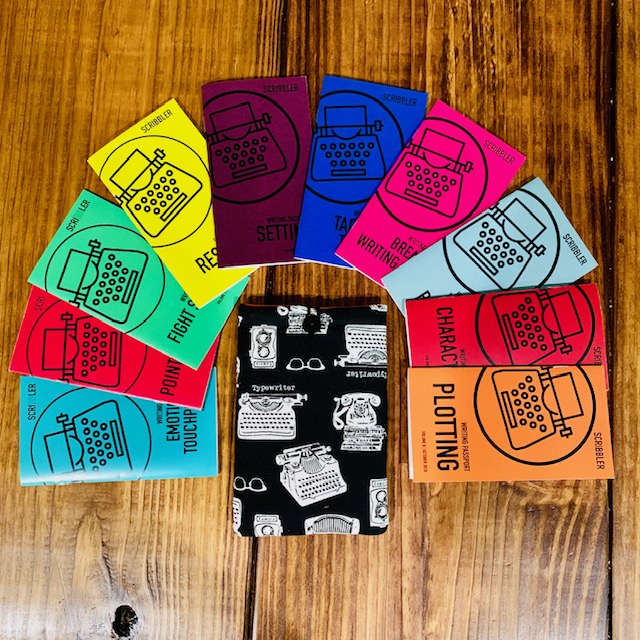
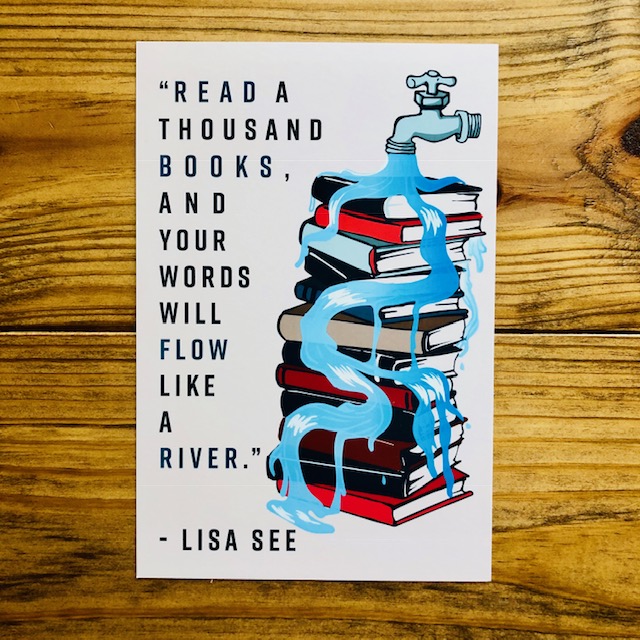
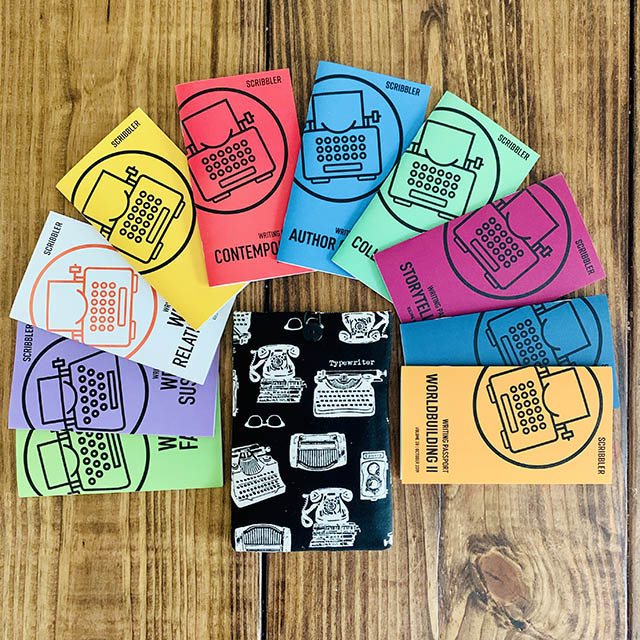
Overall, both products look to be the hands-on tools needed for my craft. Both services are set up to cancel at any time (before your next charge hits, that is). The box exposes you to an author happy you’re reading his story and sweet swag getting you jazzed for the next box or inspired to write on. They even hold a monthly contest on a Scribbler postcard based on the theme to win a prize. Dabble is the Little Engine That Could as a writing software program. Both companies are open for future changes, product implements, and offer stellar CS. That’s rare in this otherwise brutally lonely and huckster-happy industry, so research these gems and kick the tires whenever you have a moment before taking the plunge.

&

No, you read right. This heading’s an ampersand. It’s intentional. Got your attention, though, like a good headline should do.

She’s real gone, you’re telling yourself. Old news, says I, but that dun bother me none–we both know darn well you secretly love it. **smirk**

Okay . . . back to our story.

This particular symbol of the English languange charaters has an interesting history. If you’re old enough to remember when you learned the alphabet, you recited “and per se and”–& this said as such–after Z. In time, and per se and merged into the word ampersand you know today. While on the topic of mashing words together from a string of them said either too fast, said or accented incorrectly, misheard, or misused, ampersand became part of the mondergreen crowd. Explains why you thought the mondergreen, “You are caught up in me” from the chorus of Elton John’s “Daniel” is really “You were older than me.”

Ampersand, the & symbol, originally combined the capital letters of E and T. When everyone way back when wrote in gorgeous penmanship, E and T, especially next to one another in cursive, sure looked an awful lot like the &. Over time, and with differeing fonts, the two merged to become the punctuation we know.

And of course, what would our peek into the writing life be without this symbol helping others used to replace foul language? Cartoonists and comic strip artists from the 1920s to as late as the 1970s, while syndicated with national and global newspaper chains, had to find a workaround to express salty language without overtly using it. Hello, &%*$#@! Ingenuity! Excelsior! Rather than be cited for cultural impropriety, or tired of just plain getting the business over such use, comic strip and editorial cartoonists used these to skirt, and maybe flaut a little, censorship rules. So for you cozy mystery creators where sewer talk isn’t allowed, this #%*&$@! is perfect to show over tell–zing!–the preferred stronger word(s). Think of it as a visual version of cartoon starbursts, comets, squiggles and whorls when one of the Looney Tunes cast actually sees–as does JERSEY DOGS narrator Casper McGuinness–after getting his noodle clonked for doing something stupid. This could be a delightful change for your readers no other cozy writers are doing, much to your surprise.

Another lovely reading ride comes to a close. I’d wish you an early Happy Halloween, but with the spooktacular clusterf*ck this year’s been, you hardly need my OK to get your Jolly Rancher, candy corn, & dark chocolate Snickers bites freak on like it’s Donkey Knng. Now let me git before I share what next month’s punctuation cornucopia’ll be–the almighty asterick that turned a Roger Maris record into Babe Ruth’s baseball side chick.

Nope–I’ve a fantastic post in store you may enjoy more, but it ain’t that. Gotcha again. **smirk**

& with that, God’s will, and your faithful readership . . . until next month, my friends.

~ Missye

Seeing the Bones

By Janis Patterson

No, this isn’t a forensic column, at least not in the physical way. No bones, no blood, no autopsies, no dead bodies. Instead I’m talking about the skeleton (again a bone reference, sorry -) of your story.

Not long ago a dear writer friend of mine and I were talking (while sitting out under a leafy tree, eating ice cream – lovely!) about writing technique. She was telling about a conversation she had had with another writer about the skills needed to construct a good, sound, readable story. She used a story she had read for an example. It was a good story (I had read it too) but it lacked something. There was a ‘mechanical-ness’ about it. You could almost hear the writer thinking, “Have I put enough emotion here?” “I should put more description here.” “Got to watch my beats and pacing.” “What is the proportion of dialogue to narrative?”

It was, she said, like looking at a hand performing a graceful motion, but instead of seeing the skin, you saw the working of the bones through the skin.

And I don’t care how carefully the story is crafted, that is bad writing.

A story (short, novella or full novel) should take the reader away, give them a different reality that is totally believable within its own framework – not a look at how the story is created. It would be like being taken for a ride in a luxurious car, but with every action a mechanical voice announces “turning steering wheel 90 degrees to the right, now turning steering wheel 90 degrees to the left to get back to straight progress” or “applying 10% brakes to slow down for approaching crosswalk” or some such nonsense. It would take all the pleasure out of the drive.

Every action and reaction in a book should happen because it is dictated by the needs of the story – the action and the characters – not because of some esoteric road map of plot shape, beats, pacing, dialogue/narration proportions and other underlying necessities of construction. Readers should see the story as a cohesive whole, unbothered by the mechanics.

The reader should see only the gesture, not the bones beneath.