Gratitude by Karen Shughart

“Gratitude: The quality of being thankful; readiness to show appreciation for and to return kindness.” Oxford Dictionary

photo of autumn mood forest

Every morning, while drinking my cup of tea, I watch the news on TV.  Lately, it’s not been a great way to start my day. The news is filled with images and events that are disturbing and stressful, and at times I’m overwhelmed by the state of our nation and world:  bombings, shootings, horrific natural disasters, cruelty to children and animals, disrespect for differences, the list goes on and on.

Every evening before I go to bed, I read from a booklet that contains daily meditations, inspirational tips and advice for living in these very troubling times. At the beginning of each issue there’s an essay that’s connected to the monthly theme, written by a spiritual guide, therapist or religious leader. This month, as is fitting as we prepare to celebrate Thanksgiving, the theme is gratitude.

The author of the essay for November works as a therapist, counseling clients working in a variety of high-profile professions. She believes that, for our emotional well-being, we are obliged to take stock of our lives and instead of feeling angry when life doesn’t go the way we want, we must focus on what’s going well. She suggests keeping a gratitude journal, writing down three things each morning and evening for which we feel grateful.

I’ve thought a lot about that word, gratitude, and take time most days to be thankful, not always for what’s large or life changing, but instead for those everyday occurrences that help to keep my life in balance. I feel grateful when I awaken after a good night’s sleep.  I feel grateful that I can enjoy that hot cup of tea. I feel grateful that I can see the lake from my bedroom window and hear the crashing of the waves. I feel grateful for glorious bright colors of autumn leaves, or the crunching of the snow on winter walk; the sip of a good red wine. I feel especially grateful for the love that encircles me and the love I can give back: to my husband, children, relatives, friends.

The list, really, is endless, and I try and focus on what really matters rather than what brings status and recognition. It’s not the size of the house, it’s that there’s a roof over my head. It’s not the filet or lobster, it’s that we have food on the table. It’s not the make and brand of the car, it’s the vehicle that can get me safely where I want to go. It’s not the number of friends, it’s the quality of relationships.

What I’ve discovered is that even in the bleakest of times, those days and weeks where it seems like the stress will never end, there is something to feel grateful for. And, it’s amazing how one’s perspective changes after taking a minute or two to count one’s blessings.

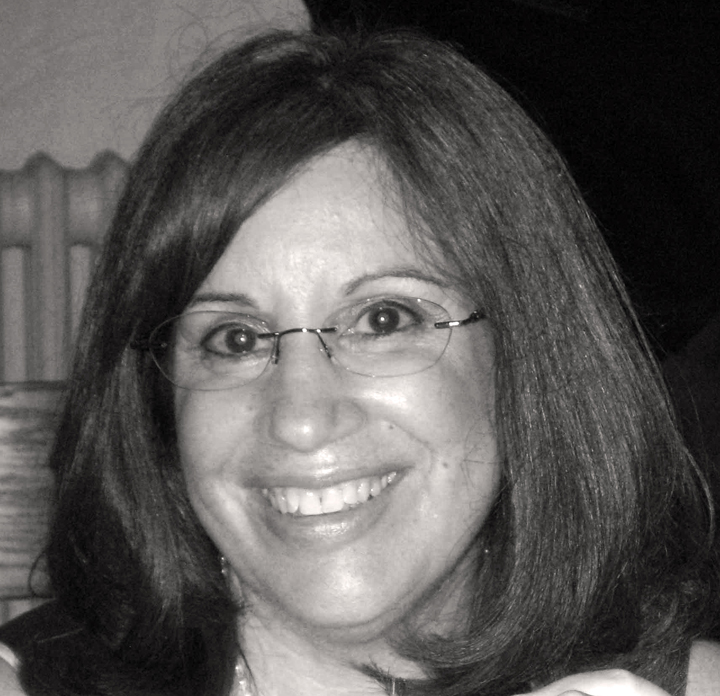
Guest Blogger: Lois Winston

Putting a Humorous Spin on Murder

By Lois Winston

I write the Anastasia Pollack Crafting Mysteries about a magazine crafts editor who is forced to become a reluctant amateur sleuth. However, I began my writing career penning dark romantic suspense. The first, after quite a few years and countless revisions, became the second book I ever sold. However, somewhere along the way I discovered my funny bone. Or maybe I should say funny bones because rather than being situated in my elbow, they reside in my ten fingers.

No one was more shocked than I. I’m one of those people who can never remember a joke’s punch line. When it comes to scintillating repartee, I always come up with a brilliant retort hours after the moment has passed. So years ago when my agent suggested I try to write a chick lit novel because Bridget Jones’s Diary had taken the publishing world by storm, and editors were clamoring for similar works, I laughed.

But she was serious. Apparently, she saw something buried deep inside me and knew it needed to be released. Turns out, she was right. On paper I’m quite funny, and the book I wrote, Talk Gertie to Me, became my debut novel.

Then one day my agent asked me to try my hand at writing a cozy mystery. She had been speaking with an editor who was looking for a series featuring a crafter. Since I designed needlework for craft kit manufacturers and craft book publishers in my day job, my agent thought I was the perfect person to write such a series. She also requested I use the humorous writing voice I had developed in Talk Gertie to Me. The woman was obviously clairvoyant because even though I hadn’t read a mystery since I devoured the Cherry Ames books as a kid, the moment I sat down at the computer to attempt writing a cozy mystery, I found my true literary calling.

I had always enjoyed reading books that make me laugh. There really is something to that old adage about laughter being the best medicine. Laughing releases endorphins in the brain, and the more endorphins, the happier we are. Given all the problems in the world, not only do I need to laugh more, I also realized I’d much rather make people laugh than have them sleep with one eye open at night.

So when Assault With a Deadly Glue Gun, the first book in the series was released in 2011, I was thrilled that critics embraced it. Publishers Weekly and Booklist both gave it starred reviews, comparing my writing to that of Tina Fey and Janet Evanovich. Kirkus described Anastasia as “North Jersey’s more mature answer to Stephanie Plum.” With praise like that, why would I ever go back to writing gritty romantic suspense?

Of course, Anastasia doesn’t see anything funny about the dead bodies I leave lying around for her to discover, the trouble I get her into with gangsters and psychopaths, or the communist mother-in-law I gave her. Luckily, she has no say in the matter. Besides, I’m not a total sadist when it comes to my reluctant amateur sleuth. I have given her a Shakespeare-quoting parrot and a drop-dead hunk of a boyfriend. Although, on second thought, maybe I am a bit sadistic because when it comes to photojournalist Zack Barnes, he may or may not also be a spy.

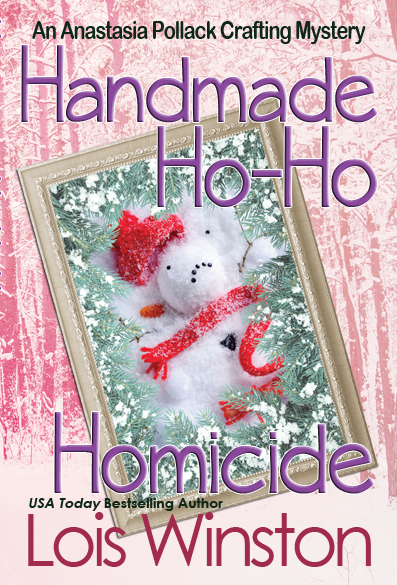
Handmade Ho-Ho Homicide

An Anastasia Pollack Crafting Mystery, Book 8

Two and a half weeks ago magazine crafts editor Anastasia Pollack arrived home to find Ira Pollack, her half-brother-in-law, had blinged out her home with enough Christmas lights to rival Rockefeller Center. Now he’s crammed her small yard with enormous cavorting inflatable characters. She and photojournalist boyfriend and possible spy Zack Barnes pack up the unwanted lawn decorations to return to Ira. They arrive to find his yard the scene of an over-the-top Christmas extravaganza. His neighbors are not happy with the animatronics, laser light show, and blaring music creating traffic jams on their normally quiet street. One of them expresses his displeasure with his fists before running off.

In the excitement, the deflated lawn ornaments are never returned to Ira. The next morning Anastasia once again heads to his house before work to drop them off. When she arrives, she discovers Ira’s attacker dead in Santa’s sleigh. Ira becomes the prime suspect in the man’s murder and begs Anastasia to help clear his name. But Anastasia has promised her sons she’ll keep her nose out of police business. What’s a reluctant amateur sleuth to do?

Buy Links

Amazon https://www.amazon.com/dp/B07VG2QZXV/

Kobo https://www.kobo.com/us/en/ebook/handmade-ho-ho-homicide

Barnes & Noble https://www.barnesandnoble.com/w/handmade-ho-ho-homicide-lois-winston/1132607263

iTunes https://books.apple.com/us/book/handmade-ho-ho-homicide/id1473711082

Bio:

USA Today bestselling and award-winning author Lois Winston writes mystery, romance, romantic suspense, chick lit, women’s fiction, children’s chapter books, and nonfiction under her own name and her Emma Carlyle pen name. Kirkus Reviews dubbed her critically acclaimed Anastasia Pollack Crafting Mystery series, “North Jersey’s more mature answer to Stephanie Plum.” In addition, Lois is a former literary agent and an award-winning craft and needlework designer who often draws much of her source material for both her characters and plots from her experiences in the crafts industry.

Website: www.loiswinston.com

Newsletter sign-up: https://app.mailerlite.com/webforms/landing/z1z1u5

Killer Crafts & Crafty Killers blog: www.anastasiapollack.blogspot.com

Pinterest: www.pinterest.com/anasleuth

Twitter: https://twitter.com/Anasleuth

Goodreads: https://www.goodreads.com/author/show/722763.Lois_Winston Bookbub: https://www.bookbub.com/authors/lois-winston

Law or Justice? What Do They Mean to Mystery Writers?

by Janis Patterson

One of the reason mysteries are so popular, according to some, is that they give the reader satisfaction by putting the world in order, rectifying chaos and ensuring law and justice prevail. That may be partially true. Why partially?

Because law and justice do not mean the same thing. In theory they should, but because laws are controlled by humans and justice is a cosmic concept, their applications and results often vary widely. For example, take the case of a sadistic mass murderer who tortured several people to a prolonged and agonizing death. He is caught, tried, found guilty and sentenced, either to death or to life in prison. The law has been satisfied, but it hardly seems justice that a man who gleefully and deliberately caused such unspeakable fear, pain and death to many should either die on a clean operating table with an injection that puts him peacefully to sleep or lives an admittedly restricted life in prison, but one with food, shelter, TV, books, schooling, visits from friends and loved ones… Justice? Would it not be truer to the principle of justice for him to undergo what he made others suffer?

Now I am not debating the pros/cons/desirability/arguments for or against capital punishment. That is just an extreme example of the difference between what some people see as the rule of law and what others perceive as justice. The same principles could be applied to the theft of an apple pie.

So how what can mystery writers take from this? In the classic A. Conan Doyle series about Sherlock Holmes I seem to remember several instances where Sherlock bent or even ignored the letter of the law in the interests of justice. So, if memory serves, did Ellery Queen. Such an attitude can also be found in writers of every era, though I will admit they are rare.

There are those who say that justice is an unattainable goal, and that what the law metes out is right and proper and makes us human instead of beasts. There are some who say making the punishment fit the crime is justice. Personally, I lean a little bit both ways – and that’s not easy! – but my personal feelings aren’t the subject of this blog.

There was a time when a hungry person stole a loaf of bread they were hung or transported to the Antipodes. Now a vicious mass murderer can be incarcerated and well taken care of for life. Two extremes, admittedly, but on often our civilization and our perception of right and wrong are defined by extremes.

It is said that it is neither politicians nor historians who create history – it is the balladeers, the poets, the tellers of stories. As writers we are in control of every story we write. Each story is a world we create and good, bad or indifferent we decide what happens. That is an awesome responsibility, and one that should not be taken lightly.

I can’t tell you what is right or dictate what you write, but when your sleuth/policeman/protagonist decides to follow the letter of the law with no regard for heinousness of the crime, or said sleuth decides to ignore the law and proceed with his understanding of justice, be careful. What you write may someday influence our guideline for society.

My Favorite Part of Being a Writer by Paty Jager

I don’t know about all writers, but for me, the best part of writing a book is the “stewing and brewing” process. It’s the time between, “Bing!” I have an idea and when I start writing the actual story.

source: Depositphotos

What I call the “Stewing and Brewing” process is where I come up with the story idea or setting and then start researching and filling out my suspect chart.

I get to scan websites and look through baby name books to come up with character names and then give the attributes and reasons they are part of the story. Suspects, officials, friends, the whole bit.

And even better! Figuring out how the victim dies. I love putting a twist on the cause of murder. My newest Shandra Higheagle release, Toxic Trigger-point the death is caused by an acute allergic reaction to bees. The book I’m “stewing and brewing” right now I’m thinking the death appears accidental at first. Then… as things get investigated further it was murder.

There are times my devious mind astounds me! LOL However, coming up with the out-of-the-box scenarios is so much fun. Taking the reader on the trip of; this person did it, no, that person did it, is almost as much fun as coming up with the characters, motive, and cause of death.

I pinch myself all the time wondering how I can have so much fun writing when other writers are always complaining how hard it is. I do agree, the editing, revisions, and making the story shine are hard, but it’s like child birth. I forget about those things when I’m in the throes of “stewing and brewing”. 😉

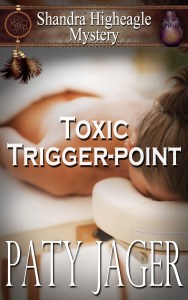
Here is my latest Shandra Higheagle release:

Toxic Trigger-Point

Adultery… Jealousy… Murder

Shandra Higheagle Greer is minding her own business when she walks into a room for a massage and it is already occupied—by a dead body.

Always the champion for someone she knows, when her favorite masseuse looks like the murderer, Shandra listens to her gut and dreams choreographed by her deceased grandmother.

Detective Ryan Greer can’t believe his wife has walked into another homicide. He’s learned no matter how he tries to keep her out of the investigation he can’t. But this time the consequences could be deadly for Shandra—she heard the murder happen.

https://books2read.com/u/4Ex9De

A Potential $1,500 Edit, Justified

Now, don’t go bug-eyed about the price tag in this post’s title. Before I share my story, here’s the lowdown–that’s the 411, the skinny, or the scoop for those of you in Rio Linda–of what edits and editors are and what they do–and what they aren’t and what they won’t do.

A developmental edit is a deep content edit. This is the most thorough of the edits throughout your story, and where your editor will find plot holes, inconsistency, what’s working and not, and so on. This is also the most pricey–you’re paying for time, insight, and expertise. Choose this editor wisely, since you’ll have a working, professional relationship with this individual who specializes in this style of editing. What this means for your budget: a DNA sample, your firstborn’s genome, a fraction of your home equity loan, a portion of royalties . . . I’m (slightly) kidding, but the price tag for this is $$$$ to $$$$$.

copy edit is a step above proofreading, but just under developmental editing. It’s another way to say line editing, more or less. These people work to make sure you’re consistent in weather scenes, word choice and what it means either in character or author intention; character names–your MC Steve in Chapter 2 isn’t Jude in Chapter 6–or if you’re in Monday midnight DST in a chapter, that same chapter’s not a snowy Wednesday afternoon EST by its end (unless explained); accents are consistent, etc. It’s also more a consistency in verb tense/1st POV or 3rd POV and other overlooked nits not caught by you or the dev editor than anything else. A dev editor can do light copy editing if he picks it up from time to time, but it’s not a must–especially at the rate you’re paying for the job! Budget for this: $$ to $$$.

Proofreading, or also known as a proofer, ONLY checks for irregularities in punctuation, facts, spelling, times, dates, places, and otherwise flags too many mistakes left in or left out. Some would debate grammar should be checked also, but depending on what some in your cast are doing in dialects, location and the like, that really comes more to a developmental editor choice, a copy editor knowing this about your MS–and, of course, you, Ms. Author :). This edit takes the least time, and thus, the least strain on your writer budget ($ to $$).

What Editing & Edits Are NOT
• Copy edits aren’t developmental edits. Proofing isn’t a copy edit. They blend, yes, BUT,  since both take a chunk of time vs. a little time, that’s why they’re divided as such. Think of it like this: More time = more money.
• Inexpensive, so budget accordingly.
• Your personal cheerleading section–that’s more for writing coaches, crit groups, and writing buddies, if you have them and find them. Get them, if you ned this, too, which I cannot recommend enough. And find the right crowd for this, too . . . but another topic for another post :).
• Aren’t yessing you to death or a doomdayer, “you suck, quit writing this minute!” inputter, either (to be fair, they may think it, which is their prerogative, but you won’t know it).
• Aren’t a taskmaster.
• Will insist you stick with his or her changes to your work.
• Will do beyond what’s paid for or past deadline without an additional charge.
• Aren’t your psychiatrist (yes, Virginia, there’s an app for that–so use it).
• Won’t change your writing voice (conversational, bossy, dark, light-hearted, preachy, etc.), style (staccato or run-on sentences, cold, flat, boring, clinical, etc.), but rather, they may, and should, offer constructive criticism and alternatives.
• Aren’t mind-readers, so communicate your specific needs, results expected, timeframe turnaround, feedback explained, etc.
• And for the love of everything holy, get one suited for YOUR personality type, please! You’ll save so much aggravation and heartache for it in the long run.
• Ultimately, you and the editor are in a working professional relationship, so keep it that way.

“Okay, Missye, You’re Just Bats! Convince Me Why That Price Tag’s Justified!”
Thank you. Be happy to.

After she blew a virtual gasket why I thought a $1,500 dev edit for my specific MS is reasonable, my writer friend pouted and still disagrees, but sees the logic. The argument I gave her, I’ll share with you.

• My 2nd mystery is a plot-within-a-plot, includes an ASTORIA FOXE ONE Casebook #3 sneak peek, a ToC, dedication, acknowledgements, and another large cast, so I’m looking for another set of eyes for overall content, continuity, clarity, cohesiveness, consistency, logical time flow, pacing, what’s too much or too little, etc. That, unfortunately, ain’t gonna come without some financial sacrifice.

• The last time I’d paid a hefty edit tag was on JERSEY DOGS (42 dead and alive member cast, ToC, dedication, acknowledgements, story, and a four chapter Casebook #2 sneak), and I worked with an editor formerly with Scholastic and Penguin Putnam. This price of admission alone I’d shell more for, and some of his previously edited books hit the NYT’s, Amazon’s, and WSJ’s bestsellers lists. This aside, he went above and beyond my expectations: he was sweet, answered all my silly and serious Qs, was thorough, fast turnaround, encouraging, insightful, and did things for my book–cast in order of appearance, questioned sentence murkiness, asked what I meant here/there, and included a solid summary–a nice touch I didn’t ask for or expect. Annnnnd,, dude had been schooled under Sol Stein a few years before the iconic editor’s passing, so that’s definitely saying something. He resided in L.A. at the time of JERSEY’s edit–still may, as of this post, and not cheap in CoL–so his asking rate reflected such.

• Time isn’t replaceable when money is; I’m paying for said time and expertise.

• I’d rather have keen eyes and keener expertise in an edit, and pay that rate for said experience, than brag how cheap this edit was, only for my work and his reflects said edits. It’s disgusting, I’m sad to say, how often writers in free and paid writing listservs, gloat and preen how little they paid for an editing service. Sadder still: there’s absolutely talking NO sense to them how lowbrow, high-minded, and just triflin’ this comes across. Yet if you point this out to the sweetly delusional dreamer in the name of vocational-shaming–yes, kids, that’s a thing, now—you’re the baddie. Okay, then. #SorryNotSorry #NotMyCircusNotMyPonies #CarryingOn :).

• The editor should only edit for a living. This is far different than knowing how to edit when you’re also writing and not writing. While both talents really are two different hats at the same time, they’re also symbiotically intrinsic. I’m proud to say I’m taking a nit comb to Casebook #2 and deleting some of the hefty, but I’m also doing it to deflate some of that dev edit price tag.

• Going in with JERSEY, I knew I’d author a meaty mystery series. That reading time takes dough. As many charge either by the page, word, or a flat rate, there’s no getting around paying more for a bigger output. I’m really working to cut content, but it ain’t easy :).

• Some editing services I won’t pay a dime to due to their inflexibility on receiving payments–most of us don’t have deep pockets, most of us like having lights on, and a key to turn into a lock that’s not a vehicle to call home. Although one came highly recommended for my needs, she wasn’t willing to work with a tight budget, so I politely declined. There’s too much competition around to happily move on more than okay to work with my needs, budget, and timeframe, and I’ll stand by my convictions steadfast. Many writers really don’t think this financial angle through, especially if they’re being supported by ones other than themselves, and sadly go with the first one squealing over their MS, sure, let me help you polish this for that Midas price tag. The peripherals making money from the authors who aren’t yet making enough to cover this, likely know this, but won’t tell them that. Lowdown dirty shame, that is.

• I’ve edit-skimped before: from the proverbial free/need to earn stripes tale of woe to the “it came with the house” deal, regardless of house. Don’t edit-skimp. Ever. Akin to wearing pre-owned day-of-the-week undies even laundered in the hottest water and strongest lye soap available, I felt emotionally and creatively tarnished and second-rate, as that time left me disheartened, frustrated, angry, and outright head-scratching if this person and I read the same damn book. A free or low-cost edit simply isn’t worth the emotional roller-coaster–you may genuinely never know if they truly enjoyed the work, or were they blowing smoke saying they did (You can always run a polygraph if you’re unsure, but if you have the money for such services, use that dough for a professional edit, okay? You’re welcome :). ). Listen, if you believe in your writing efforts, you and it took the bumps and lumps needed to grow as an author and storyteller, then be serious enough to make sure a service is professional enough for their eyes–and your dough!–to have your final draft put its best foot forward. If you don’t sell yourself short on other big important things in life, your MS shouldn’t be treated any less when edit time arrives.

So it boils down to where and how your dough goes, not so much that you’re spending it, regardless. Research like hell, go with your gut voice, DON’T second-guess that voice or yourself, ask scads of questions, and in general, be bold to be informed. It takes time to earn that coin, so no way will I spend it on stupid-awful edits I’ll horribly regret later; it’s enough I’m still scolding myself on a pre-owned Jeep Laredo purchase lasting a whole eight months before its mid-June end. And as my man’s funding my writing life for the better part of the entire time he’s known and been with me, durn tootin’ I’ll make sure our money and time is spent discriminantly. Ultimately, with God expecting me to be a good and prudent stewardess in all I do with the time, talent, and funds He’s granted me, it’s the least I should do. And I’ve been blessed–as of this post, I’ve an editor on retainer willing to work with my budget for my Casebooks! Squeee! But should this post mean you as it does me, you’re justified. Your book is destined to be even better than you’d imagined through another set of careful, caring eyes as yours are.

Back to NaNo, already in progress. Wishing you all a lovely, safe, blessed, and joyful Thanksgiving!