
A Compulsive Story Maker and the Mayor’s Grandpa Mug

I was in the thrift store looking for tolerably attractive coffee mugs. I kept very few when I downsized and moved, and I’m clumsy with crockery, so I needed to resupply. A friend who recently retired from running our local bookstore was also shopping. She told me she could never buy the mug I found especially pretty, because it had words on it promoting a business systems company, and she was a compulsive reader. “It would drive me crazy. If there are words in front of me, I read them. Even if I’ve read them before, I read them over and over.”

This doesn’t happen to me. I’ll read them once and then enjoy the elegant blue and gold stripes around them.

But then she picked up a mug with pictures and words. “Oh my goodness,” she said, “it’s Jim Smith.”* The mayor.

Happy Father’s Day. We love you, Grandpa Smith was inscribed above a picture of his three smiling grandchildren. On the other side of the mug was an image of the mayor, his son, and his dog. The men looked handsome and happy; the dog, slobbery and goofy. This was the mug that could drive me crazy. I’m not a compulsive reader, but a compulsive story maker.

“He’s such a lovely man,” my friend said with a touch of concern

“And a good mayor,” I added.

We acknowledged we were both thinking about stories that would emerge. Would the mayor appear inconsiderate of his grandkids’ feelings? People would speculate. Had he had a split with his son or grandchildren? Had a person in one of the pictures died or been kicked out of the family? It’s possible he had so many grandpa mugs he needed to clear out the excess, or he quit drinking coffee, or the unflattering shot of the dog bothered him. But the mug felt wrong there.

I bought it for a quarter along with the pretty mug with words on it, but I’m not drinking coffee out of the grandpa mug. I bought it so other compulsive story makers wouldn’t invent tales about the mayor.

And then I quietly disposed of it, so I wouldn’t keep thinking of stories. Someone else’s family pictures suggest so many, and I write about a psychic who can see past events connected to a person by holding an object imbued with their energy. I felt like I’d be drinking in the mayor’s energy if I drank coffee from his grandpa mug. There’s a possible story there, but I can write it later. Not every day at breakfast.

(*Not the mayor’s real name.)

Would the grandpa mug drive you crazy? Are you a compulsive story-maker?

*****

Shamans’ Blues, book two in the Mae Martin Psychic Mystery Series, is on sale for ninety-nine cents on all e-book retail sites.
SUCCESSES AND PROBLEMS by Marilyn Meredith

Lately, that’s been my writing life, good stuff and not so good.

My long-time publisher for my Deputy Tempe Crabtree series has closed its doors. I asked for and received my rights back for the series and the covers. Because the cover had been designed for the latest book and new designs done for some of the older books, I was pleased.

So what to do next? I decided the best route to take with the series was self-publishing, though I didn’t really feel up to the task. One of my friends, an expert at self-publishing, is taking on this huge job. I say huge because there are 17 books in this series.

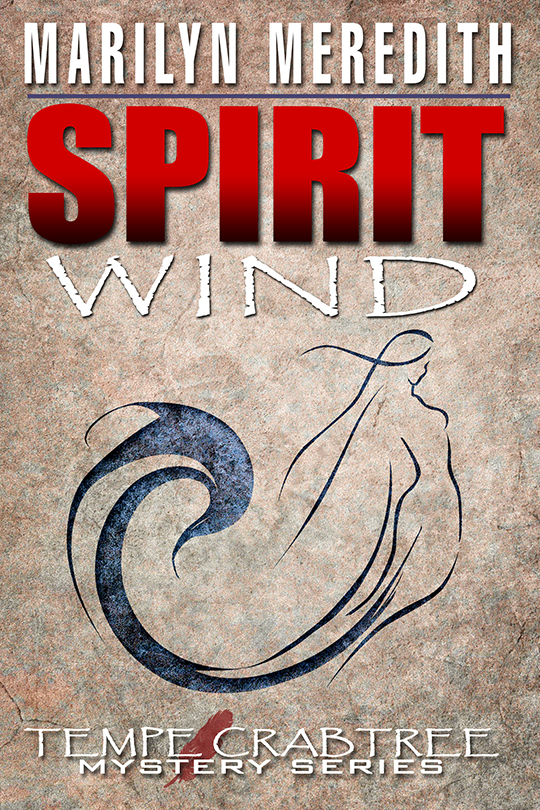
The latest book, Spirit Wind, is now published and available in print and on Kindle.

The first batch of the printed books didn’t have the appropriate headers—so I’ve used most of them as review copies—and sold some at a big discount.

A few of the other books in the series have been done, but the old publisher’s copies are still the ones upfront and available. So far, we’ve been unsuccessful at getting them taken down or at least the latest ones the first to show up.

I’d like to do a .99 cent deal for one of the series, but that will have to wait until some of the problems are fixed.

How am I feeling about all this? I’m happy the latest Deputy Tempe Crabtree mystery is now available. Though a bit frustrated about some of the other problems, I’m not going to lose sleep over them. One thing I’ve learned over the years, the author’s path is never smooth. I’ve had crooked publishers, and publishers who were friends die. This happened with the first publisher of this series.

I’m going to book fairs (I have plenty of books to sell) and giving talks to writers groups and others. The promotion goes on. And I’m working on a book in my other series.

One thing I can assure you, I’m never bored. I can’t even imagine what that would be like.

The official blurb for Spirit Wind: A call from a ghost hunter changes Deputy Tempe Crabtree’s vacation plans. Instead of going to the coast, she and her husband are headed to Tehachapi to  investigate a haunted house and are confronted by voices on the wind, a murder, and someone out to get them.

Marilyn

Of Men and Monsters

by Janis Patterson

Not too long ago one of the radio shows we listen to gave the history of Andrew Kehoe, who on May 8, 1927 went on a mass killing spree. A strange sort of man, he was a farmer in Bath Township, Michigan. While he could fix almost any mechanical contraption – and often did for his neighbors without charge – he neglected his farm and abused his animals.

Then when the local school system raised his taxes by $19.80 cents to pay for a new school, something snapped. Kehoe decided to kill every schoolchild in Bath Township. He was hired to fix some electrical work at the new school, which he did, while putting in place massive charges of explosives. He had been setting off explosions at his farm, telling the curious he was just blasting up stumps. He had really been testing electric detonation devices. Finally, the day before school was to be out, he set off the explosives at the school. Then, having beaten his wife to death, he blew up his house, his barn, the trees on his place and his farm animals.

Having packed his car with explosives and every bit of scrap metal he could find around his farm, Kehoe drove into town, where he was horrified to find that only half the school had actually blown up. The explosion had apparently made the detonators in the other half malfunction. He was horrified to have failed. It is not known what he originally had in mind for his explosive-and-scrap metal loaded car, but he was determined to bring down the school completely and kill the children who had survived the original blast. He tried to get his car close to the still-standing half, but the school superintendent came up to ask what he was doing

Kehoe hit the detonator, killing the superintendent and himself, sending shrapnel-like shards out into the crowd of hysterical parents and destabilizing the remaining part of the school. Then it was discovered there were still unexploded charges in the school. By then the fire departments and others from nearby Lansing had arrived, and they sealed the building until the explosives could be cleared away. Of course, there were still children both living and dead in the school and their parents had to listen to their cries while not being allowed to go to them, or even know if their child was alive or dead.

Had he still been alive at that moment, Kehoe would probably have loved it.

So what makes such a monster? By all accounts until the tax bill arrived Kehoe was considered a pretty good guy. Perhaps a little eccentric in some of his ways, but who of us does not know – or is not – someone who doesn’t have a little bit of eccentricity? Yet how many turn into monsters?

Monster or saint, they are all human beings. Sometimes it stretches credulity that the same species which produces beings such as Mother Teresa, Albert Einstein and Dr. Alfred Schweitzer can also produce the likes of Adolf Hitler, Andrew Kehoe and Ted Bundy. But it not only can, it does with unwavering regularity.

So how does this affect our writing? We must remember that to be real our heroes and our villains must be human beings with flaws, strengths and weaknesses. No one person is either completely evil or completely saintly. Albert Einstein was an incredible genius, but he had – at least in his early years – a somewhat rollicking and for the time unconventional love life. I’m told Adolf Hitler was kind to cats.

As writers, if we wish to be good writers, we cannot commit the sin of making a character that is completely and thoroughly good or evil. That makes them one dimensional, a literary piece of cardboard who just stands there and parrots the words we put in their mouths.

To become a living, breathing, believable character your creation has to be a mixture of both good and evil. A character who does only good, proclaims only good and put good above all else no matter the cost to himself is a cartoon. (I’m thinking along the lines of Dudley Do-Right.)  Same thing with a villain and evil. Both of them must have some characteristics of the other – a hero who hates dogs and is not averse to a tiny bit of cheating on his taxes is a lot more believable as a human being, just as is a villain who donates to animal charities and helps old ladies across the street.

You must always remember that even heroes have dark sides and monsters have virtues. Perhaps not many, but each has some.

What Do Animals and Children Reveal? by Paty Jager

It’s funny how having a reader comment about how having a child’s interaction with my main character shows a different side to him–a side she liked–reminded me why I put animals, and in the case of the Gabriel Hawke series children, in my books.

When I started brewing up my character Shandra Higheagle, I knew she would have a big dog, because she was going to live alone on a mountain. But then I turned that big dog into a coward, and there went her protection. Along came a curmudgeon of a woman, Crazy Lil, who came with the ranch Shandra bought. And with Lil came Lewis, the cat, who hangs around her neck like a fur necklace.

The reason for the dog for Shandra was protection, but Lewis for Lil was to show she had a soft caring side that she doesn’t show. Or want anyone to know about. As is with most women, they both have a soft spot for horses. The way Lil cares for the cat, the horses, and Shandra, shows more of her character than one would guess from her interactions with other characters.

Gabriel Hawke, the main character in my new series, is a by the book Fish and Wildlife State Trooper. His marriage failed because of his job, so he doesn’t have plans to marry again. He is a bit standoffish to people he’s never met because of his Native American heritage and the put downs he’s suffered over the years. He likes to remain aloof until he sees which way the other person will treat him.

In walks his dog, Dog. Yes, he named his dog, Dog because he doesn’t want to get too attached, but guess what? The dog is by his side whenever Hawke isn’t in uniform. He shares food with the animal and allows it to sleep next to him in his sleeping bag when on patrol in the mountains. Then there’s Jack, his horse, and Horse, his mule. Hawke believes if you name an animal what it should be, just as it has it’s animal name, it will behave as such. Hence, a mule is called Horse to keep it from having the nasty mule tendencies. Guess what? It doesn’t always work. 😉

As Hawke works to keep his relationships with two women whose company he enjoys platonic, along comes a child who steals his heart with her interest in plants and all things that deal with his beloved Eagle Cap Wilderness. His heart softening and letting the child in has also lowered his resistance to the two women. All this interaction with animals and the child is bringing him out of his grumpy, stoic trance and having him see the world in a whole new way.

When a main character’s true self can be shown through animals or children, you can bet the reader is going to become more engaged with that character and care just a little bit more about them and what happens to them.

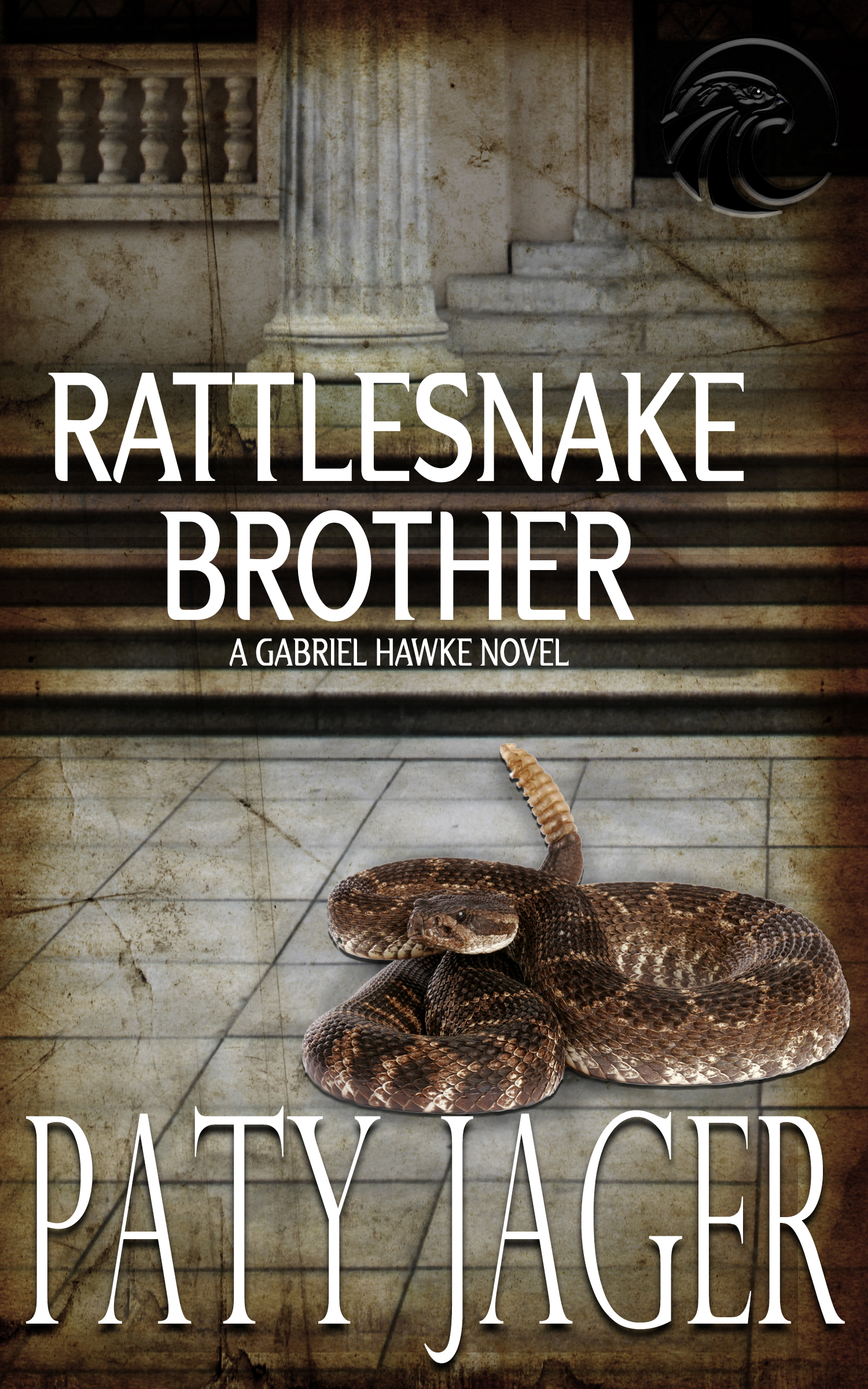
Rattlesnake Brother, book 3 in the Gabriel Hawke series is now available in ebook and print.

Corrupt officials.

Illegal hunters.

Death to those who dare complain.

Fish and Wildlife State Trooper Gabriel Hawke encounters a hunter with an illegal tag. The name on the tag belongs to the Wallowa County District Attorney and the man holding the tag isn’t the public defender. 

As Hawke digs to find out if the DA is corrupt, the hunter’s body is found. Zeroing in on the DA, Hawke finds he has more suspects than the DA and more deaths than the hunter.

Universal Link: https://books2read.com/u/3JyooJ

Dream or Reality? By Patricia Smith Wood

I assume most folks reading this blog are either writers, want-to-be writers, mystery fans, fans of writers in general, or someone who might be looking for a life.

The dream of becoming a published writer can be a fun thing to entertain–especially if you don’t know any actual writers. Your imagination can go anywhere, picturing the wonderful life you would lead as a published writer.  Everyone daydreams as they go through life. I certainly did. As a kid, I daydreamed of all sorts of careers I might one day pursue. The younger you are, the more unrealistic your ambitions will seem to your older self.

When I was 6 years old, I saw Margaret O’Brien in a movie. She was a kid my age, didn’t look all that different from me, and she got to do “pretend” stuff. I was big into “pretend” stuff. Then when I was 8 years old, I saw Miracle on 34th Street. Nine-year-old Natalie Wood played the part of Maureen O’Hara’s daughter. I adored Maureen O’Hara. She very closely resembled my own mother, and I daydreamed endlessly about playing the part of her daughter in movies.

Fast forward to reality and the adult years.  A “movie star” career was not in the cards. But the idea of becoming a writer wasn’t out of the realm of possibility. So during boring tasks like washing dishes and folding laundry, I’d dream about my fabulous career as a writer. Rich, famous, toast of the town (which town I never gave thought to) and hiring people to do what I was currently engaged in doing. Yes, that was the life for me. Just become a famous writer.

Those dreams were so far behind me when I actually became a published writer. By that time, I knew a thing or two about how this journey would likely play out. Number one, rich and famous wasn’t even on the list anymore. When you consider the number of writers in this world who are actually able to completely live on their earnings as a writer, you realize the daunting challenge of it all.

Getting people interested in reading what I wrote was the thing for me. If everybody in the country each bought one copy of my first book but never read it, would that be a good thing or a bad thing? I’d make a one-time killing in sales, but nothing else.

I realized years ago the important thing is to pursue your dreams. The best way to do that is visualize what you actually want, and get busy doing it. And strangely enough, even a very low list writer like me (meaning not well known at all) can be admired by the people who read their work. On more than one occasion I’ve been asked to pose for a photo with someone who just bought one of my books. They are so impressed that I’ve written and been published. They think I’m the “somebody” I always wanted to be.

It’s a pretty terrific feeling to encounter a fan like that. It bolsters my confidence and does wonders for the ego.

Whatever your dream is, make a plan and see what happens. You never know how it’ll play out.