A Real Mystery Solved and Future Planning

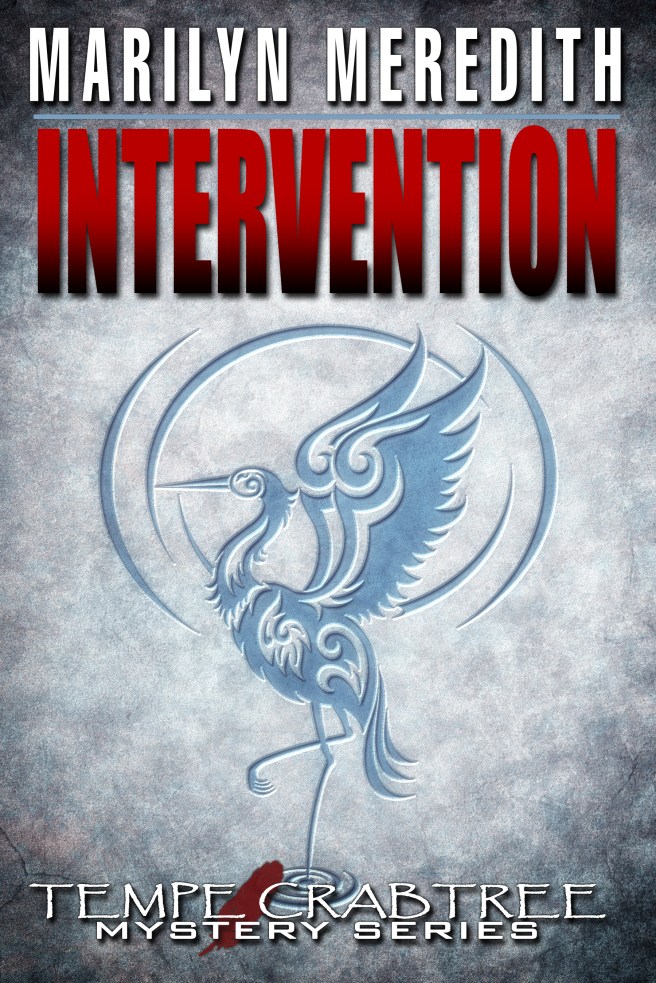
Intervention New

A Real Mystery Solved and Future Planning

If I were to write a story about what happened, it would be titled “The Case of the Missing Bible.”

Bibles aren’t something you expect to an item a burglar would steal–not even this one which is great—it has notes explaining the content at the bottom of each page. I have many other Bible but this is the one I use every day. But the other morning I noticed my Bible was missing. I always keep it in the same place—and I use if first thing in the morning, reading at the table my computer is on. Afterwards, I put it back.

Because I’ve been known to misplace things, I searched everywhere I could think of. It wasn’t anywhere. I began to think about who had been here. My granddaughter had popped over early in the a.m. to get me to print something from the computer for her, which I did. And I vaguely remember her leaving with a black book under her arm. Yep, though she didn’t remember picking it up, she had it. You might think that odd, but this particular granddaughter is a preacher’s wife and often carries a Bible around with her. Mystery solved.

Now, to future planning. Though plan often go astray—I still plan ahead. I haven’t had a new book to promote for a while. I have turned in a new Rocky Bluff P.D. mystery to my new publisher and it’s gone through some editing. I hope to see a proof soon. In the meantime, I’m planning some promotion for earlier books in the series.

And I’m nearly finished with my latest mystery in the Deputy Tempe Crabtree series. It has been held up because of editing the first four books in that series, and all the editing I had to do for the early books in the RBPD mystery series. They are all getting a facelift which in the book world means new covers. So I’ve been working on some promotion for those earlier books while I’m waiting for the new one to be published

Once both those books are out, I’ll be promoting like crazy. I have some great events coming in October—I hope I’ll have one of them ready by then.

And after roasting all summer in Central California, I’m hoping September will be cooler.

What’s going on in your neck of the woods?

Marilyn who also writes as F. M.

PS: The new cover for Intervention, the Deputy Tempe Crabtree mystery series, is my favorite.

The Road to Writing is Paved with Good Intentions

Photo of Sea WavesMy book, Murder in the Museum, was published in the spring by Cozy Cat Press. I resolved to spend at least twice a week promoting it and several more hours writing the second book in the series, Murder in the Cemetery.  I was feeling positive about my progress. The first, in all formats, was selling well, and I had written 15 chapters of the second book. Then spring turned into summer, here on Lake Ontario a season that starts with the July 4th holiday. And that’s when my resolve crumbled.
You must understand that we live in a resort area where summer days are long and the sunsets, spectacular. Where our days are filled with fishing, boating, beachcombing, golfing, swimming, festivals, parades and fireworks. Oh, and did I forget to mention the parties and picnics?  And the intimate get-togethers with friends at waterside restaurants? And outdoor concerts and theatre performances? And gardening?  And farm markets? This summer I also coordinated multiple events and activities for a family destination wedding that was held here, and we had three weeks of non-stop company. Get the picture?

I wanted to enjoy the beautiful weather and activities with friends and family, and that was the point when my resolve to write and promote on a regular basis crumbled. But I wasn’t feeling very good about it. I felt guilty and was losing sleep. Then one night, while tossing, turning and fretting, I took a deep breath and acknowledged that I was putting too much pressure on myself. I calmed down and faced reality.

The reality was that while not doing as well online, book sales were brisk at the multitude of seasonal gift shops, museums, visitors’ centers, bookstores and other outlets in our village and nearby communities. The reality was that I’d enjoyed several successful book signings and, as a local author, had been asked to attend various book group meetings.   And when I thought about it a little more I realized that life’s experiences make us better writers. Good and bad, they help us craft our stories with authenticity and richness. When I sit down to continue writing the second book, I’m sure I’ll include some of this summer’s celebrations in the story.

So, I decided to stop fretting and enjoy this bountiful season. I understood that it was okay for me to take some time to not only smell the posies I’d planted or cultivated over the years, but also weed them and feed them. And to do the same for myself.

Summer is now almost over, and fall is on the way. Soon I’ll settle down and get back to work on a more consistent basis. But I’m also going to enjoy the bonfires, apple-picking, grape harvests and wine tastings, festivals, hikes and cozy dinners with my husband, friends and family.  And I’ll weave these experiences into my stories, as well.

Getting Unstuck


Last weekend, I ran into a fellow writer and asked him how his new book was going. He said it was hard. Very hard. I said mine was too, and he replied, “If they’re good, they’re all hard. Can you imagine what you’d have if you could say, ‘It was easy, I just wrote it?’ ”

When it’s hard, here are some things I’ve found that help me move through the muck:

Trying the scene in a different point of view. (Of course, this only works  if you write in the third person.) Figuring out who has the most at stake in the scene and shifting to their POV can give a scene more energy and drive.

Cutting the last few lines or even paragraphs of a scene or chapter. How often have I said this to critique partners, and how often have they said this to me? “The scene really ends here.”

Revisiting the protagonist’s character arc. What will challenge her to go where she needs to go next psychologically?

Revisiting the protagonist’s story goal. Is the main plot sufficiently  driven by what she wants and what’s getting in the way of it, or have I gotten sidetracked? The fertility of my garden of subplots is astounding, and some of the things that sprout in it are weeds.

Examining the protagonist/antagonist relationships.  I usually have multiple oppositional characters in the way of my main character’s goal, presenting conflicts that push her to change and mature. As with subplots, I have to examine these characters and make sure I haven’t cast  too many.

Doing  an intense writing workout. For example, cranking out a 2,000 word short story in a single sitting. I’d already plotted it while running. I knew the instigating event, the protagonist, the antagonist, the secondary characters who complicate things, the settings, the themes, the ending, and the twists. Was it a brilliant story? No. But it shot me clean through a plot and made me review skills for structuring and tightening a story. I knew intuitively what to skip such as the transitions that were easily implied and the descriptions that a reader would have already imagined. And I have the satisfaction of having finished something. Now, back to the book in progress.

*****

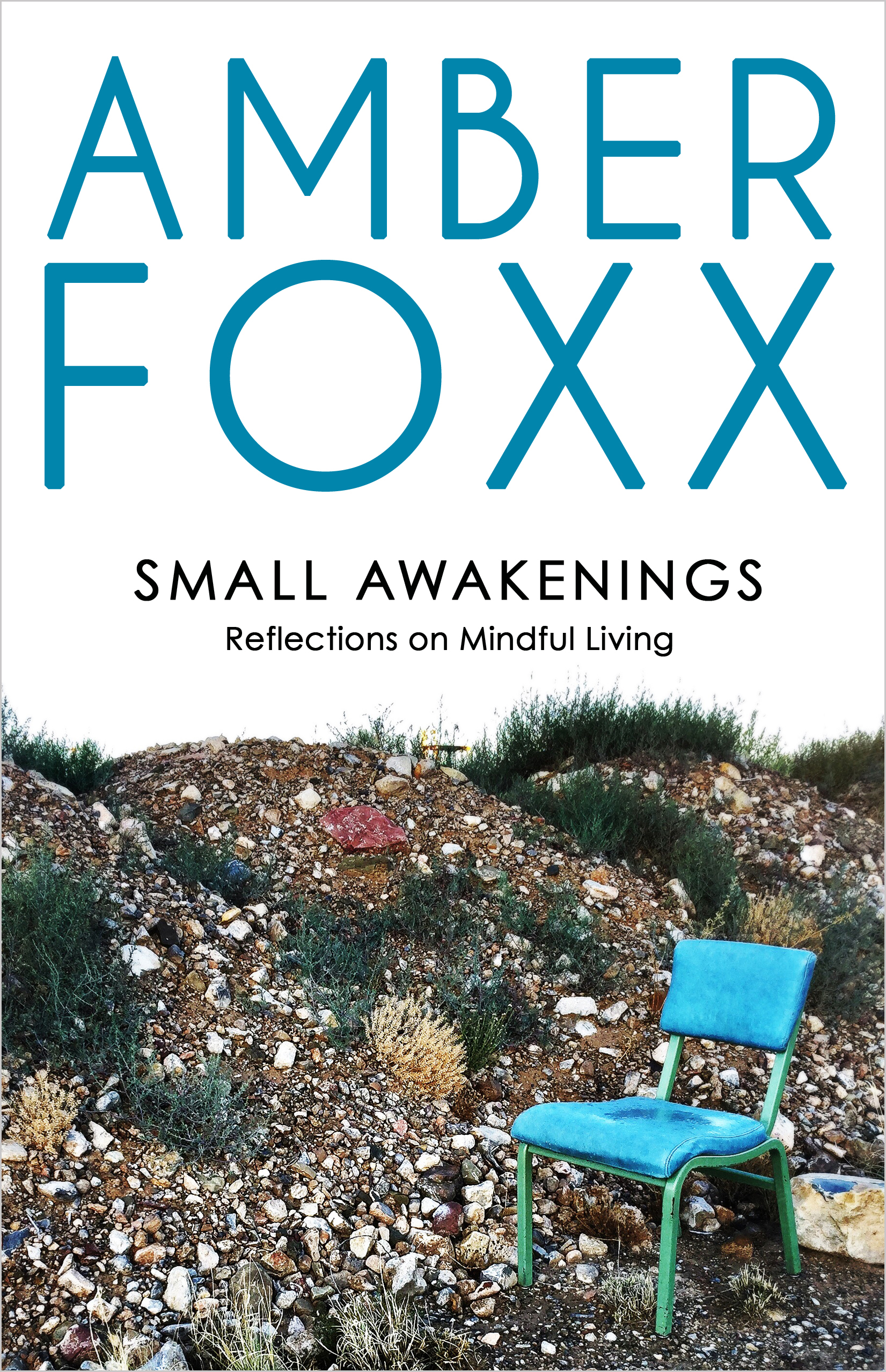
I haven’t been totally stuck, by the way. I have two new releases this month: Small Awakenings, a book of reflective essays, and a boxed set of the first three Mae Martin  psychic mysteries. The boxed set is on sale for $2.99 through the weekend.

The Backstory

thumb_IMG_1225_1024

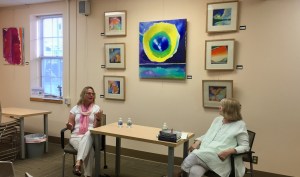
I had a great event at the Longport Public Library last week, in Longport, N.J. It’s a fabulous New Jersey Shore town—I highly recommend it if you have a chance to visit! One of the things I loved about the event was having to respond to some remarkably in-depth questions about process and writing. I tend to think about these things peripherally or as I’m doing them, so it’s always valuable to have to sit back and spell it out.

IMG_3989
Mystery Writer Jane Kelly (right) interviews me at the Longport Public Library

One issue that came up in our conversation was the use of background information. There’s a lot of that in every book. Each character has his or her own backstory. In my books, the setting is one of the characters, so it has its own backstory, too.

The dilemma every author faces is, how much of that information do I include in the story? The trick is to find a balance, to include just enough to let the reader understand and relate to the character or the place without feeling overburdened by history.

bookcase books bookshop bookstore
Photo by Pixabay on Pexels.com

While my books focus on different cultures, they take place in present day. But that doesn’t mean there’s no history. Every place I visit today is the way it is because of its history, and I need to explore and understand that history in order to faithfully reproduce that place on paper. It takes skill to let that backstory seep through the plot, through the characters and their actions, rather than simply dumping facts and details in giant piles on each page.

I can only imagine how much harder the task of culling down the details is for someone who writes historical mysteries!

I leave so many words out of each book, descriptions and details that I write down diligently, only to cut in later editing as I see that they’re not really needed. I hope that with each book, my skill in this area is getting stronger.

Fortunately, I love learning these details of each place I visit and the places I write about. I don’t mind working through this background then cutting it — I know it’s not wasted time. Getting those facts and descriptions and timelines down on paper means that the story I write will be accurate and informed by each location’s unique characteristics.

What do you think? Have you read something that overburdened you with backstory or left you feeling like you didn’t get quite enough?

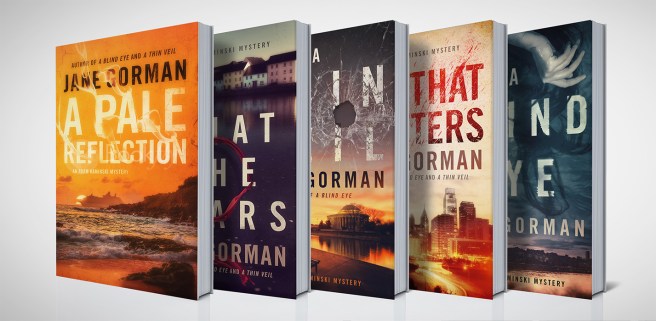
Adam-Kaminski-Series

Jane Gorman is the author of the Adam Kaminski Mystery Series. Learn more at jane gorman.com or follow her on Facebook or Instagram.


Hiding the killer in my subconscious by Paty Jager

2017 headshot newEvery mystery book I’ve written, I start out with the firm belief I know who the killer is.

I start preparing for the book by deciding where the main character, Shandra Higheagle is, what she is doing, and how she will come to either discover a body, be in the vicinity of who does find the body, or know the accused murderer.

The next step is making up my suspect chart and writing down what I know and want others to know about each suspect.

With the suspect chart comes red herrings and other characters- friends, family of the suspects and the victim.

Once the chart is done, I evaluate and decide which one would be the least likely to have killed, yet have the best motive. And that’s the character who I start out hiding the information( red herrings and quick mentions of clues that are glossed over) and plan to have be the one who dunit in the end.

Cars on winding road trough the forest aerial viewEvery book so far, the killer has ended up being someone other than I started out to write about.  I’m not sure if its because I do so many twists and turns in who it could be that I confuse myself or that I realize the person I started out as the murderer is too logical, so I do yet another twist and there is my killer! When I go back through the book to put in clues, I always see that I’d added the necessary clues without thinking about it.

All along my subconscious knew who did it while my working brain was busy workingConcept of the human brain on my initial scenario. I love that this happens because it surprises not only me but the reader.  And it means that writing mystery is what I should be doing since my subconscious seems to know my murderous mind better than I do!

Do you like stories with lots of twists and turns or do you like to know who did it and work with the sleuths to prove it?

SH Mug Art