February is Almost Over!

It’s hard to believe we are almost done with the 2nd month of 2018.

This has been a busy one for me.

Much of my writing time has been spent re-editing all the books in my Rocky Bluff P.D. mystery series for republishing by A & K. Not only will they be re-edited, the plan is to have all new covers—covers that will be easy recognizable that this is a series.

While working on these books, though I have found errors: typos, a few inconsistencies, and ways to write things better. Overall, I’ve been pleased.

The first day of February I joined three of my fellow Sisters in Crime, San Joaquin chapter, for a panel on mysteries at the Fig Garden Branch Library in Fresno. We were all delighted with the crowd who came to hear us.

I spent four days in Ventura attending the Public Safety Writers Association’s Board Meeting. I can tell you that the annual conference in July will be great. www.policewriter.com/  This is definitely the best little conference going and mystery writers are welcome.
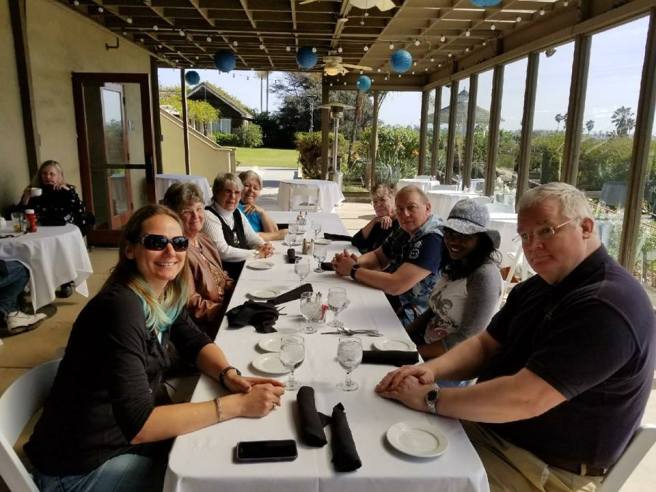
PSWA Board 2018

While there, we also toured the horrible devastation of the Thomas Fire. 900 homes were burned down. So sad.
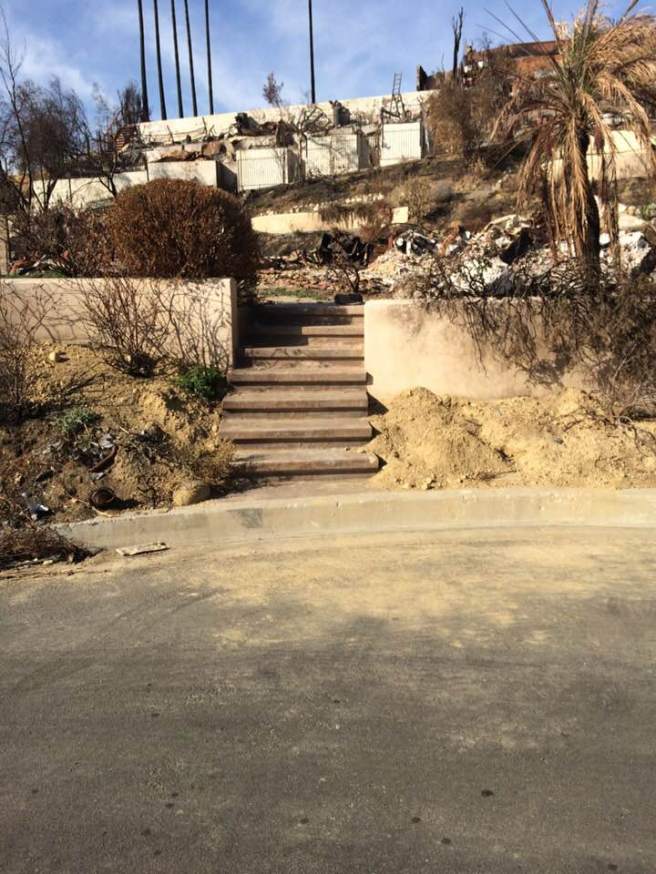
Ventura Fire after

We took one of our granddaughters and her hubby out for an anniversary and Valentine celebration—their choice of restaurant, a Chinese Buffet. Good food and wonderful conversation.

And just to let folks know, I once in a while do something just for fun, I went to a paint class. Fun and so relaxing. I used to do a lot of painting, but decided I need to choose between painting and writing—I chose writing.
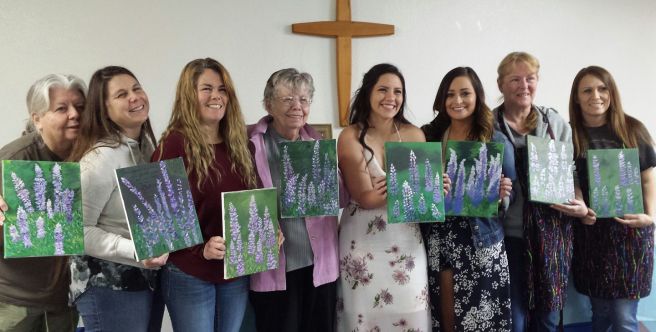
painting class

A big highlight to end the month was visiting a 7th and 8th grade class to talk about the importance of editing. What a great group of kids—so attentive and they asked great questions.
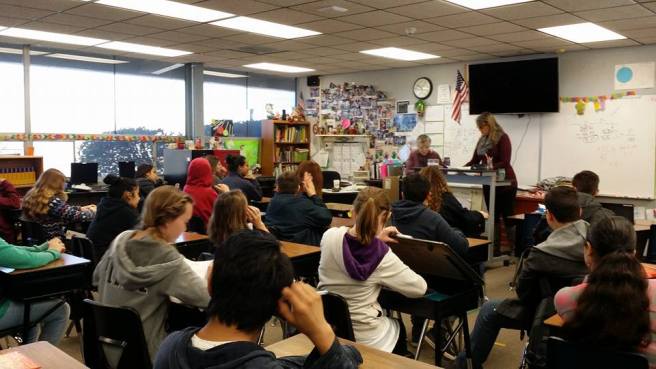
me at Marti's class.

I wonder what March will bring.

How was your February?

Marilyn
Bad Actors

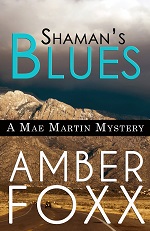
Mysteries, even the lighter ones, touch on the darker side of human nature. There is a wrong to be righted, not just a puzzle to solve. Since I don’t write about murder, I alternate between what I think of crimes of the spirit and actual crimes. The antagonist is usually based on someone who made me angry, created a sense of outrage, or gave me the creeps. In The Calling, Mae Martin encounters a professor who appears to be unethical in his relationships with female students and colleagues, and there’s a dark spiritual power around him as well. Shaman’s Blues starts with missing people, one who may be connected with a ghost, and one who claims to read auras and gives strange advice. She was inspired by someone I met many years ago in Santa Fe and never forgot—because people seemed to believe her, despite the dubious nature of her guidance. The exploitation of others’ spiritual longings and desire for healing is a theme I explore often. Living in New Mexico, where alternative medicine and spiritual seekers are a big part of the scene, I’ll never run out of material. There are many excellent practitioners here, but there are some questionable ones as well.

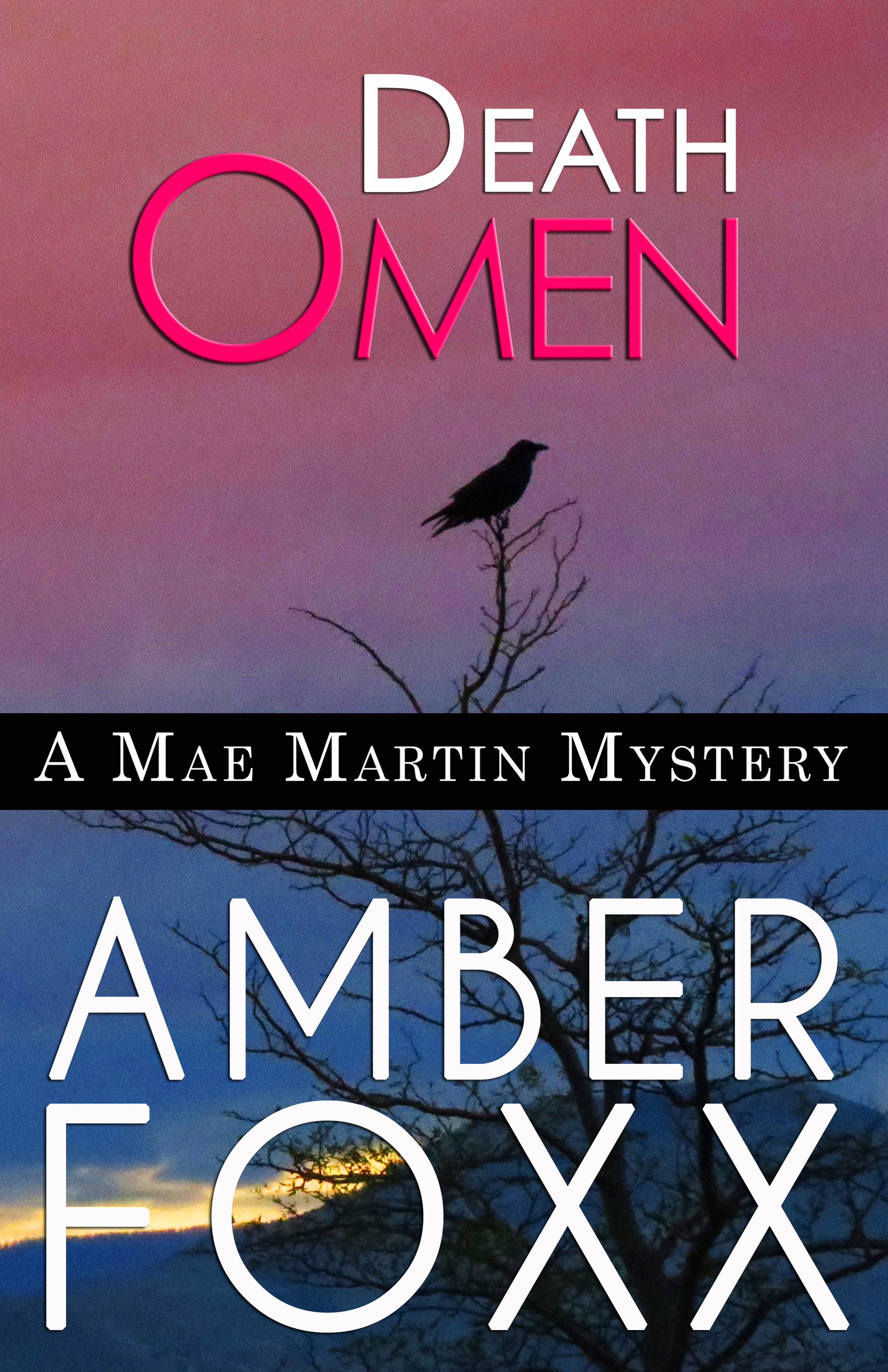
Because of the hot springs, the land where my home town, Truth or Consequences, is situated was a healing place for the Apaches long before Europeans arrived. Visitors come here now for retreats and to recover their health and peace of mind. I set my most recent book, Death Omen, here, for that reason. Some of it takes place in Santa Fe and on the road, but much of the third act takes place in one of Truth or Consequences’ hot springs spas. The antagonist claims to be a healer and a visionary who can see past incarnations. If she’s not what she says she is, her followers may be risking their lives.

*****

Shaman’s Blues, book two in the Mae Martin series, is currently on sale for 99 cents.

Who Saw That?

thumb_IMG_1225_1024

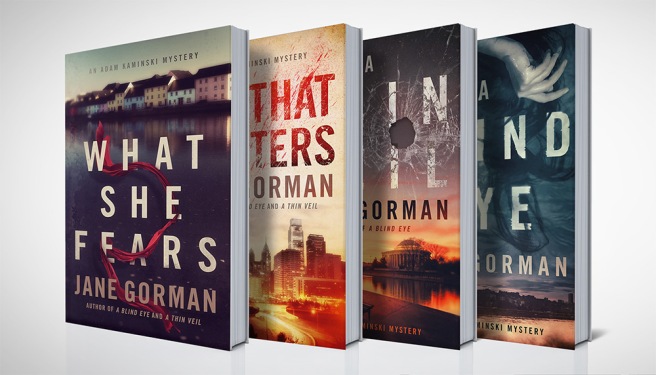
Julia Kaminski, sister to the hero of the Adam Kaminski mystery series, is a photographer. A good one. She’s still figuring out how to make a living in her chosen profession. In an ideal world, she’d earn her money by showing and selling her photographs at galleries. But until that happens, she’s getting by by taking on gigs as a photographer at wedding or parties. And still holding out for her big break.

Julia’s photographs take on new meaning in book 5 in the series, A Pale Reflection. Julia finally gets a leading role, after appearing as a side character in the first four books, and jumps into the chance to use her photographic skills to help her brother Adam figure out whodunnit.

27591728_Unknown

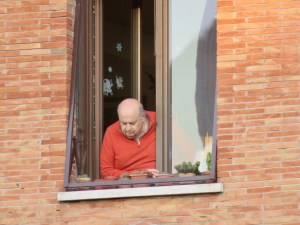
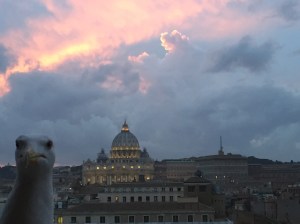
The thing about photographs is they capture more than you might realize. You, the tourist, for example, sees a beautiful scene and snap a shot. It may only be later, as you go back to look through the photographs, that you notice someone or something in the picture you hadn’t previously realized was there. Or someone watching when you thought you were alone.

27599568_Unknown

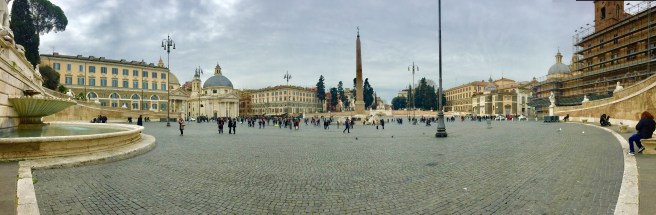
In my family, my husband is the photographer. We just had the amazing opportunity to spend a glorious week in Rome. (Will Adam Kaminski be solving a murder in Rome in the near future? Stay tuned!).

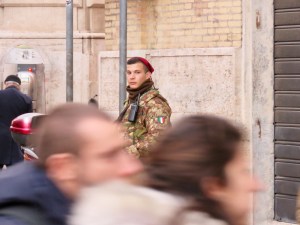
Chuck, my husband, takes spectacular photographs of traditional scenes — statues, artwork, natural beauty and urban beauty. But he also finds joy in surprising details. For example, catching an unexpected eye.

IMG_3708

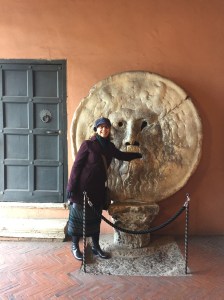
For us, it’s fun. We use these photographs to share our experiences with friends and family and to refresh our own memories of the time we spent there. And if we were trying to catch a killer, the “mouth of truth” pictured here would be a huge help!

IMG_6641

Of course, we’re not trying to solve a murder. For Julia and Adam, a photograph can mean so much more. Even the difference between life and death.

IMG_6700

Learn more about Jane Gorman and the Adam Kaminski mystery series at janegorman.com or follow her on Facebook. For some great photographs of Rome and her other travels, check out her Instagram page!

Adam-Kaminski-Mystery-Series

Writing is My Life or My Life is My Writing by Paty Jager

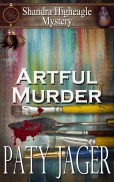
Artful Murder 5x8There’s not a writer out there who hasn’t brought something from their life into their writing. Writing whether for pleasure or for money, deals with everyday life experiences. It has to. One can’t bring the full flavor of life into a story without allowing something they have experienced to come into the writing.

Everyday happenings: the pungent aroma of coffee brewing, the dampness of mist walking on the beach, the blinding glare of light from an oncoming vehicle at night, the sweet and sour tingle on the tongue while eating candy.  All of these everyday things are used when writing. The senses and what we see and feel around us are used to show the characters in the same or comparable settings.

When I started planning Artful Murder, book 10 in the Shandra Higheagle mystery series and my March release, I had to draw on past experiences. Far back experiences. LOL In Artful Murder, Shandra volunteers in a high school art department.

While figuring out who the murder victim would be and lining up suspects, I went back to memories of high school and found the one teacher who the boys made fun of and the girls found creepy.  He became my murder victim.

I made the victim worse than the real life teacher. And I gave the principal a reason for ignoring the complaints of the other teachers and students. Which, of course, added more suspects and widened the net of suspects to parents and significant others of the female teachers.

Students are more savvy to what is going on in their schools than teachers think. I used this and a person with a grudge to add even more fuel to the ffire that was about to explode at the school.

I can honestly say that I have more fun fleshing out my mystery books than I do the other genre I write. There is something therapeutic about putting the people or events that I’ve come across through my life into books and find my own justice.

SH Mug Art


Constructing Clues

by Janis Patterson

I think we all agree that when creating a mystery we should play fair with our readers. Mixed in amongst our red herrings there should be some genuine clues that – with an astute reader and a little bit of luck – can be used to solve the case.

Playing fair, however, does not always involve playing nice. For example, what if it is determined that the killer is left handed, and there are two left-handed people in the suspect pool. Pretty much makes it a slam-dunk, doesn’t it? Or does it? What if our sleuth finds that one of the suspect pool is ambidextrous? Ah, now that complicates things.

I believe that until pretty much the end of the book there should be at least two rational, provable solutions to the case. Nothing is more boring than knowing by the third chapter who the criminal is and wondering why the sleuth cannot see it. Once that almost-the-end-of-the-book point is reached, however, there should be a clue or event that makes it clear to the fictional sleuth and the mystery is solved. Whether the author cares to make it obvious to the reader or not before the sleuth reveals all depends on the story and the voice of the author. In a truly great mystery, the reader will go ‘Ah! Of course!’ and suddenly the entire action of the crime is painfully obvious to the reader, step by step. All the clues are there, in plain sight, but the reader has not put them together.

I never said it would be easy.

As for realistic villains… First, there can only be one villain… or not. One of the best mysteries I ever read had two villains, working in concert while seemingly disconnected on the surface. Each had an alibi for at least half the incidents so neither could be considered suspects and the two had no obvious connection to each other. Only two small clues linked them together, and one was a red herring, but the real one was out there in the open and available to all. I had to read the book twice, making a special effort to note the clues the sleuth had pointed out before I could admit that it really was so simple… and so obvious.

Another thing about clues is that they should be reasonably accessible to the modern reader. I remember an early Ellery Queen (whom I adore) where the clue that solved the mystery was tied to a knowledge of the Phoenician alphabet. I mean – really? The Phoenician alphabet?? Who knows the Phoenician alphabet? If one did, the clue was fairly obvious, but really…

One thing that makes me wild – and which makes me throw a book against the wall and never buy anything from that author again is the clue (or solution) that appears suddenly without warning or reason from far left field. A character never seen or heard of before wanders in and announces the one fact that solves the mystery. That ranks right up there in the list of unacceptable endings with the convenient never-before-heard-of wandering homicidal maniac. Both ‘solutions’ are cheats that deny the reader the chance of solving the mystery himself. Even if the reader doesn’t want to work at solving the mystery, only to read a good story, it isn’t fair to pull the old ‘deus ex machina’ card. It’s cheating, and authors – good authors – should be above such shenanigans.

If you’re going to commit a crime, do it honestly.