Small Change, Big Change

When I started improvising my current work in progress, I had a seed for a plot in mind, but it changed directions because of one small thing. My first-round chapter-by-chapter critique partner told me that the name I was using for a character’s business, Minerva Press, is a real publishing house. No big deal, I thought. It would be simple to change it. She would name her small press after a lesser-known goddess. Having already established that this character was part Finnish, I picked Loviatar, a Finnish goddess, from the pantheon of my search results, though I had no idea why anyone would name a business after her. She’s a dark goddess, the blind daughter of death, the bringer of scourges into the world.

Rather than reject this goddess, I kept reading about her. Something told me to stick with her.

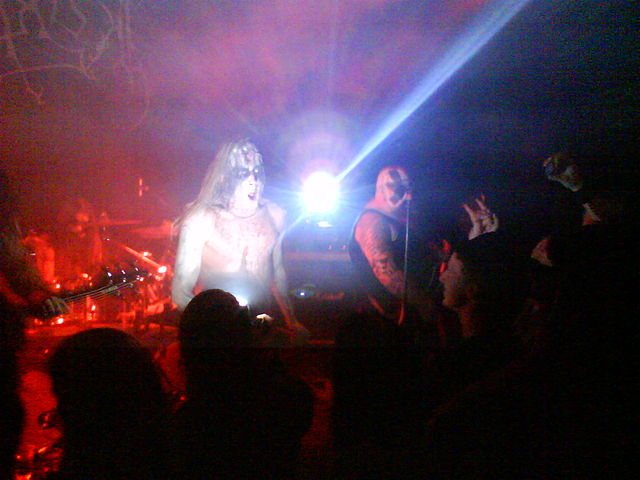
One article mentioned that that Loviatar is popular with black metal musicians. What, I wondered, is black metal? At the time, I didn’t know the difference between black metal, heavy metal, death metal, thrash metal, melodic death metal and Viking metal, or that most of these genres even existed. The next thing I knew, I was watching such bands on YouTube and digging into Nordic black metal and the world view of that culture, finding some unexpected connections with (not kidding) the Romantic Movement and Shelley’s views on Satan as the hero of Paradise Lost. My character is a poet, and faculty advisor to a poetry club. With the name of her small press, her backstory changed. Her situation of danger changed. The motives of her enemies changed. The only thing that didn’t change is my taste in music; I didn’t become a fan of black metal when she did.

I may have a title for the story that’s evolving: Dark Goddess.

Strangely, many of the plot elements fit better into the new version of the story than the old one. Clues that I’d planted, puzzling myself, fell into place. If I’d finished the first draft before sharing chapters, it would be a different story. Maybe I still would have liked it, but it would have been lighter, less complicated, and more predictable. And I don’t ever want to be predictable. Even to myself!
 

How My Rocky Bluff P.D. Series Has Changed

Because the entire Rocky Bluff P.D. mystery series is now being re-published by a new house, I’ve been re-editing each book. In the process I’ve found some interesting tidbits and errors, besides the usual typos and repeated words.

A & K Logo

(My new publisher’s logo)

The overuse of ellipses: I could have been called the Queen of ellipses. Why one of many editors didn’t call me on this I have no idea.

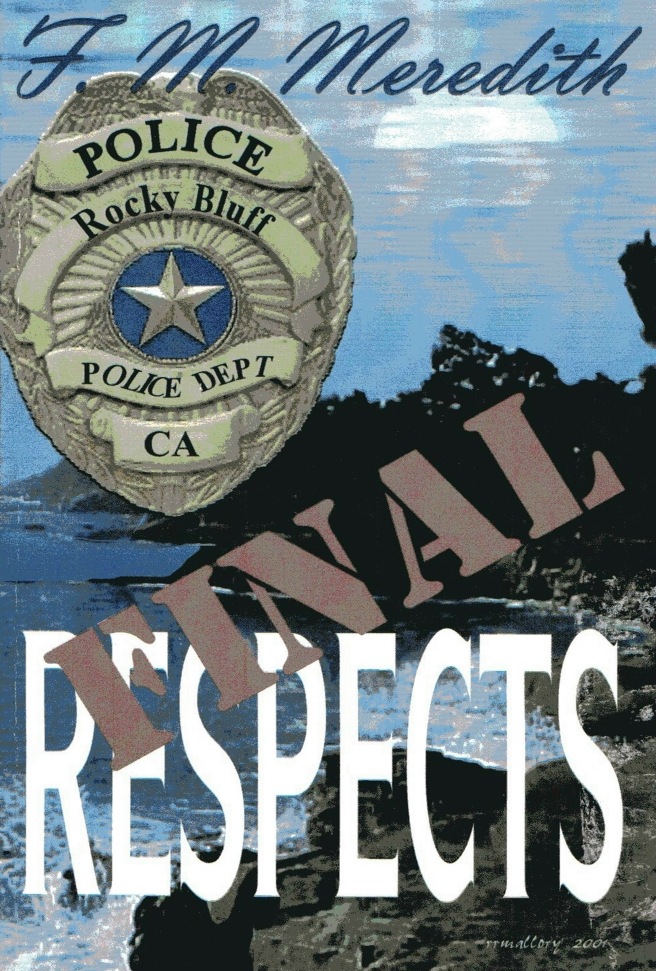
Because the first book, Final Respects, was written long ago, most of police officer characters sport mustaches. They don’t come off until about the 5th book in the series. In the first two books, there’s a lot of smoking, even in the police department. In California, is it no longer legal to smoke in a public building. My new publisher wants this to stay as is.

One big error I found was that in No Sanctuary one of the lead female character is made a Vice-Detective, which she still is in the next book—but not in the one after that or any of the later ones. I figured out how to correct it.

I’ve found that I’ve changed the hair color of at least one of the characters—but that will be an easy fix.

Actually, though I am making changes along the way, I’m pleased with the writing and the plots.

One big thing that influenced how I wrote these books was having my cop son-in-law tell me that the police never work on one case at a time. Because of that, there are many things going on in every book..

I’m sure as I continue to work my way through the editing of the rest of the novels, I’ll find other errors. This has been an interesting process.

Though the first book, Final Respects, has the same cover used when it was first published, the subsequent books will have a new look.

Final Respects. best

And yes, I’ve written this series under the name F. M. Meredith. Why I used that is a whole other story.

If you’ve never read this series, once it’s all available once again, I hope some of you will try it.

Marilyn


Guest- L. Lee Kane

California Drinkin’

I decided I wanted to write a book about the Central Valley, where I’m now from which is a vast, hot, 300- mile-long expanse extending from Sacramento to the north and the San Joaquin Valley in the South, and has the most fertile areas in the United States for growing grapes. We produce a full 60 per cent of all the agricultural products in California and we crush 75 per cent of all wine grapes. Wineries are huge. And so are the crops.

One of the core differences between the wine industry in California and that in Europe is the people who run it. The California wine revolution of the 1960’s and 1970’s was largely initiated by men and women who were not from winemaking families. After the Prohibition, which lasted 13 years there were few people to train the newcomers, including Ernest and Julio Gallo, which makes close to 70 million cases, including popular inexpensive wine and Robert Mondavi Woodbridge wines which make slightly more than 6 million cases a year. The interesting thing is that these three self-made men were self-taught. Everything they learned they read out of a book.

  • More than 90 per cent of the wine made in the United States is made in California.
  • The state’s incredibly diverse climate and geography allow California wines to be made in a profusion of styles from dozens of different grape varieties.
  • California’s winemakers are among the most innovative and open to experimentation in the world.

Of course, my book, ‘Death on the Vine’ is not so factual, I have romance, murder, intrigue, lots of money, a socio path, and revenge. Some of this has some true parts in it but for the most part, it’s fictional. I will have a sequel to the book, I haven’t quite decided on a title but again it’s set in the small town of Oakhurst, California not too far away from Yosemite. Daisy, Frisco, and a whole host of characters will play a part…and another socio path.

I think you can see from my bio that I have familiarity with socio paths and quirky characters.

I have a contest running on amazon for a free book for Death on the Vine and if you read it, review it, I’ll want to put your name in my next book and maybe we can have a contest for a new title.

Murder on the Vine picture

Murder on the Vine

Just before high school graduation, Daisy Murphy returns home from a football game and finds her mother standing over her abusive boyfriend’s body—holding a bloody hammer. In the aftermath, Daisy flees her home and eventually establishes a new life as an expert winemaker in the Central Valley of California. But as hard as she tries to get away from her past, the effects of that horrible night travel with her.

Detective Jake Frisco has unearthed a murder at the vineyard where Daisy is employed as the winery’s expert winemaker. It doesn’t take long to discover that Daisy is haunted by her past and carries a heavy burden. It seems that possible involvement in an unsolved murder is part of her life’s baggage. Does this put Daisy at the top of the suspect’s list? Can he put aside his growing feelings for her and follow the leads in the case, even if they take him straight to her as the murderer?

Can Daisy finally face her past and trust that the truth she offers the Detective will be enough to save her? Will she find the courage to ask for a future beyond the sorrow of her youth—a future filled with love and self-worth?

linda and Shari- croppedLinda L. Kane MA in Education, PPS, School Psychologist, and Learning Disability Specialist, is the author of Death on the Vine, Chilled to the Bones and an upcoming release of the The Black Madonna. She lives with her husband, three dogs, one bird, and eight horses in California.
www.lindaleekane.com

THE JOYS (?) OF EDITING

DSC_0196            You’re probably wondering why I have a question mark after “Joys” in the title of this blog. And if you’re a writer, you know that editing is not a joy. It’s a painful slog through verbiage which seemed well-expressed and literate when you first put it on the page, but which, when you review what you’ve written with a view to just making it a little clearer, more literate, a better expression of what you wanted to say, has become idiotic, banal, and thoroughly uninteresting.  Not to mention inexplicable.
That’s where I am now. I’m editing the third novel in my series set in Burgess Beach, Florida, featuring Detectives Andi Battaglia and Greg Lamont.  It’s called REASONS TO DISAPPEAR, and the mystery concerns the disappearance of Captain Bradley, Andi and Greg’s boss, and their efforts to find him.  It seemed like a good idea at the time I conceived it, and it’s still a good idea. The problem is that although I know why he disappeared, I need to give him more motivation to do that. Duh!

Because I am a pantser and write without knowing the plot but simply start with an idea—Captain Bradley disappears—when I go back to edit the material, I often find I have insufficient motivation on the part of one or more characters. Not just insufficient motivation but perhaps incredible motivation: Why would he do that?

So that’s why the editing. Now if I were plotter I would know what had happened and why in advance before I even started writing. But then of course I couldn’t surprise myself with the answer to the question of why Captain Bradley disappeared or what’s going to happen to him. And I really like to be surprised, in my writing as well as my reading. I don’t like to read mysteries where I know the guilty party too early on. Spoils the surprise! And so I like to surprise myself, too, in my writing.

At a presentation I attended at a local bookstore, a panel of writers talked about how they worked and whether they knew what was coming in their books. One of the authors was a television writer who was used to writing tight scripts where everything—plot, characters, ending— was known in advance. The other two writers were pantsers who didn’t know what was coming next. One of the panelists confessed that she had had to rewrite her entire book because she was deeply dissatisfied with the person she had appointed as the murderer. He just wasn’t the right person. So, she went back, rewrote the book, and added a character, one she was confident was indeed the murderer. And was happy with the result.

I guess it would be easier for me if I had all the plot lines figured out in advance. Then I wouldn’t be stuck with not knowing who the murderer is and why. However, I’m afraid that’s the way I write. So I edit a lot and figure out why the characters behave as they do. Then I edit again. Then, again. Again and again. Finally, I’m done.

When Words Matter

thumb_IMG_1225_1024

I was working on my current manuscript the other day, when the idea for a short story came to me. I’m not a short story writer. I’ve tried. I did not succeed. But I was struck by the idea, wondering why it came to me. At this point, I’m more interested in the idea than in writing the actual story.

The story would go something like this: an average guy accidentally gets involved in a battle between good guys and bad guys from the future (yes, I’m a Sci-Fi fan). He doesn’t have the skills or knowledge that the future warriors do, but he has a good heart and a lot of courage. He joins the battle and helps the good guys win. They invite him to join them, to travel to the future with them, where he can have a better life. He’s thrilled. He’s got no family he’ll miss (maybe his wife just died in childbirth or something tragic like that).

He travels to the future with his new friends, excited for the life that awaits him. When he arrives, he’s processed into his new community. You know the type of thing: paperwork, blood tests, analyses to make sure he’s safe. To make sure he’ll assimilate well. Everything goes great, until they get to the final page of the questionnaire.

“What is—well, ahem, I suppose I should say what was your profession? What can you do to contribute to our society?” The future agent man asks him.

“I’m a writer,” our hero replies. “I write fiction. Books. Stories.”

Future agent man blanches. He stands, the papers he holds shaking in his hands. He glances at the two-way mirror on the wall and jerks his chin toward it in some sort of signal.

Our hero, for the first time, starts to worry about his decision. Two burly men in white suits carrying long, silver tubes enter the room.

“I’m sorry, but we can’t let you stay,” future agent man explains apologetically. “Writers are too dangerous. Too subversive. We don’t allow those types here.”

Our hero doesn’t feel a thing as he is humanely euthanized.

IMG_0894

Sometimes I feel powerless. Sometimes I feel like I’m just a cog in a machine that I can’t control. But we all have our own way of moving our little part of the machine. Maybe we can’t steer, maybe we can’t even control our speed, but for each of us there’s something we can do. For me, it’s writing.

author pic
The author in her natural habitat

I love the fact that I can build my own worlds, create my own characters, heroes and villains. Bad things happen, but they generally end well. (Alright, not for the people who get killed, obviously. But usually for everyone else!)

When I write, I need to remember to do it with intention, with thoughtfulness (my fellow Lady of Mystery, Amber Foxx, might say mindfulness). Because what I write matters.

I think my idea was connected to the fact that today is Martin Luther King Day. He was a man who knew how to use words, as well as actions. His words had power. They still do.

I’m inspired by him in many ways. One of those ways is recognizing that words matter.

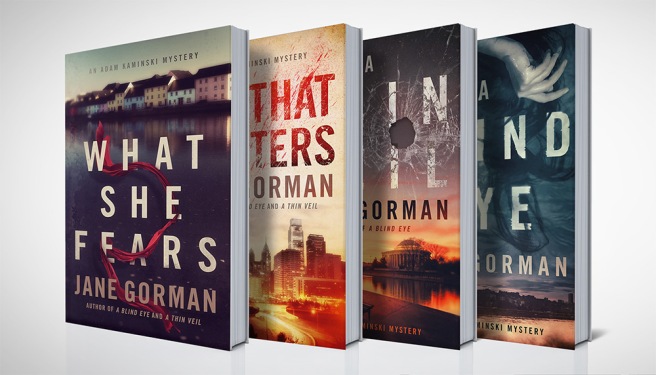
To learn more about Jane Gorman and the Adam Kaminski Mystery Series, visit her website at janegorman.com or follow her on Facebook.

Adam-Kaminski-Mystery-Series