
Splits, Murders and Happy Endings

by Janis Patterson

I have a split personality. No, really it’s true. I do.

Part of the time – as Janis Patterson – I delight in writing the foulest murder, stories of people who exterminate their fellows without a thought or qualm – and what is really scary is that I like it! I delight in finding new and obscure ways of killing someone, and am absolutely over the moon when I discover how such a heinous act can be gotten away with scot-free. (The only unfunny part of this was when in real life a truly creepy person asked me if I do consulting. Brrrrr…..)

However – the rest of the time – as Janis Susan May – love-across-time-cover I’m an unabashed romantic who writes tender stories of two imperfect people surmounting obstacles and finally find the perfection of true love. I adore giving them trials and misunderstandings and difficulties and differences of opinion, making it seem that they will never get together… then just when things look darkest bringing them together in a satisfying happily-ever-after ending.

And never, hopefully, shall the twain meet.

So what causes this rather radical dichotomy? I have no idea. I just know that some stories demand romance and hearts and flowers, while others have to have revenge and murder. Those of you who know me know a little about my working process – I don’t plot and I don’t do character sheets or anything like that. The stories just come… and so do the characters, independent people who simply walk in, tell me their name (and Heaven help me if I try to change it) and what they’re going to do. Far too many times I don’t feel like I am writing but instead merely transcribing.

It makes for an interesting work process. On the other hand, I am never bored. And neither are my readers.

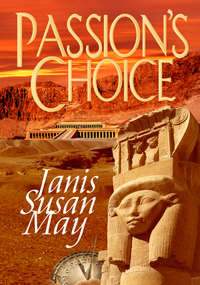
For example, my Ancient Egyptian time travel romance PASSION’S CHOICE is now not only a standalone novel, it is also included in the Love Across Time box set – ten full novels by bestselling authors, right now on sale for 99 cents at Amazon! An unbelievable bargain you should go get immediately! PASSION’S CHOICE is the story of Elissa, an average young American woman on a tour in Egypt when she falls over the railing at Deir el Bahri, temple of the female pharaoh Hatshepsut. The only thing is, when she hits the ground the temple is under construction, and the general in charge of the project believes her to be a pleasure woman. (You can guess what that is, can’t you?) Before she knows what’s going on, Elissa finds herself in a dangerous masquerade at the pharaoh’s court, one that not only puts the life of the man she loves at risk, but the fate of Egypt – and perhaps the future – as well.pc-web-small
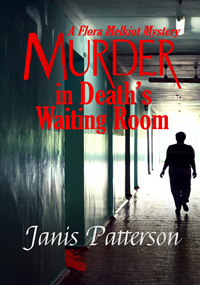
By contrast, my newest murder mystery release is about arrogant, wealthy, aged sleuth Flora Melkiot, who has been called the dark side of Miss Marple. In MURDER IN DEATH’S WAITING ROOM, Flora has been confined to a rehab facility by her painfully conventional daughter, an act that infuriates Flora, who says it was only a little traffic accident and she could manage perfectly well with a broken wrist in her own home. Then first one of the patients and then another are brutally murdered, and Flora once again finds herself in the position of solving the crimes. As always, Flora is convinced that she can do anything… and usually she not only can, she does. When drugs get added into the mix, what should be a place of healing comes perilously close to becoming a death trap. midwr-web-promo-small
See? Two completely different kinds of writing, genres, even characters, but just one of me. One of my longtime beta readers – who has read almost every word I’ve ever written – looked at me one day and asked how I did it. How did I manage two such different genres, two such different conventions, two such different worldviews and do both of them equally well. I thought for a minute, then gave her the only answer that was possible.

I don’t have a clue.

Killing Time by Paty Jager

paty shadow (1)Eons ago when I wrote my  first mystery book it all started with guests on a talk show. Well, let me take a step back from there. I wrote that first murder mystery because there was someone in my life I wanted to see dead. Since I’m a law-abiding citizen, I used the power of words to kill my intended victim. 😉
It was having the demise of this person in mind as I watched the talk show that the premise of the story formed. The talk show had a woman and a man who were private detectives and they’d written a book, Be Your Own Detective. I listened to them talk about how they’d written a book that could help anyone be their own detective.

I haunted bookstores until I found the book. (This was way before you could order easily online). With the book in hand, I came up with a freelance photographer and divorced mother of two who gets a call from her ex that he is in jail for a murder he didn’t commit. The woman debated on whether to ignore her husband or make sure her children didn’t have the baggage of a criminal father. She watched a talk show and discovered the same book I did. 😉

With the book in hand she begins digging into the whereabouts of her husband when he supposedly killed a woman. (The person I wanted dead)  I used the information in the book on tailing, surveillance, paper trails and verbal seduction to come up with scenes and move the story along. The book had lots of great information in it. Some of it would still work to day and some that is dated.

I actually wrote two books with the same amateur sleuth. Some day, with lots of updating, they might become published. But as long as I can keep coming up with plausible deaths and mysteries for Shandra Higheagle to solve, I’ll be working on her stories.

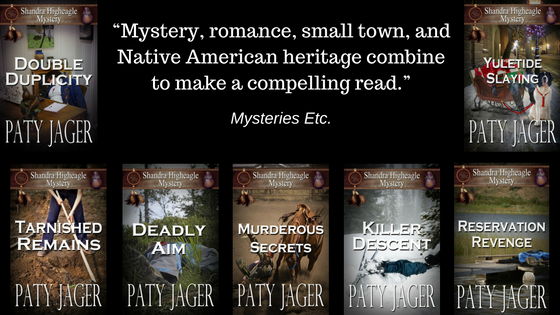
higheagle-book-banner

Paty Jager is an award-winning author of 25+ novels and over a dozen novellas and short stories of murder mystery, western romance, and action adventure.  This is what Mysteries Etc says about her Shandra Higheagle mystery series: “Mystery, romance, small town, and Native American heritage combine to make a compelling read.”
All her work has Western or Native American elements in them along with hints of humor and engaging characters. Paty and her husband raise alfalfa hay in rural eastern Oregon. Riding horses and battling rattlesnakes, she not only writes the western lifestyle, she lives it.

blog / websiteFacebook / Paty’s Posse / Goodreads / Twitter / Pinterest

Save

Intensify that interrogation scene

By Sally Carpenter

One of the hardest scenes to write in a mystery is the interrogation: The police officer, P.I., bounty hunter or amateur sleuth grills a suspect. Too often such scenes morph into a rhythm of Q-and-A, Q-and-A that lulls the reader to sleep and generates no conflict or character development. Interrogation scenes should be more than info dumps.

 I’m reading the book “Acting for Animators” by Ed Hooks (I bought the book years ago when I thought I’d be writing in TV animation). Hooks begins with basic acting theory that is useful for writers as well as visual artists. After all, acting is developing a character, and a mystery nothing more than how certain characters react to a crime. Without characters, our stories would be nothing more than boring police reports.

 Hooks says every scene in a play/book consists of a negotiation, of two or more characters striving to obtain a specific objective. Writing an interrogation scene with this in mind will perk up the story immensely.

 What is your character’s objective in an interrogation scene? The immediate goal for the protagonist, obviously, is to uncover clues or evidence to solve the case. But the character should have a larger overriding objective.

 The cop, of course, is doing her job. But maybe she had a long string of cold cases, and needs to break this one to prevent being transferred to traffic control. Or solving this case will result in a promotion. Or the mayor is breathing down her neck to wrap up this one quickly and quietly. Or she’s trying to do a good job to prove to Internal Affairs she’s not a dirty cop. All of these factors will affect every action the protagonist makes.

 The private eye needs this case to pay the overdue rent or her son’s college tuition or her mother’s operation. She must solve this crime because the local police department is too corrupt to deal with it.

The amateur sleuth is involved because the victim was a friend orerelative or the sleuth’s BFF was arrested for the murder.

 Or this particular case is too similar to the protagonist’s childhood trauma or inner demon that must dealt with. That will certainly affect the way the protagonist speaks to the suspects.

What of the suspect? That character’s objective in the scene is not to sit quietly and spit out exposition, but to get out of the hot seat as soon as possible.

A red herring will maintain her innocence or be terrified at the thought of an arrest or angry for even being considered a guilty party. This will affect how the answers are given.

 The killer may mislead, lie, deflect suspicion on another person, or act nonchalant, bored or even brag if the police have no solid evidence of his guilt.

 When people talk, they don’t sit motionless. They stand, pace, fidget, lean, cross arms or legs, nod, scratch, drink coffee, take notes, twist, etc. Characters in a story are also in motion, although they should move with a purpose and not flail about. Liars often avoid eye contact or cover their mouths. Writing in such action will break up long chunks of dialogue and add interest.

 Keep interrogation scenes short. A story is realistic, but it’s heightened realism. A real interrogation at police headquarters may take hours, but a reader won’t sit through pages of small talk.

 Make each word interesting. The suspect needs to say more than “I didn’t do it.”

 Each episode of “Columbo” is nothing more than a 90-minute interrogation scene! But the show works because each scene builds by revealing a new clue or pushing the killer emotionally further into exasperation.

 Columbo’s homey anecdotes about the wife or family are more than a humorous asides but are used as a means to disarm and distract the murderer, who thinks he can outwit this peculiar little man.

 The next time you watch “Columbo,” listen carefully to the thrust-and-parry game going on between the cop and the killer. How is the dialogue like a negotiation? Who has the upper hand in each scene? What “tricks” does Columbo use to wear down his opponent? And how can you use these techniques in writing an interrogation scene?