It’s Not Always About Winning by Paty Jager

This past weekend I attended the InD’Scribe Conference and RONE awards.  My book Double Duplicity was a finalist in the mystery category.

Double Duplicity (652x1024)I hadn’t planned on attending the conference, but I received an email that said my book was a finalist in the RONE contest. A contest that was vetted three ways. First the book had to have a 4.5 or better review from the InD’Tale review magazine. Then it was left to readers to vote for it. After that round it was read by people who work in the publishing industry. The scores were tabulated and the winners were picked.

At the conference, I was also a member of a 4 person panel that talked about writing paranormal. I was happy to find I wasn’t the only person who had shape-shifting Native American tales. My book, Double Duplicity, that was up for the Mystery RONE award has a deceased Nez Perce woman who visits her granddaughter’s dreams and helps her solve mysteries. I believe being a finalist helped put me on that particular panel.

The mystery category had stiff competition. I didn’t read each finalists books but I looked them up. A funny thing happened when I first arrived. A young man saw my finalist badge and asked what category. I told him mystery. He was a finalist for paranormal.  He asked if I’d read my competition. I replied I hadn’t. “That was probably smart,” he said. “After reading mine, I know I don’t have a chance.” Which was pretty much why I didn’t want to read the competition.  It would have taken the wistfulness of perhaps winning away, if I felt I didn’t have a chance.

me-rone-awardI dressed up for the event and sat through the two hour long celebration. Of course mystery and suspense were the last categories to be given out.

I’m the first to admit when I saw they were making the people who won the top spot give a speech, I was hoping to not be the winner, only a runner up so I didn’t have to give a speech. And my wish came true. They called the winner of the mystery category and then the runner up. Which was me! While winning and having the crystal trophy would have been awesome because the InDTale magazine would have also given my book free promotion, I’m happy with the certificate naming me the runner up. It validated I didn’t make the wrong decision by writing the genre of my heart.

And even though I’m a runner up, TJ Mackay, the head of InDTale magazine, said that many of the categories the difference between the winner and 1st runner up was by 1 point and one category by half a point. I like to think the mystery category was one of the close ones and that makes my runner up all the more sweet.

You can download the first book of the Shandra Higheagle Mystery Series, Double Duplicity, for free at all ebook venues. Watch in November for the 7th book in the series, Yuletide Slayings.

Paty Jager is an award-winning author of 25+ novels and over a dozen novellas and short stories of murder mystery, western historical romance, and action adventure. She has a RomCon Reader’s Choice Award for her Action Adventure and received the EPPIE Award for Best Contemporary Romance. Her first mystery was a finalist in the Chanticleer Mayhem and Mystery Award and was 1st runner up in the RONE Award Mystery category.  This is what Mysteries Etc says about her Shandra Higheagle mystery series: “Mystery, romance, small town, and Native American heritage combine to make a compelling read.”

blog / websiteFacebook / Paty’s Posse / Goodreads / Twitter / Pinterest

SH Mug Art

Do you have voices in your head?

IMG_1610

By JL Simpson

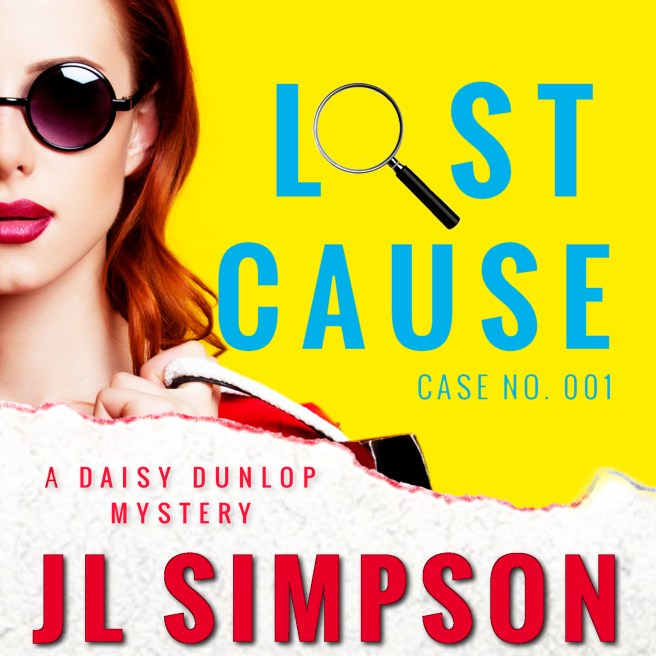
When I wrote the first book in my Daisy Dunlop Mystery series their was some sliver of interest in making it into a TV show. The interest fizzled and I got on with writing the rest of the series. However, it got me to wondering how the book would work on the screen. I don’t have the money to fund such a venture but I did have an opportunity to do the next best thing, turn it into an audio book.

I put the book out for auditions and waited. A few people tried out. Some were better than others, but none of them could quite do the British accents, or get the timing right for the comedic edge to the plot. After over a year of trying to find the right person for the job I was ready to give up. Days before I was going to pull the book off the internet I got a new audition.

The lovely Mary Phillips from Riveting Narrations sent me her reading of chapter one and I was blown away. I listened to it over and over and decided to sign her up. So, the book is now in production. I have never released an audio book, and Mary has only narrated one other book, so we are both learning as we go.

Mary is more than half way through recording the book and I get updates of each chapter as they are complete. Every single chapter I hear convinces me that not only does Mary have a great future as a narrator but that she was the only person who could do Daisy justice.

If you’ve ever been to the UK you’ll know that there are dozens of different accents, and I think I used every last one. Mary has managed them all. Not only does she switch from accent to accent, but also male to female voice, and every character has their own unique identity. It is an amazing thing to hear the characters you created being brought to life. As I sit and listen I can almost believe that the people that were brought into being by my imagination are alive and well living as the voices in Mary’s head.

The book is due out later this month and I can’t wait to find out how my readers feel about the transformation of Daisy from book to audio. So, if you have voices in your heads, a skill for doing accents, love to read out loud, then maybe you’re a budding narrator.

lacaudio

If you want to know when the audio book is released then why not sign up for my newsletter by clicking HERE.

Your neighbor, the killer

By Sally Carpenter

 The central questions in any mystery are “who is the killer/villain?” and “what is the motive?” The answer may surprise you.

 I’ve just started reading the book “Evil: Inside Human Violence and Cruelty” by Roy Baumeister. He’s a college professor who examines the question not from a theological or moral standpoint, but the perspective of psychology and sociology.

In the first couple of chapters I’ve found some interesting ideas. First, all persons have the capacity to do evil, only most choose not to do through self-control.

I’ladd my own theory that this self-control is often enforced through religious teaching (“thou shalt not kill”) and the law (“life in prison without parole”).

 Nearly everyone has felt intense anger at some point most manage not to give in to their feelings. Road rage begins with two people letting their self-control slip so they can act on their fury until the incident ends in injury or death.

 Baumeister says most people know their killer and few murders are committed by strangers.

 He also says most murderers—and I would add sex criminals—are ordinary folk, both in their lifestyle and appearance. They don’t have hideous faces, evil grins, wicked laughs or gang banger attitudes to indicate their evil intensions.

 Such persons are often charismatic, charming and even likeable, which is how they lure in their victims. Who would suspect such a nice person to be capable of a monstrous deed?

 Criminals didn’t see themselves as doing wrong. The killer says the person deserved it. A rapist may blame alcohol or drugs, not his free own choice. The rapist will say the victim “enjoyed it” or “I couldn’t help it,” a complete denial of reality.

Victims tend to preserve the memory of the crime (which is why some can engage in revenge killings year later) whereas criminals will downplay the incident or push it out of mind: “let bygones be bygones.” To them, the act is over and done with; let’s move on.

A cozy mystery fits with these observations. The murderer is always local and known, sometime a long-time pillar of the community. No serial criminals or strangers here.

 The identification of the killer is a surprise because it’s the person who seems least likely to do it, while the red herrings have more obvious motives.

 The murderer sees the killing as justified: it had to be done.

 “Columbo” was such a clever show because the killers were smart, attractive, suave, friendly and often well respected in their professional. On the surface they led orderly lives without even a parking ticket on their record.

 Yet they found themselves trapped in a situation that they thought would harm them and they saw no other recourse than to eliminate the problem.

 Columbo’s skill was that he understood human nature. Beneath the veneer of the model citizen beat a killer’s heart.

It’ll be interesting to read more of the book and see how the author’s observations can be applied to writing mysteries.